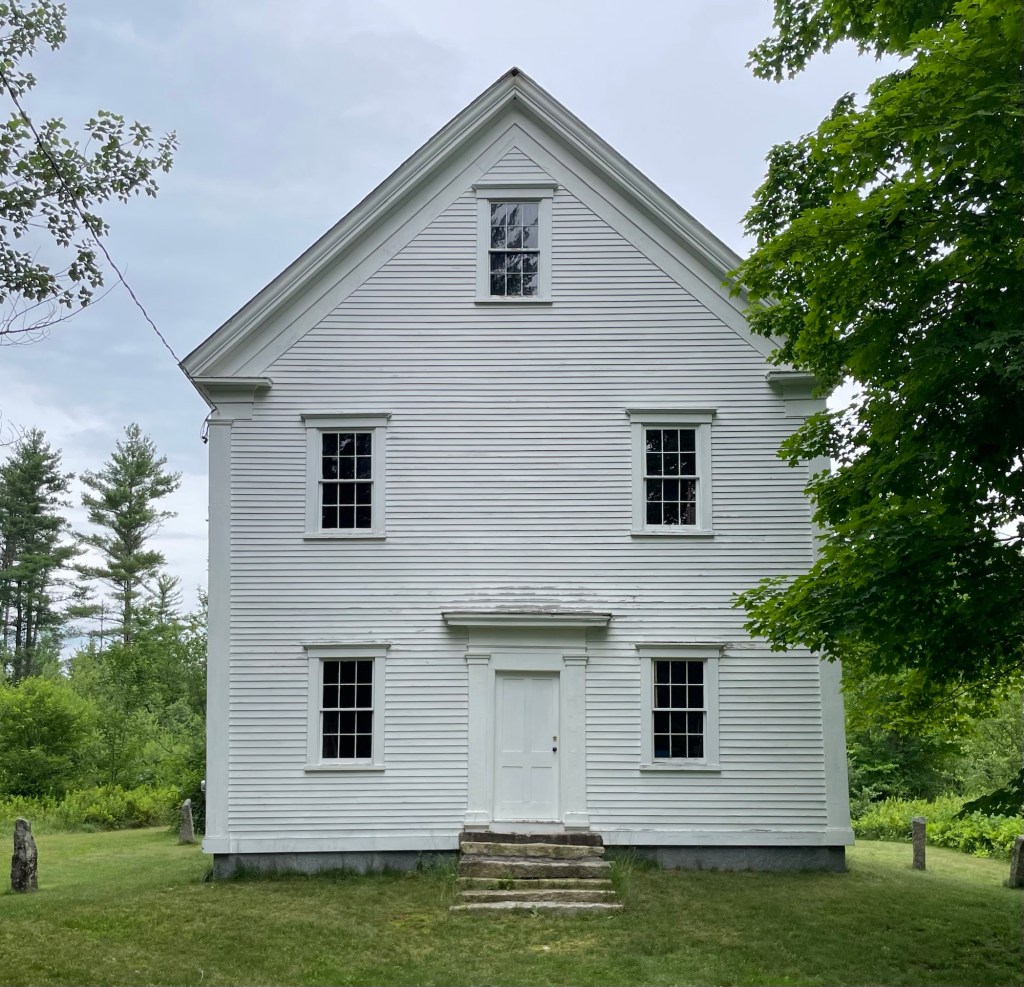
Effingham Academy // 1819

The small town of Effingham, New Hampshire, is the home to the state’s first Normal School. This building was originally constructed in 1819 as a vernacular, Federal period academy for the youth in the rural town of Effingham on land formerly owned by wealthy resident Isaac Lord. A normal school for the training of teachers was established on the school building’s second floor in 1830 with James W. Bradbury, a Bowdoin College graduate, to head it. Bradbury, later a United States Senator, took the position only on condition that it should be for the instruction and training of teachers, a novel idea at the time. The school, like many small academy buildings of the period, eventually closed. The building is now managed by the Effingham Historical Society.

Jefferson Willow Grange Hall // c.1901

Grange Halls have long been vitally important buildings in agricultural towns all over New England and are becoming threatened due to shifting development patterns and dwindling membership. The National Grange of the Order of Patrons of Husbandry was established in 1867 to advance methods of agriculture, as well as to promote the social and economic needs of farmers in the United States. Communities all over built grange halls where farmers and residents could meet and discuss prices, trade, and share tips for larger crop yields. The Willow Grange Hall in Jefferson, Maine was built in 1901 and is a vernacular building which remains a community meeting hall to this day.

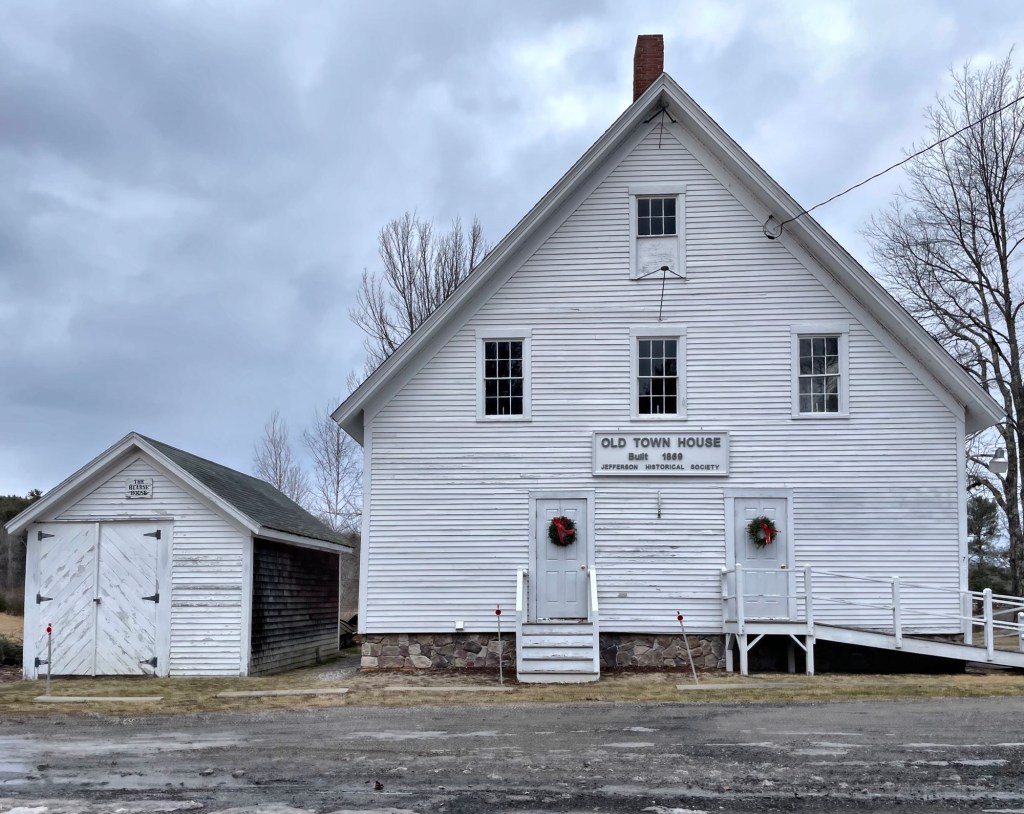
Jefferson Town House and Hearse House // 1869

Following the conclusion of the French and Indian War in 1763, much of the un-colonized land in central Maine began to see development. The Ballstown Plantation was settled in the 1760s and today includes two separate townships created from it, Jefferson and Whitefield, Maine. Jefferson was initially settled by emigrants from the coastal towns of Boothbay and Woolwich in the years just prior to the Revolution and incorporated in 1807, named after Thomas Jefferson, then President of the United States. A Town House was built in 1828 and was eventually outgrown and a new structure was funded in 1869. This is the second Jefferson Town House and like in many rural towns, it served many purposes. The building was used for town meetings, a high school, and was sometimes rented to fraternal organizations (talk about Mixed Use)! The outdated building was no longer needed by the town in the 1970s and a new building was erected closer to the center of town. This building was subsequently rented to the Jefferson Historical Society, who have restored the building, and the historic hearse house next door. The vernacular civic building will hopefully be preserved for another 150 years!

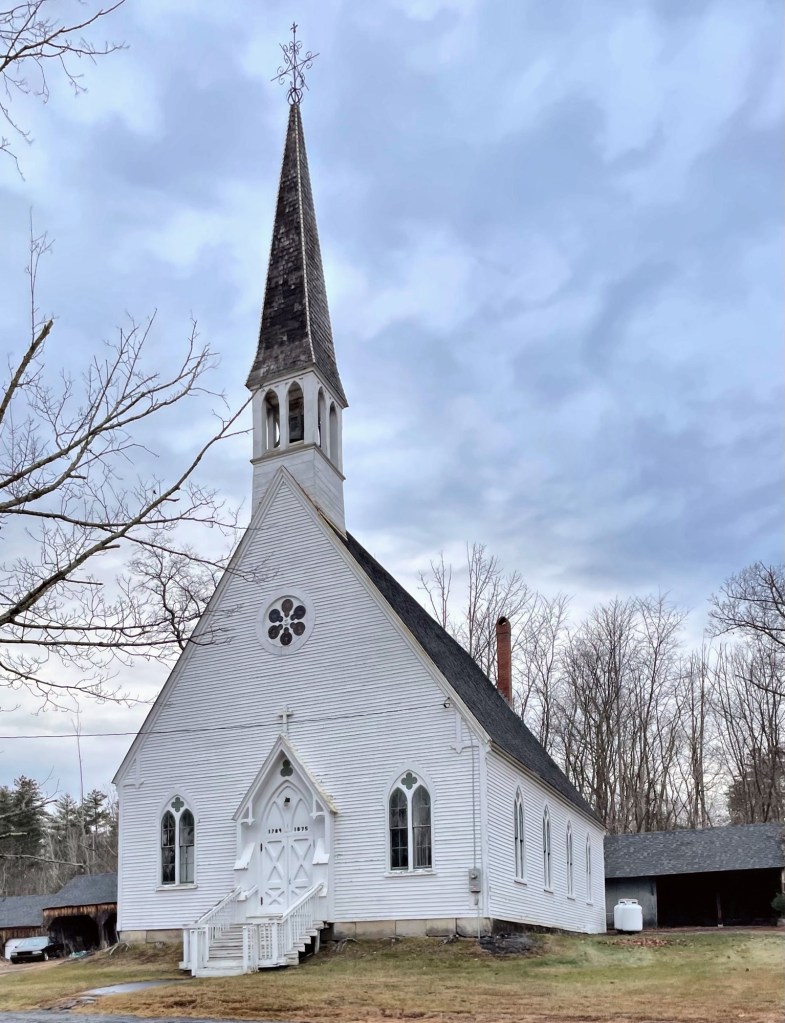
South Weare Union Church // 1875

In 1874, the Congregationalist citizens at South Weare, New Hampshire, decided to tear down their old church as it was in very poor condition and build a new one. The issue was that the Universalists owned a share of the old church, so, they decided to build a Union Church together. They broke ground in 1875 and it was completed months later in January 1876. The construction and furnishings were a group effort. The interior was furnished with circular ash pews, trimmed with black walnut. Osgood Fifield of Boston, a native of Weare, gave the beautiful pulpit; the Ladies Sewing Circle gave the carpet, assisted by the Universalists. The Victorian Gothic church building is impressive for such a small, rural congregation at the time. It has lancet windows, a circular rosette window in the gable end, and a steep gable roof capped by a towering belfry. The church even retains its historic horse sheds at the rear!

Weare Town House // 1837

Weare, New Hampshire has a pretty cool history. Located at the northern edge of Hillsborough County, the land presently known as Weare was granted to veterans of the Canadian wars in 1735 by Governor Jonathan Belcher, who named it “Beverly-Canada” after many of the veteran’s hometown, Beverly, Massachusetts. After various disputes over the settlement and naming of the town, it became known as “Weare’s Town” before being incorporated by Governor Benning Wentworth in 1764 as Weare, after Meshech Weare, who served as the town’s first clerk and later went on to become New Hampshire’s first Governor. The town grew slowly during the 18th and 19th centuries around five major villages, with farmland and forests connecting them. Near the geographic center of town, this Town House was built in 1837 to be a government and religious center of the town. Originally, town meetings were held on the first floor and the Universalist Church met on the second floor and the local high school was installed on the second floor in 1919. The building remains the town offices with event space for rent inside today. The building is a great example of a vernacular Greek/Gothic Revival town house of the period with a two-stage tower with pinnacles at the corners of each stage and a louvered belfry at the bell.

Troy Meeting House // 1840

Located in the rural town of Troy, Maine, the 1840 Troy Meeting House is a classic example of a type of meeting house or church that was built by some rural communities in the state in the decades prior to the Civil War. Built as a Union Church, without a specific denomination, the building served the members of the Troy Meeting House Society, and by extension as the only church in the town. The building features both Greek Revival and Gothic Revival stylistic details on the exterior and its design is similar to others in the surrounding towns, likely being from the same builder.

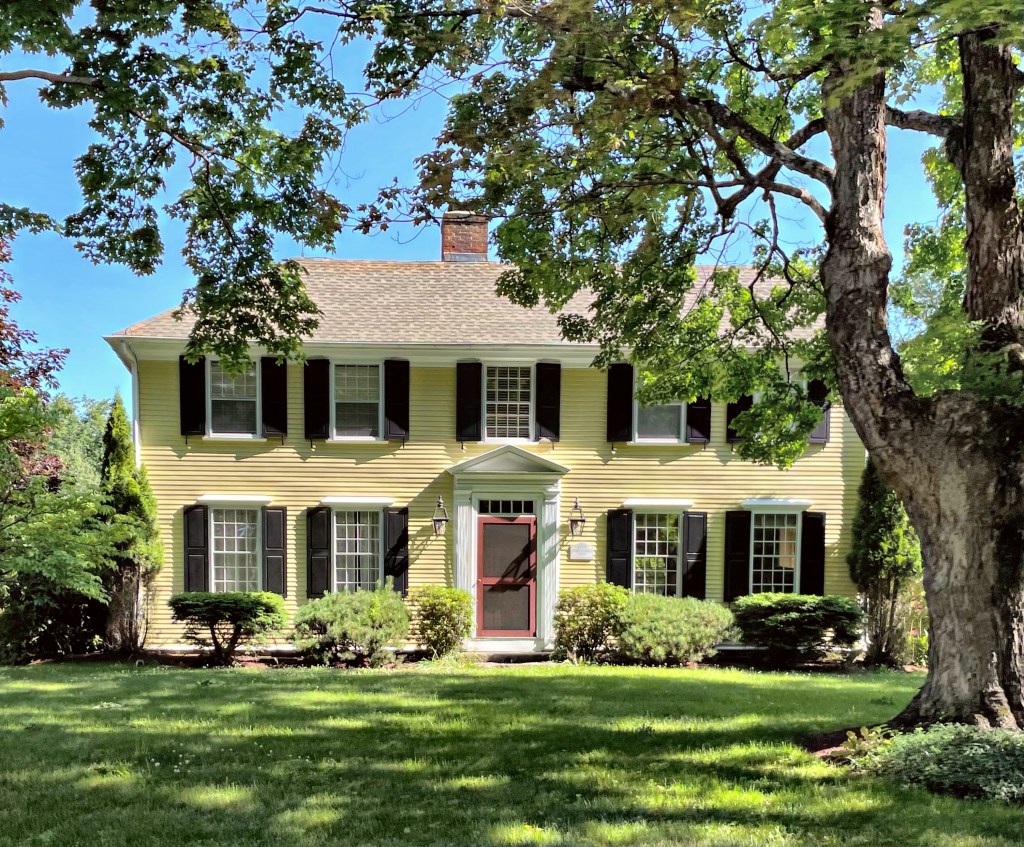
Dr. Stephen Sweet House // c.1845

Connecticut has some of the most stately early 19th century homes in New England, from the larger cities to rural towns like this beauty in little Franklin, Connecticut. This dwelling was built in the 1840s for Dr. Stephen Sweet (1798-1874) a physician near the town green. It was built after his second marriage, after his first wife’s death. His second wife, Matilda, died in the home during childbirth at age 44, along with their son just days later. The house is an excellent example of the Greek Revival style, with a gable roof running parallel to the main street, central entrance and corners framed with pilasters and frieze band at the cornice. At the side of the house, which also fronts a street, the stately home commands the corner with a second entry (maybe for in-patients), and a pair of quarter-round windows in the pediment.

Adams House // c.1820

Welcome to Peru…Vermont. The town of Peru sits in Bennington County, adjacent to the previously featured town of Landgrove. Peru was chartered with the name Bromley in 1761 by Benning Wentworth, governor of the Province of New Hampshire as one of the land grant towns in the former hinterland of present-day Vermont. By 1804, the name of the town was changed to Peru. The new name was adopted to attract more people to the town by associating it with the South American province of Peru, which was considered to be a place of great wealth (wishful thinking). This house on the western edge of the village was built c.1820 and significantly modernized since then. The original log house here was built c.1804 by Joel Adams. The home was modernized to the present five-bay facade by the 1820s-30s and operated as a double-house for Joel and his son Joel Adams Jr. The property was also inhabited by Everett Adams, Joel’s grandson, who briefly served in the Civil War.

Reverend Abel Fiske House // c.1791

Reverend Abel Fiske (1752-1802) was born in Pepperell, Massachusetts and graduated from Harvard College in the class of 1774. Four years later in 1778, at 26 years old, he was ordained as the successor of Reverend Jonathan Livermore at Wilton, New Hampshire, where he remained until his death. During his time in Wilton, Rev. Fiske built this Federal style home for his family. The house is a short walk to the old church where he gave sermons to the growing rural community.

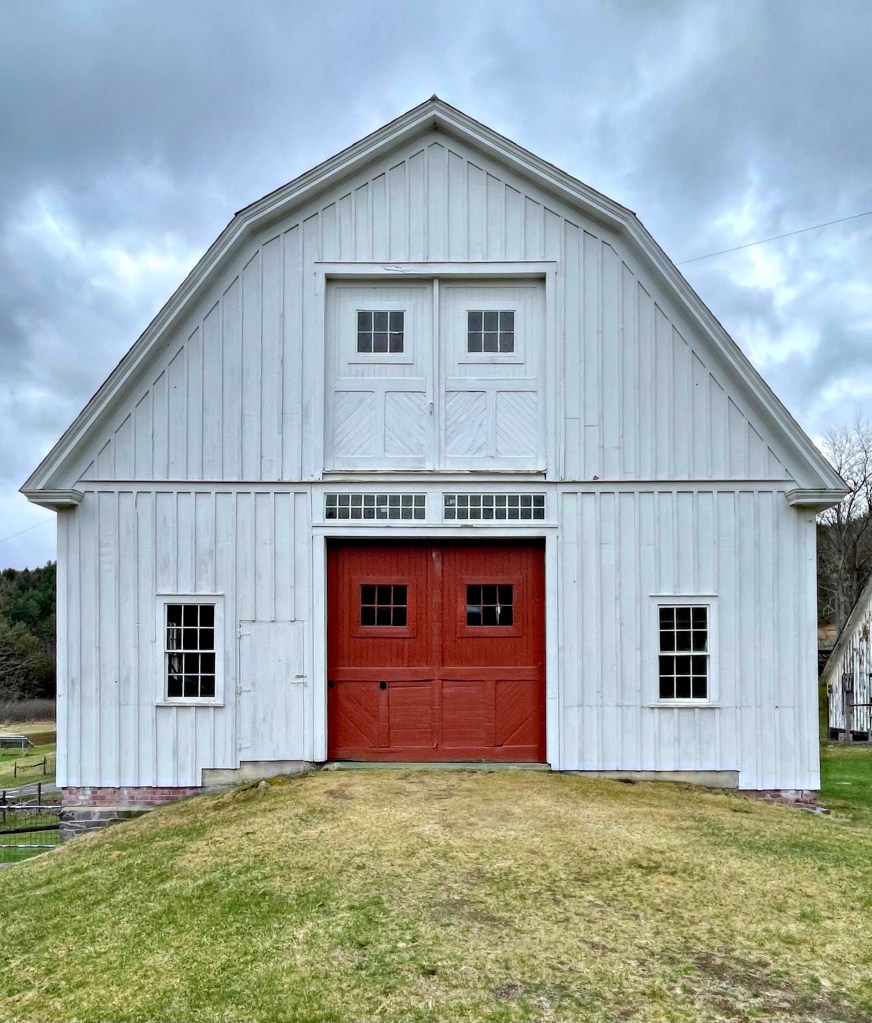
Scott Farm – Horse Barn // c.1910

You saw the cow barn at Scott Farm, now you can see where the horses lived! The Horse Barn at Scott Farm in Dummerston, Vermont is a very photogenic building with its symmetrical facade and bright colors. The barn was built not long after Frederick Holbrook II of Boston acquired most of the farm to add to Naulakha, where he lived. Holbrook used the farm as a gentleman’s farm where he would have laborers managing the grounds and supplying him with the freshest produce and dairy products. Inside, there is a ramp down to the basement which still retains the horse stalls, it’s so charming!