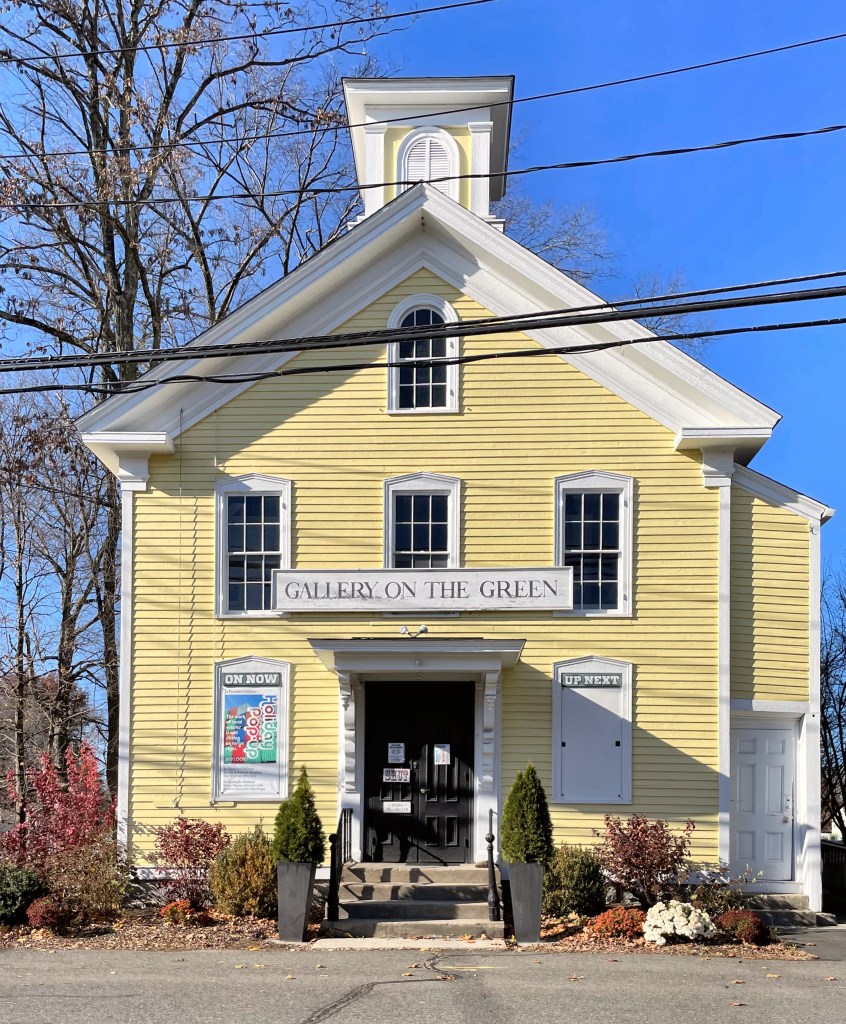
Jordan Schoolhouse // c.1735

Waterford was once part of New London, but it separated in 1801 as the area desired its own town government which took agricultural interests more seriously. In the 19th century, much of the town’s economy was centered around agriculture, with many residents running sheep farms. During the 20th century, sheep farms were replaced by dairy farms. Between 1920 and 1960, there were about 100 dairy farms in Waterford. After WWII, suburbanization occurred and many wealthy residents of nearby New London moved to Waterford for more space. The oldest surviving public building in Waterford, Connecticut is this Colonial-era schoolhouse which was likely built in the 1730s. The Jordan Schoolhouse was built as a rural schoolhouse as farmers wanted their children to be taught writing, reading, arithmetic, and religion, even if they followed their parent’s footsteps in farming. The gambrel-roofed Georgian building was used as a school until the mid-19th century and it was converted to a private home for Asa and Eliza Gallup and their family. The schoolhouse was eventually moved to its current site on Jordan Green in 1972 and is operated as a museum space for the Waterford Historical Society.

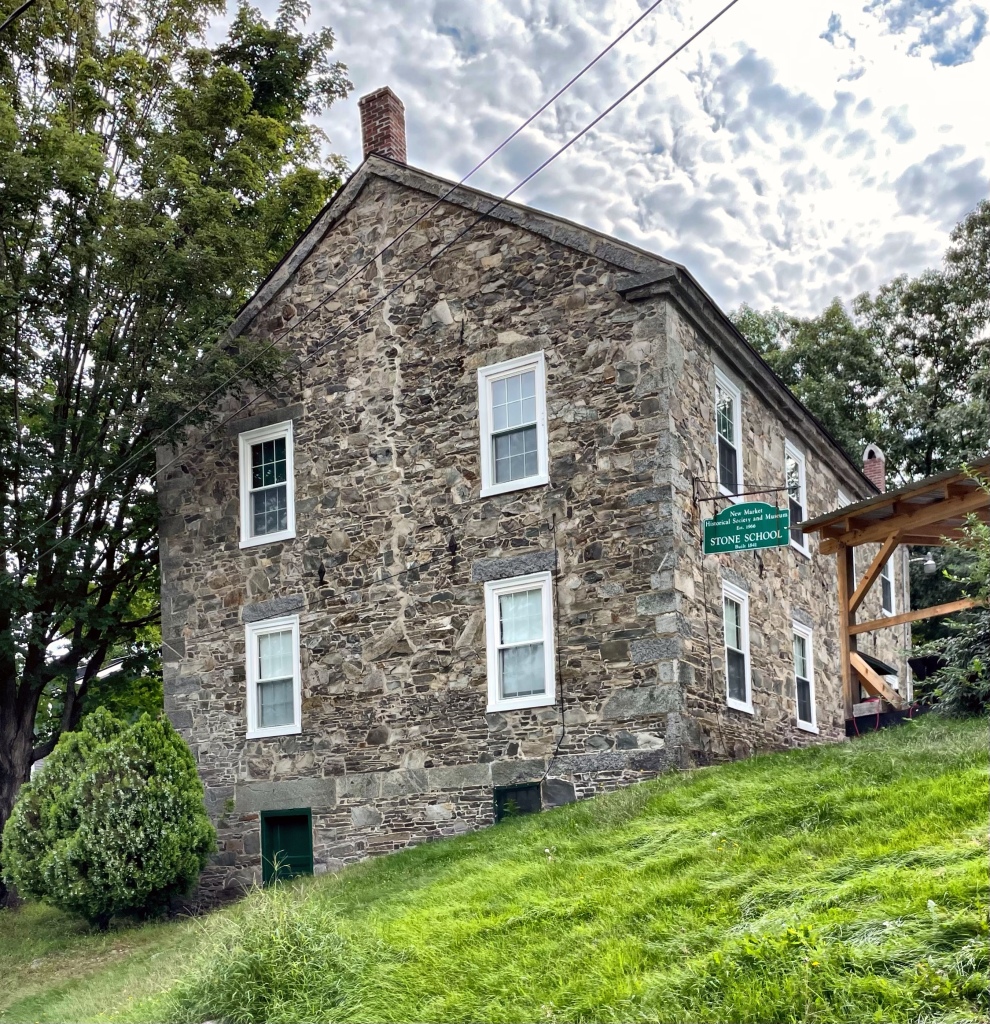
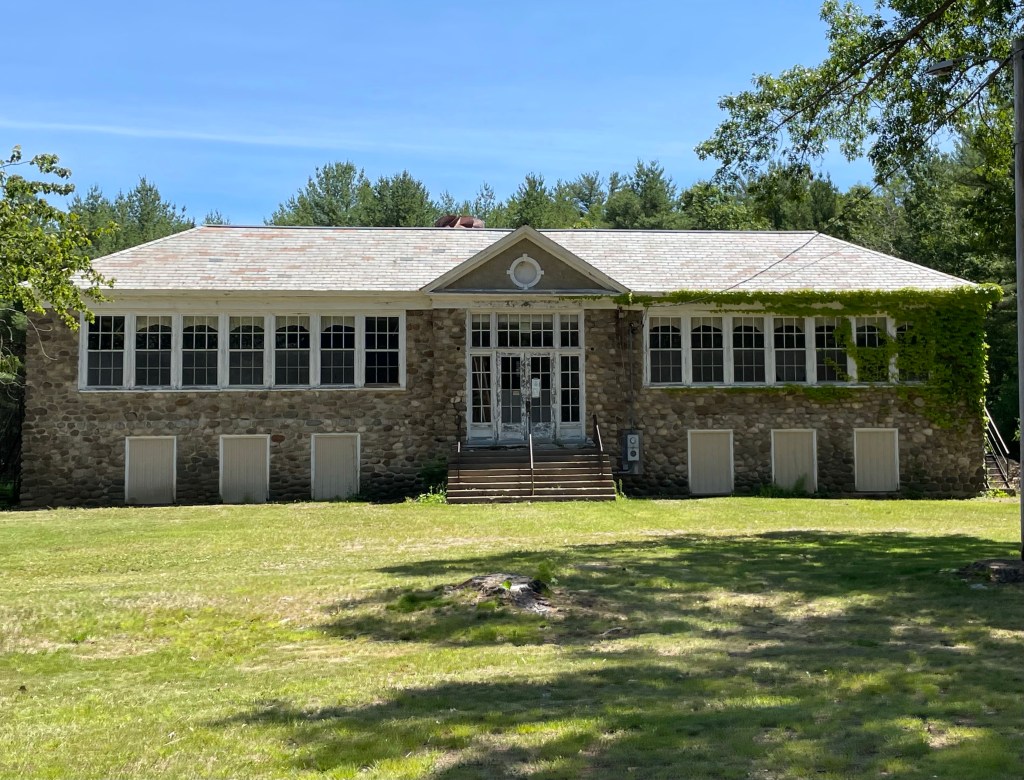
Newington Stone Schoolhouse // 1921

When the first floor of the Old Town Hall was deemed too cramped for the students of Newington, NH, to receive their education, the town worked out a solution, build a new school. Town revenue from timber-cutting in the Town Forest (the oldest Town Forest in the United States) helped finance construction of the school. Additionally, many landowners and farmers were asked to gather and donate stones on their properties and in stone walls for the material of the new building, which many contributed. The school closed in 1959, not long after the Pease Air Force Base was expanded and destroyed much of the southern edge of town. The U.S. Government acquired many parcels of land in Newington and Portsmouth and redeveloped the site over time in the mid 20th century. In Newington, the government leveled 26 local homesteads an action that left a deep scar on the town’s collective memory. The town has used the building for years, but only recently acquired the property from the Federal Government when they de-accessioned some of their properties here. Hopefully this building will be restored and serve as an educational tool for the town’s later generations.

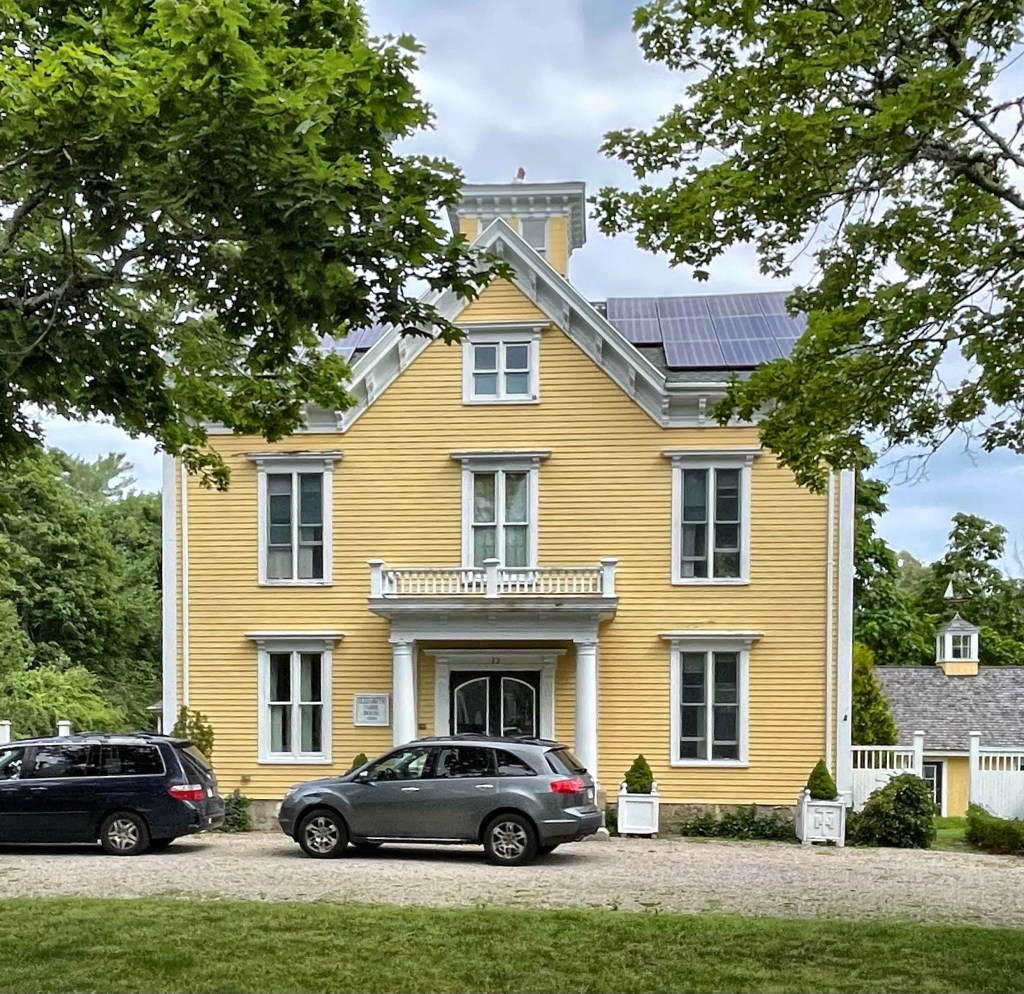
Boxborough District Schoolhouse #2 // 1857

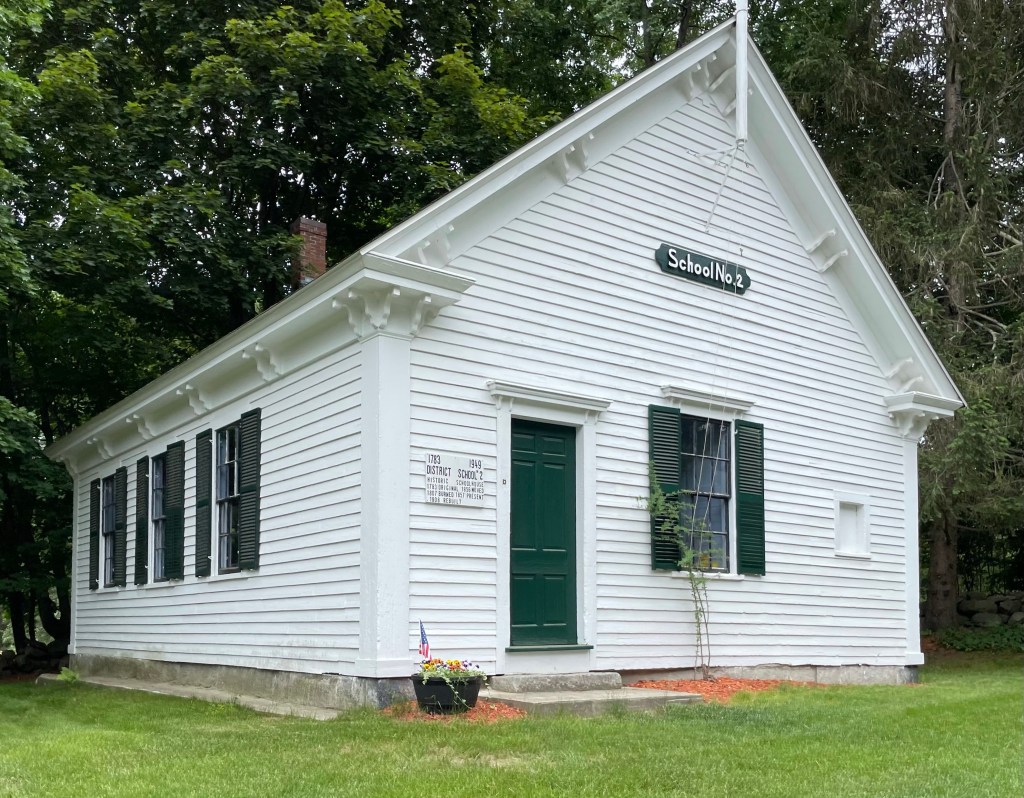
Before most small New England towns had single school buildings for elementary, middle and high school, small one-room schoolhouses like this dotted the landscape, especially in rural towns. Having smaller schools spread out allowed for a greater number of students to attend school without traveling by horseback long distances, and more local school buildings was a great solution. This c.1857 school building was in use until 1949, and it didn’t even have heat, running water, or electricity until the 1930s, making smart design a necessity to get the most out of the building. Large windows would provide natural light to flood the classroom and the steep gable roof would ensure snow to slide off the roof. Sadly, many towns have lost these buildings, but some have been restored or even repurposed as homes!

Tewksbury Center School // 1934-2021

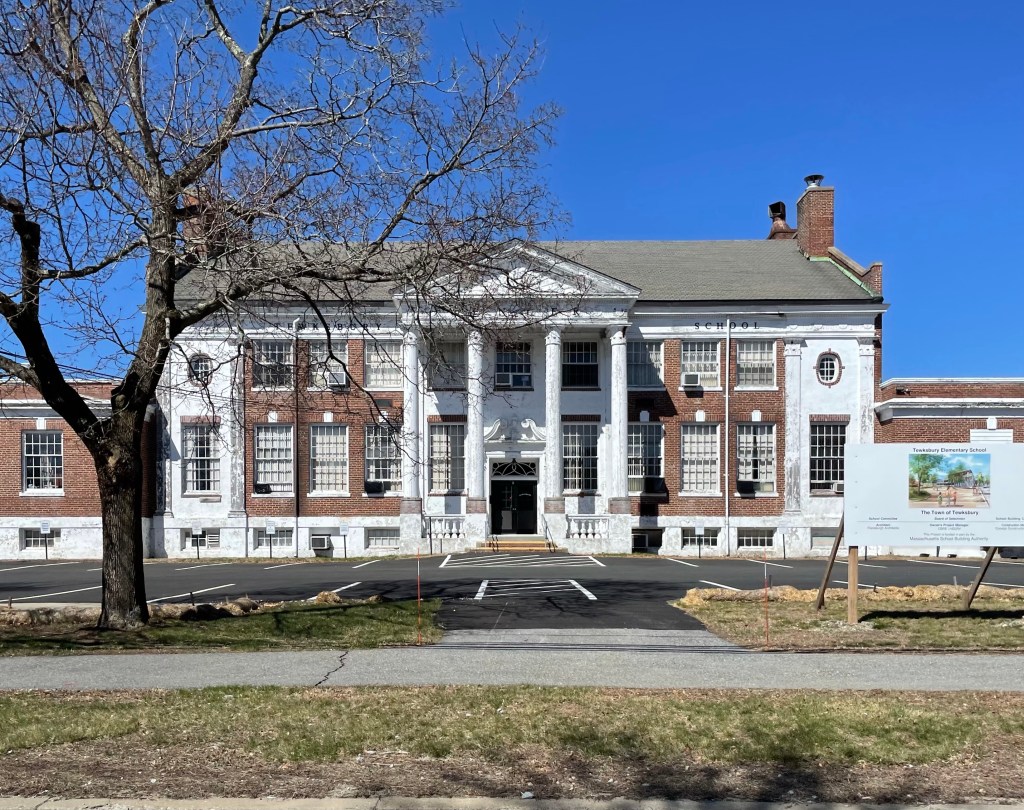
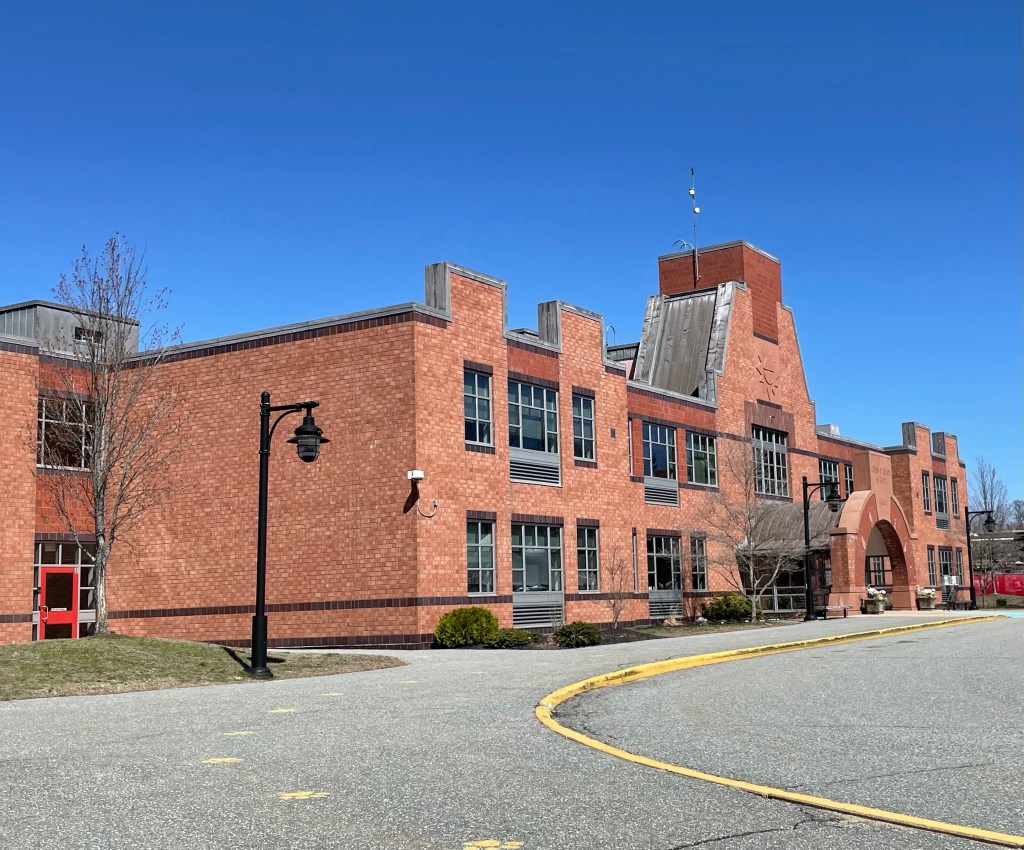
Built in 1934 as the fourth high school for the town of Tewksbury, this Neo-Classical school building has seen better days. The Center School was designed by Miller and Beal architects of Portland, Maine, and likely funded with assistance of New Deal program funding during the Great Depression. The next year, Tewksbury Stadium was dedicated in 1938, which was a Works Progress Administration (WPA) project. The Tewksbury Center School retains many of the details that characterize its Neo-Classical Style including: the front gable entry portico supported by two-story Corinthian columns and pilasters, the wide frieze band with the band of dentil molding, the decoratively clad end bays framed by Corinthian pilasters, the broken pediment of the door surround, and keystones in the brick lintels. The town needed to expand at the end of the 20th century, and hired Architectural Resources Cambridge to design the John F. Ryan Elementary School, located behind this building. The Ryan Elemetary School is a pleasing design which is Post-Modern in style. The Center School has been used as offices for the School Department and was recently proposed to be demolished for surface parking, and a new school constructed elsewhere on the site. This seems very wasteful, and epitomizes the lack of regard for environmental or historical conservation in many cities and towns.

South Reading Schoolhouse // 1834

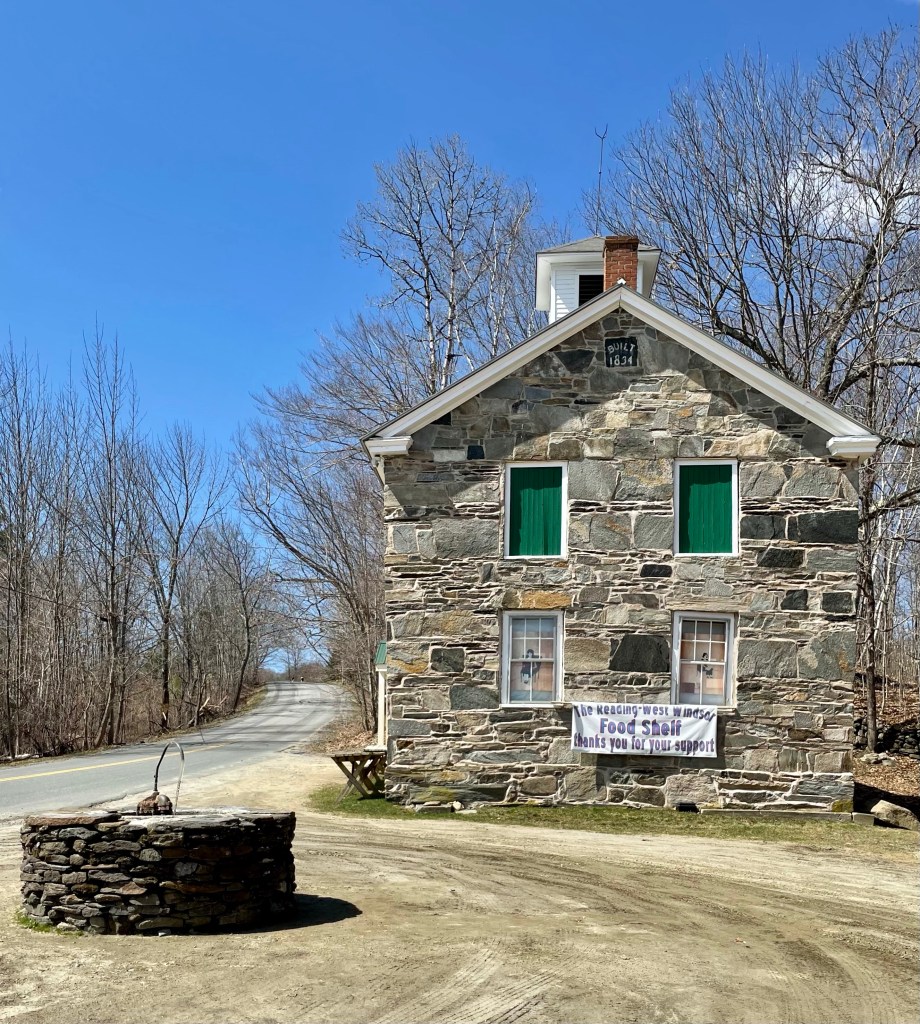
Continuing with the snecked ashlar buildings of Reading, Vermont, this schoolhouse is possibly the oldest extant such building in the state. Built in 1834, the South Reading Schoolhouse is located in a very rural village in Vermont, yet is very well preserved, showing the building much as it looked nearly 200 years ago. “Snecked Ashlar” describes a certain type of stonemasonry, brought over from Ireland and Scotland, in which a relatively thick rubblestone wall is veneered with large flat slabs of stone laid on edge. The slabs are tied, or “snecked”, to the rubblestone wall with “snecks”, small flat stones laid across the top edge of the slabs to tie them back into the rubblestone and produce a stable wall facing. It is particularly interesting to see such a large, two-story rural schoolhouse in the area, a testament to the importance of education, even for Vermont’s farming residents. The South Reading Schoolhouse was last used as a school in 1970. It is presently used as a community center for the village of South Reading and as a meeting hall for the South Reading Meeting House Association. A natural spring fountain can be found in the foreground of the schoolhouse today.

Oak Hill Middle School // 1936

In the 1930s, America was in the throes of the Great Depression, and towns and cities struggled to provide services for the ever-growing populations, all the while suffering from lower tax revenues. The New Deal was enacted as a result, which provided a series of programs, public work projects, financial reforms, and regulations enacted by President Franklin D. Roosevelt between 1933 and 1939. One of these programs was the Public Works Administration (PWA), which funded and built large-scale public works projects such as dams, bridges, hospitals, and schools, to provide jobs and bolster local economies. In Newton, the developing Oak Hill Village required a new public school, and the town received funding for the Oak Hill Middle School in 1935. Architects Densmore, LeClear, and Robbins were hired to provide designs for a new school, and builders completed the building the next year. The Georgian Revival building is constructed with red brick with cast stone trim. The 16-over-16 windows and cupola also work to showcase the beauty of the design.

Do you know of any PWA projects near you?

Colt Memorial School // 1906

Similar to Burnside Memorial Hall nearby, this school building in Bristol was also constructed as a memorial, in the form of an architectural statement-piece. The school building was gifted to the town of Bristol by Samuel P. Colt, who resided in a mansion nearby, Linden Place, and also owned a massive country estate in town, where his prized cows were cultivated. The school building was funded as a gift in memory of his mother Theodora DeWolf Colt and showcases his everlasting love for her. Designed by Cooper & Bailey of Boston, this monumental, 2-story, hip-roof Renaissance Revival structure was built of white marble with 2-story, cast-bronze window bays. The symmetrical facade has a central Corinthian portico with fluted columns and a pediment containing cherubs around the Colt family crest. The school was used as the town high school until the 1960s when it was outgrown, the building has since been used as an elementary school, the nicest one I have ever seen!

Richmond School // 1907

This two-story brick schoolhouse was built in 1907 for town growing along the river in Richmond, Vermont. The town’s history goes back thousands of years ago when indigenous people lived here during the Archaic period from 9,500 to 3,000 years ago. The Winooski River, which runs through the town today, was also a common highway for the Abenaki Tribe after 1,000 A.D. between Lake Champlain and the Connecticut River. European settlement of Vermont did not begin until the Treaty of Paris ended the French and Indian War in 1763. Richmond was eventually granted township status in 1794 when the Vermont Legislature combined parts of nearby towns to form the new town. The town grew mostly as an agricultural village until the 19th century, when the Winooski River was harnessed for power. The town grew over the years, surviving large town center fires and floods over the years. As was the case with many small Vermont towns, Richmond’s population began a steady decline during the Great Depression. The trend was reversed in the 1960s as a result of new regional employers coming into the area. The school here was outgrown and built a new school in town in that period of growth and converted to the Town Hall, showing a great example of adaptive reuse in small town New England.

Pequot School // 1917

The Pequot School in Fairfield was built in 1917-18 and is one of only a few institutional buildings erected in the Southport area during the early twentieth century. The school, designed by architect William H. McLean, replaced an earlier school on the site which was built in 1854. The 1854 wood-frame school building was outgrown in the early 20th century and the school board voted to demolish the old building and replace with a larger, modern school. The school is a unique design in the Classical Revival realm, but capped with a cupola and stunning green tile roof. The school closed in 1972, and the historic Pequot School building was acquired by the Southport Conservancy as a treasured landmark. It was occupied by the town until 1985 when it was occupied by the Southport School.

Oliver Ames High School // 1896

I’m starting to see a trend in Easton, almost everything is named after the Ames Family! In 1893, Oliver Ames (1831-1895), a grandson of shovel company founder Oliver Ames and son of Oakes Ames, offered to fund the construction of a new high school building if the town would pay the cost of building its foundation and grading the site. While governor of the Commonwealth of Massachusetts (1887-90), Ames had hired Boston architect Carl Fehmer as consulting architect to the State for the extension to the Massachusetts State House, and it was Fehmer who secured the design contract for the new school in Easton. The refined Colonial Revival school building features a central pavilion with an entrance set within an ornate stone architrave with a Classical entablature with central pediment. The school was outgrown in 1957 and became the town’s middle school, outgrown again in the 1990s. The town sold the school to a developer with preservation restrictions and it is now used as apartments!