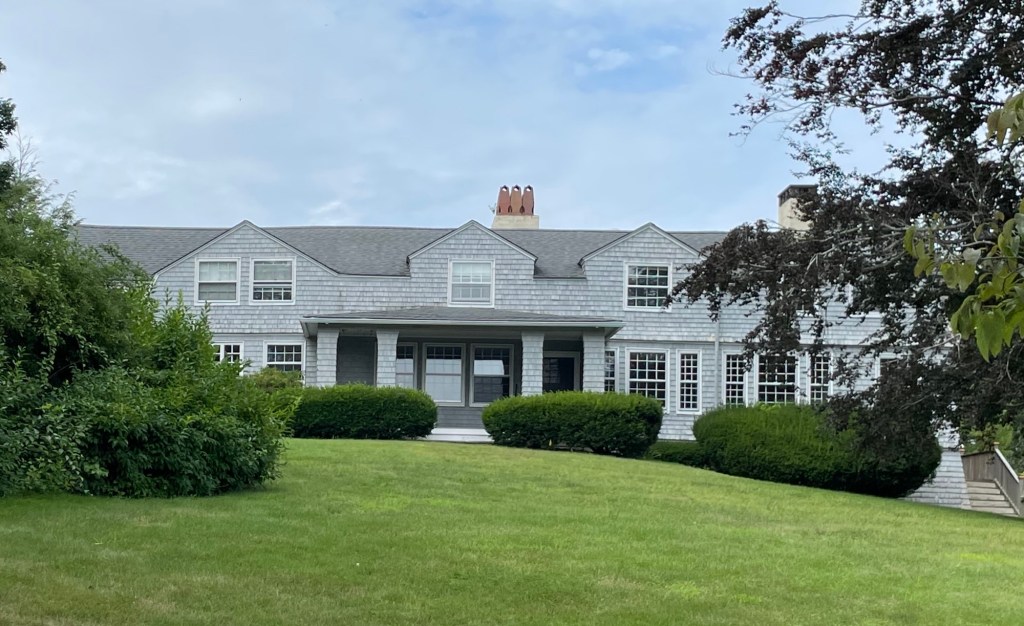
Browne-Hosmer Cottage // 1881

This Shingle style home in Marion was designed for Reverend William Percy Browne (1838-1901), who was educated at Kenyon College in Ohio alongside John Cotton Brooks, the youngest brother of Phillips Brooks, who would become the Rector of Boston’s Trinity Church and briefly Bishop of Massachusetts. Brooks would hire H.H. Richardson to design Trinity Church in Boston in the early 1870s. From this connection and being members of the St. Botolph Club of Boston, Reverend William Percy Browne and H.H. Richardson began a working relationship designing Browne’s summer cottage in Marion. The legend is that at the club, Browne bet Richardson that he could not design a small house for $2,500. Browne lost. This modest house was completed in 1882 and represented an early, significant example of a Shingle style home in Massachusetts. Browne died in 1901 and the house was sold to Sidney Hosmer, a Boston electrical engineer. Under his ownership, the home was expanded and altered, likely from plans by Charles Allerton Coolidge, Boston architect who summered in Marion. The cottage was eventually purchased by Tabor Academy, who in 2019, pulled a demolition permit for the house. Architects and historians quickly rallied and advocated for the preservation of the cottage, saving it from the wrecking ball, for now. The cottage remains vacant and no definitive plans as of 2026 have been unveiled to sell the property or restore it.
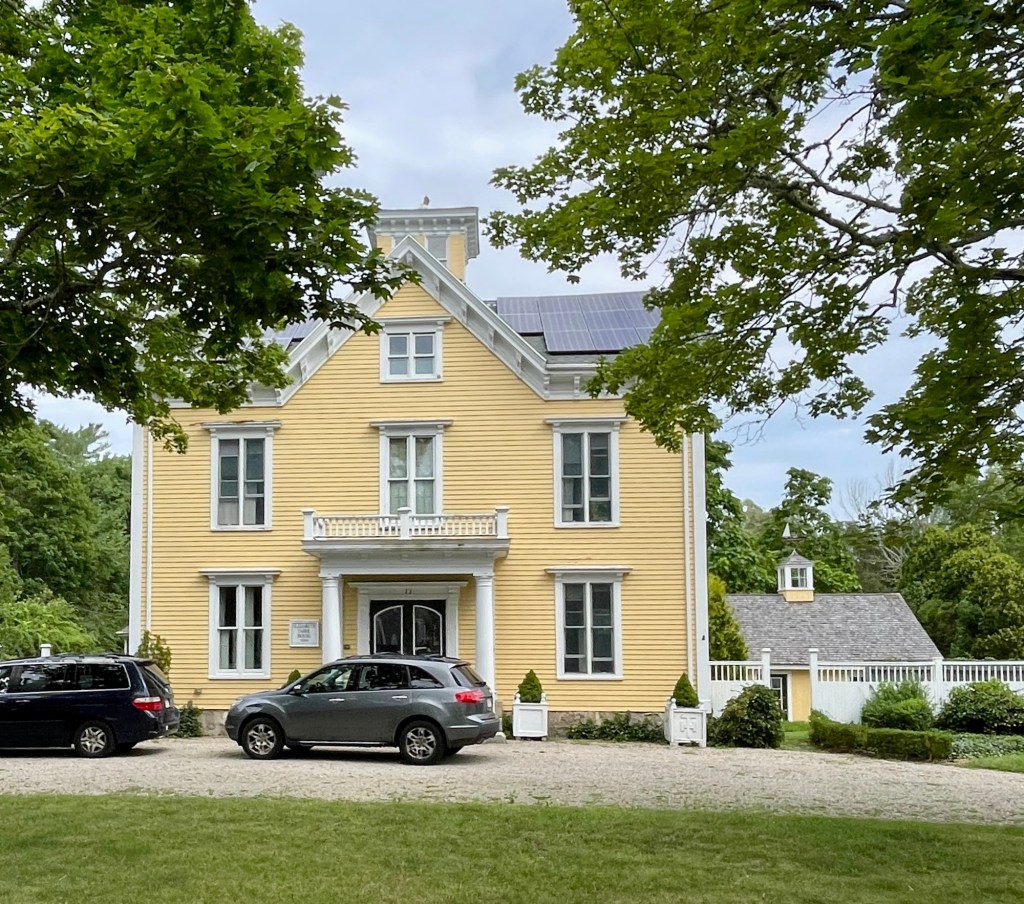
Tabor Hall // c.1880

This beautiful Italianate building was constructed around 1880 for the newly established Tabor Academy, which was founded in Marion, Massachusetts by Ms. Elizabeth Taber in 1876. After Ms. Taber funded the constructed of a town library and museum and Academy Building (now the Marion Town Hall) for her hometown, she endowed money for Tabor Hall, which was to house the school’s Principal, some boarding students, and most importantly, herself. The structure was originally located on Spring Street, just north of the library, 1936, when the “Tabor Swap” occurred. The swap was a deal between the academy and the Town of Marion, who exchanged properties. The town received the library building, the academic building (soon after converted to Town Hall) and land where this building once sat and erected the Sippican Elementary school on the land, and had Tabor Hall moved a block away to this site on Cottage Street. Tabor Hall has since been a private home, and recently (before this image) has been renovated with new siding.

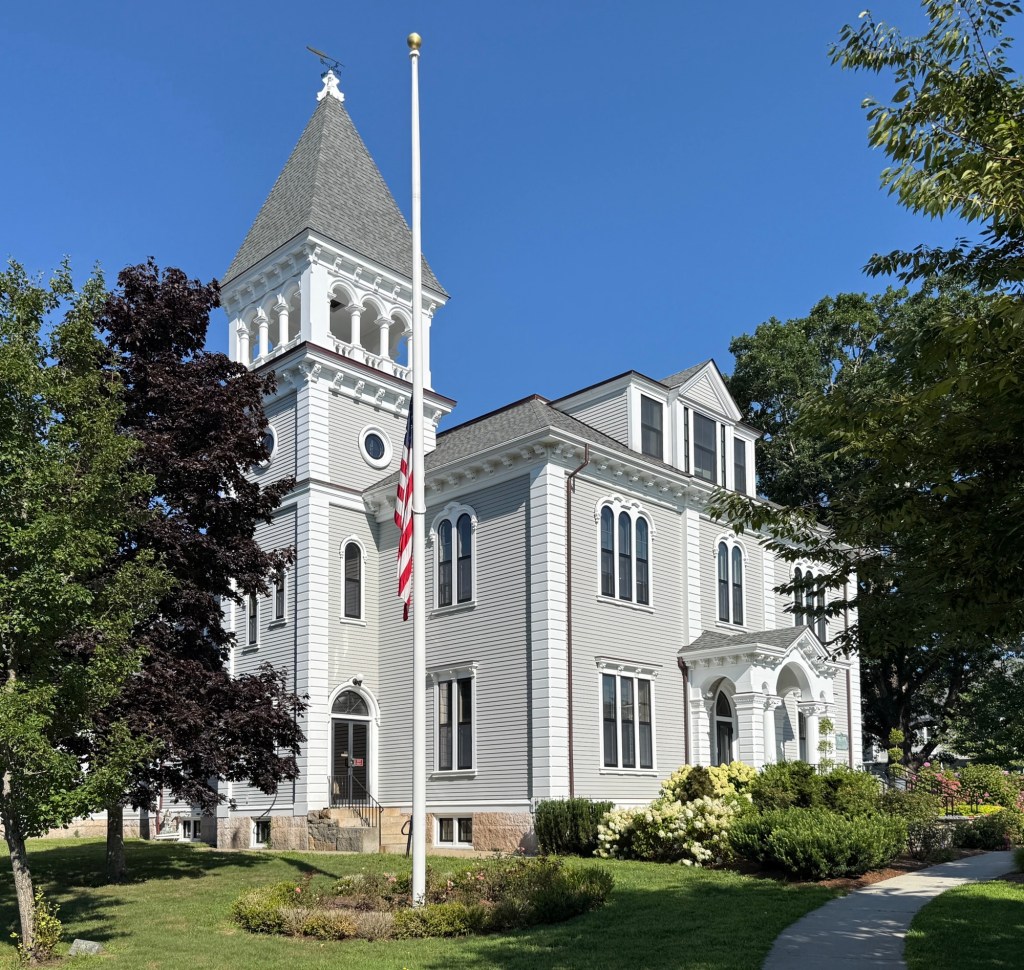
Tabor Academy Building – Marion Town Hall // 1876

This building, one of the most architecturally significant in the town of Marion, Massachusetts, was constructed in 1876 as a new academy building in the community. When built, Marion was not yet a summer resort community and suffered the decline of the shipbuilding and sea-faring trades that saw the region prosper throughout much of the first half of the 19th century. The new academy building was largely funded by Marion resident, Elizabeth Sprague Pitcher Tabor (1791- 1888). Following the death of her wealthy husband, New Bedford clockmaker and whaling vessel shareholder Stephen Taber, Mrs. Taber focused her attention on improving the circumstances of her hometown of Marion by financing and overseeing construction of new buildings in town. In her later years, Elizabeth founded Tabor Academy in Marion, naming it after Mount Tabor in Palestine rather than after herself (but the close spelling was likely intentional). Tabor Academy served as a private school for boys and girls over 12 years of age, and was to remain free for local students. With the rise of public schools in the state, many academies began to struggle with admitting students, especially those that had parents willing to pay additional money for enrollment. The school struggled around the Great Depression and thus, traded buildings with the Town of Marion in the 1930s and this building became the Marion Town Hall, a use it retains to this day. The building itself is a stunning Italianate design, likely constructed from plans by Boston architect and summer resident in Marion, William Gibbons Preston. The Town of Marion has done an exceptional job maintaining and preserving this significant and iconic piece of architecture and local history into the 21st century.