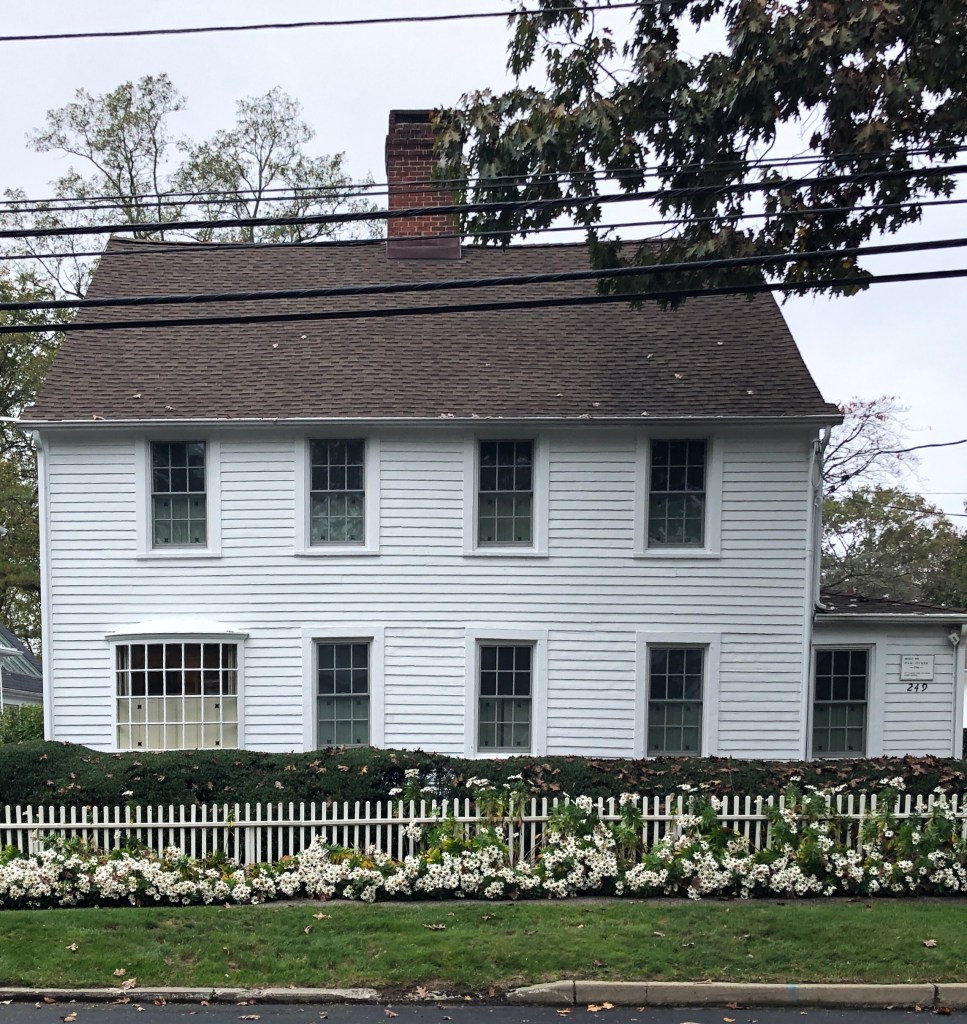
Captain John Maltbie House // 1766

On July 7-8, 1779, the Red Coats marched through Fairfield torching houses to punish the locals for seeking independence. They killed locals, destroying anything they could find on their way out, setting fires to homes and civic buildings around the Green. This home was built by Isaac Tucker, later sold to Jonathan Maltbie, sea captain involved with East Indies trade. He later would fight against the British during the Revolution, and after the war, was hired as captain on one of the first cutter ships built, the Argus. During the British invasion of Fairfield, they attempted to set fire to this home three times, but it seemed to never go up in flames when they returned. The tradition holds that an elderly servant, hiding upstairs, put out the flames and saved the house from destruction, after the British Troops torched it. Burn marks apparently remain inside to this day. Since the home was built, the front door facing the street was relocated to the side, and a large multi-pane bay window was installed in its place.
Captain Fisher House // 1892

Standing out amongst the Federal and Greek Revival homes in Edgartown, this Victorian home was constructed in 1892 by Captain Charles W. Fisher (1835-1905) for his new wife. The Fisher family includes many members who were active in the local whaling industry. Fisher is said to have caught the largest sperm whale on record in 1884 and apparently loved being on the open ocean. The next year he married Parnell Pease and she sailed with him to the Pacific on a whaling voyage, lasting five years! At the time of their marriage, Fisher was in his 50s and his new wife in her 20s. Upon their return, Fisher built his wife this “modern style house on the pretentious side with Victorian ornamentation.” Unfortunately, his wife preferred her former house, which was a block a way and obscured any views of the water. Tradition states that apparently, Mrs. Fisher had seen enough of the water during her voyage, as her diary on the five year trip detailed her many unfortunate bouts with sea-sickness, a stay on an island, and dangerous storms.

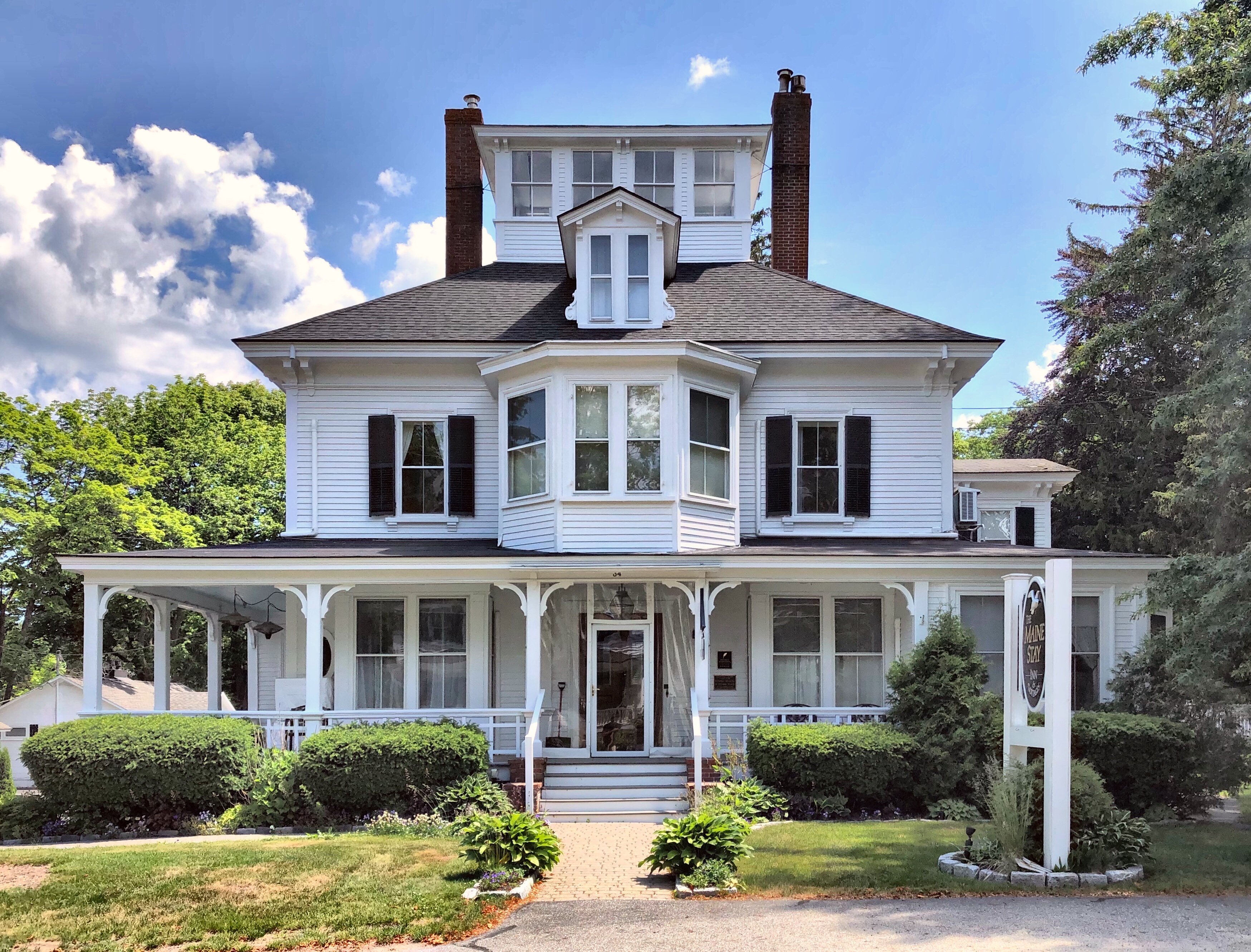
Melville Walker House // 1860

Built for Melville Walker, a sea captain on land gifted to him by his father, this home perfectly exhibits the changing dynamic of Kennebunkport. Melville Walker would often be out at sea for months at a time, and he apparently brought along his wife, three daughters and son on many trips to ports all over the world. The Italianate home was eventually sold out of the family, and by 1901, it was purchased by George Little, an executive with the New York, New Haven and Hartford Railroad. That year, he had the summer home renovated with Colonial Revival detailing, including the hipped roof, dormer, and other detailing. The belvedere, 2/2 windows, and Victorian era porch were retained, showing the original form and detailing of the Italianate version. In the 1950s, the home was converted to an inn, with small cottages constructed surrounding the property to house additional families. Today, Maine Stay Inn & Cottages welcomes families from all over the world to experience the beauty of Kennebunkport.