Rev. William Percy Browne Cottage // 1881

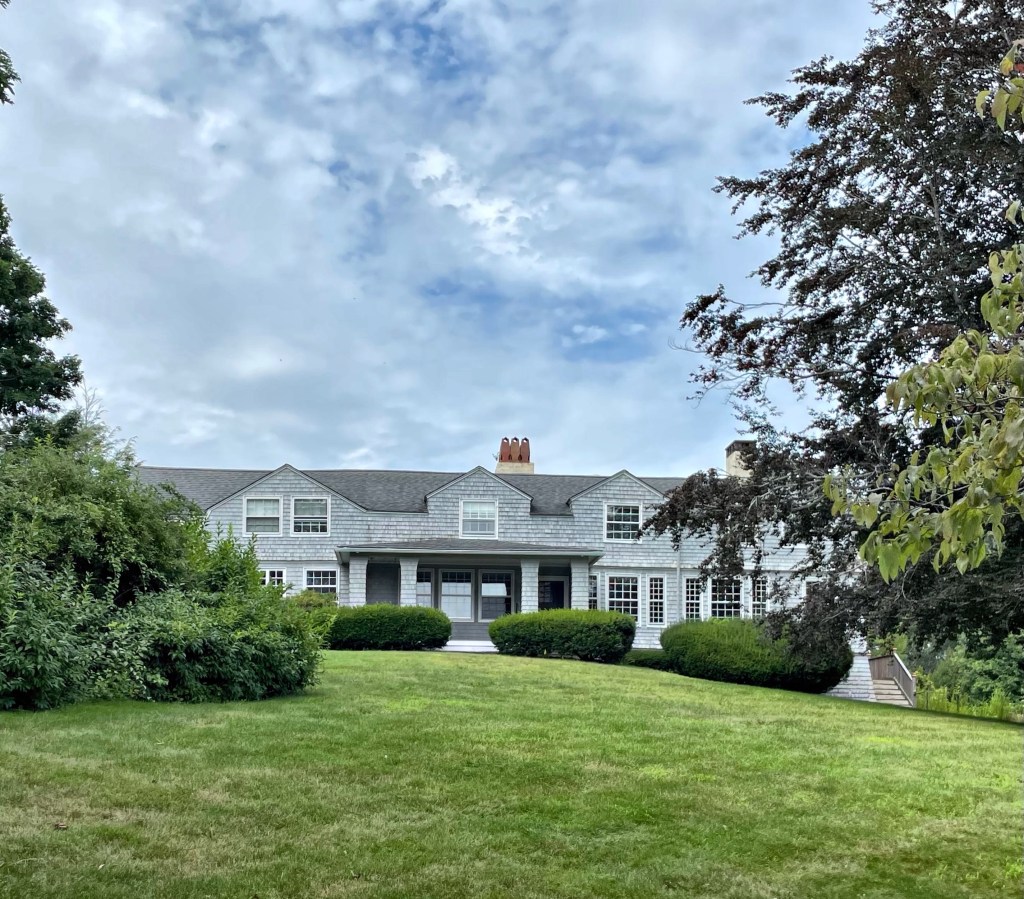
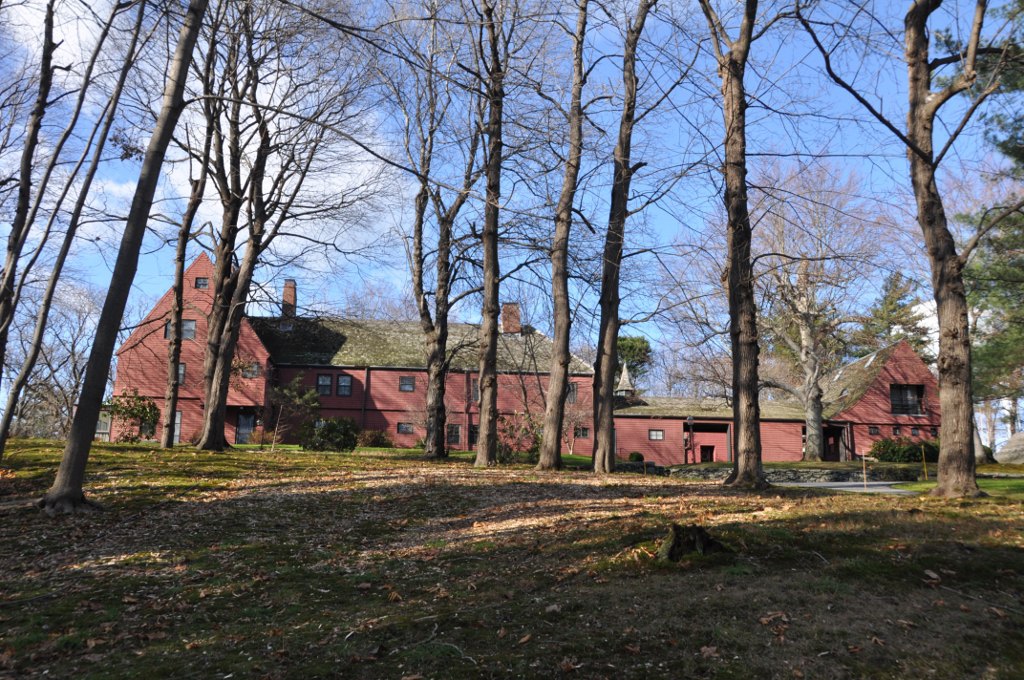
In 1881, Henry Hobson Richardson furnished plans for this modest, shingled cottage in the town of Marion, overlooking Sippican Harbor. At the same time, he was also completing designs for Austin Hall at Harvard and overseeing the construction of Albany City Hall in New York, both in his iconic Richardsonian Romanesque style. This Shingle style home in Marion was designed for Reverend William Percy Browne (1838-1901), who was educated at Kenyon College in Ohio alongside John Cotton Brooks, the youngest brother of Phillips Brooks, who would become the Rector of Boston’s Trinity Church and briefly Bishop of Massachusetts. Brooks would hire H.H. Richardson to design Trinity Church in Boston in the early 1870s. From this connection and being members of the St. Botolph Club of Boston, Reverend William Percy Browne and H.H. Richardson began a working relationship designing Browne’s summer cottage in Marion. The legend is that at the club, Browne bet Richardson that he could not design a small house for $2,500. Browne lost. This modest house was completed in 1882 and represented an early, significant example of a Shingle style home in Massachusetts. Browne died in 1901 and the house was sold to Sidney Hosmer, a Boston electrical engineer. Under his ownership, the home was expanded and altered, somewhat obscuring Richardson’s original design. The cottage was eventually purchased by Tabor Academy, who in 2019, pulled a demolition permit for the house. Architects and historians quickly rallied and advocated for the preservation of the cottage, saving it from the wrecking ball. The academy is undergoing alternative plans, which were stalled due to Covid-19.


Marion Congregational Chapel // 1885

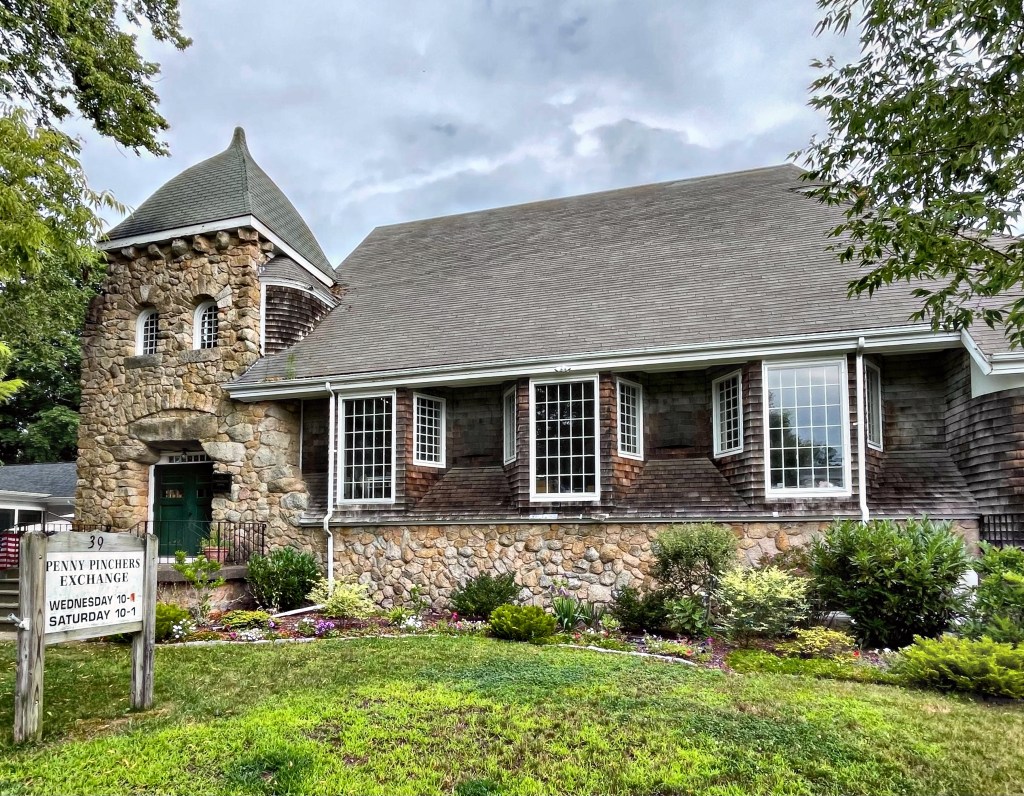
Built in 1885, Marion’s Congregational Chapel represents one of Elizabeth Pitcher Taber’s last substantial gifts to her community. Born in Marion in 1791, Mrs. Taber taught grammar school in Marion as a young woman, marrying, Stephen Taber, clock maker and whaling ship-owner in 1823, subsequently living in Acushnet and New Bedford. She refocused her interest in Marion after the death of her husband in 1862. A wealthy, childless widow, Mrs.Taber funded a library/natural history museum, music hall, and during the mid-late 1870s, she set about the daunting task of founding a private academy in Marion which still thrives in the town as Tabor Academy. Three years before her death in 1885, Mrs. Taber, in one of her last acts of generosity to her church and town, purchased a vacant lot owned by her Tabor Academy’s principal and her downstairs neighbor in Tabor Hall, Clark P. Howland. She paid him $300.00 for his land and subsequently had the Congregational Chapel built in the up-to-date Shingle Style. Composed of rubble stone, the church features a south-facing wall with a trio of polygonal bays that add depth and provides the hallmark cedar shingle siding in the style. The church is one of the most rustic and beautiful in the state of Massachusetts. The church here also runs Penny Pinchers Exchange, a church-run thrift shop.


Henry C. White Estate // 1913

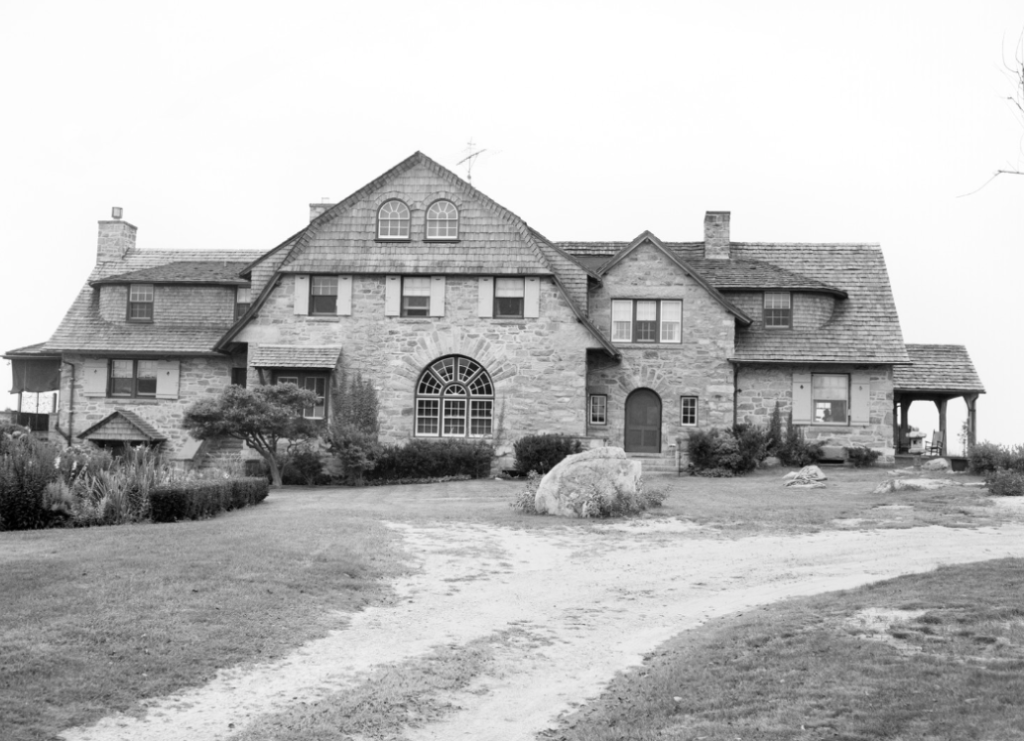
White Estate, c.1970, taken by Wayne Andrews

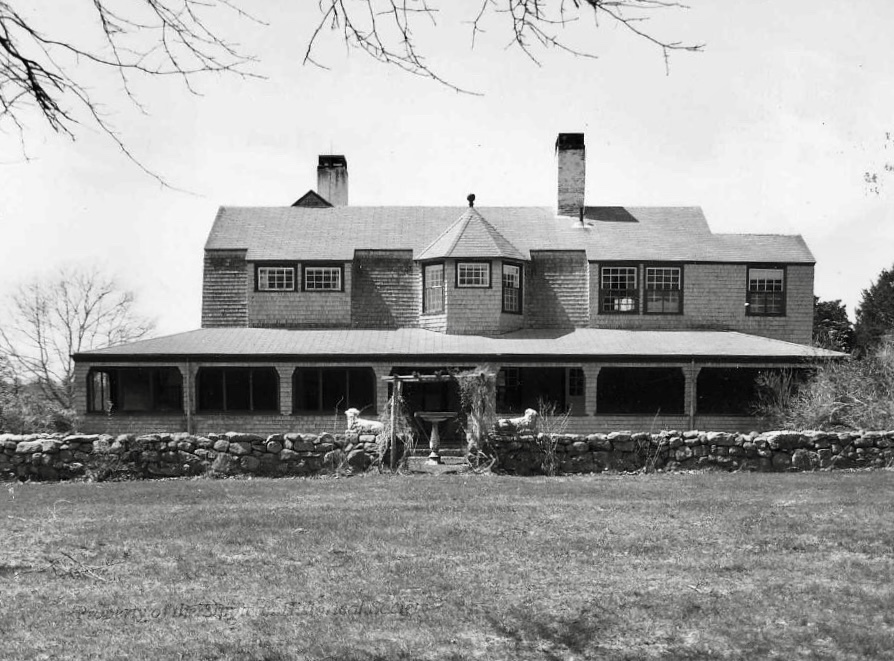
Henry Cooke White (1861-1952), the patriarch of an extremely artistic family, purchased undeveloped land on a coastal part of Waterford, Connecticut in 1891. When passing through the area he found a vantage point overlooking the water, he was overwhelmed by the panoramic view of Long Island Sound, writing in his memoirs, “…I was convinced that this was my Promised land.” Not long after, he built a summer cottage on what became known as White Point the following year. The Whites wintered with his parents in Hartford until they built a year-round home in Waterford in 1913, designed by Wilson Eyre, a Philadelphia architect, after he was inspired by Charles Lang Freer’s home in Detroit. The rustic Shingle style house was constructed of ashlar stone masonry with shingles above, which is sited perfectly on the rocky shoreline. Also on the site is a boat house and garage (which I could photograph from the street) in similar detailing. Henry‘s son and grandson both followed his footsteps: Nelson Cooke White (1900-1989), who was born at White Point, and inherited his father’s love of the sea, became a noted marine and landscape painter; and Nelson Holbrook White (1932-) who was taught by his grandfather and later studied in Italy how to perfect his painting.

Walter Garde Cottage // c.1910

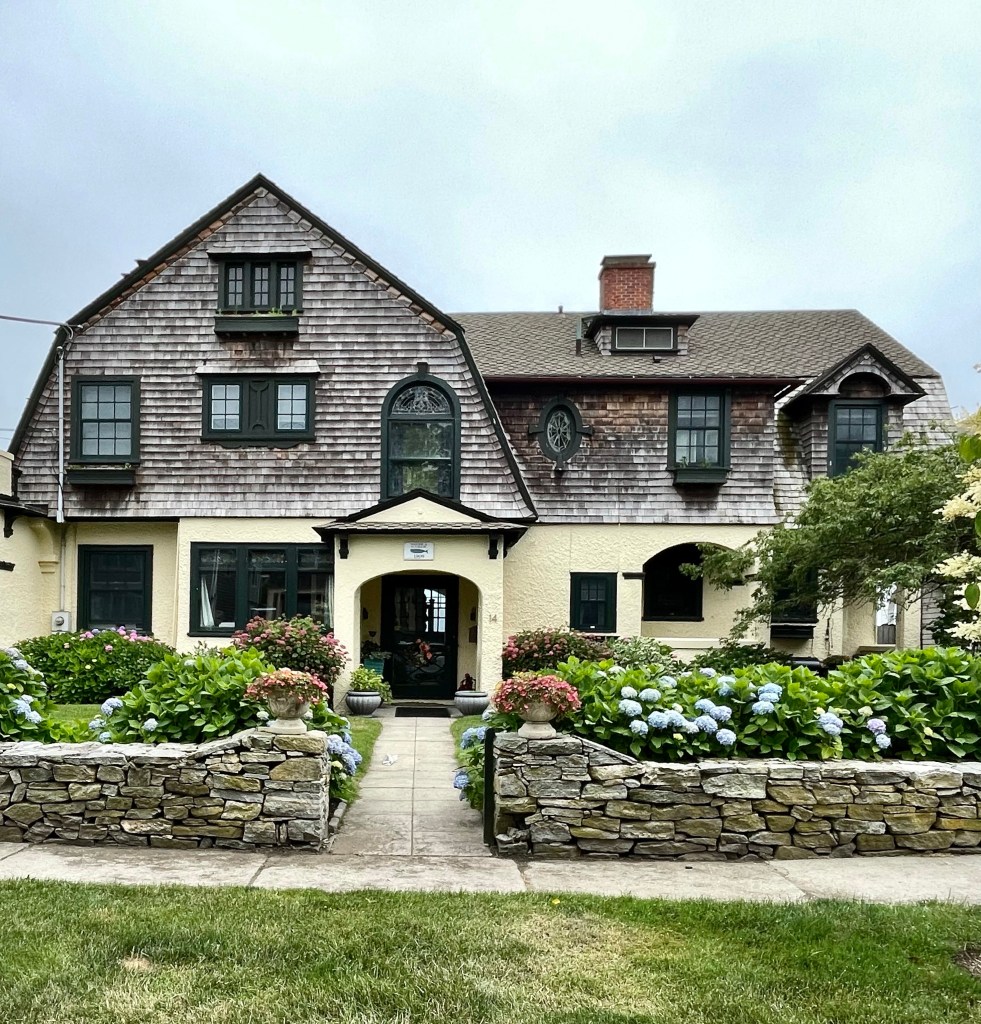
This summer cottage in the Neptune Park development of New London, Connecticut, was built around 1910 for Walter Garde, a resident of Hartford and New London. Walter built this home as a retreat from city-living where he could breathe the fresh sea breeze and not worry about smoke and pollution from the growing industrial cores of Hartford and New London. The home blends styles and forms elegantly with a stuccoed ground floor and shingles above. A cross-gambrel roof adds depth with windows in various shapes and sizes creating a pleasing composition at the street. Walter Garde was a businessman who notably opened the Garde Theatre (now Garde Arts Center) in Downtown New London.

Dr. Henry Jacob Bigelow House // 1886

The Dr. Henry Jacob Bigelow House, sitting high on Oak Hill in Newton, is among the last designs (1886) of architectural icon Henry Hobson Richardson. If you already didn’t know, Richardson was one of the foremost architects of his day and is known both for bold Richardsonian Romanesque and Shingle style designs. He was hired by Dr. Henry Jacob Bigelow to provide plans for a sprawling country retreat from the noisy and cramped conditions in Boston. Dr. Bigelow was an eminent surgeon in Boston who earlier, helped facilitate the first public dose of ether as anesthesia on a patient, a breakthrough that led to the stunning Ether Monument in the Boston Public Garden. Bigelow only got to enjoy the country estate for a couple years until he died in the home in 1890. Years later, the estate (and nearby buildings) became home to the Peabody Home of Crippled Children, which worked as a sort of open-air hospital. Eventually, the home was vacated and sat, deteriorating on the hill. It was saved from demolition through the efforts of preservationists in Newton, and was restored as a part of “This Old House” with Bob Vila. It was restored as a set of five condominiums sited in a sunny interior courtyard.

William G. Low House // 1887-1962

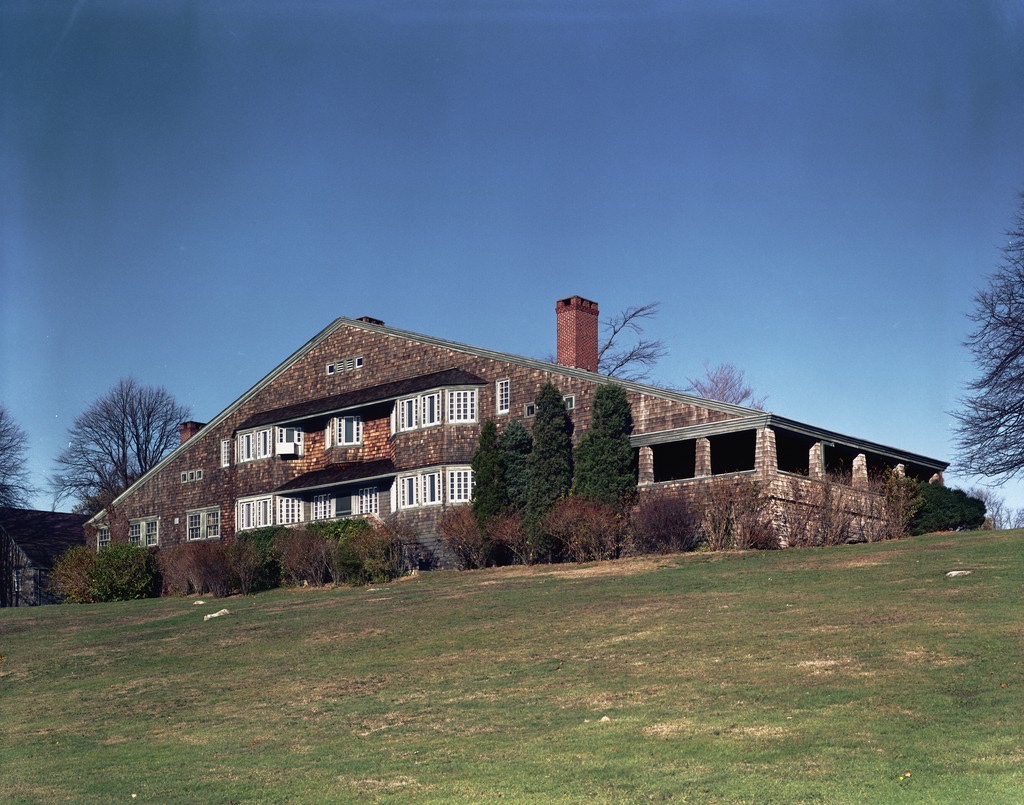
One of the many significant losses to American architecture is the demolition of the Low House, a perfect encapsulation of the Shingle style of architecture by one of the most prolific designers in American history. The William G. Low House was constructed at the southern tip of Bristol, Rhode Island by esteemed architect Charles Follen McKim (my personal favorite) of the firm McKim, Mead & White. The Shingle style, which took off in the Northeast United States, primarily in seaside communities in the late 20th century, the homes of the style often had a strong horizontal emphasis. The style contrasts the other Victorian-era styles, de-emphasizing applied decoration and detailing in favor of complex shapes wrapped in cedar shingles. The Low House, formerly located on Low Lane, stood out for its 140-foot long gable which appeared to protrude right from the hilly outlook. The home was demolished in 1962, but was documented by the Historic American Buildings Survey program, which documented the home inside and out before it was a pile of rubble. Architectural historian Leland Roth later wrote, “Although little known in its own time, the Low House has come to represent the high mark of the Shingle Style”.

C. A. Brown Cottage // 1886

Located just south of Portland Head Light, on the rocky ocean shore of Cape Elizabeth, is the settlement called Delano Park, a group of summer cottages, many of which were designed by iconic Maine architect John Calvin Stevens. Arguably the most significant and interesting is this Shingle style cottage, completed in 1886 for Charles A. Brown of Portland as a summer home. The cottage, sits atop a fieldstone foundation that are the very color of the ledges out of which the building grows. The walls above the are of shingle, “untouched by paint, but toned a silvery gray by the weather” as Stevens noted in his writings. Stevens was a master in siting his designs perfectly into the existing landscaping, and by covering all of the home with shingles, Stevens created an unembellished, uniform surface, which celebrates the honesty of its form. The home originally had a wood shingle roof, finished with a green stain. The home remains extremely well preserved by the owners and showcases the Shingle style of architecture brilliantly.

Hull Yacht Club // 1891-1930s

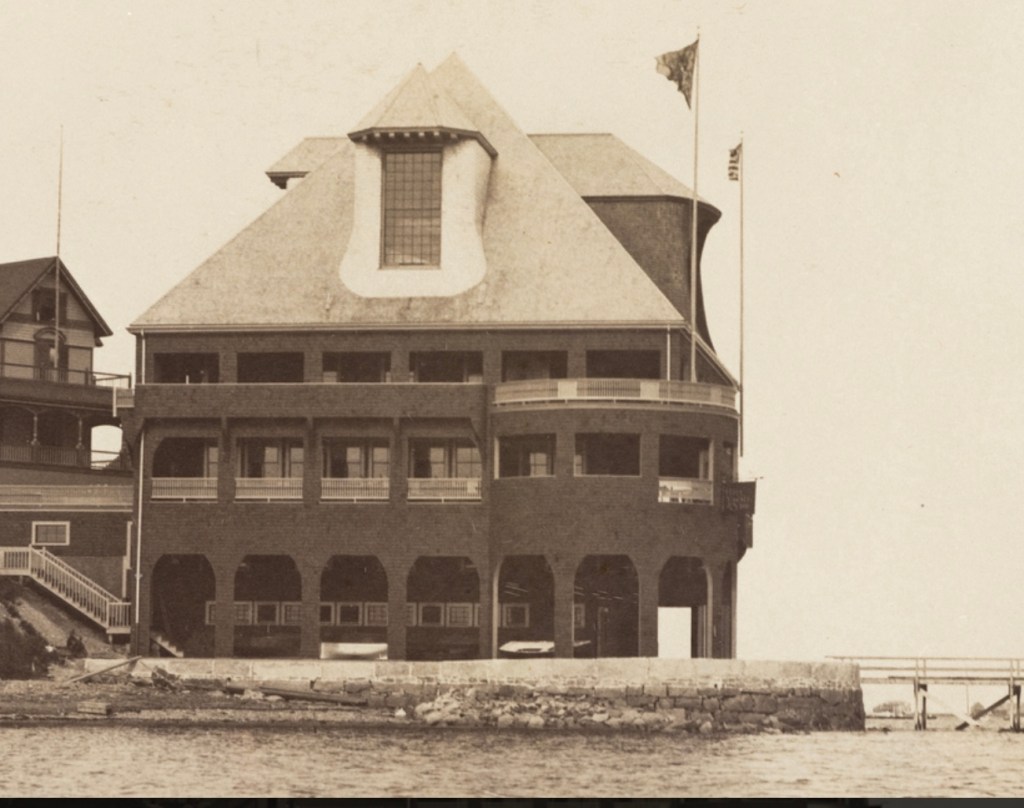
c.1891 image of second Hull Yacht Clubhouse, Stebbins Collection, HNE

In the Spring of 1880, thirteen Hull, Massachusetts, summer residents, who owned and raced small sailboats, met and decided to form a yacht club. The Hull Yacht Club was founded that same year. During the first two seasons there was no club house, sailing events were run from a private pier and dock and meetings were held at members homes. Even though they started with no club house, being close to Boston with plenty of deep, protected water, drew many new members. The first clubhouse here was constructed in 1882 and the club saw membership soar to over 500. The clubhouse was quickly deemed inadequate for the Boston-area elite and their massive sloops. The second Hull Yacht Club was completed in May 1891. The New York Times and Outing Magazine described the new club as one of the grandest yacht clubs in America, and at the time, it had the second highest membership in the country! The main club house was designed by architect S. Edwin Tobey, and stood four stories, with a 12 foot wide piazza on three sides covered by endless expanses of shingles. The third floor had billiard rooms and public and private dinning, committee room, reading room, wine room, The second floor housed three bowling alleys, and the first floor had lockers, showers, laundry, spar storage. The club merged a couple times over the subsequent decades, but suffered heavily due to the Great Depression, when the Gilded Age monies stopped flowing as freely. The club sold the massive shingled building to developers who sought to convert the building into a resort, but it was deemed a fire hazard and razed in the 1930s. The club erected a new, modest clubhouse near Point Allerton later.