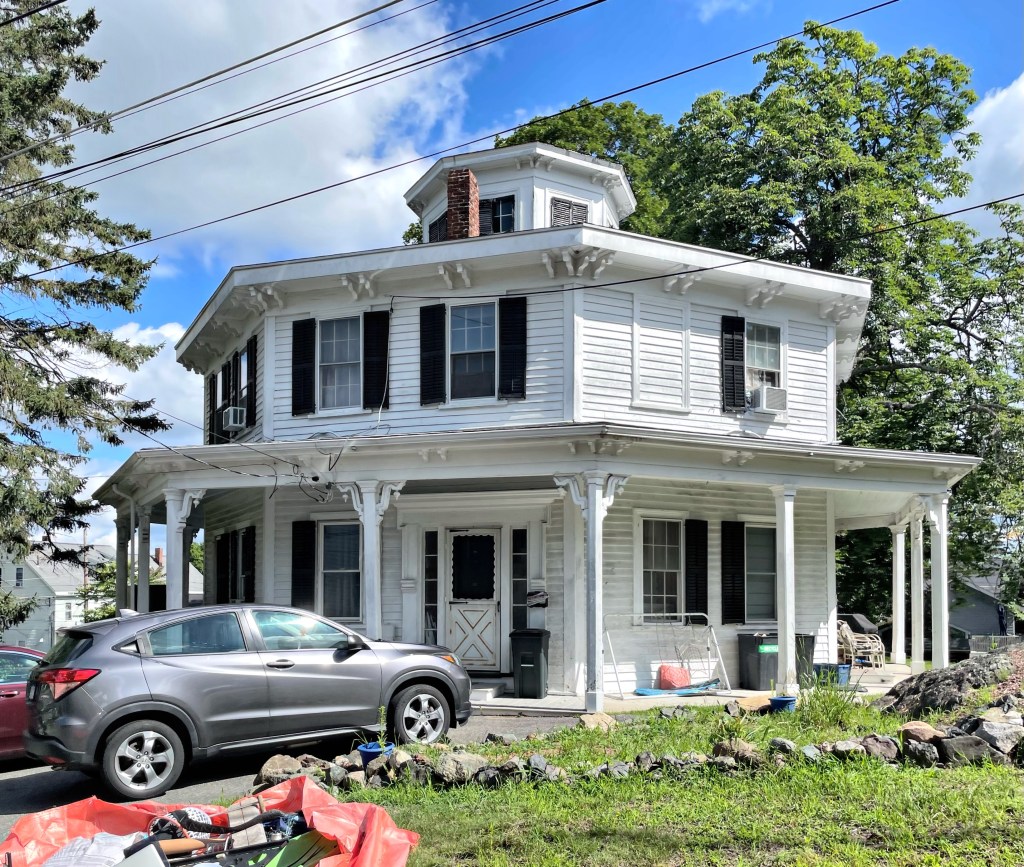
Enoch Fuller Octagon // c.1850

Oh the Octagon! The very rare Octagon house was a unique house style briefly popular in the 1850s in the United States and Canada. The style can generally be traced to the influence of one man, amateur architect and phrenologist Orson Squire Fowler. In his book, The Octagon House: A Home for All of 1848 (and reprinted with more photos in 1853), Fowler advocated for the shape’s benefits for buildings in that the octagon allowed for additional living space, received more natural light, was easier to heat, and remained cooler in the summer. These benefits all derive from the geometry of an octagon: the shape encloses space efficiently, minimizing external surface area and consequently heat loss and gain, building costs etc. Some were convinced and built Octagon houses, but the style and its brief period of popularity, died by the 1860s. This example in Stoneham, Massachusetts was built around 1850 for and by Enoch Fuller, a close personal friend of P. T. Barnum, founder of the Barnum & Bailey Circus. Fuller visited Barnum’s octagonal home in Bridgeport, Connecticut and he decided to construct an octagon house in Stoneham. The home was owned by Col. Gerrry Trowbridge not long after completion. The home was built with a fireplace in every room, a spiral, “flying” staircase, and a sweeping veranda.
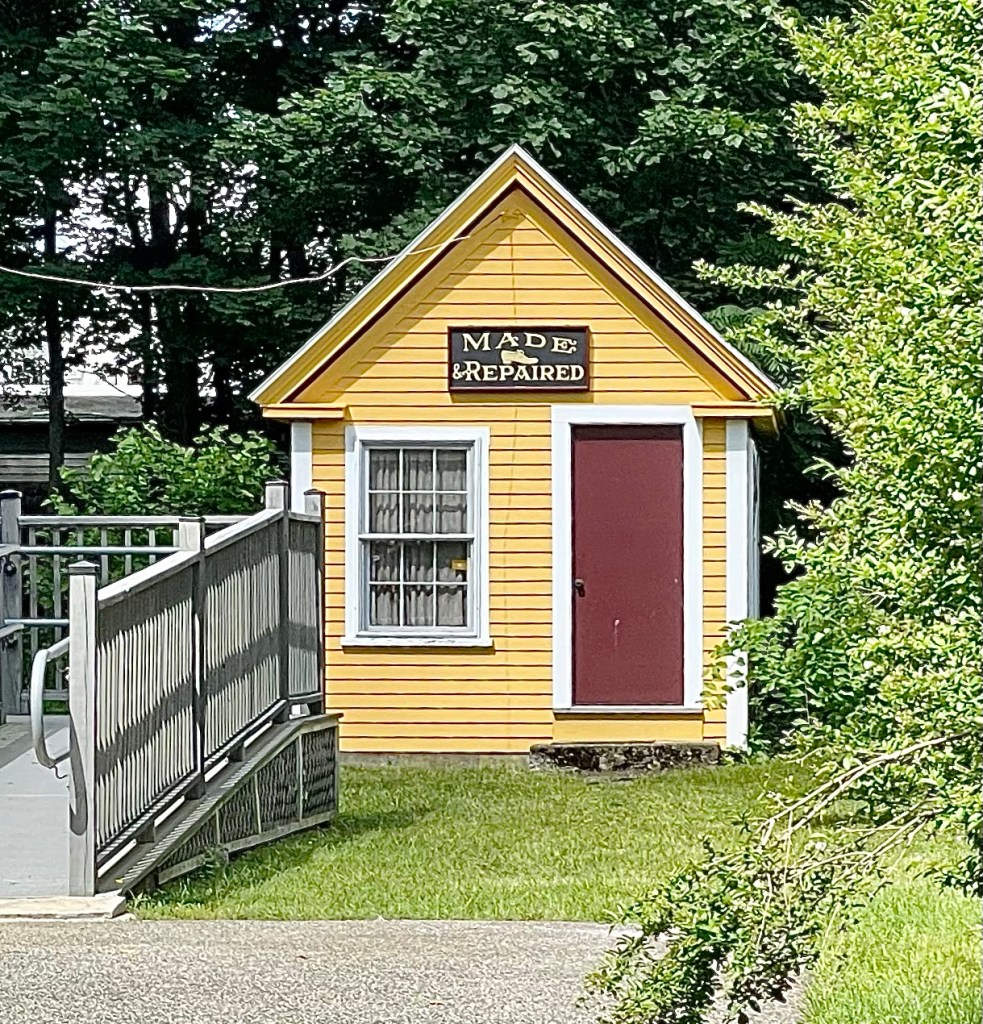
Doucette Ten-Footer // c.1850

Here is a building type many of you may not know of… the Ten-Footer! This 10 x 10-foot square building is a well preserved example of a kind of shop historically used by many shoemakers in the late-18th to mid-19th centuries. In Stoneham during the 19th century there were many such shops scattered throughout the town as the area became a sort of hub for shoemaking. In the age before and just after the Industrial Revolution, many Massachusetts residents had home shops in the yards where family and neighbors could earn extra part-time money by doing piece work on shoes. These cottage industry shoe workers were paid for each pair of shoes delivered to the local distributor. Usually, the owner-shoemaker worked alone or with family members in the cramped space with materials like leathers, rubber, and straps stored in the attic space in a loft in the gable. This ten-footer was built in the mid 19th century and later owned by Peter Doucette, who ran a shoe shop here. The small building was eventually acquired by the Stoneham Historical Society and was moved behind their building, restored and it can better tell the story of the town’s rich shoemaking history.

Lorenzo and Mary Hawkins House // c.1870

Another of the charming mini mansard cottages in Stoneham, Massachusetts is this home, the Lorenzo and Mary Hawkins House. The home was built for Lorenzo D. Hawkins and his wife, Mary around 1870. Lorenzo worked as a shoe and elevator manufacturer in town and in Downtown Boston. The house is a two-story wood-frame structure with irregular massing. It has the classic mansard roof, an ornately decorated entry porch, heavily bracketed cornice, and round-arch windows in its dormers and front bay.

E. A. Durgin House // 1870

Would you just look at this house?! Massachusetts may have the most Second Empire/Mansard style houses in the United States, but some really stand out. This home in Stoneham, Massachusetts was built around 1870 for local shoe dealer Erastus A. Durgin. The mini mansard home is pretty typical besides the prominent square tower with a steeply pitched gable roof that stands over the entrance. Charming!

First Baptist Church of Stoneham // 1892

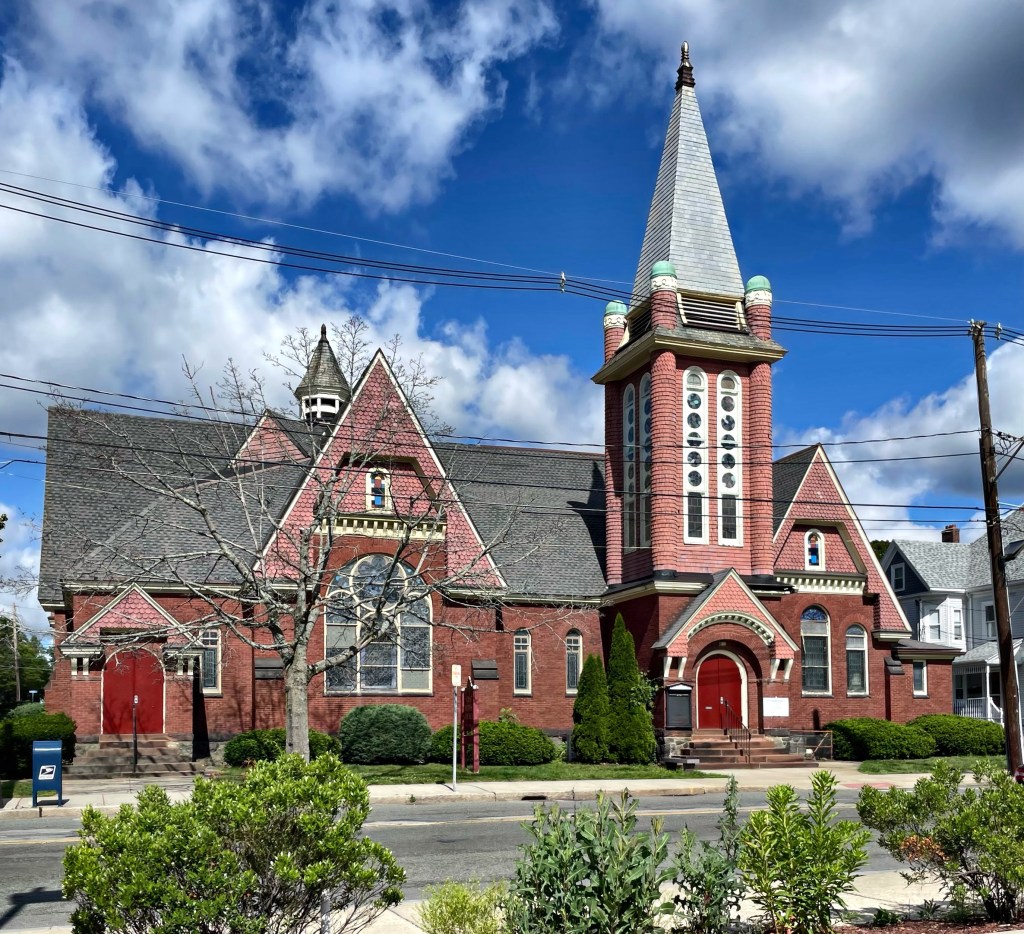
In 1891, the Baptist Society of Stoneham, Massachusetts unveiled that it had acquired funding and approved the plans for its first purpose-built church building in town. The organization met in a shared chapel in town since its founding in 1870. The new church would be unique in the Boston suburb as the only in town to be of the Queen Anne/Shingle style. A prominent site on South Main Street was acquired and work began in 1892 to erect the new house of worship. The design of the church is credited to the firm of L.B. Volk & Sons, a firm who specialized in church buildings with commissions all over the country. The church is complex in plan and combines brick and shingle siding in its construction with a prominent two-story tower with rounded corners and stained glass rondels (round windows).

Stoneham Fire Station // 1916

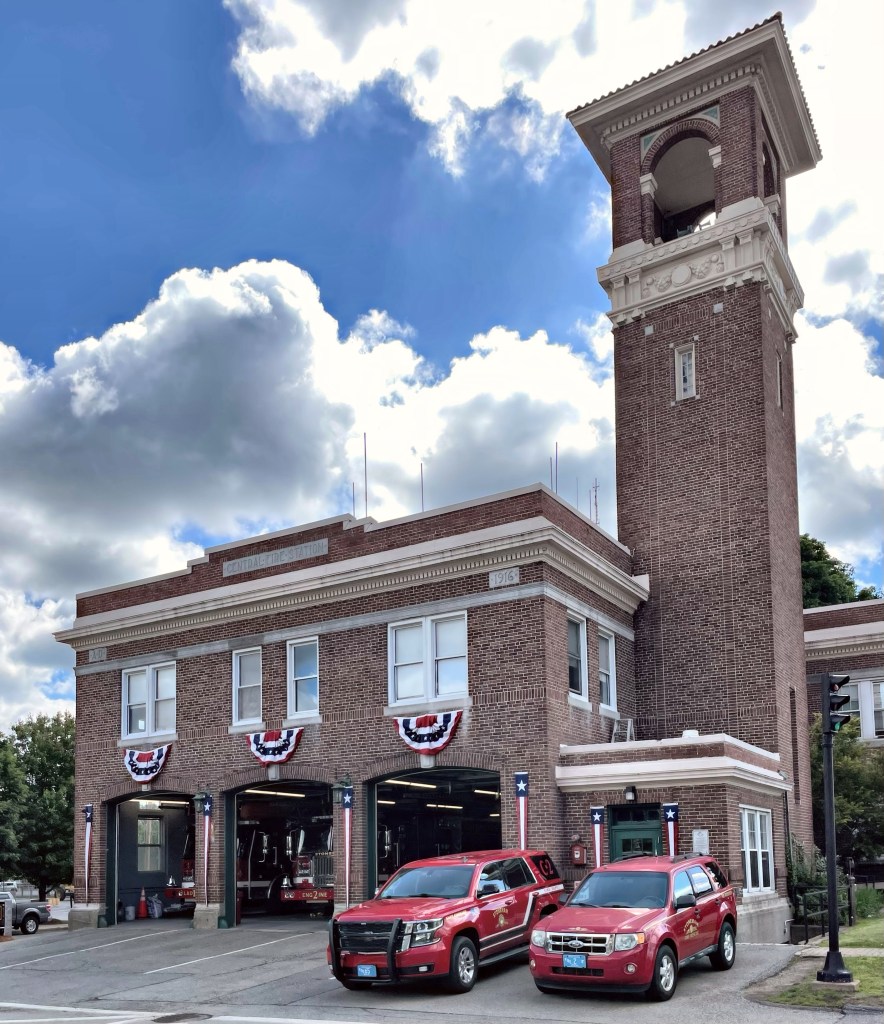
Fire stations are some of the most recognizable and iconic buildings in any city or town, but to find historic fire stations is becoming less and less common as larger trucks and facilities put a strain on the older buildings. The two-story brick Renaissance Revival fire station in Stoneham, Massachusetts was built in 1916 and continues to serve as the town’s central fire station. Its most prominent feature is its four-story hose drying tower, which is reminiscent of Italian Renaissance-era towers. The building was designed by architect Penn Varney and has been well-maintained by the town for over 100 years.

John Bottume House // c.1858

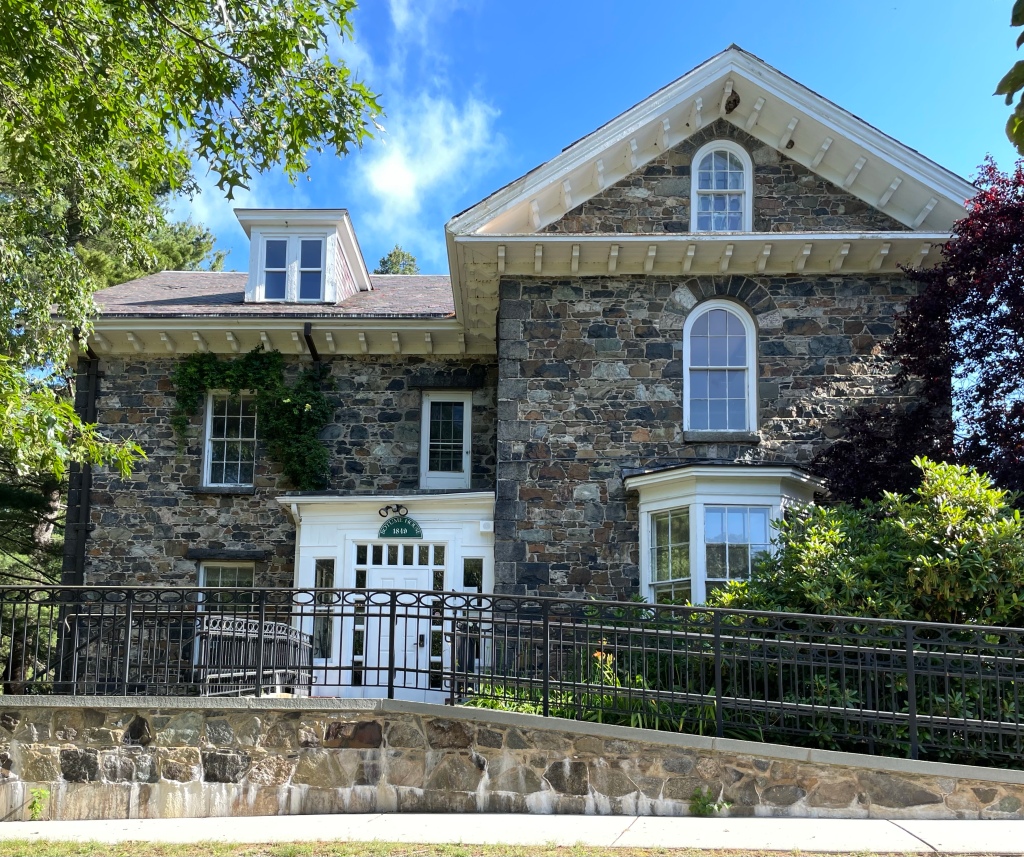
The John Bottume House in Stoneham, Massachusetts was built c.1858, this stone house was one of several built along the shore of Spot Pond by a Boston businessman as a retreat, and is the only one to survive. The coursed granite residence is an excellent and high-style example of the Italianate architecture style. It is owned today by the Massachusetts Department of Conservation and Recreation, and houses the visitors center for the Middlesex Fells Reservation.

Charles Copeland House // c.1875

Spot Pond, now encompassed by the Middlesex Fells Reservation, became a site of country retreats for Boston businessmen in the mid-late 19th century. One of the property owners was Charles Copeland, a confectioner and ice cream dealer, had ice houses on Spot Pond where he harvested ice for production into ice cream in Boston area shops. Copeland’s main house was located near the ice houses at the eastern shores of the pond, but this home was also owned by him in the 1870s. This residence was possibly rented out by Copeland or occupied by one of his many children. It remains a great example of the Stick and Shingle styles of architecture. The residence is maintained as part of the Massachusetts Department of Conservation and Recreation’s property in the Fells Reservation park.

Tudor Barn // c.1845

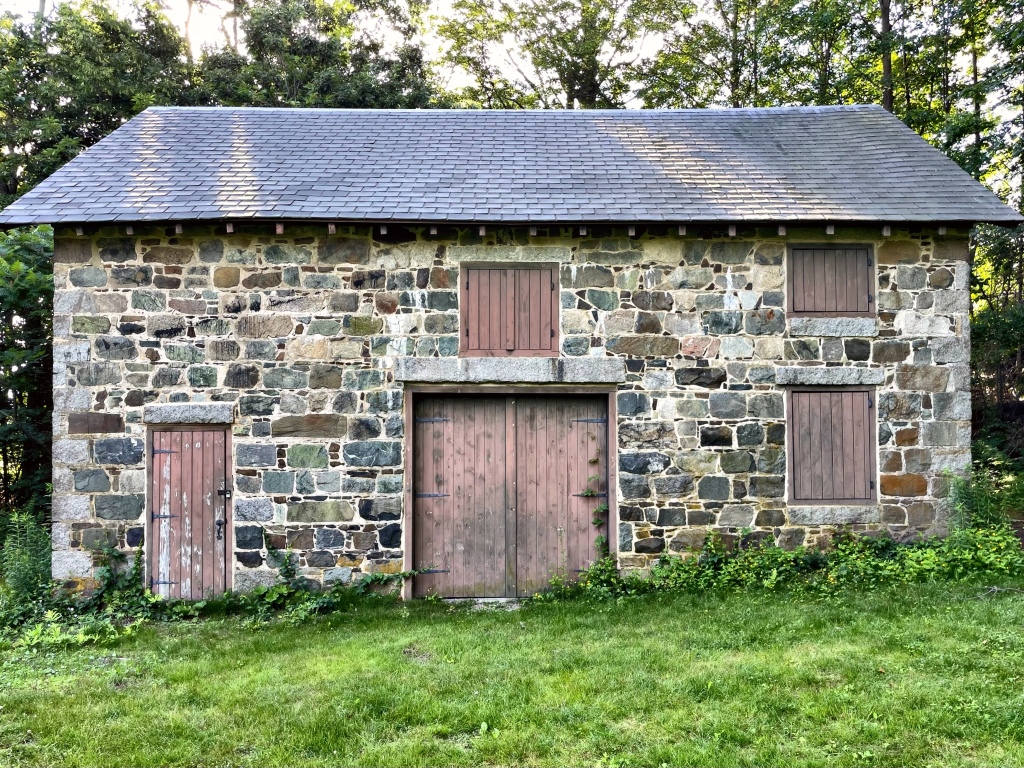
Built in the 1840’s as a carriage barn, and once attached to a nearby mansion now gone, this barn sits near the eastern shores of Spot Pond, a major feature in the Middlesex Fells Reservation, just north of Boston. The barn sits in Stoneham, Massachusetts, and was a part of Frederic Tudor’s rural estate out in the “country”. Frederic Tudor is best known as Boston’s “Ice King”, he was the founder of the Tudor Ice Company and a pioneer of the international ice trade in the early 19th century. He made a fortune shipping ice cut from New England ponds to ports in the Caribbean, Europe, and as far away as India and Hong Kong. After the turn of the 20th century, many of the buildings surrounding Spot Pond were razed as to secure the watershed, protecting the surrounding town’s drinking water. Frederic Tudors large estate was razed, but the barn survived. Years of deferred maintenance and lack of preservation by the late 1990’s made the old barn threatened with demolition. This was exacerbated by a fire damaging the roof and in 2003, a wall collapsed. Local preservationists rallied together to acquire funding (both private and public grants) to restore the building. It remains a highlight on the walks around Spot Pond and Middlesex Fells Reservation, and is a visual link to the earlier days in what was once remote “Boston”.

Spot Pond Gatehouse // 1900

The Middlesex Reservoir and Spot Pond are located just north of Boston and have long been a little piece of the outdoors near the heart of New England’s largest metropolitan area. In 1894, the Massachusetts Legislature established the Metropolitan Parks Commission, which was endowed with the authority to acquire, maintain, and make recreational spaces available to the public. By 1900 the new commission had acquired 1,881 acres for the reservation. Part of this reservation, Spot Pond, is a natural water feature that for a number of years was integrated into the Boston area public drinking water supply, servicing the towns of Stoneham, Melrose, and Malden with drinking water. As part of this, gatehouses were built with hardware to open and close the pipes delivering the water to the adjacent towns. This gatehouse is in Stoneham was built in 1900 by the architectural firm of Shepley, Rutan & Coolidge, to not only protect the machinery inside, but to beautify the parkland, then maintained by the Metropolitan Parks Commission. The Renaissance Revival style building is today surrounded by a tall chain link fence, which really diminishes its presence in the landscape (but it does help prevent graffiti).