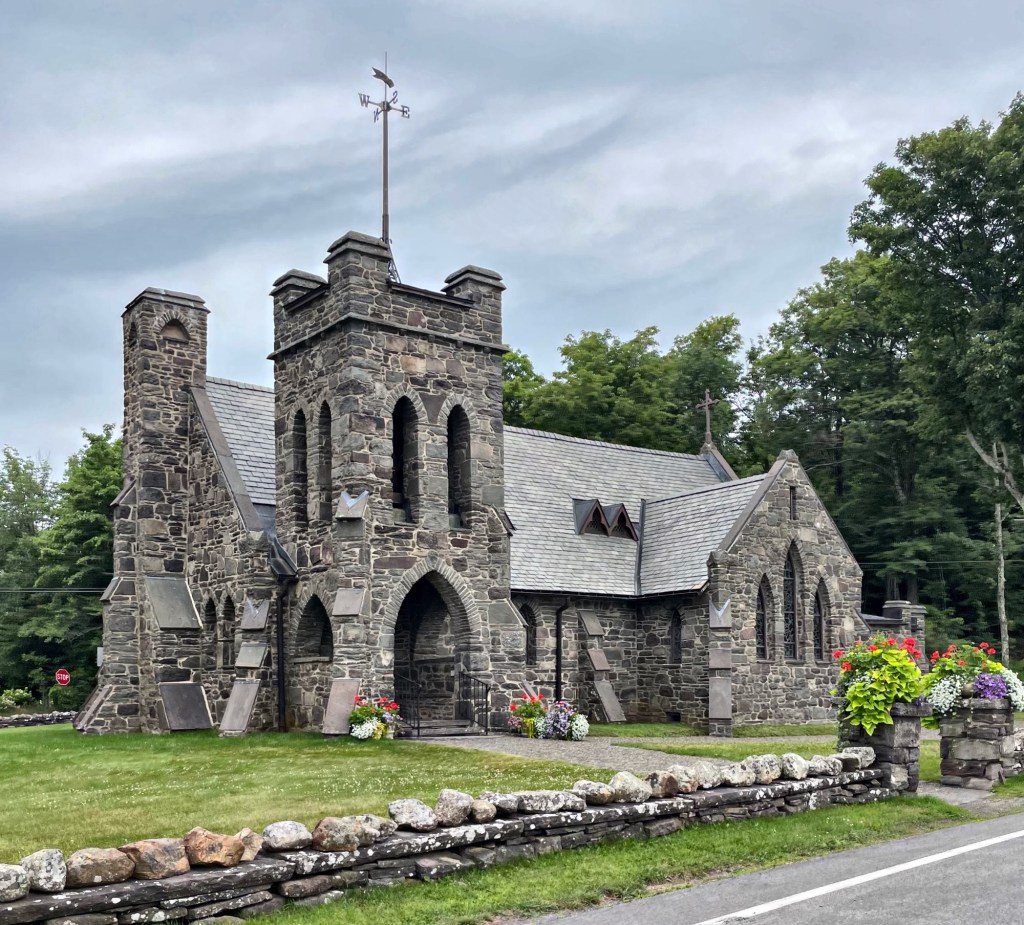
All Souls Church, Onteora Park // 1894

Onteora Park is one of many notable summer colonies in the Catskill Mountains that were developed in the late 19th and early 20th century. Onteora Park is located in Hunter, New York, and is comprised of a development of over 100 residential properties along with club buildings and the All Souls Church. The development of Onteora Park is largely credited to Ms. Candace (Thurber) Wheeler, one of America’s first woman interior and textile designers and co-founder of the Society of Decorative Art in New York City. In 1883, she and her wealthy brother, Francis Beattie Thurber, purchased land here with sweeping views of the Catskill Mountains, and built two summer houses for their respective families. By 1887, Candace Wheeler and her sister-in-law, Jeannette (Mrs. Francis B.) Thurber, decided to expand and develop their property as a vacation community of like-minded people dedicated to the arts. Years after the first cottages were built, Candace asked her son, Dunham Walker, an architect, to furnish designs for a community summer chapel. After the site had been secured, Canadian architect (and summer resident of Onteora) George Agnew Reid, was asked to put Mr. Wheeler’s plan into acceptable form and to supervise construction. The original wooden church was changed over to stone, all in a Victorian Gothic style. By 1910, the building was enlarged with the addition of the chancel and addition of transepts and possibly the square bell tower. At this time, the church was also electrified. Today, the church is lovingly maintained and open for the summer season and special ceremonies.
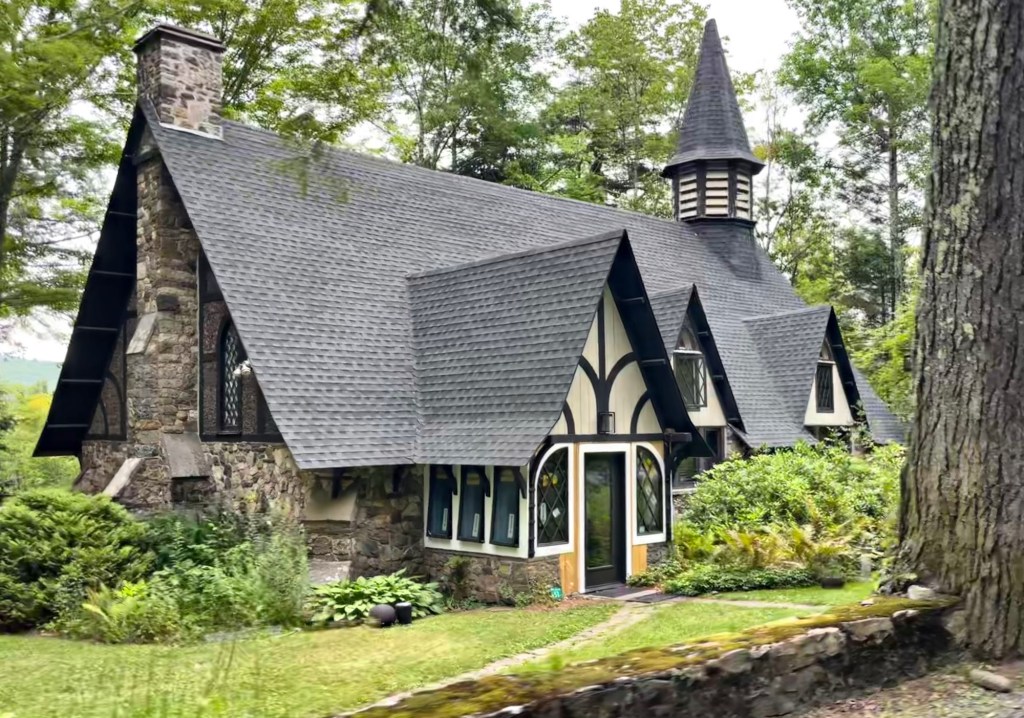
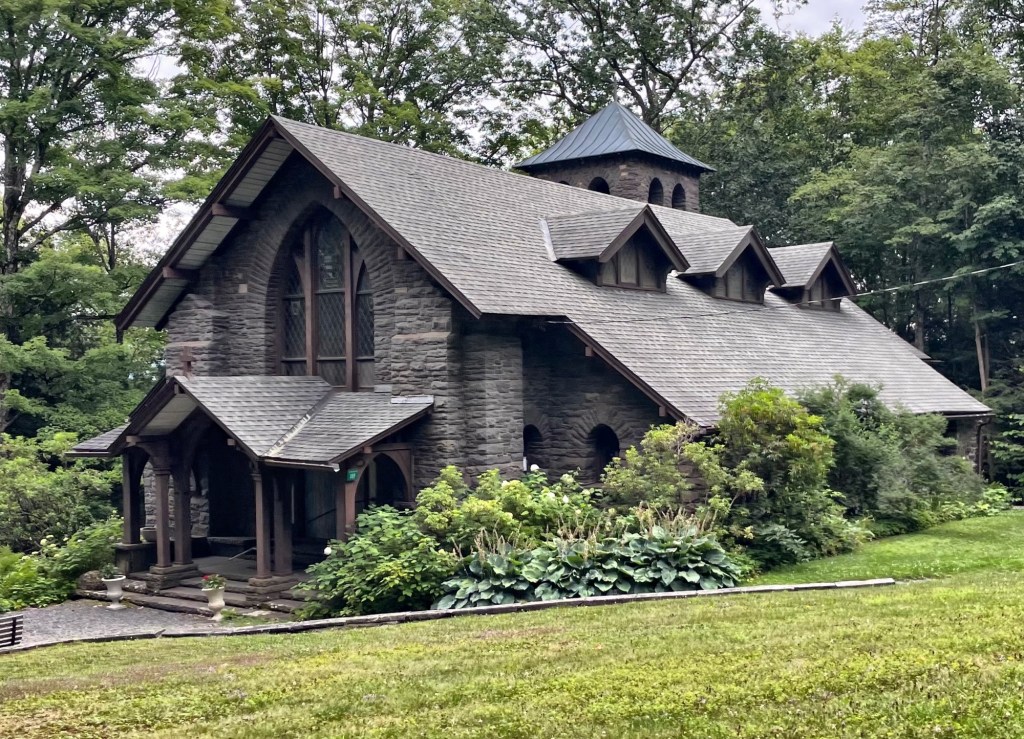
Union Chapel, Twilight Park // 1897

The Union Chapel in the summer colony of Twilight Park in the Catskill Mountains of New York, is one of the finest late Victorian chapels in the region. The edifice was built in 1897, a year following the erection of the All Angels Episcopal Church, in Twilight Park, and was designed to complement the rustic character of the surrounding cottages. The chapel was built as a non-denominational, or Union church, for summer residents of the colony who preferred an alternative to Episcopal sermons down the dirt road. The church was designed by Alice Hands, of the New York firm Gannon & Hands, the first all-female architectural firm in the United States. The chapel was eventually closed in 1970 and converted to a private residence, with some stained glass windows donated to the Episcopal Church in Twilight Park.

Memorial Church of All Angels, Twilight Park // 1896

The Memorial Church of All Angels is located in the center of the summer colony of Twilight Park, found in the town of Hunter in the Catskill Mountains. The founding of the church began shortly after the colony was established in 1888, when two years later, the Rev. H. M. Baum from Evanston, Pa., an early visitor to the Park, realized the need for an Episcopal Church, and funds were raised to build a small chapel, known as the St. Paul’s Church. The church was foreclosed upon in a matter of years. In 1895, church services were again reinvigorated when the Rev. Henry Yates Satterlee, the first bishop of Washington, then the Rector of Calvary Church, New York, had taken the cottage of his cousin, the artist Walter Satterlee, for his summer home. He set out to establish a summer chapel for Episcopalians in Twilight Park, and he hired architect Alexander Mackintosh, to furnish plans for the church. The church opened in 1896, and it would be expanded in 1909 with an addition and porch and again in 1915 with the belltower. The church opens every summer for services and is one of the finest Episcopal chapels in the Northeast.

All Saints by-the-Sea Episcopal Church // 1905

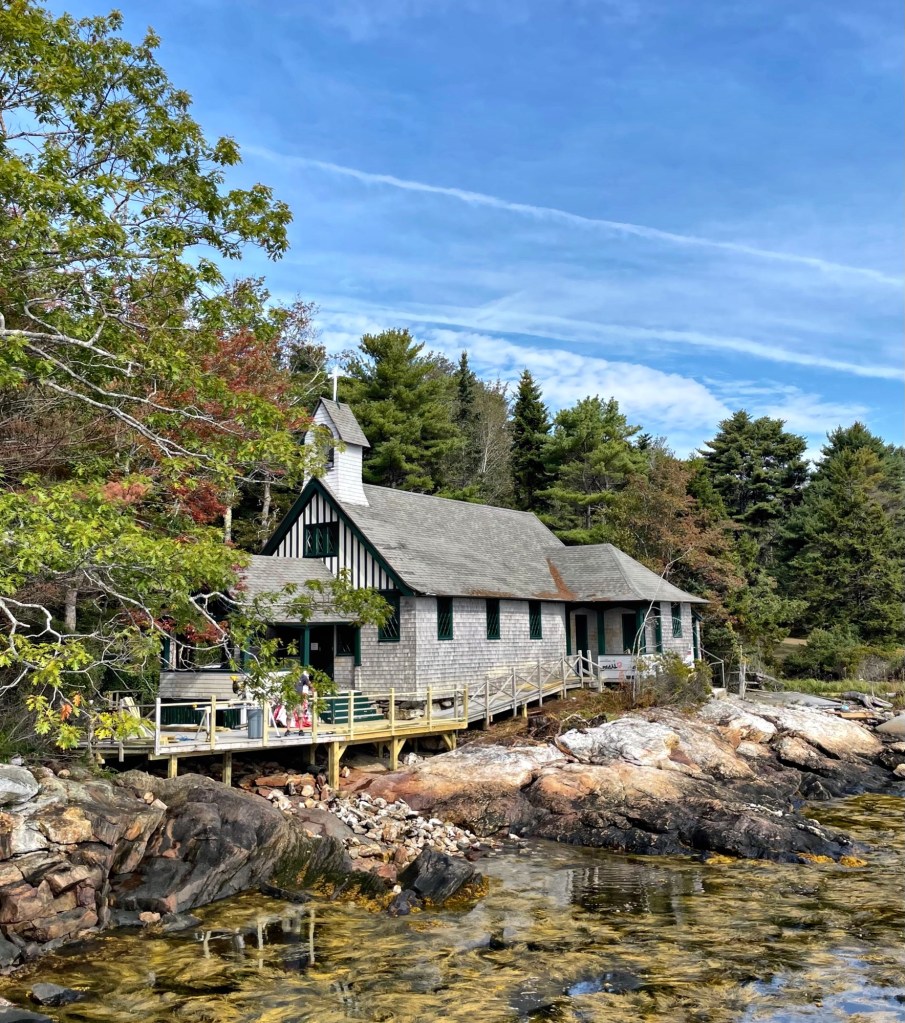
Possibly my favorite type of building in Maine are the historic Episcopal summer chapels that sprouted up along the coast in the late 19th and early 20th centuries. This is the All Saints by-the-Sea Episcopal Church of Southport, Maine, an island community with many summer residents. This church had its beginnings when Reverend John Thomas Magrath of Gardiner, Maine, would visit Southport in the summers and hold services for rusticators under the oak trees or in the cottage living room if the weather was poor. Eventually, a member of the congregation purchased a lot on the east side of Southport on the rugged coastline, and planning began for a chapel. In 1905, the chapel was designed by architect, Albert Hall in a rustic blending of the Shingle and Tudor styles. The building exhibits shingle siding with half-timbering, the original diamond-pane windows, and a large entry porch off the entrance.

Wildwood Baptist Chapel // 1910

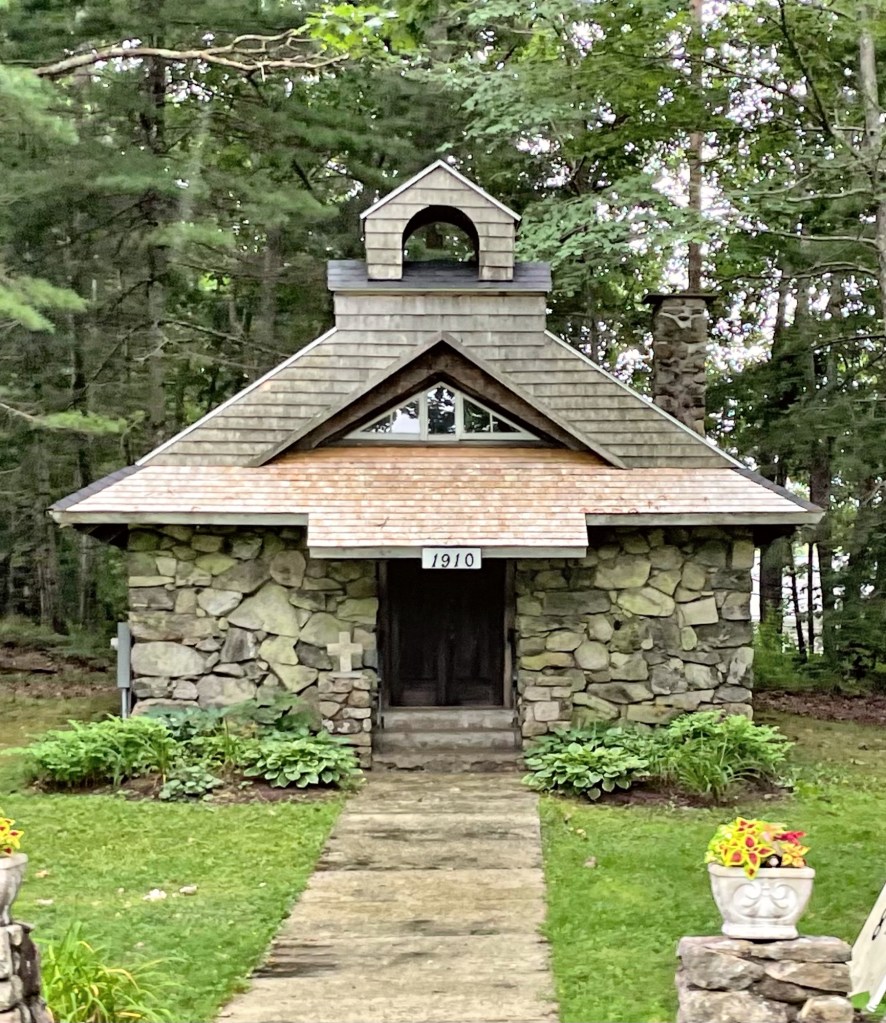
Tucked away on a wooded lot, away from the main villages of Kennebunkport, Maine, the Wildwood Baptist Chapel sits on the side of the road looking like a scene from a storybook. The chapel was built in 1910 for Baptists residing in the Wildes District of town, between the busier Kennebunkport Village and Cape Porpoise. The stone used in the construction of the chapel was taken from nearby properties and assembled on site by a skilled mason who built the walls with a Shingle style roof. Services here were limited and eventually ceased in earnest in 1935, as personal automobile allowed residents to travel to the church in the village for services. The poorly insulated chapel and small fireplace made the sanctuary inside difficult to heat in the cold winter months. The chapel is maintained well to this day, and is primarily used for summer services and special events.

St. Margaret Catholic Summer Chapel // c.1895

When the Grindstone Neck Summer Colony of Maine was in full-swing, wealthy summer residents would frequent the colony’s Episcopal chapel (featured previously). What the summer residents did not really plan for was the influx of other residents as summer staff, largely Irish servants who in large part were Catholic. As a result, the St. Margaret Catholic Chapel was built to provide a house of worship, largely for those summer workers on Grindstone Neck. Keeping with the rustic architectural character of the colony, the chapel was designed in the Shingle style. I could not find any information on the architect, so any additional insight would be greatly appreciated!

St. Christopher’s-by-the-Sea Episcopal Church // 1892

In 1891, a proposal was made to build a summer Episcopal chapel, to be known as St. Christopher’s by the Sea, on Grindstone Neck in Winter Harbor, Maine. This project was supported by local area residents and by the summer community on Grindstone Neck. The construction of the church started in 1892, but it was not until August 6, 1893 that the first service was held in the chapel. The Rev. Julius Atwood, rector of St. James’ Church in Providence, Rhode Island, officiated and preached the first sermon. The church was designed by Lindley Johnson, a Philadelphia-based architect who also summered in a cottage on Grindstone Neck and designed other cottages in the colony. The Shingle style chapel is architecturally unique and rustic, a quality which is also visible at the interior, which is rustic in appearance with exposed beams and shingled walls.

Church of the Holy Redeemer // 1907

Built to replace the former St. Sylvia’s Catholic Church (1881-1909), the Church of the Holy Redeemer in Bar Harbor stands as one of the more imposing religious buildings in town. The new church was envisioned by Rev. James O’Brien, who wanted a larger church structure closer to downtown Bar Harbor than the current St. Sylvia’s. The Neo-Gothic stone church was designed by Bangor architect Victor Hodgins, and was constructed from granite blocks quarried from Washington County, Maine. Inside, massive trusses from felled cyprus trees nearby support the roof and stone walls. Gorgeous stained glass windows line the walls which flood the interior with color.

St. Rita’s Roman Catholic Church // 1916

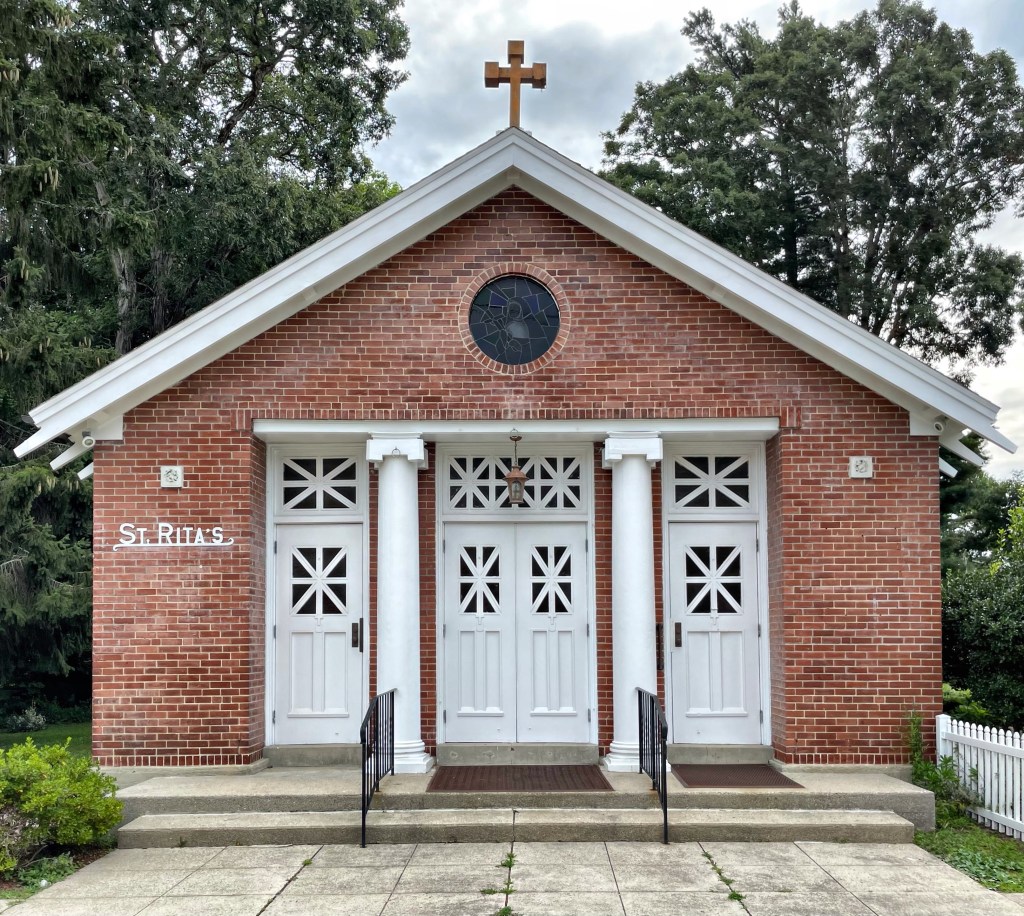
A Roman Catholic parish was established in the South Coast/Cape Cod area by 1830 in Sandwich, where a large glass company employed a number of Irish immigrants. Over the course of the 19th century, several mission churches were established, and eventually a second parish, St. Patrick’s, was established in Wareham in 1911. Soon after, a mission was established in nearby Marion to serve the summertime Catholic community there. A parcel of land was acquired by the Roman Catholic Bishop of Fall River and they hired architect Matthew Sullivan to furnish plans for the small church. Matthew Sullivan (1868–1948) trained in the office of Edmund M. Wheelwright, Boston City Architect (1891-1894). Sullivan succeeded Wheelwright as City Architect and served in that position from 1895 to 1901, when he became a junior partner in the firm of Maginnis, Walsh and Sullivan, which was widely known for its ecclesiastical work, where he too specialized in religious buildings. St. Rita’s Roman Catholic Church is an example of an early 20th century chapel in the Craftsman style, characterized by eaves marked by long projecting rafter tails and a bold entry framed by Tuscan columns.

St. Andrews-by-the-Sea // 1876

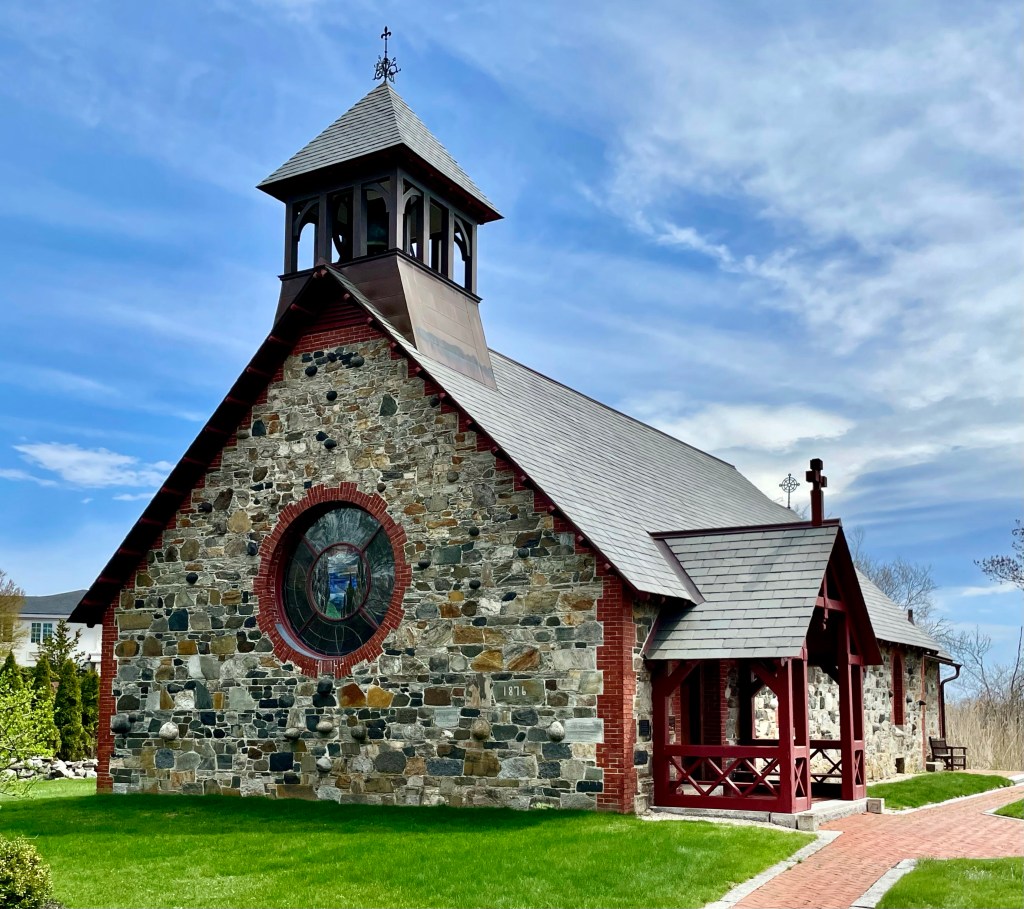
In the mid-to-late 1800’s, Rye Beach on the coast of New Hampshire was a popular summer residences for wealthy families from New York, St. Louis, Chicago, and other mid-western cities. Church services were important to these summer residents who united together to build this chapel, which before its construction, had to go to services at the casino in the colony (not ideal). Generally, wealthy summer residents here brought their household staffs, who lived in the many hotels and boarding houses along the beach. Some of these servants and employees of the hotels were African-Americans, who used St. Andrew’s for their own worship services and meetings. The summer chapel was built in 1876, completed that next year and is one of the most stunning chapels I have seen in New England. St. Andrew’s was designed by the architectural firm of Winslow and Wetherell. It is a unique example of a small rural stone chapel embellished by wooden trim and owes much to both the Stick and late Gothic styles. English country parish churches clearly inspired the chapel’s design and the use of rubblestone construction (likely of stones that were taken from the site) makes the building pop! Oh and that rose window at the facade!