West Gouldsboro Village Library // 1907

One of the few libraries in Maine built in the Tudor Revival style can be found in the quaint coastal town of Gouldsboro. This library was built in 1907 from plans by Maine architect Frederick L. Savage after members of town sought a community space where they could meet and check out books. The small one-story building sits upon a tall fieldstone foundation and with a stuccoed exterior above. The entrance consists of a single door flanked by sidelight windows topped by an elliptical hood, above which sits within the half-timbered gable front. The small library was in operation until 1956. It reopened briefly in 1990, but closed again. It is owned by the West Gouldsboro Village Improvement Association. Historic library buildings are the best!

Hastings House // c.1941

Many neighborhoods in New England held on to historical revival styles even when the International style and Mid-Century Modern homes began to proliferate all across the region. Some owners (even today) prefer traditionally designed houses to blend into their surroundings and historical context. This charming gingerbread Tudor Revival style house in Fairfield is one of them! The Hastings House was built in 1941 and designed by the powerhouse design couple of Cameron Clark (architect) and Agnes Clark (landscape architect) who designed and renovated properties all over Fairfield. The house is notable for its use of stucco with half-timbering, steeply pitched roofline, red tile roof, and more Colonial-inspired door treatments.

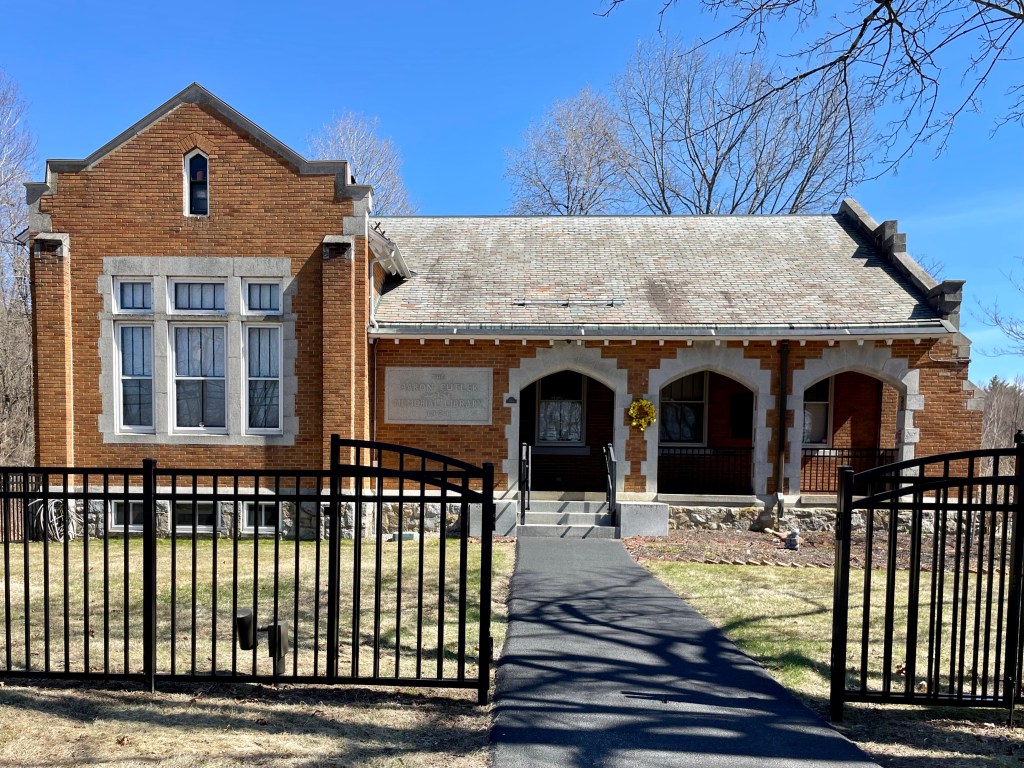
Aaron Cutler Memorial Library // 1924

In his 1917 will, Aaron Cutler of Hudson, N.H. left his estate to family and friends with his remaining estate to be bequeathed “for the purpose of the erection, furnishing and maintenance of a Public Library, upon the express condition that the citizens of said town give land upon which to erect the same. Said land to be located within one-quarter of a mile of the town hall. Said Library to be of brick and slate. And to be known as “The Aaron Cutler Memorial Library.” His town of Hudson recently erected a memorial library, so he sought to fund a library in an adjacent municipality. Land was donated in Litchfield for a new library there and architect William M. Butterfield furnished plans for the building. The library was completed in 1924 and exhibits Tudor/English Revival design, unique for the town.

Rose and Howard K. Hilton House // 1900

Tudor Revivals may just be my favorite style of house. The interesting roof forms and gables, the use of stone, brick or stucco, and the presence of garrisoning and half-timbering in designs are always so charming. This enchanting Tudor Revival home in Providence, Rhode Island, was built in 1900 by local architect Howard K. Hilton (1867-1909) as his personal residence with wife Rose. He first worked in the office of H. W. Colwell and continued his training under Ellis Jackson joining him in partnership (Jackson & Hilton) and under the firm name was identified with the design of several churches, schools, hospitals and various other buildings in his native city before he retired in his final years. This home is very unique for its site on a narrow urban lot with the door at the side, brick first floor with jettying at the second floor of wood construction with half-timbering. While writing this, I noticed that there are also projecting gargoyles which serve as water spouts to send water away from the structure during rainfall events. Tudors are really the best!

Harriswood Crescent // 1889

Harriswood Crescent was built in 1889-90 at the height of Roxbury’s development as a streetcar suburb which coincided with the electrification of the streetcar lines in Boston. The area of Roxbury in which the Crescent is located, known at the time as Boston Highlands due to its rocky terrain and steep grades, was an extremely desirable residential location. As land values raised, middle and upper-class families looked for varied housing types that fit their demands. Seen as a great investment of the family estate, the heirs of wealthy businessman Horatio Harris (1821-1876) redeveloped lots on one side of a rocky park for fine townhouses, which were named Harriswood Crescent. The name was probably chosen for its historical associations with Boston’s Tontine Crescent and the great Georgian crescents of London and Bath in England. Architect J. Williams Beal designed the row, which was one of his first commissions upon returning to Boston in 1888 after employment as a draftsman at McKim, Mead & White and a long study in England to view architecture. Built at 15 separate units, the row of Tudor style houses is among the only of such developments in Boston, and New England at large.

LeClear House // c.1915

Waban in the late 19th and early 20th centuries was a hotbed for architect-designed houses as their own residences. This Colonial Revival/Tudor Revival style estate was designed by Gifford LeClear (1874–1931), a prominent architect in the Boston area. Gifford LeClear was born in Rutherford, New Jersey to Thomas and Cornelia (King) LeClear. He was educated in the private schools in Boston before entering Harvard University. He graduated with a Bachelor of Arts degree in 1895 and Master of Arts in 1896. He then worked for a year in the engineering department of the West End Street Railway before forming his partnership with Densmore in 1897. The partnership of Densmore & LeClear was formed in April 1897, practicing as mechanical and electrical engineers. One of the firm’s major projects in this role was the design of the building systems for the new campus of the Harvard Medical School in Boston.

James R. Bancroft House // 1924

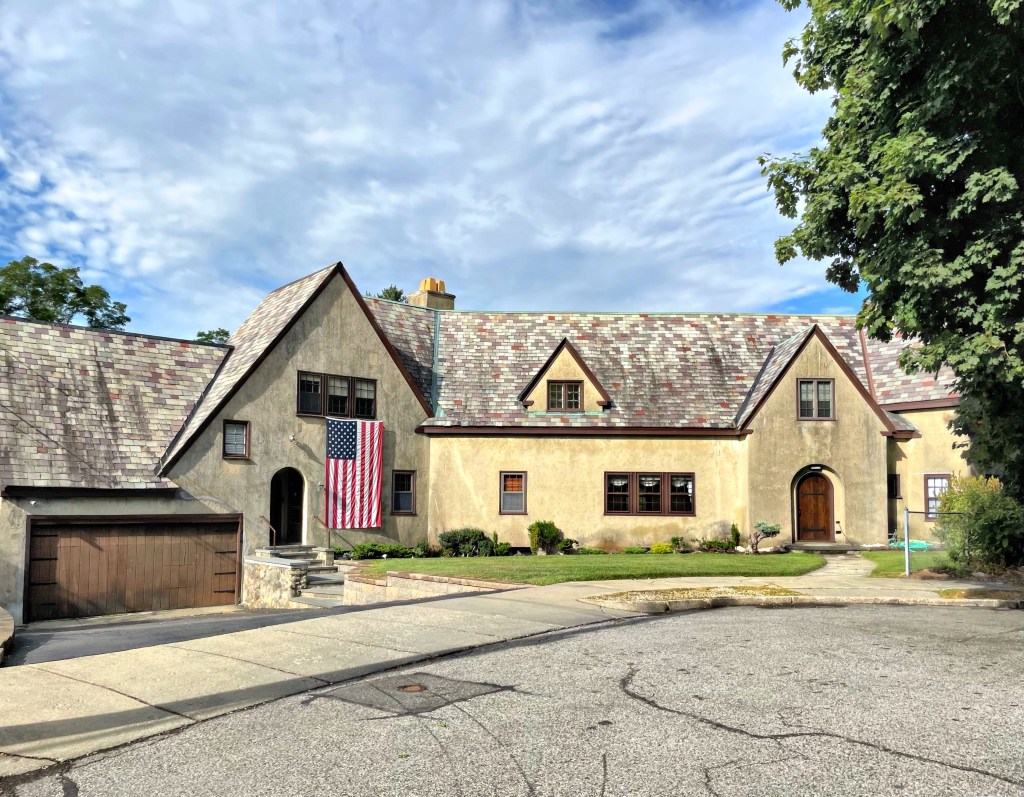
At the very end of Windsor Road in Waban Village, Newton, you will find this large, stuccoed Tudor home. The property was one of the last developed on the street and was designed by Newton-based architect William J. Freethy. The first owner of the house was James R. Bancroft, a nationally known economist who taught at Boston University and for years served as President of the American Institute of Finance. The Bancroft House is a refined example of the Tudor Revival style with stucco siding without half-timbering or other masonry detailing which is seen in so many other examples nearby.

Emmett House // 1917

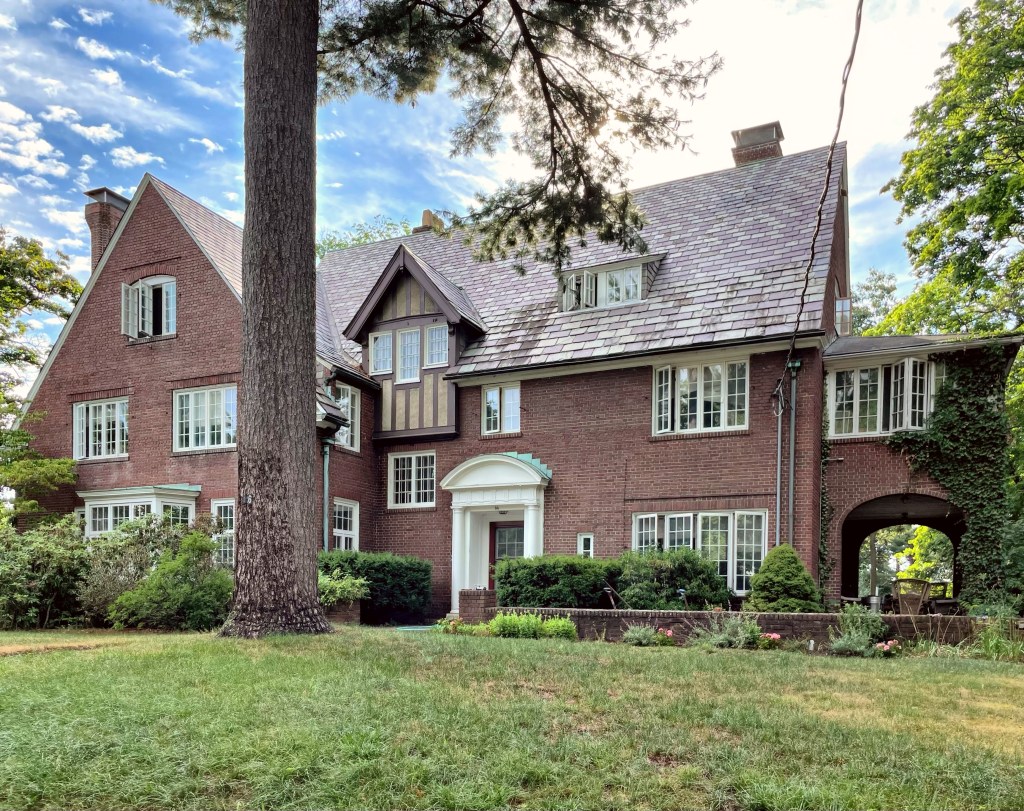
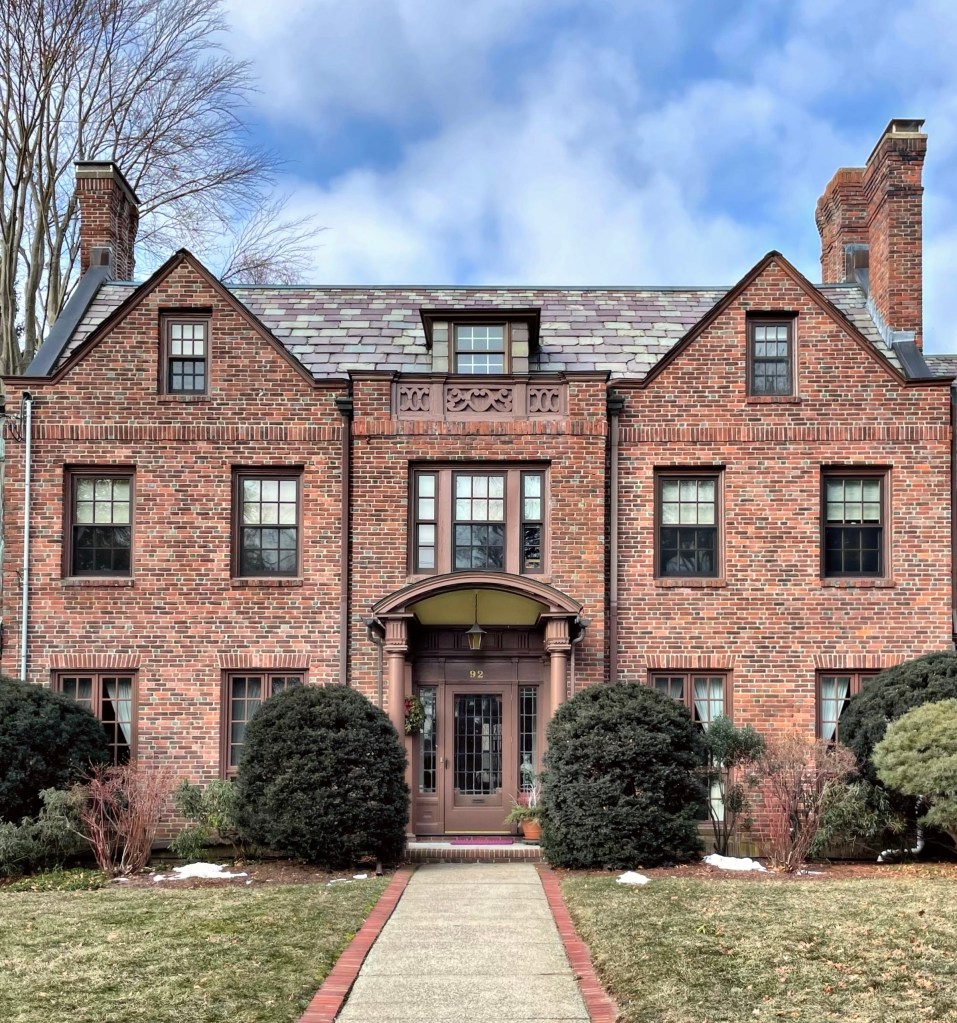
This refined brick Tudor Revival house in the Waban Village of Newton was built in 1917 for Lila and James Emmett. The couple hired Boston architect Edward B. Stratton to furnish plans for the home, which fits in to the early 20th century neighborhood. The symmetrical home has two gables at the facade which frame the central bay with a segmental pediment at the entrance.

Windle House // c.1912

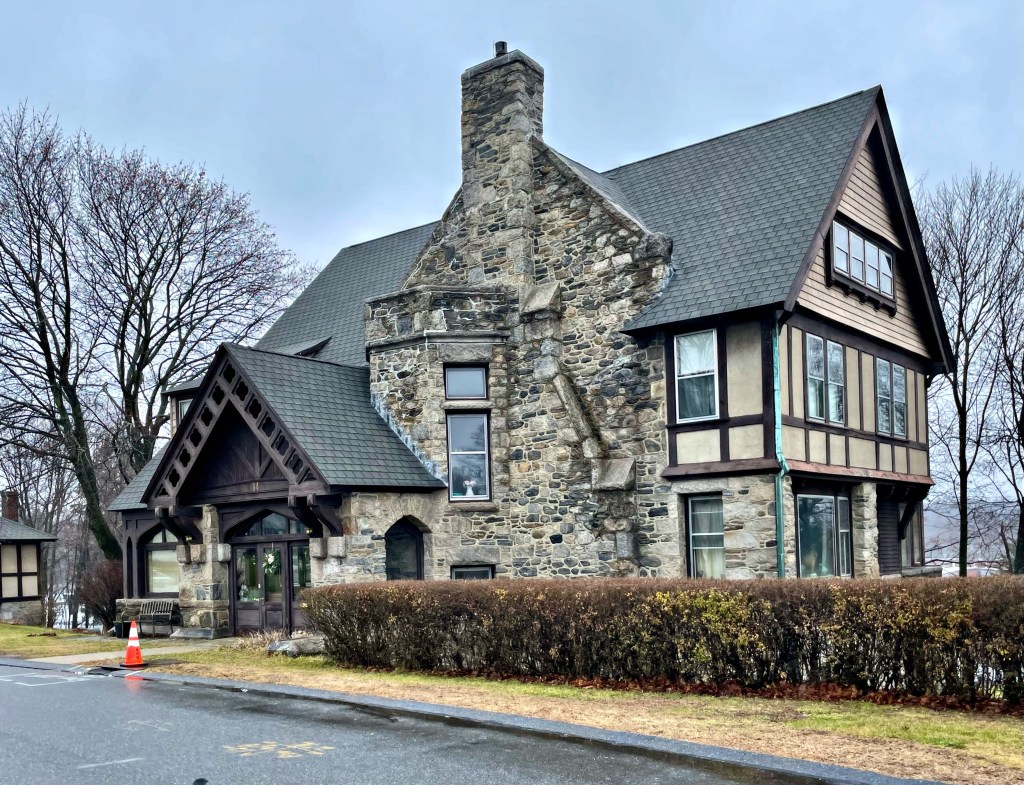
William “Willie” Winfred Windle (yes that is a real name) was born in Millbury at the height of the town’s industrial growth and prosperity. He ran the W.W. Windle Mill just west of downtown and with his wealth, was able to buy a house lot on one of the most fashionable residential streets in town. His home was built in the early 20th century and is a stunning example of Tudor Revival architecture. In 1911, Windle traveled to England to inspect mills there and was likely inspired by some of the residential architecture he viewed on the trip. The house elegantly blends stone walls with half-timbered wood, with a prominent entry. The timber and stone entrance porch which has decorative bargeboard and corbels, has been enclosed. The home remained in the Windle family at least into the 1940s, when it was occupied by William Winfred Windle’s son, Winfred Woodward Windle. By the 1970s, the home was occupied as the Millbury Society of District Nursing.

Fairholme // 1875

One of a handful of massive summer cottages in Newport that have always remained a single-family house is this beauty, known as Fairholme. Originally built in 1875, the summer cottage was built in the popular Stick style for Philadelphia arts patron and engineer Fairman Rogers by architect Frank Furness, also of Philadelphia. The estate was purchased, expanded and modernized at the turn of the 20th century by Philadelphia banker John R. Drexel (1863-1935) and his wife, Alice Troth (1865-1947). It is likely that Philadelphia architect Horace Trumbauer was hired by the Drexel’s to modernize the home, as he was hired in 1903 to design their Manhattan townhome. The enlarged home in the Tudor Revival style saw a couple successive owners, all uber wealthy bankers and industrialists. The waterfront mansion which neighbors The Breakers and Anglesea (both featured on here previously), sold in 2016 for $16.1 Million!