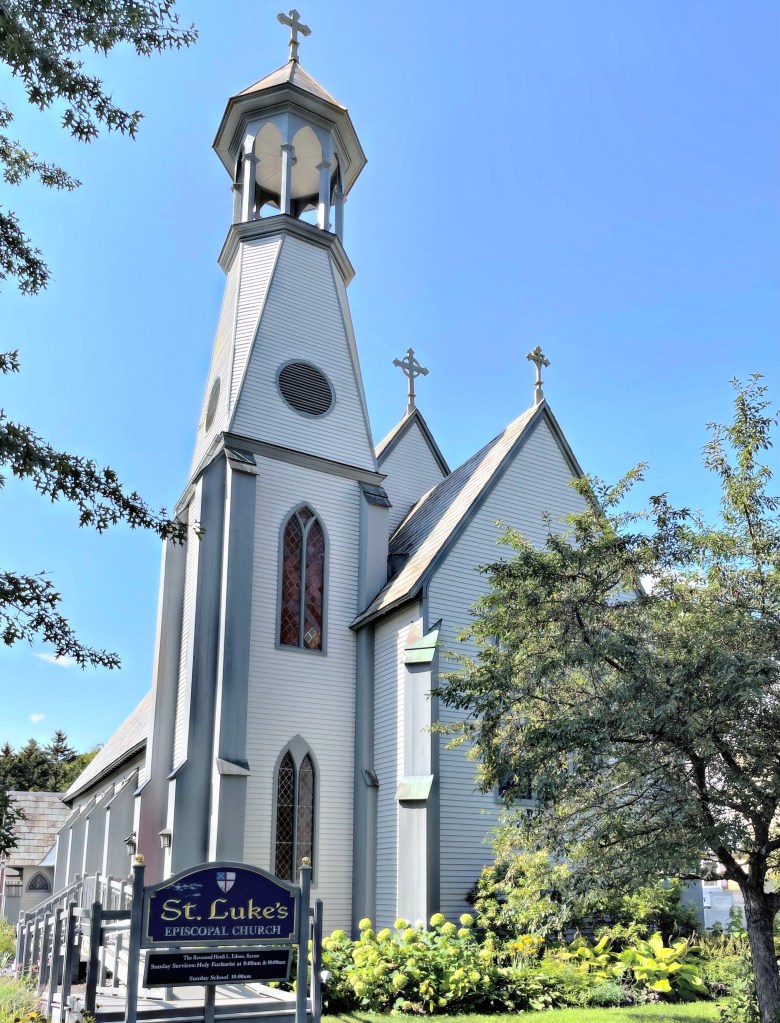
Next door to the Inn Victoria, the beautiful St. Luke’s Episcopal Church in Chester, VT, stands out as one of the only Gothic Revival buildings in the town. A small group of residents gathered in the 1860s to found a Episcopal church in the town, which already had a dominant Congregational church. They furnished money which was matched by the diocese, and Merrick Wentworth was named senior warden. Members of his family and that of Frederick Fullerton, his son-in-law, formed a large part of the congregation. Frederick and Philette Wentworth Fullerton donated a building site across the street from their home, and Mr. Wentworth’s nephew, Boston architect, William P. Wentworth, contributed plans for a Gothic-style frame church, which includes a tall corner belltower.
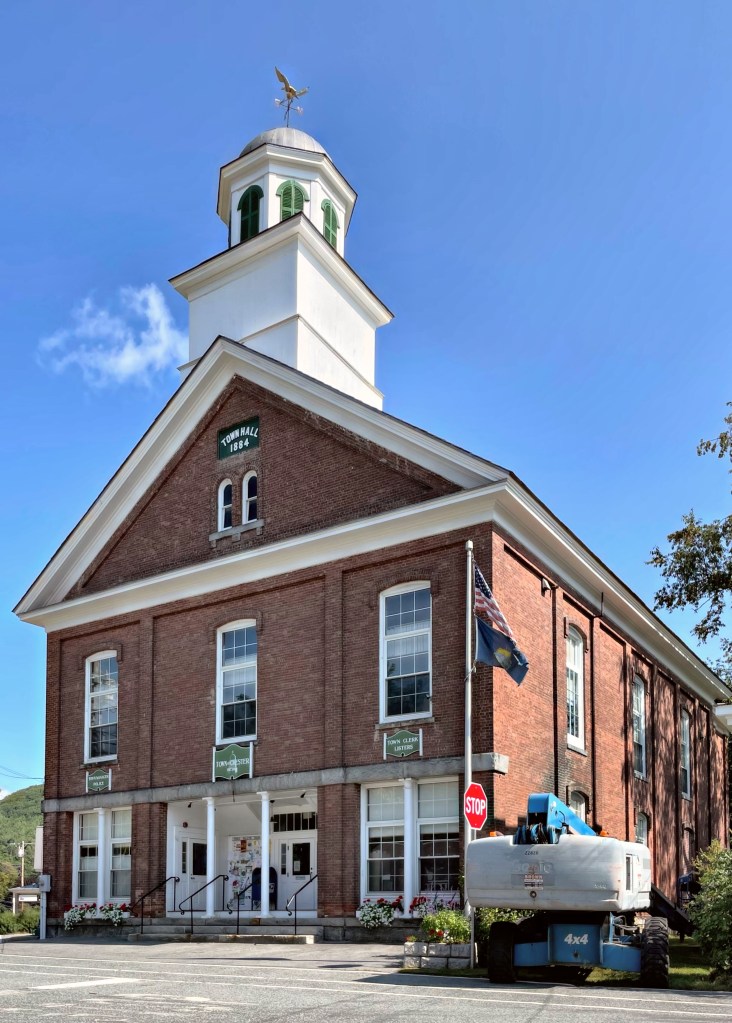
The town of Chester, Vermont, was originally chartered by New Hampshire Governor Benning Wentworth as Flamstead, in 1754. The terms of the charter were not met and the town was re-chartered as New Flamstead in 1761. In 1766, a patent was issued by New York that changed the name of the town to Chester, after George Augustus Frederick, the Earl of Chester and the eldest son of King George III. Vermont in the 18th century was contested land claimed by both New Hampshire and New York, unsettled until the colonists in the area decided to petition for their own statehood. The town of Chester voted to keep their name. The town grew with two distinct villages, Chester Village and Stone Village. Both villages were very distinct in terms of politics, religious affiliations, and architecture. When the railroad cut through the town, the route passed between Chester’s North and South villages, and Chester Depot village emerged right in the middle. The establishment of a third village by the railroad depot, offered neutral ground on which to erect a town hall, as before 1884, town meetings were held alternately each year in the two opposing villages. The large town hall building in Depot Village is a late example of Greek Revival and Italianate design.
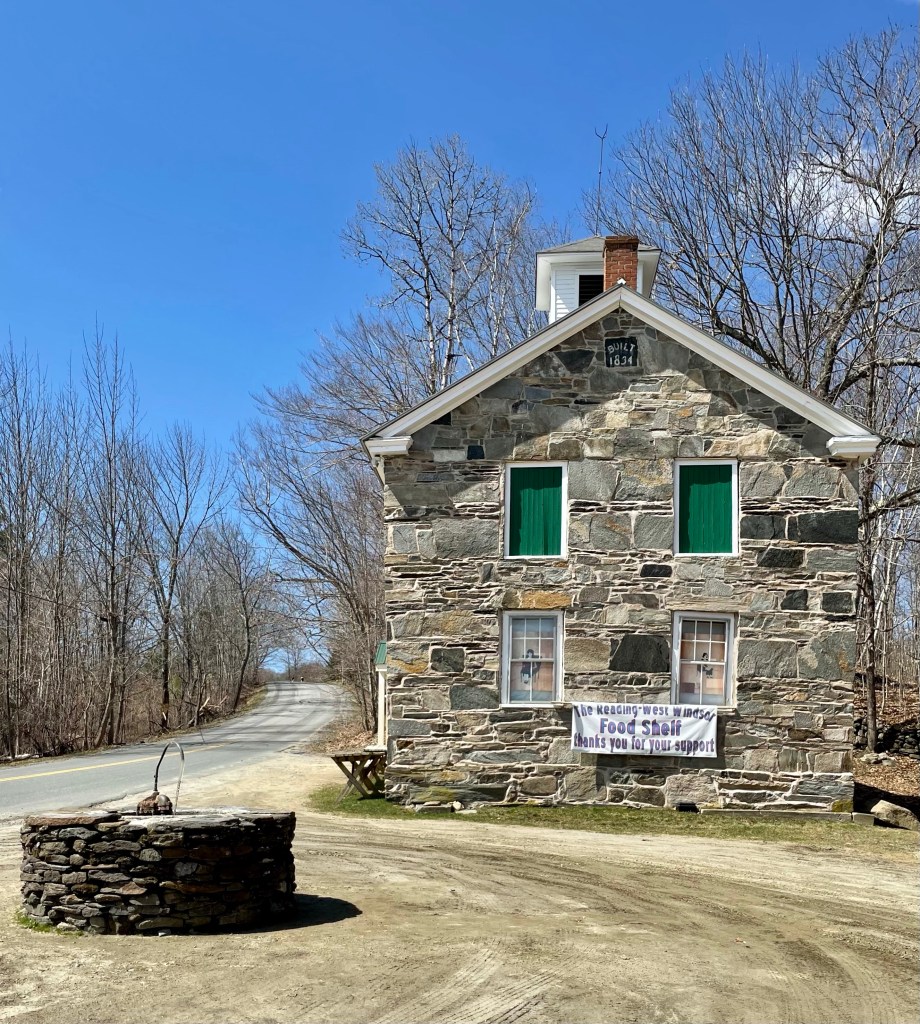
Continuing with the snecked ashlar buildings of Reading, Vermont, this schoolhouse is possibly the oldest extant such building in the state. Built in 1834, the South Reading Schoolhouse is located in a very rural village in Vermont, yet is very well preserved, showing the building much as it looked nearly 200 years ago. “Snecked Ashlar” describes a certain type of stonemasonry, brought over from Ireland and Scotland, in which a relatively thick rubblestone wall is veneered with large flat slabs of stone laid on edge. The slabs are tied, or “snecked”, to the rubblestone wall with “snecks”, small flat stones laid across the top edge of the slabs to tie them back into the rubblestone and produce a stable wall facing. It is particularly interesting to see such a large, two-story rural schoolhouse in the area, a testament to the importance of education, even for Vermont’s farming residents. The South Reading Schoolhouse was last used as a school in 1970. It is presently used as a community center for the village of South Reading and as a meeting hall for the South Reading Meeting House Association. A natural spring fountain can be found in the foreground of the schoolhouse today.
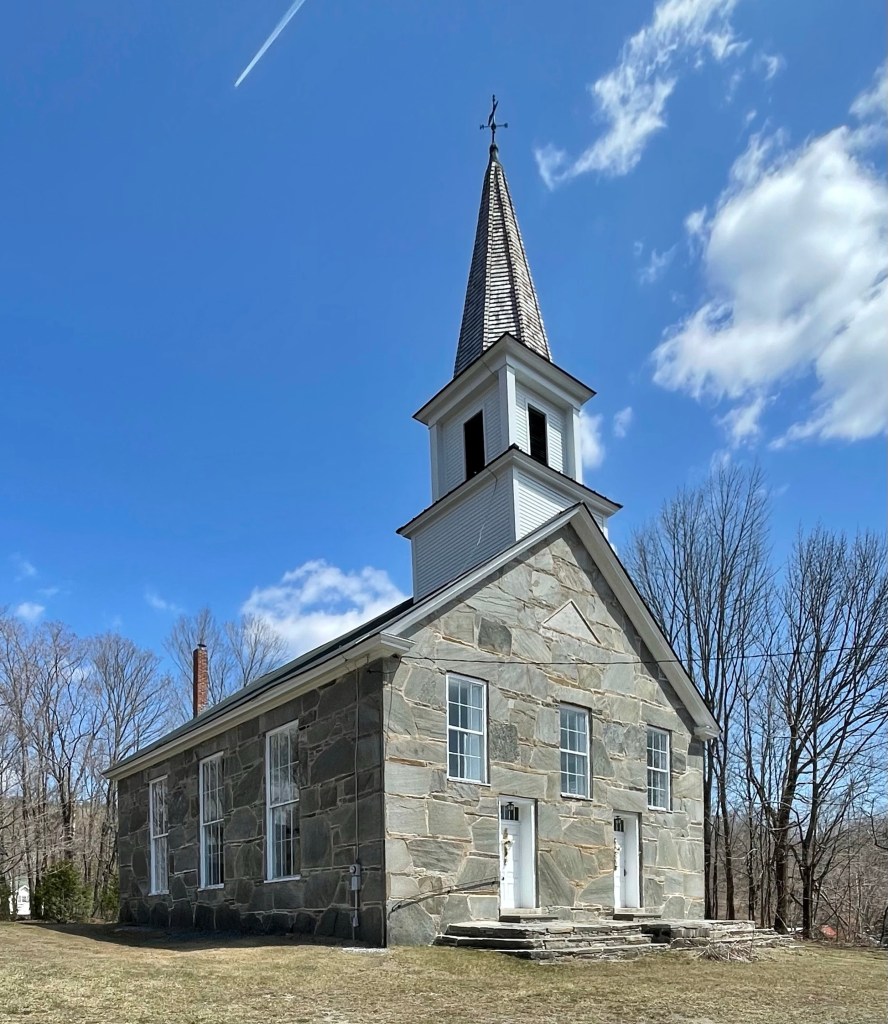
A very rare example of a snecked ashlar church, the South Reading Union Meeting House in Reading, Vermont remains in a great state of preservation, and a testament to innovative building styles seen in rural parts of New England. Built in 1844, the stone church was built by local stone masons based on the unique regional stone construction method. The church features a triangular stone in the facade which shows its construction date. There is something so stunning about stone churches..
Reading Vermont’s public library building was built in 1899, by local resident Gilbert A. Davis (1835-1919). The building’s funds were furnished by Mr. Davis in his life, likely inspired by Andrew Carnegie’s fund which had libraries built in towns all over the United States. Gilbert Davis worked as a lawyer in Woodstock before moving back to Reading, Vermont to run his own practice. The library he funded is Neo-Classical in design in the form of a Greek Cross with intersecting gable roofs and with a monumental portico in the Ionic Order on the front facade. The charming library building is well-preseved and an excellent example of Vermonts beautiful small-town libraries.
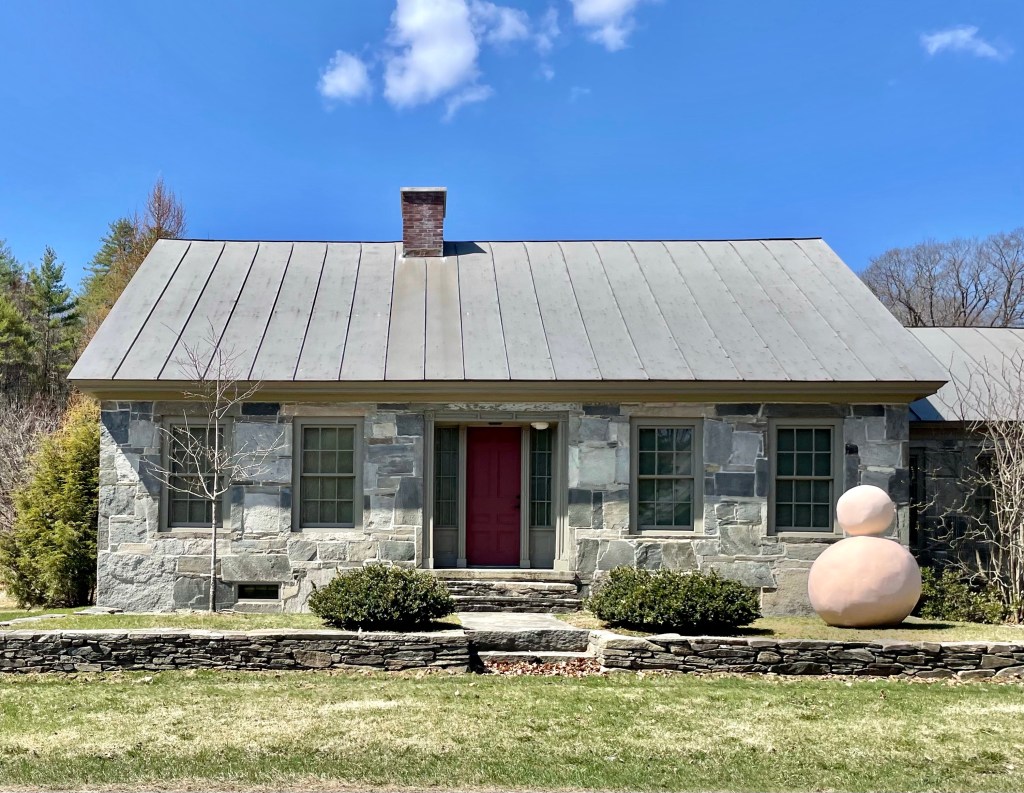
Lexington Farm was built by Elisha Wright Watkins (1805-1886) in around 1835, and was operated as a dairy farm until the 1980’s. Today, the property consists of a snecked ashlar stone farmhouse, cow barn, horse barn and tractor barn, grouped together at the southern extremity of the village of Felchville (also known as Reading). The farmhouse and barns are situated next to a waterfall on a tributary of the Black River, and are surrounded by pastures, hayfields and extensive woodland. A couple decades after Watkins’ death, the property was purchased by Alonzo Goddard. It stayed in that family and was eventually willed to Errol Locke in 1923. Errol, by trade, wasn’t a farmer. He was a Harvard-educated man who graduated there in 1913. Eventually, he went to work for a company called General Radio, which was founded in Cambridge, Massachusetts, in 1915. He started as a clerk, and 37 years later, he retired as president. The company, by that time, had moved to Concord, Massachusetts, which we know, thanks to the important events of April 19, 1775, is not too far from Lexington, where Locke lived. He renamed the Watkins Farm, Lexington Farm, seemingly as a tribute to his home town in the Bay State. In 2009, the Hall Art Foundation began the process of converting Lexington Farm to museum-quality galleries. The former dairy farm’s location and existing structures were ideally suited for this purpose. After approximately three years of restoration, renovation and refitting, Lexington Farm was transformed to approximately 6,000 sq. feet of exhibition space.
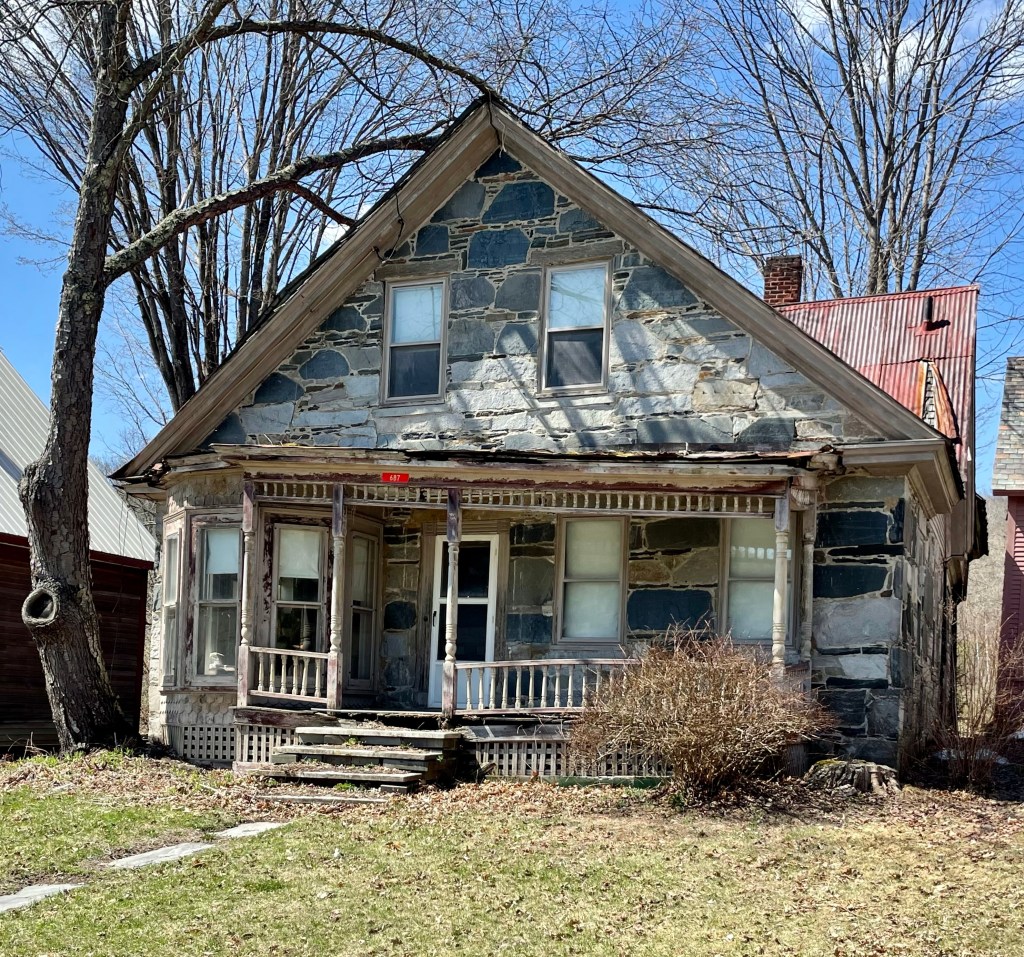
In the early 1830s, skilled masons from Scotland and Ireland came to central Vermont to work on building projects. A number of these workers, mainly from the Aberdeen area, and specialized in a specific building style in which plates of stone are affixed to a rubblestone wall. This method of bonding stonework is so prevalent in Scotland and Ireland it has been referred to in some journals as ‘Celtic Bond’, but in Vermont, it is known as “snecked ashlar”. The mixture of stone sizes and colors produces a strong bond and an attractive finish. This home is a rare example in the state, which is estimated to have about 50 of these homes left. I could not locate any information on the owners of the home, but the house has seen better days, with the wooden front porch shifting away from the main house. Also, if you look closely, you can see the original wood shingle roofing breathing under the sheet metal roof!
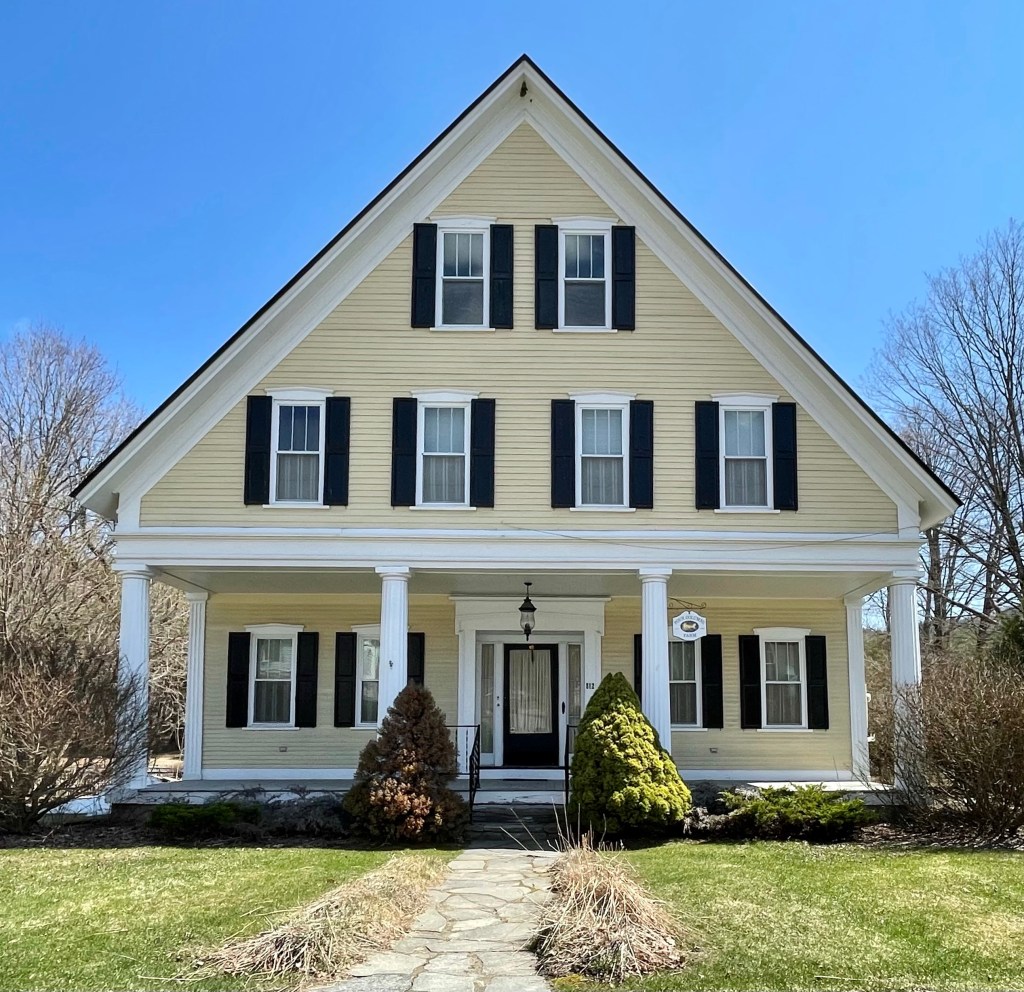
This Greek Revival home in Reading, Vermont was built around 1853 for Levi Fay Hartshorn, and is an excellent example of a vernacular Greek Revival house in Central Vermont. Levi F. Hartshorn moved to Reading, Vermont and opened up a store, also built this home for his family. It appears that Mr. Hartshorn gifted the village one of his shops to be used as a local library, before the present building was constructed.
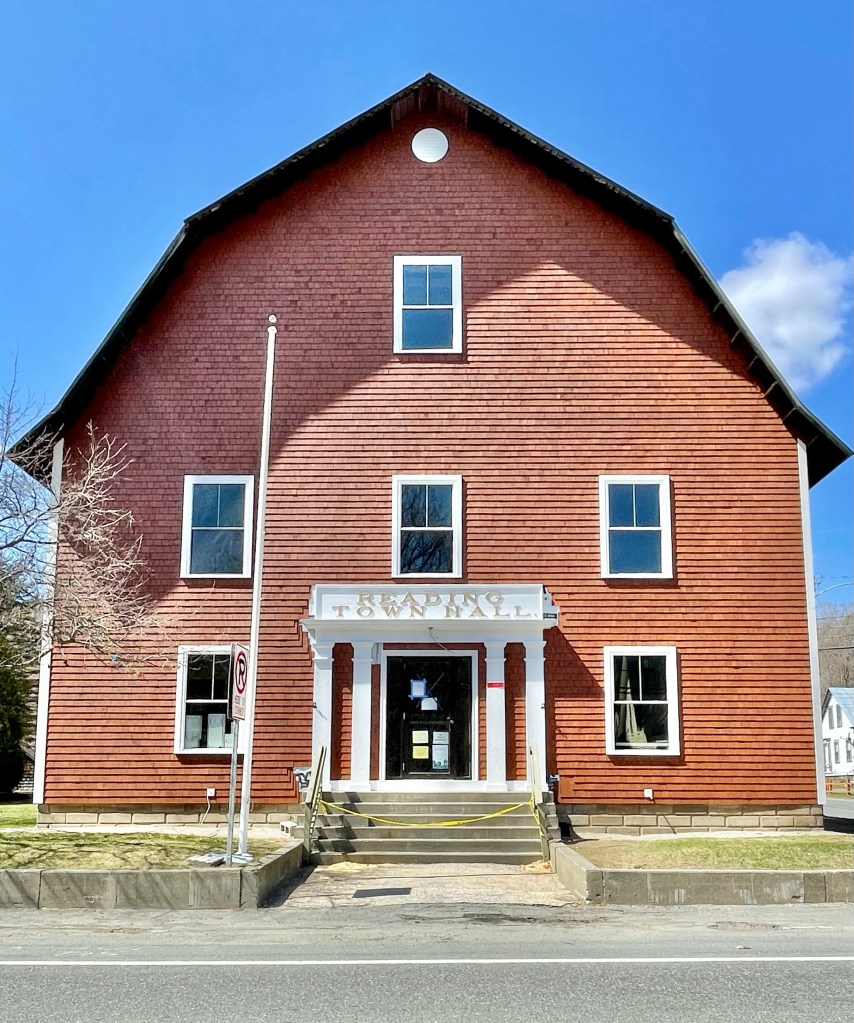
The Reading Town Hall in Reading, Vermont is an imposing shingle-clad, gambrel roof building which sits in the village of Felchville. The hall was built in 1911 as a gift to the citizens of Reading by Wallace F. Robinson. Wallace Robinson was born in Reading in 1832. He went to Boston as a young man and entered into the provisions (groceries) market, and became quite successful, expanding into the wholesale provisions business and meat packing. He was active in civic and business affairs of Boston, most notably as the President of the Boston Chamber of Commerce and as a State Representative in the Legislature for two terms. By around 1900, Robinson had retired and had taken up a life of philanthropy, spending much of his wealth on memorial buildings and to places that had a lasting impact on him, including Robinson Hall at Dartmouth College and renovations at UVM. The design for the Reading Town Hall is especially notable for the fact that it was designed to resemble historic gambrel roofed barns found in the state.
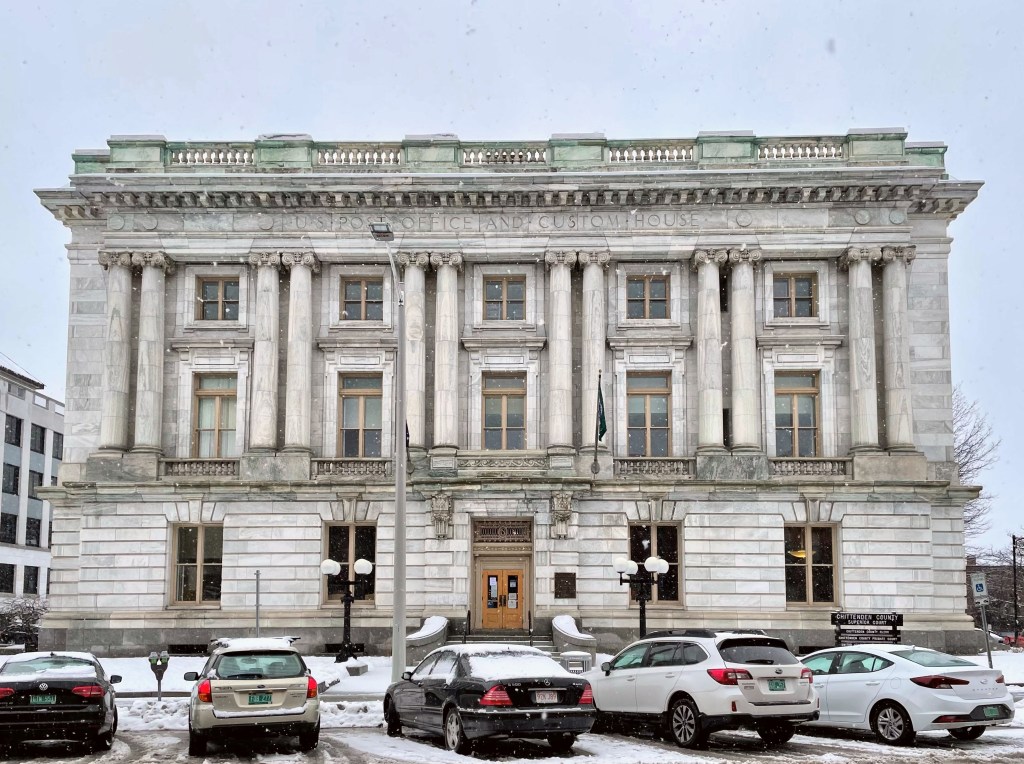
The Chittenden County Superior Courthouse in Burlington, Vermont was built in 1906 and is one of the most bold architectural designs in the city. The building was actually constructed as the U.S. Post Office and Custom House for Burlington, but changed use in the 1980s after the Old County Courthouse was destroyed by fire. The building was the work of U.S. Treasury architect James Knox Taylor. Taylor designed, many major eastern federal buildings during the late 19th and early 20th centuries. He provided plans for this Beaux Arts structure with a well-appointed exterior finished in marble and dressed granite. Beaux-Arts architecture depended on sculptural decoration along conservative modern lines, blossoming in the United States in the early 20th century after many American architects studied at the École des Beaux-Arts in Paris, particularly from the 1830s to the end of the 19th century.

 Buildings of New England