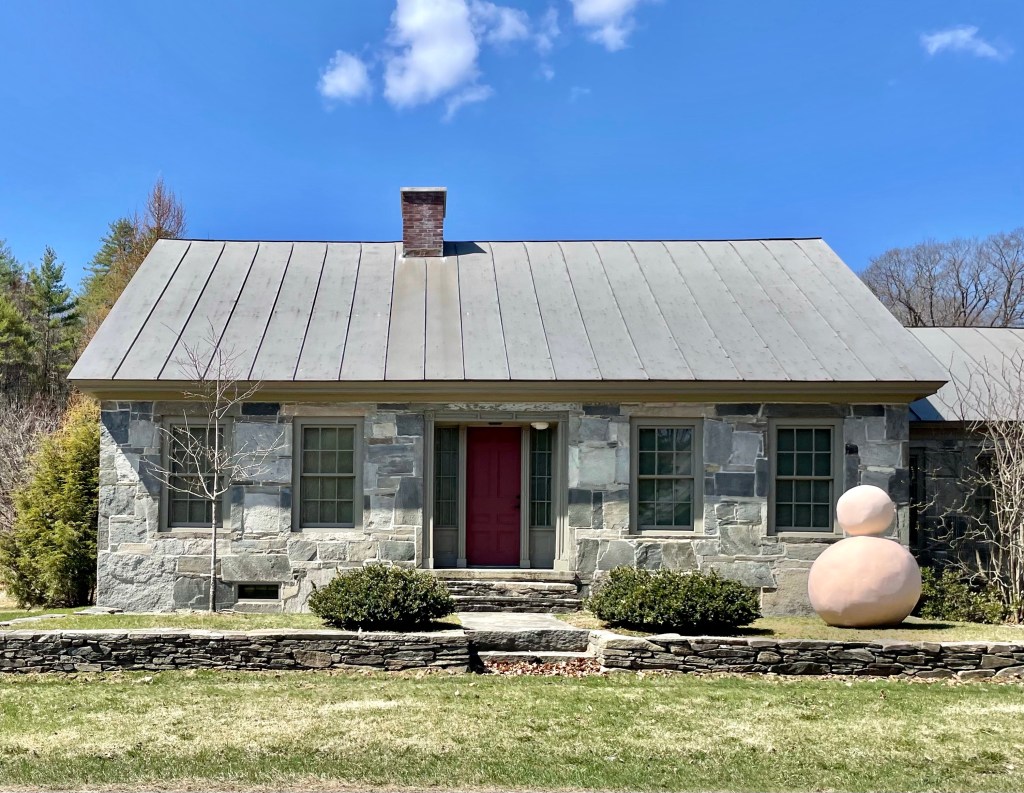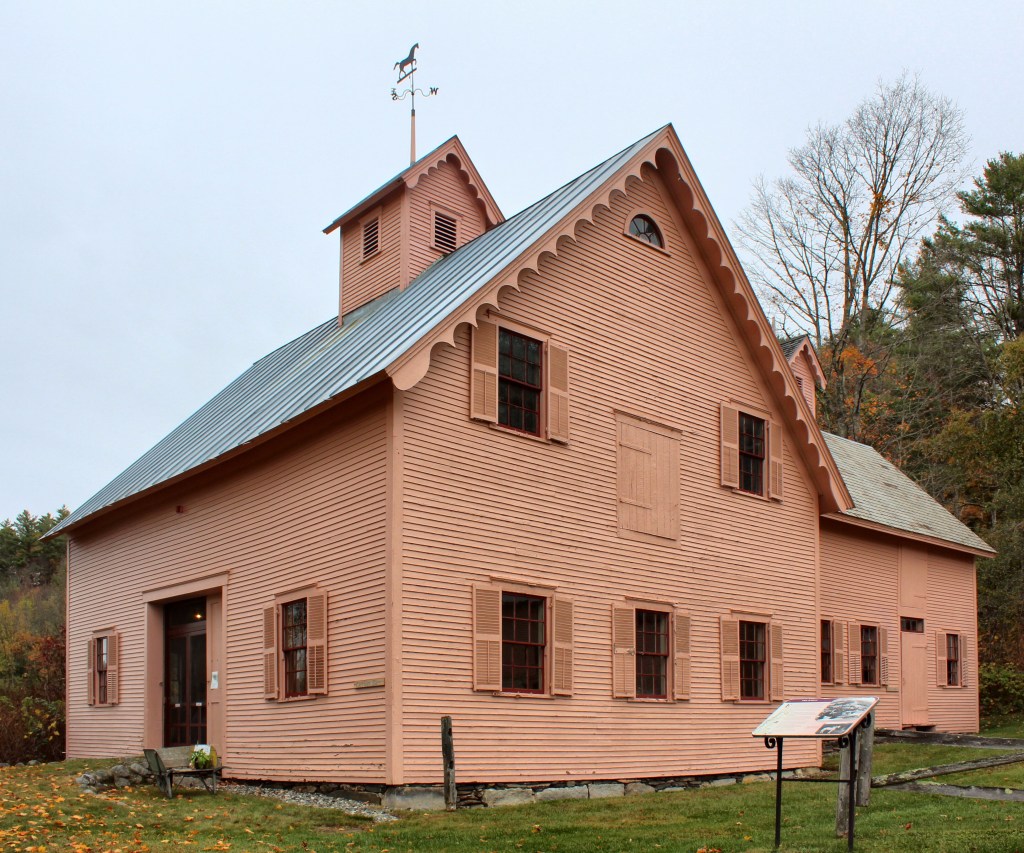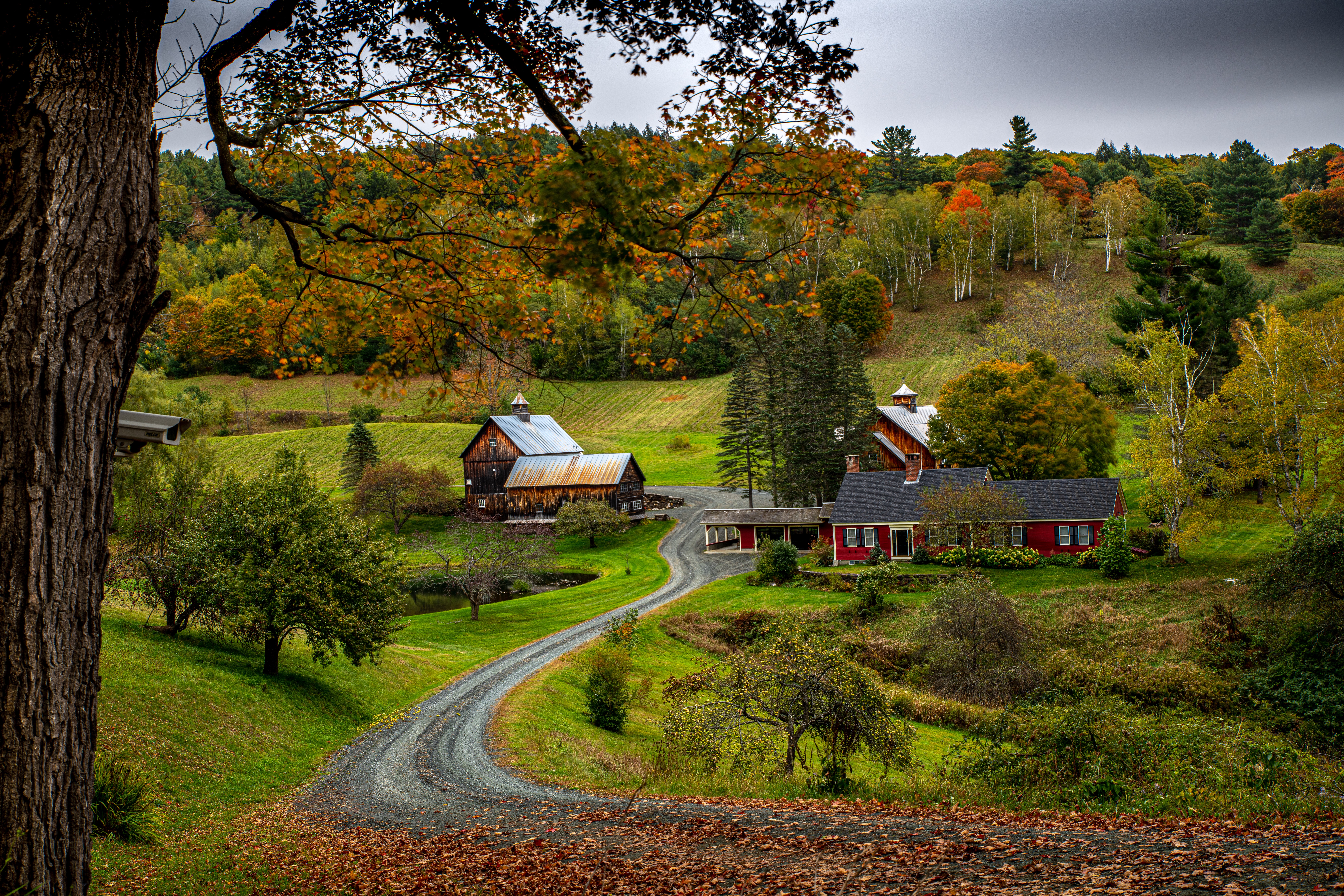
Watkins-Lexington Farm // c.1835

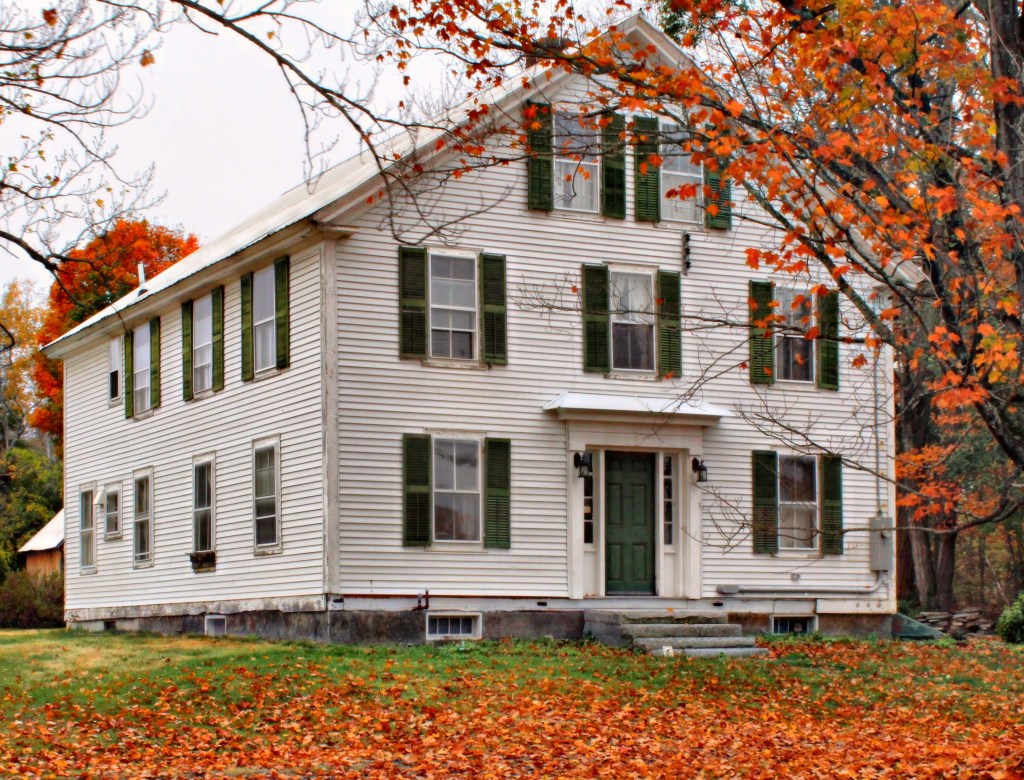
Lexington Farm was built by Elisha Wright Watkins (1805-1886) in around 1835, and was operated as a dairy farm until the 1980’s. Today, the property consists of a snecked ashlar stone farmhouse, cow barn, horse barn and tractor barn, grouped together at the southern extremity of the village of Felchville (also known as Reading). The farmhouse and barns are situated next to a waterfall on a tributary of the Black River, and are surrounded by pastures, hayfields and extensive woodland. A couple decades after Watkins’ death, the property was purchased by Alonzo Goddard. It stayed in that family and was eventually willed to Errol Locke in 1923. Errol, by trade, wasn’t a farmer. He was a Harvard-educated man who graduated there in 1913. Eventually, he went to work for a company called General Radio, which was founded in Cambridge, Massachusetts, in 1915. He started as a clerk, and 37 years later, he retired as president. The company, by that time, had moved to Concord, Massachusetts, which we know, thanks to the important events of April 19, 1775, is not too far from Lexington, where Locke lived. He renamed the Watkins Farm, Lexington Farm, seemingly as a tribute to his home town in the Bay State. In 2009, the Hall Art Foundation began the process of converting Lexington Farm to museum-quality galleries. The former dairy farm’s location and existing structures were ideally suited for this purpose. After approximately three years of restoration, renovation and refitting, Lexington Farm was transformed to approximately 6,000 sq. feet of exhibition space.

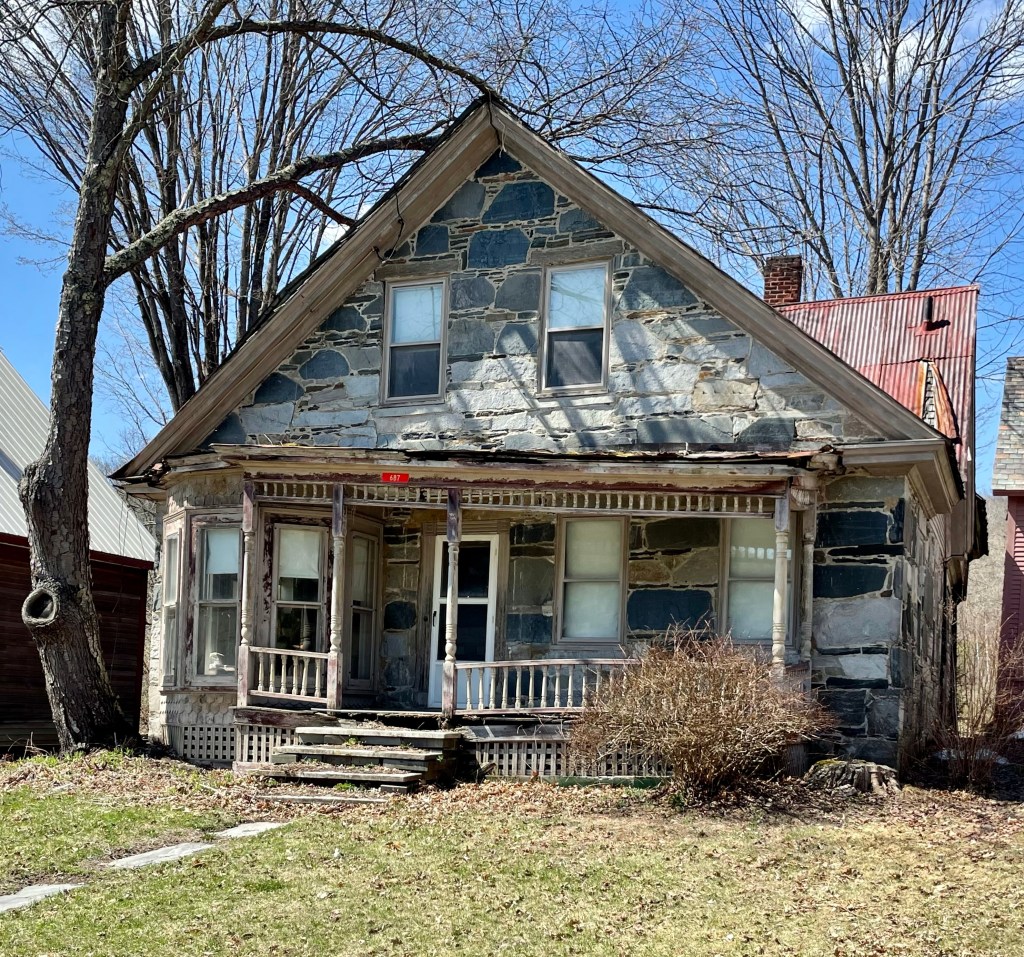
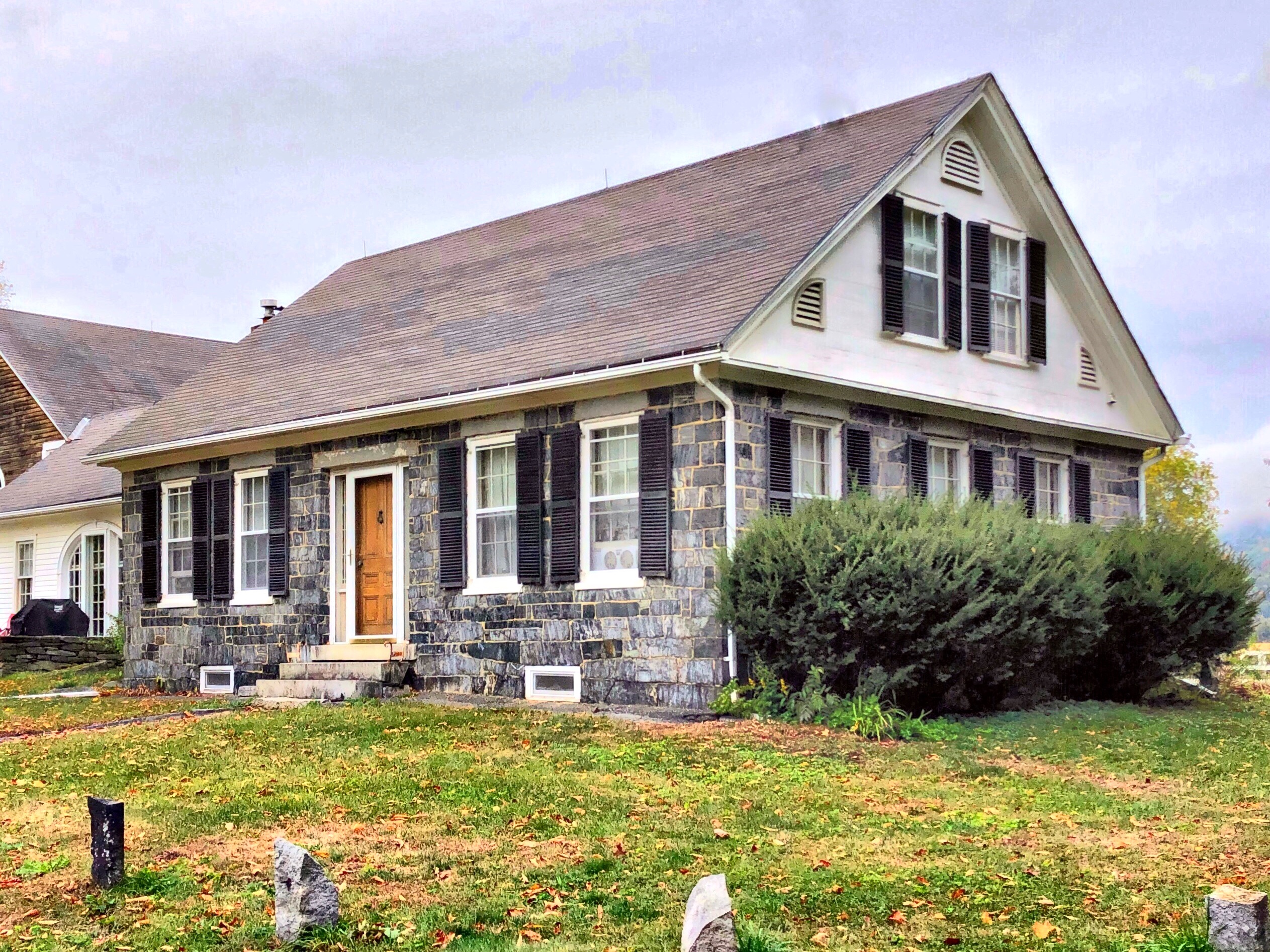
Snecked House // c.1850

In the early 1830s, skilled masons from Scotland and Ireland came to central Vermont to work on building projects. A number of these workers, mainly from the Aberdeen area, and specialized in a specific building style in which plates of stone are affixed to a rubblestone wall. This method of bonding stonework is so prevalent in Scotland and
Ireland it has been referred to in some journals as ‘Celtic Bond’, but in Vermont, it is known as “snecked ashlar”. The mixture of stone sizes and colors produces a strong bond and an attractive finish. This home is a rare example in the state, which is estimated to have about 50 of these homes left. I could not locate any information on the owners of the home, but the house has seen better days, with the wooden front porch shifting away from the main house. Also, if you look closely, you can see the original wood shingle roofing breathing under the sheet metal roof!

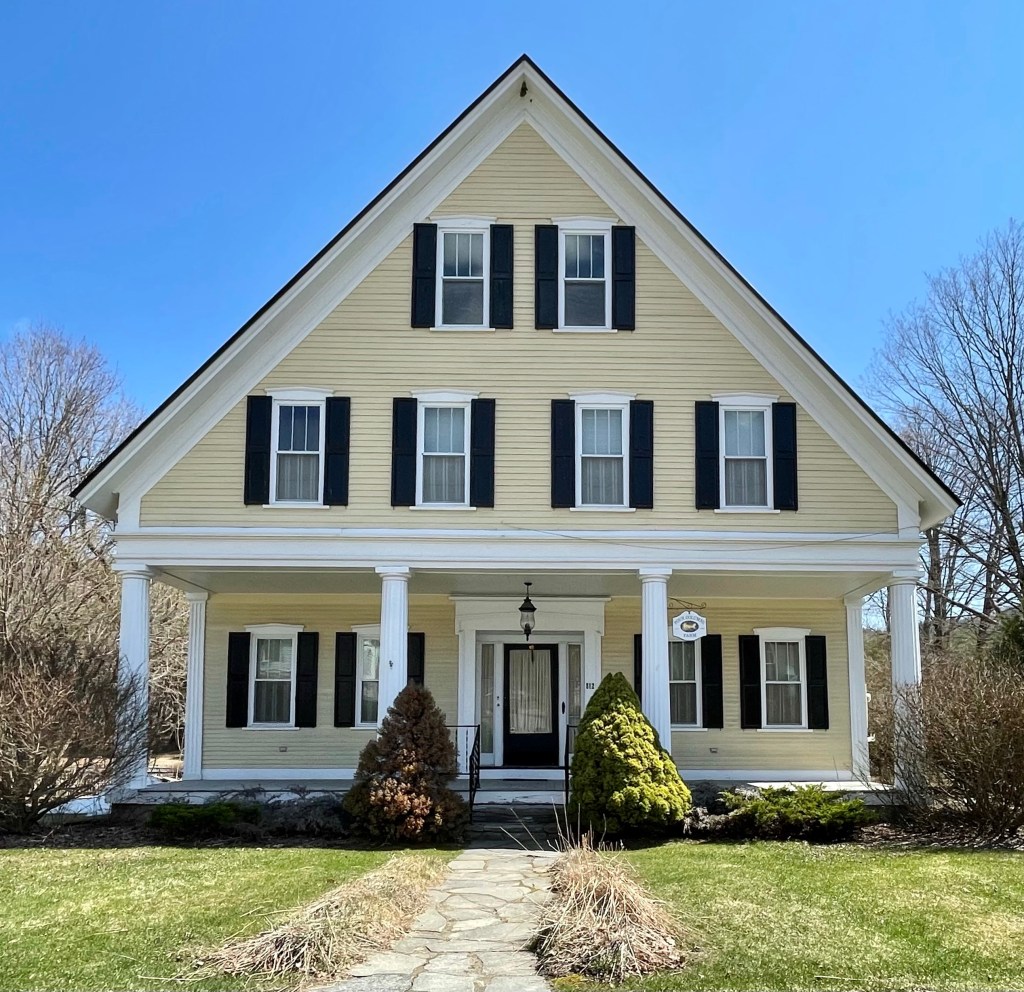
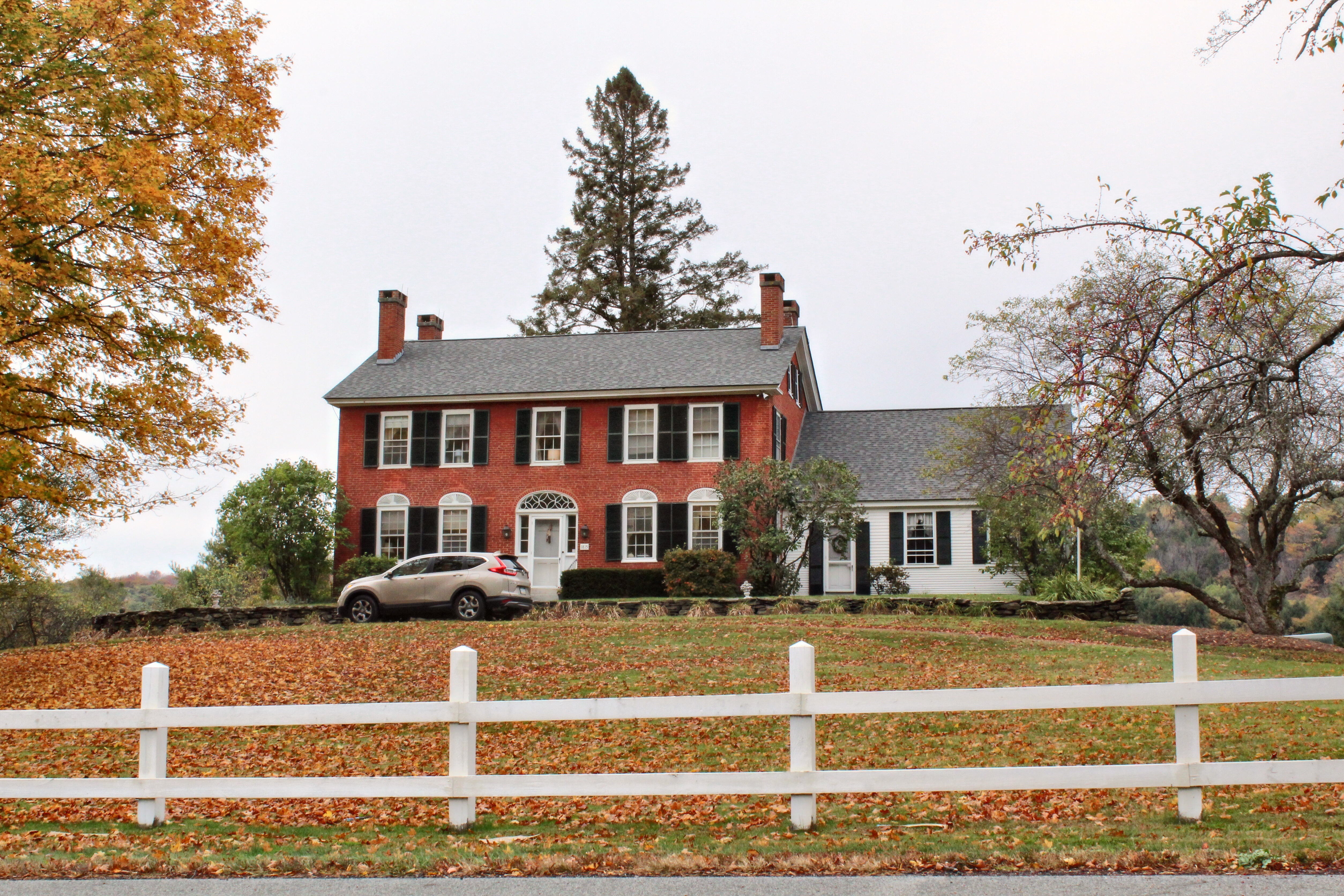
Levi F. Hartshorn House // c.1853

This Greek Revival home in Reading, Vermont was built around 1853 for Levi Fay Hartshorn, and is an excellent example of a vernacular Greek Revival house in Central Vermont. Levi F. Hartshorn moved to Reading, Vermont and opened up a store, also built this home for his family. It appears that Mr. Hartshorn gifted the village one of his shops to be used as a local library, before the present building was constructed.

Justin Morrill Homestead // 1851

One of the most stunning Gothic Revival homes in New England has to be the Justin Morrill Homestead in the tiny town of Strafford, Vermont. The home was designed by and built for Senator Justin Smith Morrill (1810-1898), who was born in town and worked with his mentor Jedediah Harris at the local store. He later expanded and owned numerous stores in the area and diversified, investing in railroads, banks and real estate in the region. He retired in the late 1840s and became a gentleman farmer, building this Gothic Revival home in town. In 1854 Morrill was elected to the Thirty-fourth Congress as a Whig. He was a founder of the Republican Party, and won re-election five times. In 1866, Morrill was elected to the U.S. Senate as a Union Republican, serving until his death in 1898. Morrill is best known for sponsoring the Morrill Act, also known as the Land Grant College Act. This act was signed into law by Abraham Lincoln in 1862, and established federal funding for higher education in every state of the country. Senator Morrill primarily used this house as a summer residence, as he spent much of his time in Washington, DC. The property remained in the Morrill family, until World War II. The house was eventually acquired by preservationists, who sold it to the state in 1969 for use as a Historical Site and museum.

Justin Morrill Barn

Sleepy Hollow Farm // c.1780

Without question, this property is the most photographed site in the tiny town of Pomfret, Vermont, if not the state. The property dates to the late 18th century when John and Samuel Doten moved to the newly settled town of Pomfret Vermont, overlooking the growing town of Woodstock in the valley below. The two brothers acquired vast farmland on the hills of Pomfret and each built farmhouses adjacent to eachother, with Samuel getting elevated land and John developing the land sunken off what is now known as Cloudland Road into this stunning property. Sleepy Hollow Farm remained in the Doten family for centuries until the 1950s, when the owners sold the property to move to Woodstock and work for Laurance Rockefeller, the famous philanthropist and conservationist, who later donated his Summer home in Woodstock to the National Park Service. The property sold numerous times in the late 20th century, and is presently owned by Aerosmith guitarist Joe Perry and his wife, Billie. They are clearly great stewards to the property’s rich history and various outbuildings, and must not care too much to have swarms of photographers at the end of their driveway year-round!

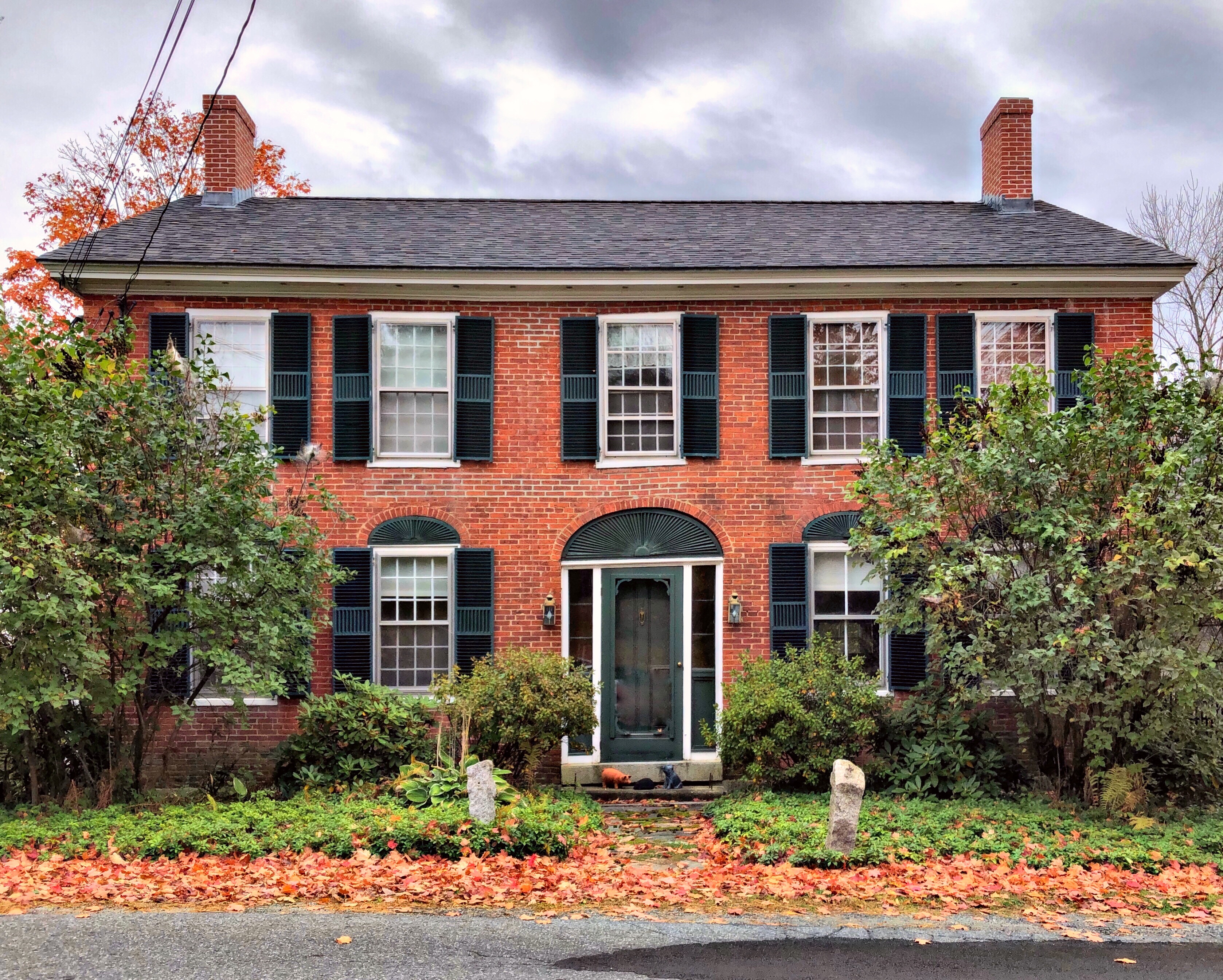
Hezekiah Porter House // 1822

Hezekiah Porter (1783-1851) built this house in 1822 for him and his family, right in Thetford Center, Vermont. Porter was born in 1783 in Hebron, Connecticut, where he presumably learned the clothier trade, before moving to Thetford in 1806. Porter later operated a brickyard, serving as contractor to the Thetford Center Methodist Church, Town Hall and several other brick homes in town dating from the 1820s and 1830s. Porter lived on this large property with his wife and ten children until his death. The property was later occupied by Hezekiah’s son, Amos P. Porter. In 1888, Amos farmed about 200 acres and had 7 cows, 50 Merino sheep and 18 Jersey cattle!

Child Farmhouse // c.1835

Constructed out of stone quarried from nearby Lyme, New Hampshire, the Child Farmhouse is one of a handful of stone houses in East Thetford, Vermont. This house is a particularly fine example of a Cape Cod with Federal detailing, as translated into granite construction. The home features stone lintels over the door and window openings. It was built for Bela Child (1786-1866), likely after the death of his first wife, as a new home for his second. The family operated a massive farm along the Connecticut river.

Turner House // 1825

In New England, brick houses are more scarce for the simple fact trees are everywhere, brickyards were not. As towns and cities developed all across the region, some towns found they had a lot of clay in their soil, perfect for the manufacturing of brick. In Thetford, a man named Hezekiah Porter was the first to start a brickyard, manufacturing bricks for construction projects around the area. By the 1820s, a couple brick houses were built in the Thetford Hill area of town including the Hosford House, one of the earliest. Thomas Turner, a builder constructed the Hosford House and this home nearby for his own use, both utilizing Porter’s bricks. This fine Federal home was likely a great advertisement for Turner’s building skills.

Burton Hall, Thetford Academy // 1845

Burton Hall was constructed in 1845 as a boy’s dormitory for Thetford Academy on a lot given by Orange Heaton (who lived nearby), just north of the original Academy Building. The structure was named Burton Hall in memory of Asa Burton, one of the Academy’s founders. The structure was sold by the Academy by about 1860 for $200, to a J.H. Huntington, who moved it across the street to its present site to replace his house which had burned the year prior. In the late 1930’s, Dwight Goddard, the owner of the home at the time, gifted the building back to the Academy since which time it has been known as Goddard Hall.

Fun Fact: Buildings historically were much more likely to be moved than demolished as the cost of building materials was much more than labor. Today, the opposite is true so many developers and owners prefer to demolish.

Hosford-Slade House // 1821

Is there anything better than a brick Federal style house?

This house in Thetford, Vermont was built for Heman Hosford in 1821 from bricks produced by Hezekiah Porter, who established the earliest known brickyard in Thetford. Hosford sold the house to Enoch Slade in 1837 and it remained in the Slade Family for over seven generations. He became a prominent citizen of Thetford, was a surveyor and for many years justice of the peace, and in the latter part of his life was generally known by the title of “Squire Slade.” He was a supporter and trustee of Thetford Academy, in which his children and grandchildren were educated. He was a member of the Congregational church and an earnest supporter of the principles of the Republican party. The brick gable front home features a louvered sidelights and fan over the front door and in the gable.