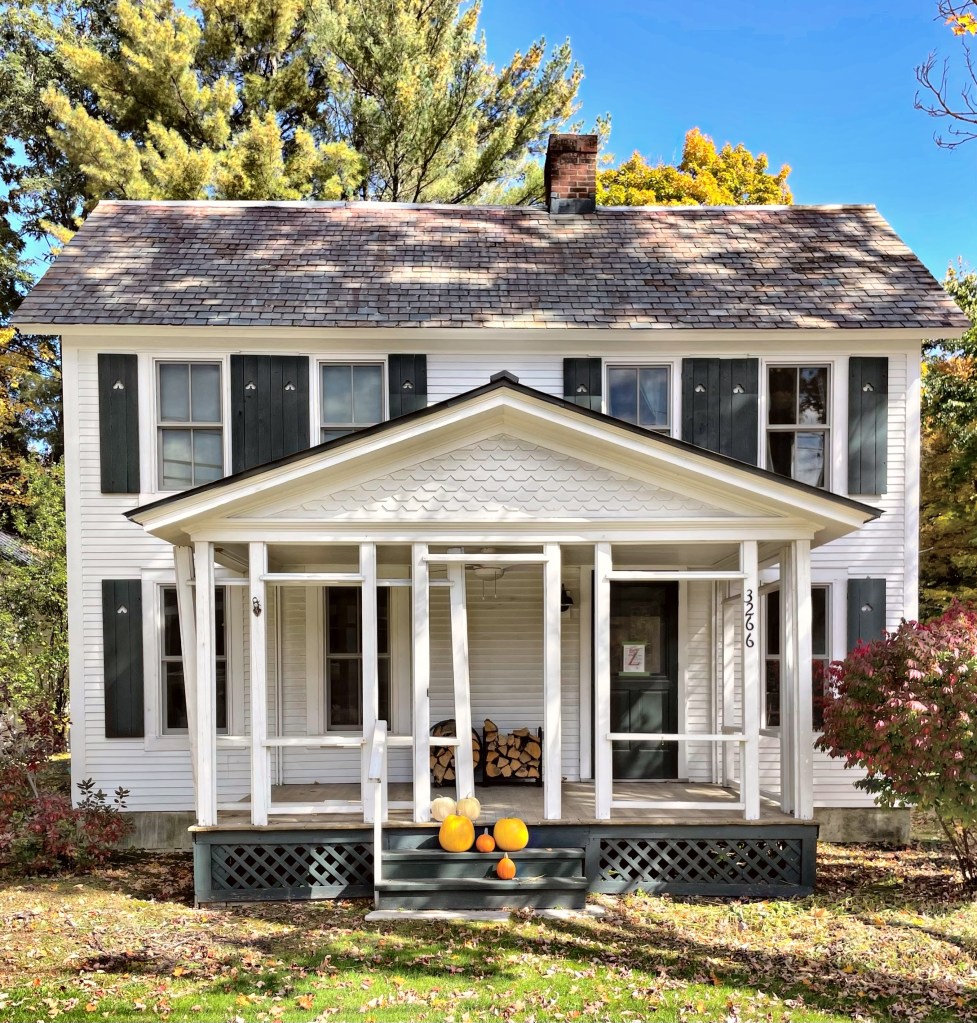
Katherine Forrest Home and Studio // c.1860

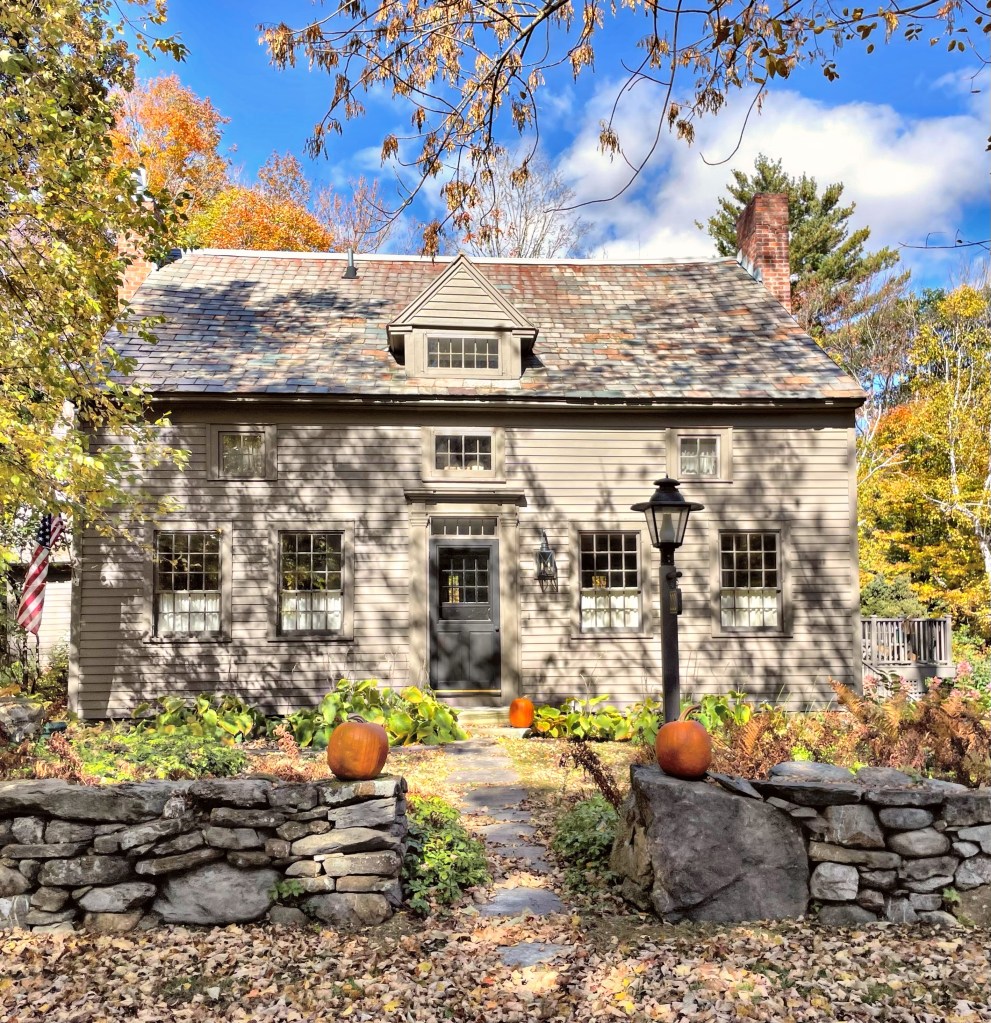
This vernacular cottage in Noank was built in phases (and likely added onto from other historic buildings) since 1860. While the building dates to the 1860s, its significance derives from a later owner, Ms. Katherine Forrest. Katherine Forrest (1883­-1952) was a graphic designer and part of the Arts & Crafts movement of the early 1900s. She specialized in textile design and printmaking. Forrest came to Noank in 1914 and purchased her house in 1926. She was locally known by the nickname ‘Speedy’ and was remembered for dying textiles in a bathtub outside the house. The building’s vernacular character and its significance as a locally historic site as part of the village’s rebirth as an artist colony in the 20th century showcases how even smaller, unpretentious buildings in New England can tell a story.

Coolidge Cheese Factory // 1890

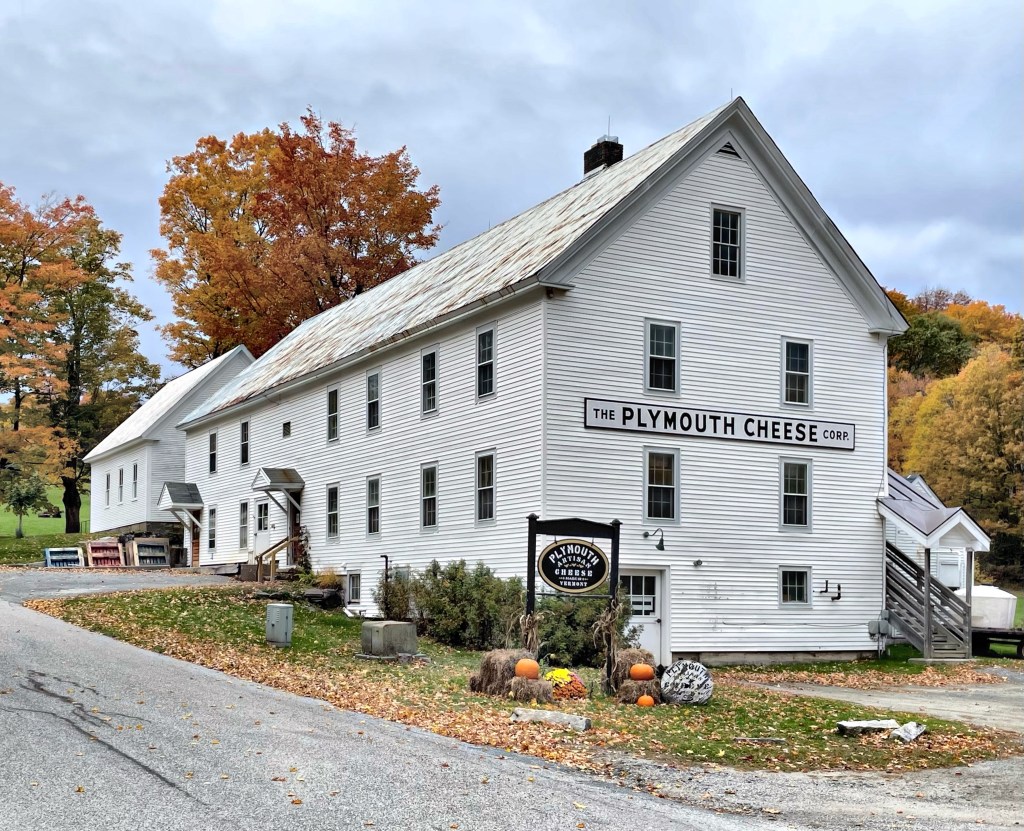
Does it get more Vermont than a cheese factory?! The Coolidge Cheese Factory in Plymouth Notch, Vermont was built in 1890 by Col. John Coolidge (President Calvin Coolidge‘s father), James S. Brown, and two other local farmers so that they would have a convenient market processing milk produced by their farms into cheese. The vernacular building was a short walk from the original Coolidge home and is evocative of many such buildings in rural Vermont. The cheese factory continued to operate until the 1930’s. The factory was renovated in the early 1970s in honor of President Coolidge’s 100th birthday and now produces cheese according to the original formula. The cheese would make a great Christmas gift!

The Cheese Factory // c.1850

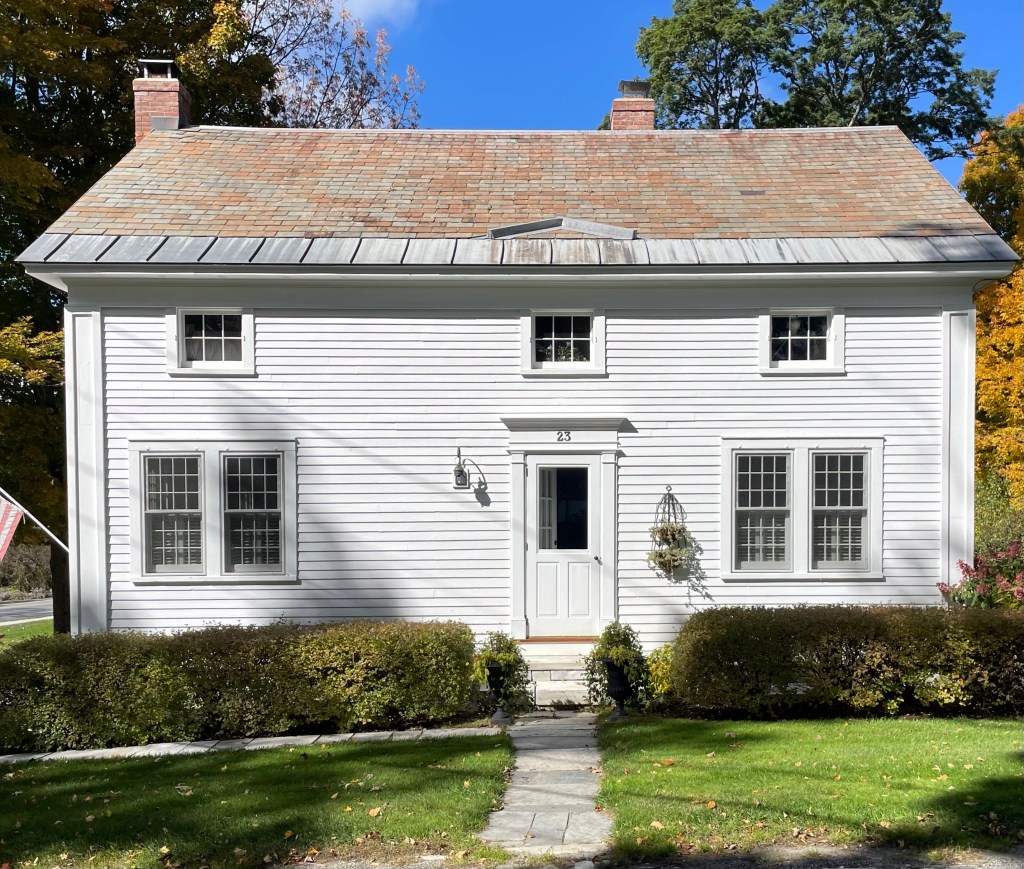
This absolutely charming vernacular Greek Revival home was built in the mid-19th century in East Dorset Village. By the end of the 19th century, it was converted to a cheese factory a model in adaptive reuse and historic preservation. In the late 1930s, as Dorset became a popular summer colony for artists and upper-middle class residents of New York and the Mid-Atlantic, the cheese factory was purchased by artists Norman and Silvia Wright. The artists relocated the small building to the Kent Hill neighborhood of town, restoring the home and adding wings onto it. I also love the chocolate color paint!

Laura Wade House // 1935

This charming cottage in Dorset is one of four houses in the village which were moved here by Charles Wade in the 1920s and ‘30s. Wade was born in Dorset and saw declining population with the marble industry failing. He sought to re-invigorate the town by advertising its natural beauty and brought in homes and buildings from nearby to fill the “missing teeth” (including the building that presently houses the Dorset Historical Society). Assembled from parts of various Enfield, Massachusetts buildings moved to Dorset this 1½-story, wood-framed, clapboard house stands on a marble ashlar foundation and is said to have been built by Wade for his daughter, Laura Wade.

Kent-Harwood House // 1850

Originally owned by marble dealer Daniel Kent (1793-1858) in the 1850s at the height of marble quarrying in the town of Dorset, Vermont, this house shows the history of Dorset very well in its alterations and ownership. After the marble dealer Kent passed away, the property was owned by watchmaker Luke B. Gray (1825-1878). Soon after, homeopathic physician Charles Farrar Harwood (1833-1902) and family moved in. His son, Elmer Harwood (1885-1960), the first Rural Free Delivery mailman in Dorset, continued living here, likely renovating the home with the oversized front porch and charming rustic quality. Harwood oversaw the delivery of mail to the rural farmhouses and village of Dorset, which previously made individuals living in remote homesteads had to pick up mail themselves at sometimes distant post offices or pay private carriers for delivery. In 1965, the home was remodelled and sold it to Hugh Vanderbilt, the son of Robert Thurlow Vanderbilt (yes of that family) whose primary residence was in Greenwich, Connecticut. This new ownership showed how the town of Dorset became popular as a rural/country retreat for the wealthy, many of those families remain here today, preserving these old homes.

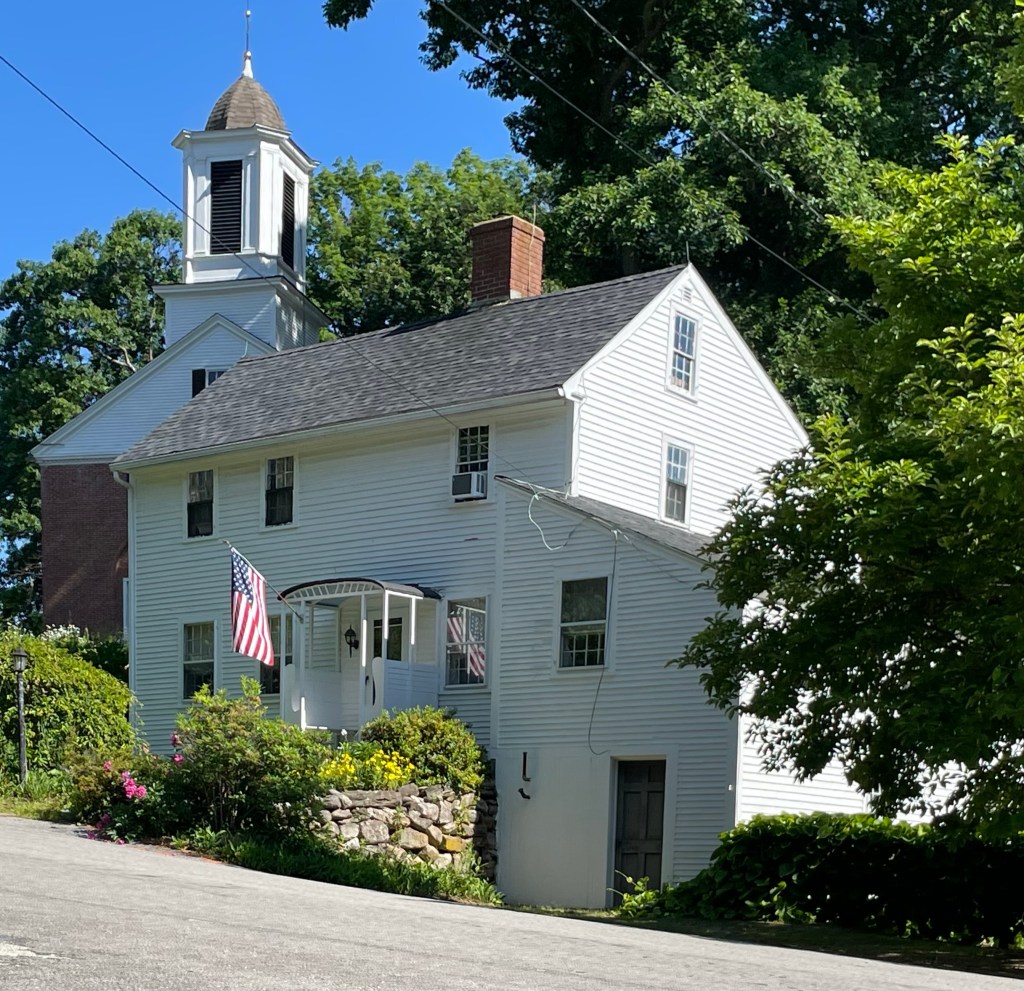
Blanchard House // c.1778

One of the oldest extant homes in Wilton Center is this Revolutionary-era Georgian house. The home was likely built in the 1770s and has a sloping saltbox roof at the rear. The house was the property of the Blanchard Family to this day. The house shows the more rural, vernacular Georgian style common in small towns in New Hampshire from the 1700s.

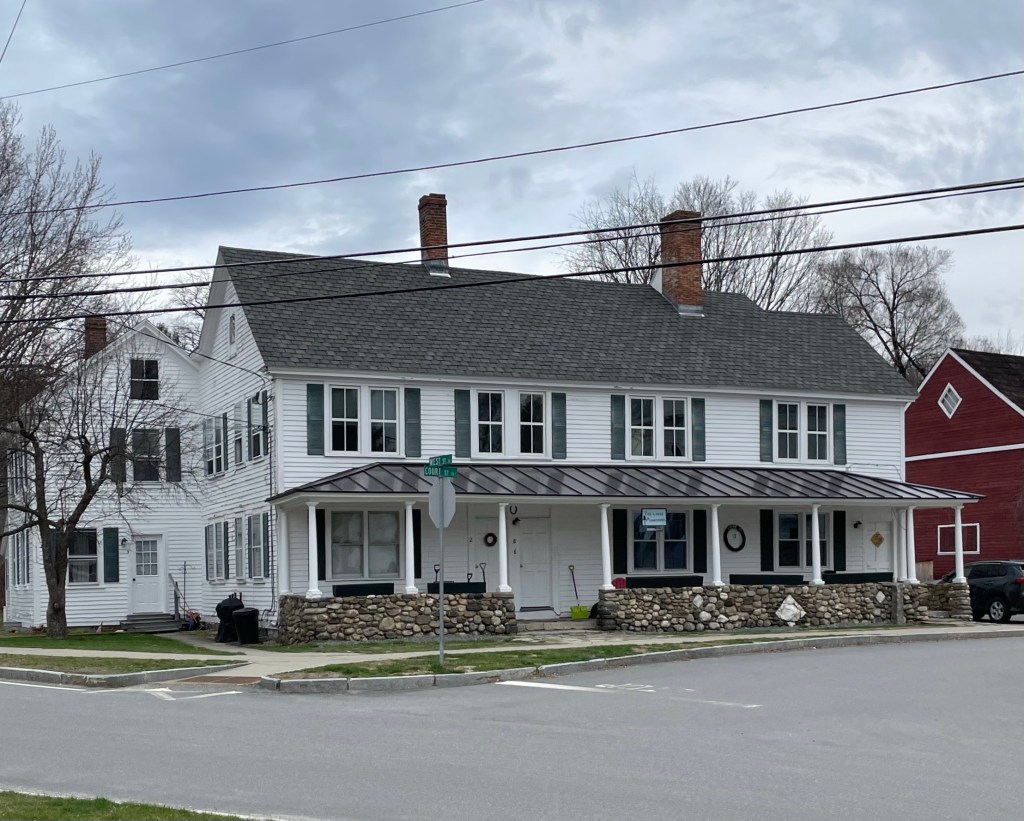
Newfane Odd Fellows Hall // c.1830

Constructed circa 1830 for Anthony Jones, this clapboard building in Newfane, Vermont originally contained tenements and was called the “long building” during the nineteenth century. Around the turn of the 20th century, a federal judge acquired the building and some of its rooms were used as offices during sessions of the county courthouse across the street. Subsequently, the local Odd Fellows Group (I.O.O.F.) occupied a hall on the second story, and for a half century after 1910, part of the first story served as Newfane’s telephone exchange. In 1971, the building was converted to apartments and has remained so since that time.

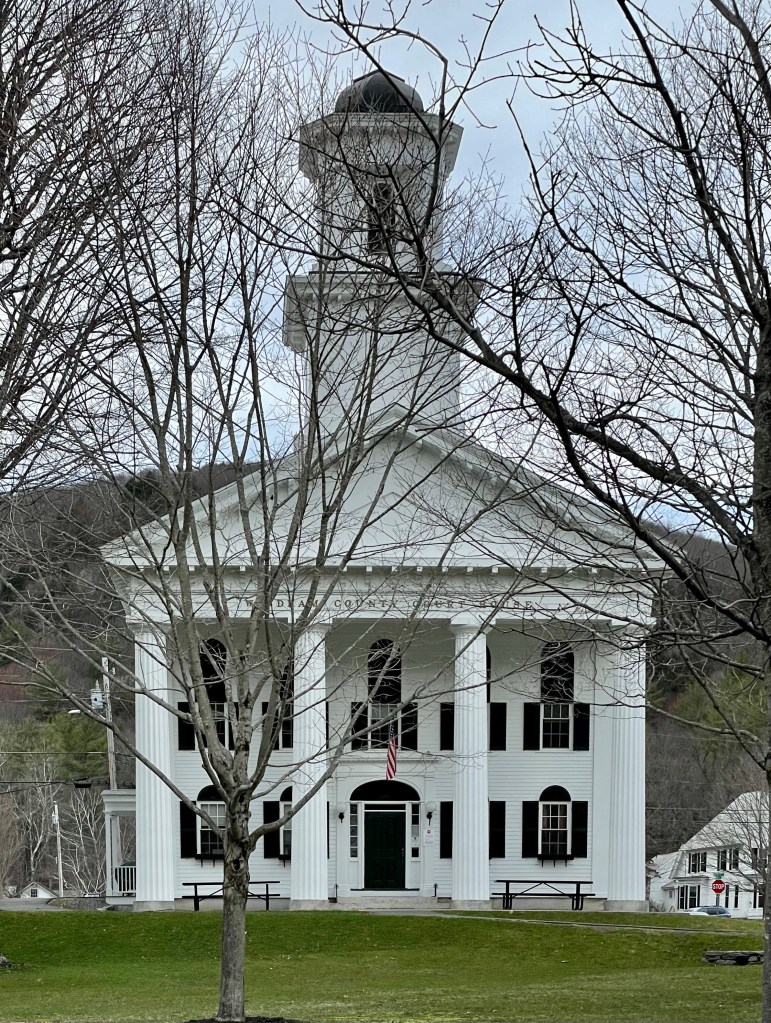
Windham County Courthouse // 1825

When the Windham County courts were transferred from Westminster in 1787, they were housed in the village known as Newfane on the Hill. Four decades later, influential residents convinced their townsmen to shift the village down to their land in a flat part of town, a location better suited for waterpower and commerce and ease of travel in the winter months. The first two buildings constructed were the courthouse and jail on a common. The village center grew rapidly as people moved old buildings down the hill and remodeled them or built anew, establishing a particularly unified townscape. This courthouse building is very stately for such a small town and packs an architectural punch. The two-story building is capped with a belfry and was designed in the Federal style with fan motifs over the windows and door. In the 1850s, nearby Brattleboro tried to usurp Newfane’s county seat status, so they in turn expanded the courthouse, raising the ceiling on the upper floor and adding the monumental Doric portico and pediment to give the building a decidedly Greek Revival appearance.

Old Windham County Jail – Jones House // 1787

Among the earliest buildings in Newfane, this plain two-and-a-half-story, wood-framed and clapboarded gable-roofed house was constructed on its original site on Newfane Hill in 1787 to serve as the county jail. When the residents in town found that living on a hill in winter was less than ideal, much of the town relocated to the flat of town. In 1825, this building was dismantled and moved to its present site. With a new jail being built already, this building was reconstructed as the residence of Anthony Jones, an early resident and businessman. During the middle decades of the century (c.1840-1880), the house served as the Congregational Parsonage for the adjacent church.

Scott Farm – Horse Barn // c.1910

You saw the cow barn at Scott Farm, now you can see where the horses lived! The Horse Barn at Scott Farm in Dummerston, Vermont is a very photogenic building with its symmetrical facade and bright colors. The barn was built not long after Frederick Holbrook II of Boston acquired most of the farm to add to Naulakha, where he lived. Holbrook used the farm as a gentleman’s farm where he would have laborers managing the grounds and supplying him with the freshest produce and dairy products. Inside, there is a ramp down to the basement which still retains the horse stalls, it’s so charming!