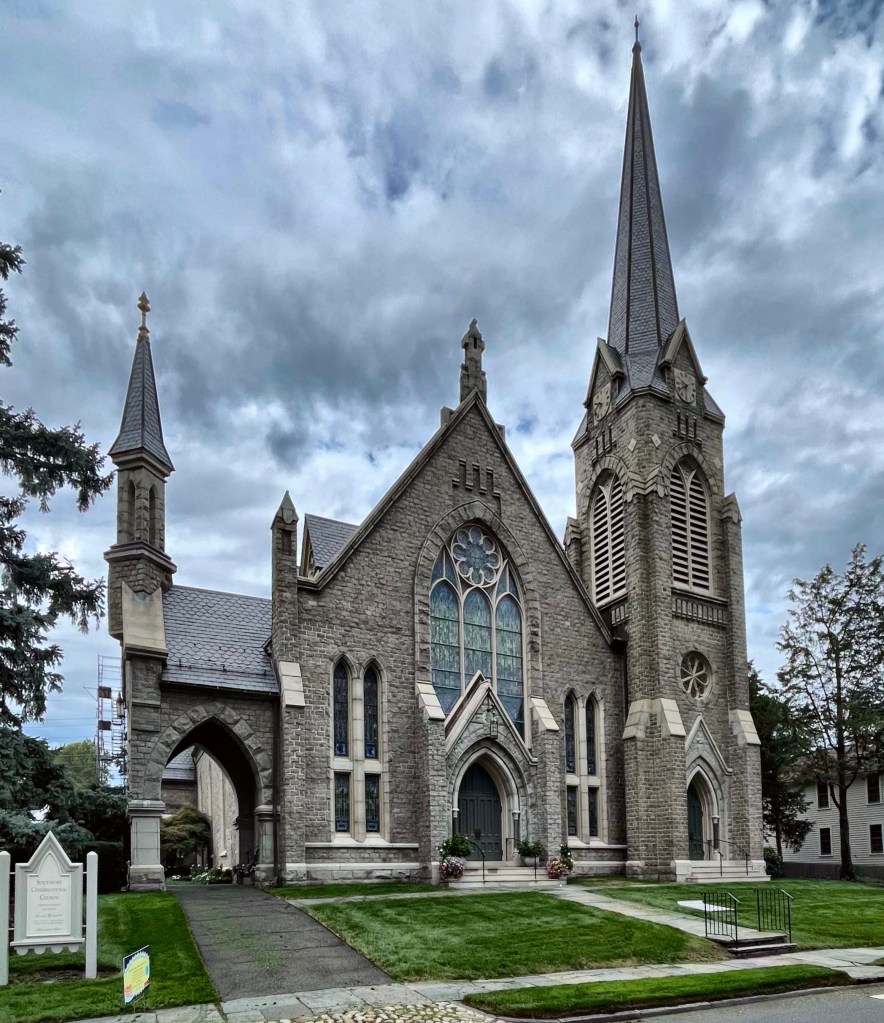
First Reformed Church, Schenectady // 1863

The First Reformed Church of Schenectady is the oldest congregation in the city. Founded by Dutch settlers, Schenectady’s first colonists, the first church lasted over a decade until it burned in the Schenectady Massacre in 1690, when a party of more than 200 French and allied Mohawk warriors attacked the unguarded community of Schenectady, destroying most of the homes, and killing or capturing most of its inhabitants. Sixty residents were killed, including 11 enslaved Africans. An expanding congregation after, outgrew its second and third buildings, replacing them with larger structures. The fourth was lost in Schenectady’s Great Fire of 1861, causing yet another building campaign. The present church building, an architectural landmark in Gothic design, was completed by the highly regarded Victorian-gothic architect Edward Tuckerman Potter in 1863. Potter is also known for his designs of the Nott Memorial Building (previously featured), in Schenectady, and Mark Twain’s home in Hartford, CT. A fire in the church gutted it in 1948, but the community at large banded together to fund the restoration efforts of the amazing architectural landmark.

Trinity Methodist Church // 1878

Located on Trinity Park in Wesleyan Grove (aka the Martha’s Vineyard Camp Meeting Association), this 1878 church served the year round Methodist community in Oak Bluffs. The Trinity Methodist Church is a towered, Victorian Gothic structure of some distinction. Edward M. Hyde, a Methodist minister who had trained in architecture and art, designed it. The property that the church and Parish House sit on belongs to the Association, but the buildings are maintained by the congregation. Interestingly, should the congregation disband, the buildings would return to the Association.