Ambrose Burnside House // 1866

What do this unique Victorian house and sideburns have in common? Well, you are about to find out!
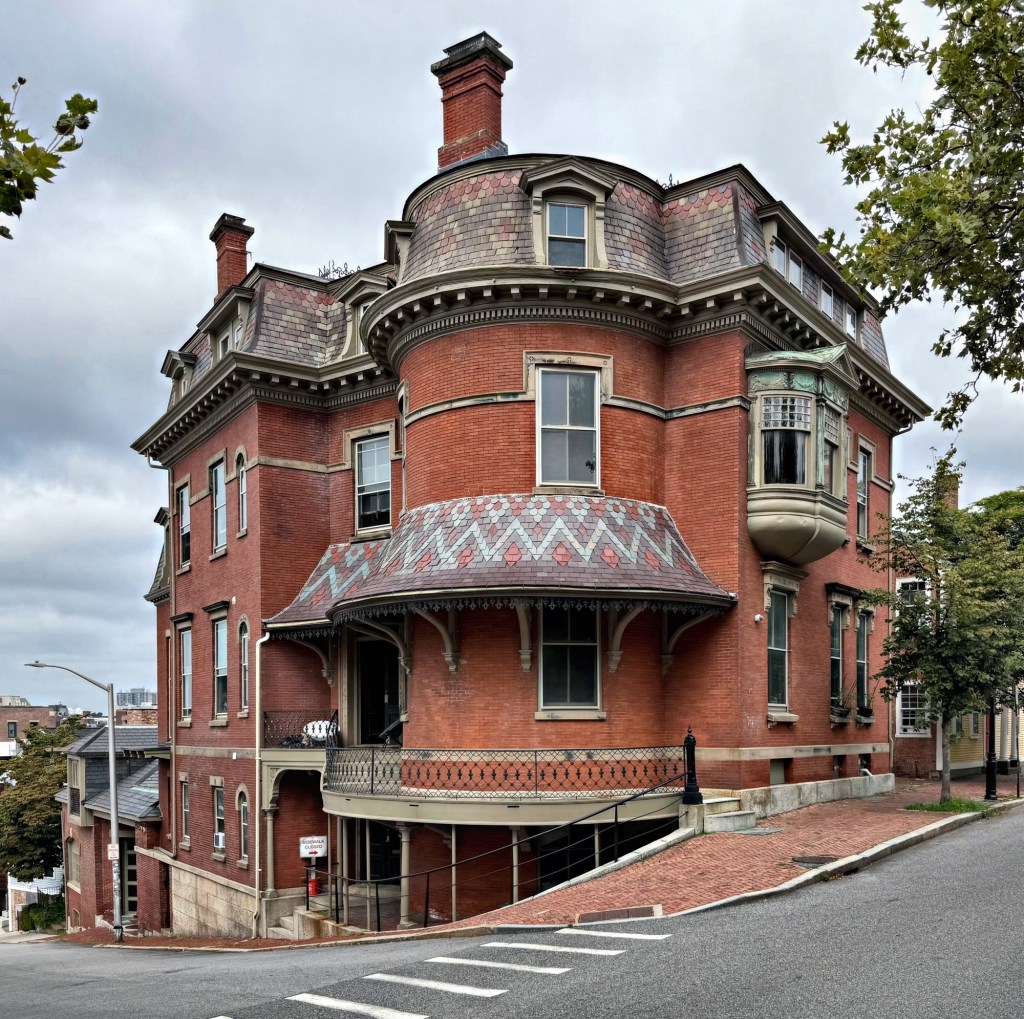
The Ambrose Burnside House is sited on an oddly shaped, and sloping corner lot on Benefit Street in Providence’s East Side neighborhood, and is one of the most unique Second Empire style residences in New England. The house was built in 1866 for General Ambrose Burnside (1824-1881), a Union general in the American Civil War, who returned to Providence and was about to begin a term as governor, followed by two terms in the United States Senate. Ambrose Burnside hired local architect, Alfred Stone, to design his new city mansion, which upon completion, was deemed one of the most “modern residences” in Providence. Built of brick with Nova Scotia stone with a concave slate mansard roof and one-of-a-kind rounded corner bay, the Ambrose Burnside House does not disappoint! Ambrose Burnside died in 1881 and the property was occupied by his sister-in-law until the property was sold in 1884 and housed the Providence Children’s Friend Society House for Aged Women and the Providence Association for the Benefit of Colored Children, providing shelter and food for elderly women and children of color without parents or guardians. After WWII, the Burnside House was converted to apartments.

Now, to the sideburns… Ambrose Burnside was noted for his unusual beard, joining strips of hair in front of his ears to his mustache but with the chin clean-shaven; the word burnsides was coined to describe this style. The syllables were later reversed to give sideburns.

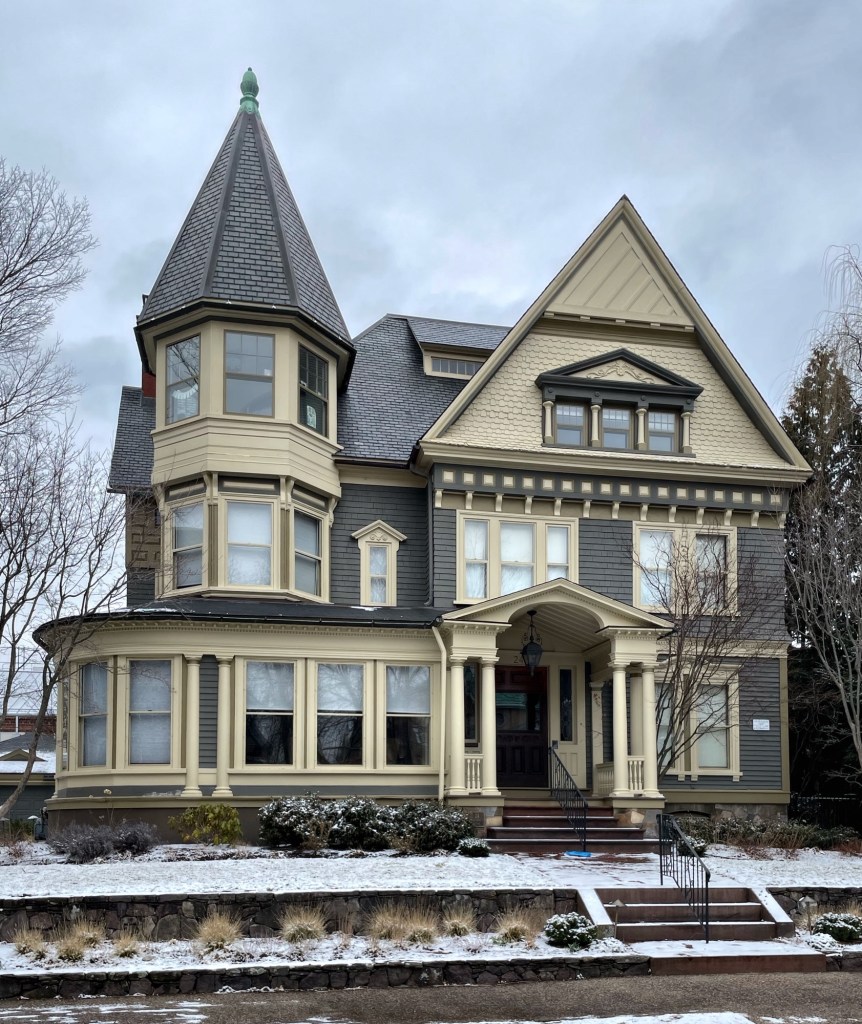
Thurston-Gladding House // 1886

One of the finest Victorian-era houses in the College Hill/East Side area of Providence is this stately residence at 30 Stimson Avenue, known as the Thurston-Gladding House. The house was built for newlyweds, John Russell Gladding and Ellen (Thurston), on land given to the couple by Ellen’s father, attorney and judge, Benjamin Thurston. John Gladding was originally from Connecticut and the couple split their time between their Providence home and a country retreat in Thompson, Connecticut. Architects Thomas J. Gould and Frank W. Angell (Gould & Angell) furnished the plans for the home, which features a ground floor faced with textured brick and walls adorned by continuous wood shingle siding above. A rounded tower, projecting bays and dormers, and a elongated front porch break up the massing into a pleasing composition.

Newton D. Arnold House // 1888

Behold, a Queen Anne Victorian house in all her majesty! This residence, the Newton D. Arnold House, is located at 24 Stimson Avenue in Providence, and is one of the finest examples of its style in the city. Newton Darling Arnold (1843-1916) was employed at the Rumford Chemical Works serving as Treasurer for the company and from this position, accepted additional roles in banking and fraternal organizations, like the Freemasons, where he served a term as Grand Master of the secret society. Newton and his wife, Caroline, purchased a house lot on Stimson Avenue and set out to build one of the finest homes in Providence. To achieve this, they hired local architect, Edward I. Nickerson, to furnish designs. The Arnold House is covered by clapboard and shingle siding beneath a complex, cross-gabled roof of slate, with an ornate gable end and two-story corner tower.

Goodwin House // 1886

Queen Anne style buildings are a favorite as they are all so different and interesting to look at with all the ornate details, asymmetrical forms, varied siding, and rooflines. This example on Stimson Avenue in Providence is a great example of the style. The house was built in 1886 for William P. Goodwin (1852-1921), a banker, insurance executive, and author, who never married and lived in the house with his sister, Sarah Jane Goodwin. Keeping it in the family, William hired his brother, architect, John Bray Goodwin, to design his residence, with little expense spared. Interestingly, the house is built right at the street with its front door accessed up a stair and a brick base adjacent to enclose the property from the sidewalk, creating a high garden wall with gate. There is so much to look at here, it is spectacular.

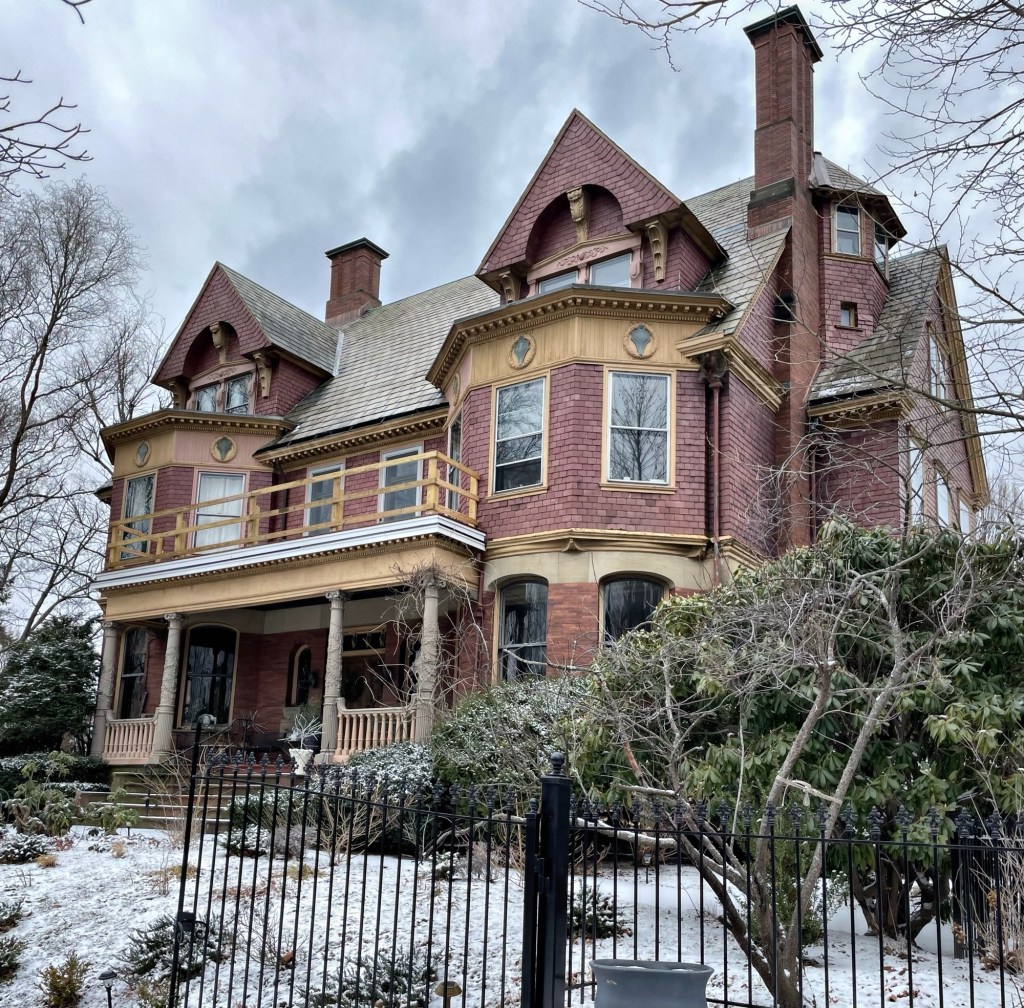
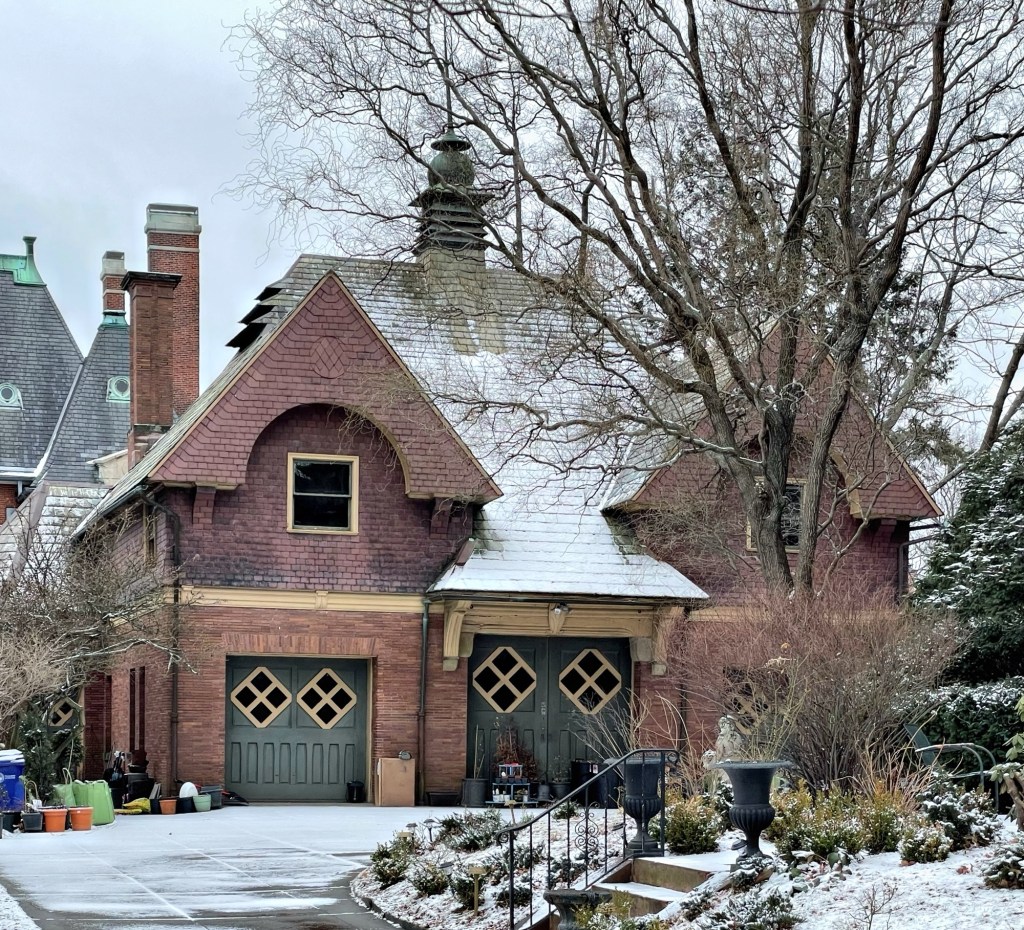
Joseph Fletcher House and Stable // 1889

With red brick and slate siding and all the finest trimmings, this house looks like a present wrapped under the Christmas tree! The Joseph Fletcher House is located at 19 Stimson Avenue in Providence, Rhode Island, and is an excellent example of a Queen Anne residence with the innovative use of siding types often found in the style. The residence was built in 1889 for textile manufacturer, Joseph Edward Fletcher (1866-1924), the son of wealthy, English-born manufacturer, Charles Fletcher. The Fletcher house and adjacent stable were designed by Stone, Carpenter & Willson, one of the most prestigious architectural firms in New England at this period. It is believed that the site was developed by Charles Fletcher, as a wedding gift to his 23-year-old son and daughter-in-law following their marriage. The home was recently sold, and the interiors are as stunning as the exterior!

Eliza and Samson Almy House // 1859

The College Hill neighborhood of Providence has some of the finest residential architecture in New England, and some really fun stories of those who built these grand homes. In 1859, the house was built with a concave mansard roof punctuated with dormers and a bold bracketed cornice below. The use of round headed windows on the second floor is a really great design detail. The residence was first owned by Eliza Talbot Almy (1808-1886), who held the title to the property. Wives holding the title of properties in this period was fairly common as it would protect their personal property and residence from financial risk if the husband was met with lawsuits or financial hardship. Eliza’s husband was cotton broker and manufacturer Samson Almy (1795-1876), who had already been sued in a case heard before the United States Supreme Court in 1851. After Eliza’s death in 1886, her daughter, Susan Smith (1837-1917) and husband, Amos Denison Smith (1835-1912), a Civil War veteran, occupied the house into the early 20th century.

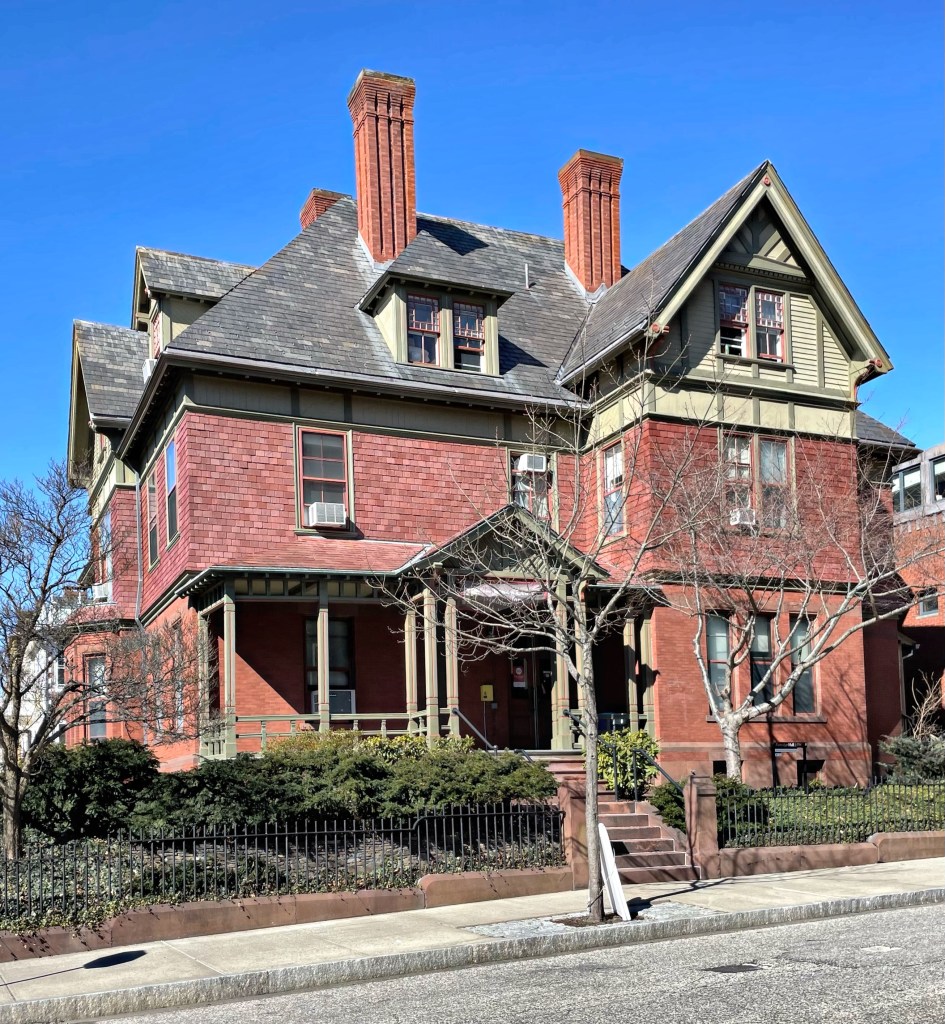
Beckwith House – Partridge Hall // 1882

Henry Truman Beckwith (1808-1893) was born in Providence and (of course) enrolled at Brown University. He left school after two years and wished to see the world. He began to work as a cargo clerk aboard ships for a cotton merchant of Macon, Georgia. He traveled between Boston and Calcutta at least twice, bringing aboard novels from American and British authors, spending much of his time reading. Being well-read and without a family of his own (he never married), he devoted much of his time to clubs and organizations including: the Providence Athenaeum, Rhode Island Historical Society, and the Rhode Island Horticultural Society. In the later years of his life, Henry had this Queen Anne style home built in College Hill, on the same block as the Historical Society where he was a member. The Beckwith House was eventually acquired by Brown University and has since been known as Partridge Hall. The building is now home to the Brown Center for Students of Color, an organization that was established after a series of student protests in 1968 and 1975. Amid the civil rights movement of the late 1960s and 1970s, a group of Black students walked out of Brown University in December 1968 in protest of fierce racism on campus. The mission of the Brown Center for Students of Color has evolved over the years, but its current mission statement reads “Visualize. Vocalize. Mobilize”, they remain an integral piece of the campus and provide much-needed space for students of color to build a sense of community on campus.