Canterbury Shaker Meeting House // 1792

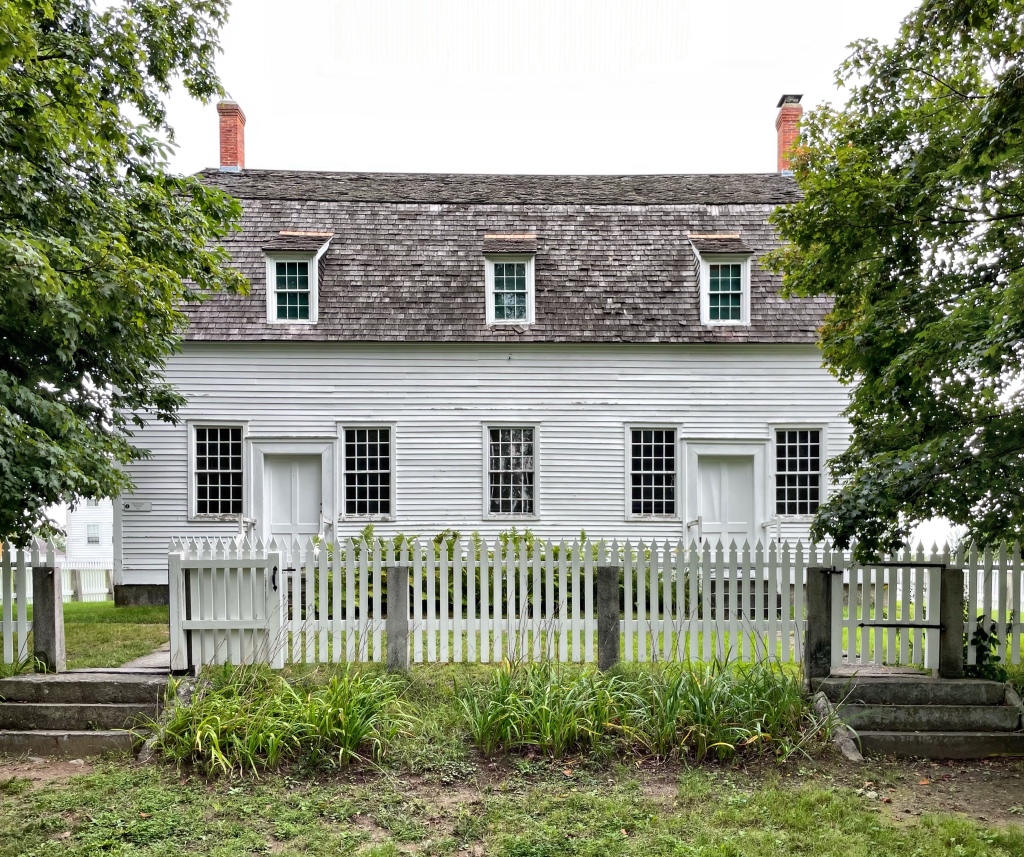
The Canterbury Shaker Village was one of two Shaker communities existing in present-day New Hampshire (the other being Enfield Shaker Village, featured previously on here). In 1782 Israel Chauncey and Ebeneezer Cooley from the Mount Lebanon village of Shakers traveled to Canterbury and converted several prominent figures of the community by convincing some of the Christian farmers that the Shaker way was what they had been seeking. Among those converted to the Shakers, the Whitcher, Wiggin and Sanborn families, donated land to house the Canterbury Village community of Shakers and the Canterbury Village was founded in 1792, led by Father Job Bishop. The village expanded over time, and in 1803 there were 159 members in three families. Nearly fifty years later in 1850, the site contained 3,000 acres with a community of 300 housed in 100 buildings!

The first building of the Canterbury Village was the Meeting House. The Gambrel roofed building was constructed by members in reverent silence and supervised by Moses Johnson (1752-1842) who served as master builder of seven Shaker meetinghouses all over the Northeast. Inside, there were two stairways, one for men and one for women, located in the northwest and southwest corners of the building, each easily accessed by separate entrances, which led brothers and sisters from the first floor meeting room to the second story sleeping lofts.

In 1992, Canterbury Shaker Village closed, leaving only Sabbathday Lake Shaker Village open as a functioning community. There are apparently only two active Shakers left in the country, both at Sabbathday Lake in Maine. Many other villages like Canterbury, have been converted to museums, which give historians and the general public a great insight into how these places have functioned.
Willey Hotel // pre-1822

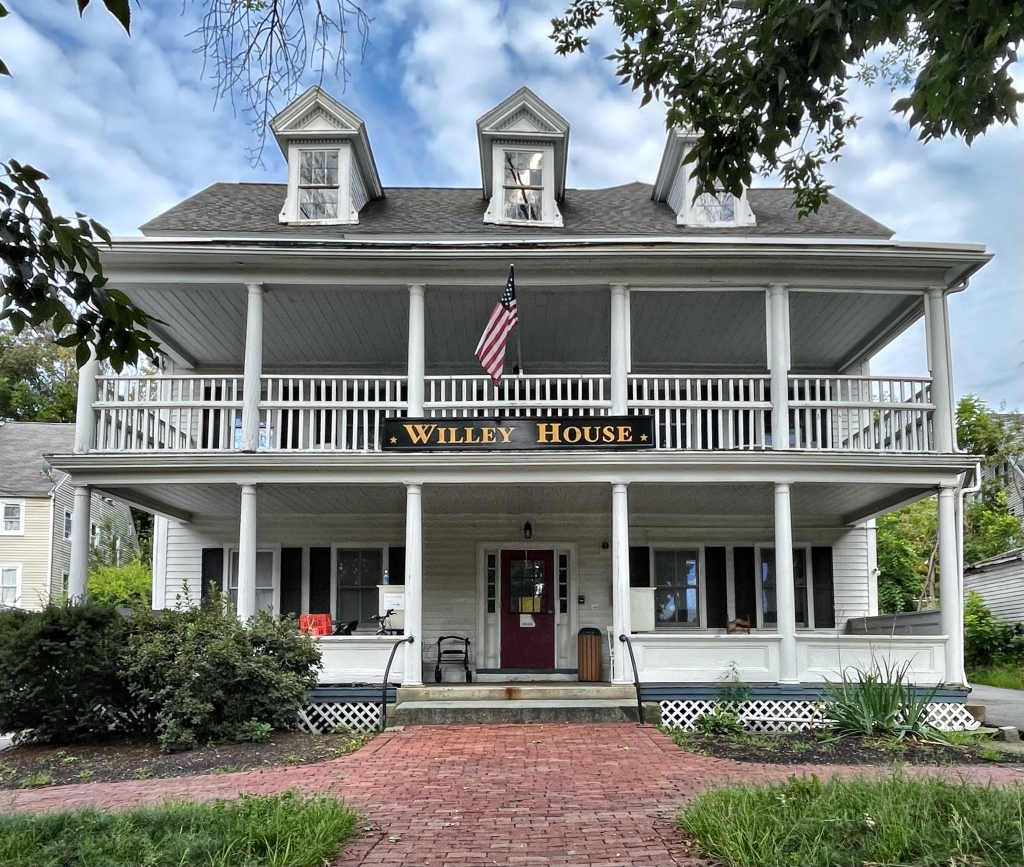
Originally an old tavern/inn, this wood-frame building in Newmarket, NH, was built for a member of the Rundlett Family who settled in town from nearby Portsmouth. The old building was known as Rundlett’s Tavern for a number of years, later renamed the Washington House, and eventually Silver’s Hotel by 1870. Under owner Joseph B. Silver, the Federal style building was updated with Victorian-era flair, marketing to visitors of town who had business with the Newmarket Manufacturing Company across the street. After Silver died in 1898, the building was purchased by George H. Willey and renamed the Willey Hotel/Willey House. He oversaw renovations in the 1920s to give it the Colonial Revival appearance we see today. The building is now apartments.

Old Stone School, Newmarket // 1841

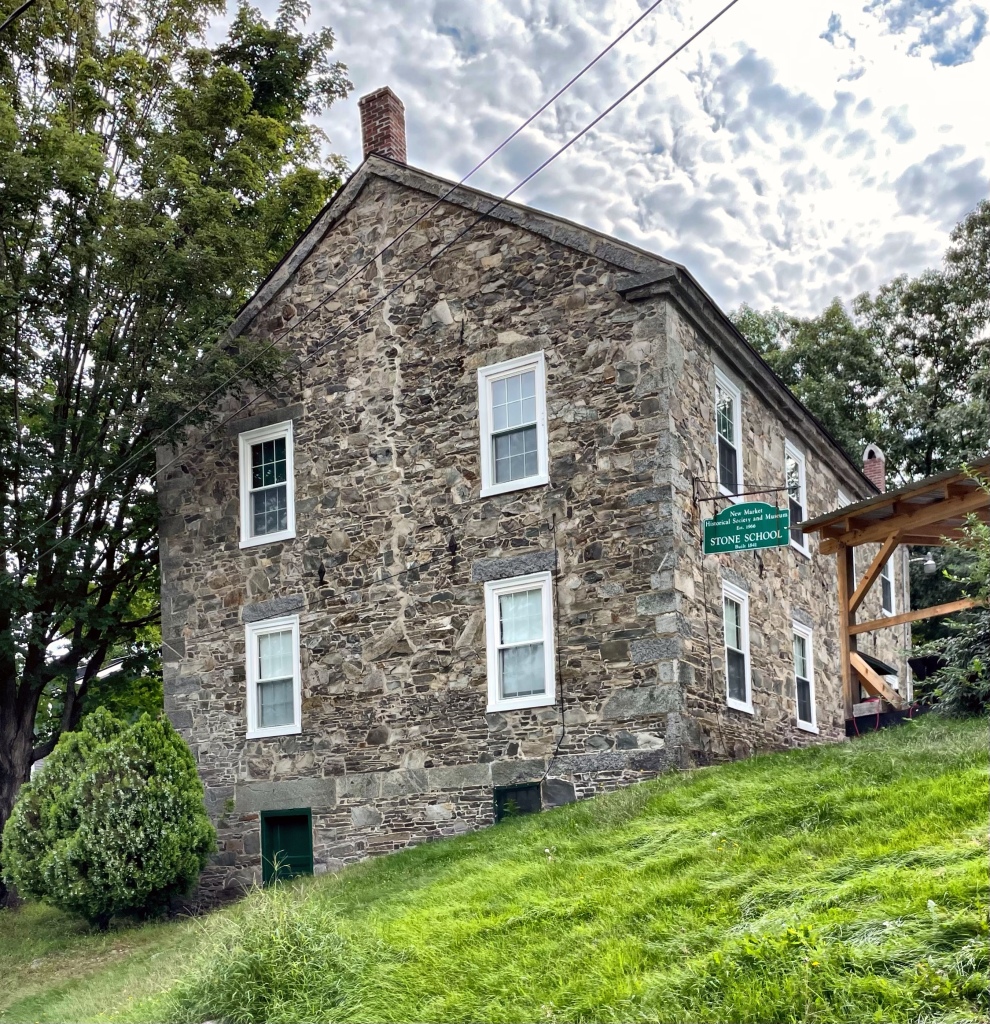
Perched high on a hill, next to the Stone Church (featured previously), the old Stone School in Newmarket is one of a handful of iconic stone buildings in the town. Built in 1841, its stonework executed by William and Robert Channel, local farmers and stonemasons, who likely got their skill from building stone walls on farms. The building was used continuously as a school until 1966, when it was given to the Newmarket Historical Society, which now operates it as a local history museum.

Mathes Store // c.1835

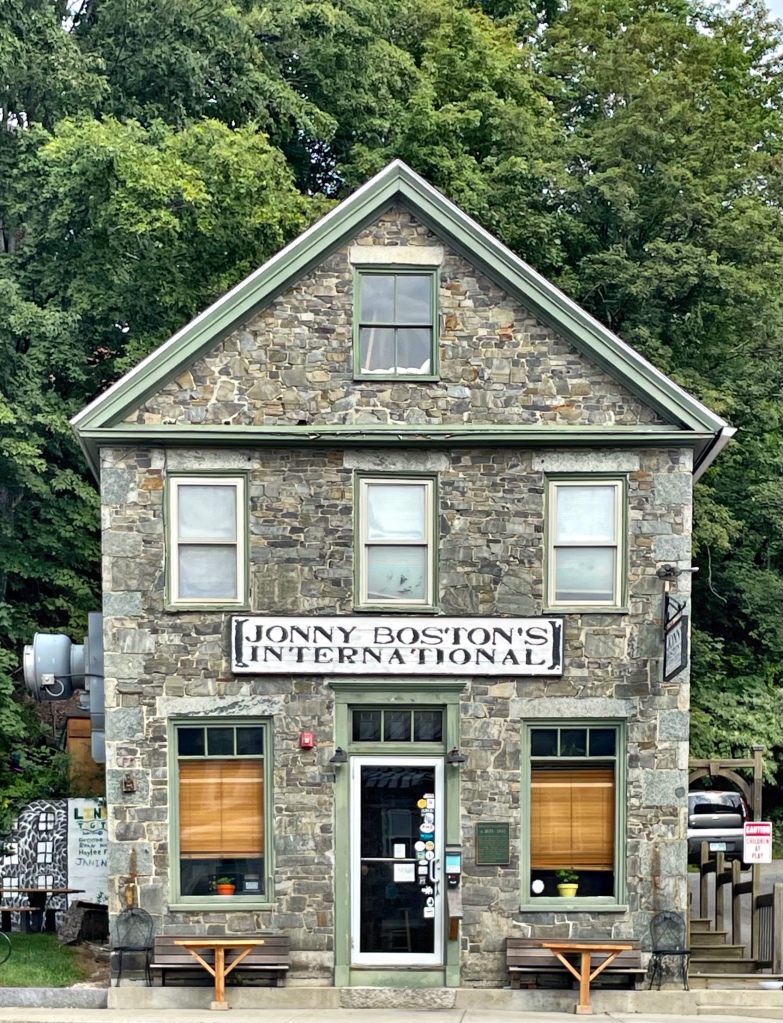
Next door to the Mathes Block (previously featured) this stone commercial building is one of many such buildings that make Newmarket so beautiful and unique. Stone was harvested from the shores of the Lamprey River nearby and the beautiful coloring made them perfect for buildings in town. This building was constructed in the 1830s for Benjamin Mathes, a developer and businessman in town. The structure was occupied by the town post office in the early years, and now houses a restaurant.

Mathes Block // 1840

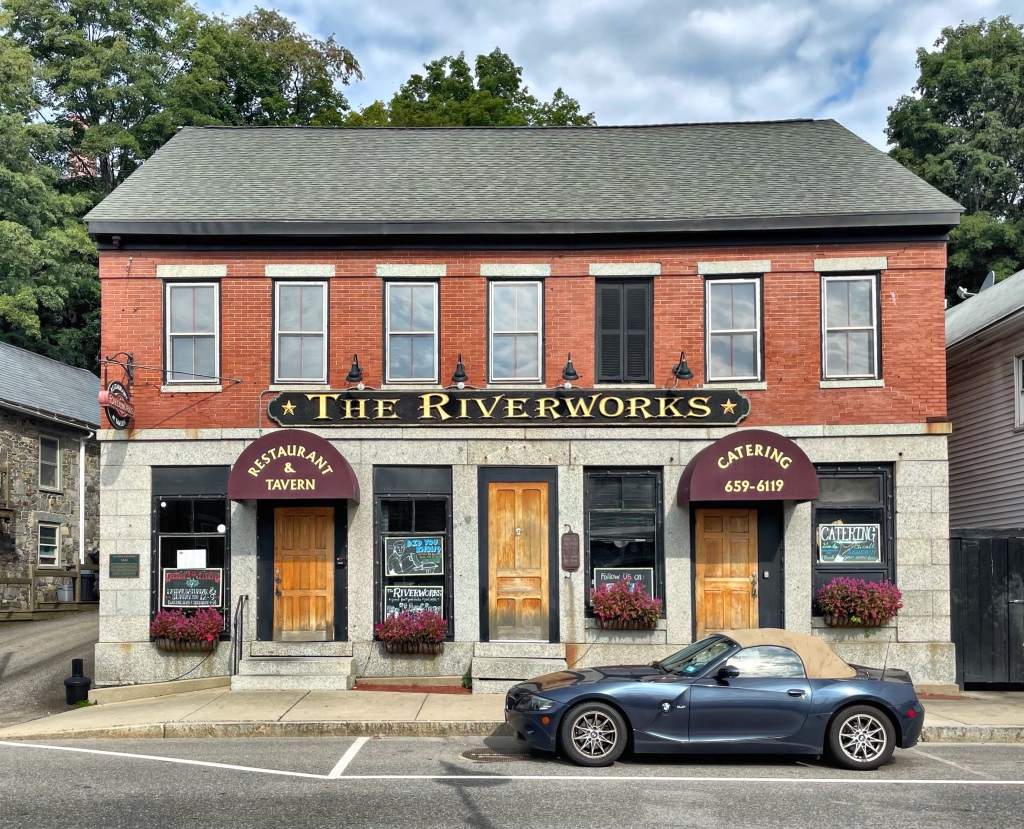
Right on Main Street in Newmarket, the Mathes Block is one of the best-preserved examples of a brick commercial building in town. The structure was seemingly built for Benjamin W. Mathes, who operated a grocery and dry goods store out of the storefronts. Above, he likely had offices or a dwelling for workers. The building stands out for the contrast of granite at the storefront with the brick elsewhere. The building is now home to The Riverworks, an aptly named restaurant/pub with great food.

James Paul House // c.1835

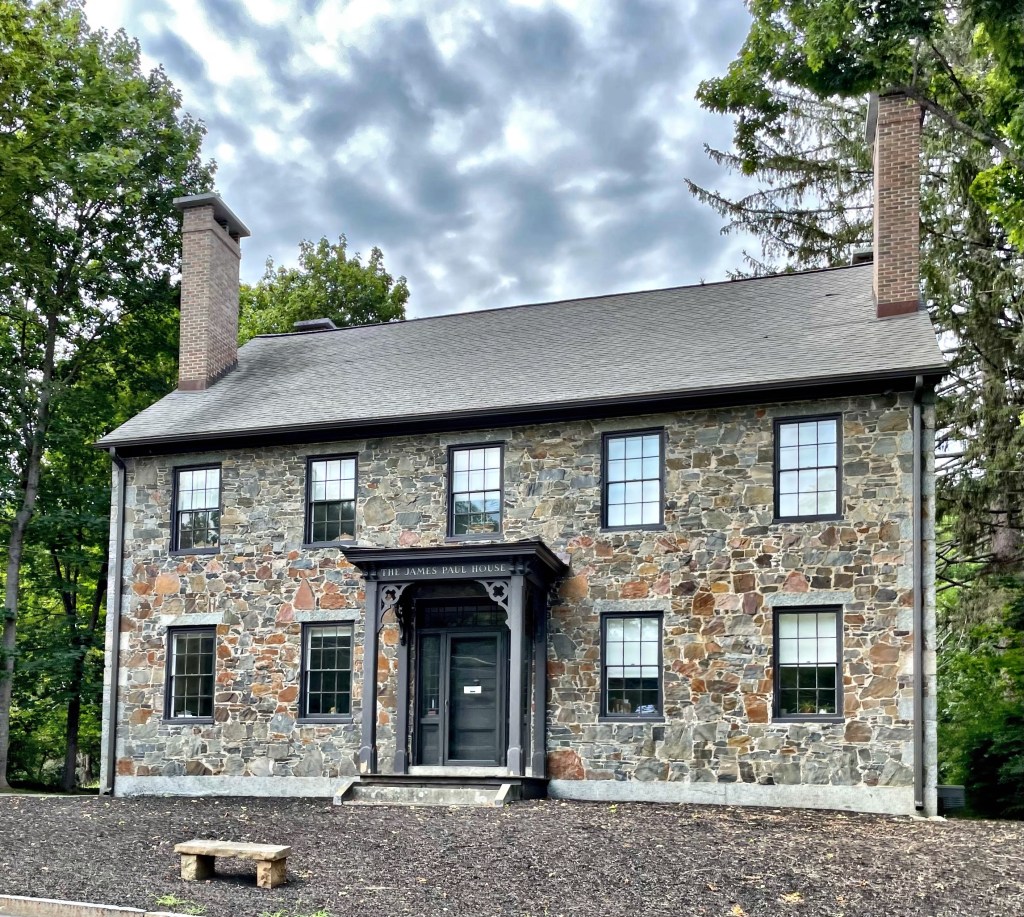
The James Paul House in Durham, NH, stands out as a rare example of stone construction in town. The house was built between 1830 and 1840, and is transitional Federal/Greek Revival in style. It has four tall chimneys (two on each slope of the roof), granite lintels over the windows, and granite quoins at the corners which together, create an elegant composition. Tragically, James Paul died unexpectedly when removing the staging on this house, he was never able to live in this beauty. The home was occupied by two reverends of a local church.

Smith Memorial Chapel // 1900

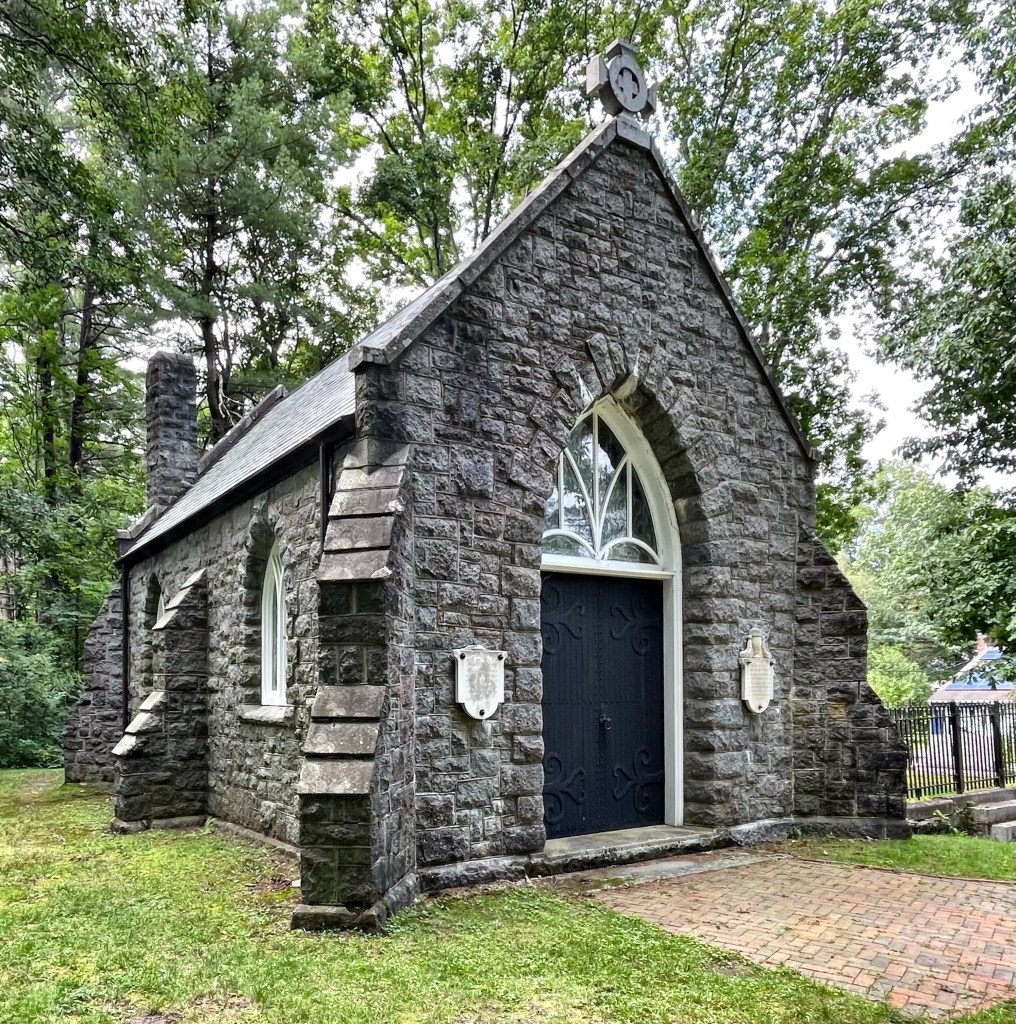
The Smith Memorial Chapel, located in Durham, NH, was built for and named after Hamilton Smith by his wife, Alice Congreve, in 1900. From their marriage in 1886, Hamilton and Alice Smith lived in England for ten years, where Hamilton worked and lived in mining operations in South Africa. He had a home in New York and by the end of 1895, Hamilton acquired property in Durham to create a country estate (next post). On the Fourth of July in 1900, Hamilton and a family friend went boating downriver on the Oyster River, in Durham along with his two dogs Hana and Joy. While attempting to free the boat after it ran aground, he suffered a fatal heart attack at just 59 years old. Almost immediately, his widow Alice funded a memorial chapel to her late husband on the family cemetery. The Gothic Revival chapel features amazing lancet stained glass windows and stone buttresses resembling old English chapels. Also on the grounds of the cemetery are the burials of Mr. and Mrs. Smith and their beloved dogs, marked by small gravestones. The property, including the small cemetery in which both family members and pets are interred, remained in the family until 1979, when it was donated to the town.

Old Durham Town Hall // 1825

Durham, New Hampshire, sits beside Great Bay at the mouth of the Oyster River, an ideal location for settlement, like the Western Abenaki and their ancestors who’ve lived in the region for an estimated 11,000 years. By 1633, English colonists were spread along the tidal shores of the Oyster River, and brought non-native livestock aboard their ships, “thousands of cattle, swine, sheep, and horses,” requiring them to clear acres merely for pasture. Formerly un-molested fields, carefully cultivated across centuries, were trampled and their crops destroyed. Due to this, violence between the native people and colonizers erupted, and livestock were frequently killed. The Abenaki saw them as a direct threat to their food supply. The Oyster River Plantation (as it was originally named by colonizers), was so named Durham in 1732 when it was incorporated, after County Durham in England.

Built in 1825 by Joseph Coe, local merchant and shipbuilder, this brick building was constructed as a prominent corner store with two stories of windows for commercial use and a top floor apartment. The brick structure is an excellent example of Federal style architecture in the Great Bay area of New Hampshire, and its location at the end of Main Street, where it converges with Dover and Newmarket roads, historic routes to the town’s neighbors, provided a lot of traffic of potential customers.After years of meeting in taverns and schoolhouses, the town selectmen voted in 1840 to purchase Coe’s Store for use as a town hall. They purchased the building, later opening the top two floors into one large meeting space. The town outgrew the building and relocated across the street, and since 1961, the building has been occupied by the Durham Historic Association and Museum.

Newington Railroad Depot // 1873

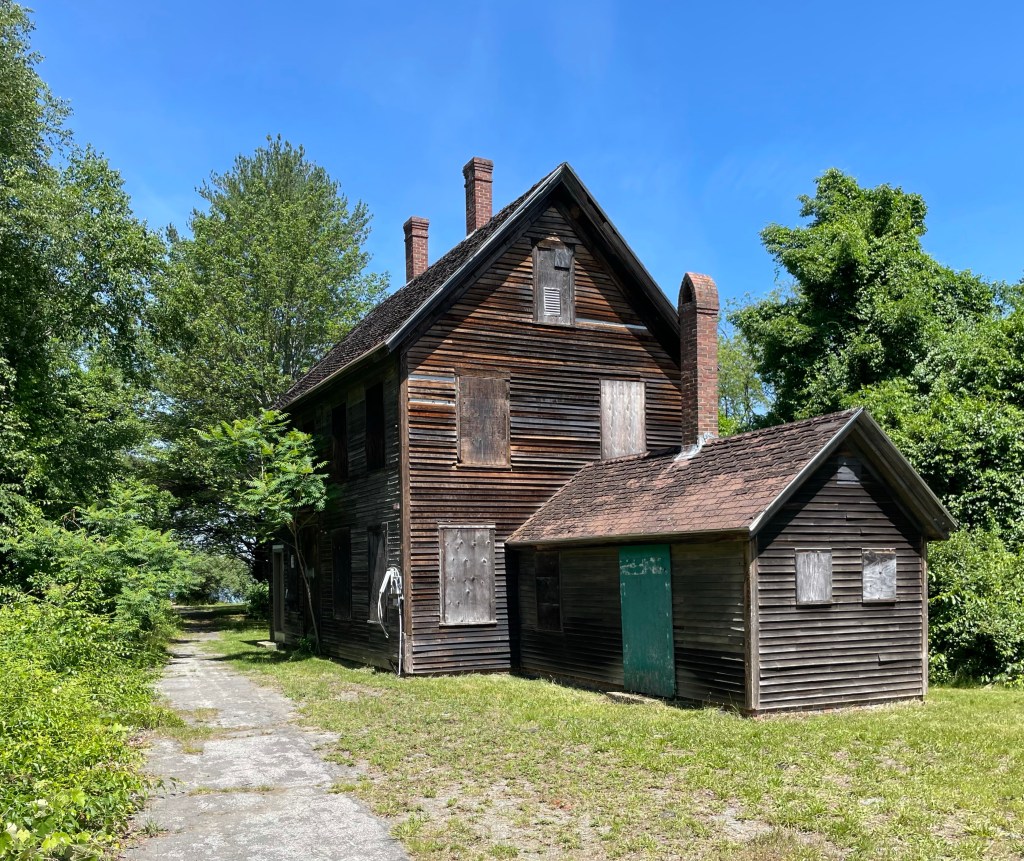
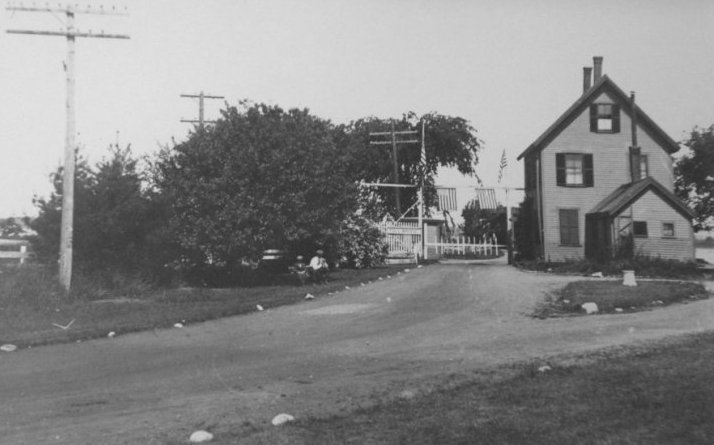
The Newington Railroad Depot was built in 1873 at the narrowest point at the Piscataqua River as part of the Portsmouth and Dover Railroad. The Portsmouth and Dover Railroad Company was chartered in 1866 in order to provide a link between the eastern and western divisions of the Boston and Maine Railroad and also included the means to cross Great Bay. The rail line was completed in 1874 and included this railroad depot which included a residence for the stationmaster while he collected tolls for pedestrians and carriages crossing the bridge nearby, and operated the swing section of the bridge to permit boat traffic to pass. By 1915, the one story wing was constructed which served as a 10’x20′ waiting room and ticket office. The offshoot rail line remained in service until the completion of the General Sullivan Bridge in 1934, due to the popularity of the automobile. The rail line was subsequently abandoned, and the nearby tracks were taken up in 1940. Elmer Brooks, the longtime stationkeeper was allowed to remain in the old depot, renting the building from the State of New Hampshire, who acquired the site in 1940. He lived here until his death in 1971. After which, the building has decayed. The State of New Hampshire should restore this valuable piece of history and has an amazing opportunity for a park in the surrounding area. Hopefully something is done to preserve the building!

Newington Stone Schoolhouse // 1921

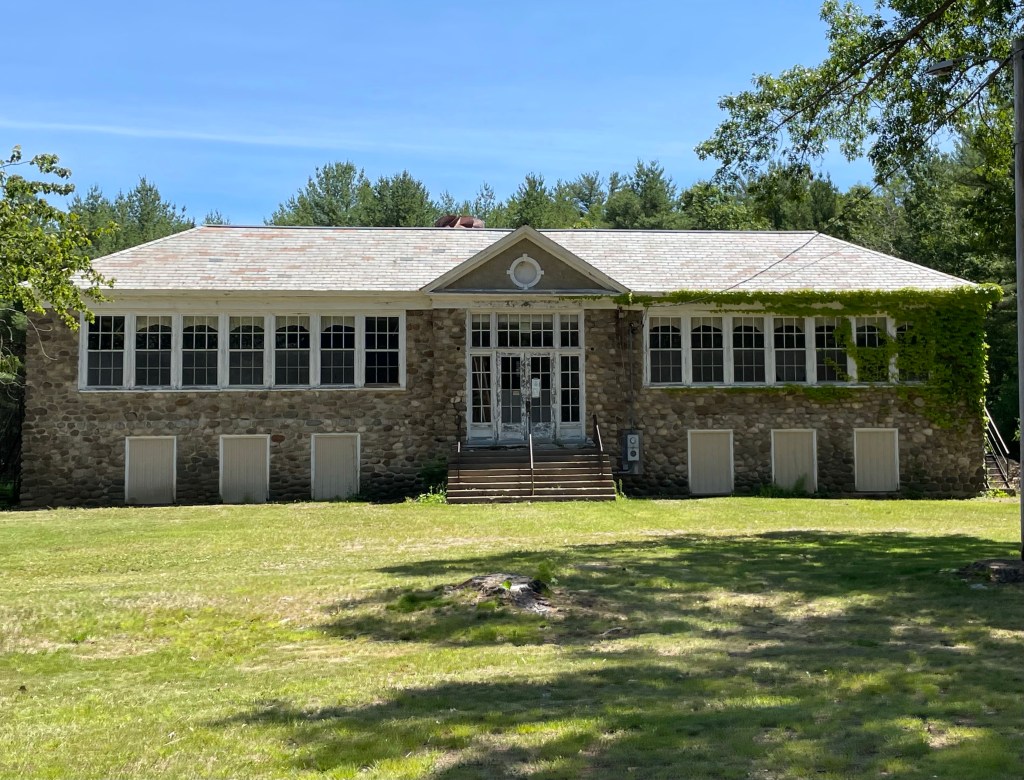
When the first floor of the Old Town Hall was deemed too cramped for the students of Newington, NH, to receive their education, the town worked out a solution, build a new school. Town revenue from timber-cutting in the Town Forest (the oldest Town Forest in the United States) helped finance construction of the school. Additionally, many landowners and farmers were asked to gather and donate stones on their properties and in stone walls for the material of the new building, which many contributed. The school closed in 1959, not long after the Pease Air Force Base was expanded and destroyed much of the southern edge of town. The U.S. Government acquired many parcels of land in Newington and Portsmouth and redeveloped the site over time in the mid 20th century. In Newington, the government leveled 26 local homesteads an action that left a deep scar on the town’s collective memory. The town has used the building for years, but only recently acquired the property from the Federal Government when they de-accessioned some of their properties here. Hopefully this building will be restored and serve as an educational tool for the town’s later generations.