Henry S. Grew Townhouse // 1856

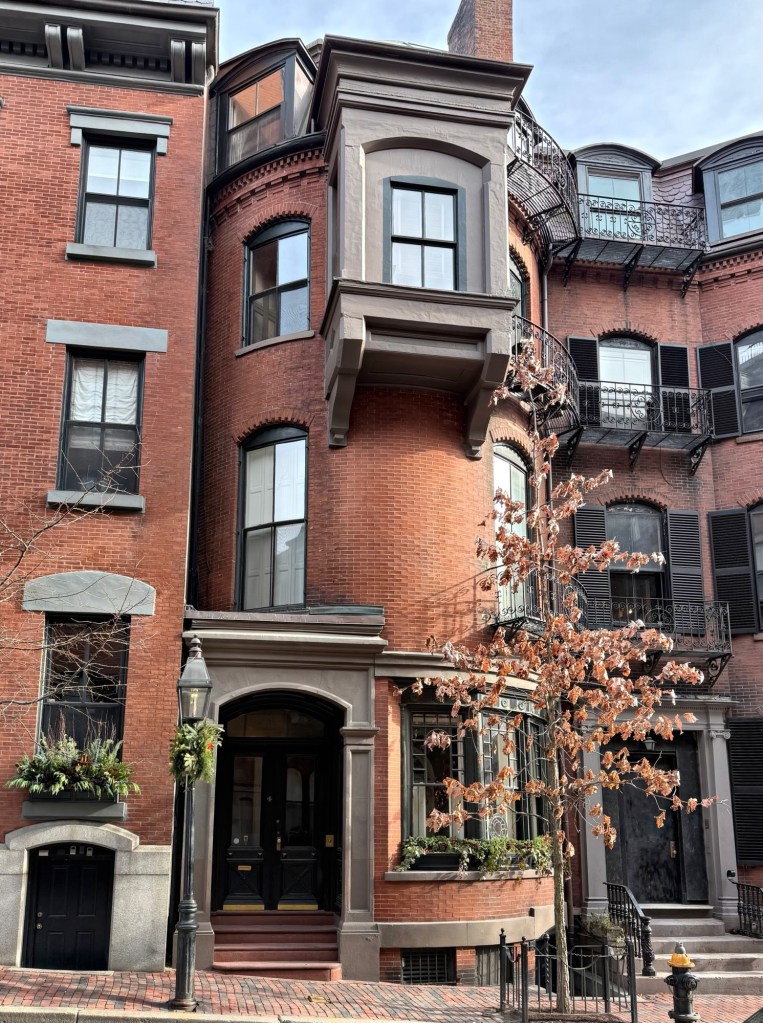
Built in 1856, the townhouse at 2 Walnut Street is a unique Second Empire style townhouse erected on one of the last undeveloped lots on the South Slope of Boston’s exclusive Beacon Hill neighborhood. The three-story, brick residence is capped by a mansard roof and its facade is dominated by a full-height octagonal bay, which at the center on each floor, is a recessed brick panel in lieu of windows. The property was originally owned by Henry Sturgis Grew (1834-1910) a real estate developer and politician who split his time between this residence and a large estate called Grew’s Hill, that grew to several hundred acres and contained an active farm, part of which was later incorporated into Stony Brook Reservation. Henry Grew’s daughter, Jane Norton Grew, would go on to marry John Pierpont Morgan Jr. (J. P. Morgan) in 1890. The Grew House was modernized in the 20th century with a Classical door surround, but otherwise, it maintains the appearance of when it was built in 1856. 

Cotting-Russell Mansion // 1812

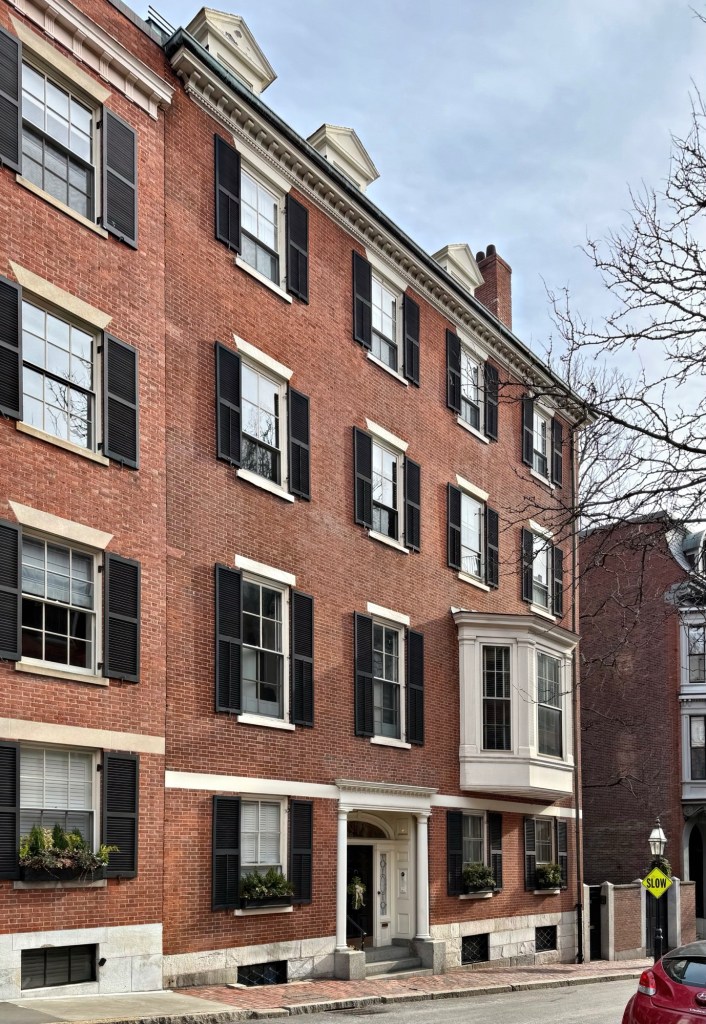
Walnut Street in Boston’s Beacon Hill is one of the finest short streets that showcases some of the best examples of 19th century residential architecture in Massachusetts. Built in 1812, the house at 8 Walnut Street, is an excellent example of a Federal style mansion updated after the Civil War with new window sashes and projecting oriel window. The recessed off-center entrance consists of a front door which is flanked by multi-pane sidelights and surmounted by an elliptical fan light. On either side, columns support the cornice-headed entablature which disrupts the painted stone beltcourse between the first and second floors. The mansion was built by Uriah Cotting (1766-1819) a prominent real estate developer. When this house was completed, Cotting the property to Nathaniel Pope Russell, an insurance man who rented the property. Dr. George Parkman rented this house at the time of his tragic death at the hands of a Harvard Medical School professor in 1849. Mrs. Parkman and their son, John E. Parkman resided here until after the trial, when they moved to a larger residence on Beacon Street.

Motley-Davis Mansion // 1811

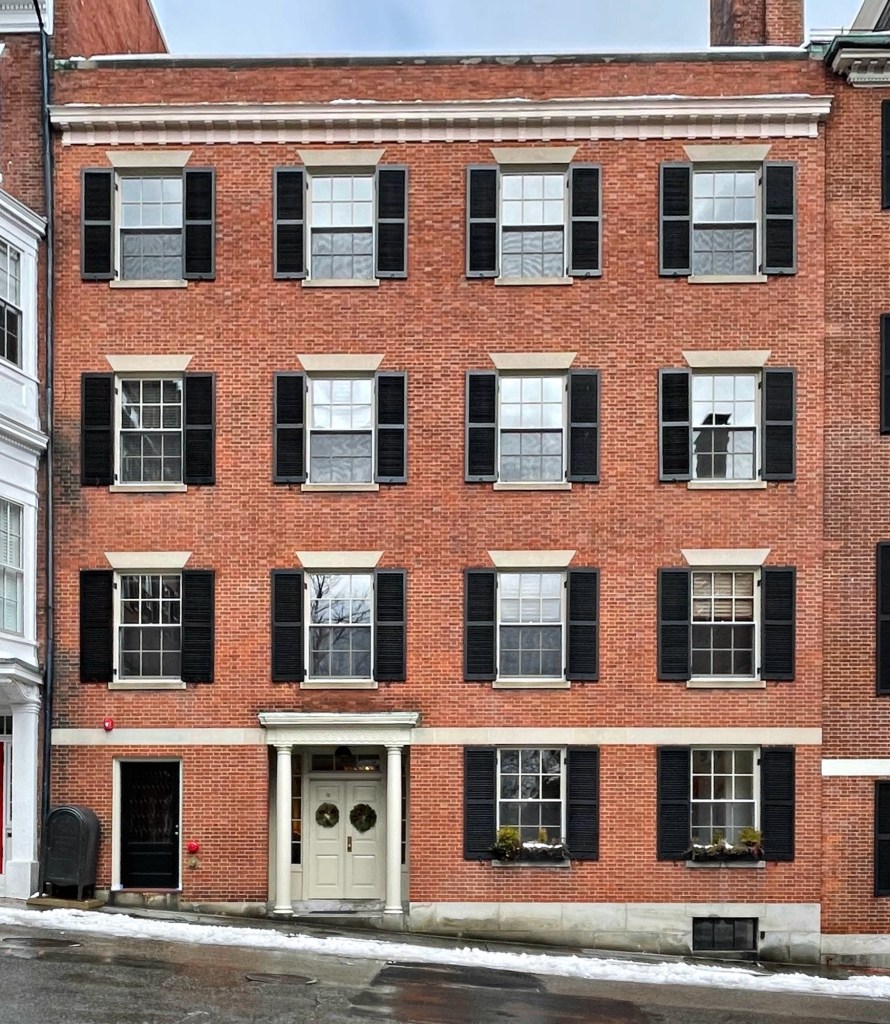
This stately Federal style mansion at 10 Walnut Street in Beacon Hill, was built in 1811 for Ebenezer Francis as an investment property on land he had purchased from Uriah Cotting, one of the premier real estate developers of 19th century Boston. By 1823, Thomas Motley, the father of historian John Lothrop Motley, lived here, and hosted impromptu melodramas enacted by a young John Motley and two of his friends,
Wendell Phillips and Thomas Gold Appleton, both of whom lived close by on Beacon Street. After the Civil War, the property was owned by James Davis (1806-1881), a wealthy coppersmith who co-founded The Revere Copper Company with Joseph Warren Revere, grandson of Paul Revere. James Davis remodelled the Federal style house with Second Empire detailing including a brownstone-faced first story and quoins, with an oriel window at the second story, and a slate mansard above a bracketed cornice. During the 1920s, 10 Walnut Street’s Victorian facade was removed and a Federal Revival facade was constructed in its place, closer to original conditions. Today, the Motley-Davis Mansion rises four stories from a low granite basement to a flat roof enclosed by a low parapet. The off-center entrance is marked by columns supporting a cornice-headed entablature. This entablature interrupts the continuous stone belt course separating the first and second stories. What a beauty.