Thayer Bird Museum // 1903

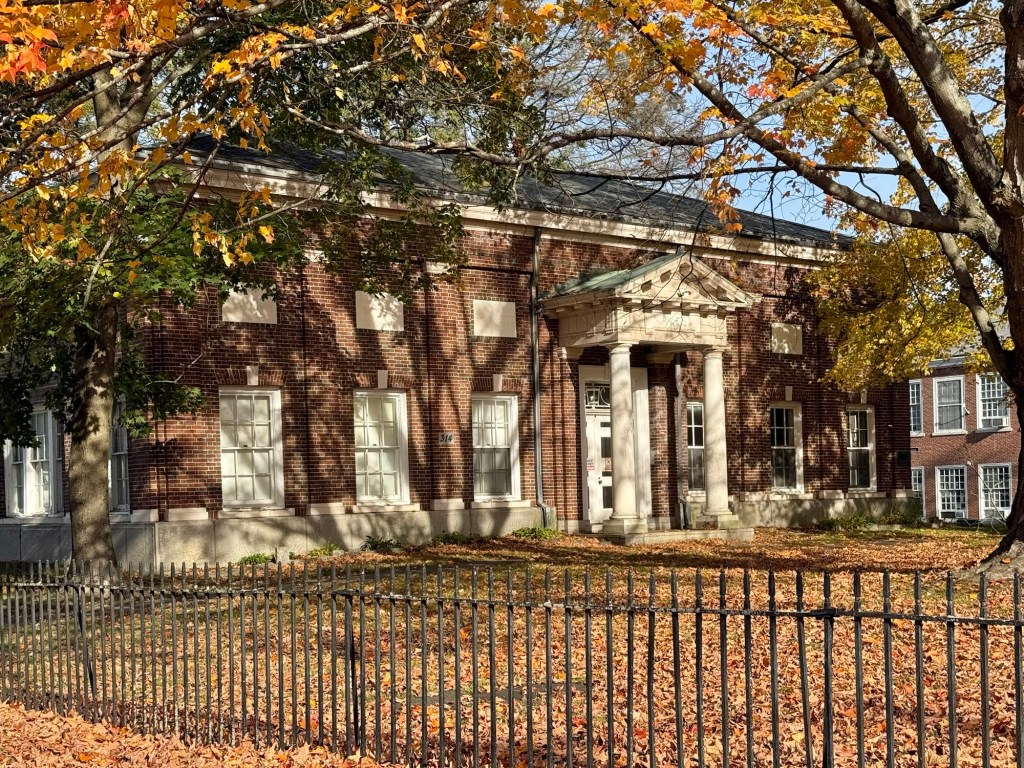
John Eliot Thayer (1862–1933) was an amateur ornithologist and member of the wealthy Thayer Family in Lancaster, Massachusetts. Due to his family’s business dealings, John Thayer was able to turn his passion, studying birds, into one of the largest collections of stuffed birds, eggs and nests for professionals all over the country to study. John began collecting and housed his collections were in several wooden buildings close to his home in Lancaster, but when these became unsafe and crowded he built this beautiful brick building in 1903 in South Lancaster opening it to the public as a museum a year later. The Boston architectural firm of Winslow & Bigelow designed the Colonial Revival style building, with the Guastavino Fireproof Construction Company providing plans for interior spaces and likely engineering inside. Many of the leading ornithologists of the time visited the Thayer Museum and it was estimated that more than ten thousand visitors came to the museum in the first six years.  In 1974, the building was sold to the now defunct Atlantic Union College and reopened as the Mabel Bartlett Art Gallery. Much of the Thayer collection was donated to the Museum of Comparative Zoology at Mr. Thayer’s alma mater, Harvard University. Since the Atlantic Union College closed in 2018, this important building has been closed, hopefully to see reuse in the eventual redevelopment of the campus.
Frederick P. Fish Mansion – New England Hebrew Academy // 1902

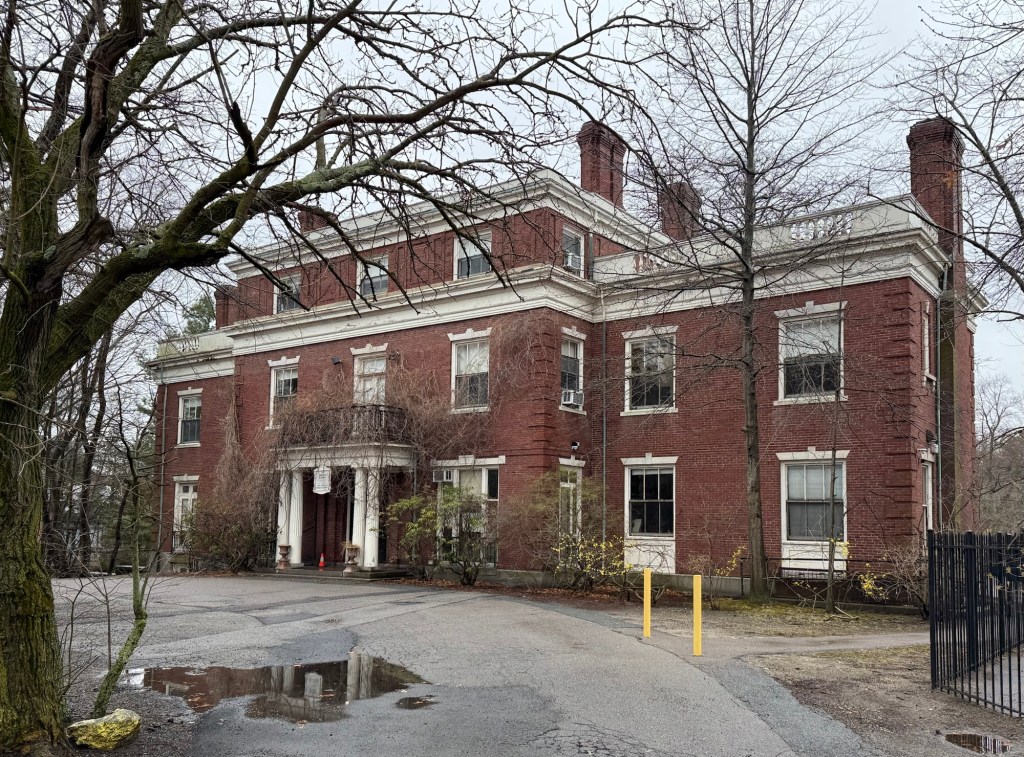
One of the finest estates in Brookline can be found here in the Cottage Farm neighborhood, just steps from Boston and the Charles River. This brick mansion was built in 1902 for Frederick Perry Fish (1855-1930), a prominent lawyer who also served as president of American Telephone & Telegraph Corporation from 1901 to 1907. One of the leading patent attorneys of his age, representing such clients as Alexander Graham BellThomas Edison, and The Wright Brothers, by the time of his death he was believed to have appeared in more patent cases at the Supreme Court than any other lawyer. For his Brookline residence, Fish purchased an 1867 brick mansard-roofed home on the lot and hired the architectural firm of Winslow & Bigelow to ether modify the earlier home or demolish it and build entirely new. The result is this stately, three-story Neo-Classical mansion. Fish would die at his home in 1930, and the property would eventually be owned by the New England Hebrew Academy as a Jewish day school. While it is an institutional use, the facade is covered with climbing vines that are bad for the masonry and an asphalt paved front yard which detracts from the beauty of this estate. It appears to be near-original though, which is great to see!

Walker Building // 1891

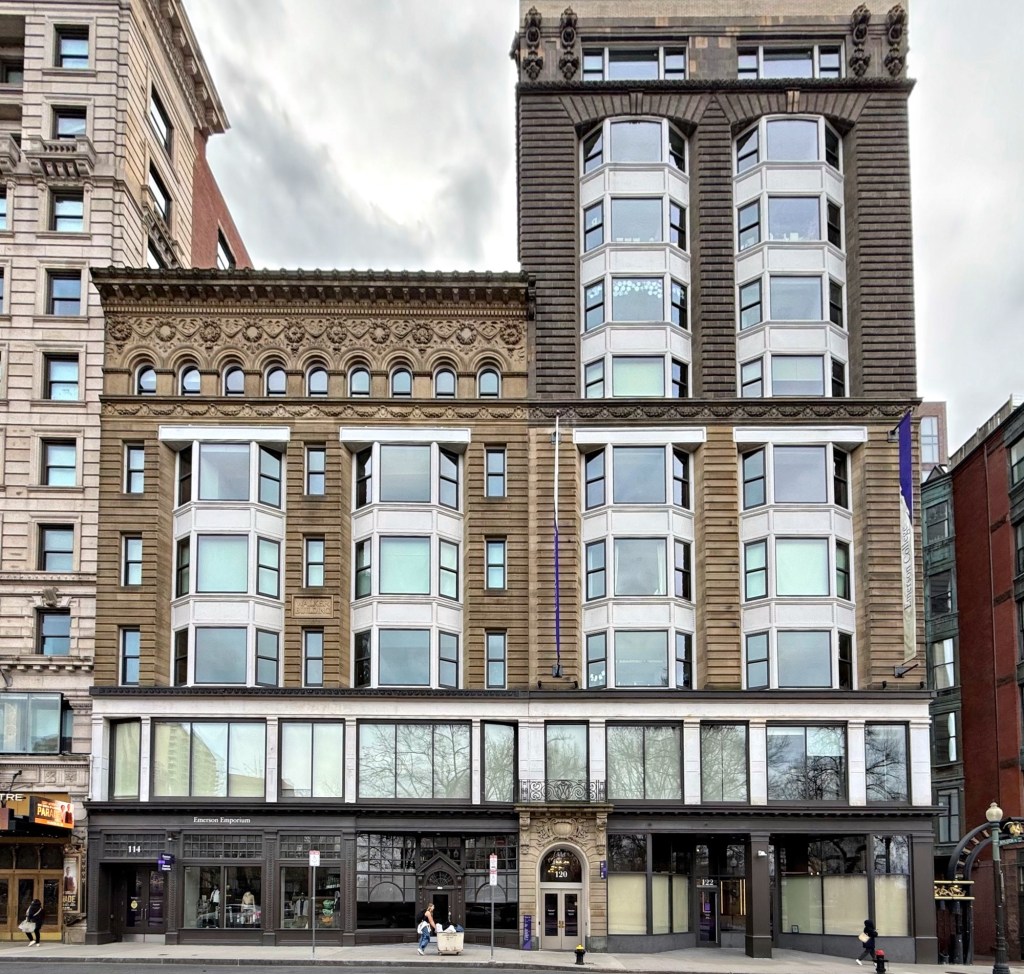
On Boylston Street overlooking the Boston Common, this historic building with two distinct parts is not photographed as much as some of its neighbors, but it is an important visual reminder of the period of growth and development in the city in the late 19th and early 20th centuries. This is the Walker Building, an early office building that was constructed beginning in 1891 in two phases by owner Joseph W. Walker. Mr. Walker hired the architectural firm of Winslow & Wetherell to design the building, which was finished in the Romanesque Revival style with a notable cornice with nine-bay arcade of arched windows and ornate wreath and swag motifs. A major tenant in the building was the Boston office of the S. S. White Dental Manufacturing Company, the largest dental manufacturing company in the world. Less than a decade after the six-story Walker Building opened, Joseph Walker purchased and razed the parcels nextdoor and again hired the same firm (at this time renamed Winslow & Bigelow), to expand the Walker Building, building a ten-story addition in a similar style. The second Walker building housed piano company showrooms and offices along with professional offices of numerous architects and professionals. The Walker Building is now owned by Emerson College, and is used as classrooms, computer labs, and study spots for students with the dining center and bookstore in the former retail spaces.

South Street Building // 1899

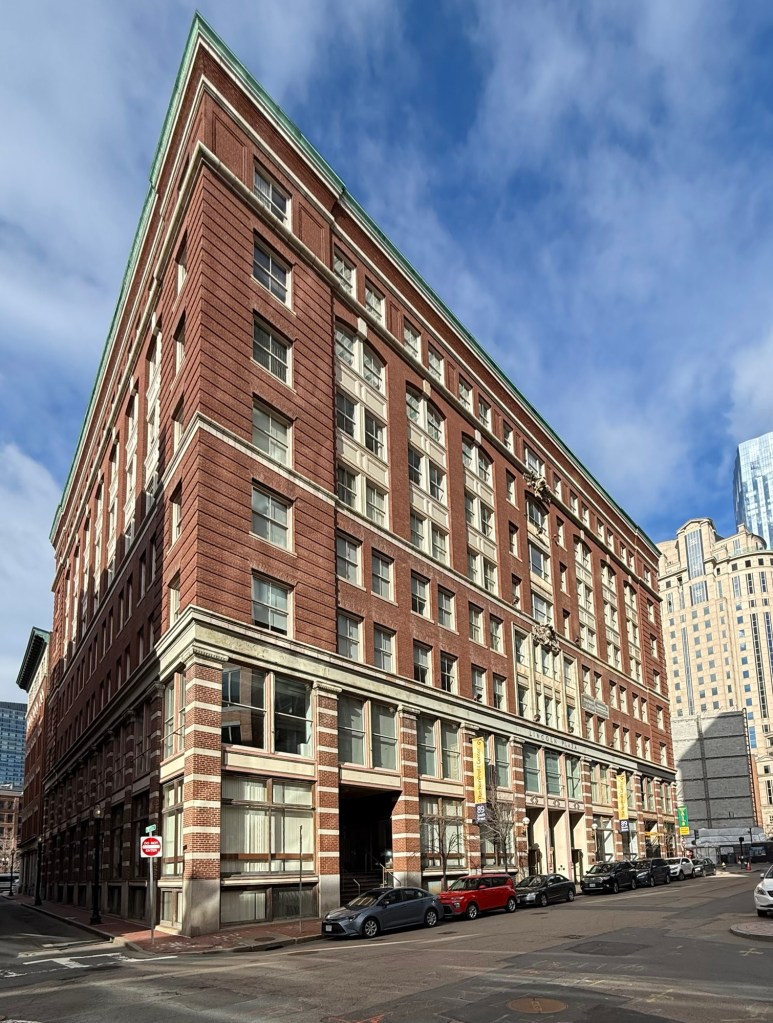
One of the larger mercantile buildings in the Leather District of Boston is this turn-of-the-century block, historically known as the South Street Building. Bounded by three streets, this eight-story building was constructed in 1899 from plans by Winslow, Wetherill & Bigelow and is a great example of a Classical Revival style commercial block with Beaux Arts motifs to further decorate the facades. In 1901, as expected, the city directories list many leather and soft goods-related occupants in the building, including: The American Calfskin Leather Company, John F. Moore Co., leather dealer, and Charles D. French, leather remnants dealer. The building was renovated in 1990 and rebranded as Lincoln Plaza, becoming a major space for non-profit offices.

Porter House // 1906

Built for “the best-known real estate operator in the city [Boston]”, this stunning townhouse, while narrow, packs a punch among the gorgeous homes on Marlborough Street in the Back Bay. This home was designed by the architectural firm of Winslow & Bigelow and built for Alexander Sylvanus Porter, Jr., and his wife Henrietta Goddard Wigglesworth. Mr. Porter was a partner of J.K. Porter & Co., auctioneers and real estate brokers. He was crucial for the development of many iconic buildings in Boston and New York, including the Touraine Hotel, the Boston Stock Exchange, the Brazer Building, and more. The townhome can be classified as Classical Revival with the symmetrical facade with central door, use of classical pilasters at the central bay, and decorative stone ornamentation on every floor.