Wiggins House – Swift River House – Dr. Edwin Remick House // c.1840

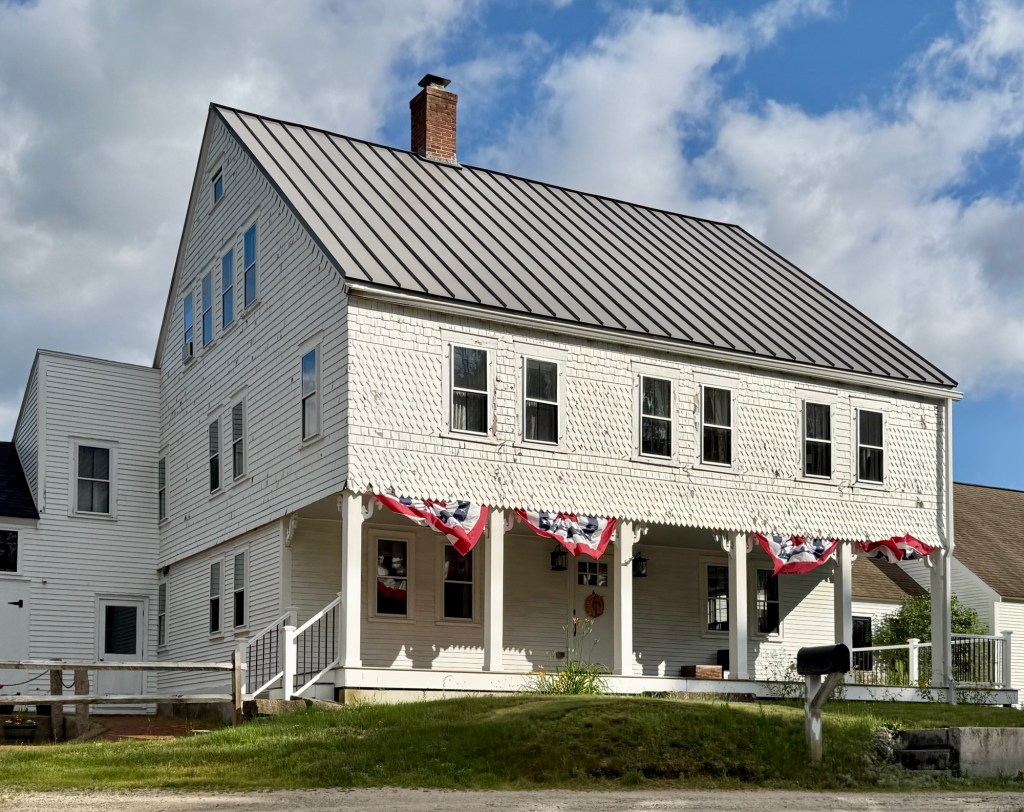
This now significantly altered Federal period residence is located in Tamworth, New Hampshire, and is a visual representation of the shift of the community from an agricultural economy to a tourism-based economy. The residence was built in the first half of the 19th century and owned by Henry Alonzo Wiggin (1808-1871) who was listed in the Census as a farmer. The formerly vernacular Federal period farmhouse was converted and expanded into an inn in the late 19th or early 20th century and became known as the Swift River House. When converted to an inn, the house was given the projecting addition on the facade at the second and third floors with the full-length porch, and covered with shingles. The structure served a vital role in the tourism economy when Lakes Region towns saw huge increases in visitors for the summer months. In 1929, Dr. Edwin Remick purchased the property for his son, Dr. Edwin Remick Jr., and his new wife, Marion. The father and son doctors maintained a medical office nearby in the Enoch Remick House, which now alongside this structure, are house museums operated by the Remick Country Doctor Museum & Farm.
C. L. Griswold Mill // 1850

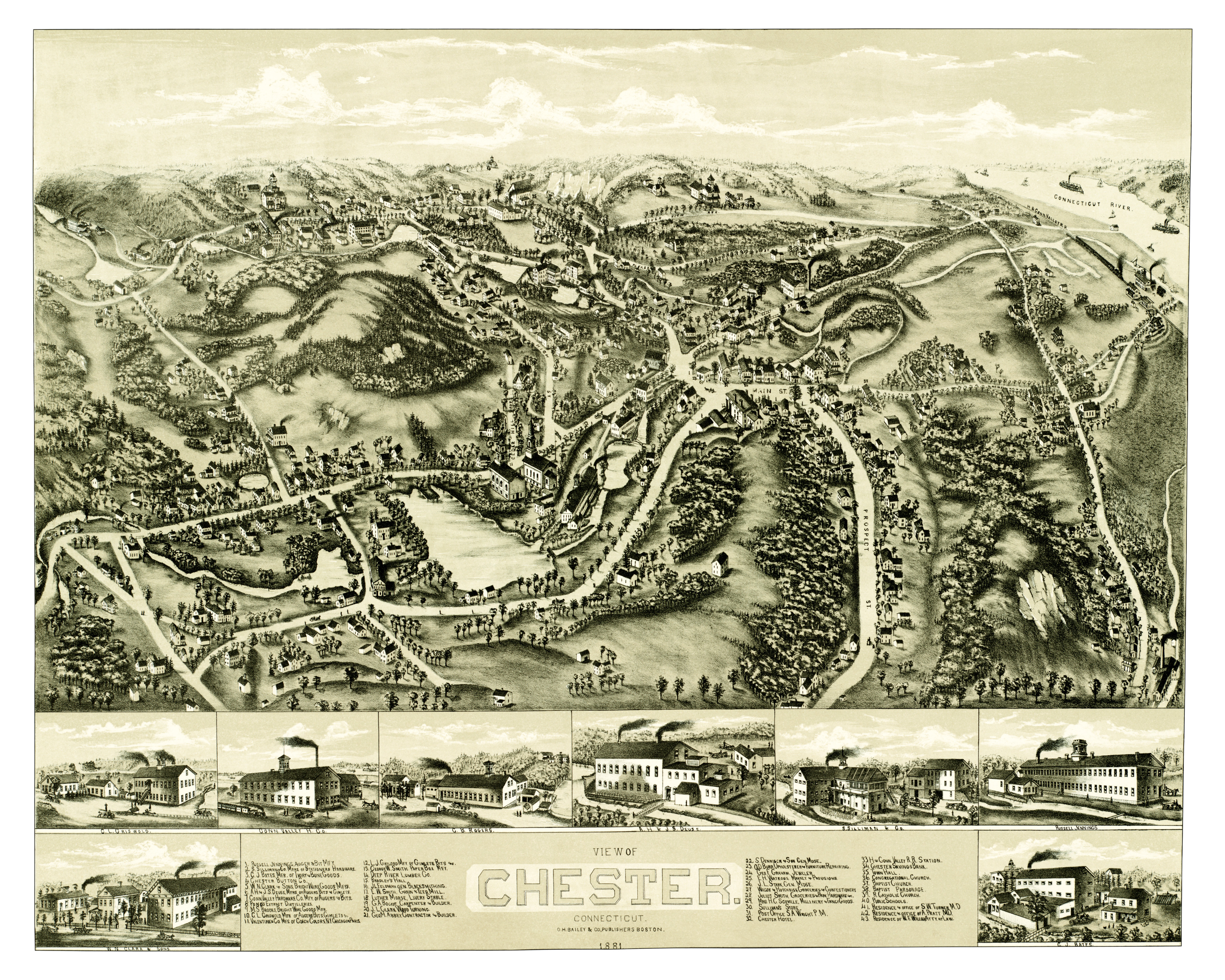
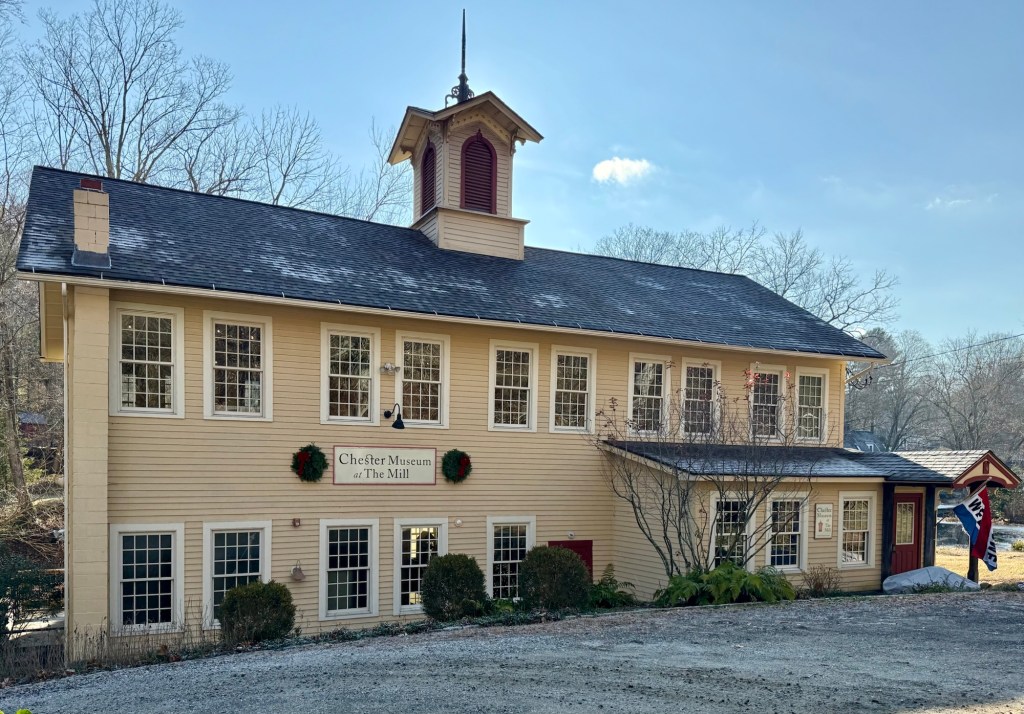
Tucked away on the banks of the Pattaconk Brook in Chester, Connecticut, this mid-19th century industrial building contributes to the town’s vibrant industrial past. Built in 1850 by Charles L. Griswold (1822-1901) the mill ran on water power and originally produced auger bits, wood screws, corkscrews and other light hardware under the name Chester Manufacturing Company, before closing in 1919. In the early-mid 20th century, the building was occupied by the Solar Masonic Lodge No. 131, who renovated the building and removed all the original factory equipment. The National Theatre of the Deaf bought the building in 1983 and restored the original openings, using the building for rehearsal space and small performances until the theater company moved to Hartford in 2000. With its future uncertain, the old Griswold Mill was purchased by the Chester Historical Society, who opened it as the Chester Museum at The Mill in 2010.

Thayer Bird Museum // 1903

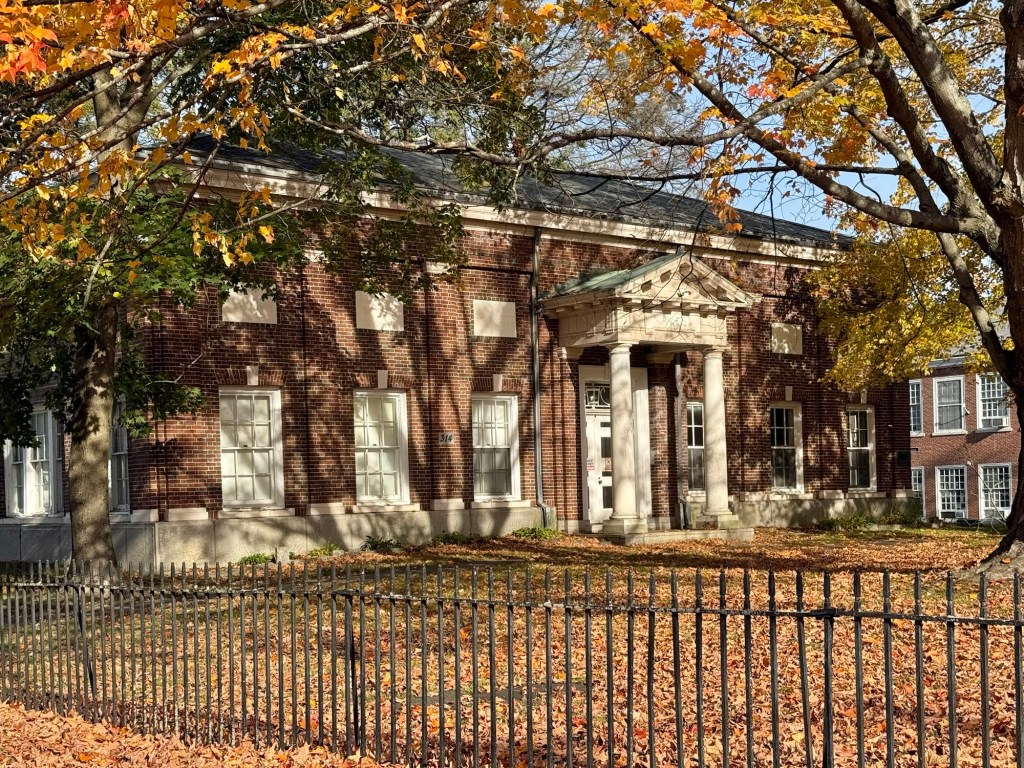
John Eliot Thayer (1862–1933) was an amateur ornithologist and member of the wealthy Thayer Family in Lancaster, Massachusetts. Due to his family’s business dealings, John Thayer was able to turn his passion, studying birds, into one of the largest collections of stuffed birds, eggs and nests for professionals all over the country to study. John began collecting and housed his collections were in several wooden buildings close to his home in Lancaster, but when these became unsafe and crowded he built this beautiful brick building in 1903 in South Lancaster opening it to the public as a museum a year later. The Boston architectural firm of Winslow & Bigelow designed the Colonial Revival style building, with the Guastavino Fireproof Construction Company providing plans for interior spaces and likely engineering inside. Many of the leading ornithologists of the time visited the Thayer Museum and it was estimated that more than ten thousand visitors came to the museum in the first six years.  In 1974, the building was sold to the now defunct Atlantic Union College and reopened as the Mabel Bartlett Art Gallery. Much of the Thayer collection was donated to the Museum of Comparative Zoology at Mr. Thayer’s alma mater, Harvard University. Since the Atlantic Union College closed in 2018, this important building has been closed, hopefully to see reuse in the eventual redevelopment of the campus.