330 Beacon // 1959

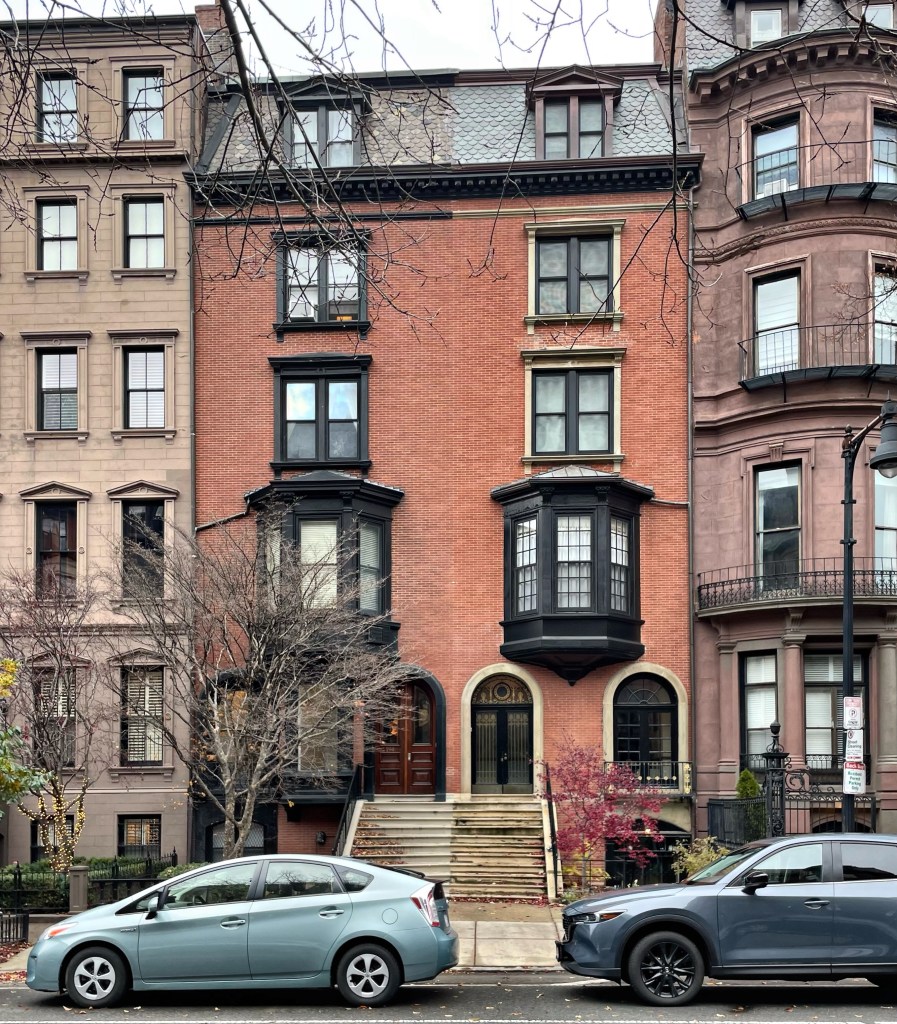
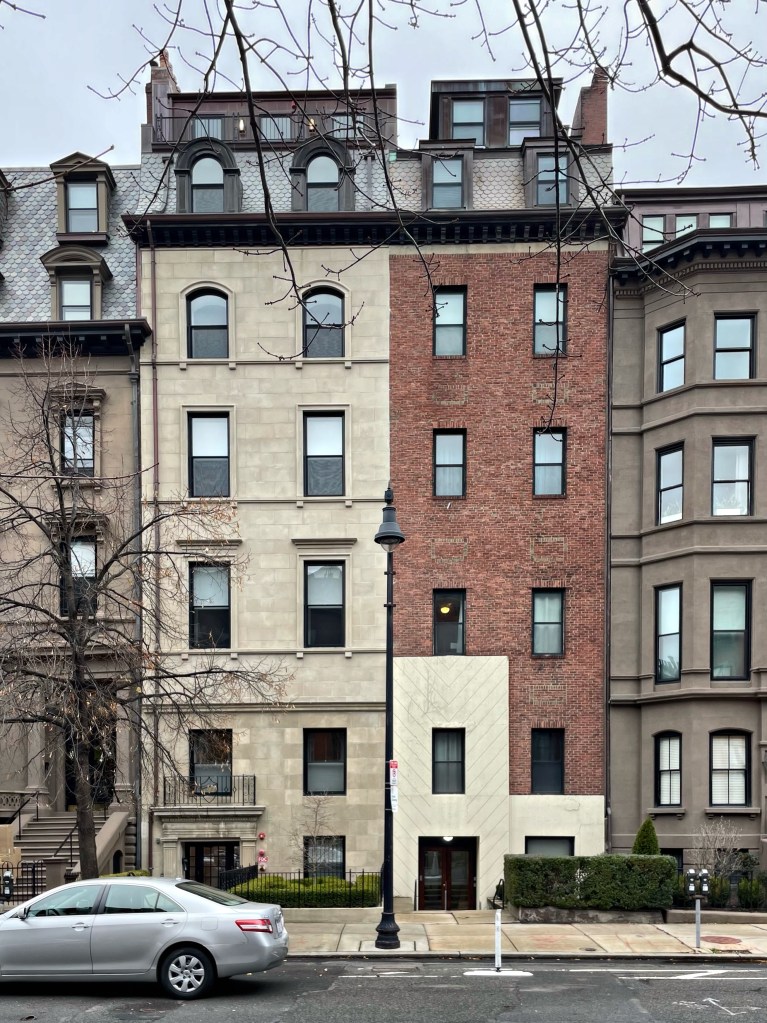
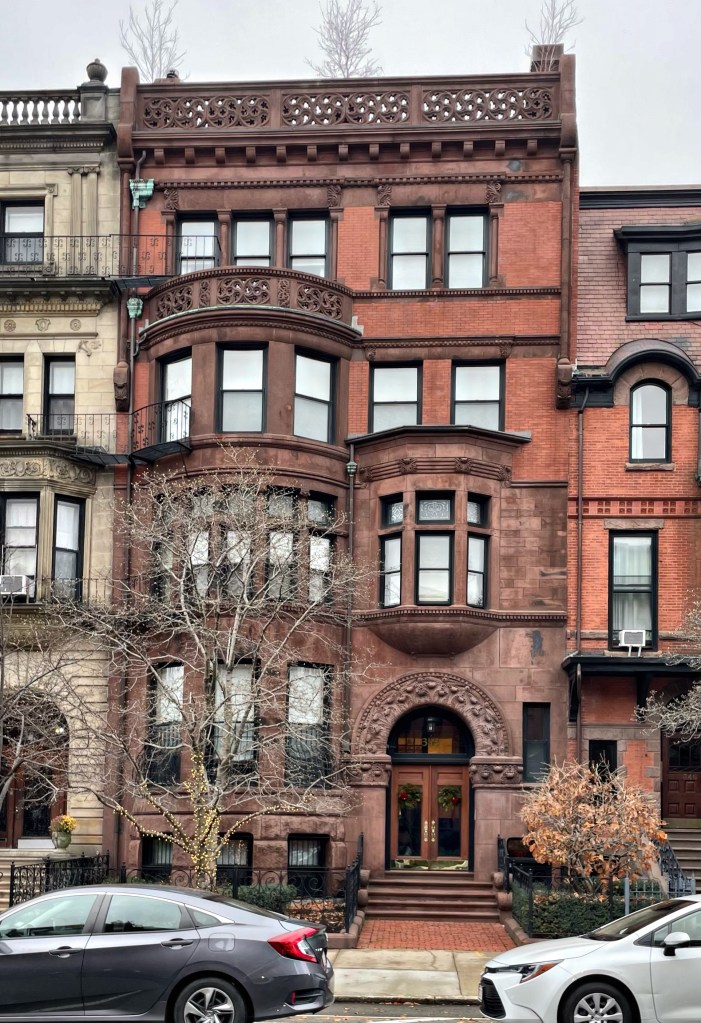
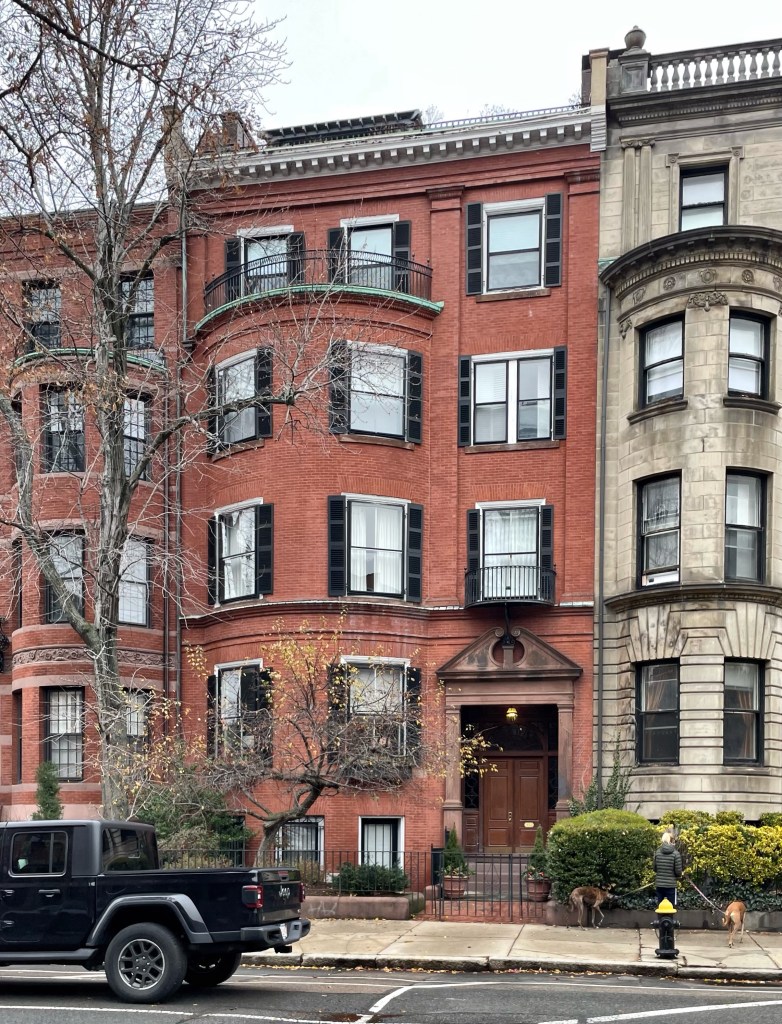
While this apartment building is completely out of scale with its surroundings in the Back Bay neighborhood, it is one of my favorite Modernist apartment buildings in the neighborhood it its own right. Hear me out! 330 Beacon was built in 1959-1960 as a seventeen story (plus penthouse) apartment building designed by modernist architect Hugh Stubbins & Associates. The tower is largely constructed of red brick similar to early 20th century apartment houses, and exhibits an undulating facade, possibly as a nod to the prevalence of 19th century projecting bays which the neighborhood is so known for. The fenestration (window placement and proportions) is also interesting as it differs on every third floor, the staggering breaks up the monotony of many similar apartment blocks built in this time period. Many of you likely will not love this building, especially after knowing that it replaced five stunning townhouses, but I love to show how New England architecture has modernized and changed based on ever-evolving tastes and housing demands.

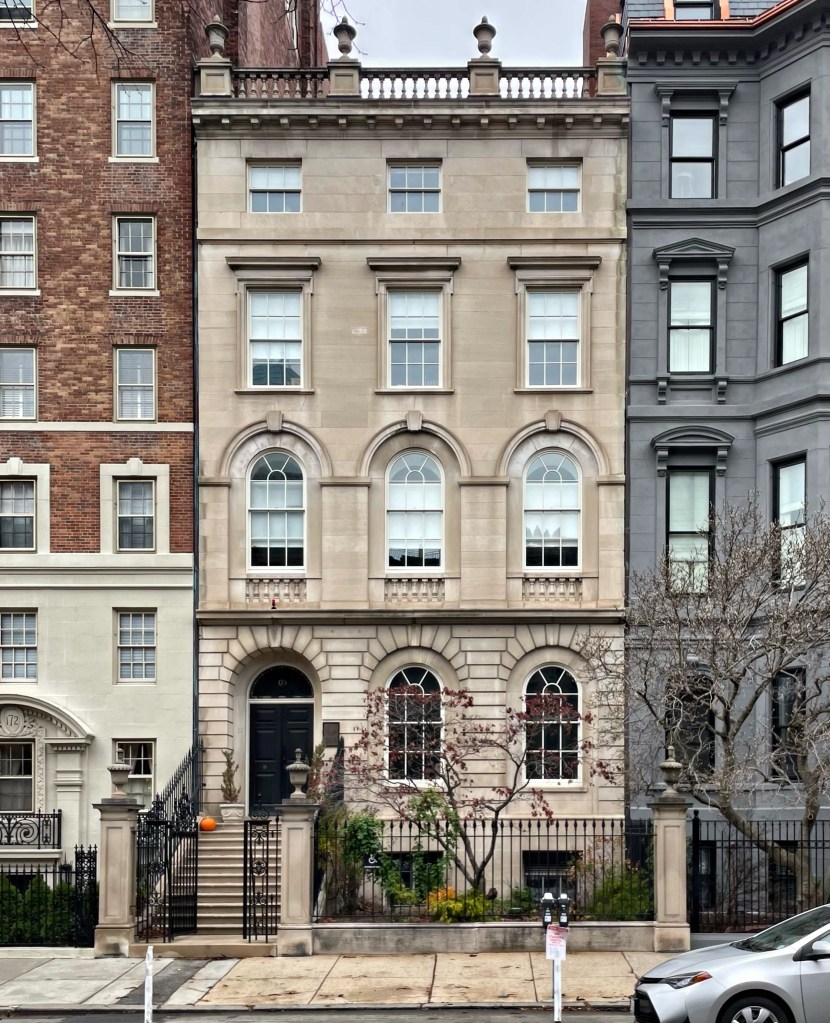
Cushing-Gay Townhouse // 1862

The Cushing-Gay Townhouse at 170 Beacon Street in the Back Bay neighborhood of Boston stands out as one of the most unique and pleasing early remodeled homes to look at. 170 Beacon was built by 1862 as one of two contiguous houses (168-170 Beacon) built for John Gardiner Cushing and his younger brother, Robert Maynard Cushing. John Gardiner Cushing built this house, which was originally a Second Empire style home similar to the dark gray residence nextdoor. The Cushing Family owned the property until 1894 and the property was sold to Helen (Ellis) Brooke, the the wife of Rev. Stopford Wentworth Brooke a British politician and later a minister of the First Church (Unitarian) of Boston. The Brooke’s moved back to England in 1900 and this home was sold to Eben Howard Gay, a banker and note broker. Eben’s wife of less than two years died just before he purchased this house on Beacon Street, she was just 26 years old. As a bachelor, Eben Gay hired architect and interior designer Ogden Codman, Jr., to remodel the 1860s house, giving it the present Adamesque front façade and new interiors to provide a setting for his collection of Chippendale furniture. The after being bought and sold numerous times following Gay’s financial struggles and selling of his prized home, the Cushing-Gay Townhome was purchased by the German Government in 1966 and is today the Goethe Institute, Boston, a cultural center and language school for the German language.

Cushing-Fearing Townhouse // 1862

168 Beacon in the Back Bay was built ca. 1861, one of two contiguous houses for Robert Maynard Cushing and his older brother, John Gardiner Cushing (more on the house nextdoor in the next post). This home was Robert Cushing’s home for him and his new wife Olivia Donaldson Dulany (m.1863). They also maintained a home, The Ledges, in Newport. The Cushing Family owned the townhouse until 1908, when it was sold following Robert’s death in 1907 by his estate to George Richmond Fearing, Jr., an investment banker. He also served as President of the Free Hospital for Women from 1910 to 1936. The home was recently renovated with a darker, brownstone facade, new copper gutters and downspouts and slate roof. It presently houses three condo units inside.

Skinner Mansion // 1886

One of the best early examples of Classical Revival residential architecture in Boston can be found on Beacon Street in the Back Bay, at the Skinner Mansion. Built in 1886 for dry goods merchant Francis Skinner (1840-1905) and his wife, Eliza Blanchard (Gardner) Skinner (1846-1898), the house exhibits a light stone facade with carved detailed panels and fluted pilasters, stone parapet with urns at the corners and a decorative wooden entrance with ironwork. Eliza was the sister-in-law of Isabella Stewart Gardner who herself lived on Beacon Street until erecting what is now the Isabella Stewart Gardner Museum, in the early 1900s. The Skinners hired architects Shaw & Hunnewell to furnish plans for their Boston townhouse, and they did not disappoint! Today, the mansion is occupied by medical offices, but retains the residential charm and character as it is located in a local historic district.

Storrow-Meyer Townhouses // 1862

Two is always better than one, especially when it comes to historic townhouses! These two residences on Beacon Street in the Back Bay neighborhood were built in 1862 for two esteemed Boston families, the Storrows and the Meyers. 192 Beacon Street (right) was built as the home of Charles Storer Storrow and his wife, Lydia (Cabot Jackson) Storrow. Charles S. Storrow was an engineer by training and made his fortune as the chief engineer at the Essex Company, a company organized to harness the water power of the Merrimack River downstream from Lowell, Massachusetts in present-day. There, Storrow designed and built the Great Stone Dam across the Merrimack river, canals to distribute the water, several large textile mills, and a city, Lawrence, to house the mill workers. He came up with the idea to make roads that go to the mills in Lawrence, allowing him to become the first mayor of Lawrence in 1853. He retired and lived out his final years at this home in Boston. James J. Storrow, after whom Boston’s Storrow Drive is named, was Charles Storrow’s grandson. 194 Beacon Street (left) was built as the home of George Augustus Meyer and his wife, Grace Helen (Parker) Meyer. George Meyer was a prosperous German-American East India merchant and lived in this home until his death in 1889.

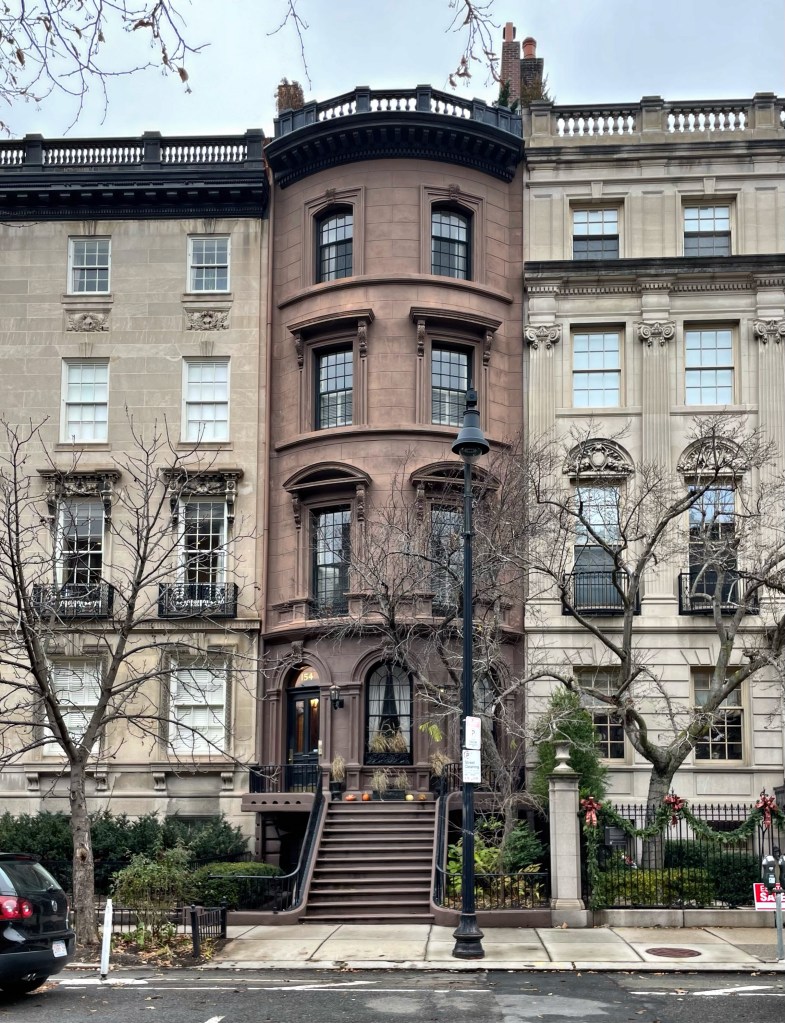
Henry Parsons King Mansion // 1907

One of the finest townhomes in the Back Bay of Boston is this stunning residence on Beacon Street. The house was constructed in 1907 for Henry Parsons King (1867-1913) and his wife Alice Spaulding King following the destruction of a house previously on the lot. Henry King was an extremely wealthy businessman who went to Harvard College before working his way up the ranks to become the president of the Whittier Machine Company and the Boston manager of the Otis Elevator Company. For their Back Bay mansion, the couple hired the esteemed firm of Little & Browne to design the stately home with its full bowed facade. Henry King died in October of 1913 and his funeral was in the home, with his body laid under the main circular staircase inside (which according to sources is one of only two free-floating marble staircases in the United States!) Alice King and their only surviving child, Henry Parsons King, Jr., continued to live at 118 Beacon. Alice died in 1938 and the family home was purchased the next year by the Fisher Business School (later Fisher College). The transaction was reported in the Boston Globe, which noted that 118 Beacon was “well known for its interior woodwork, paneling and flying staircase of polished marble,” and that the school would install “modern lighting and furnishings, including a cafeteria for student use.” Fisher College would purchase more buildings in the area and the former King Mansion is now home to the Fisher College Library.

Wales-Amory Townhouses // 1860

This is why preservation matters! These two townhouses on Beacon Street in the Back Bay of Boston were constructed in 1859-60 for Gardner Brewer (on the right) and George W. Wales (left). Brewer, an extremely wealthy merchant built the house on the right for his son-in-law and daughter, William and Ellen (Brewer) Amory, as a wedding gift following their February 1860 marriage. The symmetrical pair of houses were both originally clad with a brownstone facade with Second Empire style trim details and a continuous mansard roof. Both houses were renovated by the early 20th century with Colonial influence, as Victorian styles started to wane popularity amongst wealthy circles. The former Amory house (right) was purchased by Della Saul and was operating as a boarding house by the 1930s. It was converted to an apartment building (like condos) and the building was renovated with a new facade in 1935 by brothers and architects George Nelson Jacobs and William Nelson Jacobs with a more modern/Art Deco appearance. The house on the left remained with its more Colonial facade until a 2018 renovation by architect Guy Grassi giving it a cast stone facade, restoring the three-condo house closer to its original appearance.

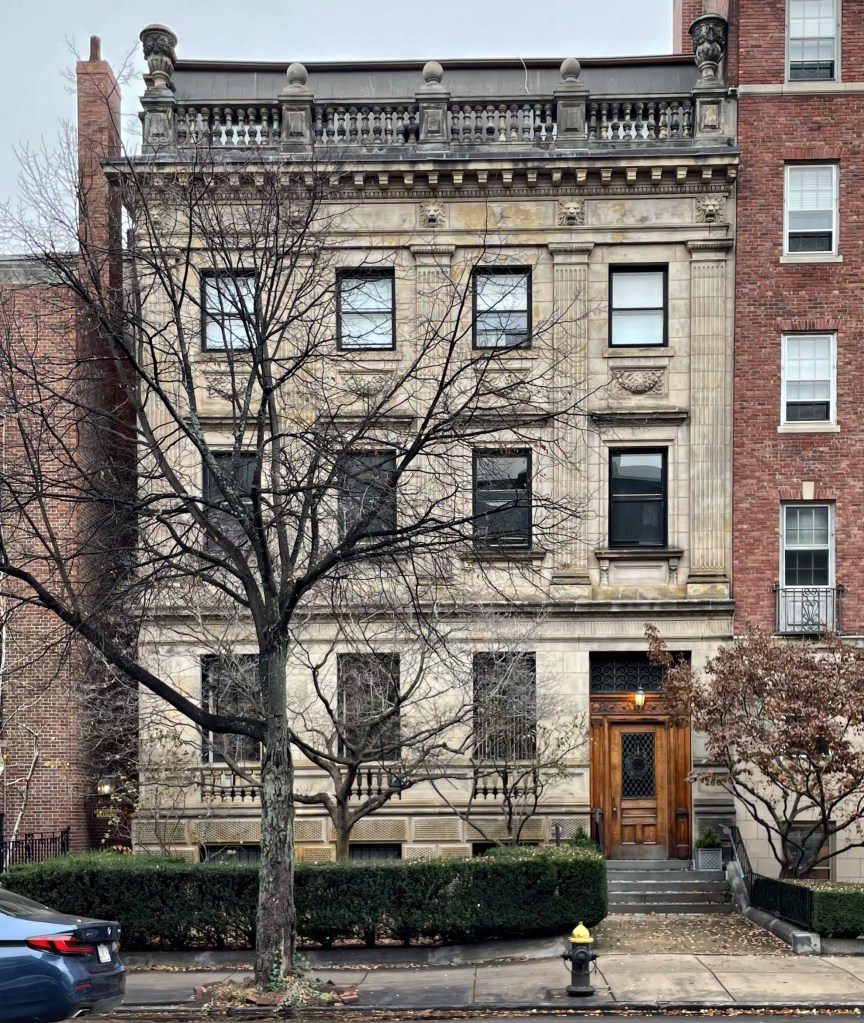
Converse Townhouse // 1886

One of the best townhouses on Beacon Street in the Back Bay neighborhood of Boston is this absolute stunner! Built in 1886-7 from plans by architects Allen and Kenway and constructed by Norcross Brothers, builders, this was the Boston home of Elisha Slade Converse and his wife, Mary Diana (Edmands) Converse. Also residing in the newly built home was their son-in-law and daughter, Costello Coolidge Converse and Mary Ida (Converse) Converse, who were first cousins… Elisha Slade Converse was founder and treasurer of the Boston Rubber Shoe Company, president of the Rubber Manufacturers Mutual Insurance Company, and president of the First National Bank of Malden. He was Malden’s first mayor and had represented it in the Massachusetts legislature in the early 1880s. Costello Converse was treasurer of the Boston Cold Storage and Freezing Company and later assumed his father-in-law’s interests in the Boston Rubber Shoe Company. The families shared their Boston residence when not at their Malden or summer homes on the North Shore until their deaths. The house was later converted to a boarding house and is now five condominium units. The Richardsonian Romanesque style townhouse has an ornate pierced stone parapet at the roof and rounded bay and detailed carved stone arch at the entrance. So much detail!

Derby Townhouse // 1886

Hasket Derby (1835-1914), was the grandson of Elias Hasket Derby, a prominent trader in Salem, MA., who was thought at one time to be the richest man in the United States. Hasket married Sarah Mason and the family lived in Boston. Dr. Hasket Derby was a renowned opthamologist and had this townhouse built in the Back Bay of Boston in 1886. He hired architect William Ralph Emerson, who ditched his prototypical Shingle style for the urban townhouse in the Colonial Revival style. The townhouse exhibits a brownstone swans neck pediment at the entry, three-story rounded bow, dentilled cornice and brick pilasters framing the bays. Its an often overlooked house in Back Bay, but so very special.

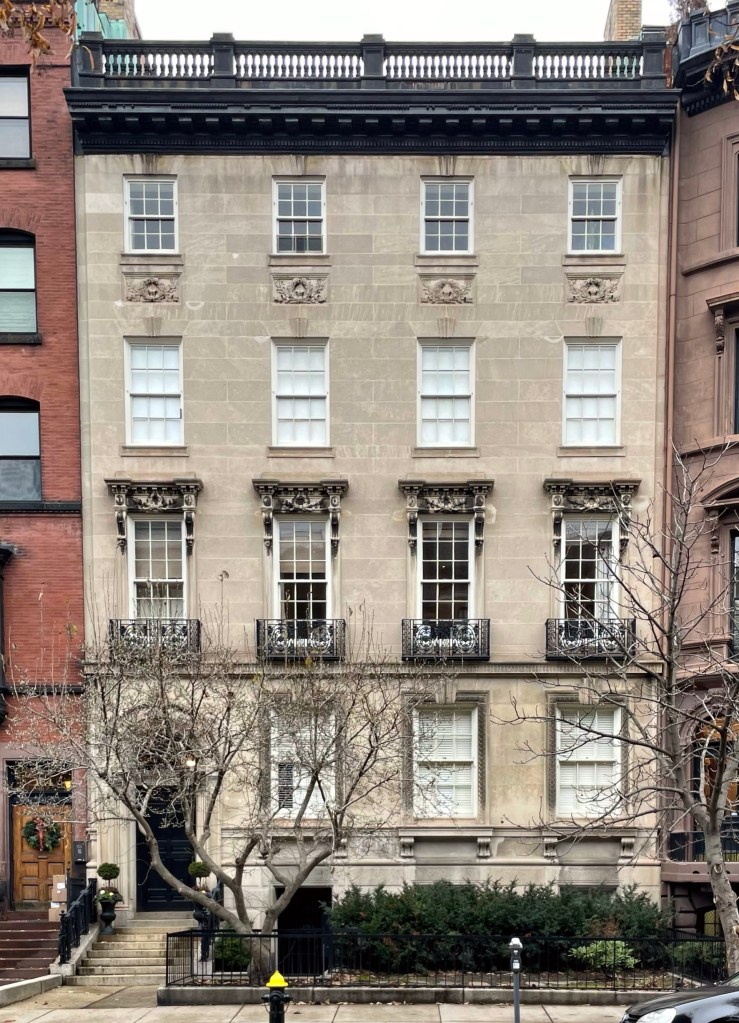
John and Gertrude Parkinson House // 1902

Teardowns have always been a common occurrence in cities, though replacement buildings from before WWII tended to be more substantially designed and built. This stately manse on Beacon Street in the Back Bay was built in 1902 on a lot previously comprised of two townhouses! This residence was built in 1902 for John and Gertrude Weld Parkinson from plans by the renowned firm of Peabody and Stearns. The Classical Revival style house has a limestone face and chunky stone lintels at the second floor to break up the facade. After income tax was introduced in the early 1900s and changing economic conditions for wealthy homeowners shifted, large single-family homes were no longer the norm. This home (and many others in Back Bay) was converted to a multi-family apartment building and today is home to eight condo units.