George Stevens House // 1814

George Stevens (1775-1852) was born in Andover, Massachusetts and settled in Blue Hill, Maine. He became a ship owner and merchant, making a name (and wealth) for himself in town and he showed an interest in education for the growing village. He erected this home in 1814 for his family, which seemingly employed Asher Benjamin’s house plans in the Federal style, popular builder’s guidebooks at the time. With his eyes towards education, George Stevens sat on the board of trustees for the Blue Hill Academy which flourished under the guardianship of the local Congregational Church and trustee president Rev. Jonathan Fisher. He chafed under Congregationalist dominance and wished for a non-denominational local academy. In 1832, he offered to give a thousand dollars and a piece of land to the Blue Hill Academy. His offer included this provision, “The institution shall be put on a liberal scale that all denominations shall have equal rights and privileges.” The Academy trustees said, “no.” As a result, George Stevens provided in his will that after his death and that of his wife this homestead, 150-acres of land, and a large portion of his personal property should be used to establish an academy, an “alternative” academy. In 1891 the Maine State Legislature incorporated George Stevens Academy, leading the “Old Academy” to cooperate with the
new institution, merging their boards and finally becoming a non-denominational academy. The school continues as a highly respected academic institution and retains the name of its founder, George Stevens.
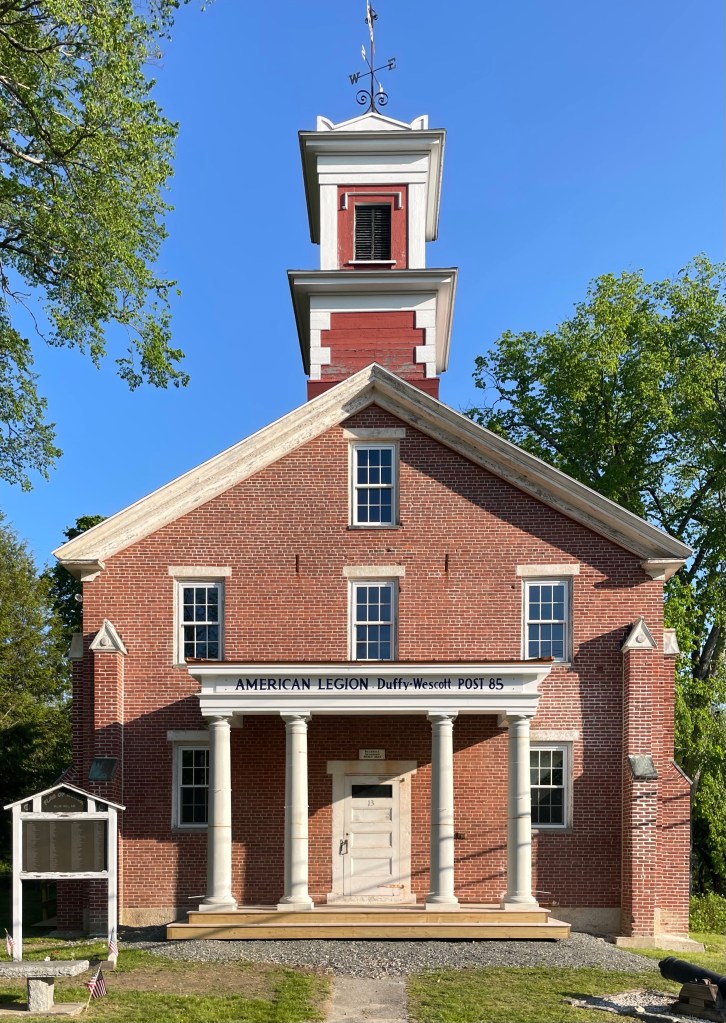
Blue Hill Academy Building // 1833

This gorgeous brick building sits in Blue Hill, Maine and is an excellent example of a Greek Revival style institutional building found on the coast of that great state. The structure was built in 1833 and originally housed the Blue Hill Academy, a school which provided courses in Greek, Latin and (due to the town’s maritime economy), navigation. The original building was constructed decades earlier when the school was founded, but was quickly outgrown. When the George Steven Academy opened its doors a couple blocks away in 1898, the two institutions were merged. The American Legion eventually purchased this building, renting it to the Blue Hill Grammar School. Renovations in 1909 were designed by Blue Hill native, George A. Clough which likely included the portico and elaborate belfry. After years of deferred maintenance on the building by dwindling membership of the local American Legion post, the building’s future was uncertain. Thankfully, the Duffy-Wescott Post 85 stood up and funded preservation and planning for the building and make emergency repairs.

Judah Chase House // c.1840

In the early 19th century, the town of Blue Hill, Maine, thrived as a shipbuilding and maritime trade center in New England. One of the town’s sea captains, Judah Chase, had this Greek Revival home built for his new family in about 1840. Just before this, Captain Chase had a brig built in town in 1834, he named it the Thomas M. Lyons. As owner and captain, Judah was hired to haul a shipment from Havre, France to the United States. On the route, gales battered the ship of the coast of the Isle of Jersey, and the ship capsized, the crew survived, but this event may have delayed the building of his home in Blue Hill!

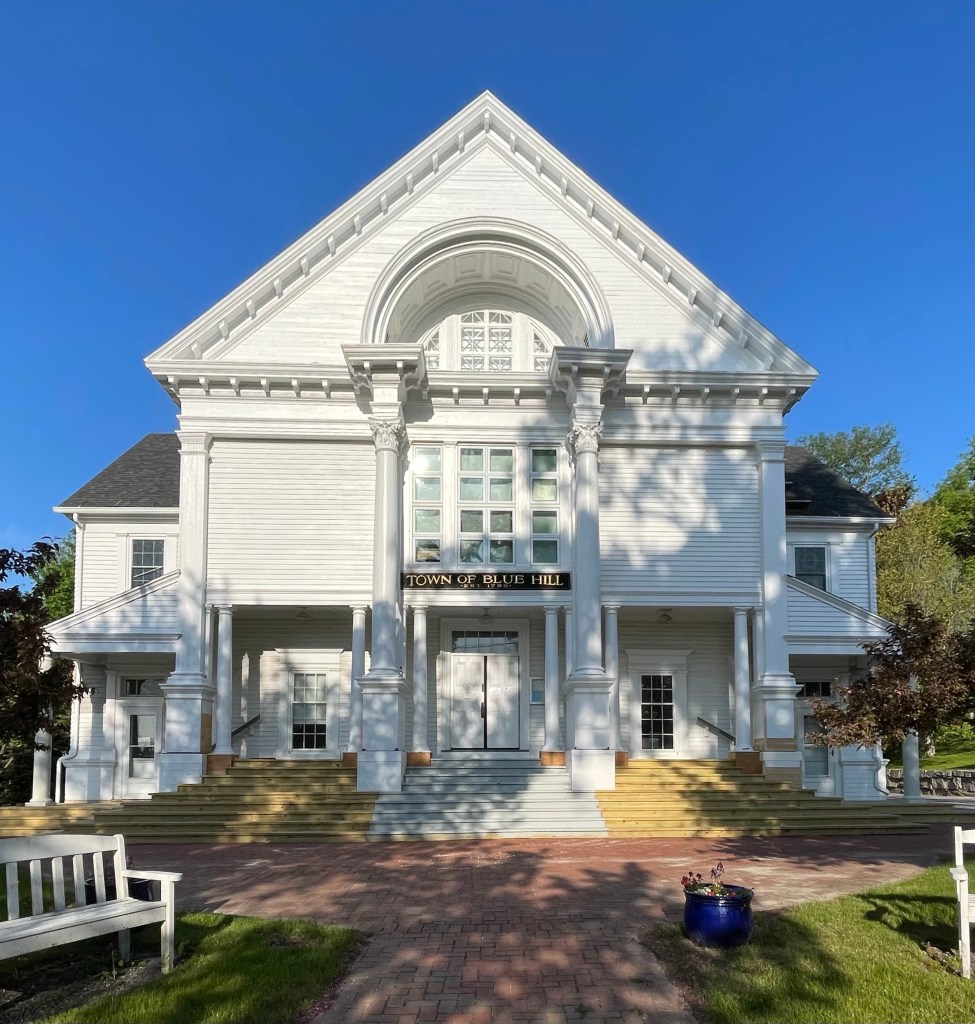
Blue Hill Town Hall // 1895

Blue Hill is a charming coastal town in Hancock County, Maine that retains so much of the charm that has been lost in many other coastal New England villages. Originally settled by the Penobscot Tribe, the town as we know it was incorporated in 1789 under the name “Blue Hill”, named after the summit overlooking the region. The town thrived early as a lumber and wood shingle exporter, later shifting to shipbuilding. The town was also noted for the quality of its granite, some of which was used to build the Brooklyn Bridge, New York Stock Exchange Building, and the U.S. Custom House at Norfolk, Virginia. In 1876, local quarries employed 300 workers. The town’s wealthy summer residents likely sought a new Town Hall for Blue Hill, as in the 1890s funding was acquired to erect a new building. It came as no surprise that George Albert Clough, an architect born in Blue Hill would furnish the plans for the new town hall. George was the son of Asa Clough an early settler and shipbuilder in town. He moved to Boston to work as an architect and later became the City of Boston’s first “City Architect” designing municipal buildings. For the Blue Hill Town Hall, he designed it in the Colonial Revival style, which remains well-preserved to this day.

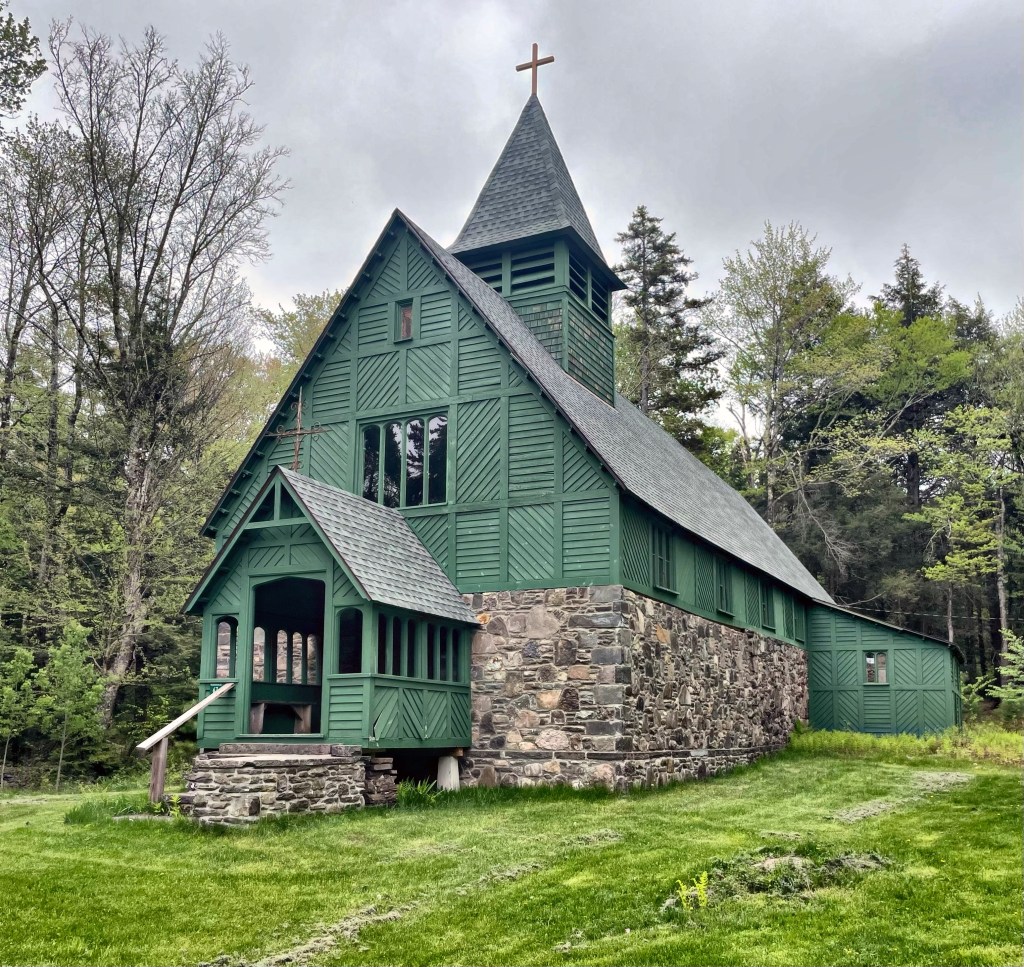
St. John the Evangelist Church // 1885

One of the most bucolic and beautiful buildings I have ever seen is this church in the Catskills, just outside of Elka Park, NY. Wow I wish New England could claim this one! The St. John the Evangelist Chapel was developed as part of a smaller enclave of summer cottages for rusticators from the Philadelphia-area, which was largely established by Mr. Alexander Hemsley (1834-1904) a chemist from Philadelphia who would later die from anaccidental chemical explosion at his factory. In 1883, Hemsley sold cottage lots to friends and family to erect summer houses in the Catskills and in 1884, decided to develop a lot for an Episcopal summer chapel. In that same year, Hemsley hired his future son-in-law, William Halsey Wood, to design the chapel. The Stick-style Victorian chapel blends the rustic use of natural materials found on the property with an elegant siting and attention to detail, not typically found in rural chapels. The native stone and stylized half-timbering really stood out to me. The church is used still in the summer with regular services on Sundays in July and August.

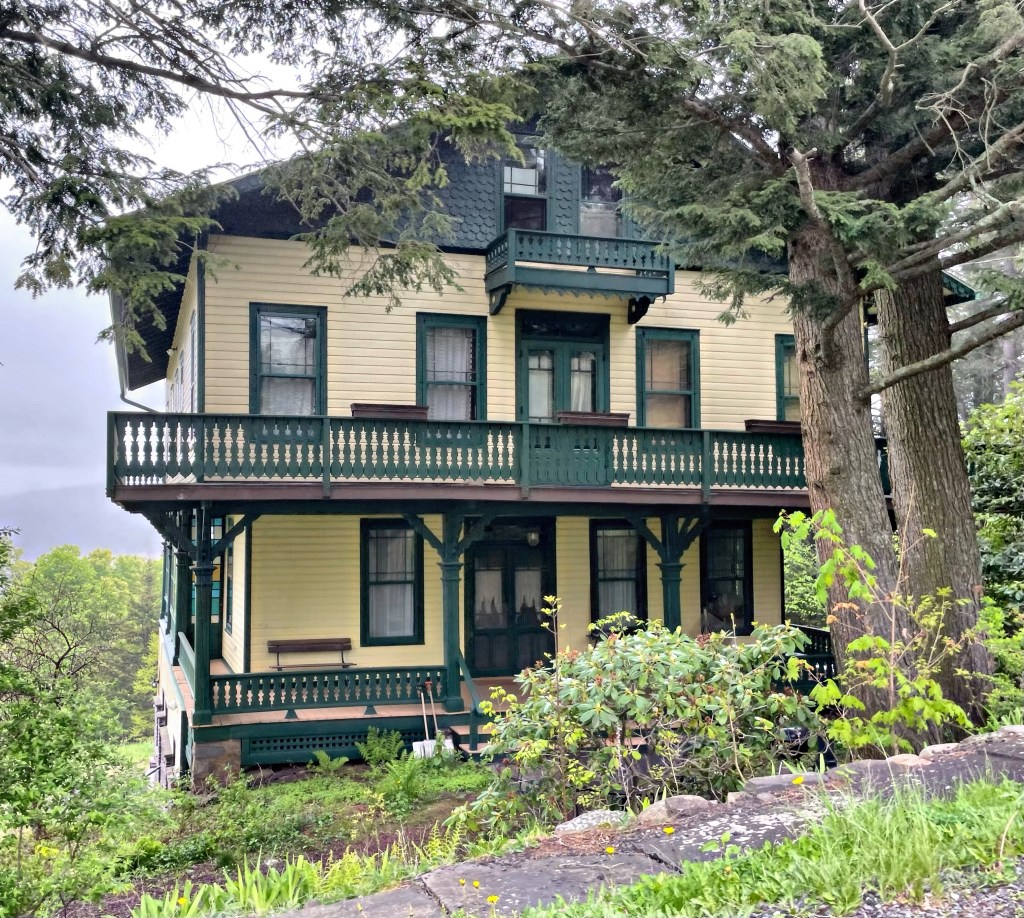
Keller Cottage // 1896

It wouldn’t be a German-developed summer colony with at least one Chalet-style summer cottage, would it? The Keller Cottage in Elka Park, New York, was built in 1896 for John Keller (1867-1924) and his German wife, Caroline Goehring (1866-1917) who summered in the colony for a few months of the year from Brooklyn, N.Y. The 3,500-square-foot, 6-bedroom “cottage” includes a sunroom with stained glass, original unpainted wood-paneled walls and oh, just some jaw-dropping views of the Catskill Mountains for good measure!

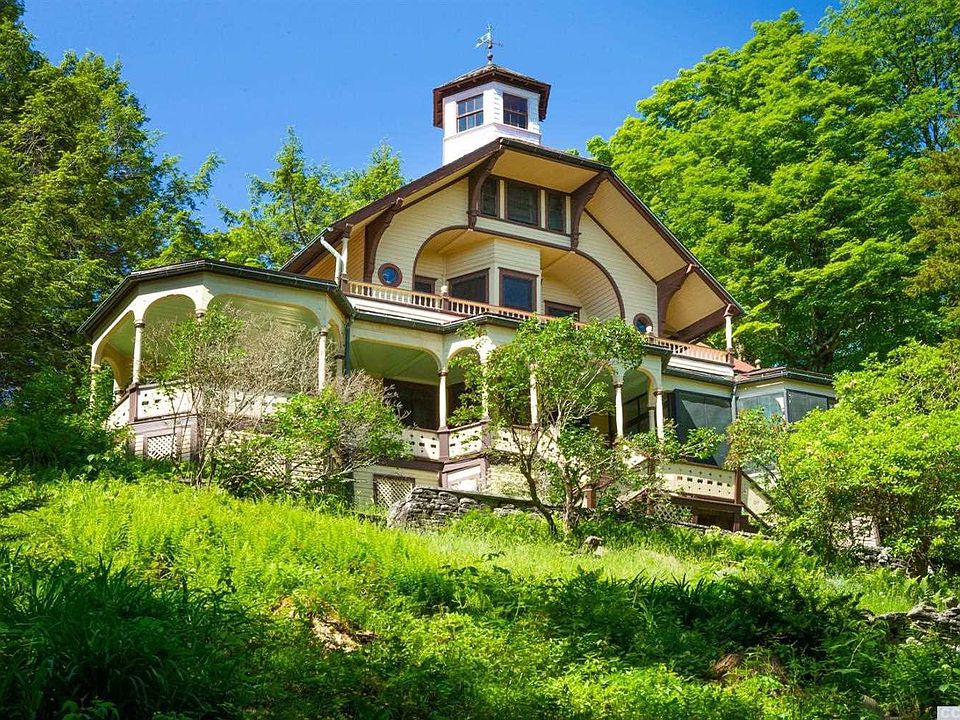
Tamsen Cottage // 1893

Photo from 2017 real estate listing

One of the more unique cottages in New York’s Elka Park summer colony in the Catskill Mountains is this charmer, the Tamsen Cottage. The cottage was built in 1893 for Edward Tamsen (1849-1907), the Sheriff of New York County from 1895-96 until Governor (and later Vice-President) Levi Parsons Morton removed him from office. The former Sheriff purchased this home and summered here with other German-American wealthy New Yorkers until his death in 1907. The chalet-style house has been exceptionally preserved since, and was listed for sale in 2017 for a mere $425,000. Wow!

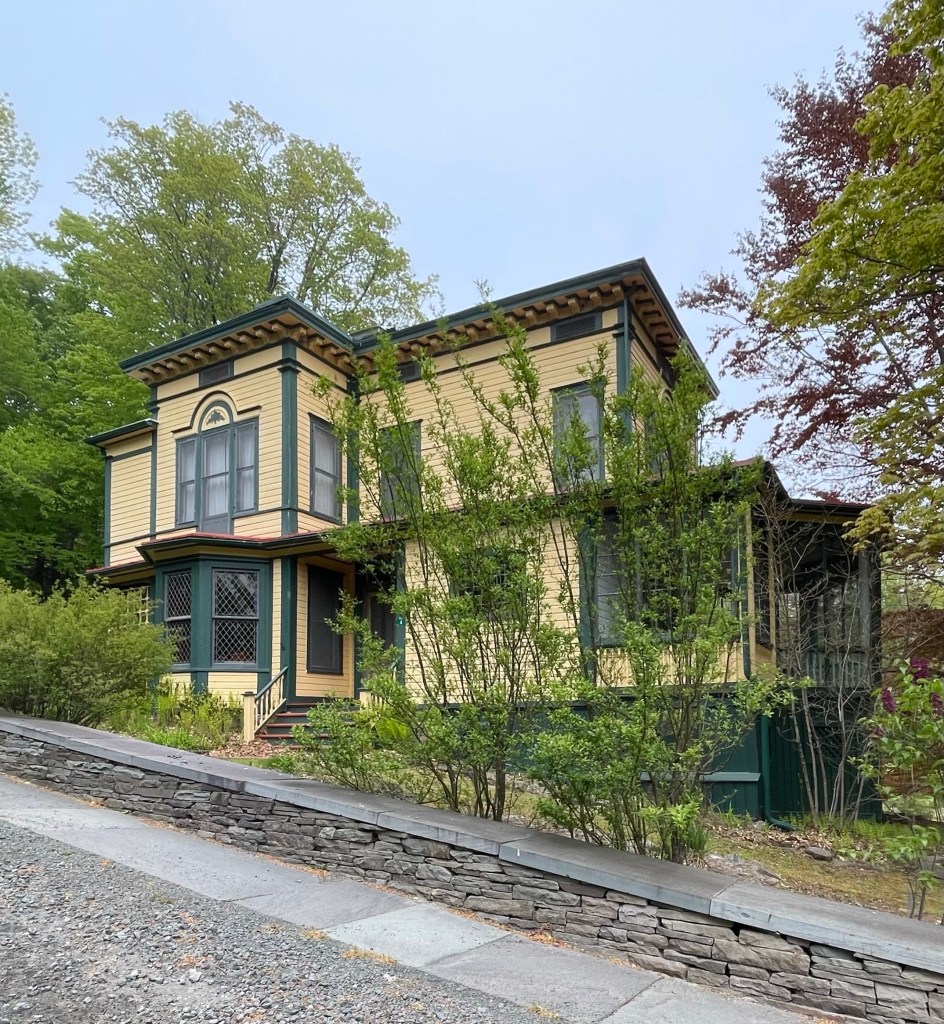
Kurth-Kliegel Cottage // 1896

Elka Park in Hunter, New York, is a really unique summer colony developed in the late 19th century as a country retreat for wealthy German-Americans to escape the woes of city life, primarily from New York City. Between 1890-1896, a total of 21 homes were built as summer cottages, 17 remain to this day. Almost all “cottages” were built with at least 4 bedrooms with space for servants, guests would lodge at the nearby Elka Park Clubhouse, which was destroyed by fire and replaced after WWII. The private community remains a secluded respite and relatively unknown to most. This cottage was built in 1896 for a tax commissioner Mr. Kurth, from plans by Hugo Kafka, a Czech-American architect with an office in New York City. Kafka also had a summer cottage at Elka Park. This cottage was purchased in the 1920s by Johann Kliegl, a German inventor and businessman who settled in New York, developing the “Klieglight”, a carbon arc lamp used heavily in filmmaking at the time. The late-Italianate style cottage remains well preserved to this day and even has a historically appropriate paint scheme!

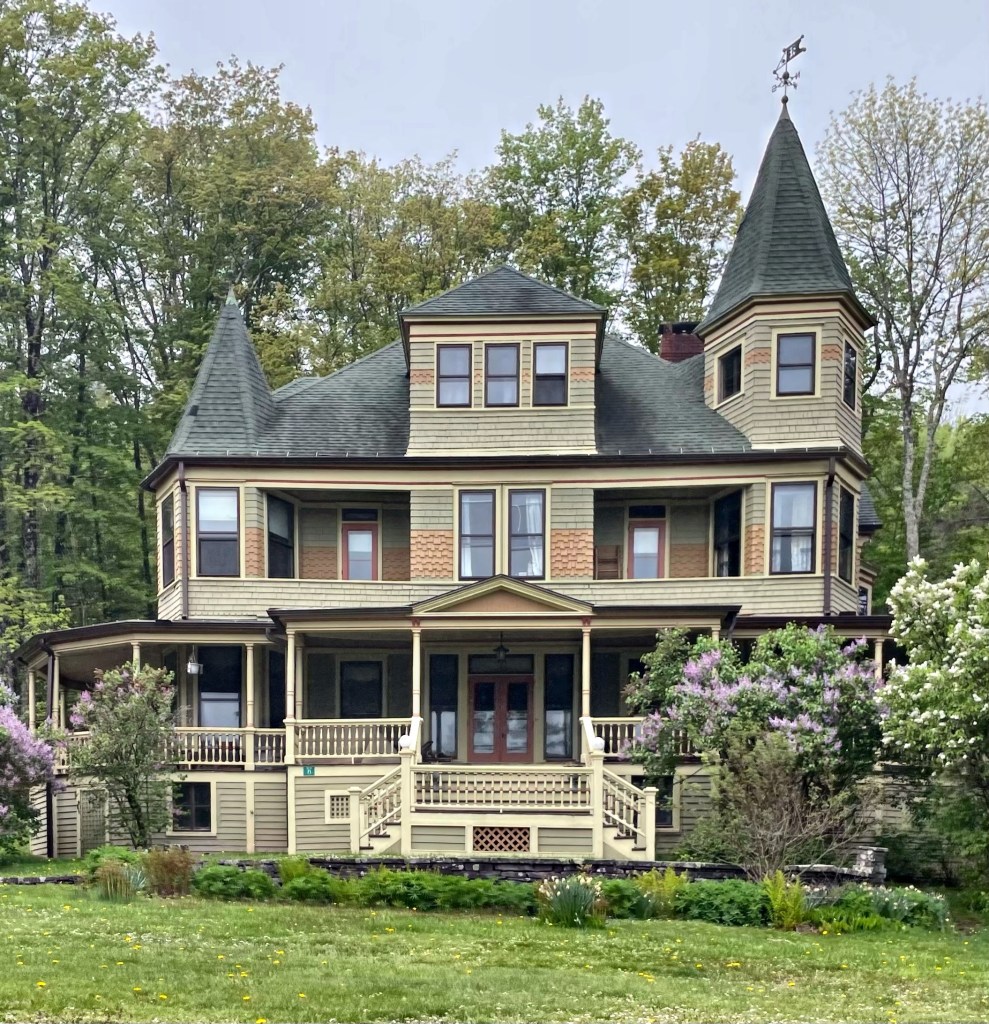
Keuffel Cottage // 1893

Built nextdoor to his business partner’s summer cottage (last post), Wilhelm (William) J. D. Keuffel, a German immigrant from Saxony, erected this summer cottage in the fashionable German-developed summer colony Elka Park in upstate New York. Keuffel & Esser Company (K&E) was founded by German immigrants Wilhelm J. D. Keuffel and Hermann Esser and manufactured high-quality surveying, drafting, and calculating tools for architects, engineers, surveyors, and building contractors in Hoboken, New Jersey with a sales office in Manhattan. By the early twentieth century, it was one of the largest manufacturers of scientific instruments in the world. Keuffel made good money, and summered in Elka Park for years until his death in 1908. The Queen Anne style Victorian “cottage” features the typical asymmetrical plan, corner towers, varied siding and detailing, and many porches to provide the residents with sweeping views of the distant mountains.

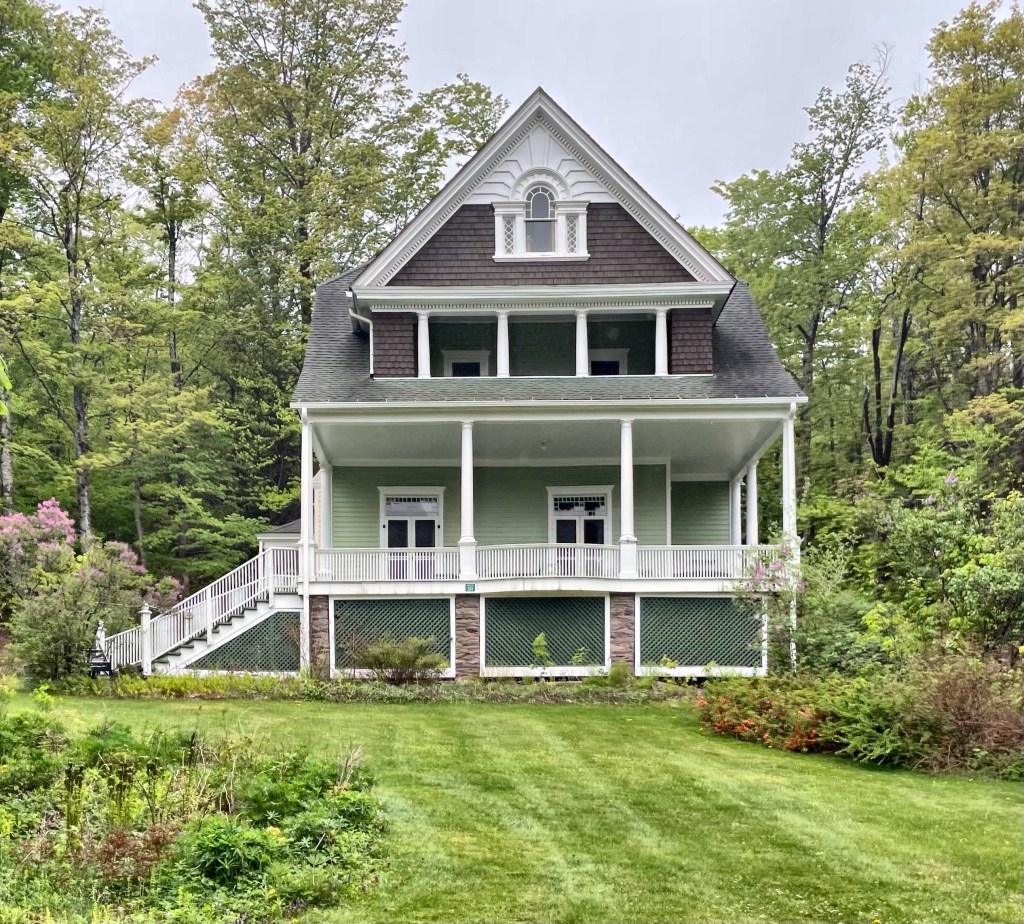
Esser Cottage // 1894

Hermann Esser (1845-1908) was born in Elbertfeld Germany and emigrated to the U.S. in the fall of 1866 and settling in Hoboken, NJ. On September 30, 1869, he married Bertha Michelmann of Hanover, Germany, who also emigrated to the U.S. years prior. In the states, Essen joined his old business partner Wilhelm J.D. Keuffel (also a German) and they ran the Keuffel & Esser Company, a scientific instrument manufacturing firm originally founded in New York City in 1867. Best known for its popularization of the slide rule, Keuffel & Esser was the first American company to specialize in the manufacture and sale of drafting and surveying tools. By the early twentieth century, it was one of the largest manufacturers of scientific instruments in the world. Their original store was located at 127 Fulton Street in Manhattan. Esser, with his wealth, decided to build a cottage in summer colony of Elka Park, New York, just north of Manhattan. The enclave was founded and has long been inhabited by wealthy German residents from New York City. This cottage was built for Mr. Esser in 1894, and is decidedly more Colonial Revival than many other cottages here. Esser only enjoyed a few summers here as he moved back to Germany in 1902, and died in 1908.