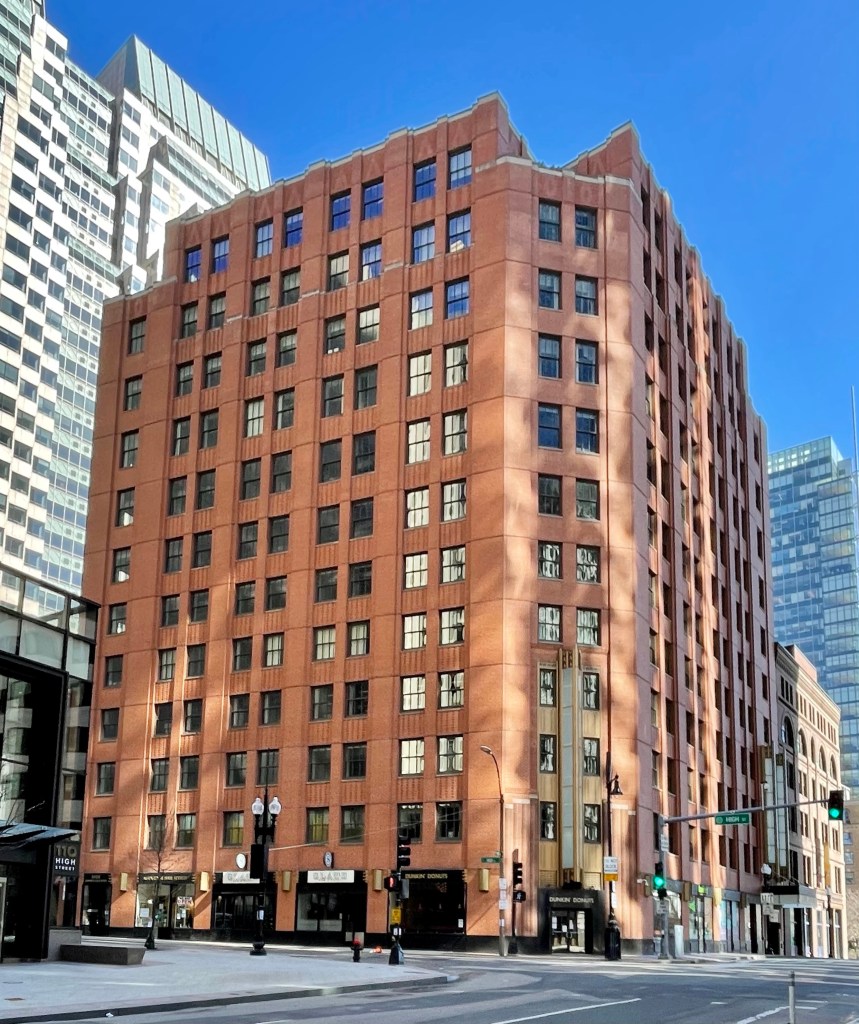
The New England Telegraph and Telephone Company Building was erected in 1947, just north of the Western Union Art Deco building (last post) to serve as the company’s headquarters. The steel-frame, polished granite and limestone-sheathed Art Deco skyscraper was designed by Alexander Hoyle, a partner in the firm of Cram & Ferguson. The stunning building takes the form of a stepped pyramid, or ziggurat, with successive receding stories rising from a four-story base, which diminishes its massing from the street. At the interior, a lobby mural on paper by artist Dean Cornwell (1892-1960), depicting “Telephone Men and Women at Work,” commissioned in 1947 and installed in 1951. The 190-foot mural told the story of the history of the telephone and was an artistic masterpiece, but was removed from the lobby during a recent renovation and subsequently sold.
While Boston doesn’t have as many iconic Art Deco buildings as New York or Chicago, we do have some that pack a punch! Located at the southern end of Downtown Boston, the Western Union building at the corner of Congress and High streets served as a headquarters for the third district in Western Union’s eastern division. Western Union was founded in 1851, and ten years later, built the first transcontinental telegraph line. The company made a brief foray into the telephone field but lost a legal battle with Bell Telephone in 1879 and thereafter concentrated solely on telegraphy. In the 20th century, Western Union diversified its operations to include: leased private-line circuitry, a money order service, as well as telegrams and mailgrams. The company’s Boston building was designed at the same time as their New York City headquarters, designed by Ralph Thomas Walker, and the buildings are strikingly similar, just with the Boston building on a smaller scale. The building in New York is among my favorite Art Deco buildings ever, as the use of red brick in varied patterns creates such a stunning composition. Amazingly, in 2004, water infiltration behind the original brick façade of the Boston building necessitated the removal and replacement in-kind of the entire brick façade. The existing signage and light fixtures, designed in the Art Deco style were added at that time.
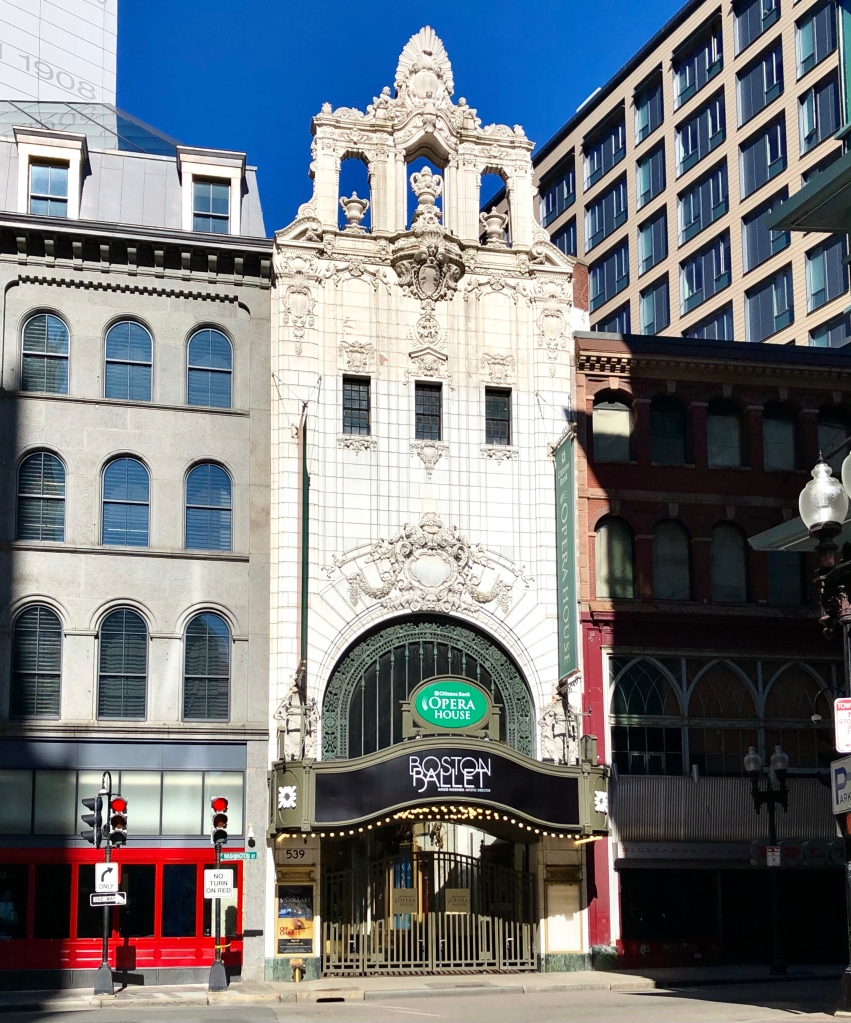
Not to be confused with the former B.F. Keith’s Boston Theatre (last post), the B.F. Keith Memorial Theater on Washington Street, remains as one of the most sophisticated architectural compositions found in Boston. The Keith’s Memorial was one of his most elaborate designs of the prominent theater architect Thomas W. Lamb. The B. F. Keith Memorial Theatre was erected under the close personal supervision of Edward Franklin Albee as Albee’s tribute to the memory of his late partner and friend, Benjamin Franklin Keith. For that reason, it was built with a degree of luxury in its details and design that is almost unrivaled. On October 23, 1928, just before the theater opened, the Radio-Keith-Orpheum (RKO) company was formed and became the owner of the theater after consolidations and mergers. The Keith Memorial theater opened on October 29, 1928, presenting first-run films along with live vaudeville. By 1929, the theater had converted to showing only films and remained a leading Boston movie showcase through the 1950s. In 1965, the theatre was purchased from RKO by Sack Theatres, and the new owners refurbished the building, and renamed it the Savoy Theatre. The theater used the frontage, formerly used by the B.F. Keith’s Boston Theatre on Tremont Street to showcase a large marquee. In the early 1970s the massive arch framing the opening between the stage and the auditorium was bricked up, and a second auditorium was installed within the stage. The theatre was then named the Savoy 1 & 2. The twinned theatre continued to operate as a pair of film houses until 1978, when it was bought by the Opera Company of Boston, who renamed the building the Boston Opera House. After a decade, the group could not maintain the ornate building and The Opera Company closed the theatre in 1991, and the building began a period of rapid deterioration. In the early 2000s, the gorgeous building was restored and re-opened as the Citizens Bank Opera House, which (pre-Covid) runs a steady rotation of touring Broadway productions, Boston Ballet Nutcracker holiday shows and more. Also, if you havent been inside the building for a tour, you are missing out!
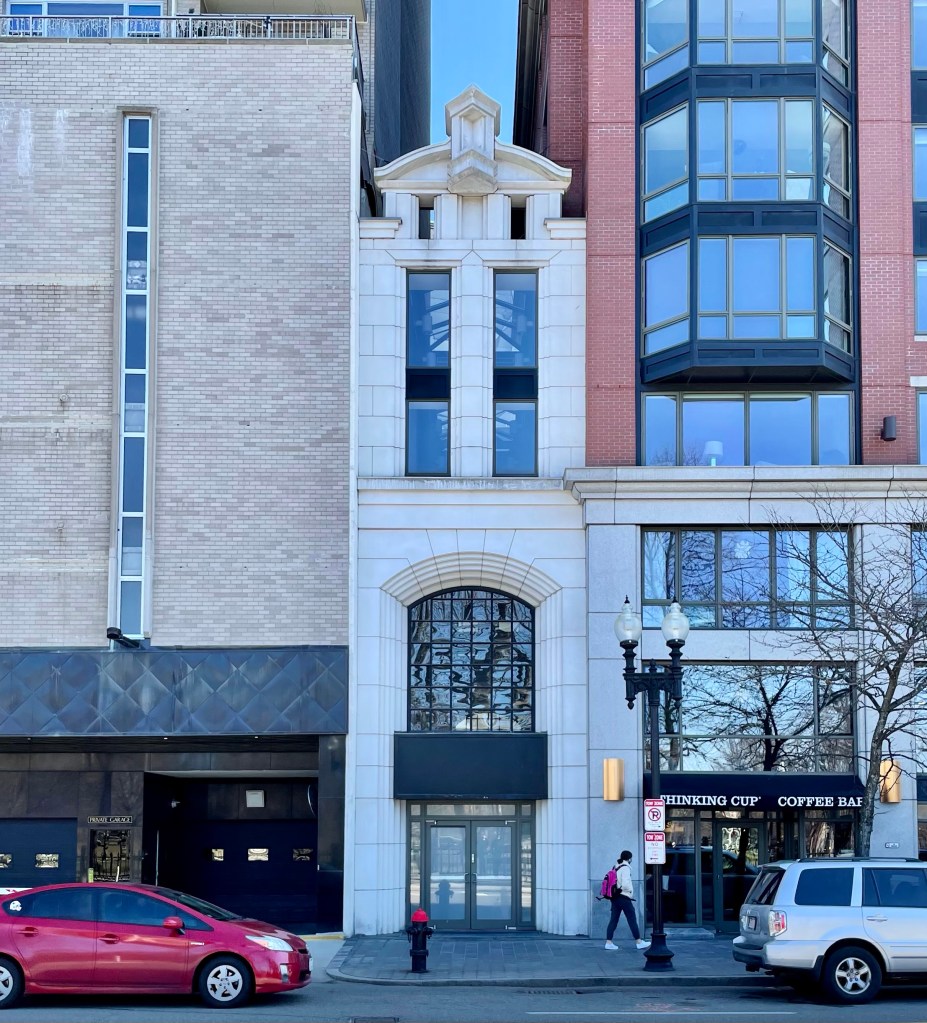
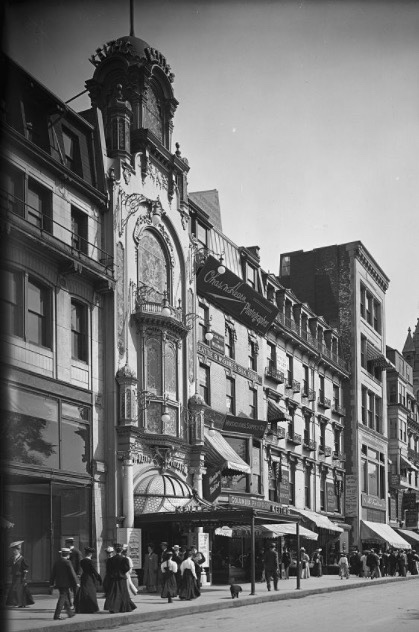
The other day, I was walking in Boston Common along Tremont Street, when I noticed this oddly ornate building wedged between larger, modern buildings. I HAD to investigate! The building was actually constructed as an arcade/covered walkway which ran to Mason Street behind, with a tunnel running under that street into the B.F. Keith’s Theatre. In 1892, Benjamin F. Keith and his business partner E.F. Albee purchased land off Mason Street, a scarcely trafficked street between the busy Tremont and Washington Streets in Boston’s Theater District, with the goal of creating the city’s finest vaudville theatre. The duo hired J. B. McElfatrick & Son, architects who specialized in theatres, to design the new B.F. Keith’s. Due to the site being wedged between two main streets, entrances were built off both Tremont and Washington with flashing lights and marquees, guiding patrons inward. The Tremont facade was especially grand so that B. F. Keith’s New Theatre could be advertised on, and approached directly from, Boston Common, with lights flooding the park. The theater opened in 1894 and was over-the-top with intricate details and sculpture all over, appealing to the city’s wealthy as a place to see the arts. Although it was primarily a vaudeville house during Keith-Albee’s ownership, famed inventor Thomas Edison demonstrated his new Vitascope movie projector here on May 18, 1896. This was the first projection of a movie anywhere in Boston. As live shows made way for motion pictures, the theater adapted, but suffered around the Great Depression when would-be patrons decided to save their limited money. In 1939, the theater was converted to a movie theater named the Normandie. The theater was demolished in 1952 for a surface parking lot to provide better service to the Opera House (originally B.F. Keith’s Memorial Theatre, confusing I know) and Paramount Theater. Today, all we have left of the once beloved B.F. Keith’s Theater is the small annex, which is virtually unrecognizable from historic images as most of its decoration and the top two stories were removed.
One of the lesser-known historic hotels in Boston can be found at the corner of Exeter and Blagden Streets in the Back Bay neighborhood, tucked behind the Boston Public Library’s Johnson addition. Exeter Chambers (now Courtyard by Marriott Boston Copley Square), was built between 1889 and 1890 from plans by architect Theodore Minot Clark. Clark was a professor at MIT and the understudy of Boston’s famed Trinity Church architect, H. H. Richardson. Clark oversaw much of the construction of Trinity Church and his name is even engraved on the building. Exeter Chambers was constructed by the Guastavino Company, a very prominent contractor during the period noted for style and quality, known for the Guastavino tile. Cutting edge techniques such as compression arches and terracotta accents were featured throughout the structure. The hotel was vacant for many years and a renovation in 2004, which added three stories to the building, restored the ornate exterior to its former glory.
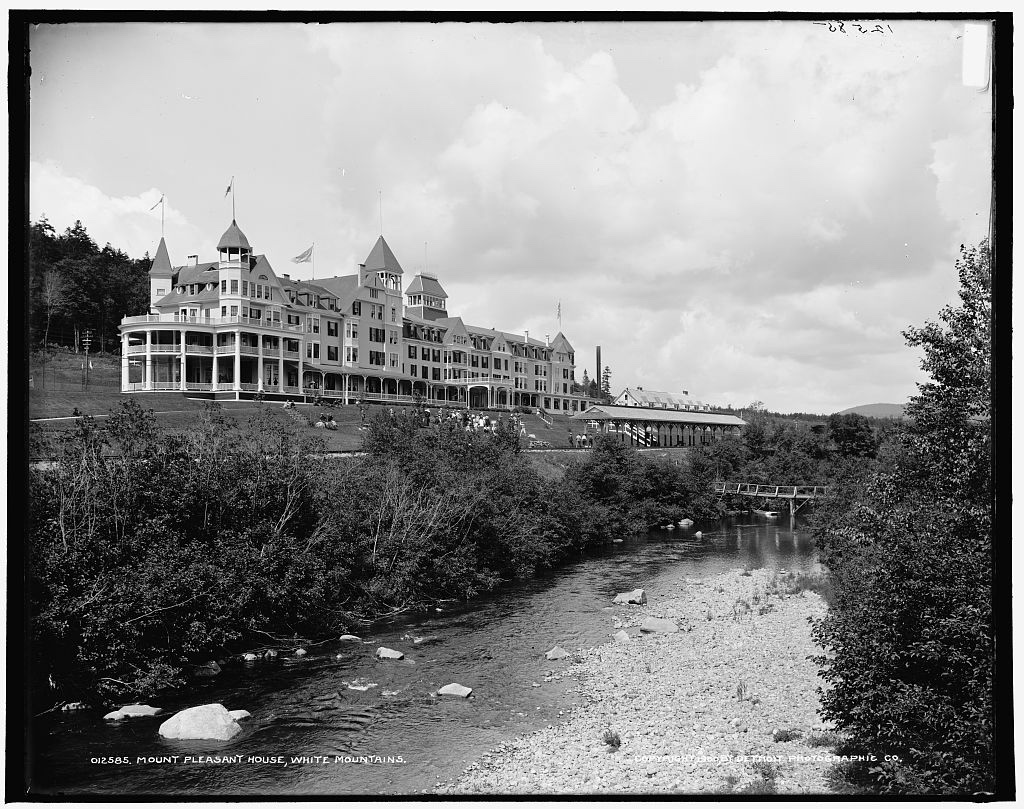
One of the earlier grand hotels in the White Mountains of New Hampshire, was Mount Pleasant House, built in 1875 after the arrival of the railroad through Crawford Notch. The hotel was located on a small hill where the Lodge at Bretton Woods is currently sited, across the street from the iconic Mount Washington Hotel. It was built by lumberman and investor John T.G. Leavitt and opened the following year. It was then a simple, almost box-like structure with only forty rooms, later expanded and “modernized” to accommodate the growing waves of affluent visitors from New York City and Boston every year. In 1881, Leavitt sold the hotel to Oscar Pitman and Joseph Stickney, the latter eventually became sole owner and acquired land across the street to build the Mount Washington Hotel in 1900. Possibly as a practice for his larger endeavor across the street, Stickney hired one of Portland’s leading architects, Francis H. Fasset, to design the additions and alterations. When Stickney died in 1903, just a year after his larger hotel was built, both properties were willed to his wife, Caroline. She ran the company through changing economic conditions and when she died, in 1936, the hotels were left to her nephew, F. Foster Reynolds. Reynolds decided that the Mt. Pleasant was not worth the expense needed to maintain it, and in 1939, ordered the building demolished, replaced decades later with the present building.
St. Patricks Day in Boston is not the same this year. It has been a year since I have been crammed into a dimly lit, wood-paneled Irish Pub, with a pint of Guinness and good conversations with strangers. So for now, I will drink my sorrows in highlighting one of many Irish pubs in Boston, Hennessy’s. The building was constructed as one of a row around 1826 along with the adjacent buildings on the block (today containing Son’s of Boston and Blackstone Grill). All four buildings were identical and stood 3-1/2 stories as Federal style commercial buildings with retail space at the ground floor and office or residences above. The buildings were sold off separately and in the 1960s, this building was acquired by the Charlestown Savings Bank, who thought to “Colonialize” the building. They removed 1-1/2 stories and altered the openings at the ground floor (it could have been MUCH worse). The bank moved out just decades later and the building has since been home to Hennessy’s.
The railroad line through Crawford Notch in the White Mountains of New Hampshire was completed and opened in 1875 by the Portland and Ogdensburg Railroad, and had a transformative effect on the local economy. Soon after completion, tourists arrived in droves during the summer months to take in the area’s scenic beauty and clean air. From this, wealthy investors built large resort hotels, like the Mount Washington Hotel, to satisfy the demand of the affluent visitors. The Portland and Ogdensburg was taken over by the Maine Central Railroad in 1888, and this depot was built in 1891. It was one of the most elaborate stations built by that railroad’s Mountain Division, because of its prominent location in the mountains. The Crawford Depot presently serves as a visitor center and shop operated by the Appalachian Mountain Club. Nearby is the trailhead to Mount Willard, which has some of the best views for a modest hike.
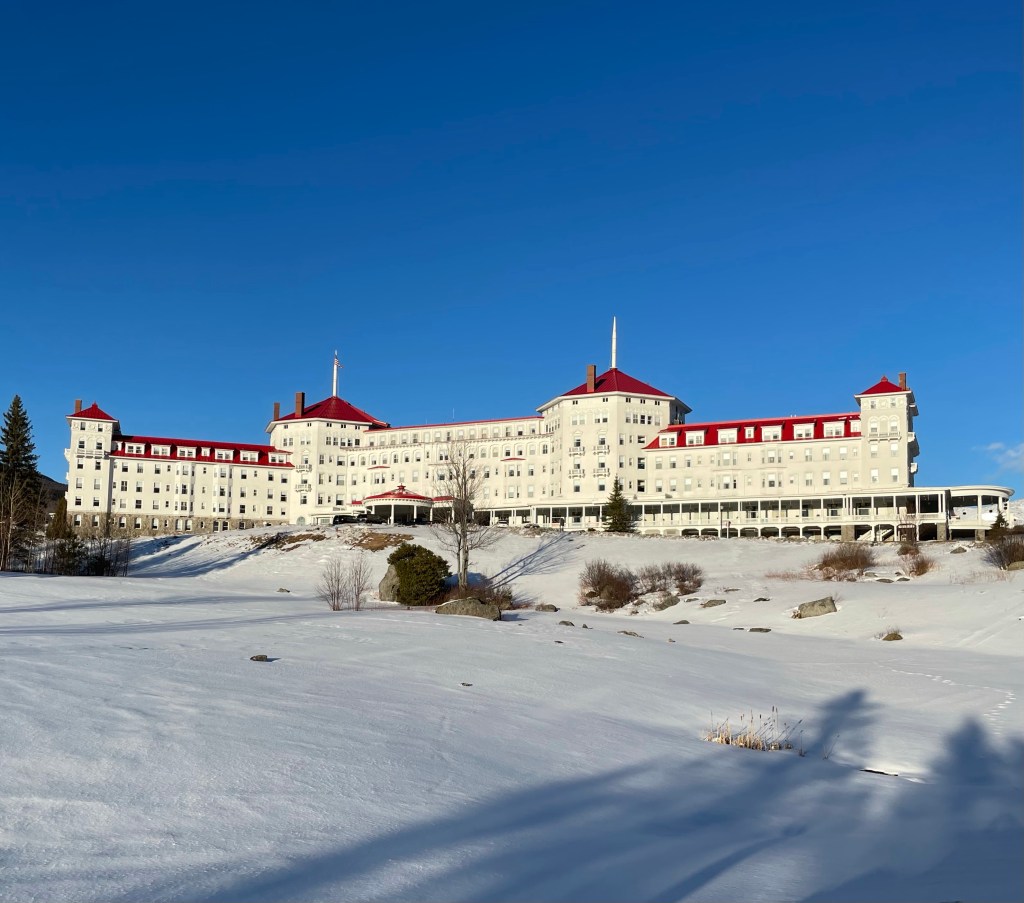
The Omni Mount Washington (originally the Mount Washington Hotel), surrounded by the great White Mountains of New Hampshire, was completed in 1902, at the end of the Gilded Age and the grand hotel era of America. The grand hotel was financed by Joseph Stickney, a native of New Hampshire, who made a fortune before the age of 30 investing in the coal business in Pennsylvania. In 1881, Stickney purchased the Mount Pleasant Hotel, a nearby summer resort and enlarged it, and acquiring a taste for hospitality development in the White Mountains (it was later demolished in the 1930s). He hired architect Charles Alling Gifford to design a new, larger resort across the street which in total, cost him over $50,000,000 in today’s dollars! Ironically, Joseph Stickney, had famously told the press on the opening day: “Look at me, for I am the poor fool who built all this,” as the economy was starting to turn right as the hotel opened. He died one year later in 1903. Nevertheless, up to fifty trains a day unloaded the families of the country’s wealthiest people, mostly from New York City, who stayed here for Summers at a time, leaving behind “the yellow fever and cholera in the cities” for fresh air and open space. The hotel’s design incorporated some of the most cutting-edge innovations of its age, including a steel-frame superstructure, an electrical power plant, and a sophisticated internal heating system. Roughly 250 Italian artisans were brought in to provide artistic touches to the structure by working on its exterior granite and stucco masonry including the two massive octagonal towers, and installing Tiffany stained glass windows.
After Joseph Stickney’s death in 1903, Carolyn his widow, became extremely rich (the couple never had children). Carolyn spent her summers at the hotel for the next decade, a nearby chapel honoring her late husband. The hotel did well in the subsequent decades until the advent of income tax, Prohibition, and the Great Depression, which harmed many large resorts’ profits. In 1936, Mrs. Stickney’s nephew, Foster Reynolds, inherited the hotel, but it closed in 1942 because of World War II. A Boston syndicate bought the extensive property for about $450,000 In 1944. The Bretton Woods monetary conference took place that year, establishing the World Bank and the International Monetary Fund. After subsequent owners, in 2015, the hotel and the Bretton Woods Mountain Resort were purchased by Omni Hotels & Resorts, who have been advocates to the history and preservation of the building and surrounding area, also overseeing the hotel’s inclusion to the illustrious Historic Hotels of America list.
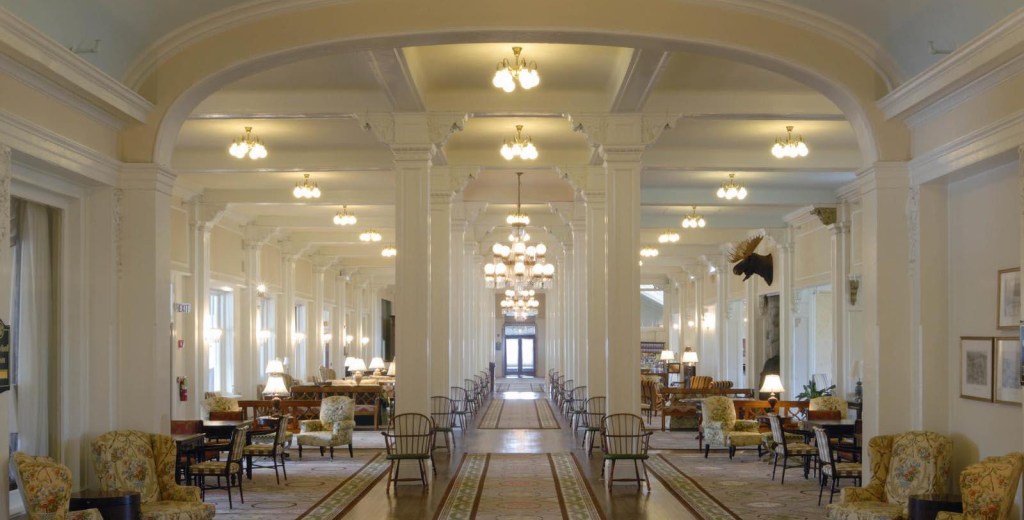
There is so much more I could write about the Omni Mount Washington Resort, from the incredible interior spaces, to Carolyn’s marriage to a French prince, to the supposedly haunted sites… So much history to uncover, so little time!
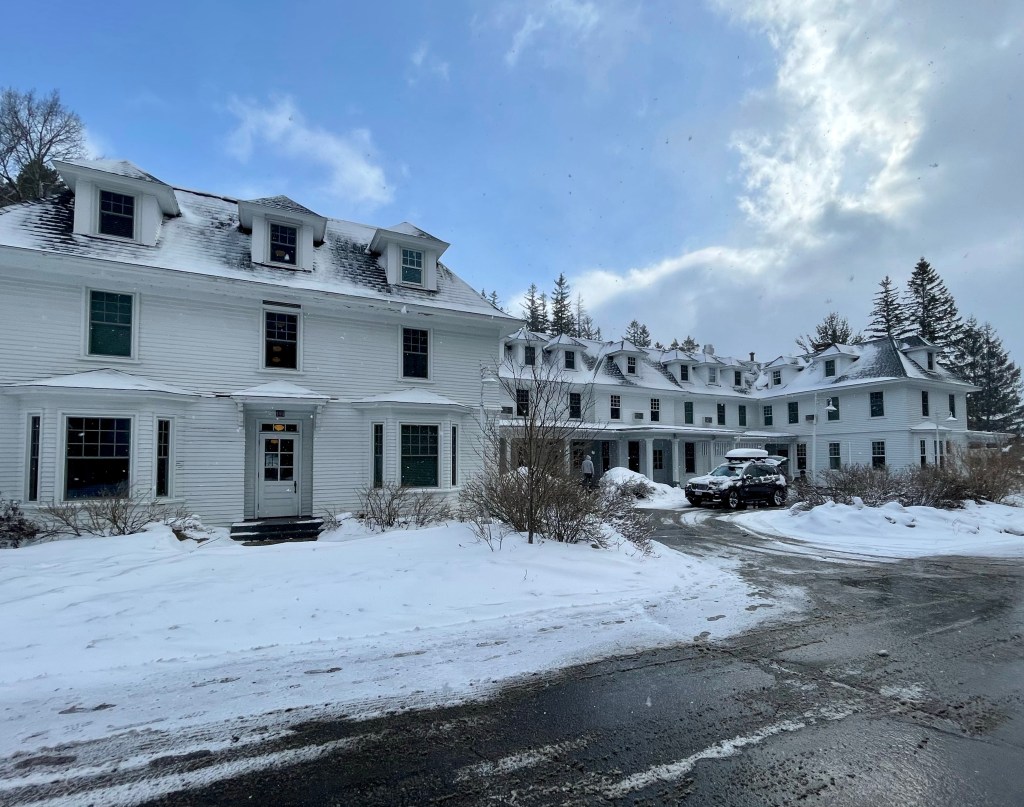
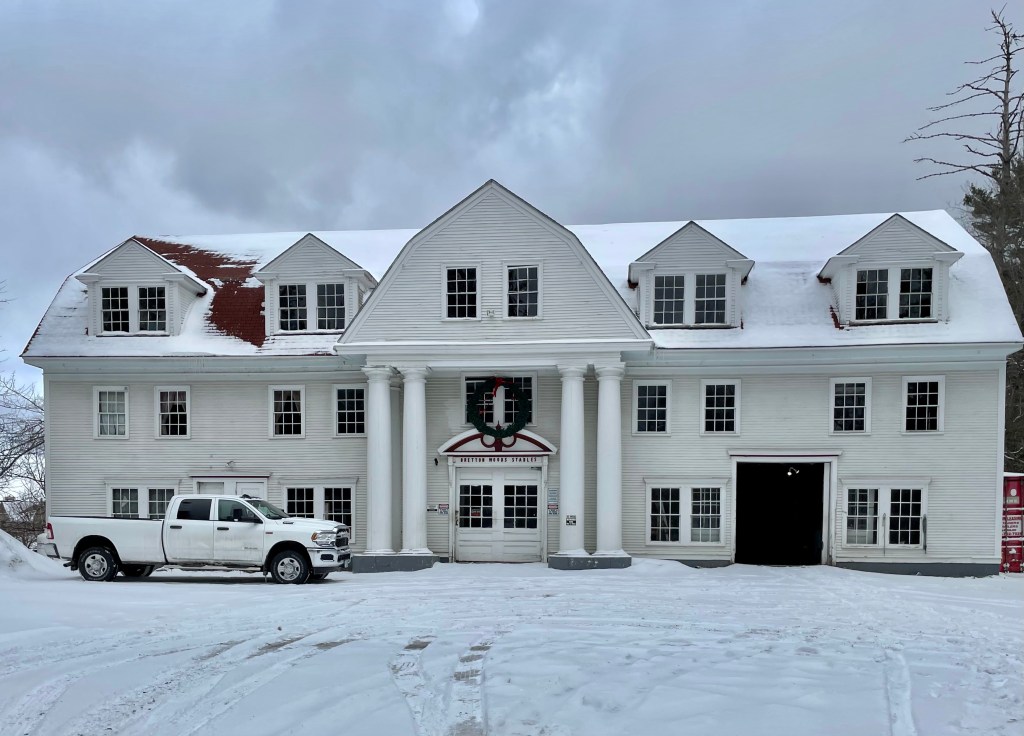
The historic Omni Bretton Arms Inn, adjacent to the Omni Mount Washington Hotel in the White Mountains of New Hampshire, was built as a private home in 1896. The home was designed by, and occupied by architect Charles Alling Gifford, while he oversaw the design and construction of the iconic Gilded Age hotel. After the hotel nearby was opened, the interior was converted to hotel rooms, and opened to guests in 1907. The Colonial Revival building features a central mass with two wings. The building was occupied in 1944 as the headquarters for the Conference Secretariat during the 44-nation Bretton Woods Monetary Conference. The Inn was granted National Historic Landmark designation in 1986 and has recently undergone a $1.4 million renovation focused on bringing the outdoors in. Part of the Omni Mount Washington Resort, this property offers more seclusion and less crowds compared to its larger neighbor. Just down the road from the Bretton Arms is the equally stunning Bretton Woods Stable, likely built at the same time.





 Buildings of New England