Derby Gas and Electric Company Offices // 1931

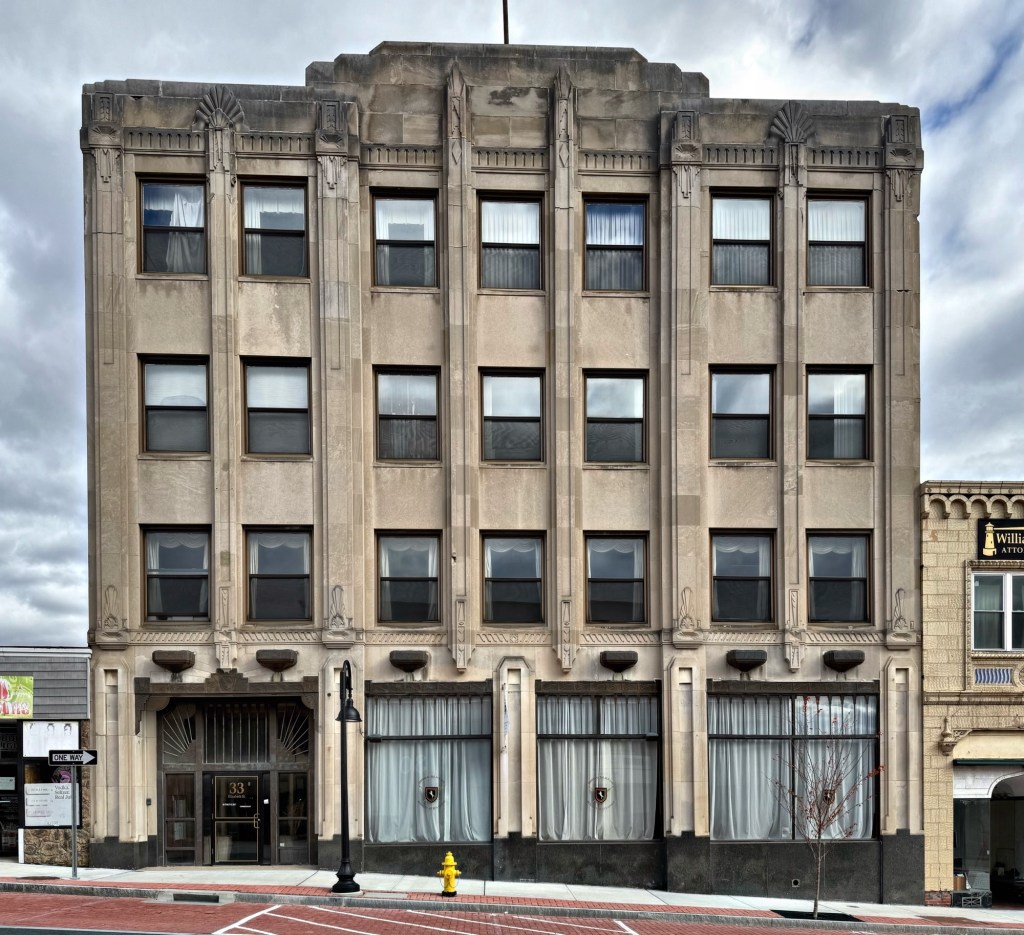
The former Derby Gas and Electric Company offices are located on Elizabeth Street in Derby, Connecticut, and stand as one of the great Art Deco buildings in New England. Built in 1931, the four-story office building features a limestone facade with bronze storefronts and light fixtures which were illuminated from the company’s plant nearby. In the 1950s the company was acquired by the United Illuminating Company.

Woodrow Wilson School // 1932

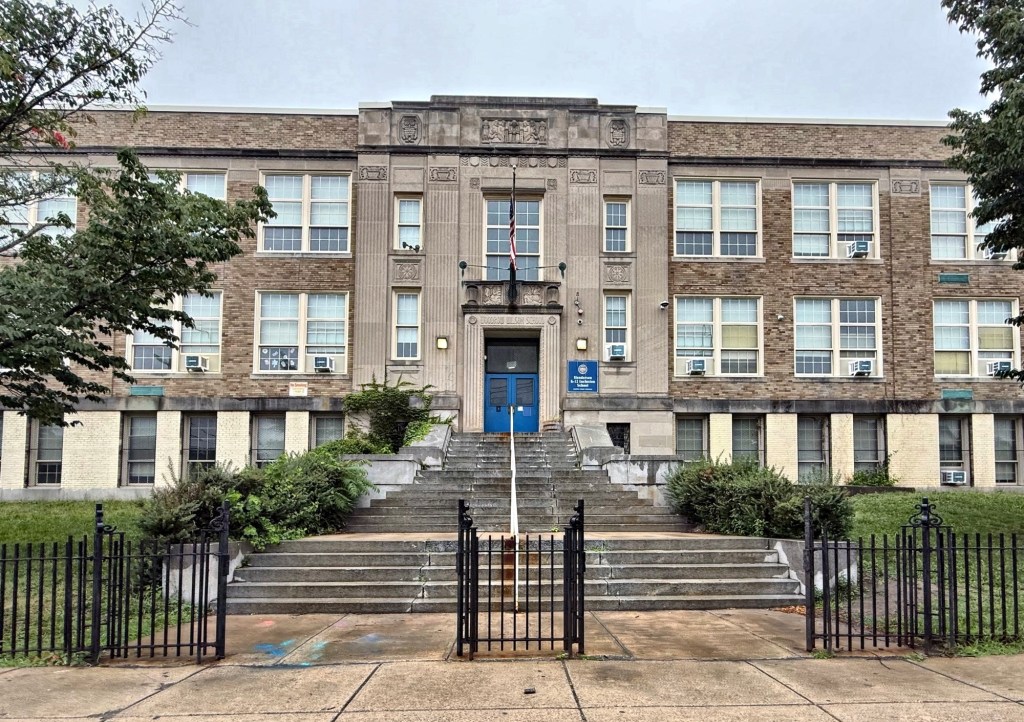
The Woodrow Wilson School, now Dr. William W. Henderson K-12 Inclusion School, is located at 18 Croftland Avenue in the Ashmont neighborhood of Dorchester. The school was built in 1932 to accommodate increased development and population growth in the immediate area in the interwar period and was designed in a blending of Classical Revival and Art Deco styles, both popular at the time for such academic buildings. The building was named for Woodrow Wilson (1856–1924), the 28th President of the United States and was designed to comfortably accommodate 1,600 students. Architect, John Matthew Gray designed the building to conform to a plan drafted by the City of Boston in 1923 to standardize all new school construction down to the precise dimensions of windows and hallways. The permitted flexibility for hired architects was strictly on the exterior, where architects were free to create individual character in the designs of entryways, auditoriums, and exterior architectural styles and decoration. The entry of the Woodrow Wilson School depicts Art Deco motifs including lettering and inlaid carved panels over the door of a child reading and a child holding a globe. The school was renamed the Dr. William W. Henderson K-12 Inclusion School after the innovative educator of the same name.


South Street Diner // c.1947

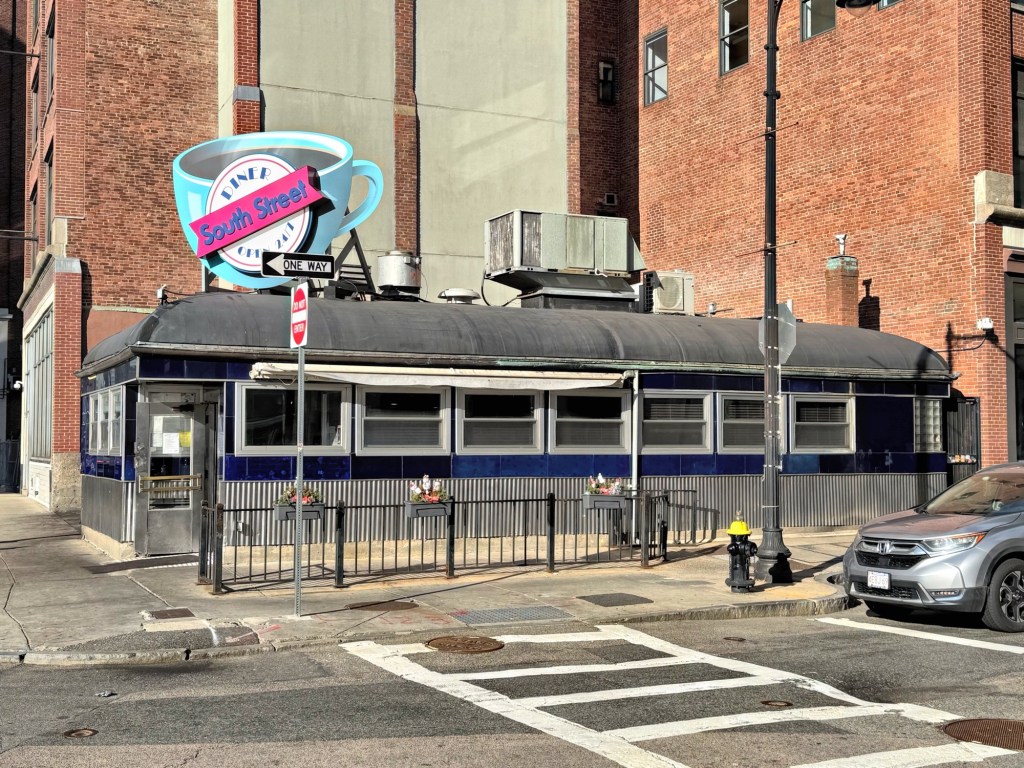
One of the hidden gems of Boston can be found tucked away in the Leather District, one of the last remaining diner cars in the city, this is South Street Diner. At this site, at the corner of South and Kneeland streets, a diner car has existed since about 1935. In 1947 the present diner car was built by the Worcester Lunch Car Company and moved on this site as the Blue Diner opened, possibly named after its patrons, largely blue-collar workers. The diner would be renamed the South Street diner in 1992, a name that has stuck ever-since. The diner attracts tourists, nearby workers, and drunken college students, serving as a much-needed melting pot for people of different backgrounds to grab a good bite to eat.

Strand Theater // 1923

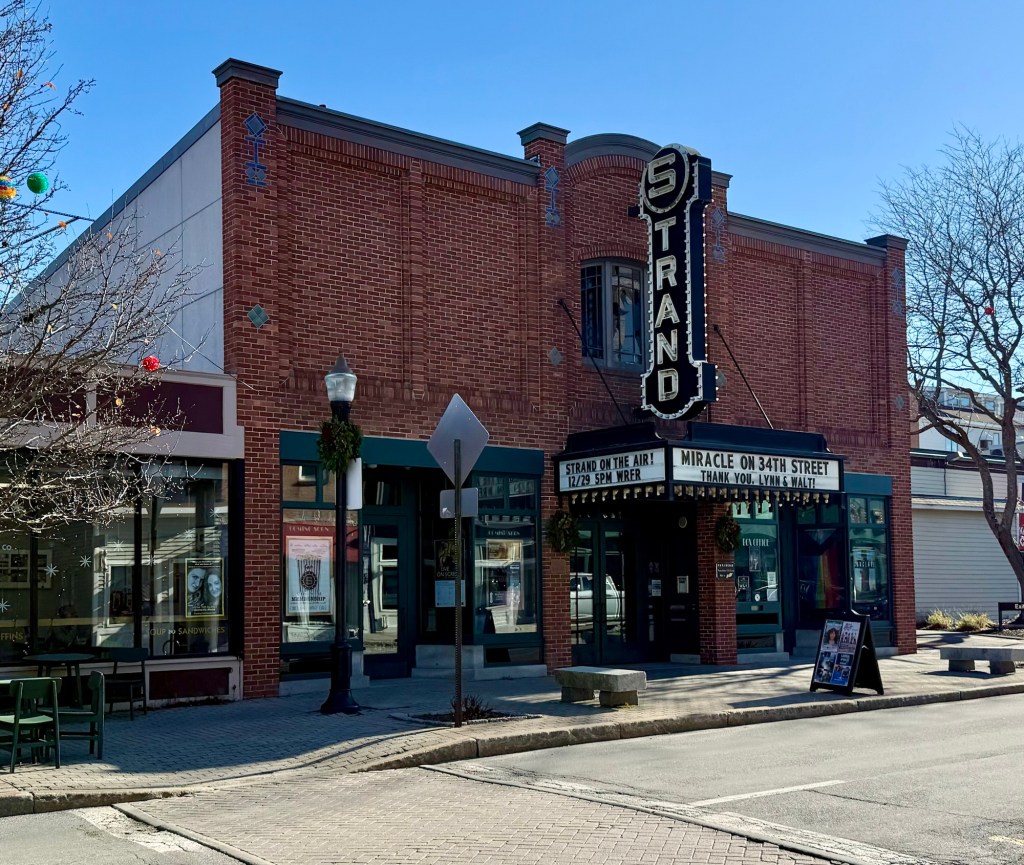
The Strand Theater on Main Street in Rockland, Maine, is a great example of the inter-war theaters that sprouted up in towns all across the country following WWI. The theater was built in 1922-23, on the site of a building destroyed in a 1922 fire that swept through the southern part of Rockland’s downtown. The steel-framed theater, with its terracotta tile walls and ornamental brick facade is fairly unadorned, besides the blade sign marquee reading “STRAND”. Two storefronts, a cigar store and a flower shop, were also incorporated into the theater, framing the entrance. The theater stayed open until the early 2000s when the local multiplex bought it and closed it. In February, 2004, the theatre was purchased by a long-time summer resident who restored the building and opened it back up. The Strand remains a vital economic and cultural center for the town, and its preservation is an important piece of Rockland’s charming Main Street.

Hotel Manger // 1930-1983

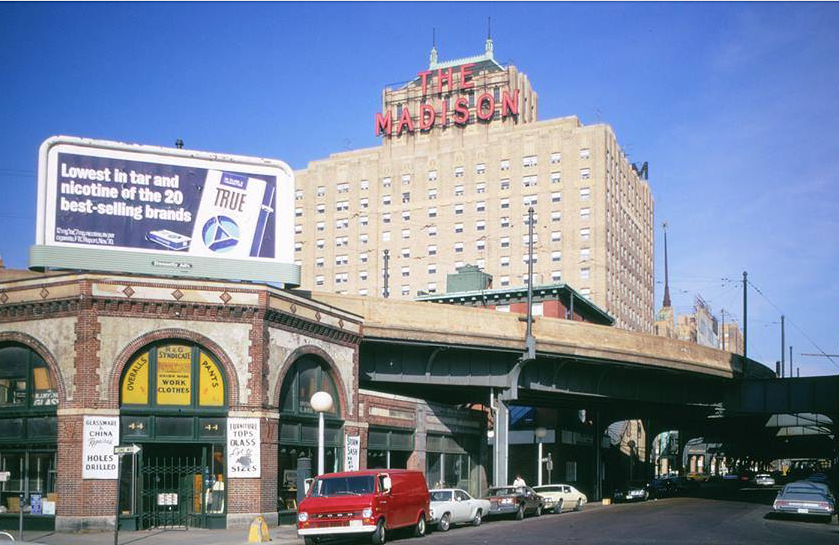
Built on the site of the former Boston & Lowell Train Station the Hotel Manger (later renamed the Madison Hotel in 1959) was part of the first redevelopment of North Station in Boston. When the Boston & Maine Railroad announced that plans had been finalized for the construction of a new North Station facility, which would include a sports arena, hotel, office building, and distributing terminal, Manger Hotels, a national hotel chain, and the Boston & Maine Railroad announced that the two parties had signed a contract for the construction of the hotel on the site with each party holding a 50% stock in the building. Designed by the architectural firm of Funk & Wilcox in the Art Deco style, the 17-story hotel was completed in 1930 and contained 500 rooms and at the time of its opening, the hotel was said to have had proportionately more marble than any other building in New England! As railroad traffic declined, the neighborhood surrounding North Station lost its importance as a commuter center and the hotel began to suffer financially, leading the hotel to close in 1976. Plans to convert the old hotel into elderly housing fell through, and in March 1983, the Boston Redevelopment Authority purchased the hotel and demolished it as part of their urban renewal plan for the area. The site is now occupied by the mundane Thomas P. O’Neill Jr. Federal Building.

North Station & Boston Garden // 1928-1998

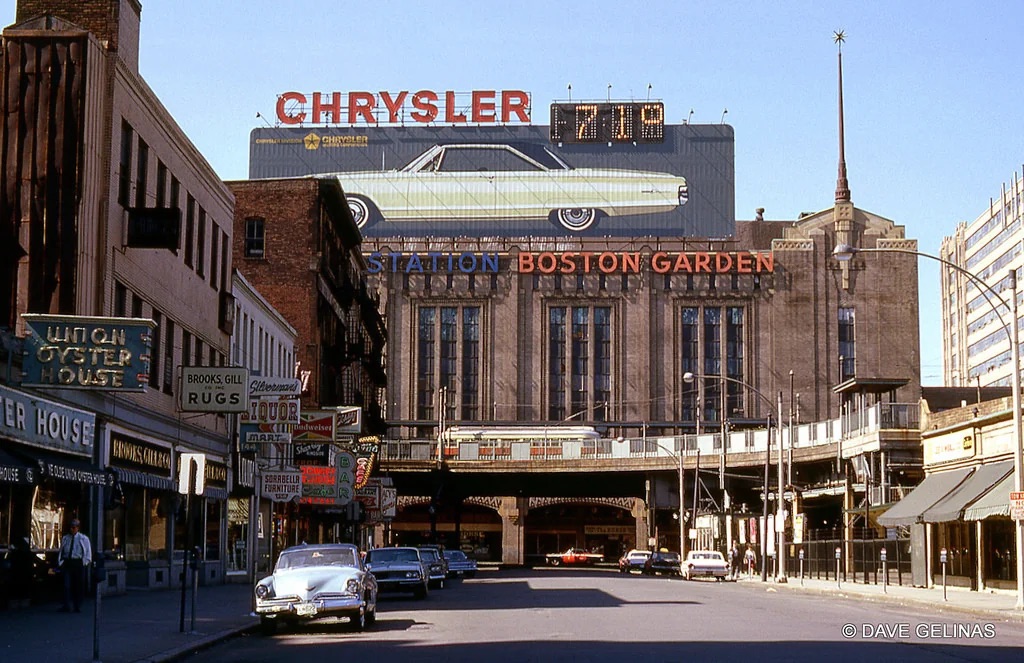
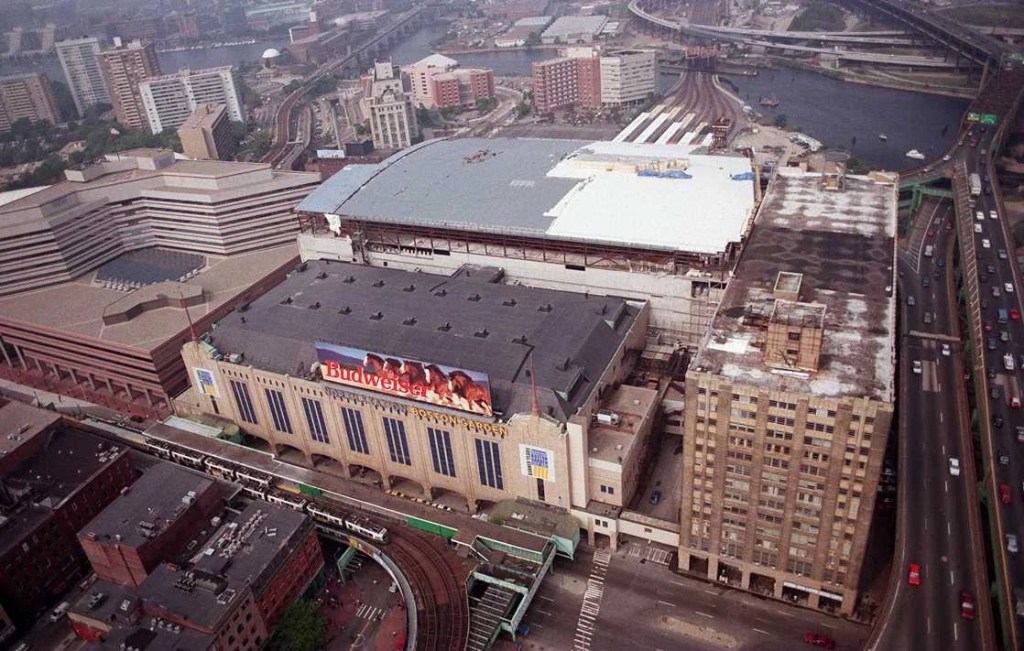
In the 1920s, plans began to build a contemporary train station that tied in both the Boston subway and regional train lines. The complex would replace the former North Union Station and help propel Boston as a more contemporary city. Seeing the opportunity, Boston real estate developer James Walsh realized the potential of adding a sporting stadium atop the station. Walsh had also contacted New York boxing promoter Tex Rickard, who built the third iteration of New York’s Madison Square Garden, and was eyeing boston as a location for a second Madison Square Garden. The duo hired the New York firm of Fellheimer and Wagner (designers of New York Grand Central Station) to design the exterior of the building in the Art Deco style. The building opened in November 1928 as the Boston Madison Square Garden, later shortened to the Boston Garden. The arena was built specifically with boxing in mind, with Rickard believing every seat should be close enough to see the “sweat on the boxers’ brows”. Due to this layout, fans for decades later were much closer to the players during Bruins and Celtics games than in most arenas, leading to a distinct hometown advantage. Storied franchises became dynasties and the grit and determination of Boston sports was fostered under this roof. The small size of the Boston Garden, paired with electrical issues and lack of air-conditioning, led to its demise. The present Boston Garden opened in 1995, behind the old Garden and was known as the Fleet Center, later renamed the TD Garden. The 1920s Garden sat vacant for three years before it was demolished in 1998. The site where the building once stood is currently a commercial development called The Hub on Causeway.

Second Church of Christ, Scientist, Roxbury // 1915

Breaking ground in 1915, this early Modern church building must have turned heads when it was being built in Roxbury! In October, 1907, a fine lot of land with a house on it, at the corner of Elm Hill Avenue and Howland Street, was purchased for eighteen thousand dollars by a group of Christian Science followers. In October, 1911, a building committee of five was elected by the church, and by the summer of 1914 the building fund had made such satisfactory growth that ground was broken and work for the new structure begun in September. The congregation hired the illustrious architectural firm of Shepley, Rutan, and Coolidge to design the edifice of classic and imposing design. Constructed of gray tapestry brick with limestone trimmings, the auditorium seated upwards of one thousand members, under the dome roof. Today, the building is occupied by Grace Church of All Nations.

David A. Ellis School // 1932

In the early decades of the 20th century, Boston’s population grew to a point that existing infrastructure was becoming an issue. The Boston School Committee as a result, acquired sites via eminent domain, and built ten new school buildings citywide in 1932 alone! The City of Boston acquired this site a decade earlier, but finally broke ground on the David A. Ellis Elementary School in 1931 from plans by architect Ralph Templeton Cushman Jackson. The building is a rare example of a Art Moderne style school building in Boston, and it was named for David Ellis (1873–1929), former chairman of the School Committee. The brick building stands out for its brickwork and sections of terracotta tiles in geometric designs. They don’t make them like they used to.

Former Ridgefield Savings Bank Building // 1930

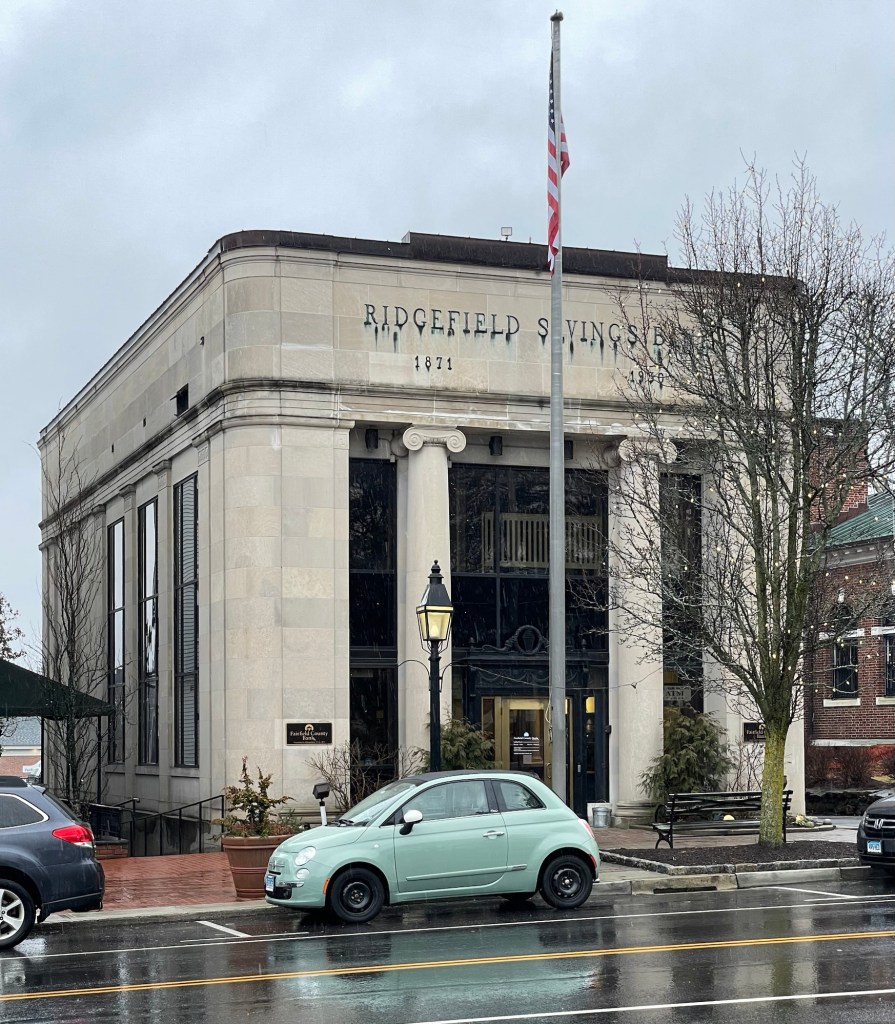
Historically, bank buildings were built with architecture at the forefront to show members and prospective investors that their company instilled prosperity and longevity. Today, many new bank buildings are cookie-cutter designs and lack ornamentation or intrigue… The interwar Ridgefield Savings Bank on Main Street in Ridgefield, Connecticut, was built in 1930 from plans by architects Ralph Hawes and Ernest Strassie in the Neo-Classical style with Art Deco rounded corners and undecorated planes. Dominated by its Classical Ionic portico the bank building is a lasting commercial landmark on the town’s charming Main Street. It is now occupied by the Fairfield County Bank.

Wales-Amory Townhouses // 1860

This is why preservation matters! These two townhouses on Beacon Street in the Back Bay of Boston were constructed in 1859-60 for Gardner Brewer (on the right) and George W. Wales (left). Brewer, an extremely wealthy merchant built the house on the right for his son-in-law and daughter, William and Ellen (Brewer) Amory, as a wedding gift following their February 1860 marriage. The symmetrical pair of houses were both originally clad with a brownstone facade with Second Empire style trim details and a continuous mansard roof. Both houses were renovated by the early 20th century with Colonial influence, as Victorian styles started to wane popularity amongst wealthy circles. The former Amory house (right) was purchased by Della Saul and was operating as a boarding house by the 1930s. It was converted to an apartment building (like condos) and the building was renovated with a new facade in 1935 by brothers and architects George Nelson Jacobs and William Nelson Jacobs with a more modern/Art Deco appearance. The house on the left remained with its more Colonial facade until a 2018 renovation by architect Guy Grassi giving it a cast stone facade, restoring the three-condo house closer to its original appearance.