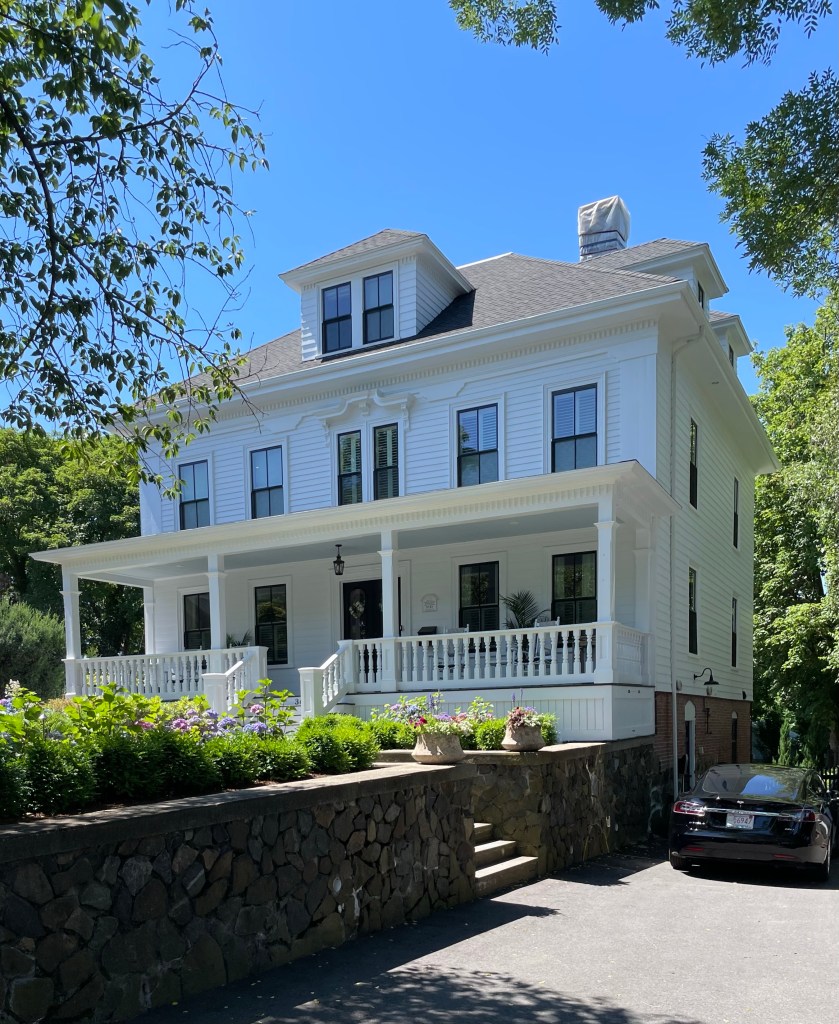
Eva Southwick House // 1898

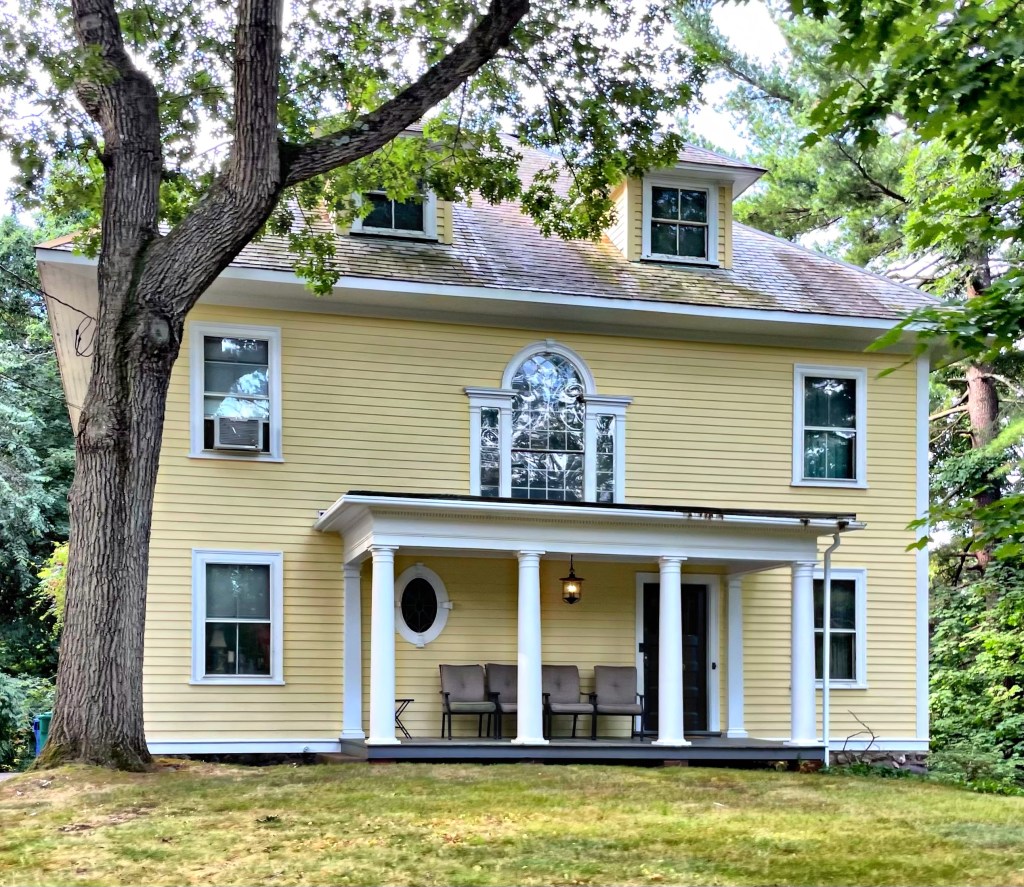
Okay, there is just something about this house that is so intriguing and unique and stands out among all the other (thousands) of Colonial Revival style houses I have seen. I just can’t quite put my finger on it! This late 19th century beauty was built in 1898 for Eva Bailey and Francis Southwick eight years after their marriage and after the birth of their children. It is unclear who the young family hired as an architect to design the home, but they definitely went with a loose adaptation of the Colonial Revival style in an American Foursquare form. The house has a large Palladian window and a minimal front portico supported by Doric columns.

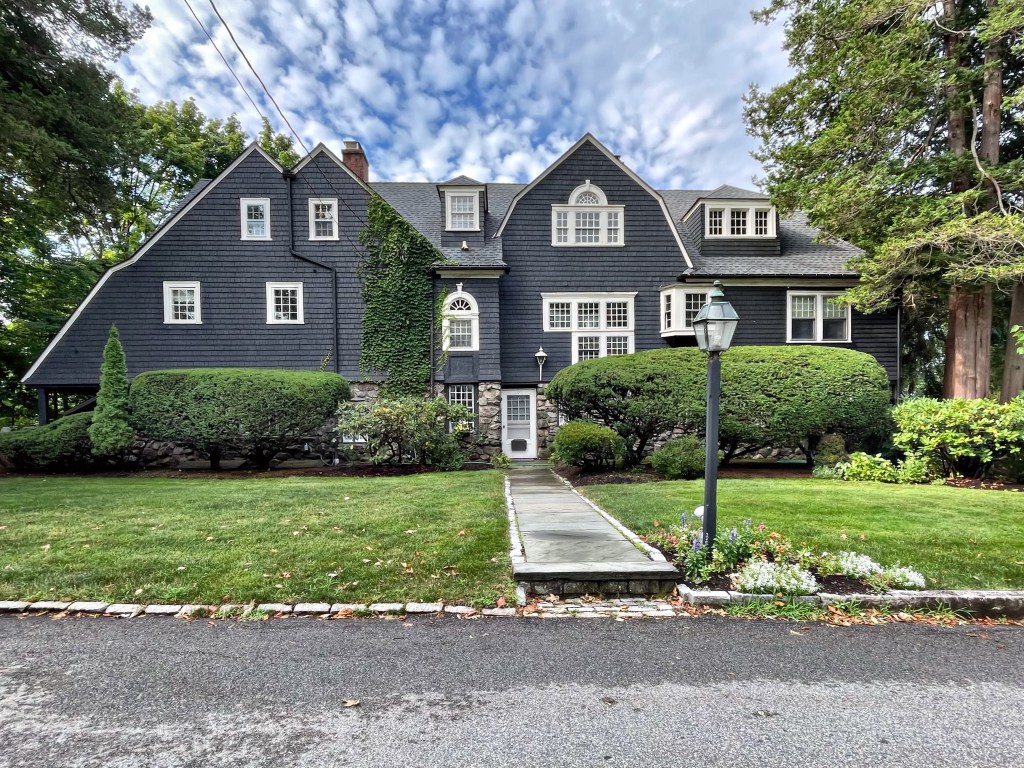
Ernest Zeiss House // 1897

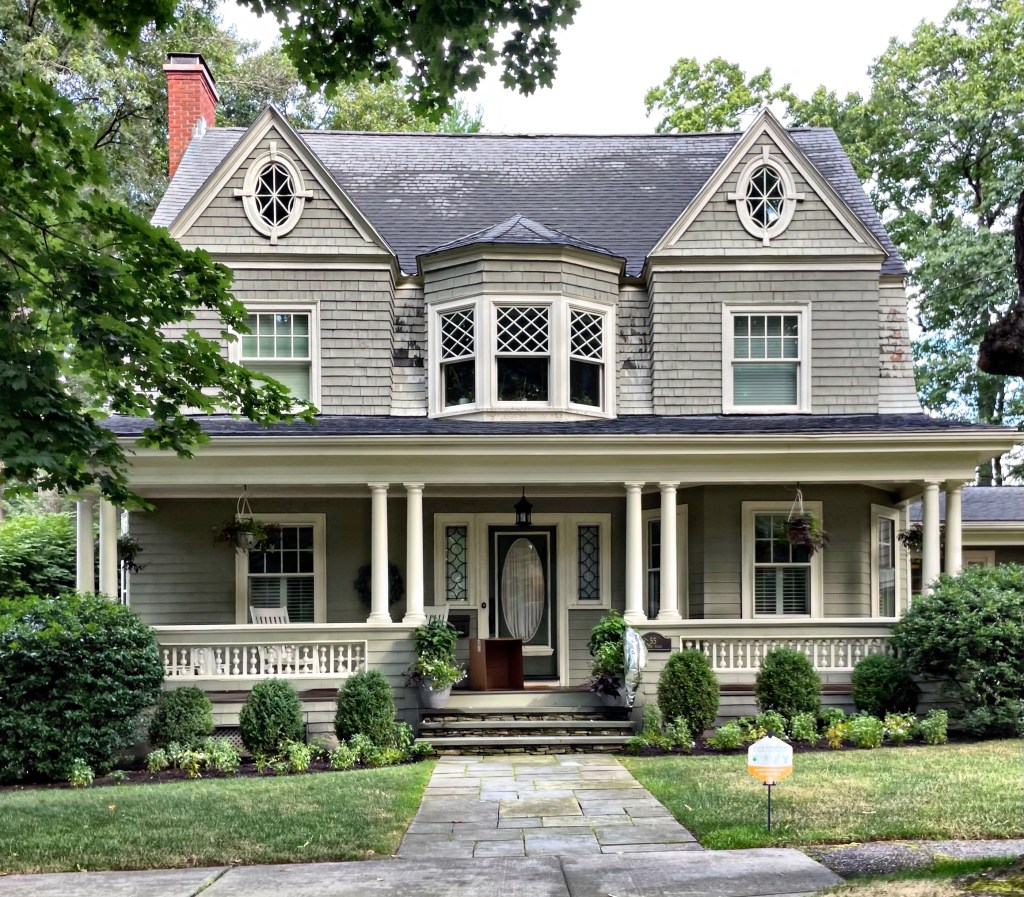
Another eclectic house in Waban is this beauty, a blending of Queen Anne and Colonial Revival styles under an impressive gambrel roof. The home was occupied by Ernest L. Zeiss, a salesman. Waban, which was once a neighborhood within the reach of the middle-class, has since become one of the most desirable neighborhoods in one of the most exclusive towns in the Boston metro. It is safe to say an ordinary 9-5 salesman would not be able to afford a house like this today!

Samuel Sparhawk House // c.1870

In 1870, Samuel Sparhawk built a large Second Empire style mansion on Mugford Street in Marblehead. Samuel and his brother Peter were among the first large shoe manufacturers in Marblehead, and did very well for themselves. Samuel also worked as Director of the Marblehead Savings Bank. In the early 20th century, the property was sold to Asa A. Schofield. In 1910, a fire at the Second Congregational Church destroyed the 1832 building and embers carried and burned the roof of the old Sparhawk House. The mansard roof was replaced with a simpler hipped roof with dormers.

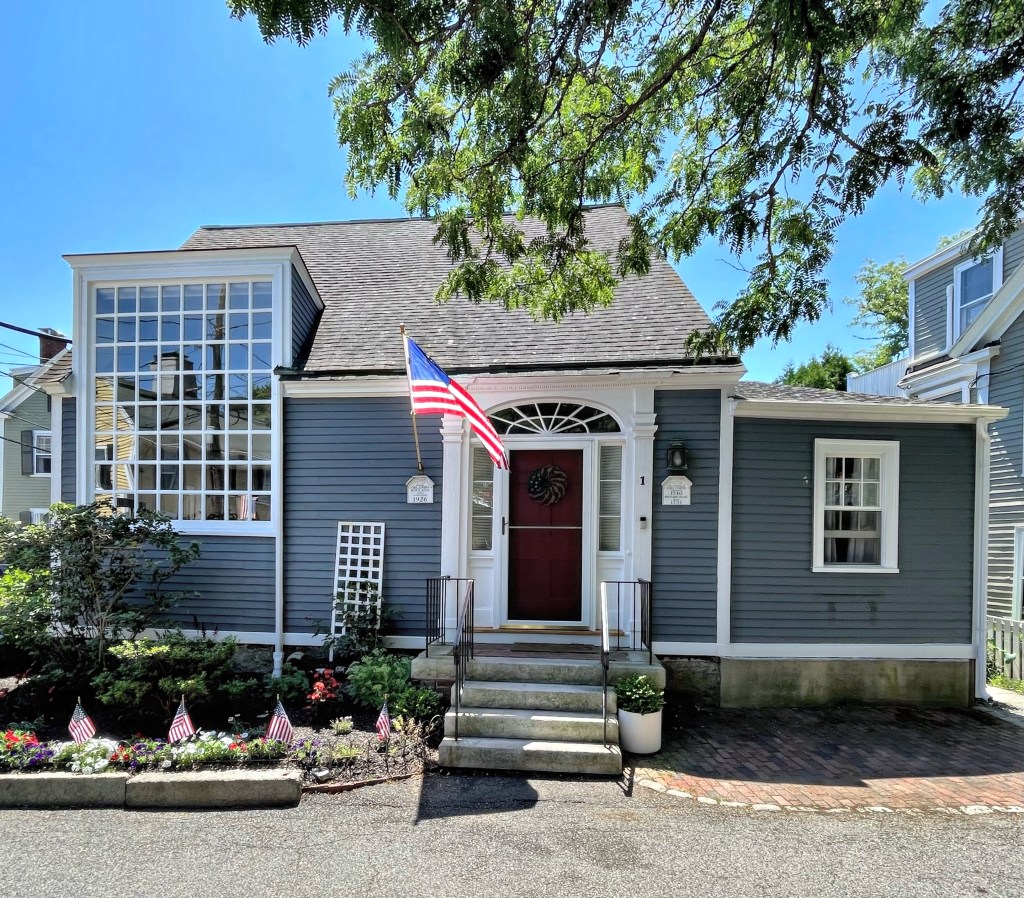
Orlando Rouland Art Studio // 1926

Born in Illinois, Orlando Rouland (1873-1945) became a painter of rural landscapes, scenes of New York City, and portraits of actors, inventors and Presidents. He lived in New York and resided in Marblehead in summers, taking advantage of the natural scenery and rustic homes for his landscapes. In Marblehead, Rouland formed the Marblehead Arts Association and was President of the North American Artists Group. He built this small building in 1926 as his studio while he spent time in the seaside town, with the large window to provide natural light into the interior. The Colonial Revival style studio has been converted to a residence.

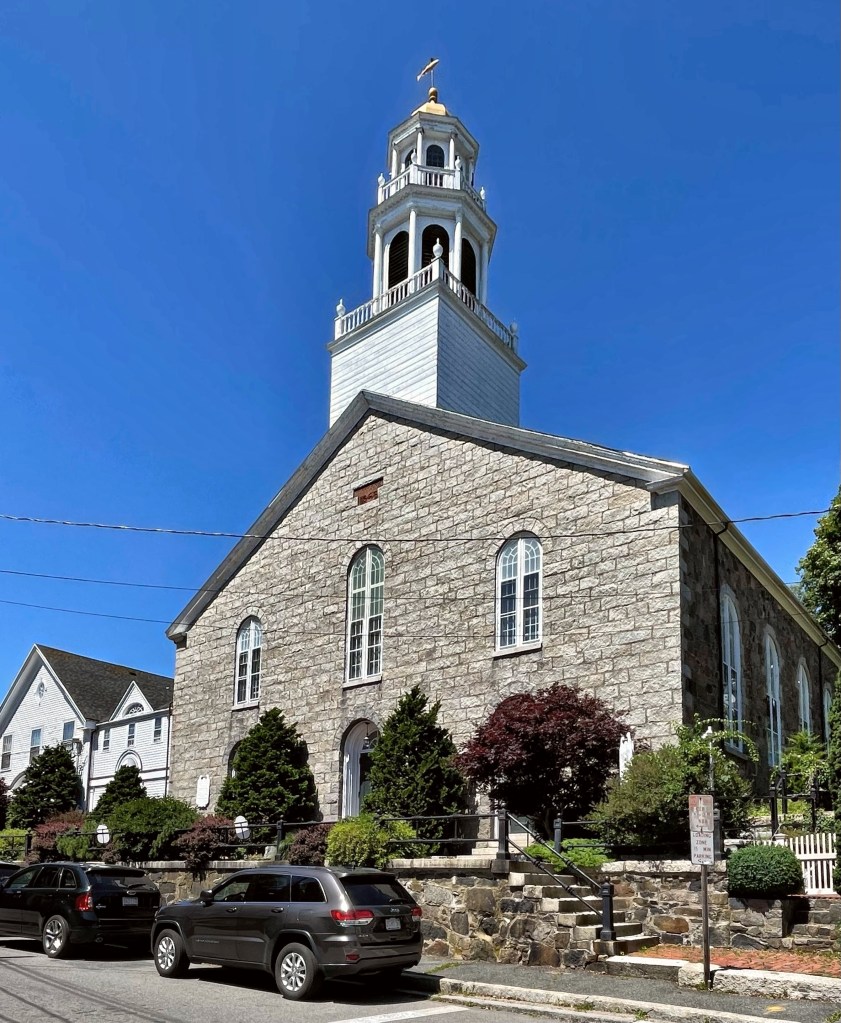
Old North Church, Marblehead // 1825

Old North Church, formally the First Church of Christ Marblehead, was organized in 1635 by fishermen and mariners who formed a church to relieve them of the burden of travel to Salem in order to receive church sacraments and participate in civil affairs (before the separation of church and state). They met in member’s homes until 1638, when a meeting house was constructed overlooking the ocean. By 1695, a “modern” church structure was built on Franklin Street. The structure was not adequate for the growing wealth and prosperity of the town, as Marblehead emerged from local cod fishing to overseas trade. In 1824, merchant-politician William Reed helped the congregation acquire a large lot on Washington Street. Within a year, the new stone church was built. The stone to build the church was blasted from the ledge upon which it stands. In 1879, a wooden meeting house was built to accommodate an increased membership at prayer meetings. The detached meeting house was added onto in 1951, connecting it to the stone church. The two attached buildings were designed/re-designed in the Colonial Revival style to add to the architectural composition of the old Federal period church.

Toy Theatre // 1914-1922

When the Toy Theatre on Lime Street in Beacon Hill (last post) was formed in the early 20th century, the members of the small (but growing) theatre group of well-connected artists and actors had their sights on something with permanence. By 1914, the group had funding and acquired land on Dartmouth street, a block away from Copley Square, and ground was broken to build a large new theatre. The fashionable Colonial Revival style building featured a large rounded bay and was constructed of brick and limestone. The theatre group could not support the building, and it was rebranded as the Copley Theatre within a couple years. Continuing the bad luck, the City of Boston decided to extend Stuart Street by 1921, and this building was along the proposed route. The street was extended and a new “Copley Theatre” was built on Stuart Street, a stone’s throw from this building. And so goes the short-lived history of the Toy Theatre.

Sweezy Summer House // 1916

Wilton, New Hampshire has a hidden enclave of high-style summer “cottages” built for wealthy residents in the early 20th century. The last of these examples I will feature is the Sweezy House, located in Wilton Center. The Federal Revival style mansion was built for Everett and Caroline Sweezy, summer residents who split their time between New Hampshire and New York. Mr. Sweezy was a banker for the Riverhead Savings Bank which was located on Long Island, which too was a summer destination. The couple hired the firm of Howe and Manning, led by female architects Lois Lilley Howe and Eleanor Manning, to design the home. The house is set back far from the street behind a rustic stone wall. The property remained in the Sweezy Family for four generations.

Wilton Masonic Temple // 1898

Located adjacent to the Gregg Free Library (Wilton’s Public Library), you will find the town’s Masonic Temple, a textbook example of Colonial Revival architecture. The building was dedicated in 1898 and sits on a prominence overlooking the Souhegan River, which supplied power and jobs to the East Wilton village. The brick building exhibits flared lintels, arched windows, a fanlight transom over the door, dentils, and prominent balustrade. The building appears to have been the work of architect Ernest Machado, an unsung specialist in Colonial Revival designs.

Everett Central Fire Station // 1908

There is something so enchanting about historic fire stations! The Central Fire Station in Everett, Massachusetts was built in 1908 from designs by the Boston architectural firm of Loring and Phipps (who also designed the first Everett High School and the Masonic Hall in town). The flat-roofed red brick structure displays Georgian Revival detailing including concrete quoins and oval windows. Originally there were four engine bays, but the station was converted to two large bays around 1980 as fire trucks got larger and larger. The building replaced an earlier, wood-frame fire station which was deemed unsatisfactory as horse-drawn apparatus made way for vehicular fire trucks.

Immaculate Conception Rectory // 1904

Next door to the Immaculate Conception Roman Catholic Church (last post) in Everett, you will find the church rectory, which completes the city block. Though very different in architectural style, the building is compatible with its more grand neighbor with the use of materials and setbacks. The rectory was built in 1904 in the Colonial Revival style, which was very popular at the time in New England. The three-story, hip-roofed building has bowed bays that flank a single-story porch with Doric columns that shelters a central entrance with fanlight and sidelights. Other Colonial-inspired details include the tripartite window set into the recessed arch above the porch, modillion cornices and splayed brick lintels with keystones. It is not clear who designed the rectory, but they did a great job at it! Rectories served as the residence of the priest of the church. Not bad digs if you ask me!