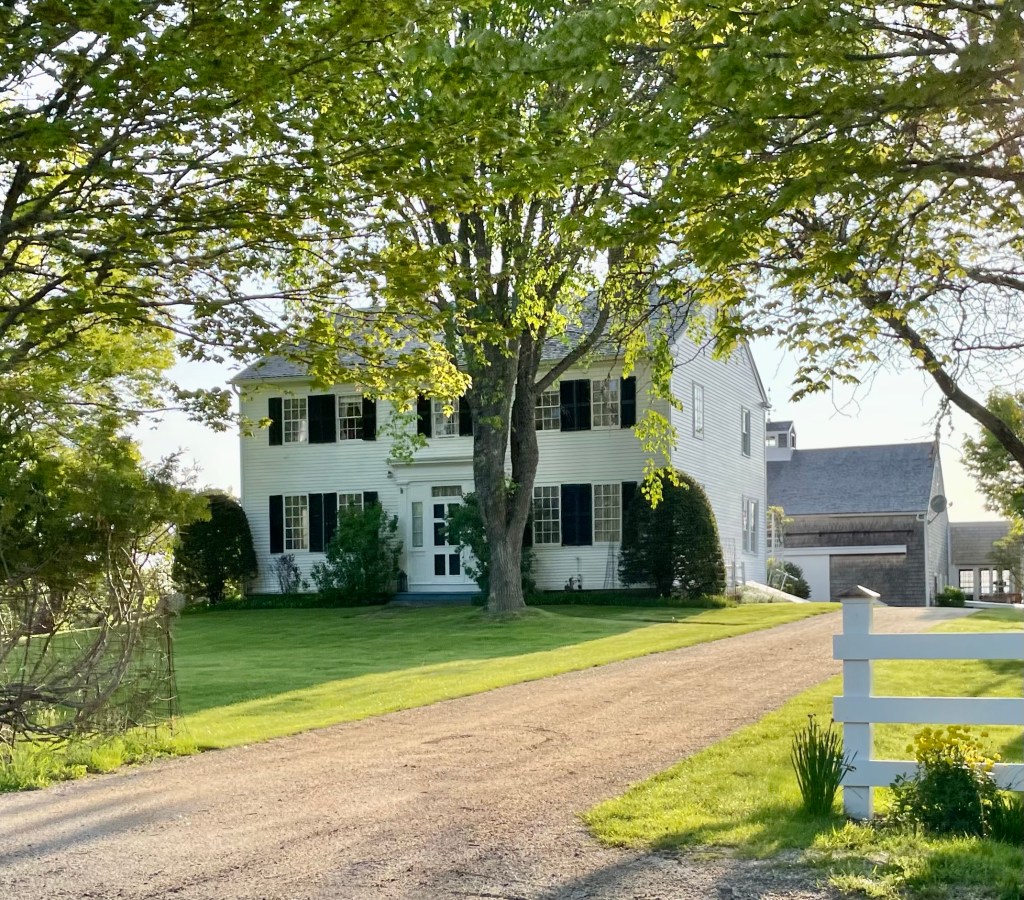
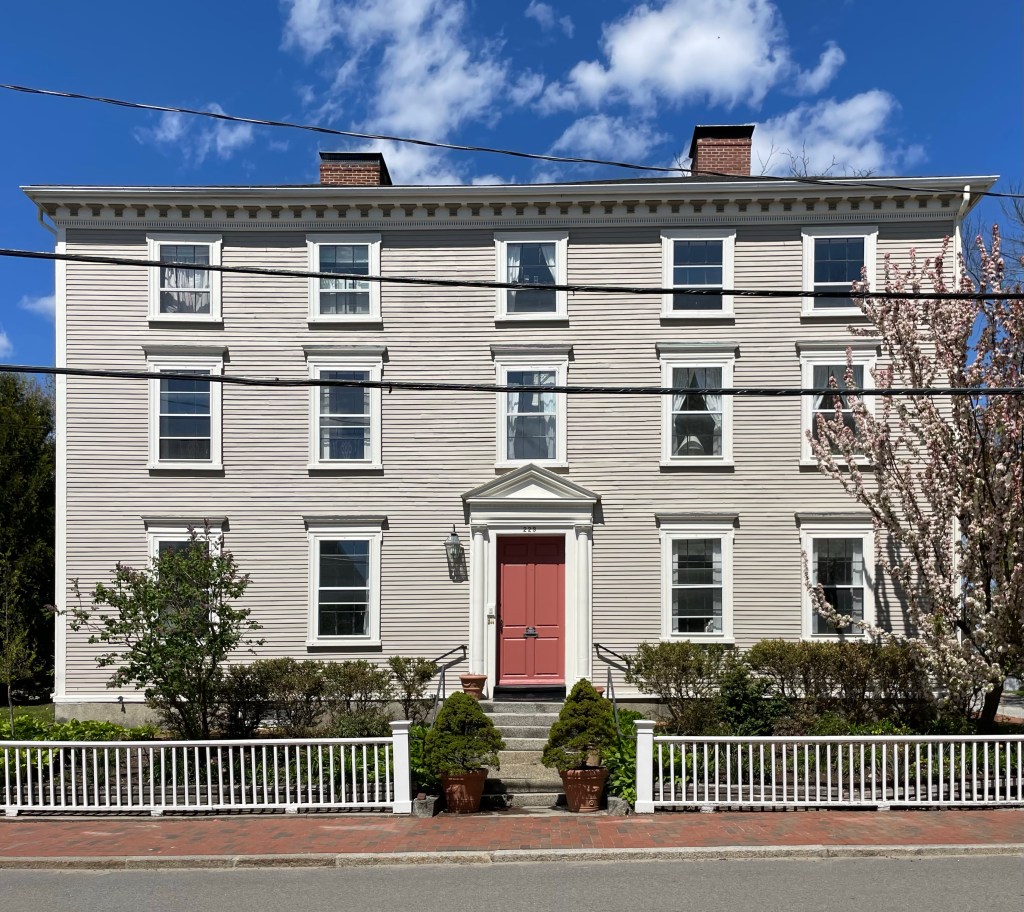
Laighton House // c.1795

This stunning Late-Georgian house in Portsmouth dates to the end of the 18th century and is one of the many well-preserved homes near downtown. Deed research shows that the property was purchased in 1795 by Amos Tappan from a Nabby Chase (a widow) and he would erect this house on the lot. The house was purchased in 1822 and sold again in 1835 to John Laighton, the namesake of the house. John Laighton (1784-1866) was the eleventh of thirteen children. His family were “mechanics” – carpenters and makers of sails, blocks, spars, and masts. He became a mast and block maker with his place of employment not far from the relocated Sheafe Warehouse in Prescott Park (featured on here previously). Captain Laighton held the post of Navy Agent for the port of Portsmouth during the presidencies of William Henry Harrison and Andrew Jackson, and he also served as mayor of Portsmouth in 1851. In 1864, two years before his death, John Laighton sold the house to his third son, Lafayette Laighton. The historic home features a massive brick chimney at the center ridge, with clapboard walls atop a fieldstone foundation. The facade has a wood-paneled entrance door with four-light transom, pilasters, and triangular pediment. The house faces southwest with a large front lawn, and it sits next-door to the stunning Gov. Langdon House. Pretty spectacular.


Former Portsmouth Marine Railway Office // c.1833

In 1833, a group of prominent Portsmouth merchants organized the Marine Railway Company and installed a set of tracks from the water in Portsmouth’s harbor to this brick machine house. When coupled with two horses, the machinery would, as the owners proclaimed, “draw vessels of 500 tons and upwards, entirely out of the water, placing them in a situation where any part of their hulls can be inspected or repaired with great dispatch.” The Portsmouth Marine Railway Company continued to operate until the mid- 1850’s. Thereafter the wealthy merchant Leonard Cotton bought it and ran it as a private venture. The railway ceased operations somewhere around 1875, though the tracks remained in place well into the 1980s. The brick building has been adaptively reused and is occupied by the Players Ring Theatre, a local non-profit group.

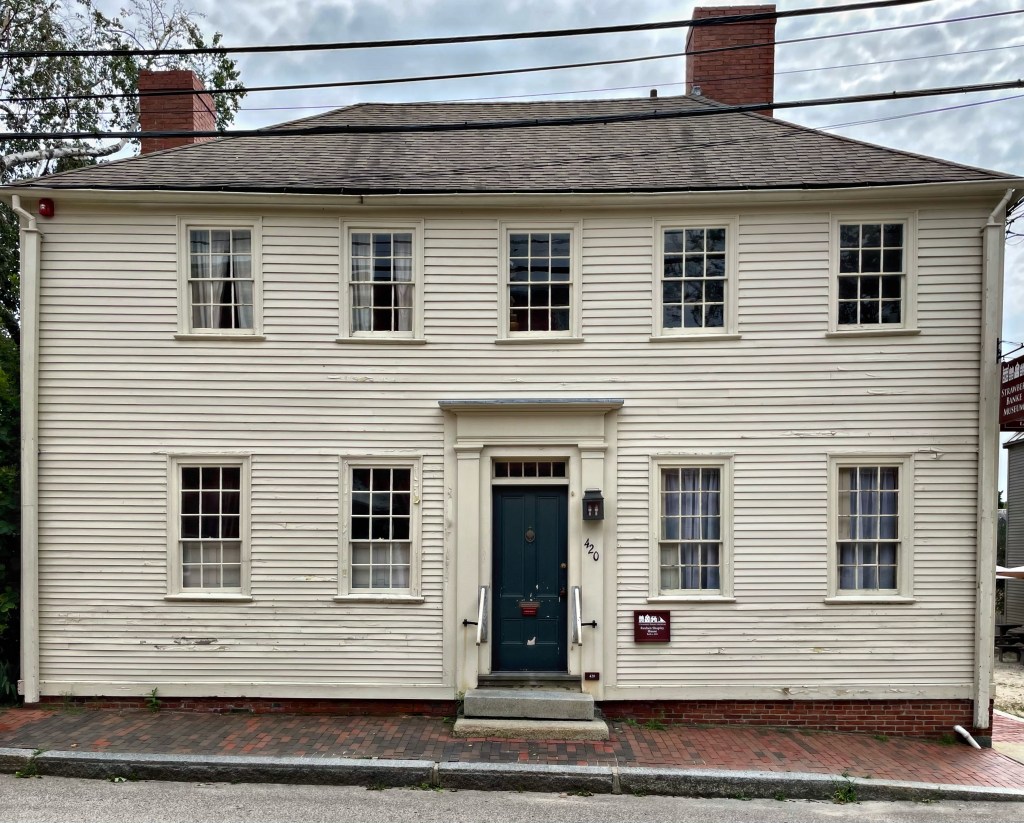
Captain Drisco House // 1790

The Captain Drisco House on Meetinghouse Hill Road is a recently restored example of the vernacular Federal period architecture so many flock to Portsmouth to see. The house sits in the middle of a warren of short streets where houses (all built before zoning and setbacks) were built right at the sidewalk creating the most pleasant walking experience. The symmetrical five-bay Federal house was built by Captain Drisco, who purchased the house lot after the Revolutionary War.

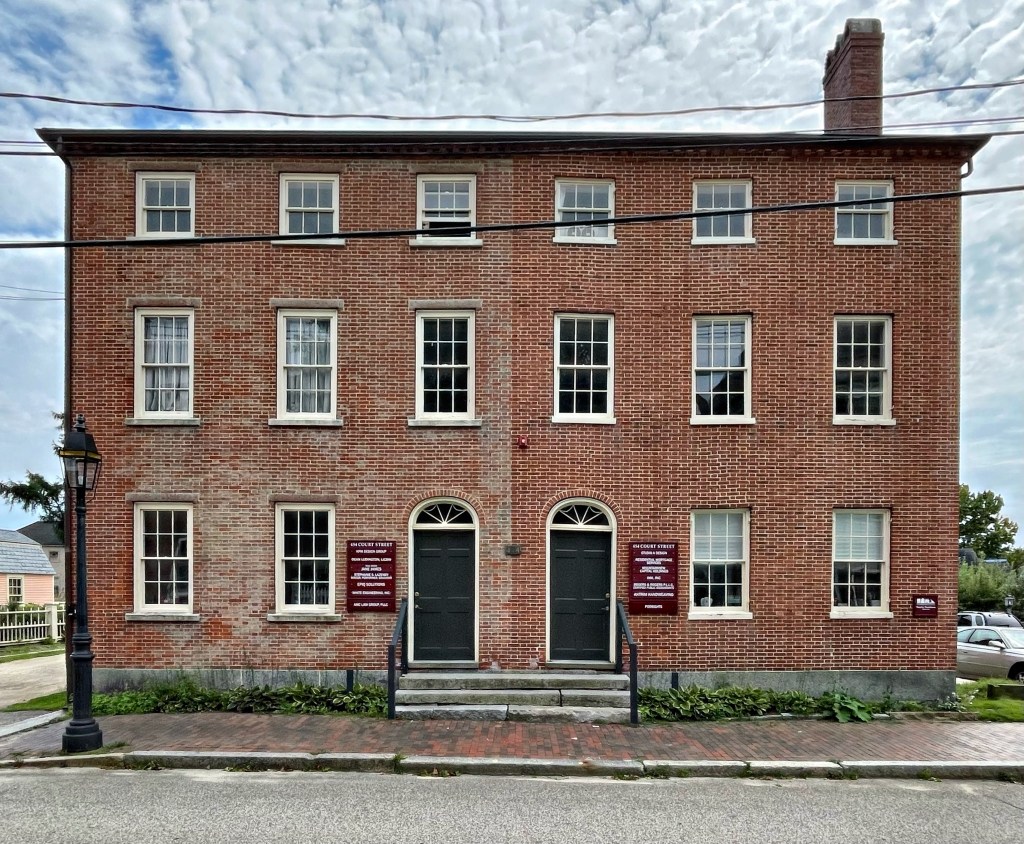
Nathan Parker House // 1815

Many may not know this fact about Portsmouth, which shaped the city’s development for some of the formative years of the coastal town. The 1814 Brick Act was passed by the New Hampshire legislature after three devastating fires wiped out hundreds of closely-packed wooden buildings in the heart of the state’s only seaport. The act prohibited the erection of wooden buildings of more than twelve feet high in the downtown area which was the densest, it was effectively an early building code. The regulation helped change the look of the city, creating the red brick image Downtown that many identify today as Portsmouth. As a result, nearly all homes and buildings in the downtown area of Portsmouth were constructed of brick, largely in the Federal style, popular at the time. This home was constructed around 1815 as a wedding present for the South Parish’s minister, Reverend Doctor Nathan Parker, upon his marriage to Susan Pickering, the daughter of New Hampshire Chief Justice John Pickering and a descendant of the original John Pickering.

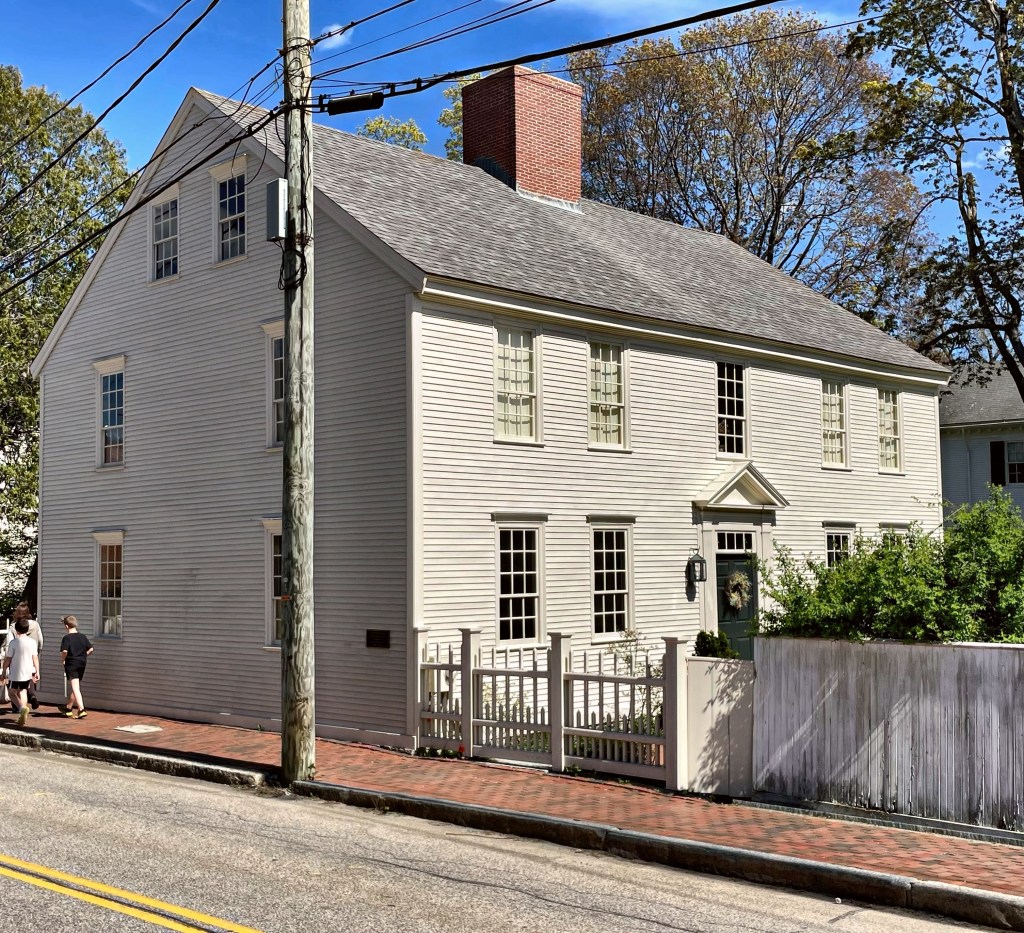
Haven-White House // 1800

Another three-story Federal period house on Pleasant Street in Portsmouth, NH is this wood-frame example, known as the Haven-White House. The property was developed in 1799-1800 by Joseph Haven, a merchant who built the house across the street from his father’s residence. Joseph Haven occupied this house until his death in 1829. After his wife Sarah’s death in 1838, the house remained in the Haven family, though usually occupied by others, until 1898 when it was sold to Mrs. Ella White. The White family, which included a grocer, a City Councilman in the early 1900s; and a chiropractor, with the family occupying the house until 1981. This history of long ownership by only two families for nearly 200 years perhaps accounts for the survival of this important house with so few changes. As a result, the house was listed on the National Register of Historic Places in 1985, marking it as a nationally significant building.

Abraham Wendell House // c.1815

The Abraham Wendell House on Pleasant Street in Portsmouth, New Hampshire, is a three-story, five-bay, masonry Federal-style residence with symmetrical facade. The building has a slate hip roof with overhanging eaves, a dentilled cornice, and tall brick chimneys. The facade has a wood-paneled entrance door with elliptical entablature, Corinthian pilasters, and a fanlight above. The home was built around 1815 for Abraham Wendell (1785-1865) a ship’s chandler and hardware merchant. Along with his brothers, Jacob and Isaac, established cotton mills in Dover. Although they lost money on the early mill attempts, they became wealthy importer of foreign goods into the ports of Portsmouth. The house remains a highly significant example of early 19th century residential architecture built for wealthy merchants.

Vincent’s Pharmacy and Waterbury Masonic Hall // 1834

While of different scale, these two brick buildings on Main Street in Waterbury, Vermont compliment each other very well. Vincent’s Pharmacy, the smaller building, was built in 1834 in the Federal and Greek Revival styles by Dan Carpenter, early lawyer and judge, to house a pharmacy business that he ran with his son, William. Next door, dating from approximately the same year as the pharmacy, the larger structure housed Waterbury’s first Masonic hall in 1860’s and in successive years a hardware business. The former Masonic hall is now home to The Reservoir, a great local restaurant that I grabbed lunch in while visiting the town.

Stagecoach Inn // 1826

Built by the Carpenter brothers in Waterbury, who also designed and built the neighboring Congregational Church (last post), this large structure was a stagecoach stop on the road to Stowe for much of the nineteenth century. Briefly, the Inn served as a private residence for Albert and Annette “Nettie” Spencer. Nettie grew up in Waterbury and married Albert who owned rubber factories in Ohio and invested in real estate in Burlington. At one time, the Spencers’ residences included their Waterbury house, a suite at the Waldorf Astoria in New York City, a house in Newport, an apartment in Paris, as well as one in London. Albert died in London, and Nettie continued living in Waterbury until her death in 1947, approaching 100 years of age. Within a year, the property was sold and the owners reopened the main house as a sort of boarding house. The property was restored and operates today as the Old Stagecoach Inn.

“The Old Corner Store” // 1833

White settlement in Waterbury Vermont began in about 1770, with the establishment of a small cluster of houses along the Winooski River near what is now Winooski Street. When Main Street, a stagecoach route paralleling the river opened in the 1790s, development moved to that area, including the construction of churches, residences, and businesses. Industry followed, and a town was formed. Many settlers arrived here from Waterbury, Connecticut, and named their new village Waterbury as a result. Many early commercial buildings were constructed with wood frames, but as the town prospered, businessmen developed more substantial brick blocks. This charming Federal/Greek Revival commercial building was erected in 1833 at the most prominent corner on Main Street in Waterbury, by Leander Hutchins (1798-1879). It is apparently the oldest extant commercial structure in the downtown section of Waterbury! The building has been restored in the late 20th century, down to the multi-pane windows and granite lintels. This building is just so perfect.

Oliver Walker House // c.1809

The Oliver Walker House in Kennebunkport Village is one of the better examples that shows how overlapping architectural styles can work really well on an old house (when done right)! The original house was constructed around 1809 for Oliver Walker (1788-1851), a sea captain who later accepted the call and became a deacon for the South Congregational Church in Kennebunkport. Walker died in 1851 and the Federal style property was inherited by his only surviving child, daughter Susan, who had married Portland native, Captain John Lowell Little. Under their ownership, the traditionally designed Federal house was modernized with fashionable Italianate style modifications of the decorative brackets and an enclosed round arched window in the side gable. A later Colonial Revival projecting vestibule adds to the complex, yet pleasing design. I have a feeling the interiors of this house are just as spectacular as the exterior.