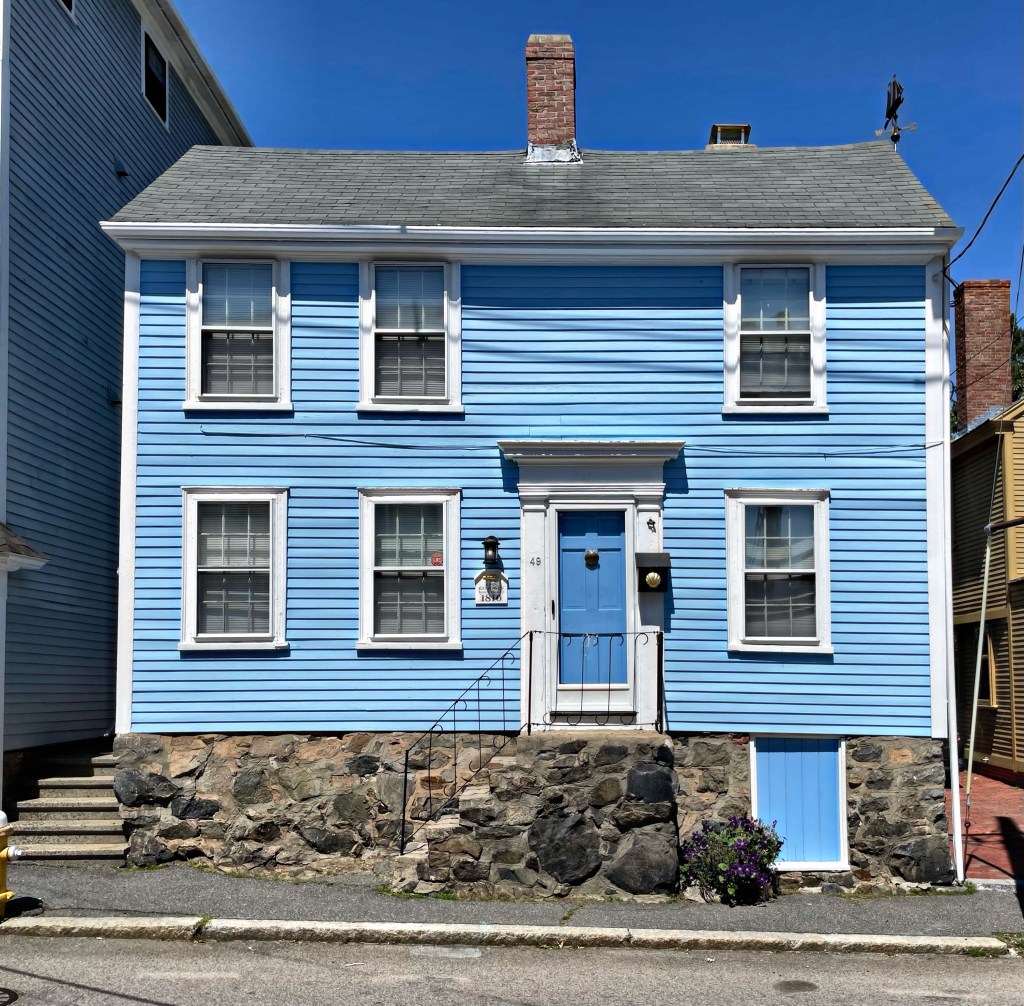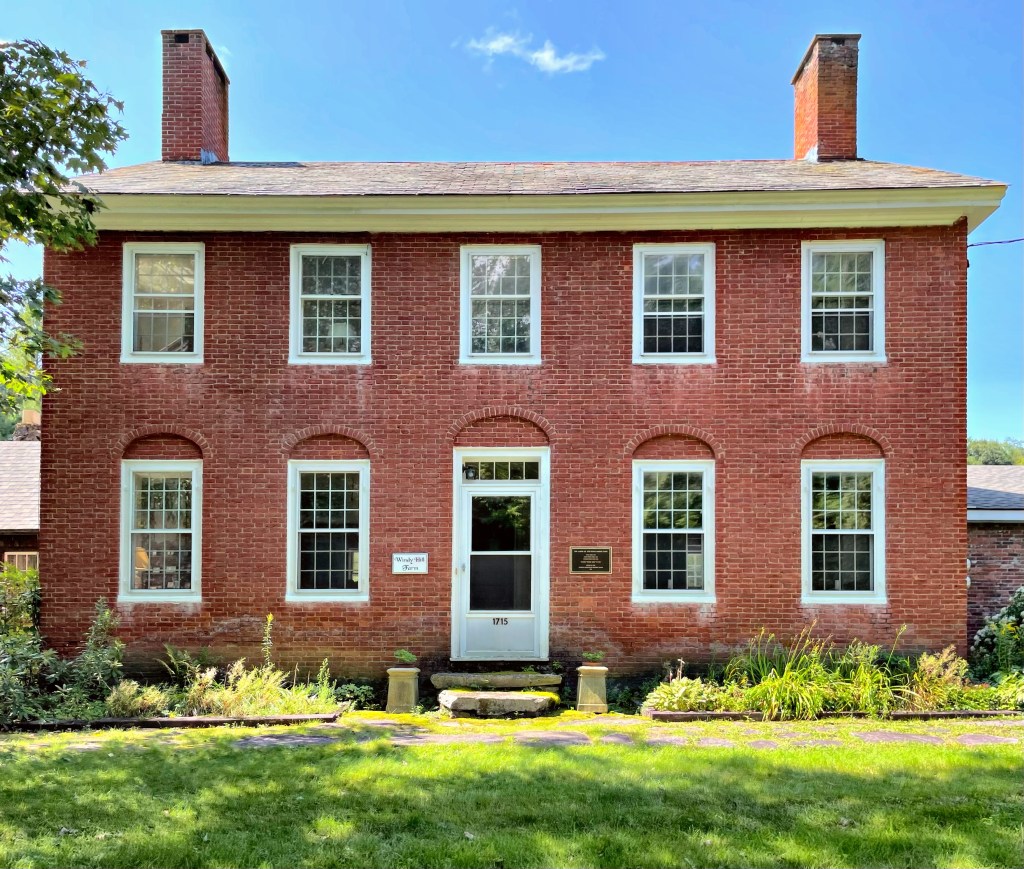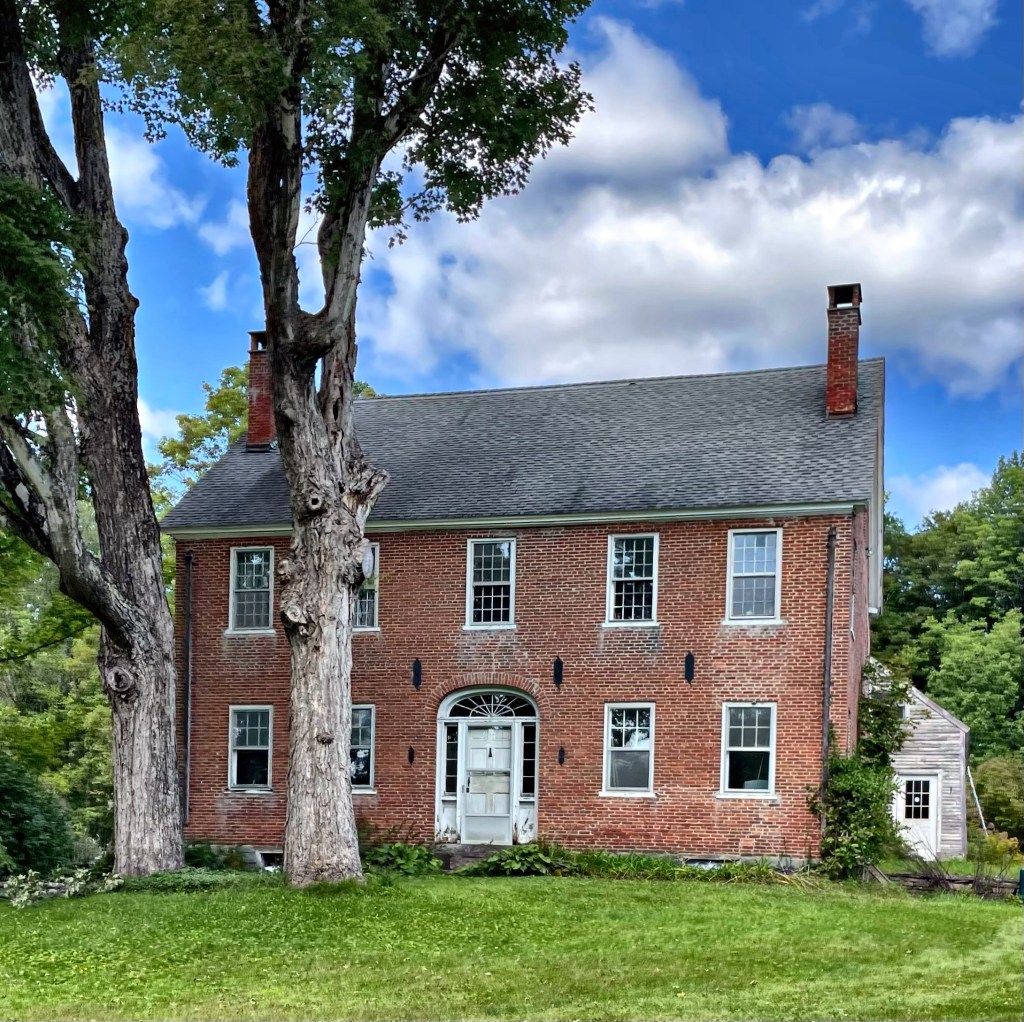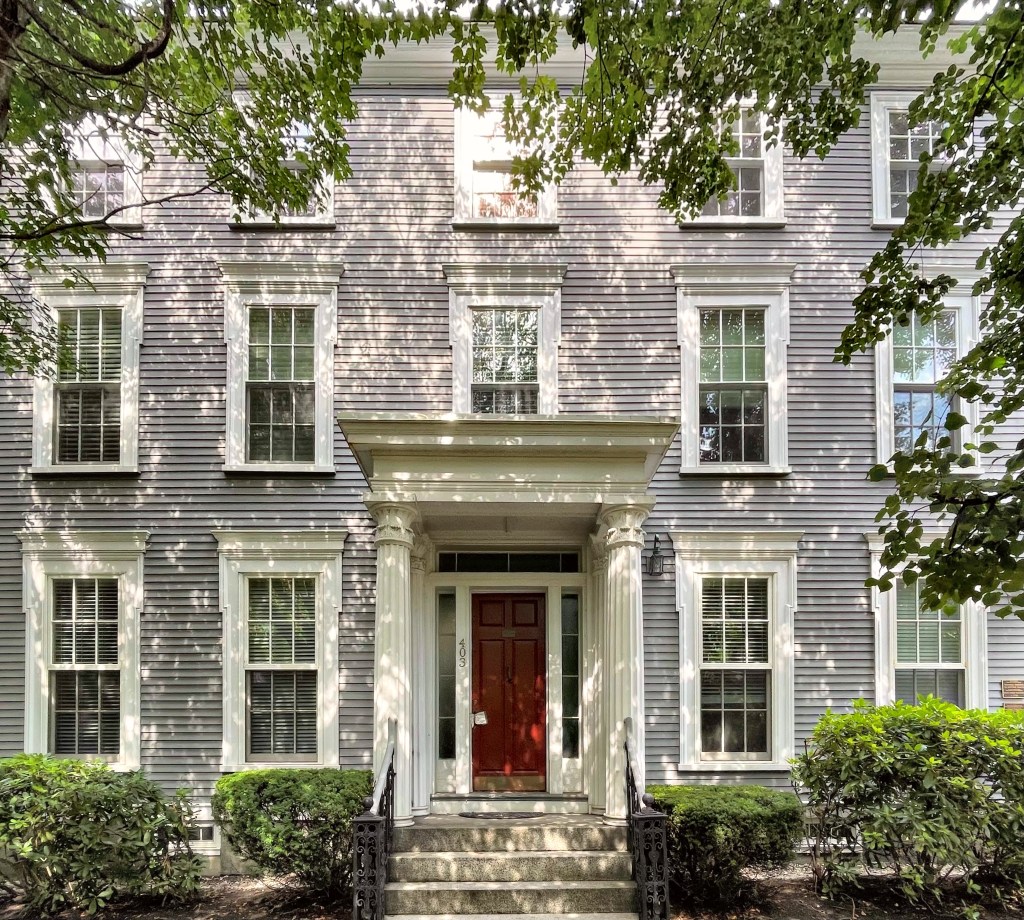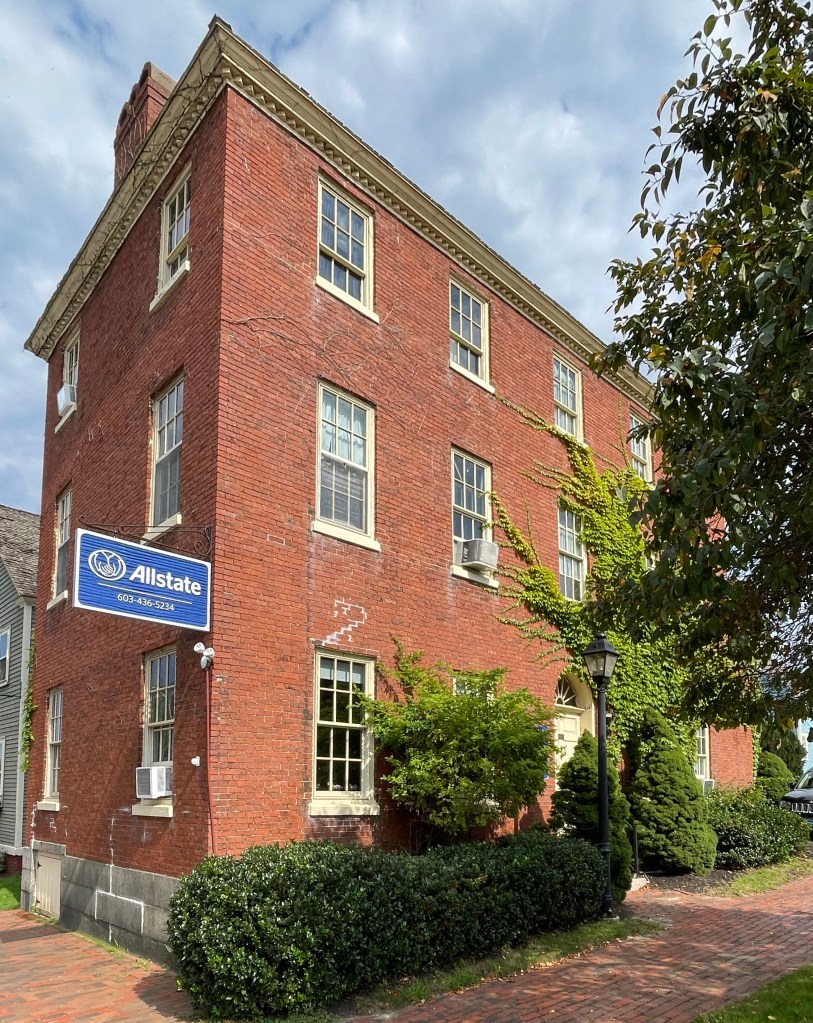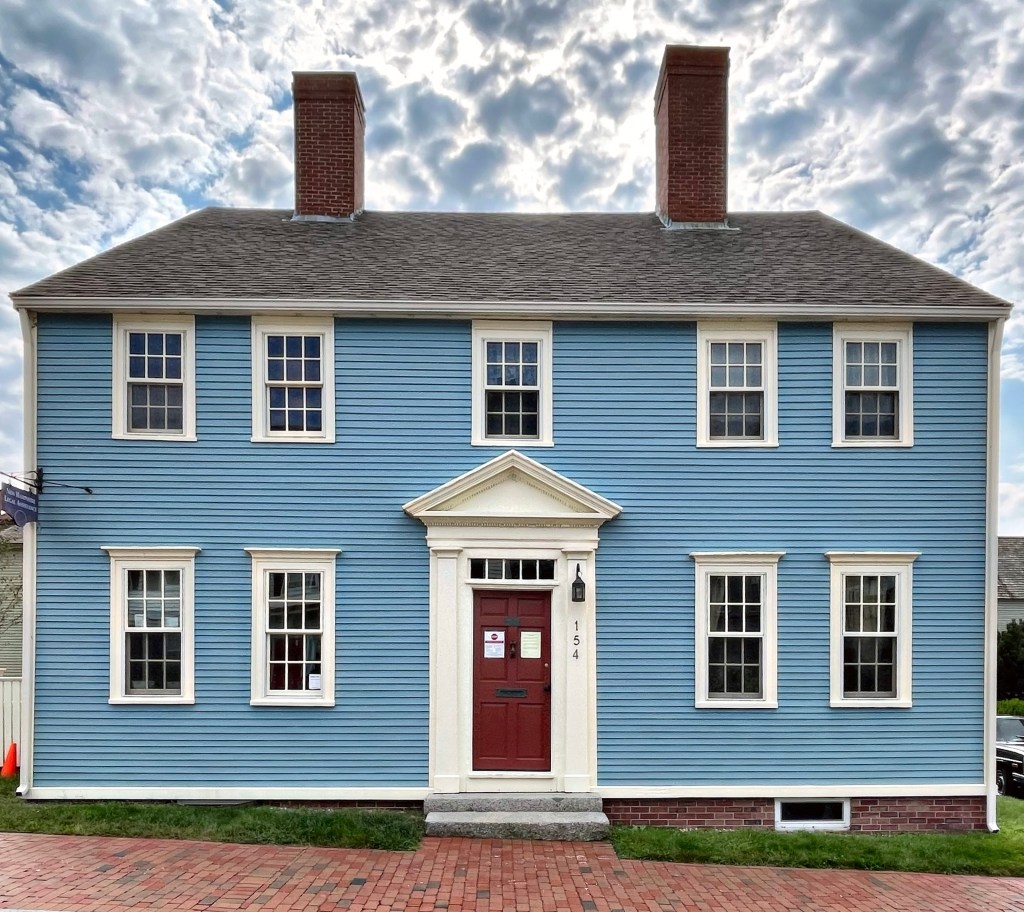
According to a dated board in the attic, this house was built c.1803! The David Bradley House on Old South Road in Southport, Connecticut is a great example of a traditionally designed house that does not need all the bells and whistles to stand out! The house was owned for a number of years by David Bradley, who worked as the village’s postmaster. It was David who likely added the Gothic Revival gable with lancet window and a (since removed) front porch.
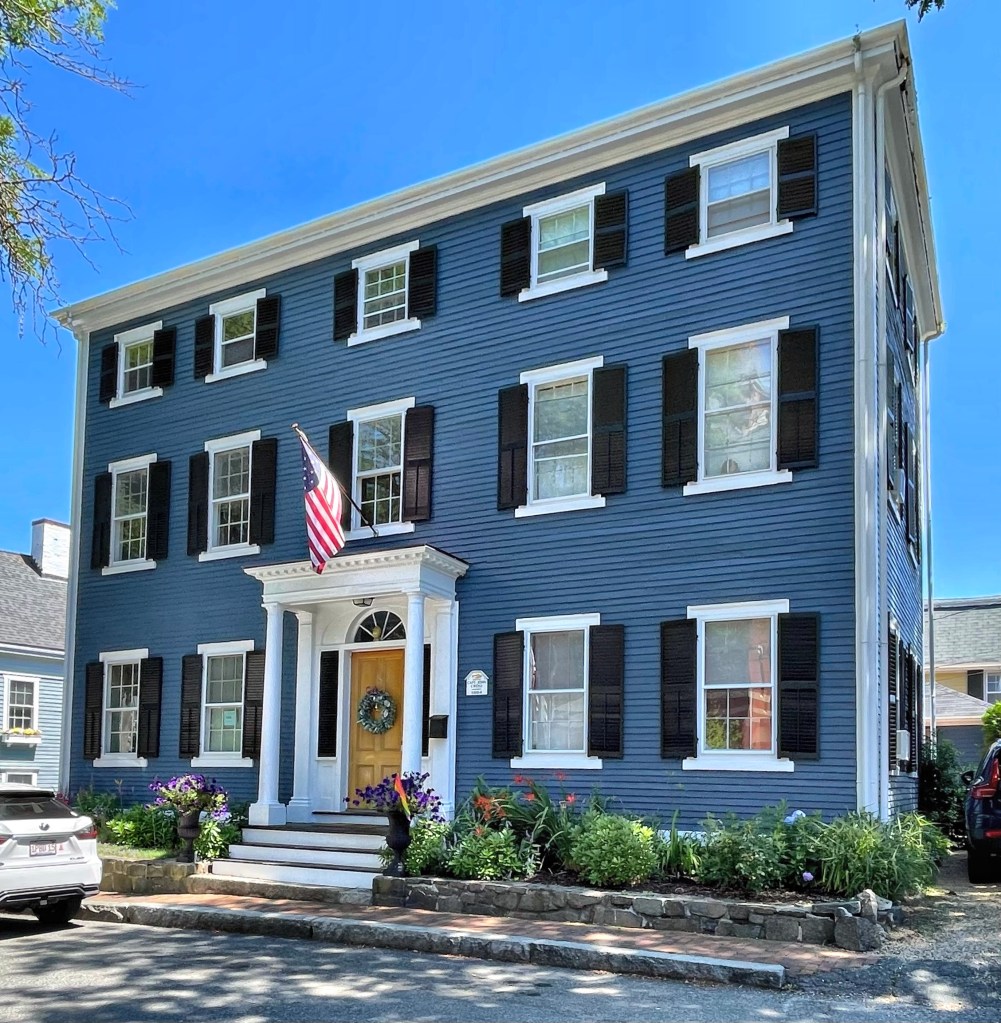
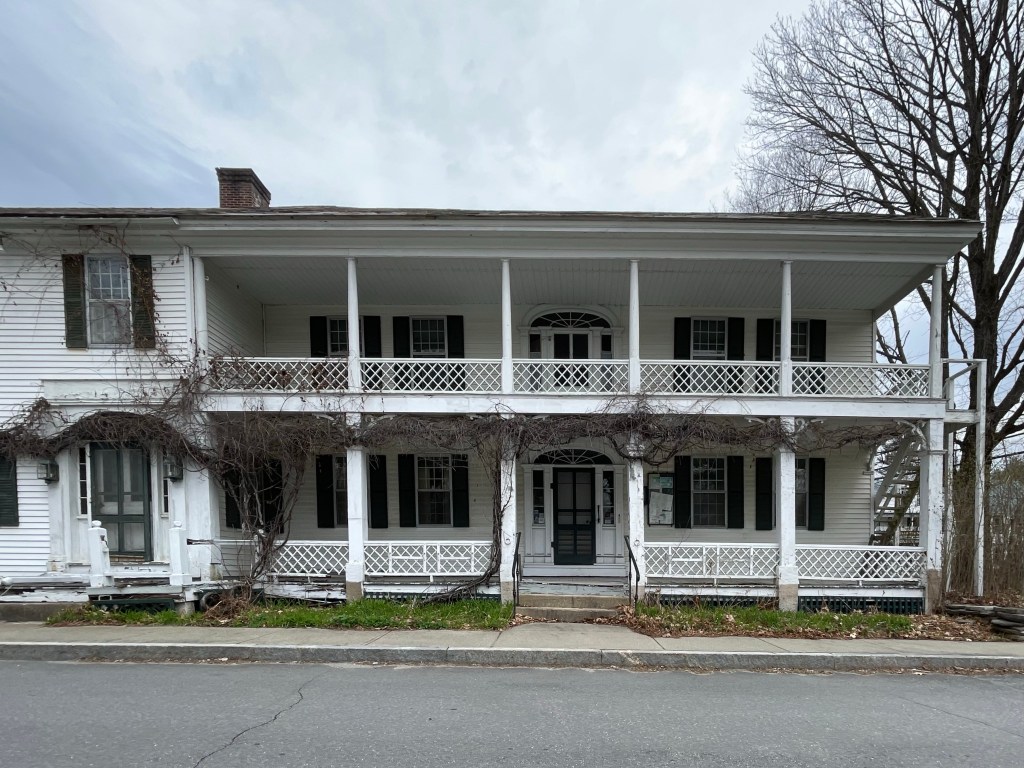
In the mid-1830s, Henry Sturges, the eldest (and only) son of Jeremiah Sturges, built what just may be my favorite house in all of Southport, Connecticut, this transitional Federal/Greek Revival style manse on Harbor Road. It may have been owned by Jeremiah and updated later by Henry. The house features a symmetrical, five-bay facade with central entry. A gabled pediment extends the roof and includes a leaded-glass oval window and the absolutely stunning full-length front porch and second floor balcony is supported by slender Ionic columns.
While the Greenfield Hill section of Fairfield, Connecticut has some of the grandest houses (old and new) in the state, there are some more average size homes that just ooze charm and curb appeal. This example on Hillside Road, dates to the 1810s and was seemingly built by Alban Bradley (1767-1832) on land inherited by him from his late father, Seth Bradley. The family farmed on the land from this Federal period farmhouse until it sold out of the family by Alban’s only son, Burritt in 1825. Burritt sold the farm to Zalmon Wakeman who farmed on the many acres of valuable land there. Sometime before his death before the Civil War, the house was “modernized” with Italianate-style porch, which is supported by delicate cut trelliswork. This is a great illustration as to how modest renovations which apply up-to-date decorative details can be done to historic properties without compromising the original structure or its architectural integrity.
WOW this is an absolute dream home! Tucked away on Meetinghouse Lane in the Greenfield Hill section of Fairfield, CT, you will find the Zalmon Bradley House. It was originally built around 1750 as a modest saltbox and later owned by Zalmon Bradley. The property was inherited by Zalmon’s sister, Sarah, who recently married Dudley Baldwin, an “ardent patriot”. The property was likely updated in appearance by Sarah and Dudley Baldwin giving the house its current four-sided hip roof, chimneys and an exquisite doorway. Dudley and Sarah died young in 1794 and 1795 (at ages 40 and 37 respectively), and the property was inherited by their only child, Abraham Dudley Baldwin. Abraham was watched for years by family, including his namesake, Abraham Baldwin (1754-1807), a senator, congressman, and key figure of the drafting and signing the U.S. Constitution. Abraham stayed in this house often during his time in Connecticut, watching after his nephew along with his sister, Ruth Baldwin Barlow. Abraham Dudley Baldwin as an adult resided in this house with his own family, and was largely engaged in local and state politics and agricultural pursuits. The Bradley-Baldwin House was restored a few years back, and looks amazing!
Richard Varick Dey (1801-1837) was a young divinity student from New York City, attending the Theological Seminary in New Brunswick, New Jersey, when he met Lavinia Agnes Scott (1805-1886). Dey was the son of prominent New York attorney Anthony Dey and Catharine Laidlie; Catherine’s father, the Rev. Archibald Laidlie, was the first minister called to preach in English in the Dutch Church in New York City. Richard and Lavinia fell in love and became engaged on December 27, 1820. However, Lavinia’s parents were opposed to Richard, and her father even asked Richard’s theology professors at Rutgers to try to discourage his pursuit of Lavinia. It did not work and they married in September 1822. After graduating from the Seminary in 1822, Richard was licensed by the Congregationalists and the young couple moved to Greenfield Hill, in Fairfield, Connecticut, where he preached from 1822-1829. Local history states that it was actually Lavinia who designed this house in 1823 for their family and oversaw the builders during its construction. The Federal style house stands out for its clear Dutch form with its roof projecting to create a recessed verandah, likely influenced by the couple’s New York/New Jersey upbringing.
Reverend Dey, Lavinia, and their children relocated to New York City, and Richard preached at a number of churches the before he died unexpectedly in 1837, leaving his 32-year-old widow with four young children. Lavinia remained in New York, where she served as the manager of The Society for the Relief of Poor Widows with Small Children for over 25 years. She never would remarry and died in 1886.
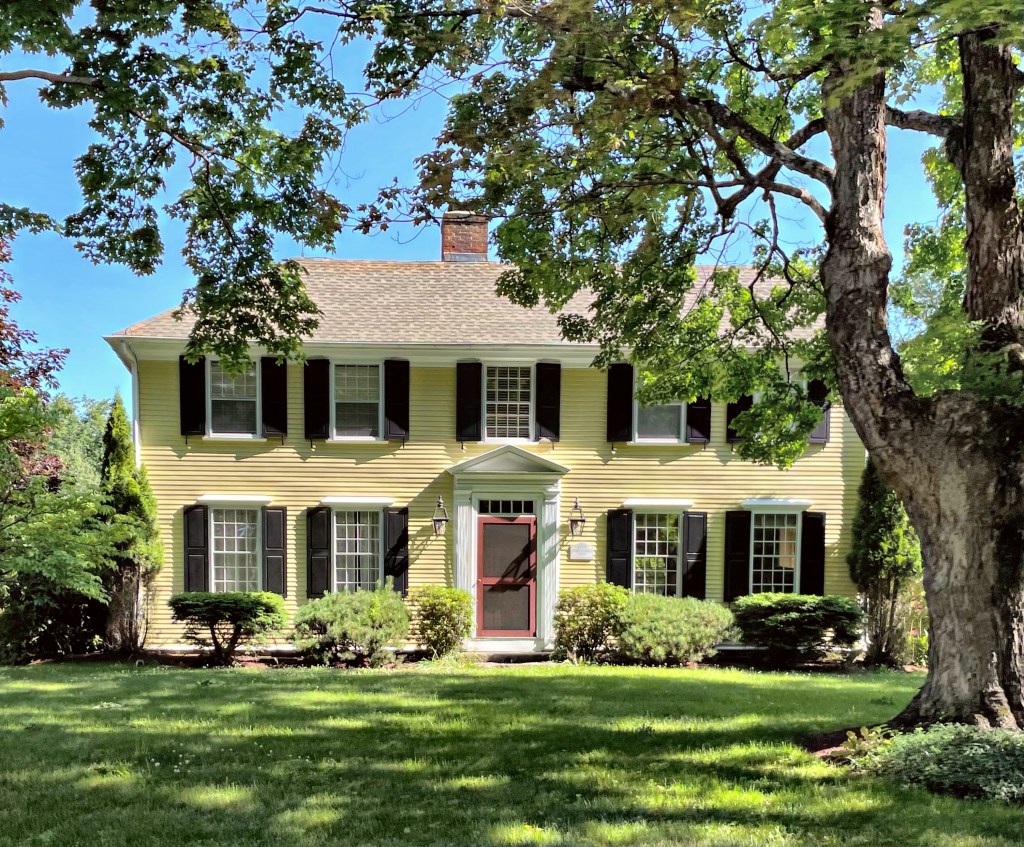
This home in Acton Center was built in 1806 by Samuel Jones, shortly after he and other esteemed residents laid out house lots just south of the Town Green.Samuel Jones worked as an attorney and he lived here with his family and widowed mother, who operated a dame school, where she taught local children out of the house. The Federal style farmhouse sits upon a brick and stone foundation and is five-bays at the facade. The entry features a panel front door with sidelights flanking it. The entry is surrounded by a traditional Federal style frame with pilasters and entablature. There is something so beautiful about the simplicity and proportions of old Federal style houses.
Tucked away on a dirt road in rural Whitingham, Vermont, the Amos Brown House sits among fields of tall grass, bounded by historic stone walls and rows of apple trees planted centuries ago. I was lucky enough to be able to stay at the Amos Brown House this past weekend and it was everything I could have imagined…and more! The property is owned and managed by the Landmark Trust USA, a nonprofit organization based in southern Vermont that preserves and restores historic properties through creative and sustainable uses for public enjoyment, education and inspiration. In the past, I stayed at the Kipling Carriage House, another charming property. The Amos Brown House is thought to be the oldest house in Whitingham, Vermont, and is a well-preserved example of a Federal style brick farmhouse in this part of the state. The telescoping ells of a summer kitchen, barn, chicken house, and shed showcase how farms would grow over time to serve the needs of these families in the undeveloped wilderness of New England. By the time of The Landmark Trust USA’s acquisition of this property in 2000, the house had seriously deteriorated. Inappropriate repairs and alterations in the 1960s and 1970s had weakened the brick walls, leading to severe cracking and small areas of collapse. They underwent a massive restoration of the property inside and out, and it remains an absolute treasure in the state to this day.
Wrapping up this series on a tour of buildings in Blue Hill, Maine, we have two stunning old homes left!
This landmark Federal style house was built sometime between 1812 and 1816 by Robert Parker, whose wife was a daughter of Joseph Wood, one of the first two white settlers of Blue Hill. The home is significant not only architecturally, but for its connections to a number of old settlers to Blue Hill and their families.
By the turn of the 20th century the farming, mining and granite producing town of Blue Hill had been discovered. Writers, artists, musicians, and wealthy urban families from all over the East Coast found inspiration or retreat in many coastal Maine communities including Blue Hill, building “cottages” to summer at. Not all those who arrived to Maine were ‘from away’, as many built new or renovated their old ancestral homes to be occupied when seeking the peace and tranquility of coastal Maine. The Parker House was no different. In 1900, it was renovated in the Colonial Revival style as a summer home for Frederick A. Merrill and his wife, Elizabeth, residents of Boston. The couple hired George A. Clough, who worked as the first City Architect of Boston, but grew up locally in Blue Hill. Mrs. Merrill was descended from Mrs. Robert Parker’s sister. The current owner, the Merrill’s great-grandson, has undertaken a restoration of the house which pays homage to its Colonial Revival past. The stunning house can even be rented!
Jonathan Fisher (1768-1847) was born in New Braintree, Massachusetts, and educated at Harvard College Divinity School. In the record of Plantation No. 5, (now Blue Hill), the selectmen voted to invite the Rev. Mr. Fisher to preach for four months in the summer of 1795. After his four month stint, the committee approached him, asking if he would stay and make the town his home, he accepted. He first built a primitive house which was outgrown by the time he had three children growing up in it! He had the current home built in 1814, attaching the original home as a rear ell (addition). Reverend Fisher died in 1847. His wife Dolly, died in 1853. At the end of the nineteenth century, Jonathan Fisher’s grandchildren decided to renovate the house. In 1896, they tore down the original house of 1796 and replaced it with a two-story addition to their grandfather’s 1814, giving it the current configuration. When the Fisher grandchildren who had been living there left Blue Hill, a number of local citizens concerned for the future of the building made arrangements that eventually led to the transfer of ownership of the house to a local non-profit foundation, the Jonathan Fisher Memorial, and made it possible for the house to be opened to the public. The Fisher House is open for tours in the summer.
This charming Federal style cape in Blue Hill Maine was built in 1832 by Moses P. Clough, a sea captain seemingly as a wedding gift to his new bride of that year, Sally Prince. He resided in the home off-and-on between excursions and trips at sea until his untimely death at sea in 1836 of bilious fever, possibly caused by malaria. After his death, his widow Sally, remarried and moved to Cherryfield, Maine. The old family home was sold to Bushrod W. Hinckley, an attorney who was involved in the town affairs. Today, the old Clough-Hinckley home is known as Arborvine, a great restaurant known for using local, farm-to-table ingredients. The home is excellently preserved by the owners, down to the leaded glass fanlight and sidelights at the entrance. Swoon!