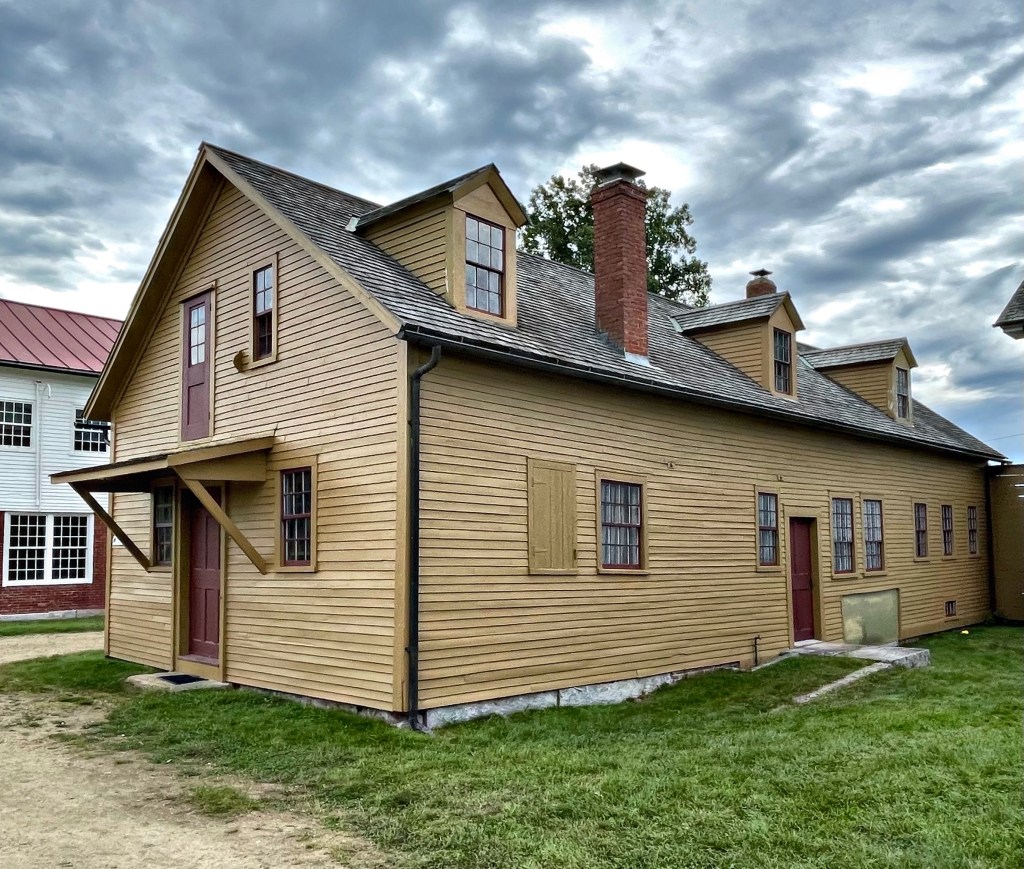
When Benjamin Whitcher donated his farm for the beginnings of a utopian Shaker community, the land and buildings became the catalyst for the next 200 years of Shaker life in the community. It is known that Benjamin Whitcher constructed his farmhouse sometime between 1775 and 1782. With the arrival of the first Shakers in 1783, Whitcher allowed families to reside on the farmland, with the 1790 Census counting 35 people on the Whitcher property. This structure was one of the original structures on the old Whitcher Farm, and is possibly the oldest extant building in the Shaker village today. The building was moved to its present location in 1841 and was used for distilling sarsaparilla syrup for medicinal purposes by members of the community.
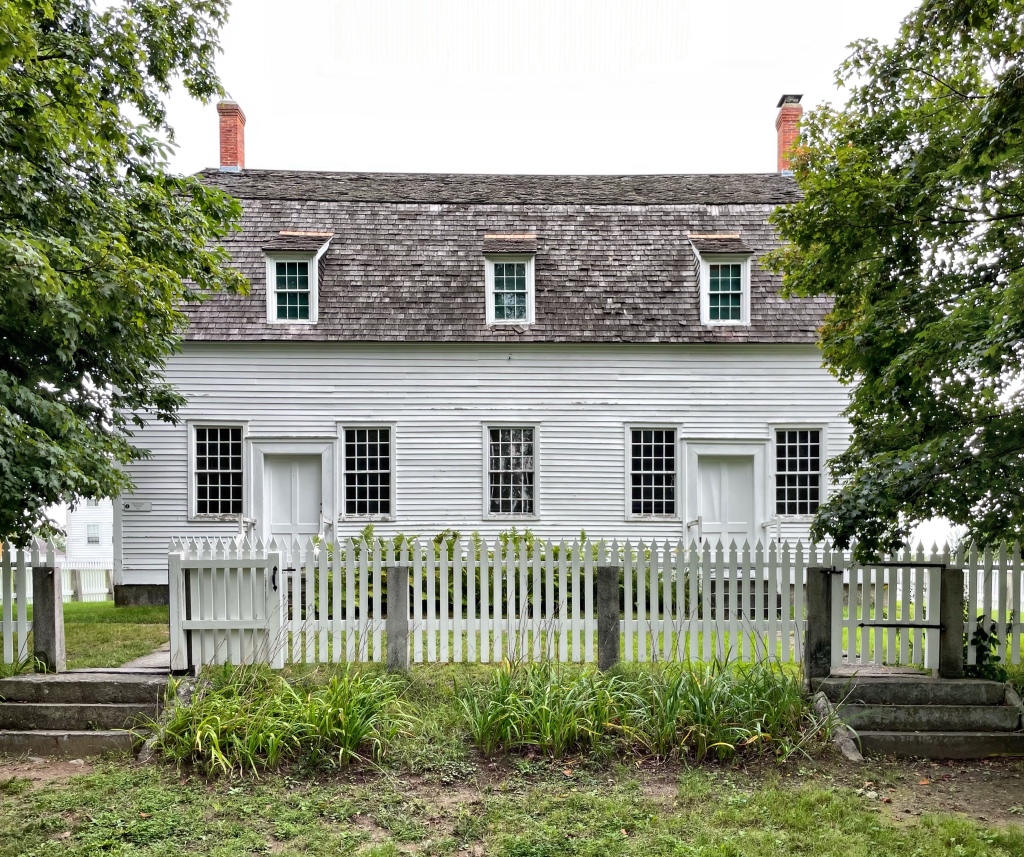
The second oldest purpose-built building in the Canterbury Shaker Village (after the 1792 Meeting House), is the dwelling house, constructed in 1793. The T-shaped structure was expanded numerous times and contains 56 rooms. The structure is the largest in the village and is notable for the large domed cupola, housing a Paul Revere bell. The first floor contained the village butcher shop, bakery, communal kitchen and dining room. For many years the second floor consisted of four bedrooms, two for elders and two for the sisters and the brethren. The third floor is also devoted to dwelling rooms. The Dwelling House was the residence of Canterbury’s last remaining Shaker sister, Ethel Hudson, who died in September 1992, the 200th anniversary year of the founding of the Canterbury Shaker community.
The Canterbury Shaker Village was one of two Shaker communities existing in present-day New Hampshire (the other being Enfield Shaker Village, featured previously on here). In 1782 Israel Chauncey and Ebeneezer Cooley from the Mount Lebanon village of Shakers traveled to Canterbury and converted several prominent figures of the community by convincing some of the Christian farmers that the Shaker way was what they had been seeking. Among those converted to the Shakers, the Whitcher, Wiggin and Sanborn families, donated land to house the Canterbury Village community of Shakers and the Canterbury Village was founded in 1792, led by Father Job Bishop. The village expanded over time, and in 1803 there were 159 members in three families. Nearly fifty years later in 1850, the site contained 3,000 acres with a community of 300 housed in 100 buildings!
The first building of the Canterbury Village was the Meeting House. The Gambrel roofed building was constructed by members in reverent silence and supervised by Moses Johnson (1752-1842) who served as master builder of seven Shaker meetinghouses all over the Northeast. Inside, there were two stairways, one for men and one for women, located in the northwest and southwest corners of the building, each easily accessed by separate entrances, which led brothers and sisters from the first floor meeting room to the second story sleeping lofts.
In 1992, Canterbury Shaker Village closed, leaving only Sabbathday Lake Shaker Village open as a functioning community. There are apparently only two active Shakers left in the country, both at Sabbathday Lake in Maine. Many other villages like Canterbury, have been converted to museums, which give historians and the general public a great insight into how these places have functioned.
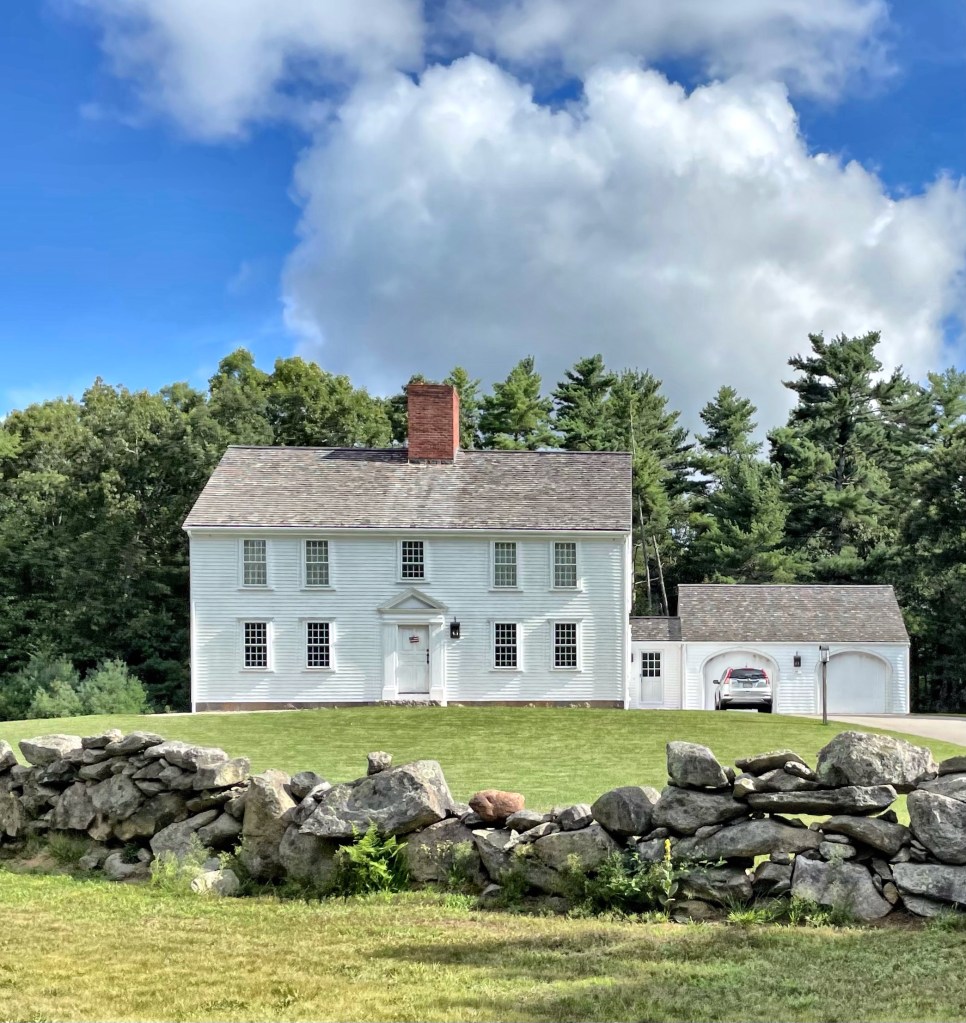
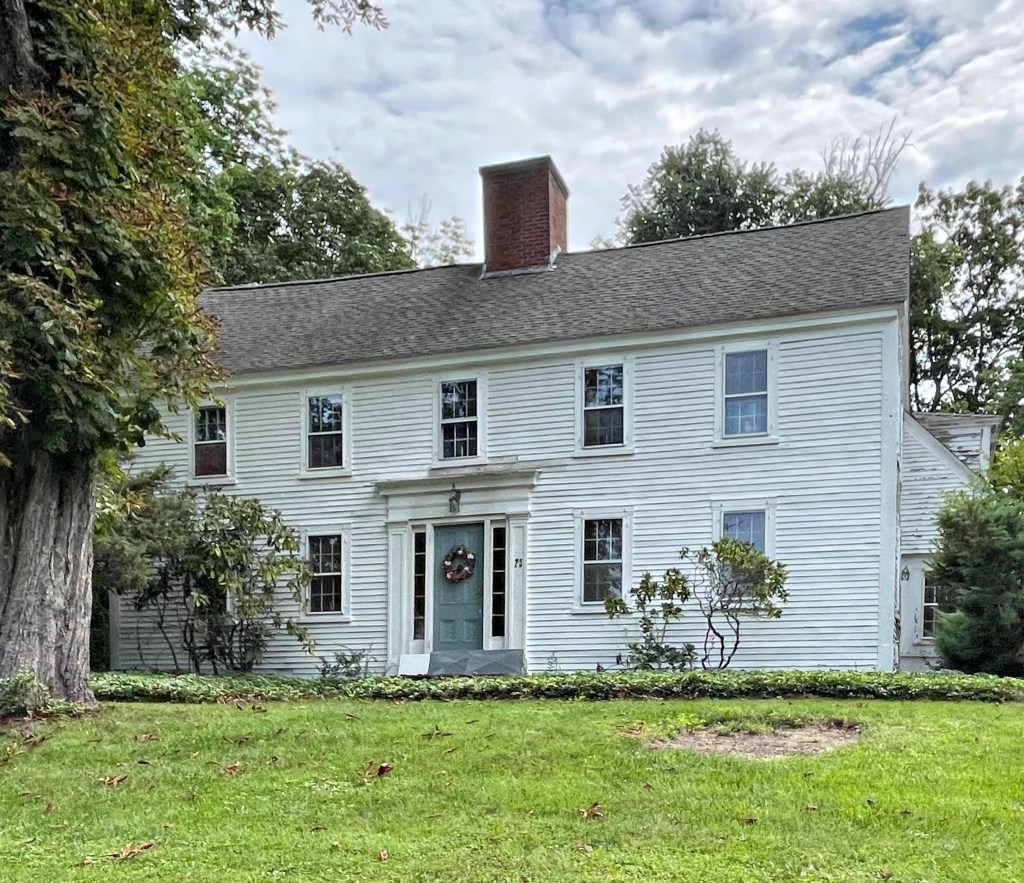
My favorite Georgian style house in Rochester, MA is the Delano-Clapp House set far off the street, behind a stone wall. The house was built in 1735 for Jonathan Delano, a weaver. Jonathan’s son, Jonathan, Jr., sold the house and land to Ebenezer Clapp, in 1755. The property remained in the Clapp Family for nearly 250 years, when it sold out of the family in 1990. This house is testament to the fact that you can find great architecture in every corner of New England!
John Sullivan was born in nearby Somersworth, and studied law. He settled in Durham to practice law in 1763, and purchased this house in 1763 (it was built in 1740 by Reverend Hugh Adams). It served as his home for the rest of his life, and is buried in the family cemetery nearby. Sullivan was a vocal opponent of British rule in the colonies, and was elected to the First Continental Congress in 1774. In December of that year he led a raid on Fort William and Mary in which the colonial militia seized munitions stored there. He was appointed a brigadier general in the Continental Army in 1775, and served through the American Revolutionary War. He participated in the Siege of Boston, and was captured by the British in the 1776 Battle of Long Island. After being exchanged, he served in the Battle of Trenton, the Philadelphia campaign of 1777, the failed attempt to recapture Newport, Rhode Island, and the 1779 Sullivan Expedition, in which the Iroquois, who had largely sided with the British, were driven from upstate New York. Sullivan’s actions and barbed personality made him enemies in Congress, and he resigned from the army late in 1779. He returned to New Hampshire, where he served as Attorney General 1782-86, and as President (the office now known as Governor) 1787-89. He chaired the state convention that ratified the United States Constitution. His home was designated a National Historic Landmark in 1972, the most prestigious designation (more than listing on National Register of Historic Places). I encourage everyone to read his Wikipedia page, he was a fascinating and polarizing early Revolutionary, that I personally did not know about until researching.
Samuel Burnham bought an older house on this site, and added to it, creating a larger residence for his family (a common occurrence in early Colonial times). One thing he did keep was a 30-foot well within the building to supply the family drinking water. Interior wells were not common, but very useful on the New England “frontier” where attacks from Native American tribes were more frequent. In the event of an attack in town, a family could close their interior shutters, and wait them out with drinking water from their internal well.
God, I love old New England homes! Could you live in one that is older than the United States?
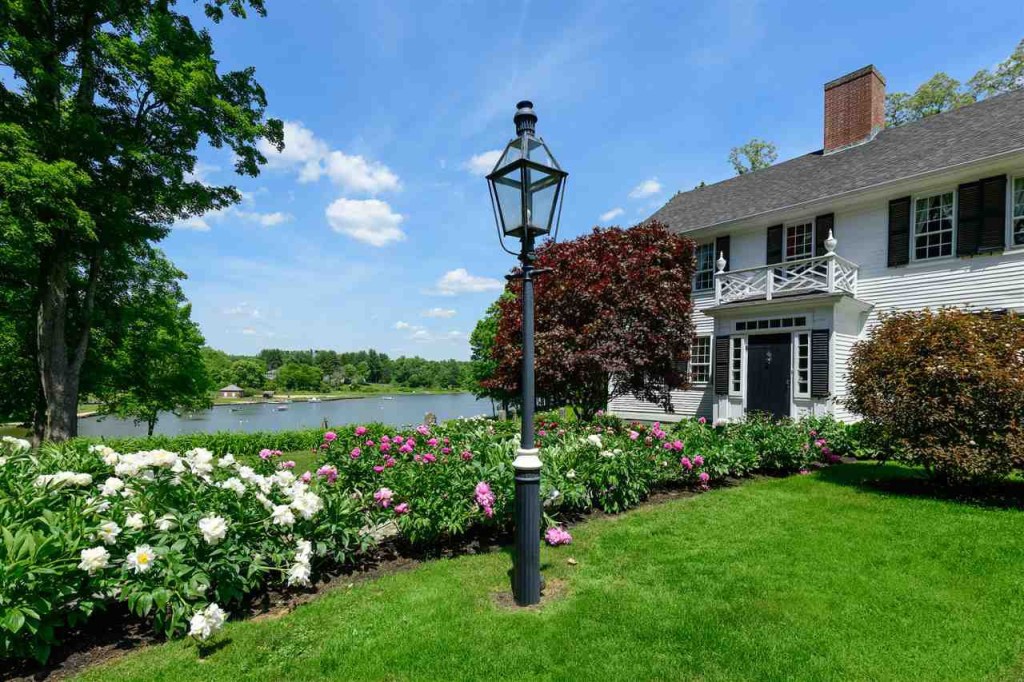
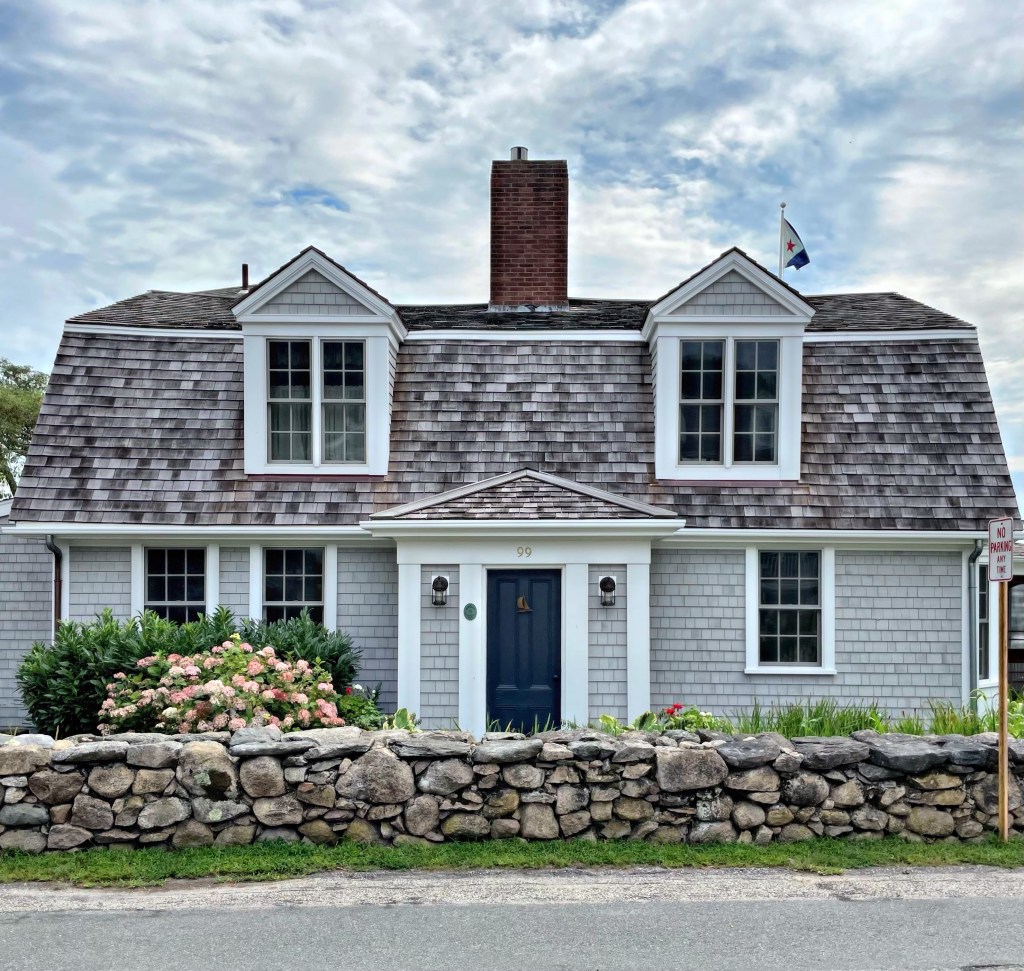
One of the oldest homes in Sippican/Wharf Village in Marion, Mass., this beautiful Cape house with gambrel roof dates to 1784 from deed research. The house was constructed by two owners, Barnabas Luce, innholder, and Stephen Cunningham, a mariner, seemingly as an inn for sailors who would dock their ships in the harbor just behind the property. It was later acquired by Edward Sherman (1790-1867), a shipwright and carpenter who built schooners at the wharfs in town. In 1868, his son Edward Franklin Sherman (1821-1907), also a ship carpenter, sold the waterfront property after his father’s death to Andrew A. Harwood, an admiral in the United States Navy, Commodore of the Washington Navy Yard, and through his mother, Elizabeth Franklin Bache, a great-grandson of Benjamin Franklin! The property remained in the Harwood family until, 1955, when the property was sold to the Beverly Yacht Club. The yacht club was originally named after the town of Beverly, north of Boston, when members broke from the Eastern Yacht Club of Marblehead which was more prestigious. For the first 23 years, the club had no fixed location, but eventually settled in Bourne, and merged with the local Sippican Yacht Club. The Great Hurricane of 1938 destroyed their clubhouse and they were “homeless” for years until moving into this 1784 home, later expanding it to meet growing needs.
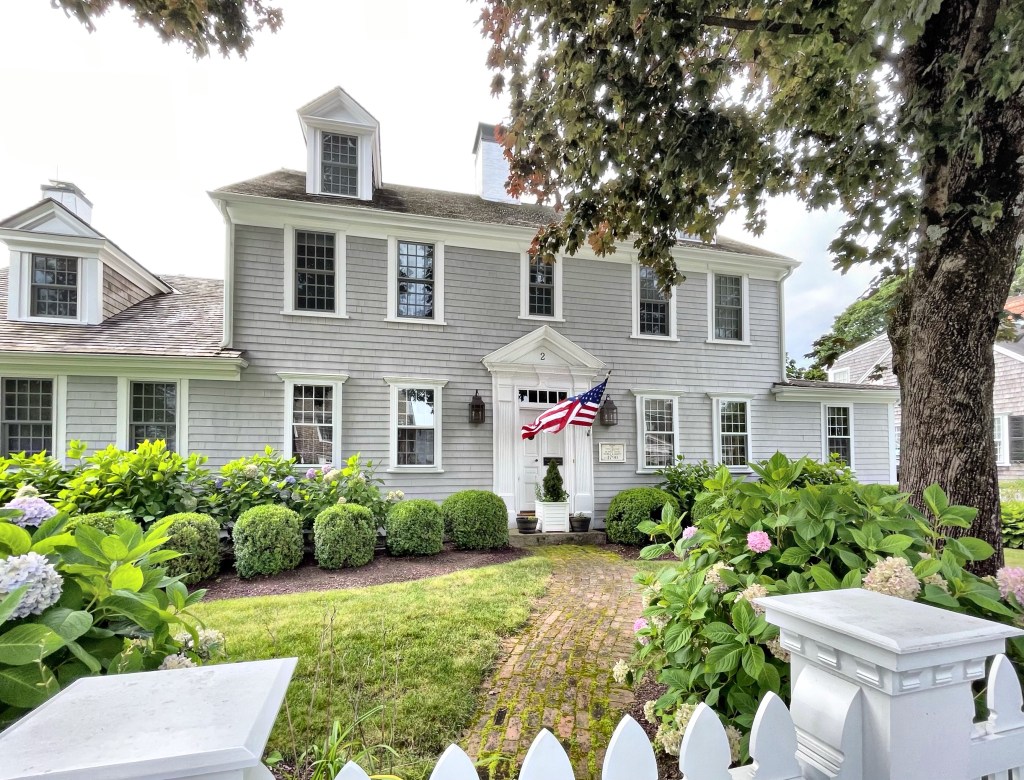
Captain Elisha Luce (1786-1850) was born in Massachusetts and from a young age, loved the sea. The son of Rowland Luce, Elisha spent his childhood in the family home (featured in the last post). Captain Luce moved into half of this double-house by 1813, right after his marriage to Jane Hiller, when he was 27 and she was 19. I don’t know many 27 year olds that could afford a house like this today! Captain Elisha E. Luce’s best known ship was the Persia, which made numerous profitable trade missions and whaling excursions from her home port of New Bedford. His wife, Jane died at the young age of 29, and he quickly remarried the next year to Lucretia Clark; they had three boys. In the other half of the home, Captain Noble Everett Bates who co-owned the schooner Marmion and went on his own voyages from his wharf in town. The home was locally known as the “Two Captains House”.
Waterford was once part of New London, but it separated in 1801 as the area desired its own town government which took agricultural interests more seriously. In the 19th century, much of the town’s economy was centered around agriculture, with many residents running sheep farms. During the 20th century, sheep farms were replaced by dairy farms. Between 1920 and 1960, there were about 100 dairy farms in Waterford. After WWII, suburbanization occurred and many wealthy residents of nearby New London moved to Waterford for more space. The oldest surviving public building in Waterford, Connecticut is this Colonial-era schoolhouse which was likely built in the 1730s. The Jordan Schoolhouse was built as a rural schoolhouse as farmers wanted their children to be taught writing, reading, arithmetic, and religion, even if they followed their parent’s footsteps in farming. The gambrel-roofed Georgian building was used as a school until the mid-19th century and it was converted to a private home for Asa and Eliza Gallup and their family. The schoolhouse was eventually moved to its current site on Jordan Green in 1972 and is operated as a museum space for the Waterford Historical Society.
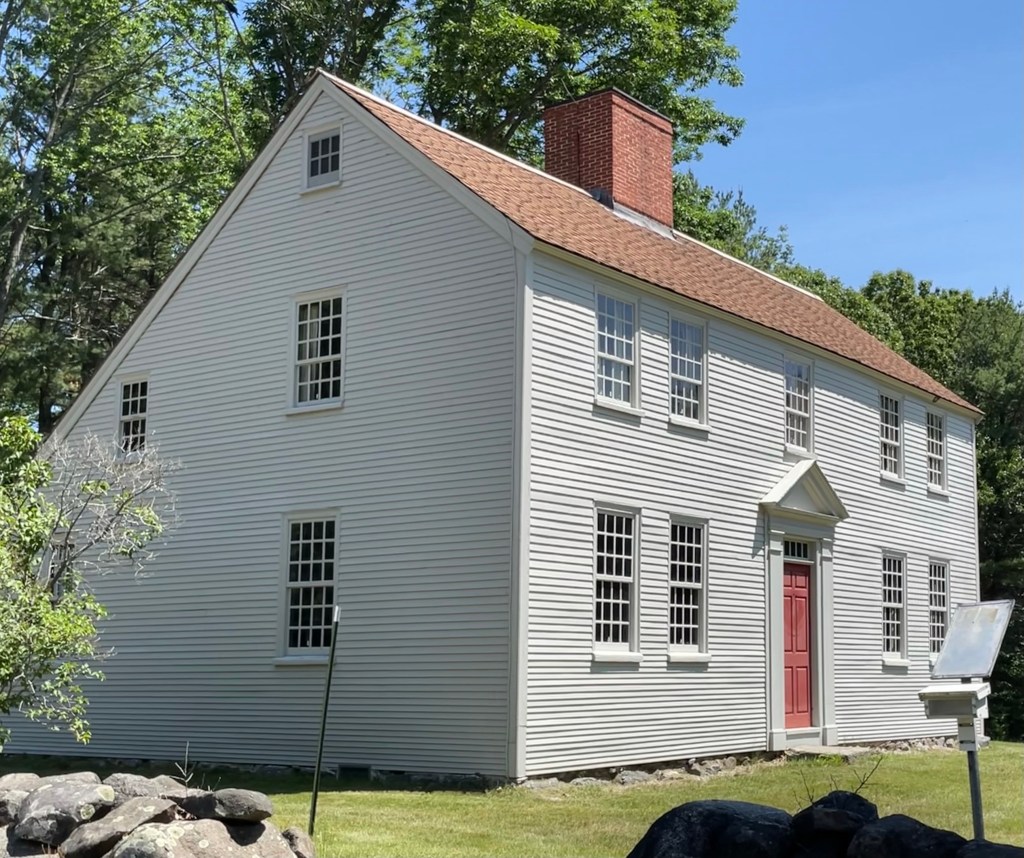
The Old Parsonage in Newington, NH, is a rare survivor from the 1700s in the tiny town. It is one of few extant “saltbox” houses to be found in the New Hampshire seacoast. Like most houses of this type, the parsonage has a lean-to that was added a few years after the house was built. Like the nearby meeting house, the parsonage has long been inextricably connected to the public life and the identity of Newington. Unlike the much-altered meeting house, the parsonage retains the appearance of the 1700s and has been extremely well-preserved, giving a glimpse into 18th century life in Newington. The parsonage is estimated to have been constructed in 1725 when Richard Pomeroy, the first Sexton of the church, sold the property here for 19 pounds, with no mention of a dwelling. It was acquired by a John Knight (1685-1765). After his death, the dwelling was sold to the Town of Newington and restored to be used as a parsonage.


 Buildings of New England