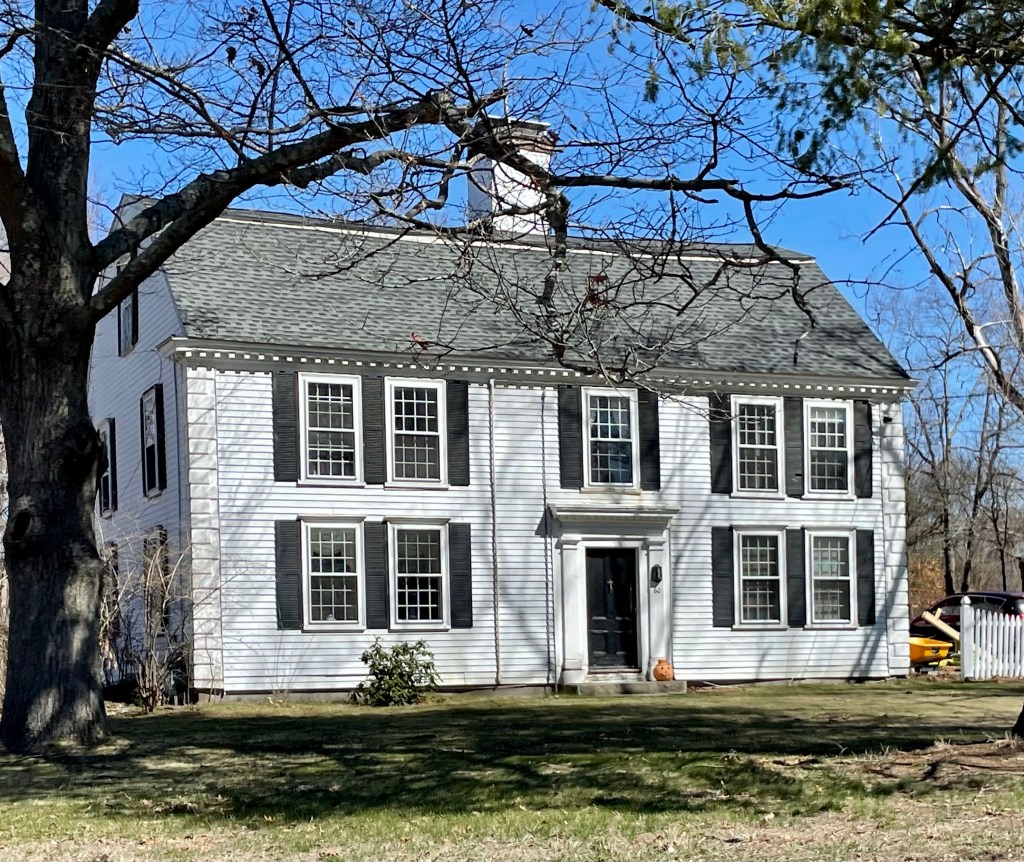
Hosmer House // 1760

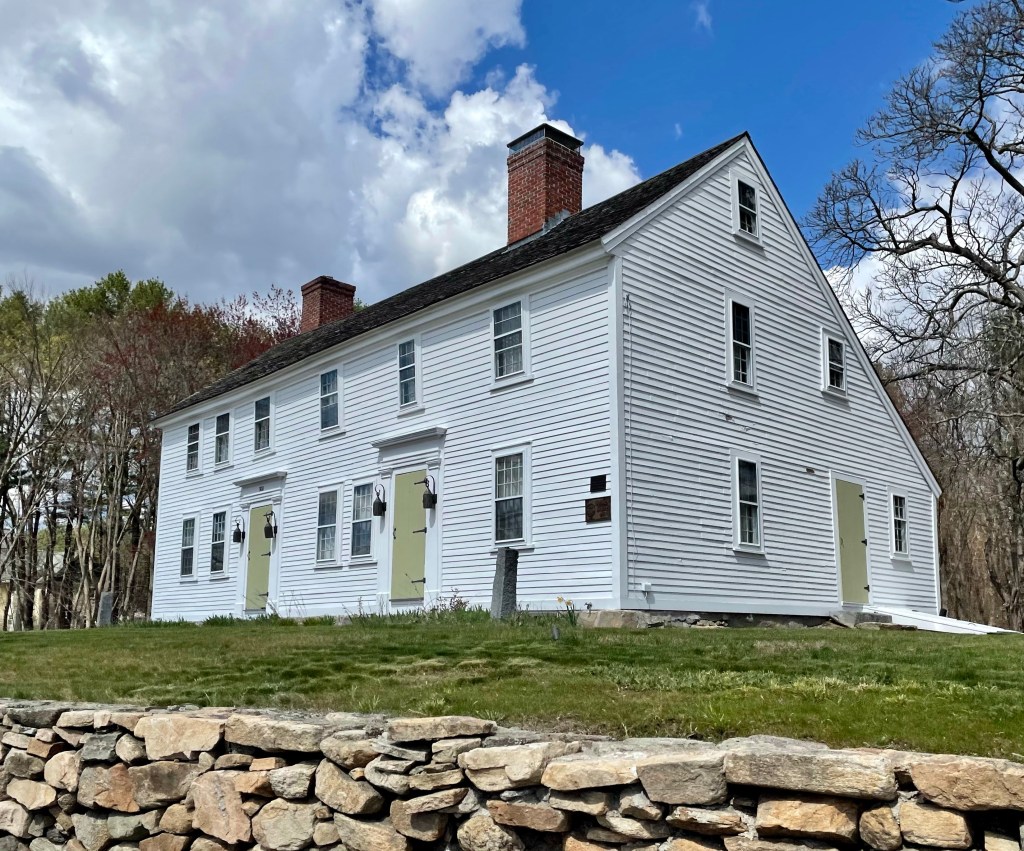
This 2-1/2 story wood frame house in Acton, Massachusetts was built in 1760, and is one of the town’s best-preserved colonial-era houses. It is an unusual double house, consisting of one section with a square plan, and the other with a typical colonial “half house” plan, having three bays and an off-center chimney. The house was built by Jonathan Hosmer, Jr., a bricklayer whose workmanship is evident in the house’s many fireplaces. Hosmer was also prominent in civic and military affairs; he served (along with his son, who was killed at 17 years old) in the 1777 Battle of Bennington. The home was later owned by Jonathan’s son Simon, who may have added the attached dwelling, creating the double-house form we see today. In 1974 the property was acquired by the Acton Historical Society, which rents one of the units, and operates the rest of the property as a museum. The home is a great example of a Georgian double-house with a saltbox roof.

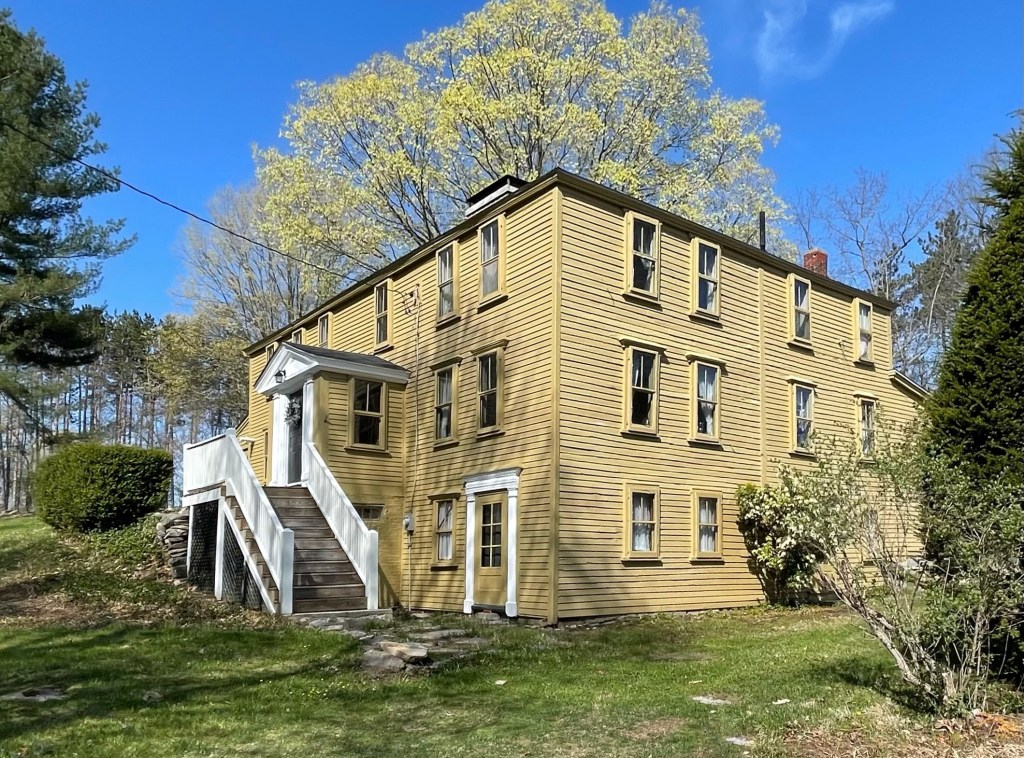
Old Acton Parsonage // c.1740

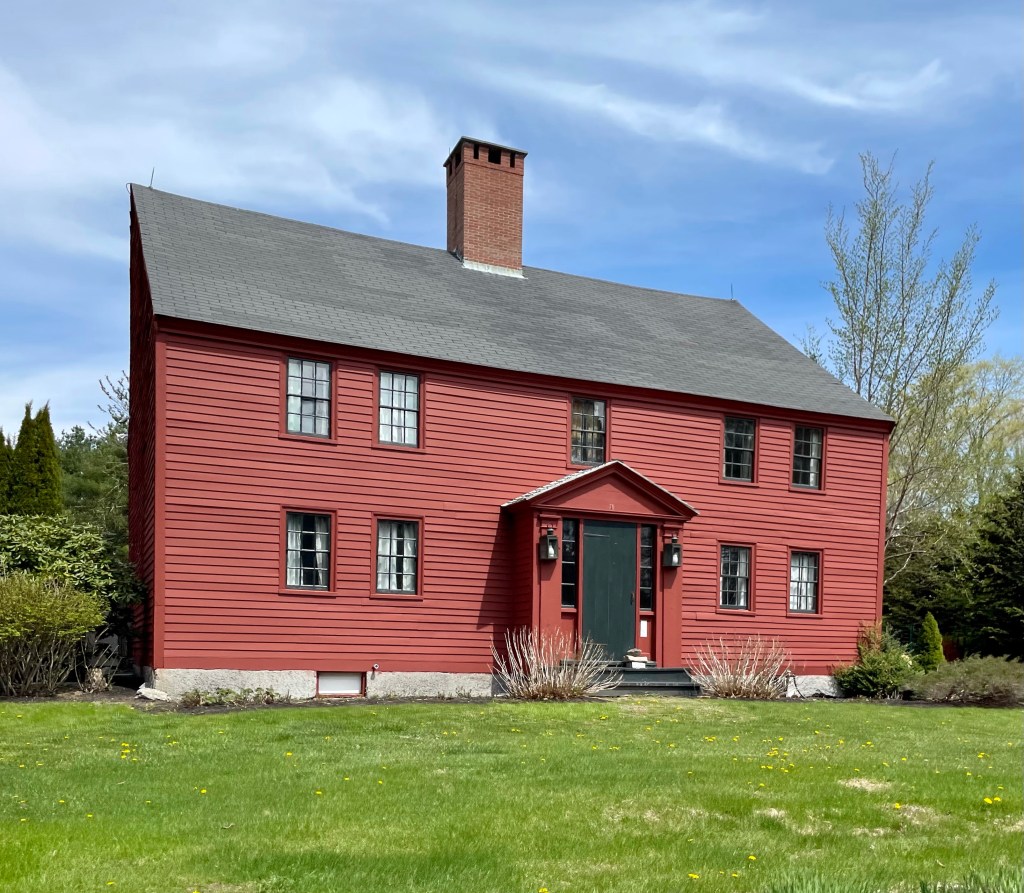
Not far off Main Street in Acton Center, this stunning old Georgian home was built around 1740 for Jacob Hooker a tailor and later served as the home of James Dudley, a blacksmith in the village. After the American Revolution, Acton called on Reverend Moses Adams (1749-1819) to be the minister for the Acton Meetinghouse. The town acquired the old Dudley House for Reverend Adams to reside in with his family. In 1780, the home was enlarged, and possibly given the raised foundation we see today. Mrs. Adams ran a store out of the basement, accessed by the doorway in the brick foundation. After Adams’ death in 1819, the property went to the next reverend in town, until his death decades later. In 1889, a carpenter, Moses Taylor, purchased the home, restored much of the woodwork, and replaced the historic windows with 2-over-1 windows, popular at the time. Moses moved a house on Main Street to make way for the new Acton Memorial Library, and was active in building and renovating homes in Acton until his death.

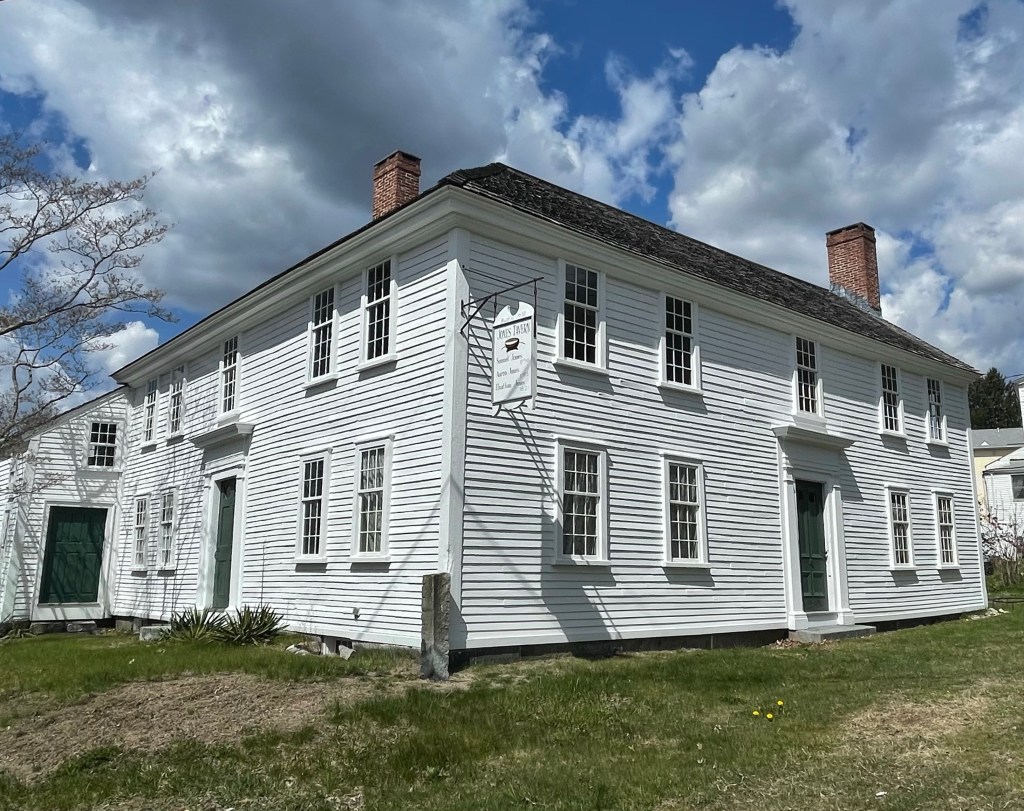
Jones Tavern // 1732

Settlement of South Acton (by colonialists) was begun in 1701 when the Jones and Knight families purchased 600 acres of a private land grant. Over the next 26 years, members of the two families established and operated mills near the Fort Pond Brook, which provided running water for operations. Samuel Jones built a home here in 1732, which as originally built, was a simple, four room central entry Georgian home with gable roof, typical of many eastern Massachusetts homes at the time. In 1750, Jones opened a tavern and general store in his house, enlarging it with a two story addition now visible on the left side. Samuel’s son Aaron Jones, a Harvard graduate and soldier who fought at the Battle of Concord nearby, took over the tavern from his father. In 1818, Aaron more than doubled the size of his establishment when he built a large, 5-bay extension and rear kitchen ell directly behind the existing structure. In addition to enlarging his property, Aaron also had it “modernized”, inserting sash windows (replacing the casement windows) throughout and adding fashionable Federal style door and window surrounds. The additions gave the building two major entries, as well as secondary access to the communal taproom. The property was then willed to his son Elnathan Jones, who operated the establishment until 1845 as both a tavern and hotel. The building remained in the Jones family until it was sold in 1946, and divided inside into multi-family use. The house was sold for salvage in 1964 after years of neglect, but was saved by Iron Work Farm, Inc., a non-profit who maintain the property to this day.

Rev. Sampson Spaulding House // 1737

Sampson Spaulding (1711-1796) studied at Harvard University to become a minister. At the age of just 23, he was called to be the first minister at the new First Congregational Church in 1736. To entice the young minister to the rural new town of Tewksbury, this Georgian mansion was constructed, probably with help from his new congregation. He married Mehetable Hunt, a local woman, and they had six children. Rev. Spaulding was
stricken with paralysis in 1791 in the middle of a church service, and he died five years later. He became one of the first burials in the new cemetery in town, now known as the Tewksbury Cemetery. The gambrel-roofed Georgian mansion stands today as one of the oldest homes in Tewksbury.

Murdock-Wiswall House // c.1718

Another of Oak Hill Village’s pre-Revolution homes is this stunner! This home was built some years before 1718 and was eventually occupied by Robert Murdock (1663-1754) and wife Hannah Stedman. Murdock emigrated from Scotland to Plymouth, MA in 1688 with his brother, later settling in Roxbury. In 1703, Robert bought a house and 120-acres of land here, and worked as a housewright. Like the King House (last post), the house was likely rebuilt or modified substantially at this time. Robert also served as a selectman, Constable, Surveyor of Highways, and Assessor in town until his death; and his son, Robert Murdock Jr., took over the property. By the mid-18th century, the estate was purchased by Jeremiah Wiswall (1725-1807). Wiswall served as Captain of the militia at the battle at Concord and Dorchester Heights during the Revolution and held a number of positions in the community including Overseer of the Poor, Constable, Selectman and as a hogreeve (person charted with the prevention or appraising of damages by stray swine). He was very involved in the events leading up to the Revolution including the committee on the tea embargo and drilled with the militia. He also lent money to the town to hire soldiers and owned a house designated as a place to receive smallpox inoculations in 1777, though it is unclear if it was this house he used. The house was eventually slated for demolition in the 1960s, but was saved by Dr. Roy Carlson, President of nearby Mount Ida College (now owned by UMass. For $1, he purchased the home from a developer and paid for it to be moved from its original location at the corner of Brookline and Dedham streets a ¼ mile southwest to its current location, on Carlson Ave, and it served as the President’s House.

Dike-King House // c.1740

Located in the Oak Hill Village of Newton, the Dike-King House remains as one of a few pre-Revolution houses, but the history is a little murky from what I found. Oak Hill was the most remote village of Newton historically and has maintained much of its open space to this day, as it did not see the suburban development following the streetcar in other villages in town connecting to nearby Boston. This house was apparently built by Jonathan Dike (1673-1751), a cooper, who lived here with his second wife Experience French (yes that was her name). The home he built was likely a much smaller dwelling and was added onto as the family grew. Jonathan died in 1751 and the home went to his eldest living son and later sold to Noah King in 1796. The house plaque on the house gives a date of 1795 as King purchased a house on the lot, but it was likely much older than one year old. Noah King was a housewright, deacon, and son of Dr. John King a prominent civic leader in the town. With his expertise as a housewright, he likely rebuilt much of the house into what we see today. Starting in 1796 through 1923 the property was run as a farm by members of the King family, but land was sold off around the Great Depression for much needed funds. Due to the asymmetry of the house, it is likely that it started as a half-house with just three bays with the door at the left-most bay, with the saltbox roof added around that time.

Mount Hope Farm // 1745

Land that Mount Hope Farm sits upon in Bristol, Rhode Island was formerly council lands of the Wampanoag Indians, where King Philip’s War of 1675 may be said to have begun and ended. For those of you who do not know about the war, it was an armed conflict running 1675–1678 between indigenous peoples of New England and New England colonists and their indigenous allies. Massasoit, leader of the Wampanoag, had maintained a long-standing alliance with the colonists. Metacom (c. 1638–1676) was his younger son, and he became “sachem” (elected chief) in 1662 after Massasoit’s death. Metacom, however, forwent his father’s alliance between the Wampanoags and the colonists and they fought back. Metacom’s forces could not beat the growing numbers of the colonists, and he was eventually killed near Mount Hope, in Bristol. After his death, his wife and nine-year-old son were captured and sold as slaves in Bermuda. Philip’s head was mounted on a pike at the entrance to Plymouth, Massachusetts, where it remained for more than two decades. His body was cut into quarters and hung in trees. This story, shows how American history is built upon death and suffering and has often been whitewashed to portray early settlers treating native peoples with respect and as equals, which was rarely the case.

Mount Hope Farm as we know in colonial times, was originally 550 acres in size, owned in 1680 by Nathaniel Byfield. In 1744, the estate was acquired by Isaac Royall. Royall began construction of the house soon after. Isaac Royall Jr. was the son of Isaac Royall Sr. (1677–1739) a slave owner, slave trader, and Antiguan plantation owner who had a home and slave quarters (both extant) in Medford, MA. After his father’s death, Royall Jr. inherited his immense wealth, built upon the backs of others, and built this Georgian farmhouse. It is unknown to me if he ever resided there or had slaves maintain the property, but the home was rented for some time. In 1776, Mount Hope Farm was confiscated by the state, after Royall, a loyalist to England, fled to Nova Scotia. The property was added onto in the 19th and 20th centuries and now sits on 127-acres of land, and is run as a park, inn, and event space.

Throope Place // 1760

In 1687, William Throope 1637-1704, who migrated to Bristol from Barnstable, Massachusetts by way of England, purchased land in Bristol, Rhode Island. On it, he constructed a small, one-room deep, two-story house. Throope’s grandson, Thomas, Jr. (1710-1771), enlarged the house about 1760, when he constructed this four-bay Georgian home, adding the old 1687 Throope house to the rear. Interestingly, house moves were very common in America to the early 20th century, as materials such as glass, nails, and brick were more expensive while labor was much cheaper, making the reuse of original structures and materials common. The farm eventually passed to Isaiah Drown Simmons (1810-1882), a dairy farmer, in 1830, and remained in the Simmons family until 1922. Records show that the original 1687 house that was moved to the rear of the 1760 house was replaced in the 1830s by Simmons. The home remained in the Simmons Family until after the death of their only daughter Elizabeth, who died in 1914. It appears that the existing front portico was added after that time, which appears more Colonial Revival.

Reynolds-DeWolf House // c.1760

New England is lucky to have so many examples of pre-Revolution Georgian homes to gawk at, and this home in Bristol is one of them. The home was likely constructed by Benjamin Reynolds, a cobbler (shoemaker) for his family. The home was purchased by Benjamin and Abigail Bosworth sometime before the Revolutionary War, and Benjamin served with the Continental Army, at the rank of Major. In 1786, Mark Antony DeWolf the patriarch of the infamous DeWolf Family (who made their fortunes on the backs of the enslaved) returned to Bristol after it was burned by the British, and purchased this home where he lived until his death in 1793. At that time, one of Mark Antony DeWolf’s many children, Levi, moved into the home. Levi DeWolf (1766-1848) was a Quaker, who was an avid reader. While his involvement in the slave trade was a shadow of that of his siblings, he was complicit and travelled to Africa at least three times on behalf of his brother James. After the trips, James offered to outfit a vessel for him to continue the trade, but Levi’s conscience likely caused him to decline. In the late 1790s, Levi had the home updated, with a new, elaborate pedimented entrance with a modillion and dentil cornice.

Coggeshall Farm // c.1750

Located on the Poppasquash Peninsula, in my favorite Rhode Island town of Bristol, the Coggeshall Farmhouse showcases the historic rural farming character of the town, which saw much development by the 19th century. In 1723, Samuel Viall (1667-1749 purchased farmland from Nathaniel Byfield, who had acquired most of the north part of Poppasquash as one of the original “founders” of Bristol (though the Wampanoag people had been already living here for centuries). Viall or a descendent likely had this small Georgian farmhouse built on the land, along with outbuildings to farm the beautiful land here. In the early nineteenth-century Wilbour and Eliza Coggeshall were tenant farmers at the farm. The Coggeshall’s son, Chandler Coggeshall, later became a politician and helped to found the Rhode Island College of Agriculture and Mechanic Arts in 1888, which became known as the University of Rhode Island. The farm eventually was acquired by industrialist Samuel P. Colt, nephew of firearms manufacturer Samuel Colt, who created a massive estate on the land. In 1965 the State of Rhode Island purchased the Colt Estate for use as a state park, and the Bristol Historical Society petitioned the state for permission to preserve the old Coggeshall farm house on the property as a museum. Coggeshall Farm Museum was established in 1973 to educate modern Americans about eighteenth century New England farm life.