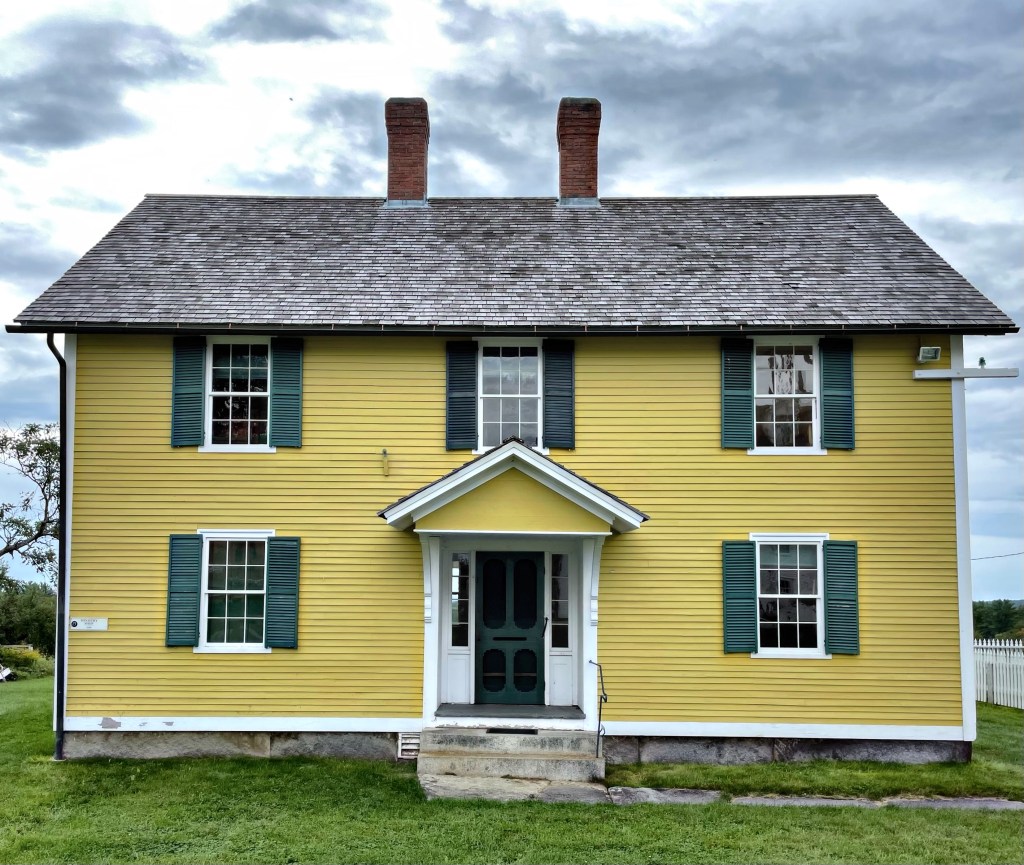
Located just east of the Meeting House at Canterbury Shaker Village in New Hampshire, the Ministry Shop was used initially as a workshop and after 1878, as sleeping quarters for the Ministry, who resided in the Meeting House until that time. Embellishment on the exterior is limited to a door hood over the recessed entrance, but the proportions and simplicity of the building really shine. The building is currently used as public exhibition space for the museum, and features a historically appropriate paint scheme!
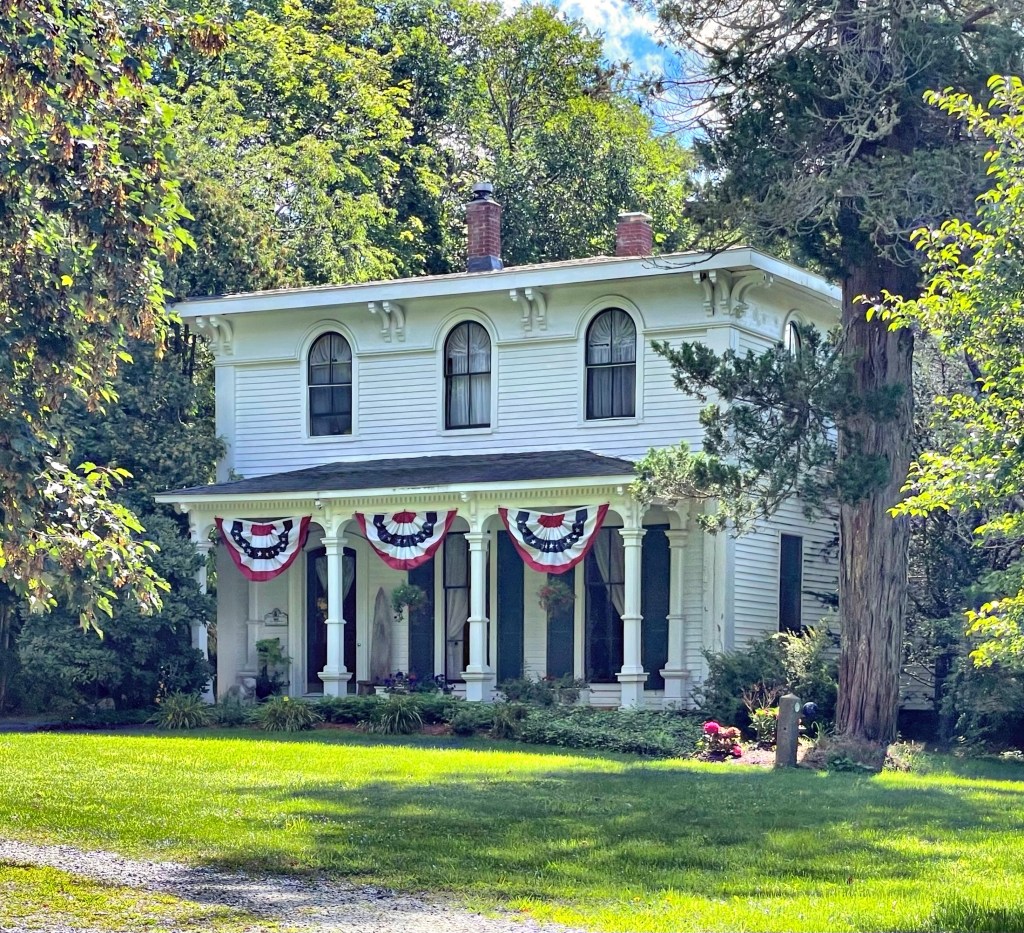
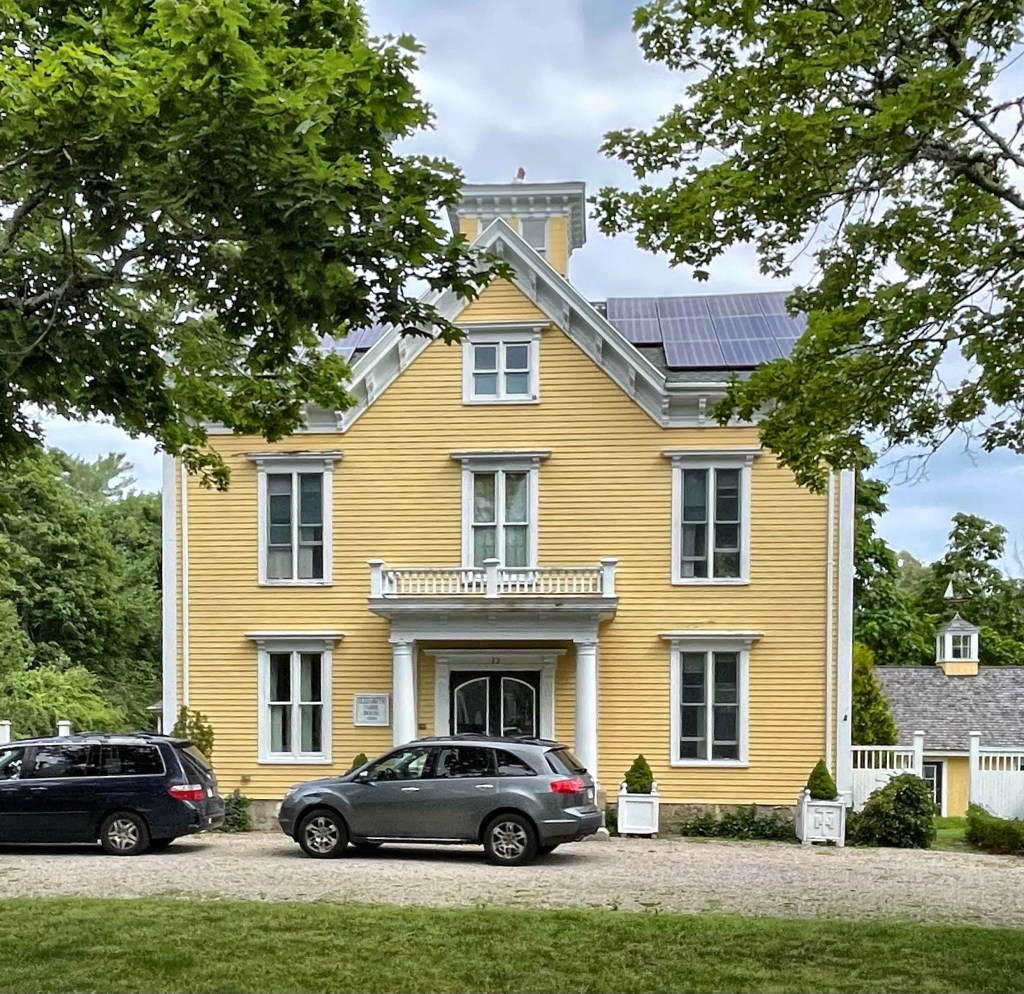
One of the more high-style houses in rural Rochester, Massachusetts, is the Weld-Haskell House. The house was built around 1854 in the Italianate style for a recently widowed Susan Haskell. Susan was the daughter of Jesse Haskell, who was a state representative and served in the War of 1812, and a descendant of one of the town’s earliest colonial settlers. The home remained in the Haskell family until the second half of the 20th century.
Calvin Chaddock (1765-1823) graduated from Dartmouth in 1791 and three years later earned a Master of Arts degree from the college. In 1792, he married Meletiah Nye and they settled in Rochester, Massachusetts, where he became pastor of a Congregational parish in the rural northern part of town. In 1798, he opened an academy for boys and girls in the village and built this beautiful Federal style home as a boarding house for students to reside in (the schoolhouse is no longer extant). By 1804, he had “a respectable number of students from different parts of the United States.” The man moved to Ohio before settling in Charlestown, West Virginia, where he lived in a homestead with his family and three enslaved people, Charles, Thomas, and an unnamed woman. Upon his death in 1823, the three people enslaved by Chaddock, were sold at auction. The former boarding house in Rochester was later occupied as a tavern and stagecoach stop, and a store, when it was given some 19th century alterations. It has been a private home for the past hundred years.
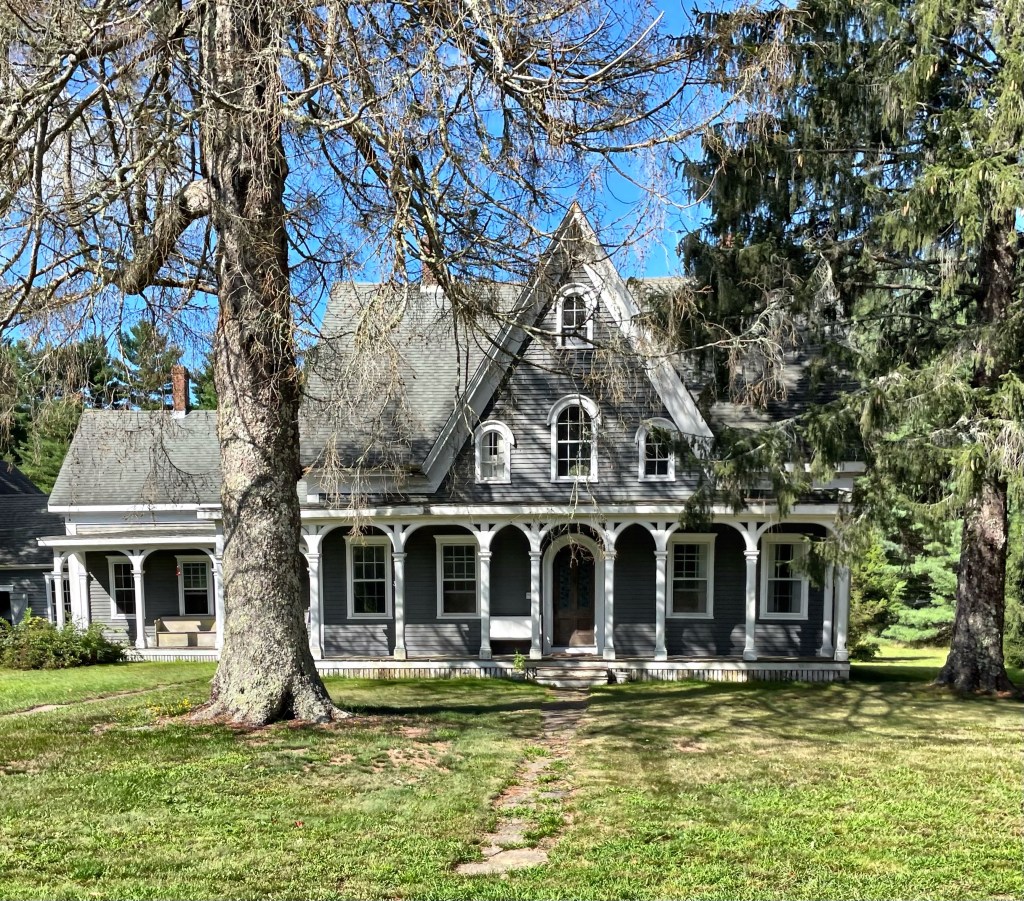
This beautiful house was built by retired whaling Captain John G. Dexter in 1860. The Dexter family’s ties to Rochester, Massachusetts, began when William Dexter became the first descendant of the Dexter family to settle in town around 1679. William, one of the 32 original grantees of the town (from land by Sachem Metacomet), died in Rochester in 1694 and his four sons and grandsons remained in Rochester through the 19th century. After being away for months or years at a time, Captain John Dexter returned to his hometown to build this home on family land that was previously undeveloped. The Dexter family remained in the house well into the early 20th century, carrying on the family’s deep rooted history in the area. The home is a blending of Gothic and Italianate styles, which work really well in the rural area.
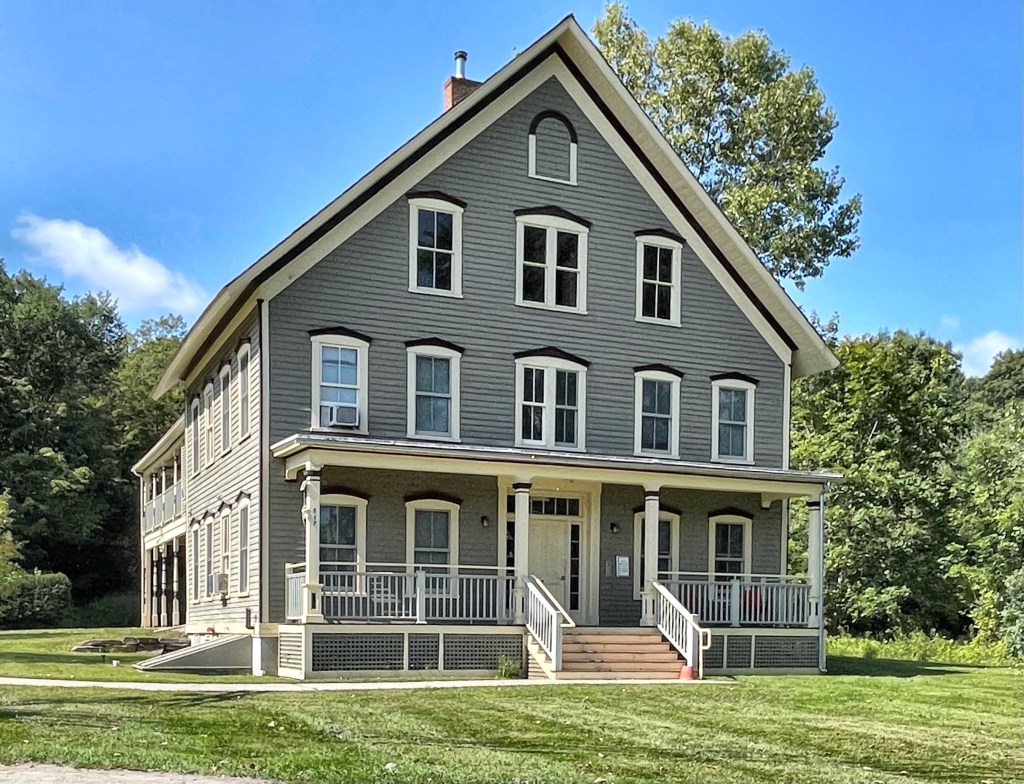
This Italianate style house was built in 1868 for Augustus and Laura Blaisdell, natives of New Hampshire who moved here to Chester, Vermont, in 1860. The Blaisdell’s operated a company that manufactured fireproof roofing and paint at their home base in New Hampshire, and built this building on a prominent site in the village to promote sales, which were conducted from a storefront on its ground floor. The location of the Blaisdell House alongside the tracks of the local railroad depot, was strategic in order to provide ease in the transportation of goods to the village of Chester Depot from the New Hampshire-based headquarters of A.H. Blaisdell & Co.The home and store is significant in the local economy and is itself, a significant example of the Italianate style in town.
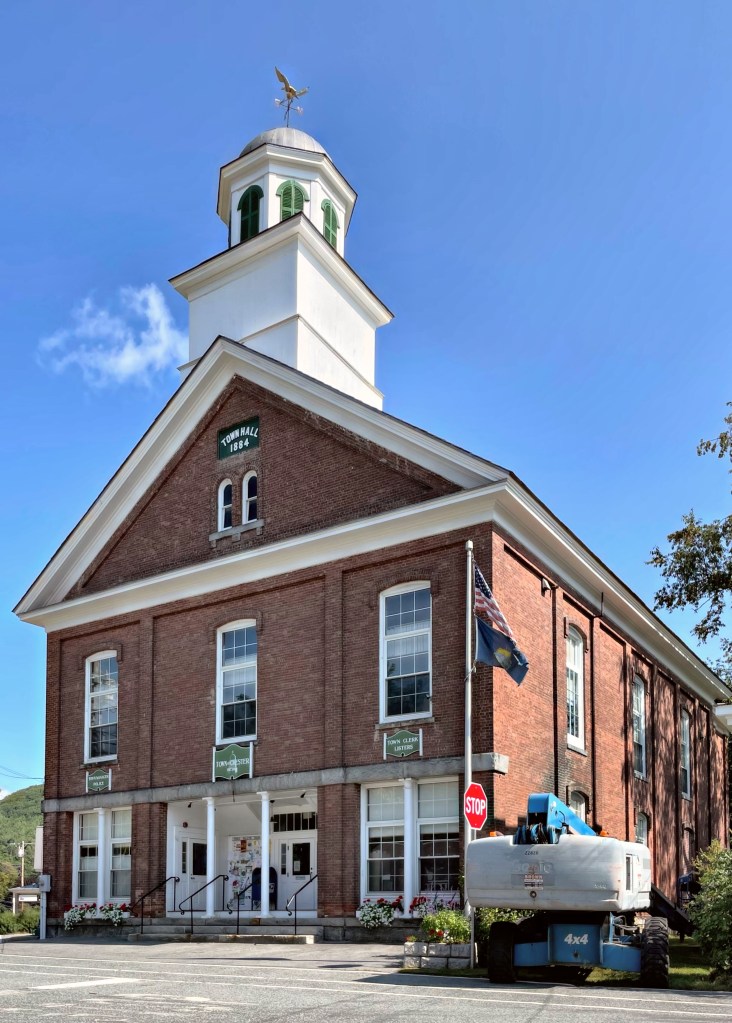
The town of Chester, Vermont, was originally chartered by New Hampshire Governor Benning Wentworth as Flamstead, in 1754. The terms of the charter were not met and the town was re-chartered as New Flamstead in 1761. In 1766, a patent was issued by New York that changed the name of the town to Chester, after George Augustus Frederick, the Earl of Chester and the eldest son of King George III. Vermont in the 18th century was contested land claimed by both New Hampshire and New York, unsettled until the colonists in the area decided to petition for their own statehood. The town of Chester voted to keep their name. The town grew with two distinct villages, Chester Village and Stone Village. Both villages were very distinct in terms of politics, religious affiliations, and architecture. When the railroad cut through the town, the route passed between Chester’s North and South villages, and Chester Depot village emerged right in the middle. The establishment of a third village by the railroad depot, offered neutral ground on which to erect a town hall, as before 1884, town meetings were held alternately each year in the two opposing villages. The large town hall building in Depot Village is a late example of Greek Revival and Italianate design.
This beautiful Italianate building was constructed around 1880 for the newly established Tabor Academy, which was founded in Marion, Massachusetts by Ms. Elizabeth Taber in 1876. After Ms. Taber funded the constructed of a town library and museum and oversaw construction of the new academic building for her school, she endowed money for Tabor Hall, which was to house the school’s Principal, some boarding students, and most importantly, herself. The structure was located on Spring Street, just north of the library, until 1937, when the “Tabor Swap” was finalized. The swap was a deal between the academy and the Town of Marion, who exchanged properties in 1937. The town received the library building, the academic building (soon after converted to Town Hall) and land where this building once sat. The town erected Sippican Elementary, a public school on the land, and Tabor Academy moved this building a block over.
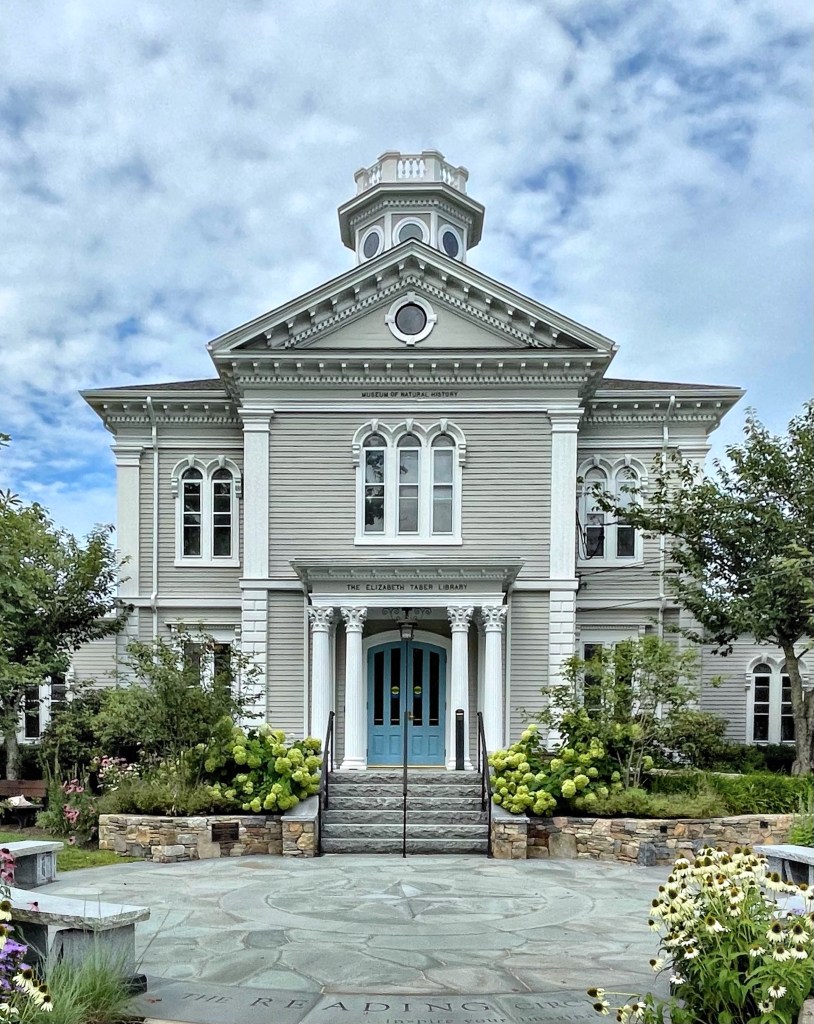
The first of many generous gifts by Elizabeth Taber to the town of Marion, Massachusetts was this gorgeous Italianate style library building. Elizabeth Taber (1791-1888) was educated in the Sippican Village School, immediately giving back, teaching school in Marion while still in her teens. At 33, she married Stephen Taber, a clockmaker, and they had three children, none living to adulthood. They eventually settled in New Bedford, where Stephen made much more money in his trade, paired with investments in whaling excursions leaving the town. In 1870, eight years after the death of her husband, Elizabeth Taber turned her attentions to engaging in projects for the benefit of her hometown, Marion. In 1870, she bequeathed over $20,000 for the design, construction and furnishing of a new library in town that would also house a natural history museum. The natural history museum component of the building had been eclipsed in importance by the library which was expanded by side wings during the mid-20th century. Encompassing a collection of rocks, minerals, stuffed birds and other curiosities, the second floor museum was designed to complement the first floor’s book-learning activities. By the late 1870s, the Taber Library and Natural History Museum had become a key component of the Tabor Academy campus, founded just years later.
Welcome to Marion, Massachusetts! Colonized in 1679 as “Sippican”, the town was once a district of adjacent Rochester, Massachusetts. The name, which also lends itself to the river which passes through the north of town and the harbor at the heart of town, was the Wampanoag name for the local tribe that once utilized these lands. Native settlements in present-day Marion dates as far back as 3000 B.C. as the local people were members of the Wampanoag tribe who, when the Pilgrims came, lived in a number of villages in Southeastern Massachusetts under the leadership of the great chief Massasoit. By the 19th century, the town was mostly known for its many local sea captains and sailors whose homes were in town. Today, the coastal town is known for its charming village and large waterfront homes, oh and amazing architecture!
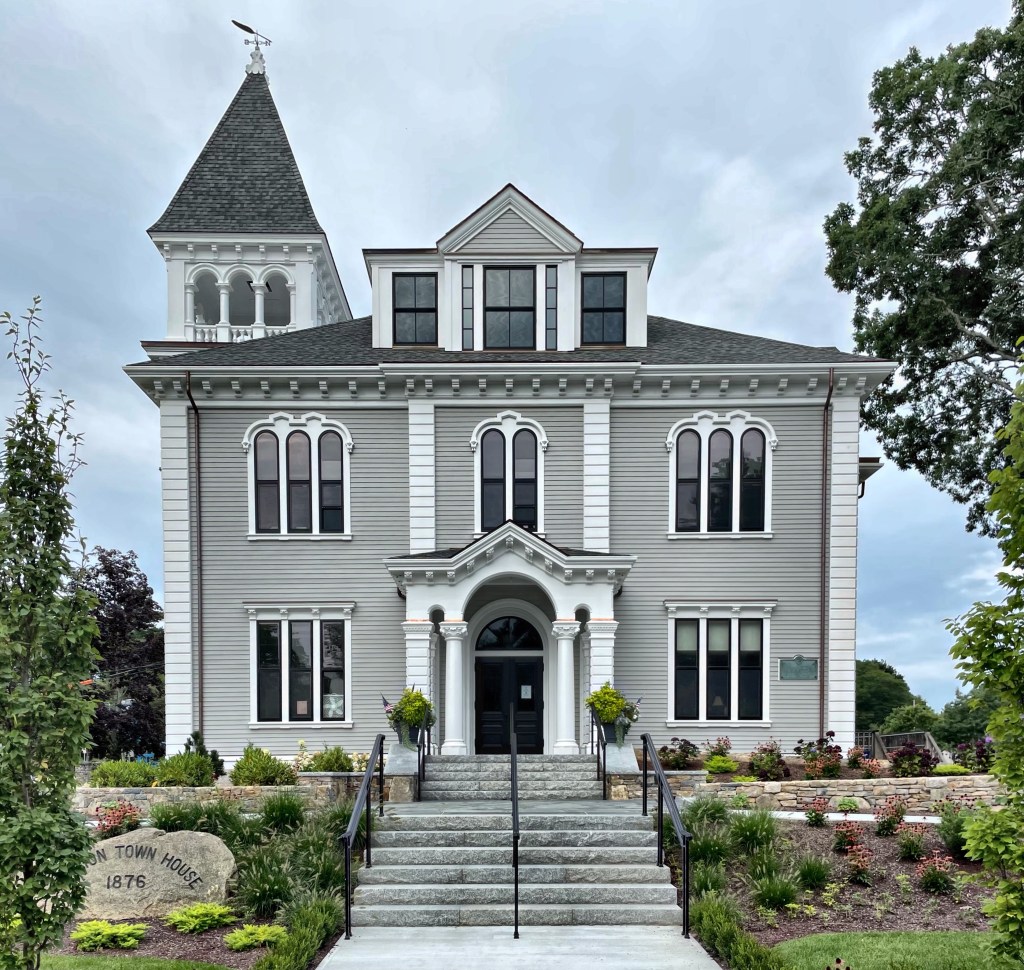
This building was constructed in 1876 by Mrs. Elizabeth Taber (1791-1888), who, at the age of 85, founded Tabor Academy in town. She named it after Mount Tabor in Palestine rather than after herself. The school was built towards the end of the “Age of the Academies”, when in 1852, Massachusetts became the first state in the country to make education compulsory. While some major private institutions already existed, many more were founded in the mid-19th century. Tabor Academy served as a private school for boys and girls over 12 years of age, and was to remain free for local students. With the rise of public schools in the state, many academies began to struggle with admitting students, especially those that had parents willing to pay additional money for enrollment. The school struggled around the Great Depression and thus, traded buildings with the Town of Marion in the 1930s and this building became the Marion Town Hall, a use it retains to this day. The building itself is a stunning Italianate design constructed from plans by Boston architect William GibbonsPreston.
Stay tuned for more buildings and history on one of my favorite Massachusetts towns!
“Less is more” is a phrase adopted in 1947 by architect Ludwig Mies van der Rohe to describe his minimalist, Miesian glass box buildings. While he was referring to Modern architecture, the same phrase can be used in 19th century design, where massing, form, and materials are showcased in all their glory with little frills or additions. The Robert Lippitt House in Providence was constructed by 1854 for Robert Lincoln Lippitt (1823-1858), who worked with his brother Henry Lippitt in owning and managing textile mills. Henry would later build his own mansion nextdoor to his late brother’s house (see past post). Sadly, Robert died four years after this home was built, at the young age of 34. His widow, Louisa Gorden Hallet remained in the home and remarried within a year of her late husband’s death, to Charles Lippitt, possibly a cousin to Robert. Messy. The home was designed by architect Thomas A. Tefft, a promising and respected young architect who also died young, at the age of 33.


 Buildings of New England