Church of All Nations // 1975

One building in Boston that has always perplexed me is this round church building. It echoes Eero Saarinen’s MIT Chapel in Cambridge, but is much heavier and plain. After over an hour of researching, I finally found out some history behind it! The church was constructed in the South Cove Redevelopment area, an urban renewal program run by the Boston Redevelopment Authority (now BPDA) as a sort of “slum” clearance near Chinatown. The Church of All Nations was founded in the South End in 1917, housed in a Gothic Revival chapel that was seized by eminent domain for the Massachusetts Turnpike Extension and demolished in 1963. The congregation met in temporary quarters on Arlington Street until the new church was constructed in 1975. Records show that the congregation hired famed Modernist architect Bertram Goldberg as early as 1967 to design a new chapel, set in a new public park. The original plans called for a square building with a massive “steeple” incorporated as the entire roof. For some reason (possibly funding and changing demands for the church), the final design was a little more mundane. The cylindrical church is clad in dark glazed brick with a cross raised in the brickwork. The church suffered from a dwindling congregation in its location, and now appear to rent out the building. One of my favorite local architecture firms Touloukian Touloukian, Inc., re-imagined the site as a new residential tower. It would be one of the few beautiful new buildings in Boston in the past decade or two. Can we please make this happen?!
Beacon Hill Reservoir // 1849-1883

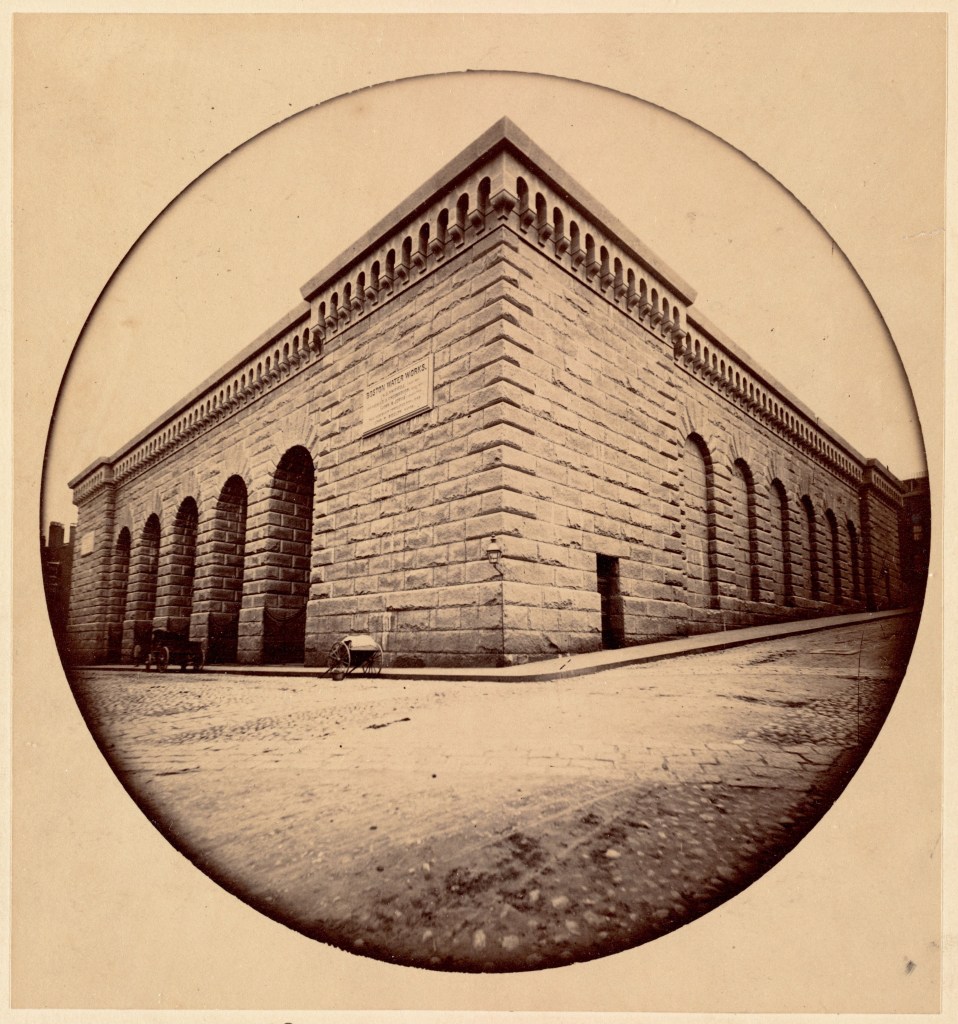
Did you know there was once a massive granite reservoir in Beacon Hill?

Long before the Wachusett and Quabbin Reservoirs that now supply water to Boston, the city’s original municipal water supply was Lake Cochituate, a reservoir in Metro-west. Due to Beacon Hill’s high elevation, the city selected the site behind the recently completed Massachusetts State House, to store and distribute water to the city. The site was too steep, so it had to be graded. Therefore, the top of Beacon Hill, where the beacon had long been standing, needed to be lowered to accommodate the reservoir. The soil was dug by hand and hauled by cart down to fill the old Mill Dam in the Bulfinch Triangle area. The reservoir, which opened in 1849, was unique in its approach. The design of the structure needed to minimize its footprint and reflect well on its surroundings in the prestigious location. In lieu of earthen bermed walls, as was the convention in most period distribution reservoirs, the design chose to create a watertight tank within a masonry structure. This made the structure the first elevated storage tank constructed in New England. Sheet lead was used to make the reservoir watertight (which likely led to a lot of health issues (hindsight is 20/20). By 1870, the poor water pressure made the Boston Waterworks build the Roxbury Standpipe, which relegated the Beacon Hill Reservoir to being an emergency water source for use only in case of fire or accident to the pumping-mains. In 1883, Boston Water Works sold the structure to the Commonwealth, who demolished it for the addition to the State House.

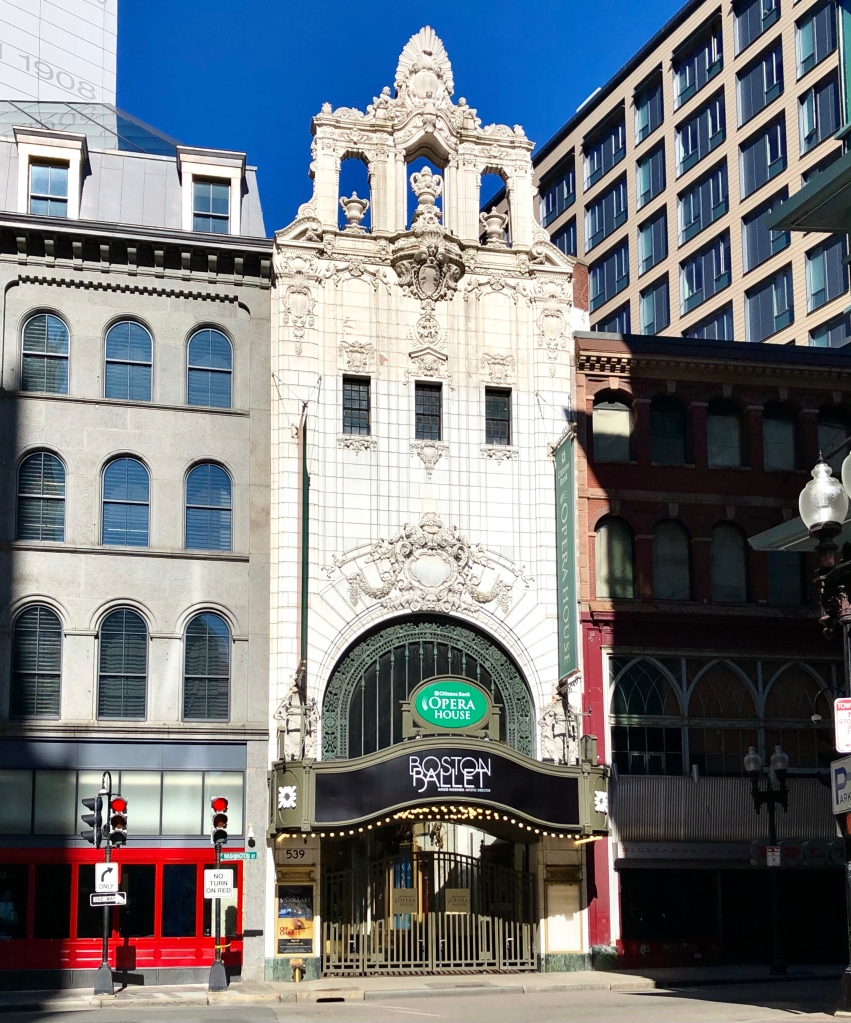
B.F. Keith Memorial Theatre // 1928

Not to be confused with the former B.F. Keith’s Boston Theatre (last post), the B.F. Keith Memorial Theater on Washington Street, remains as one of the most sophisticated architectural compositions found in Boston. The Keith’s Memorial was one of his most elaborate designs of the prominent theater architect Thomas W. Lamb. The B. F. Keith Memorial Theatre was erected under the close personal supervision of Edward Franklin Albee as Albee’s tribute to the memory of his late partner and friend, Benjamin Franklin Keith. For that reason, it was built with a degree of luxury in its details and design that is almost unrivaled. On October 23, 1928, just before the theater opened, the Radio-Keith-Orpheum (RKO) company was formed and became the owner of the theater after consolidations and mergers. The Keith Memorial theater opened on October 29, 1928, presenting first-run films along with live vaudeville. By 1929, the theater had converted to showing only films and remained a leading Boston movie showcase through the 1950s. In 1965, the theatre was purchased from RKO by Sack Theatres, and the new owners refurbished the building, and renamed it the Savoy Theatre. The theater used the frontage, formerly used by the B.F. Keith’s Boston Theatre on Tremont Street to showcase a large marquee. In the early 1970s the massive arch framing the opening between the stage and the auditorium was bricked up, and a second auditorium was installed within the stage. The theatre was then named the Savoy 1 & 2. The twinned theatre continued to operate as a pair of film houses until 1978, when it was bought by the Opera Company of Boston, who renamed the building the Boston Opera House. After a decade, the group could not maintain the ornate building and The Opera Company closed the theatre in 1991, and the building began a period of rapid deterioration. In the early 2000s, the gorgeous building was restored and re-opened as the Citizens Bank Opera House, which (pre-Covid) runs a steady rotation of touring Broadway productions, Boston Ballet Nutcracker holiday shows and more. Also, if you havent been inside the building for a tour, you are missing out!

Bristol Ferry Lighthouse // 1855

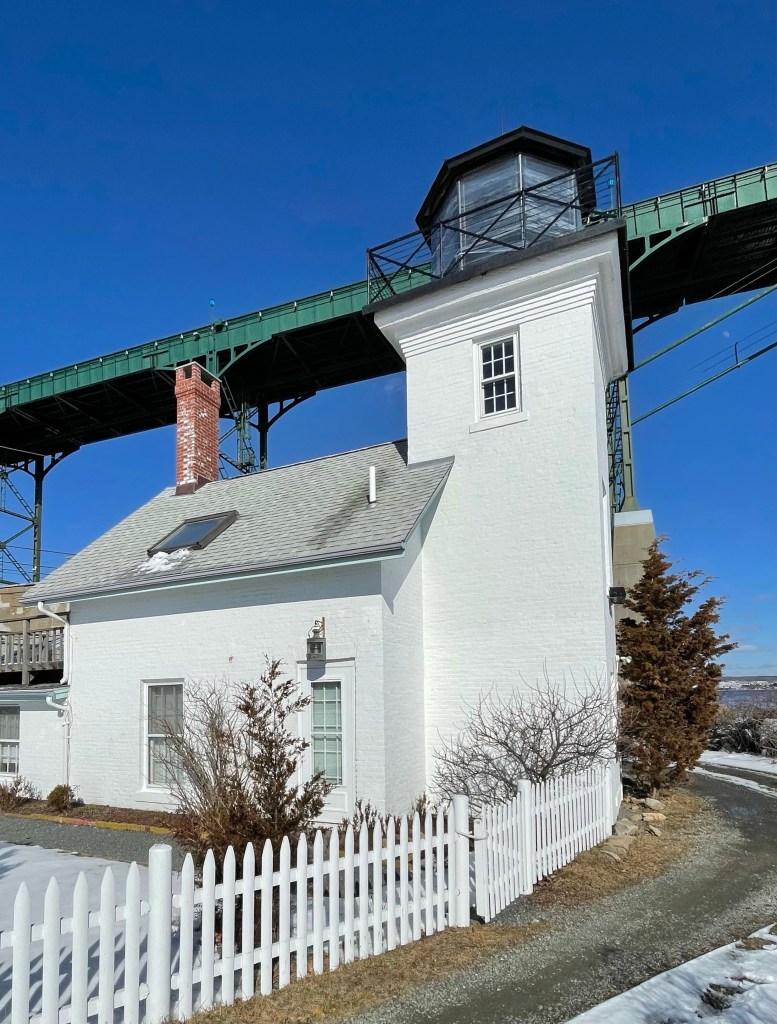
The Bristol Ferry Lighthouse, located on the southernmost tip of Bristol, Rhode Island, is possibly the most difficult building I have tried to photograph since starting this account. The lighthouse got its start in 1846, when the Bay State Steamboat Company, established a small lighted beacon at this location. The Fall River Line consisted of a railroad journey between Boston and Fall River, Massachusetts, where passengers would then board steamboats for the journey through Narragansett Bay and Long Island Sound to a dock in Manhattan. For many years, it was the preferred route to take for travel between the Boston and New York. The early beacon was unreliable, and Congress appropriated $1,500 in 1854, for a combined lighthouse and lightkeeper dwelling. The light served this chokepoint well, until the construction of the Mount Hope Bridge between Bristol and Portsmouth in 1928-1929. Spanning over a mile long, the bridge was built practically over the lighthouse and rendered it irrelevant as an aid to navigation. The lantern was removed from the tower in 1928. An automatic navigational light on a nearby skeletal tower remained in operation until 1934. Around that time, the lighthouse was sold off as excess and went into private ownership, and for a while, provided housing for a couple students at nearby Roger Williams University. The building was restored and now appears to be a private home.

Portland Head Light // 1791

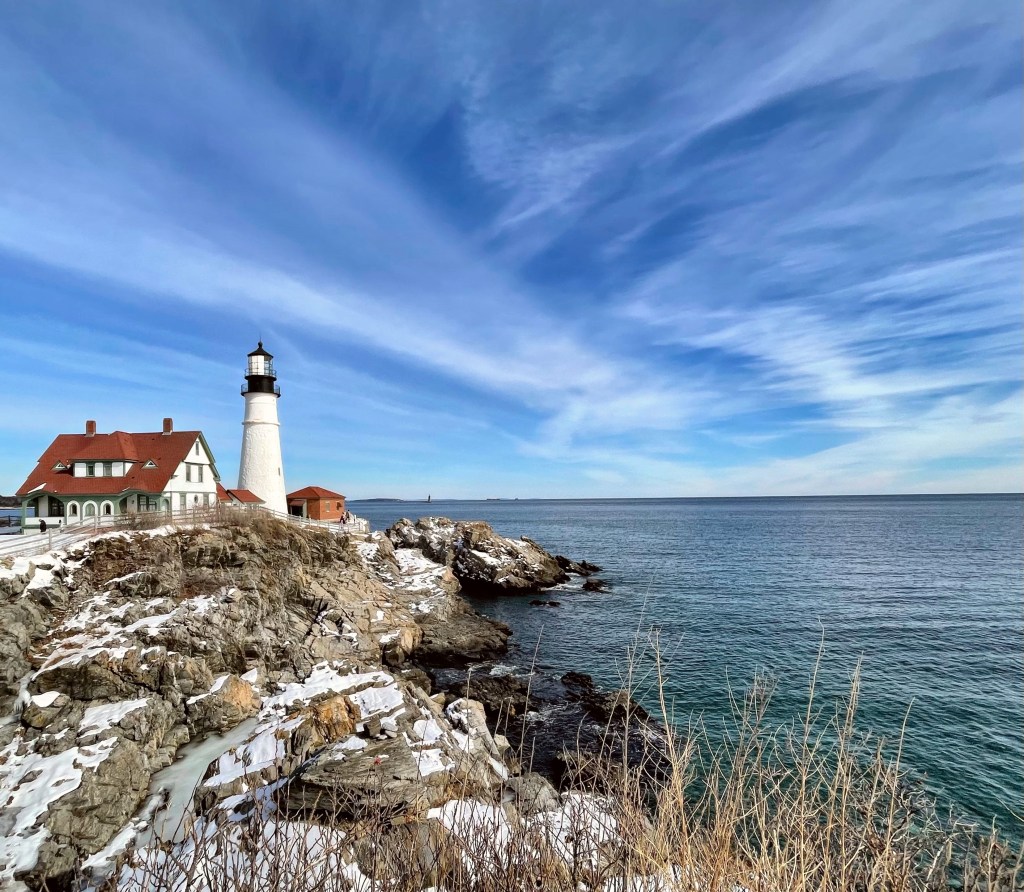
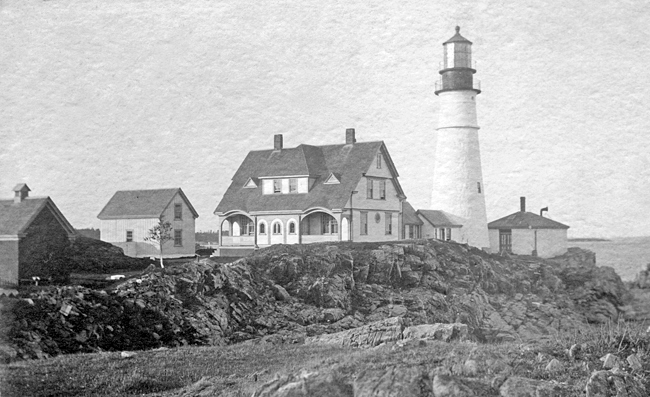
When I think of Maine, I think of rocky coastline, lobster, and lighthouses. Located in Cape Elizabeth, just south of Portland, you will find the Portland Head Light, an obscenely beautiful lighthouse, which has provided a beacon to sailors for centuries (and more recently Instagrammers). In 1787, while Maine was still part of the state of Massachusetts, President George Washington engaged two masons and instructed them to take charge of the construction of a lighthouse on Portland Head. Washington reminded them that the early government was poor, and said that the materials used to build the lighthouse should be taken from the fields and shores surrounding the site. The original plans called for the tower to be 58 feet tall, but when the masons were finished, they climbed to the top of the tower and realized that it would not be visible beyond the land to the south. When the masons were ordered to increase the height another twenty feet for visibility reasons, one quit, leaving a single man to finish the lighthouse and a small dwelling. It was completed, and the light, powered by sixteen whale-oil lamps, first shone on January 10, 1791, following its dedication by Marquis de Lafayette. Over the next century, many issues plagued the building and light-keepers, from cold winters and rogue waves icing over the pathways, to a poorly constructed top of the lighthouse, which was re-constructed due to safety concerns. In 1891, the station’s old stone light-keeper’s house was demolished, and upon its foundation a two-story wood double dwelling was constructed. A square brick oil house was also built at the same time along with a flight of steps at the landing. Portland Head Lighthouse was extinguished from June 1942 through June 1945 to avoid aiding German submarines, which did not work as planned. In 1945, the USS Eagle PE-56 just miles off the coast, was sunk by a German submarine (though previously thought to have been sunk by a boiler explosion), only 13 of the 62 crew survived. The lighthouse is now owned by the town, but the US Coast Guard retains control of the light and fog signals.

Ram Island Ledge Lighthouse // 1905

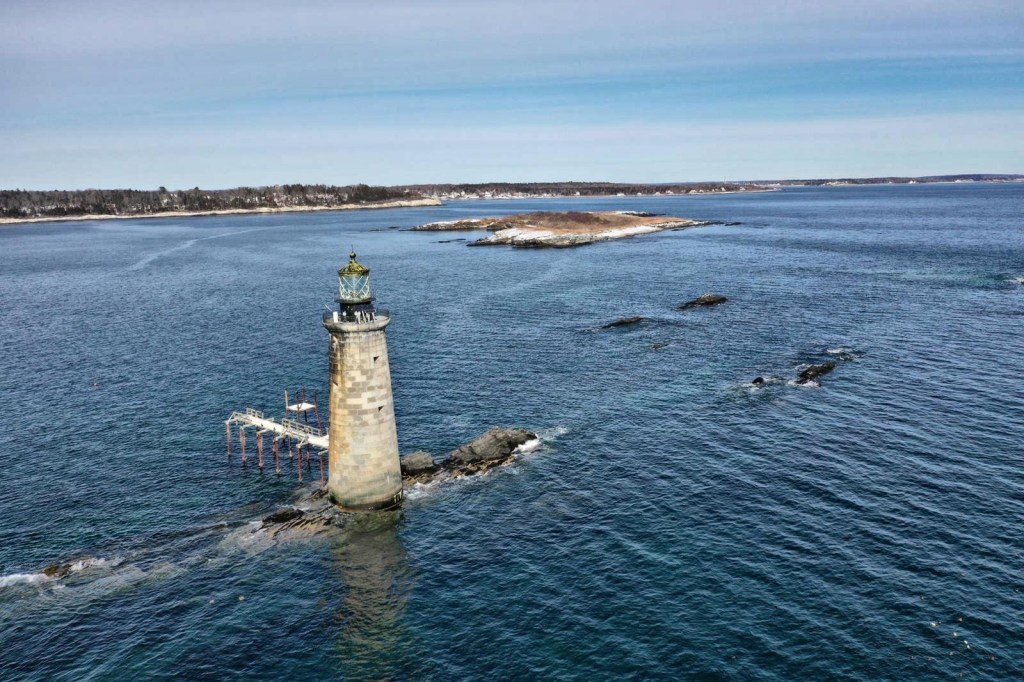
Ram Island, about a mile offshore from Portland Head near the entrance to Portland Harbor in Maine, is surrounded by dangerous ledges. For as long as ships have been navigating Portland Harbor, they have crashed into the rocky shore, losing supplies and lives. Because of this, a Congressional act on June 28, 1902, authorized the construction of a lighthouse and fog signal on Ram Island Ledge, to work together with the Portland Head Light to guide ships through the treacherous channel. The next year, the federal government purchased Ram Ledge from two Cape Elizabeth families for $500, to erect a new lighthouse. Before the lighthouse could be constructed, at least two ships, the Glenrosa and the Cora & Lillian schooner sunk in the bay. As the ledge was underwater for much of the year, a stone tower was required. Granite from Vinalhaven was shipped in and a crew of 25 men built the tower which was complete in 1905. The iconic double flash of light has guided sailors ever since. The lighthouse was manned by multiple keepers until the late 1958, when an underwater power cable was laid between Portland Head and Ram Island Ledge, allowing the ledge lighthouse to be automated. In 2008, the structure was deemed “excess to the needs of the United States Coast Guard” and auctioned off. After a bidding war, a local doctor from Maine purchased it for an estimated $190,000.

Paragon Park // 1905-1984

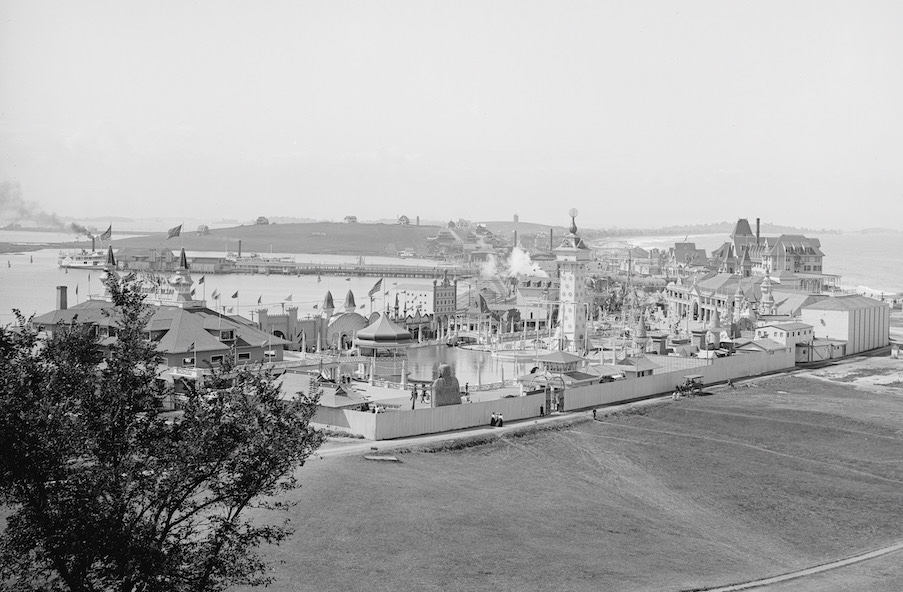
The Nantasket area of Hull on Boston’s south shore had been a popular summer destination since the middle of the 19th century, when resort hotels were developed there to take advantage of the ocean breezes and sweeping vistas. Paragon Park, an amusement park developed at the turn of the century was a great addition to provide activities for the summer visitors and resident alike. Convenient transportation in the form of steamship service and an electric railroad from Boston added to the appeal of the area. The park developed rapidly over the early 20th century and featured rides, activities and shows. The park was thought to be a mini World’s Fair, featuring a lagoon at the center with small boats to ride, and new expositions and features added every summer. The park struggled in the second half of the 20th century as the land value was more expensive and the park was only open a couple months a year. It sold in 1984 to developers who sold off many features and demolished almost all of the structures. The Giant Coaster, built in 1917 was one time, the largest roller coaster in New England. When the park was purchased, the roller coaster was sold to Six Flags America near Washington D.C. and is now The Wild One.

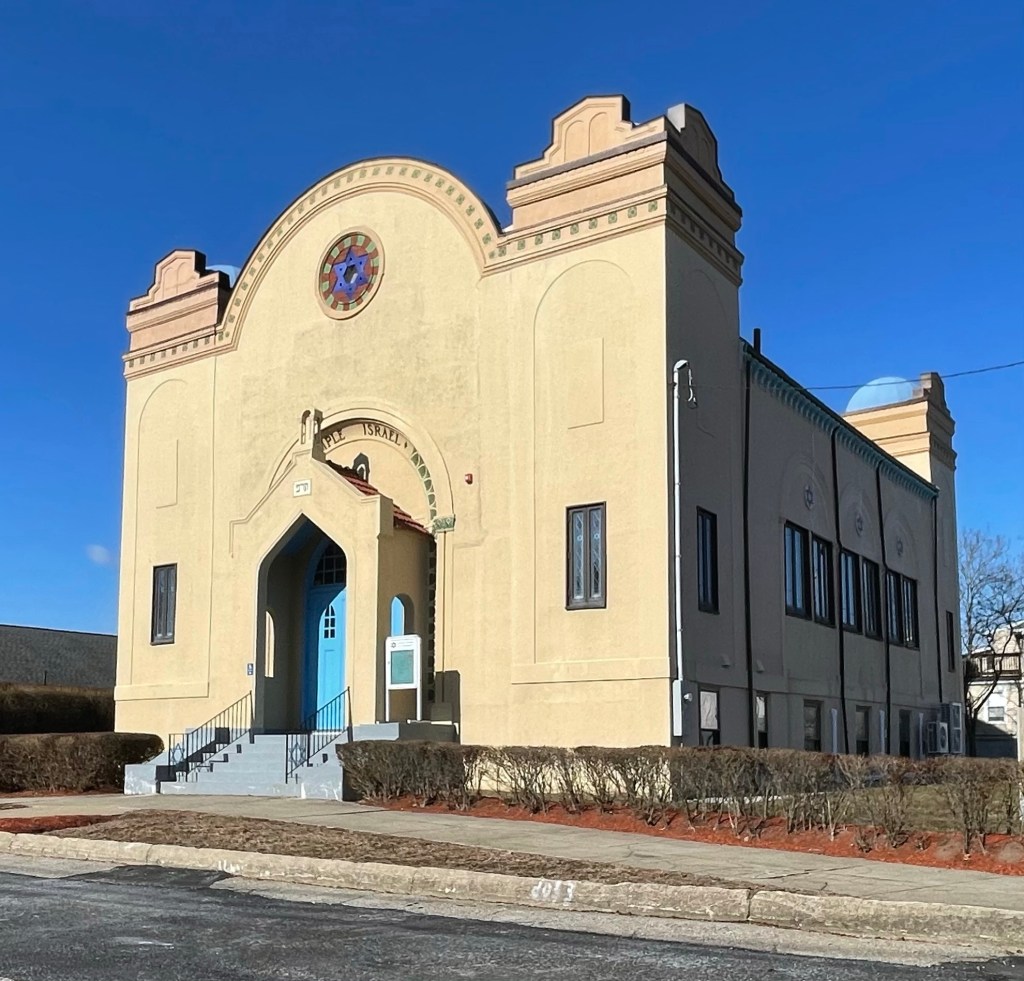
Temple Israel Synagogue // 1920

In the early 20th-century, Hull was linked by ferry, railway and road to Boston and this resort town became a popular urban recreational destination. Between 1915 and 1920, Jewish Bostonians started buying property and building summer homes in the area. The new Jewish summer residents required a temple for worship when away from their main homes. In 1920, land was purchased just north of the bustling Nantasket Beach for the erection of a place of worship. This temple was likely built by a Jewish architect/builder Joseph Rudnick, who arrived in Boston from present-day Lithuania in 1886. Unable to speak English, he hired a tutor to teach it to him, and quickly began working on constructing apartments and other buildings all over the Boston area. Temple Israel of Nantasket remains a handsome and rare example of a 1920 American
wood-framed, stucco-clad synagogue, with an active congregation.

Fort Revere // 1898-1947

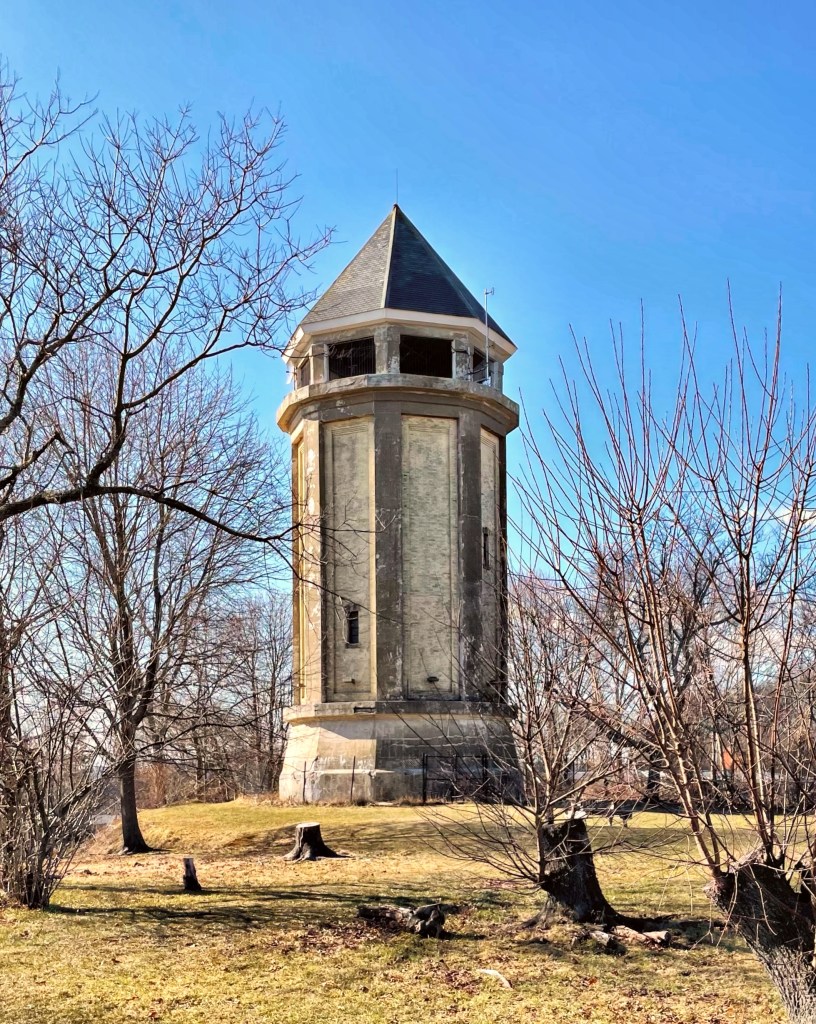
Fort Revere, named in honor of Paul Revere, was acquired as Nantasket Head Military Reservation in 1897 under the large-scale Endicott program, which initially included seven forts in the Harbor Defenses of Boston. The fort replaced the outdated Revolutionary-era fortifications and built upon the earthworks, creating batteries were built 1898–1906. Additionally, a 1903 concrete water tower was constructed to provide water and reconnaissance to the fort. After the American entry into World War I in early 1917, the fort was expanded to include temporary structures such as quarters and additional storehouses. With the outbreak of World War II in 1939, Fort Revere was again built up with temporary structures to accommodate the 1940–1941 mobilization. With new defenses completed elsewhere in the Boston area, the fort’s remaining original guns were scrapped in 1943. After the war, Fort Revere was disarmed and turned over to the Commonwealth of Massachusetts. Remains of Fort Revere include six gun emplacements built into the southeast, east and north sides of Telegraph Hill. They are connected by dugouts or bunkers and are of concrete and brick construction. Additionally, tunnels and storerooms can be explored, lined with graffiti and crumbling concrete. I highly recommend you all check it out and explore the grounds, its a great place to explore and learn history! Fingers crossed to see the remaining fortifications restored to their former glory.

Fort Revere Tower // 1903

The Town of Hull, Massachusetts was first settled in 1622 and officially incorporated in 1644, when it was named for Kingston upon Hull, England. The town juts out into the Boston Harbor, which historically had provided as a defense for approaching vessels into the harbor. As early as 1673, Telegraph Hill in Hull, was used as the highest point in the Boston harbor area from which signals could be sent warning the approach of vessels. The site was first used as a fort in 1776 to defend the port of Boston. Fort Independence was built on top of the hill in 1776-1777, to be succeeded by the much larger Fort Revere in 1903 (see next post). The first telegraph tower was built on the hill in 1827. Several other telegraph stations later occupied the site until 1938, when radio communications made the site obsolete. Though little of the original Revolutionary-era fort remains, the fort which began construction at the turn of the 20th century lasts as a stunning reminder to the importance of coastal defenses, high atop hills. At the highest point of Telegraph Hill this water tower which rises 120 feet off the ground was built in 1903 for the new Fort Revere as the first reinforced concrete water tower in the United States. At the top of the tower, an observation deck (now closed) was also used to send messages to other harbor defenses. The tower was restored in 1975 was designated an American Water Landmark in 2003. It was periodically open to the public until mid-2012 when it was closed due to safety concerns.