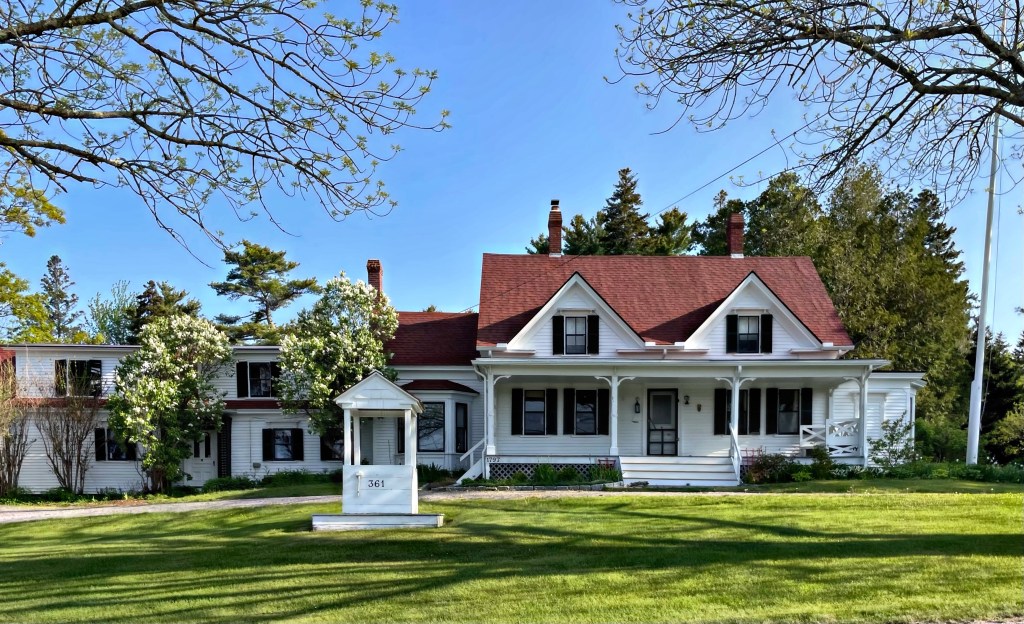
“Reach View” // 1797

Reach-View has been home to members of the Currier family and their descendants since the late 1700s. Richard Currier (1773-1837) first built a small home on land he bought in 1797 from his future father-in-law, Rev. Ebenezer Eaton, one of the original proprietors and settlers of the future town of Sedgwick, Maine. In 1799, Richard married Abigail Eaton, daughter of Ebenezer and Abigail Herrick Eaton. They lived together in Reach View until Richard died in 1859. Richard willed Reach View to their unmarried son Ebenezer “Eben” Eaton Currier, who lived there with his mother until her death in 1870. He was responsible for rebuilding much of the house after 1864. Eben’s sister would later purchase Reach-View and add the piazza (porch), bays, and interior detailing. The home remains a true family estate in the sleepy coastal town of Sedgwick.

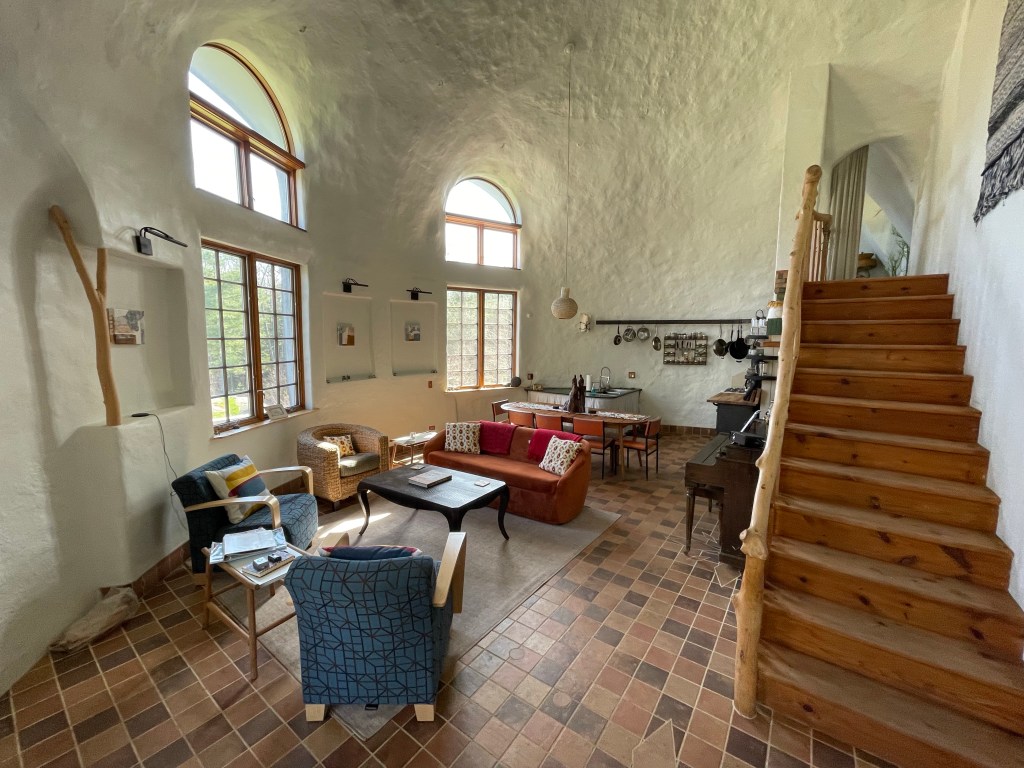
The Dome Home // 2003

This past weekend, I was lucky enough to stay at one of the most unique Airbnb’s in New England, the Dome Home in idyllic Kennebunkport, Maine! The house itself was hand-built in 2003 by trained architect and sculptor Daphne Pulsifer with her husband Daniel Bates, on 43-acres of forest just miles from the iconic Maine beaches. Inside, the house features numerous custom touches designed and built by the original owners, including light fixtures, floor tiling, hand-built oak doors, wall tiling, woodwork — much of it claimed from the property itself. The Dome Home is completely sustainable with solar panels providing all the power needed, making the property completely off-the-grid. The original owners sold the property in 2022 to the new owners who have lovingly updated the spaces, keeping the charm and unique qualities of the Dome. If you are ever in Kennebunkport and are looking for a unique, off-the-grid stay with all of the amenities of modern living, definitely check out the Dome!

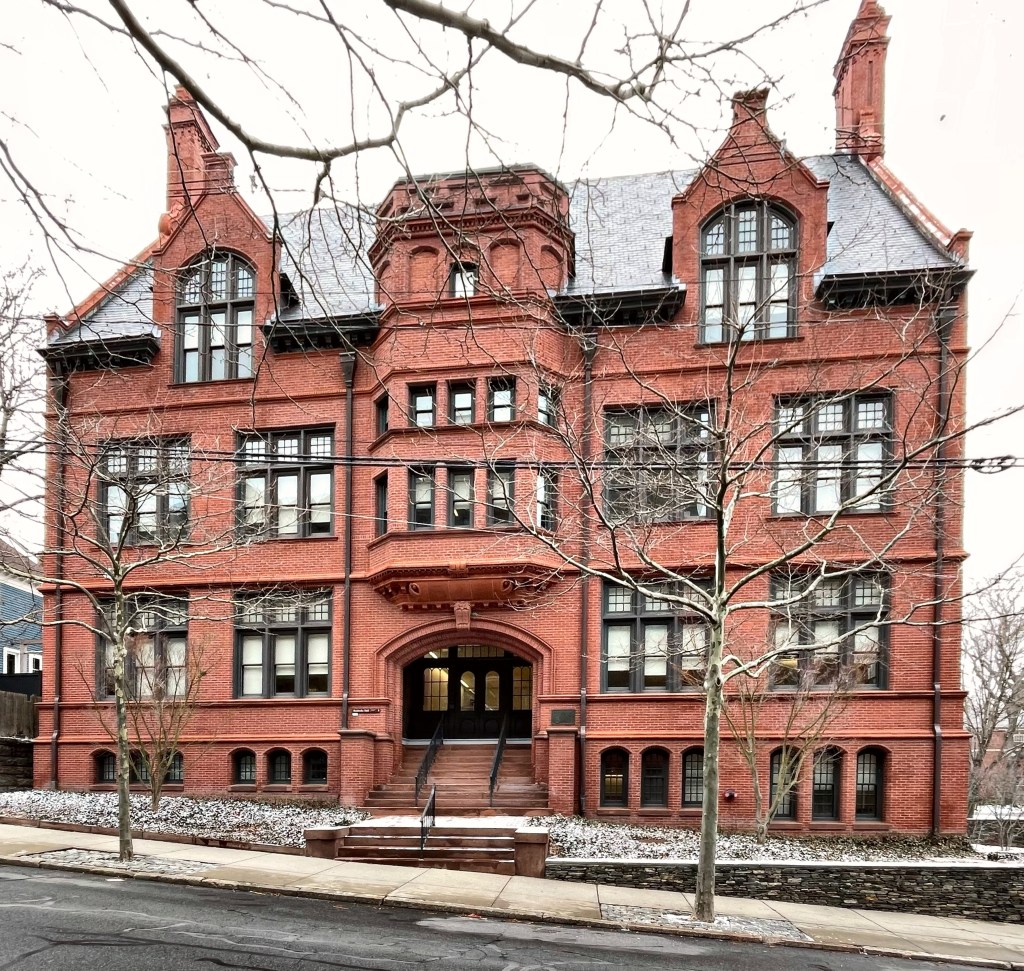
Pembroke Hall – Brown University // 1896

Brown University from its founding in 1764 until 1891 never admitted women. Brown’s all-male student body was first challenged in 1874, when the university received an application from a woman (who to this day is still unnamed). The Advisory and Executive committees decided that admitting women at the time was not a good proposal, but they continued to revisit the matter annually until 1888, when they began work to establish a separate women’s college affiliated with Brown. After similar institutions like Radcliffe (affiliated with Harvard) and Barnard College (affiliated with Columbia) were established in 1879 and 1889 respectively, Brown had a blueprint for how to operated the new women’s college. Professors at Brown would work alongside women educators and taught many of the the same courses to men as they did for female students. Pembroke Hall was the first building for Pembroke College and was built in 1896 from plans by local firm Stone, Carpenter and Willson in the Elizabethan Revival style. The building was designed to be multi-purpose with administrative offices, classrooms, reception rooms, and a library in the attic. Pembroke College was officially merged with Brown University in 1971, which was long overdue. The building is one of the finest on Brown’s now co-educational Ivy-league campus.

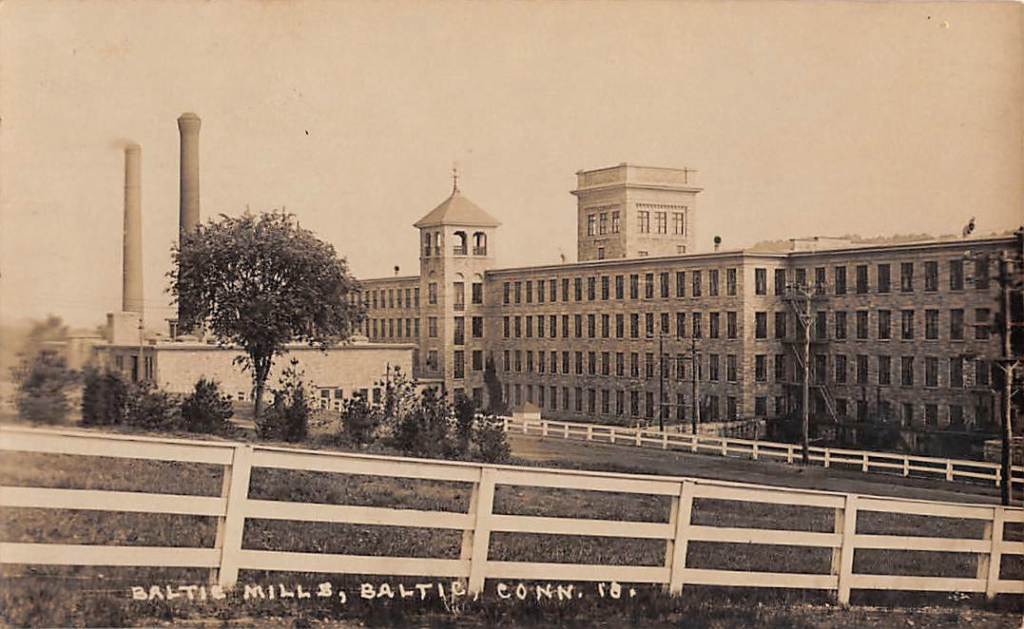
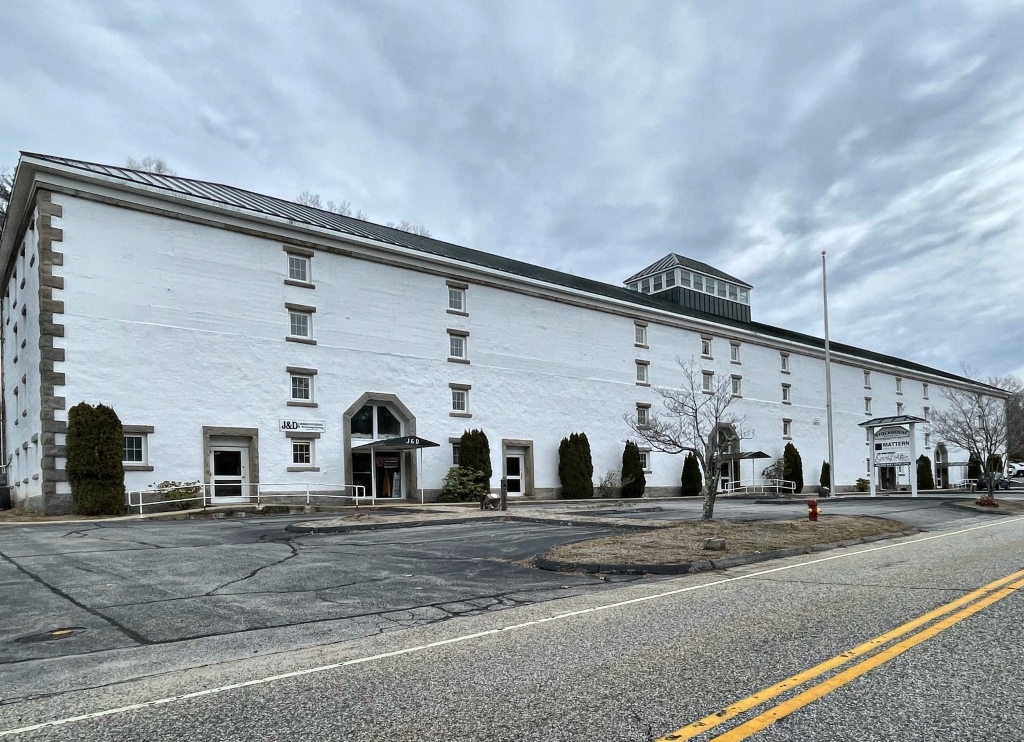
Baltic Mill Warehouse // c.1890

Situated along the Shetucket River in Sprague, Connecticut, lies the remains of what was once the nation’s largest textile mill. At its peak, over 1,000 employees operated 1,750 looms and 70,000 spindles to produce some of the country’s finest cotton. The Baltic Mill (as it became known) not only helped reshape Connecticut’s economic and cultural landscape, but its geographic one as well, giving rise to the founding of an entirely new village. The Baltic Mill did very well until the economic Panic of 1873 set in, decimating the company’s finances. The mill was forced to scale back their operations. Then, in 1877, a fire destroyed the interior of the mill, bringing an end to the complex for decades. At the turn of the 20th century, a businessman from Pawtucket, Rhode Island, named Frederick Sayles purchased the property with an eye toward revitalizing the local textile industry. He founded the Baltic Mills Company and set about making extensive repairs and upgrades to the property, including this c.1890 storage building for materials and finished textiles. Unfortunately for Sayles, the New England textile industry had already begun to decline and it wasn’t long before the company’s depleted finances forced Sayles to sell off much of its assets. The company did survive long enough to produce uniforms, parachutes, and life rafts for soldiers in World War II, but the mill’s operations ultimately came to a halt in 1966. The large 19th century mill would eventually be demolished, but this old Warehouse (a fraction of the size of the mill) is one of the last industrial pieces of the former sprawling complex and is now occupied by local businesses.

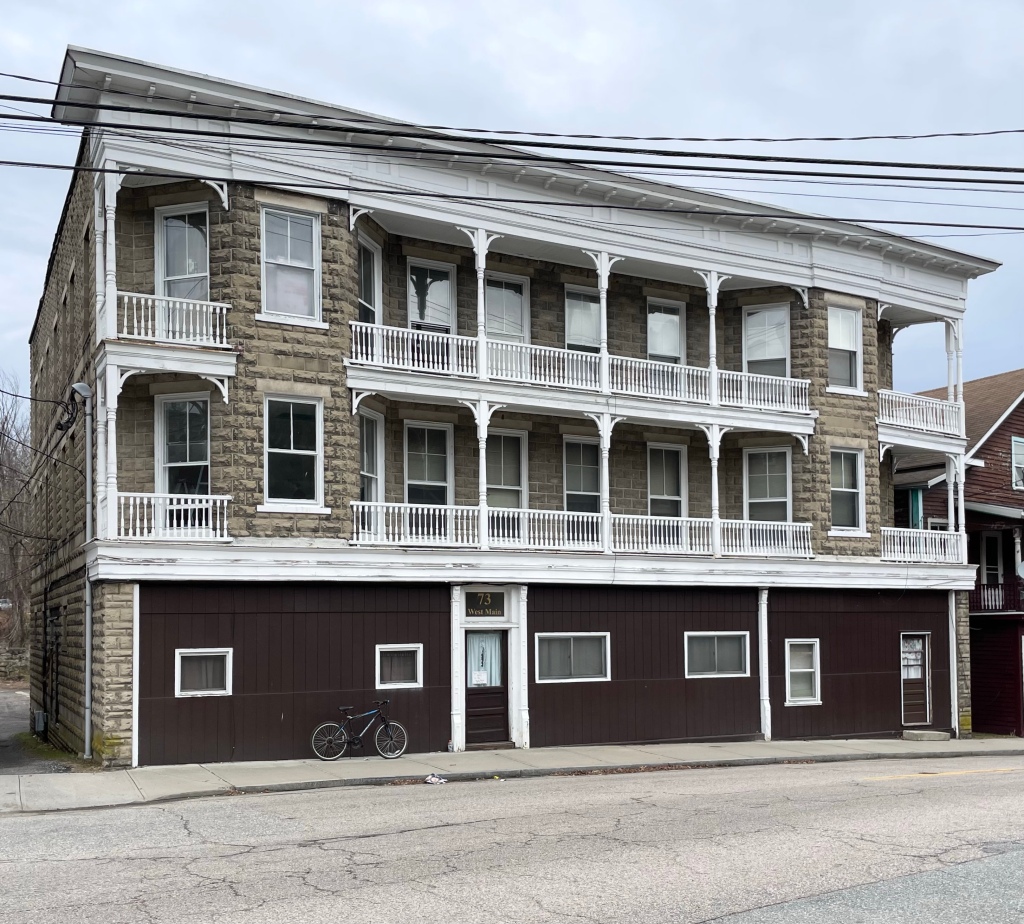
Cote Block // c.1910

The population of Sprague, Connecticut nearly doubled between 1900 and 1910 from 1,300 to 2,500. As a result, the town needed a new town hall and commercial buildings to service the new residents. A member of the Cote Family in Sprague took this as a good opportunity to erect this three-story mixed-use building on Main Street, renting out space for retail, a confectioner, and a clubhouse with residences above. The building is constructed of concrete block, a building material that surged in popularity after concrete block machines allowed these blocks to be manufactured quickly off molds of uniform style and dimension. The building also features inset center and corner porches off the street and a projecting cornice. The storefronts have since been enclosed, but the building remains one of the finest in town (even with its original windows!)

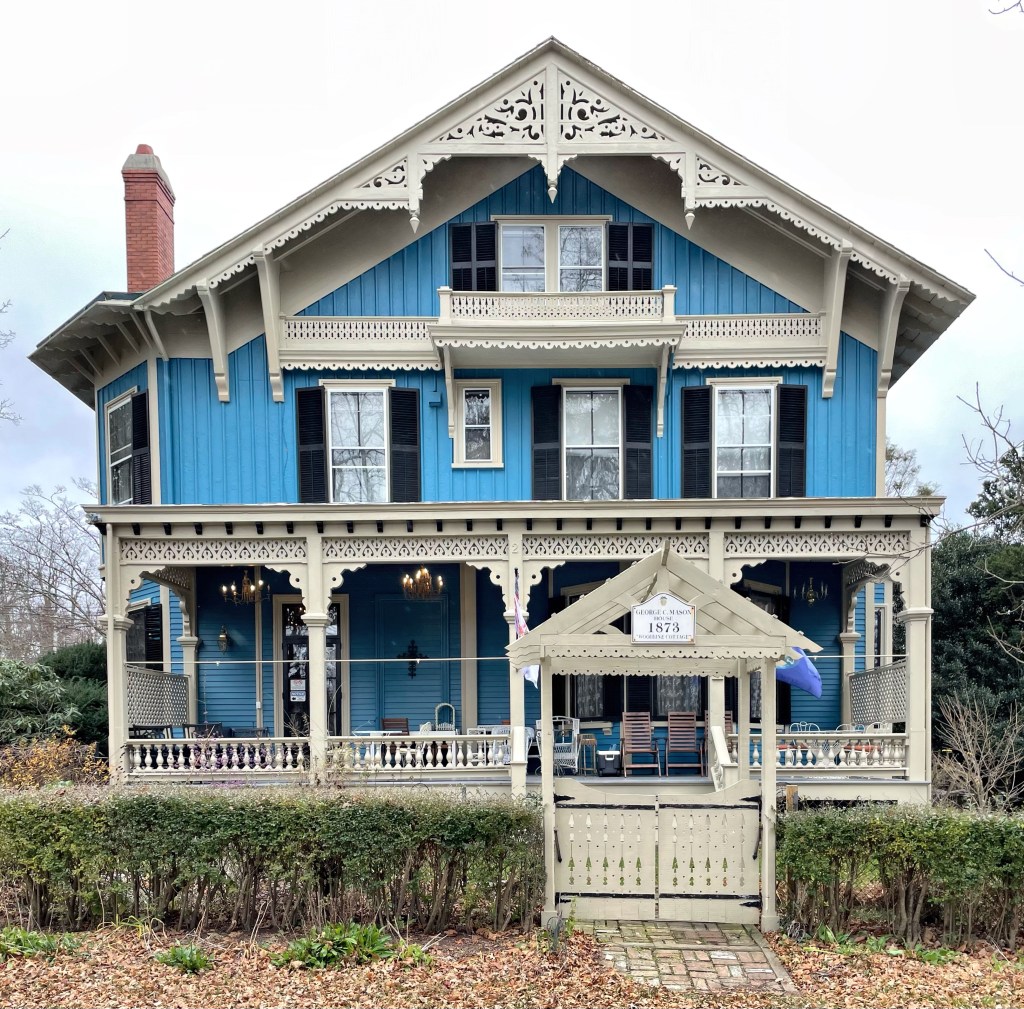
Woodbine Cottage // 1873

George Champlin Mason (1820-1894) can be credited as one of the most influential people who helped make Newport what it is today. He was born in the old Colonial town in 1820 and after a brief period working in New York City in dry goods, he traveled to Europe in his twenties to study art in Rome, Paris, and Florence, specializing in landscape paintings. Mason spent the 1840s trying unsuccessfully to make a living as landscape painter and published Newport and Its Environs, a collection of 11 engravings of his landscape views of Newport that is one of the earliest books about Newport to showcase its potential as a vacation destination. In 1851, Mason switched professions and became part owner and editor of the Newport Mercury newspaper. He often wrote on architectural subjects. In around 1858, he took his love for art and architecture and became an architect/developer, just as Newport was seeing early stages of development as a summer colony. He was hired by some early summer residents to design their homes, and did not disappoint, gaining notoriety all over the northeast. His son George C. Mason, Jr. (1849-1924), followed in his father’s footsteps and is said to have been the first professional architectural preservationist in the United States. George Sr., built this house as his primary residence in 1873, a stunning and rare example of Swiss Chalet architecture in New England, notable for the use of pierced bargeboards, board-and-batten sheathing, and cut-out railings. The property also included a charming stone English Revival tower in the rear yard, built in the 21st century as a workshop for the previous owners. How cool!

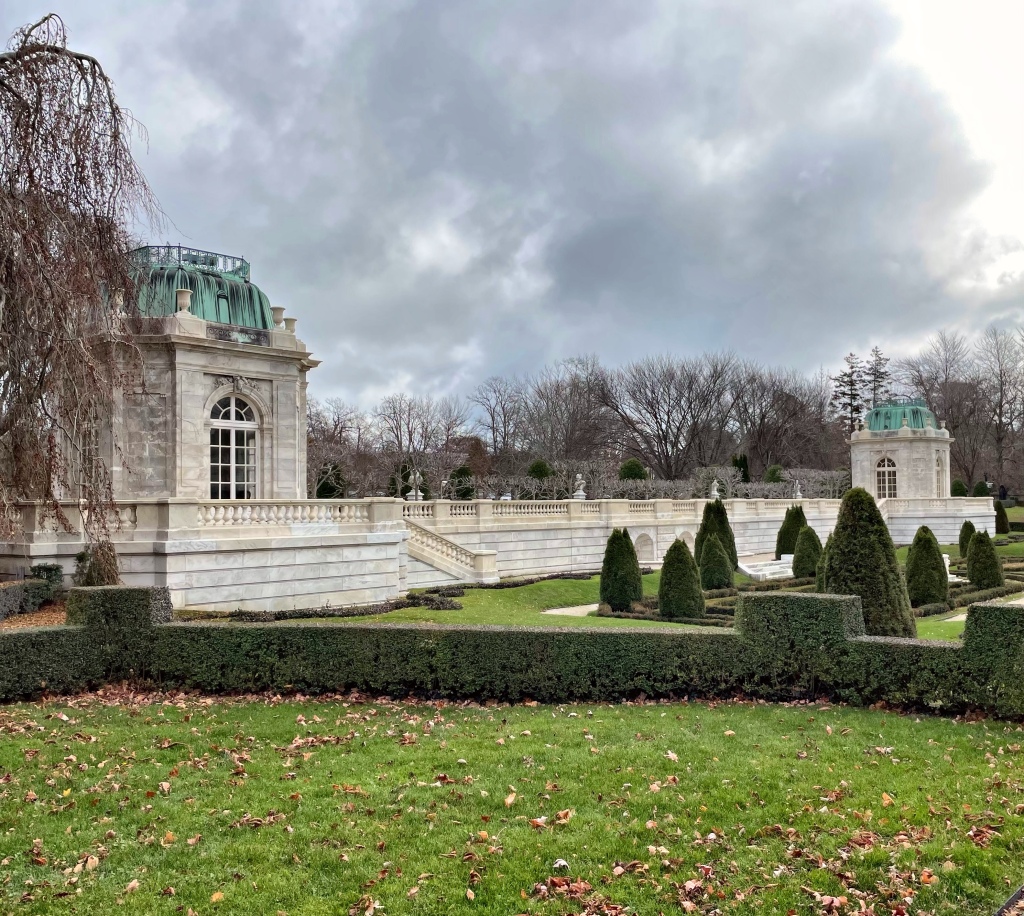
The Elms – Gardens // c.1911

For my last post on the spectacular Elms Mansion in Newport, Rhode Island, I wanted to highlight something I rarely feature on this page, a garden. When the mansion was completed by 1901, architect Horace Trumbauer and his firm went to work to produce plans for a natural landscape with a large lily pond at the far edge of the property. After 1907, the Berwind’s and high-society shifted and landscape ideals were influenced by newer theories in American landscape architecture, which sought influence from historical European gardens. Trumbauer reworked The Elms’ garden to reflect this new emphasis on reviving classical European garden design alongside landscape architects Ernest W. Bowditch and Jacques Greber advising on the parterre design in the sunken garden. A grand allée on the scale of 18th century French palace gardens extends across an expansive lawn toward two formal marble pavilions situated along a minor cross axis above a sunken garden. The marble pavillions appear to have been designed by Trumbauer and are inspired by 18th-century French garden pavilions. The grand context for the gardens is a park-like collection of specimen beech, elms, maples, linden and other large canopy trees. Many of the large trees have since succumbed to disease, but the formal Italian sunken garden remains one of the finest in the United States.

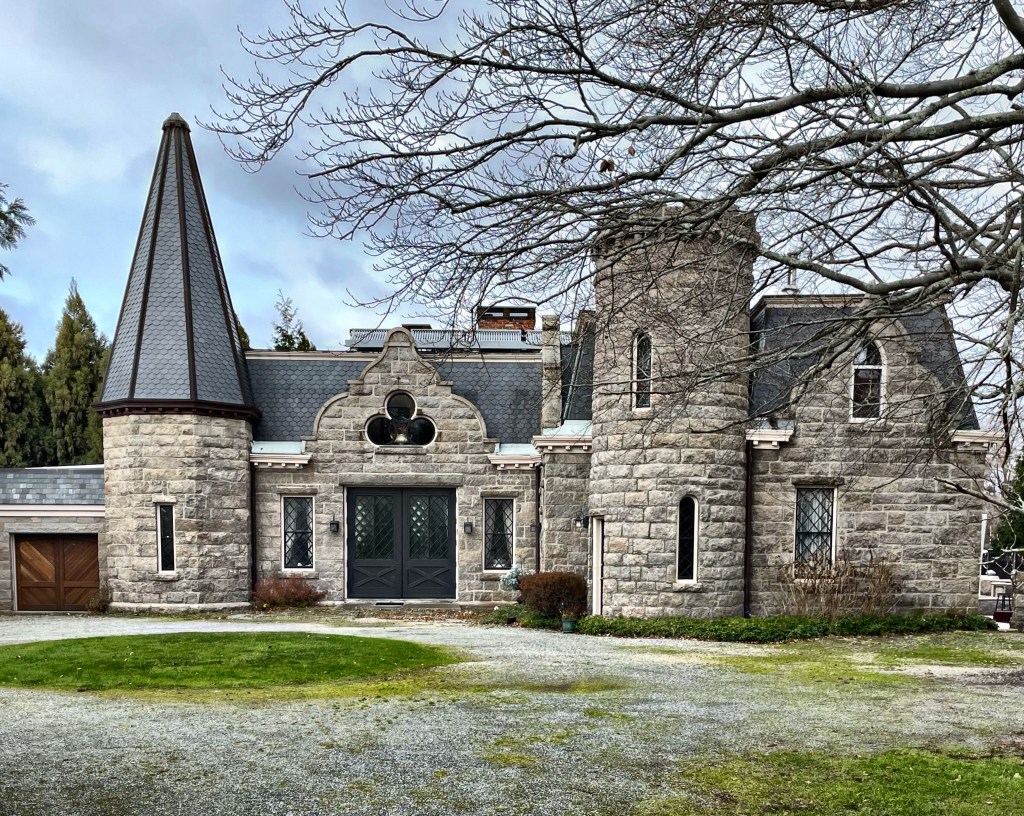
Belair Stable // c.1875

Just past the Belair Gate Lodge (1870), you w5ll find one of the most eclectic and interesting buildings in Newport, Rhode Island. This structure was built around 1875 as the stable to the larger Belair estate, just a stone’s throw away. When it was built, local papers stated the building was “probably one of the most expensive stables in the city.” It was designed by Newport architect Dudley Newton at the same time he redesigned the main mansion and furnished plans for the new gate lodge for owner George H. Norman. Architecturally, there is A LOT going on here. The 1½-story, rough-face-granite-ashlar building is capped by a hexagonal-tile slate mansard roof. On the left is an octagonal tower with an out-of-scale roof pitch and at the other side of the carriage door is a circular-plan tower with battlemented parapet. At the center is a really unique trefoil gable with trefoil window centered within. So cool to stumble upon this!! Oh, and it’s now a single-family home. Swoon.

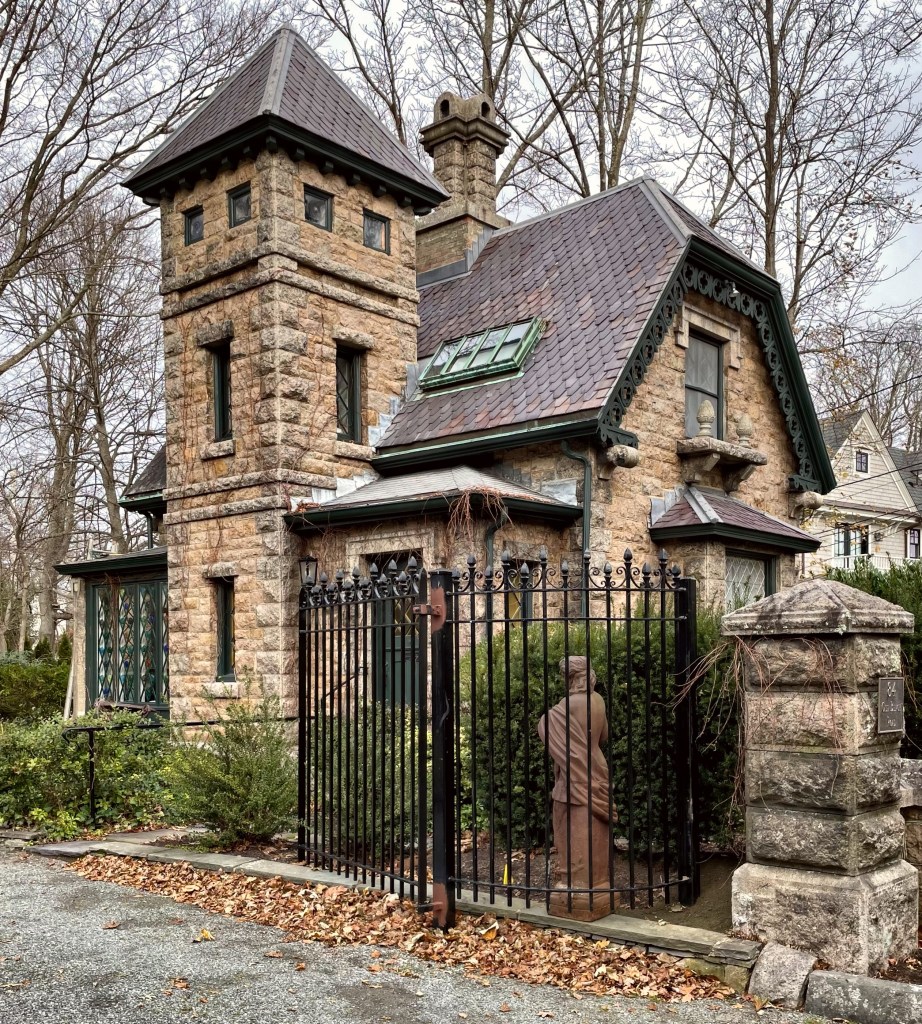
Belair Gate Lodge // 1870

Located at the historic entry to Belair (last post), one of the largest estates in Newport, you would be greeted by this charming stone building, the Belair Gate Lodge. The building is symmetrically massed, 1½-story and built of rough-face-granite-ashlar, similar to the main house. This building can be classified as French Eclectic in style and was designed by Newport architect Dudley Newton, who also designed the 1870 Second Empire renovations to the main house at the same time for owner George Henry Norman. When the Belair estate was subdivided, the gate lodge was sold off as a separate unit, and is now a single family home, aka my dream home. There is something so enchanting about gatehouses!

Maria Mitchell House and Observatory // 1790 & 1908

Although Hezekiah Swain built this house in 1790, the property is better known as the home of Maria Mitchell and is to this day, preserved to interpret her amazing legacy. Maria Mitchell’s father William bought the house in 1818, and Maria was born there later that year. Maria grew up on Nantucket and she became the first female astronomer in America. After she discovered a comet in 1847 (which was named Miss Mitchell’s Comet), her international recognition led to many awards and that acclaim enabled her to continue her work. She accepted a position as professor of astronomy at Vassar College by its founder, Matthew Vassar, in 1865 and became the first female professor of astronomy She established the Association for the Advancement of Women and became the first female member of the American Academy of the Arts and Sciences. She was also very involved in the anti-slavery movement in New England. After Maria Mitchell died in 1889, the Maria Mitchell Association, was established in Nantucket to preserve the sciences on the island and Mitchell’s work. On July 15, 1908, the Observatory on Vestal Street near the Science Library and Mitchell House was dedicated. The Observatory, built by the Nantucket Maria Mitchell Association, stimulated local interest in science. The success of the Observatory’s programs prompted the construction of an astronomical study in 1922, joining the existing facility with the Maria Mitchell Birthplace. The museum operates in Summers to this day, and continues Maria’s rich legacy in the sciences.