One of the finest Queen Anne style residences New England is this 1877 summer cottage, named “Snug Harbor”. The mansion was designed by architects William Appleton Potter and Robert Henderson Robertson for Charles H. Baldwin, a prominent admiral in the United States Navy. The design utilizes a brick first floor with shingle siding above, a high cross-gabled roof, panels and half-timbering, asymmetrical form, and a porte cochere at the entry. Later owner Arakel Bozyan, painted the entire exterior a deep red color and renamed the house “Gamir Doon”, Armenian for “Red House”. The house was restored back to a traditional color scheme and sold in 2020. The interiors are STUNNING!
In 1885, a 28-year-old Leroy King (1857-1895) and his wife Ethel Rhinelander King (1857-1925) hired one of the country’s most prominent architects, Stanford White, to design a Newport home for their family. Leroy was the son of Edward King, a prominent local merchant, and upon his fathers death in 1875, inherited some of the $100+million dollar fortune he had amassed in today’s dollars. The corner lot at Bellevue and Berkeley avenues was purchased and work was underway on the new mansion. The house is a really interesting take on the Shingle style, but instead of cedar shingle siding, employs fireproof construction. A central hall, large gabled masses, picturesque window arrangements, and a spectrum of surface textures (here conveyed largely in natural stone and brick with flourishes of shingle and pebble dash work), align this house with McKim, Mead & White’s earlier efforts in this style. The interior has been meticulously preserved and maintained by the owners.
This charming Victorian cottage in Newport was built in 1878 for Henrietta and Dr. Stephen Cambreleng Powell as their summer cottage. The well-connected couple hired New Haven architect David R. Brown to design the residence, which is an excellent example of the Queen Anne and Stick/Eastlake architecture styles. David Brown, the architect, apprenticed under the famed Henry Austin for years in New Haven, Connecticut before becoming a partner of the firm. As any good summer cottage needs a fun name, the couple named their cottage “The Anchorage”. The cottage is now known as the Old Beach Inn, and is among Newports many charming old inns.
One of the most eccentric and over-the-top houses in Newport (a town full of over-the top houses) is this home on Cottage Street. The original house was built around 1850, likely as an Italianate style residence with a flat roof. Early owner Elbert J. Anderson (1800-1888) who was born and raised in New York City. In Manhattan, Anderson was a director of The Manhattan Fire Insurance Company; the Farmers’ Loan & Trust Company; and The Phoenix Bank. He married Martha Maria Ellery, the eldest daughter of the late Abraham Redwood Ellery. In 1847, his wife inherited the Redwood Farm at Portsmouth, six miles from Newport, and they eventually moved there permanently. They maintained this summer cottage in Newport to remain close to high-society. The home was sold to George and Annie Collins, who likely modernized the residence with the bays, porches, and frilly details. By the early 20th century, the property was owned by Gustave and Amanda Muenchinger, who ran a hotel at the corner of Bellevue and Catherine streets.
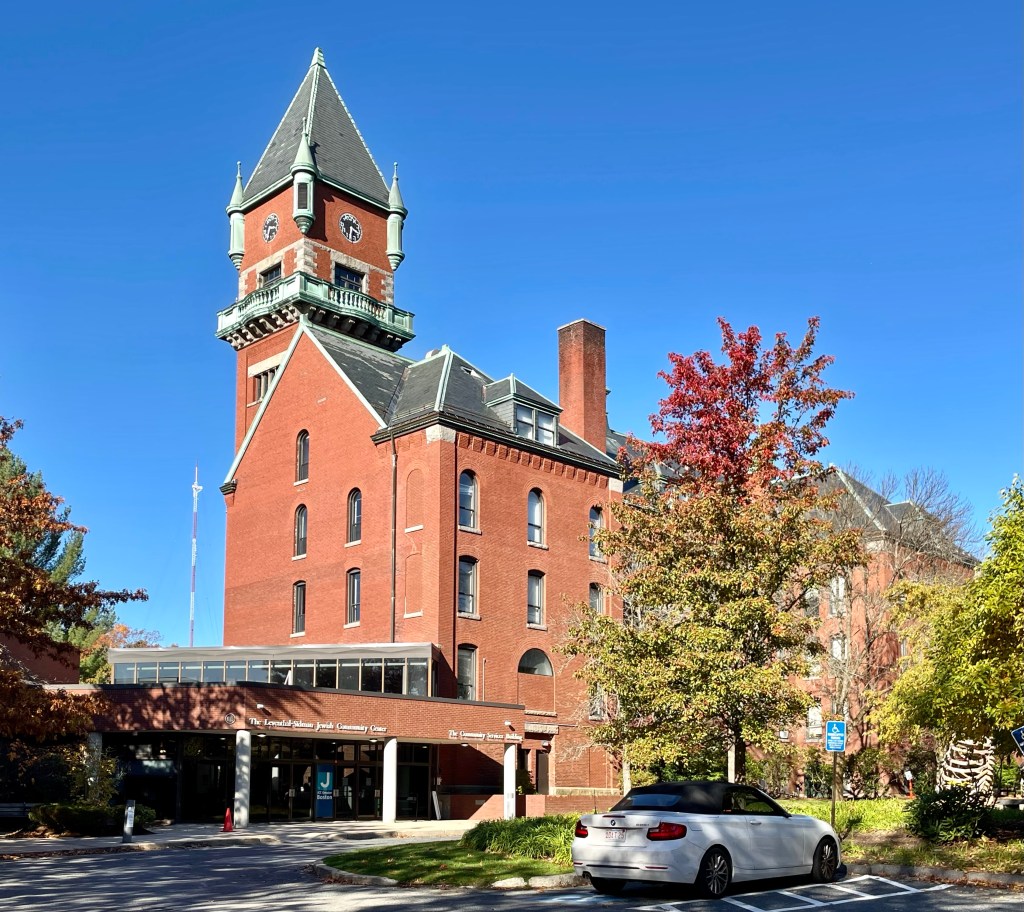
At the edge of the Charles River at the far edge of Newton, Massachusetts, homeless working boys of the Boston area had a place to rest their head. The Working Boys Home was established in 1883, as a new Catholic charity in Boston. Its mission was to provide a home for working adolescent boys (messenger boys, newsboys, boot blacks, etc.) who had no place to call home and often slept in abandoned buildings, alleys, stables, and other such places. The Working Boys Home was open to homeless boys between 12 and 17 years of age, and all were expected to work and contribute a part of their wages to the support of the home. The original space in Jamaica Plain and subsequent Bennett Street (North End) locations were deemed too inadequate. In 1890, the 48-acre estate in the Oak Hill section of Newton was purchased and this four-story brick building built from plans by William H. McGinty. After WWII, city prosperity other services reduced childhood homelessness, and the last group of boys moved out of the Working Boys Home in 1961. The property was sold in 1979 to the Combined Jewish Philanthropies of Greater Boston to be used as a center for activities meeting cross-generational needs, now known as JCC Greater Boston.
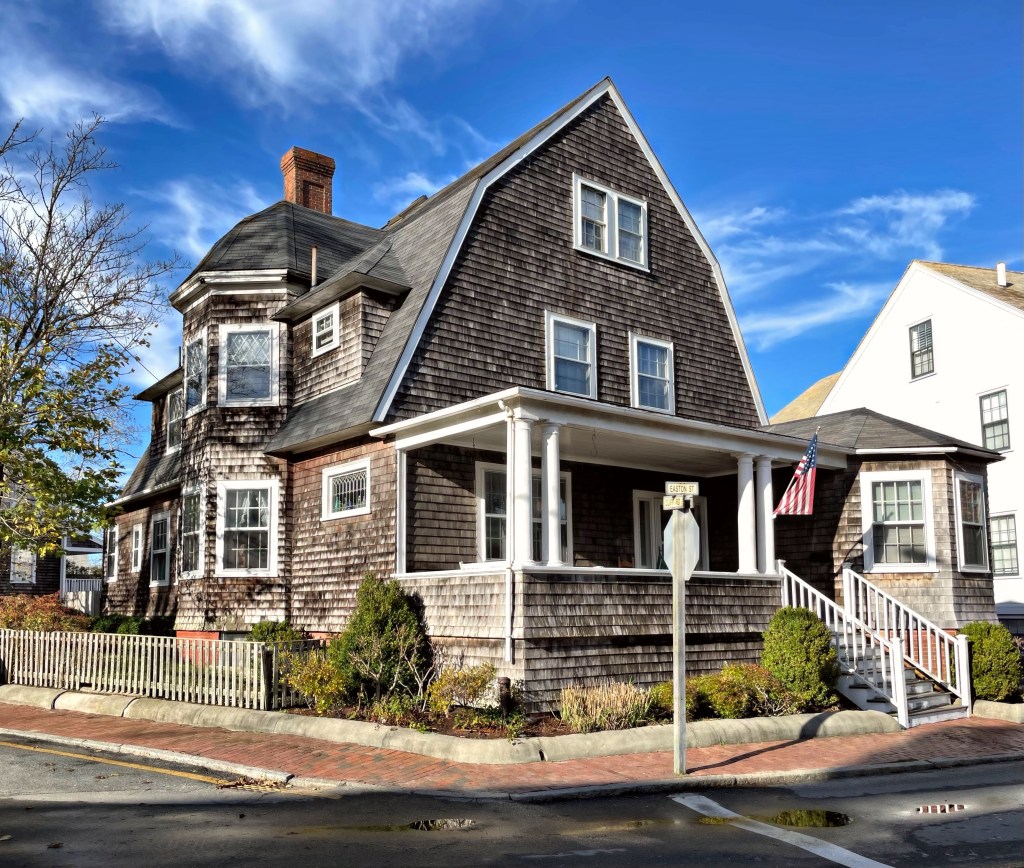
Dr. John Shackford Grouard (1867-1927) was a physician and surgeon born in Allegheny County, Penn. He attended Phillips Exeter Academy, and earned an M.D. from Harvard Medical School in 1889. In 1891, he moved to Nantucket, Massachusetts, where he established his own general medicine and surgical practice. Years after establishing his practice, he built this beautiful Shingle/Queen Anne style cottage that is dominated by a massive gambrel roof and is located adjacent to the Nantucket Hotel. He served as the Town Physician and medical examiner, on the Nantucket School Board, and as president of both the Nantucket Civic League and Citizen’s Gas, Electric, and Power Company. Dr. Grouard also co-founded the Nantucket Cottage Hospital in 1911, but more on that later. Dr. John Shackford Grouard died in Boston in 1927, one week after surgery for a gallbladder inflammation.
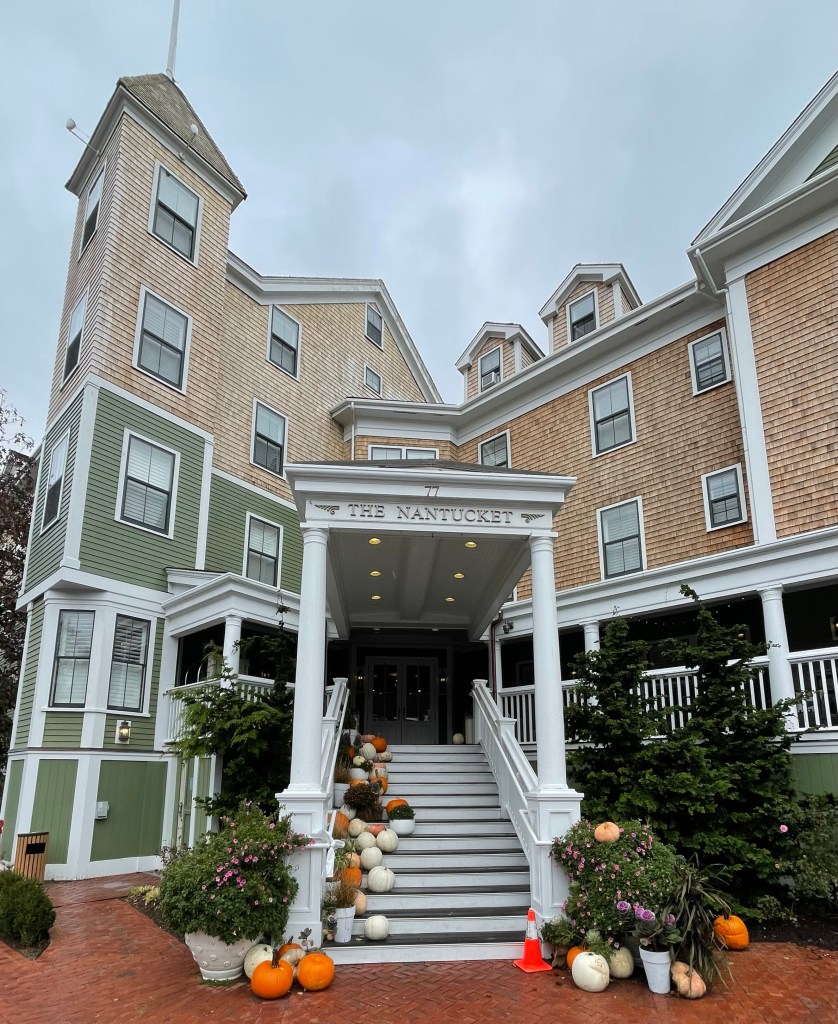
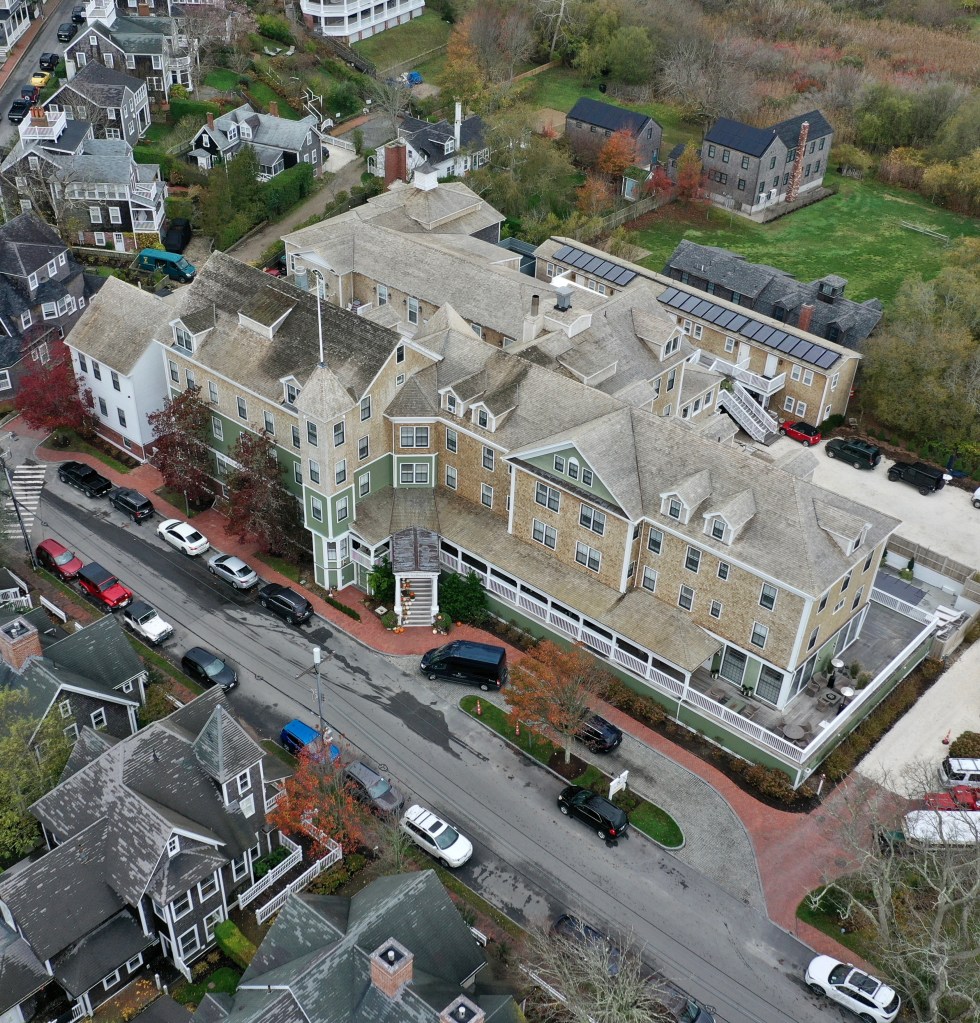
In 1888, Charles F. Folger of Philadelphia purchased the former Elijah Alley house on Easton Street, just north of the main village of Nantucket. Folger hired carpenter Edwin R. Smith to design and build a new grand hotel for summer residents of Nantucket. Originally named the Point Breeze Hotel, the grand resort opened in the summer of 1891. The Queen Anne style hotel contained forty sleeping apartments in the upper floors and was dominated by a corner tower with billiards rooms and a bowling alley in the raised brick basement. Business was booming, and by the early 20th century, Folger expanded the hotel adding the east wing in the Colonial Revival style. In 1925, a fire destroyed the original Point Breeze Hotel, leaving just the East Wing. By this time, the days of the grand, wooden hotels was coming to a close. The Nantucket Institution for Savings acquired the hotel during the Great Depression, until 1936 when Gordon Folger Jr., grandson of the Point Breeze’s original proprietor, purchased the hotel and renamed it after himself, as the Gordon Folger Hotel. By the end of the 20th century, the building sat underutilized, the early 2000s when Little Gem Resorts purchased the hotel, seeking to restore this historic property back to her former glory. The original 1891 hotel was rebuilt in 2012, even down to its iconic corner tower, and the hotel was renamed The Nantucket. The hotel is open year-round and is lavish inside and out, providing you with a sense of home even when on vacation in the middle of the Atlantic!
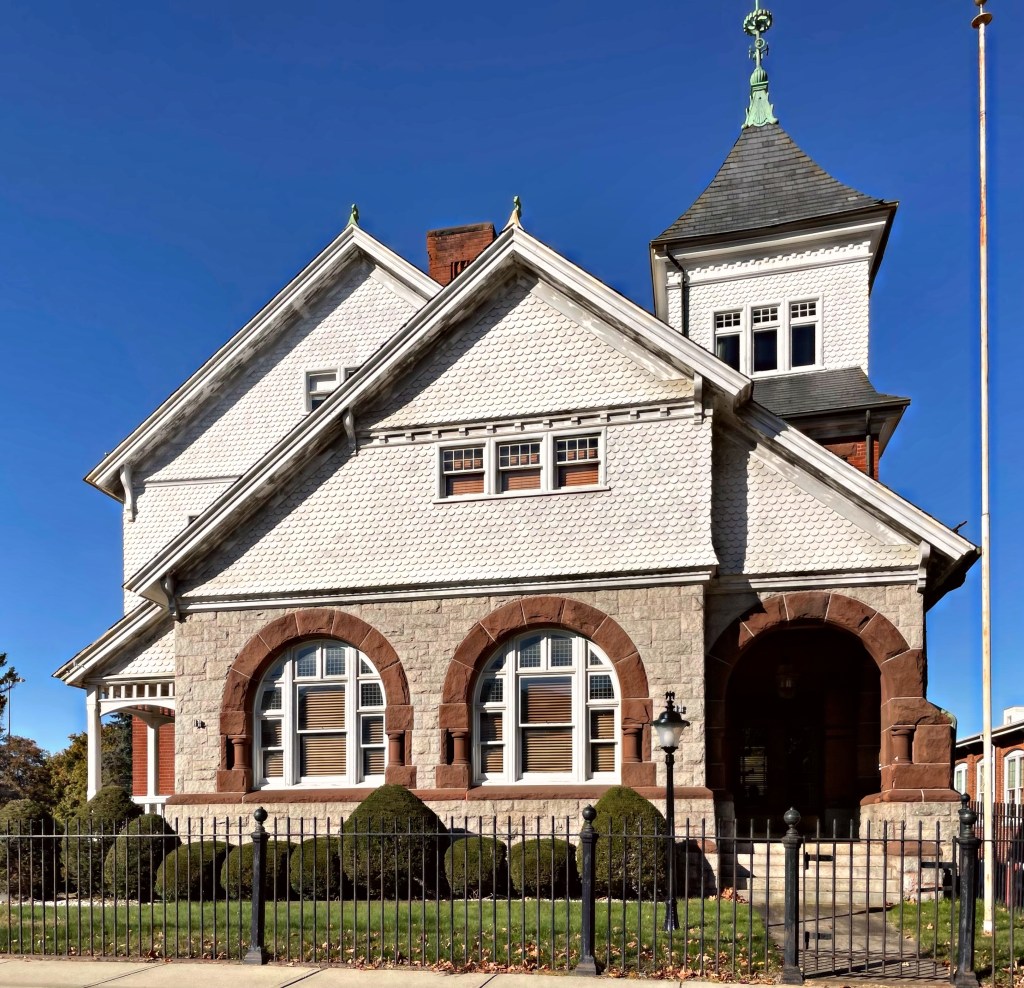
South of the Ware River in Ware’s Industrial Village, you will find this absolutely charming former manufacturing office on the side of the road. The building was constructed in 1885 for the George H. Gilbert Co., a textile manufacturer, as the company offices. The building’s architect could not be readily located, but the building appears to have been the work of a skilled designer. When the Gilbert Company relocated north to a new industrial village of Gilbertville, the Joseph T. Wood Shoe Company moved in. The building now appears to be owned by the present occupant of the mill building nextdoor, American Athletic Shoe Company. The former Gilbert Co. Office is one of the more high-style buildings in the town of Ware and exhibits the best in Queen Anne and Romanesque Revival architecture.
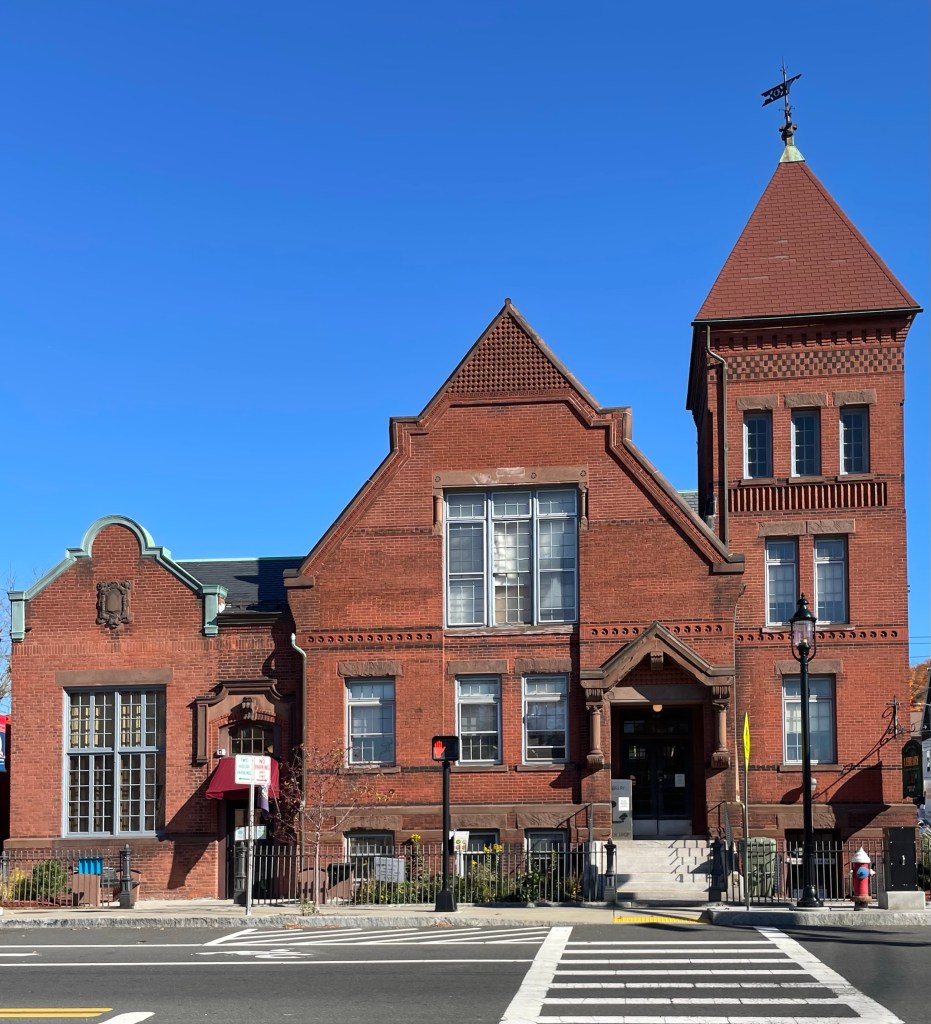
The first library in Ware, Massachusetts was organized in 1796. Operating on a subscribers system, books were lent out to those who paid the most at the time. The Society flourished for 26 years until it abruptly disbanded. In 1824, a second library was organized, called the Mechanics and Manufacturers’ Library, which was loosely managed by the manufacturing companies in town. In 1872, an act providing for the formation of library corporations was passed in Massachusetts. The Ware Young Men’s Library Association was the first to incorporate under the new law. They established a location in a commercial space in town until it was outgrown. In 1879, the present lot at the corner of Main and Church streets was donated by a local businessman. Funding was acquired and Springfield-based architect Eugene C. Gardner was hired to design the building. In 1923, an addition was built onto the side by architects Gay & Proctor in the Jacobethan Revival style, which blends well with the original Queen Anne building. The building remains home to the library and is the town’s public library.
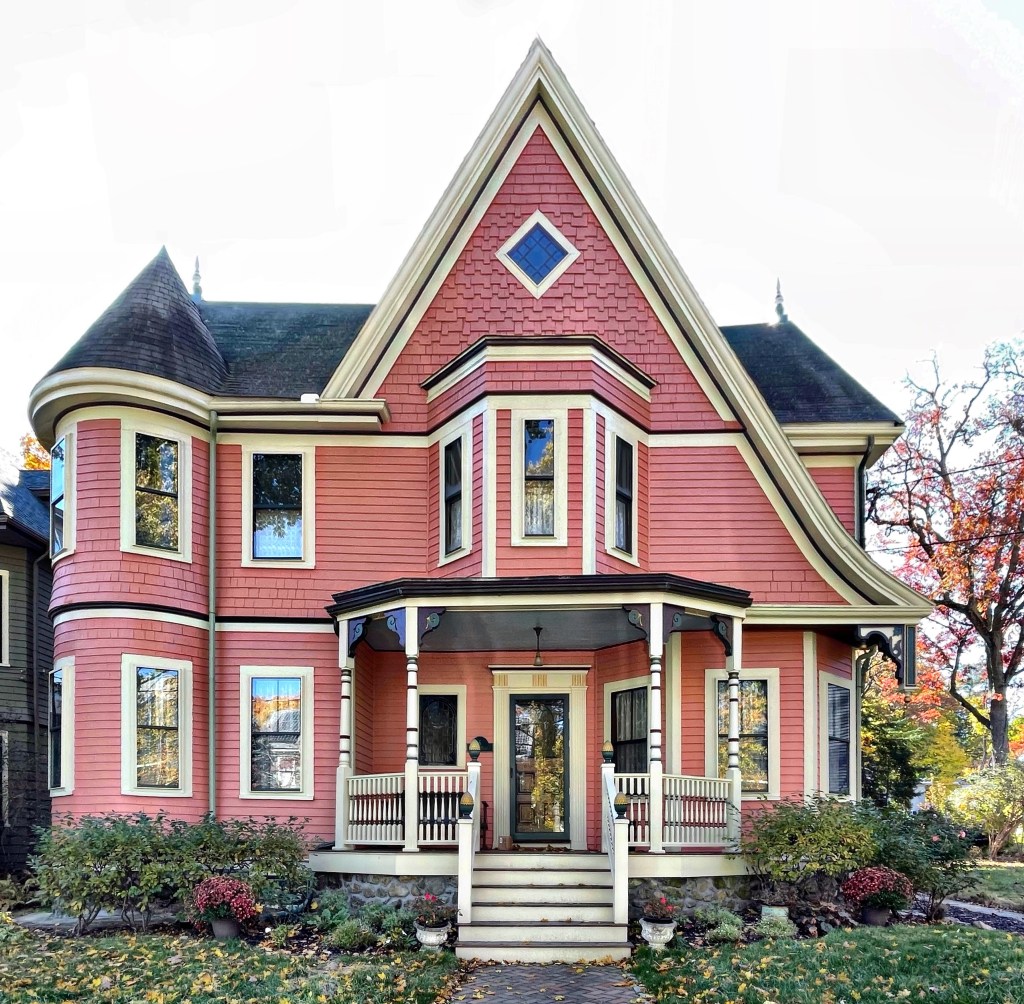
At the end of the 19th century, much of Boston’s suburban communities saw rapid development where country estates and farmhouses were razed and their properties laid out for residential development. This house in Newton was built around 1898 as a late Queen Anne and it has so many details and intricacies. The earliest known owner was Grace M. Weston who was mentioned often in local newspapers as an expert on antiques.


 Buildings of New England