The Carlisle // 1880

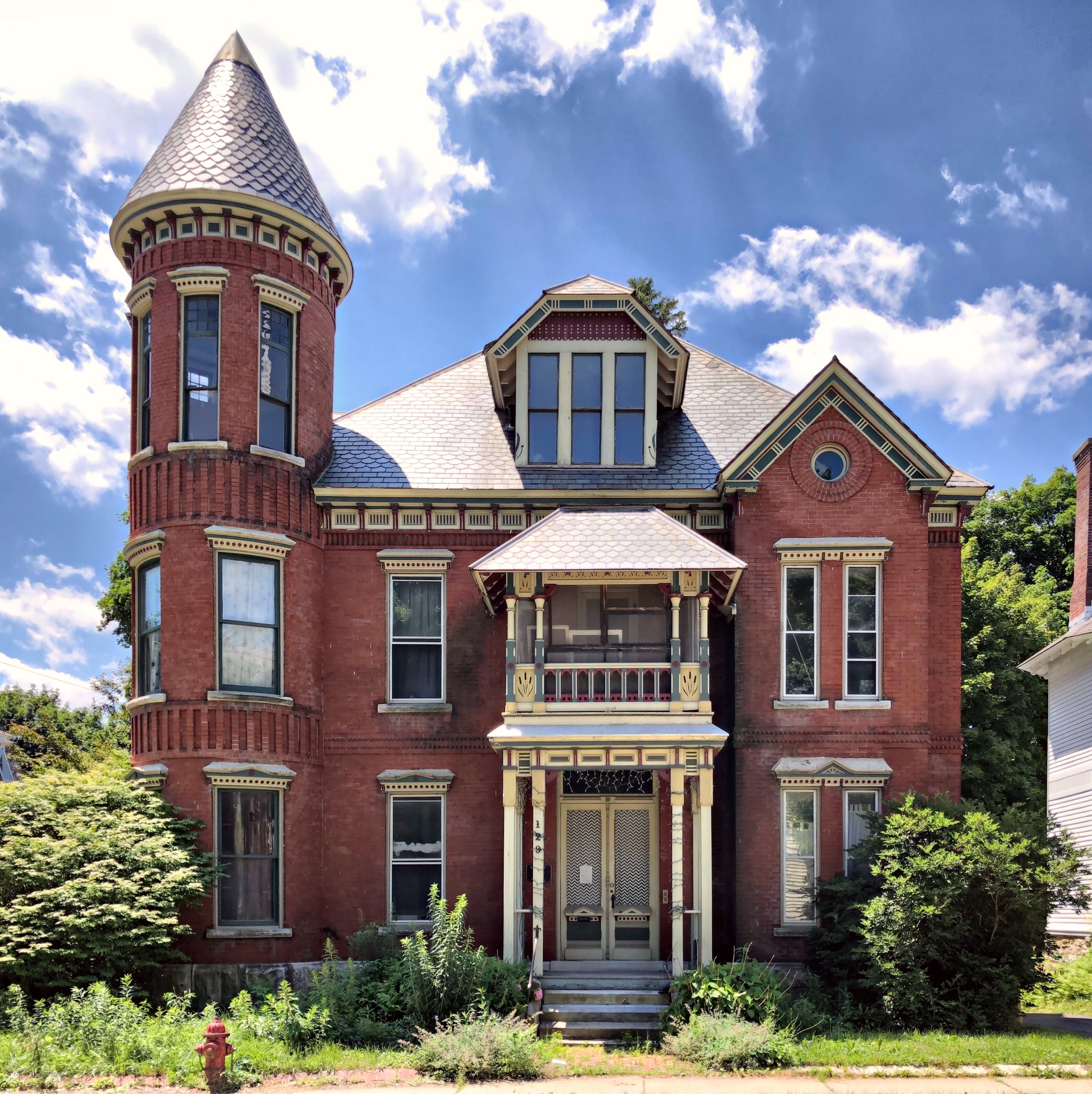
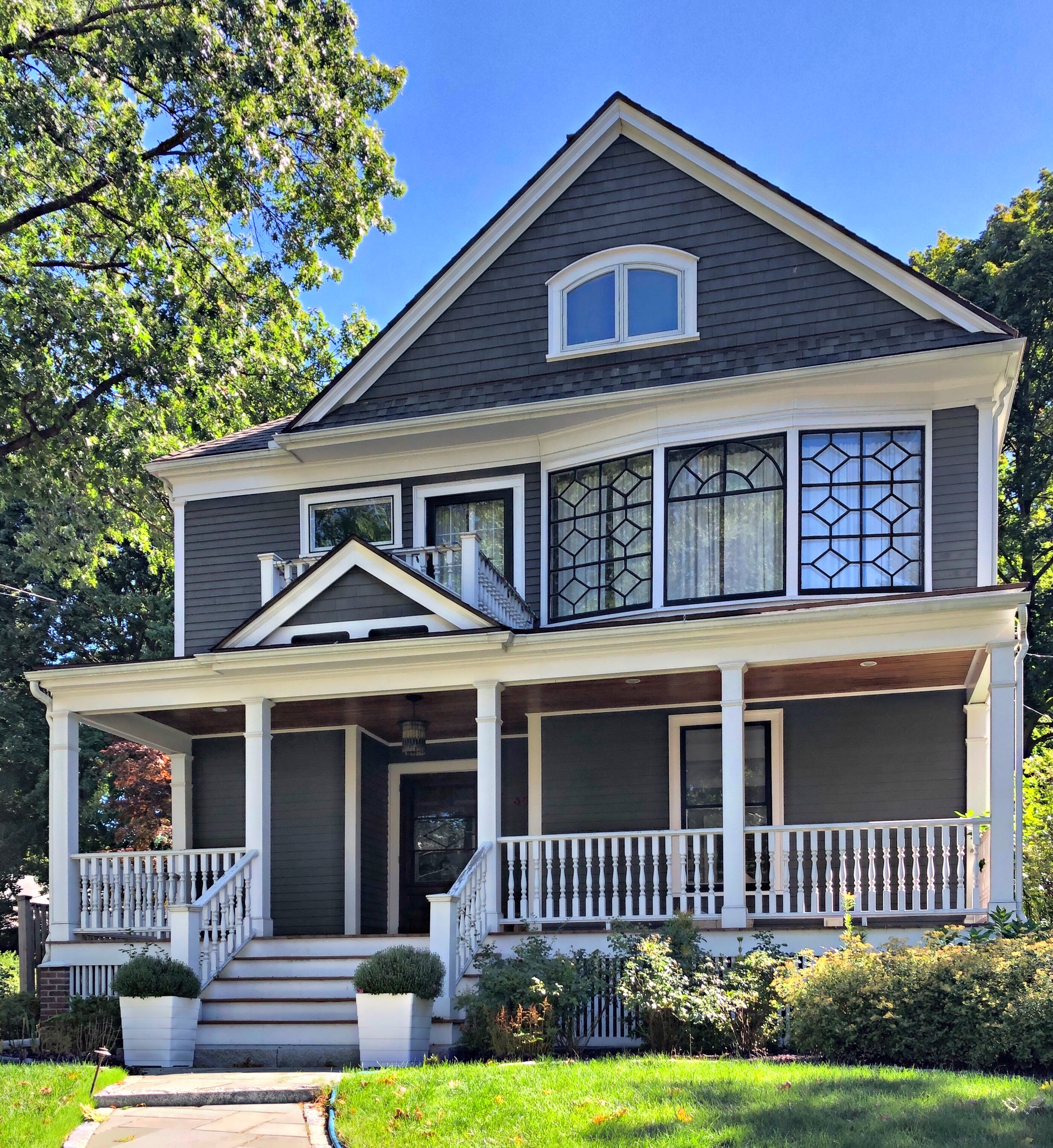
In 1880, Jonas Gerlusha Smith (1817-1893) received a permit to erect a multi-family apartment building on Warren Avenue in present-day South End. The lot was close to his personal residence at 13 Warren Avenue and would have been easy to maintain and oversee tenants in the building. Mr. Smith hired 26-year-old architect Arthur H. Vinal, who furnished the plans for the handsome Queen Anne building. Vinal would later become the City Architect of Boston from 1884 to 1887, designing the High Service Building at the Chestnut Hill Reservoir just seven years after this building. By the late 1880s, the building was known as The Carlisle and it remained in the Smith family holdings under Walter Edward Clifton Smith until the 1930s. Walter attended the Cambridge Episcopal Theological School and later worked at various churches in the Boston area, serving as pastor in his later years. He lived on Follen Street in Cambridge while he held the Carlisle for additional income. Under new ownership in 1950, a retail storefront was added to the first floor which was occupied as a florist for some years. In 1979, after years of deferred maintenance, the property was purchased by Louis G. Manzo and his son David W. Manzo, who meticulously restored the building over time into the time-capsule that it is today!

Harrishof Houses // 1899 & 1900

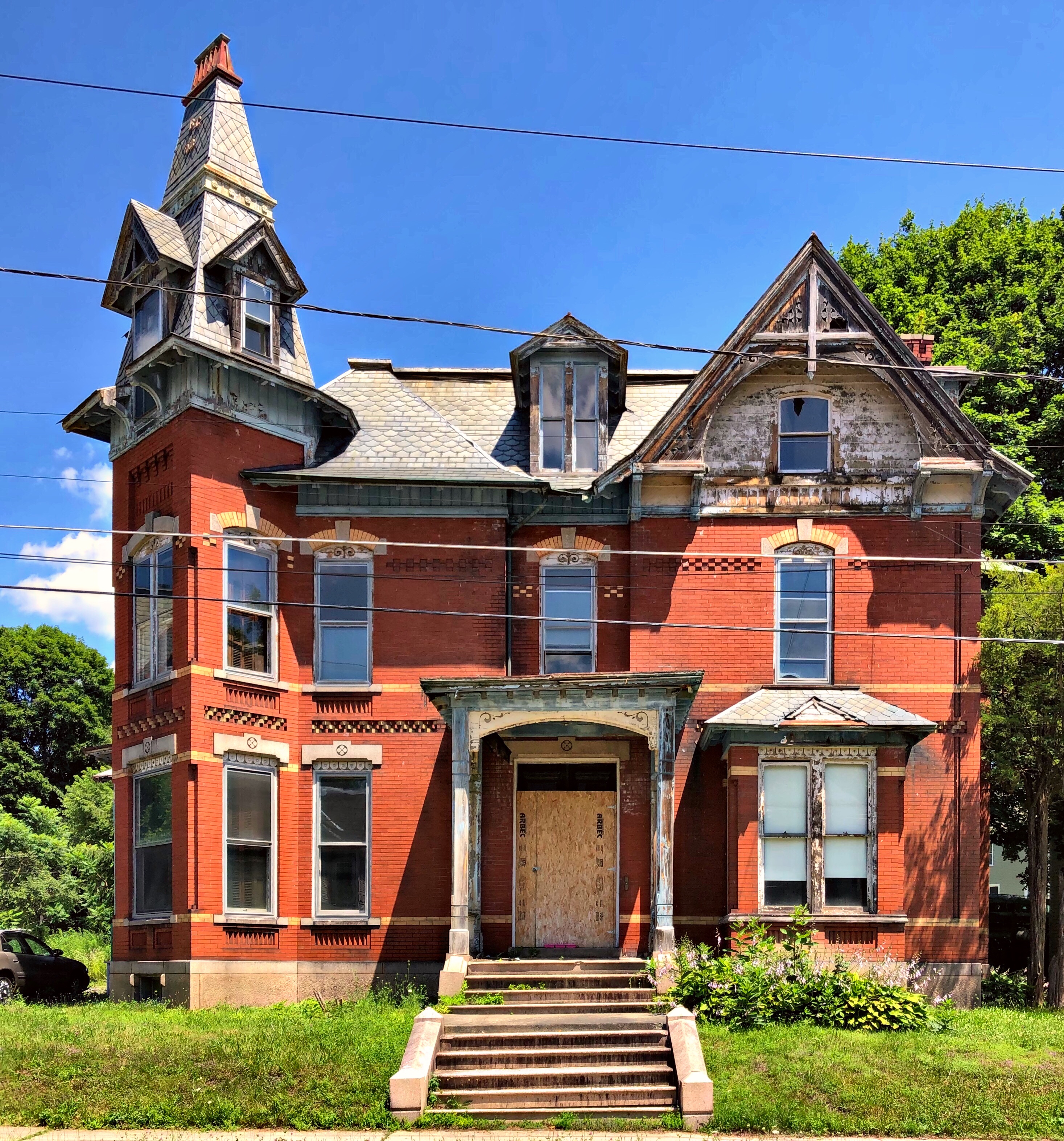
I think I found it… My favorite street in Roxbury. Harrishof Street is a surviving streetscape that shows the beauty and potential of the Washington Park district of Roxbury, a surviving span of houses that dodged the wrecking ball during a period of Urban Renewal. This section of the street runs a stone’s throw from the ruins of the 1857 Horatio Harris Villa (featured previously) and was laid out by Horatio’s heirs who developed the former sprawling estate into multi-family housing, to cash in on suburbanization caused at the turn of the 20th century thanks to electric trolley lines in the neighborhood. The development is credited to Alexander Colin Chisholm (1868-1941), a Canadian-born architect and developer who grew up in Roxbury. He specialized in small residential enclaves of similar houses, including these houses on Harrishof Street, and later on Elm Hill Park. The two-family houses blend Queen Anne and Colonial Revival styles in such a fun way that pushes the boundaries of academic architecture. The houses on the street are all slightly different and have had varied alterations over time, but this is a great candidate for a historic district!

Samuel P. Tilton Cottage // 1880

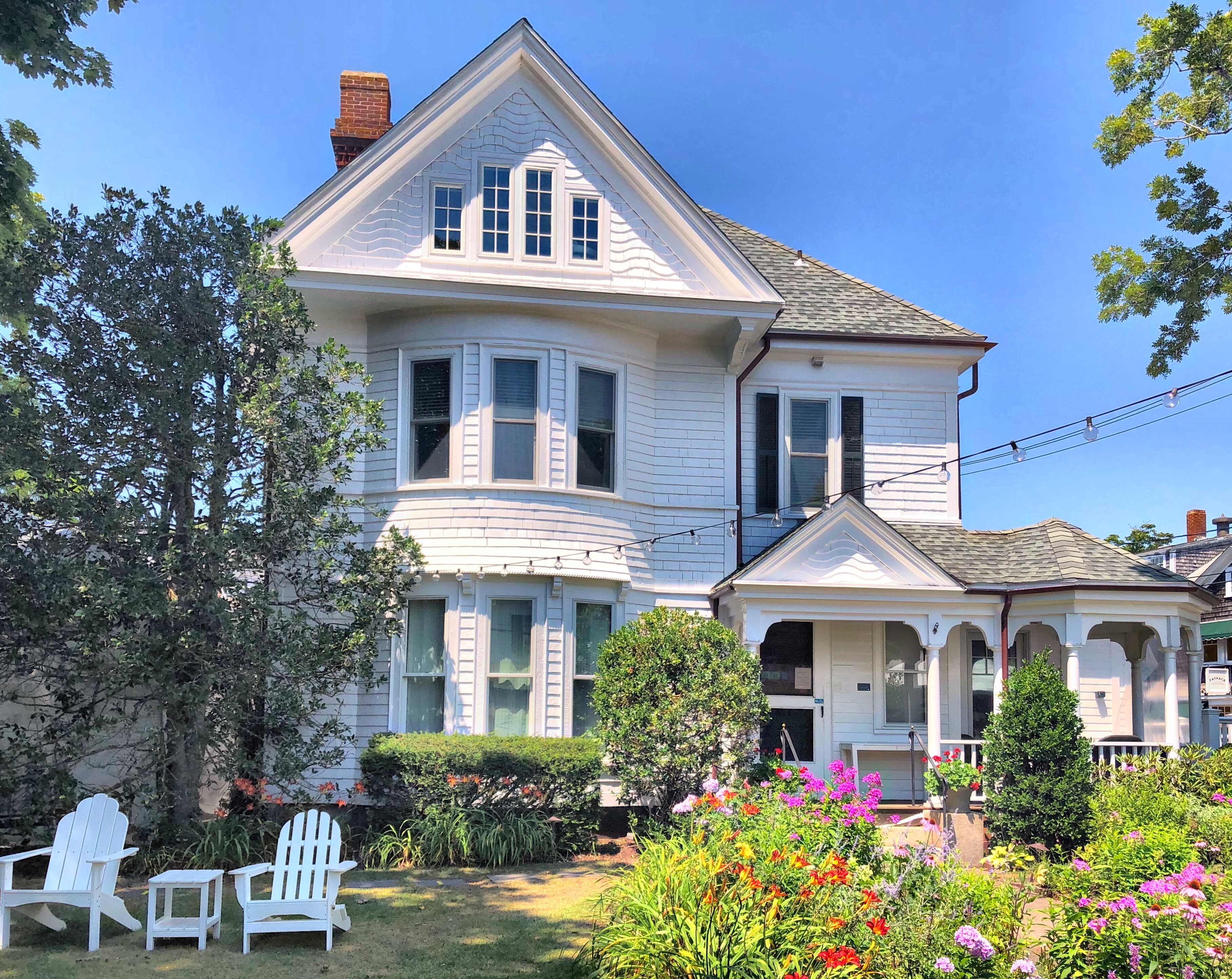
One of the most well-designed and least-pretentious summer cottages in Newport is this charming dwelling on a dead end street. The Samuel P. Tilton Cottage was designed in 1880 by the prestigious firm of McKim, Mead & White as an idiosyncratic blending of Queen Anne and Shingle architectural styles. Mr. Tilton was a milliner (maker and seller of women’s hats) with stores in Boston and Paris, France. He had this cottage built to summer close to the nation’s wealthiest, likely marketing some hats at elaborate Gilded Age events. The facade is assertively Queen Anne with its massing and decorative panels, with shingled side elevation seemingly sprouting from the earth. The architectural terminology for these unique decorative panels is “sgraffito” where here, cement or plaster siding is set and adorned with shells, pebbles, colored glass, and pieces of coal into a cartouche design. The house is one of the finest in Newport, and shows that bigger isn’t always better!

De La Salle // 1884

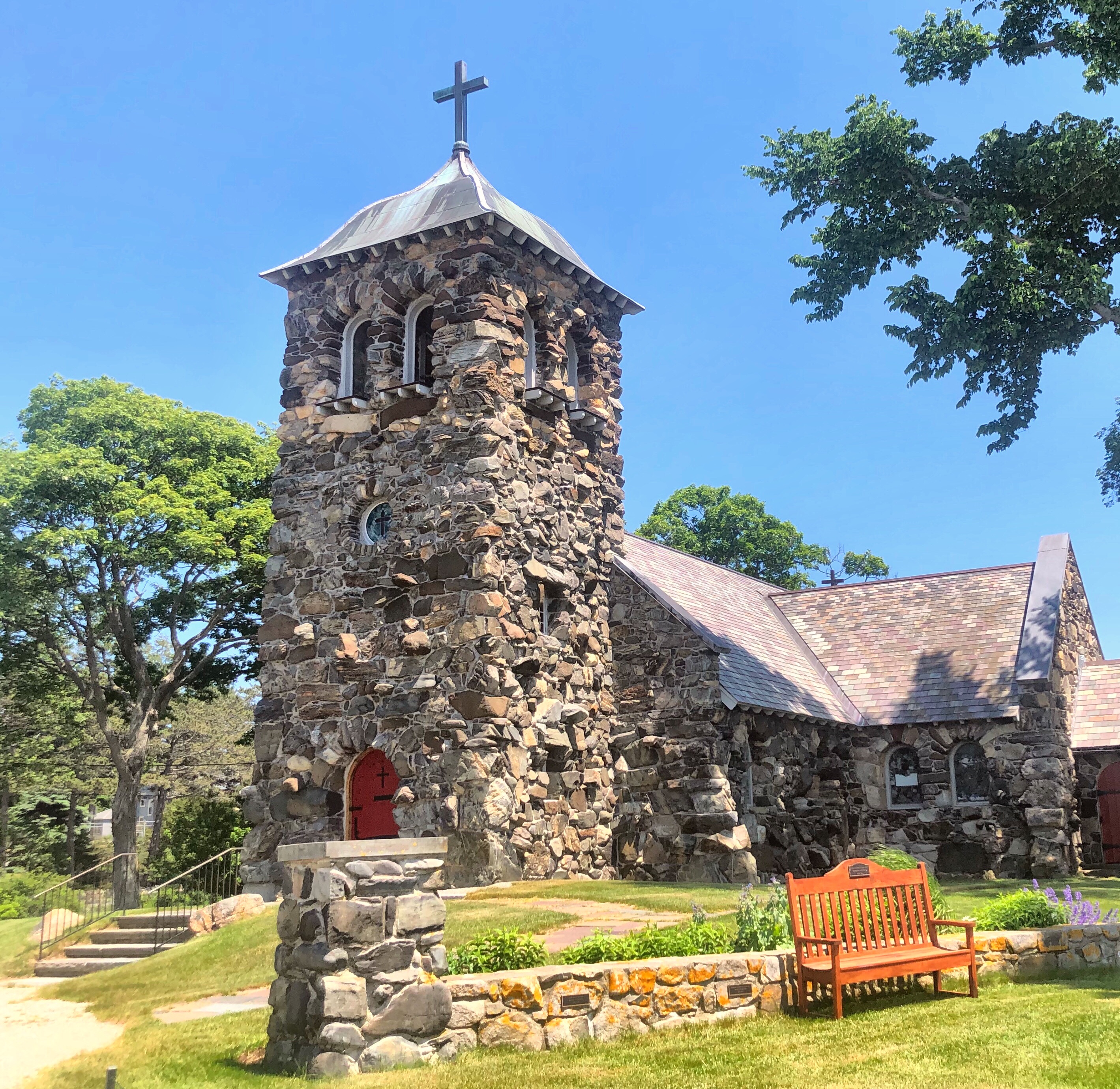
The Weld family has long been a prominent family in Boston, with ancestors dating back to the 17th century in New England. One of these men was William Fletcher Weld, a merchant, later making investments in railroads and real estate. By the time of his death in 1881, he had an estate of approximately $20 million, or more than half a billion in today’s dollars, and he left nearly all of it to his family. His eldest son, William Gordon Weld II, received a large inheritance and he began construction on this summer “residence”cottage” in Newport. The house was designed by local architect Dudley Newton, who had the estate built of locally-quarried granite. Architecturally, the dwelling is eclectic in style with Dutch Renaissance gables with conical roof forms seen typically in Queen Anne and Romanesque buildings. Weld spent his summers here for over a decade until his death in 1896. His widow Caroline, summered in the mansion until her death in 1918. By this point, Newport was beginning to fall out of favor as a wealthy resort community, and the many Gilded Age mansions were increasingly viewed as costly white elephants from a previous era. This property was sold by the Weld family in the early 1920s and became the De La Salle Academy, a Catholic school for boys, and remained in use until it closed in the early 1970s. After the school closed, the mansion was converted to condominiums and some townhomes were built on the expansive property.

“Snug Harbor” – Charles H. Baldwin Cottage // 1877

One of the finest Queen Anne style residences New England is this 1877 summer cottage, named “Snug Harbor”. The mansion was designed by architects William Appleton Potter and Robert Henderson Robertson for Charles H. Baldwin, a prominent admiral in the United States Navy. The design utilizes a brick first floor with shingle siding above, a high cross-gabled roof, panels and half-timbering, asymmetrical form, and a porte cochere at the entry. Later owner Arakel Bozyan, painted the entire exterior a deep red color and renamed the house “Gamir Doon”, Armenian for “Red House”. The house was restored back to a traditional color scheme and sold in 2020. The interiors are STUNNING!

Berkeley House // 1885

In 1885, a 28-year-old Leroy King (1857-1895) and his wife Ethel Rhinelander King (1857-1925) hired one of the country’s most prominent architects, Stanford White, to design a Newport home for their family. Leroy was the son of Edward King, a prominent local merchant, and upon his fathers death in 1875, inherited some of the $100+million dollar fortune he had amassed in today’s dollars. The corner lot at Bellevue and Berkeley avenues was purchased and work was underway on the new mansion. The house is a really interesting take on the Shingle style, but instead of cedar shingle siding, employs fireproof construction. A central hall, large gabled masses, picturesque window arrangements, and a spectrum of surface textures (here conveyed largely in natural stone and brick with flourishes of shingle and pebble dash work), align this house with McKim, Mead & White’s earlier efforts in this style. The interior has been meticulously preserved and maintained by the owners.

The Anchorage Cottage // 1878

This charming Victorian cottage in Newport was built in 1878 for Henrietta and Dr. Stephen Cambreleng Powell as their summer cottage. The well-connected couple hired New Haven architect David R. Brown to design the residence, which is an excellent example of the Queen Anne and Stick/Eastlake architecture styles. David Brown, the architect, apprenticed under the famed Henry Austin for years in New Haven, Connecticut before becoming a partner of the firm. As any good summer cottage needs a fun name, the couple named their cottage “The Anchorage”. The cottage is now known as the Old Beach Inn, and is among Newports many charming old inns.

Anderson-Muenchinger House // c.1850

One of the most eccentric and over-the-top houses in Newport (a town full of over-the top houses) is this home on Cottage Street. The original house was built around 1850, likely as an Italianate style residence with a flat roof. Early owner Elbert J. Anderson (1800-1888) who was born and raised in New York City. In Manhattan, Anderson was a director of The Manhattan Fire Insurance Company; the Farmers’ Loan & Trust Company; and The Phoenix Bank. He married Martha Maria Ellery, the eldest daughter of the late Abraham Redwood Ellery. In 1847, his wife inherited the Redwood Farm at Portsmouth, six miles from Newport, and they eventually moved there permanently. They maintained this summer cottage in Newport to remain close to high-society. The home was sold to George and Annie Collins, who likely modernized the residence with the bays, porches, and frilly details. By the early 20th century, the property was owned by Gustave and Amanda Muenchinger, who ran a hotel at the corner of Bellevue and Catherine streets.

Newton Working Boys Home // c.1895

At the edge of the Charles River at the far edge of Newton, Massachusetts, homeless working boys of the Boston area had a place to rest their head. The Working Boys Home was established in 1883, as a new Catholic charity in Boston. Its mission was to provide a home for working adolescent boys (messenger boys, newsboys, boot blacks, etc.) who had no place to call home and often slept in abandoned buildings, alleys, stables, and other such places. The Working Boys Home was open to homeless boys between 12 and 17 years of age, and all were expected to work and contribute a part of their wages to the support of the home. The original space in Jamaica Plain and subsequent Bennett Street (North End) locations were deemed too inadequate. In 1890, the 48-acre estate in the Oak Hill section of Newton was purchased and this four-story brick building built from plans by William H. McGinty. After WWII, city prosperity other services reduced childhood homelessness, and the last group of boys moved out of the Working Boys Home in 1961. The property was sold in 1979 to the Combined Jewish Philanthropies of Greater Boston to be used as a center for activities meeting cross-generational needs, now known as JCC Greater Boston.

Dr. Grouard Cottage // c.1897

Dr. John Shackford Grouard (1867-1927) was a physician and surgeon born in Allegheny County, Penn. He attended Phillips Exeter Academy, and earned an M.D. from Harvard Medical School in 1889. In 1891, he moved to Nantucket, Massachusetts, where he established his own general medicine and surgical practice. Years after establishing his practice, he built this beautiful Shingle/Queen Anne style cottage that is dominated by a massive gambrel roof and is located adjacent to the Nantucket Hotel. He served as the Town Physician and medical examiner, on the Nantucket School Board, and as president of both the Nantucket Civic League and Citizen’s Gas, Electric, and Power Company. Dr. Grouard also co-founded the Nantucket Cottage Hospital in 1911, but more on that later. Dr. John Shackford Grouard died in Boston in 1927, one week after surgery for a gallbladder inflammation.