Verna Farm // 1892

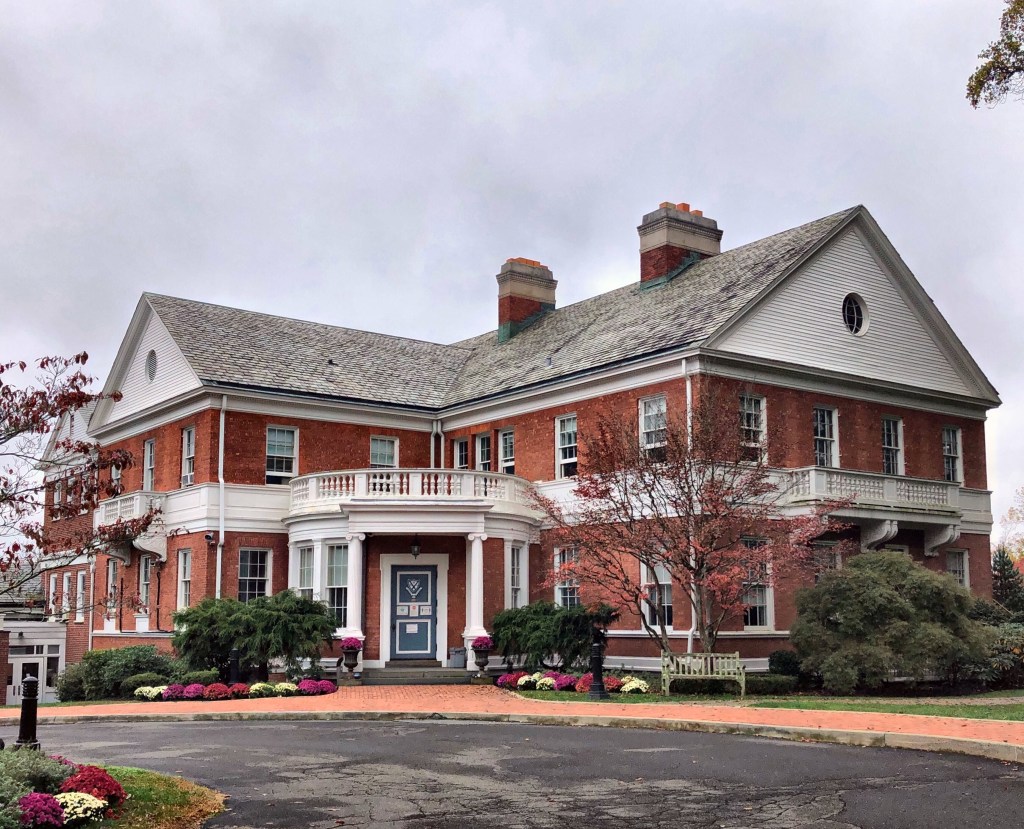
In Fairfield, Connecticut, land owned by Timothy Dwight, a minister and eighth President of Yale, a large farm once stood. The year after he was appointed to his position at Yale, he sold his farm Verna Farm, in 1796 to Isaac Bronson. The farm was eventually inherited by his grandson, Frederic Bronson. Dwight’s eighteenth-century house was eventually torn down in 1891 by Frederic’s son, Frederic Bronson, a wealthy New York City lawyer and socialite, who was included in Ward McAllister‘s “Four Hundred“, purported to be an index of New York’s best families, published in The New York Times. In 1892, Bronson hired starchitect Richard Morris Hunt, one of the greatest American architects of all time, to design a new country estate here. In 1933, the Bronson estate was acquired by W. A. Morschhauser, who had the house remodeled and made smaller in 1900; removing the third story and reducing the number of rooms from 42 to 13! Since 1949, the property has been occupied by the Fairfield Country Day School. The windmill as part of the estate was eventually gifted to the Town of Fairfield.
Bronson Windmill // 1894

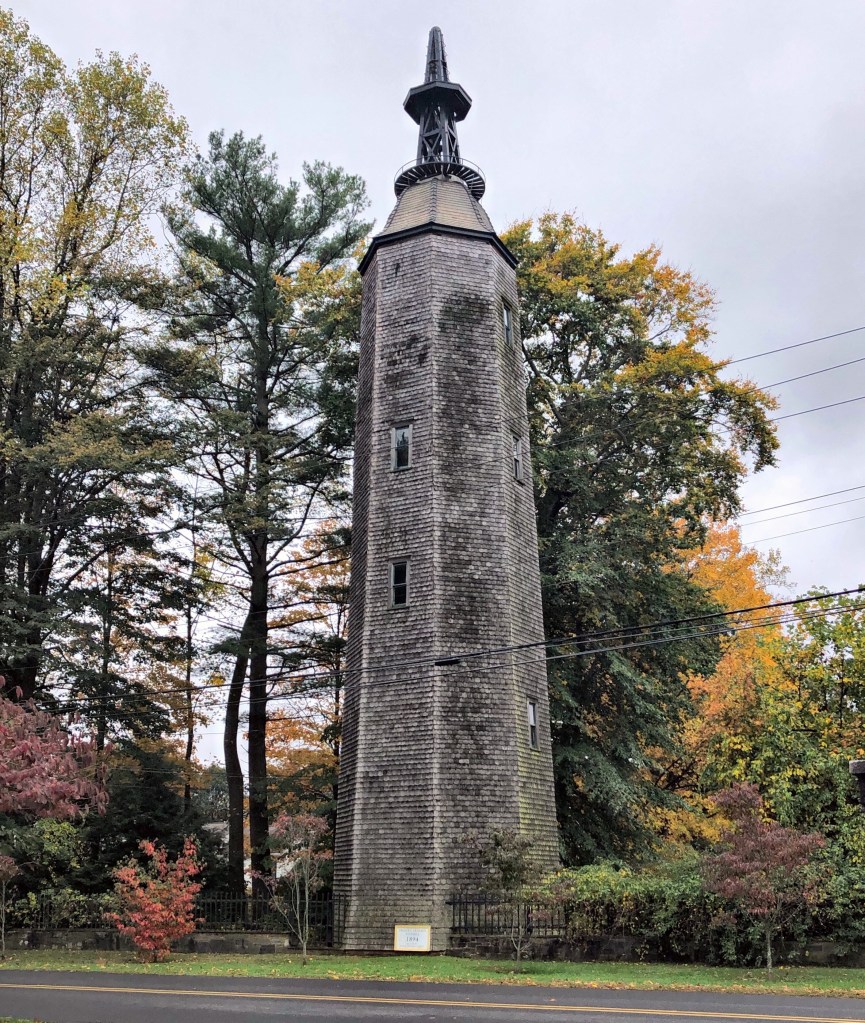
Located in a more rural part of Fairfield, Connecticut, I drove past this massive tower just off the road. Intrigued, I doubled back to find out what it was, and learned it was once a windmill! The over eighty-foot tall shingled tower was constructed in 1894 as part of a large country estate. Frederic Bronson (1851-1900) was a prominent, gilded age lawyer in New York City. He accumulated massive wealth representing many elite families, eventually becoming a member of the “Four Hundred”, a list of the 400 most powerful (rich and connected) people of New York society. In the early 1890s, Bronson constructed a summer estate in Fairfield, CT, known as Verna Farm. A part of this estate the windmill which pumped water from a well 75 feet below ground into a 7,500-gallon wooden storage tank inside the tower. The estate eventually became the Fairfield Country Day School, and the windmill (no longer in use) was gifted to the town. Eventually, it was leased by Sprint, and the telecommunications firm restored the windmill and installed a cellphone tower in its interior.

Farist House // 1894

Joel Farist (1832-1904) emigrated to America with his family by the way of Sheffield, England, working originally as a laborer as a child. By his thirties, he formed the Farist Steel Company in Springfield, MA, later relocating to Bridgeport, CT in 1872. Due to his prestigious role and success, he became well-connected in Bridgeport, later becoming the first President of the Bridgeport Electric Light Company and Vice President of Bridgeport Hospital. He built this massive home in nearby Fairfield, CT, likely to get away from the polluted Bridgeport air, for a more bucolic area. The massive Queen Anne home he had built (likely as a second home) features prominent towers, a full-length porch, and a porte-cochere off the side. The home has been restored a few times recently, and a new (hopefully not final) paint scheme in yellow was recently painted on the front facade.

Chaffee House // 1931

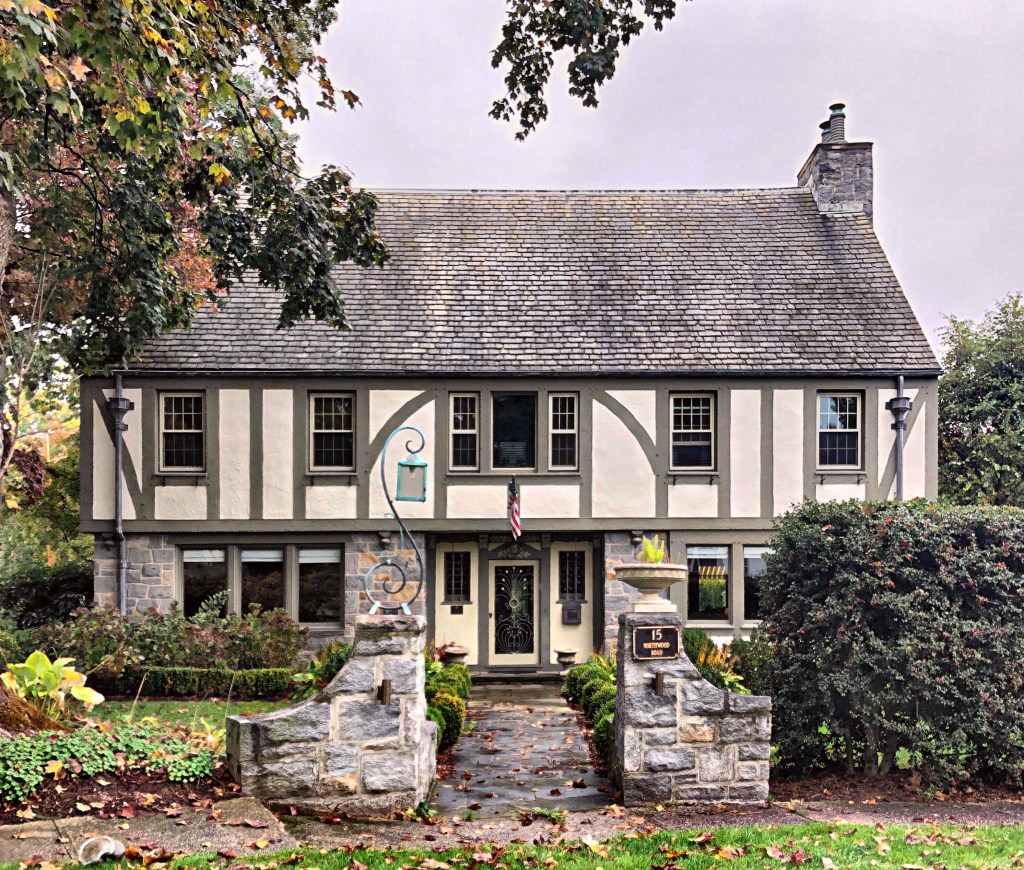
Herbert Almon Chaffee and Irma Chaffee had this Tudor home built by 1931 for their family in Fairfield, Connecticut. Mr. Chaffee was the Vice President and Assistant Treasurer of the City Savings Bank of nearby Bridgeport. Chaffee also at that time worked as Vice President of the A.W. Burritt Company, a lumber mill that produced building supplies and also operated as a real estate company that bought land and constructed on it. The home he had built clearly showcased the company’s work and features hallmarks of the English Tudor Revival style, with half-timbering, slate roof, and jettying (upper floor slightly overhanging the first).

Howard Lee House // c.1928

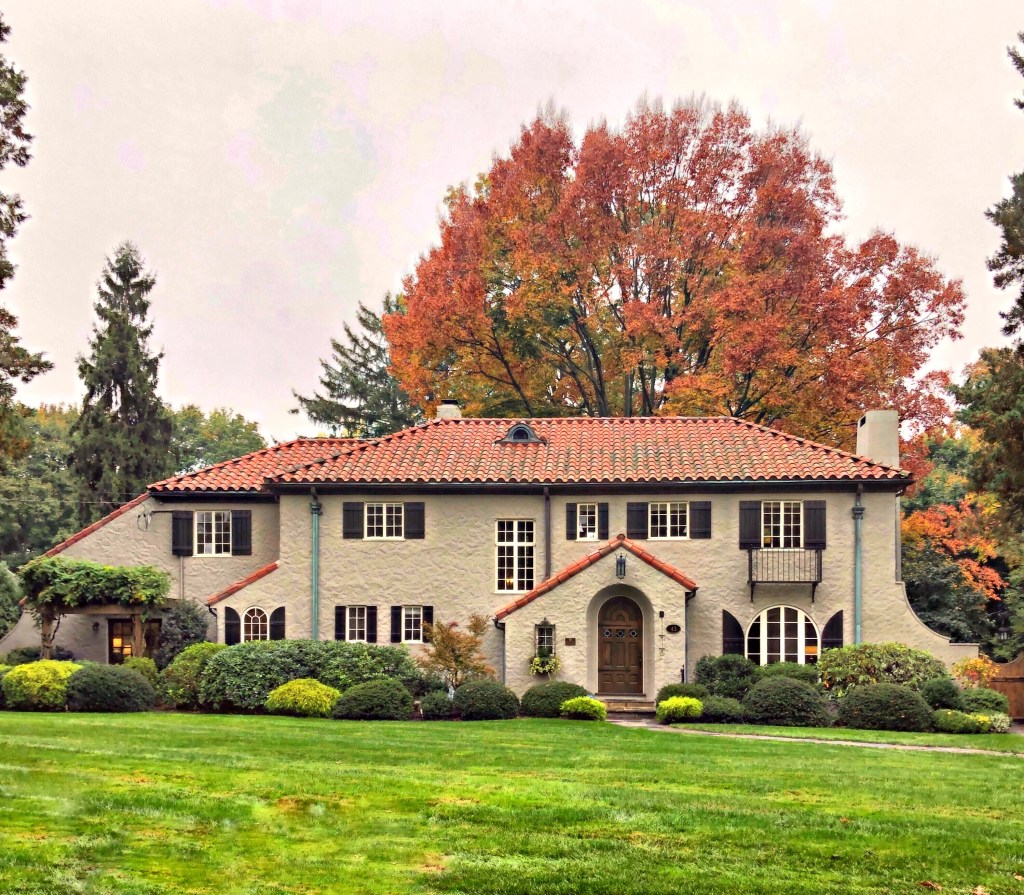
Fairfield in the early 20th century began to shift as a suburban town with neighborhoods of large homes in planned districts. The proliferation of the personal automobile led to the “suburbanization” past streetcar suburbs closer to downtowns. Howard Greeley Lee (1893-1965) worked as Vice President of the Lee Brothers Furniture Co. based out of nearby Bridgeport. The company clearly did well as Howard had this large home built in the fairly uncommon (in New England) Spanish Revival style. It features a red tile roof, stuccoed siding, metal casement windows, and arched windows and front door, all commonly found in the style.

Burr Mansion // 1794

Originally built in 1775, the first iteration of the Burr Homestead, home of Thaddeus and Eunice Burr, which actually saw the marriage of John Hancock, President of the Continental Congress, to Dorothy Quincy. Thaddeus was the cousin of the famous Aaron Burr, Jr., who was the 3rd vice-president of the United States alongside Thomas Jefferson as President. Aaron Burr Jr. is best-known today through his portrayal in the popular play “Hamilton,” where he shoots Alexander Hamilton in a duel. The house was rebuilt in 1794 in its former location in Fairfield, Connecticut after a fire by the British in Fairfield destroyed the first. The home was willed to Thaddeus’ son General Gershom Burr, who eventually sold the mansion to Obadiah Jones. Mr. Jones updated the home by, ““taking out the dormer windows and lifting the roof, taking away the porch and building the broad veranda with its lofty massive fluted columns”. The home was eventually gifted to the Town of Fairfield and is presently maintained by the Fairfield Museum and History Center.

DeForest House // c.1800

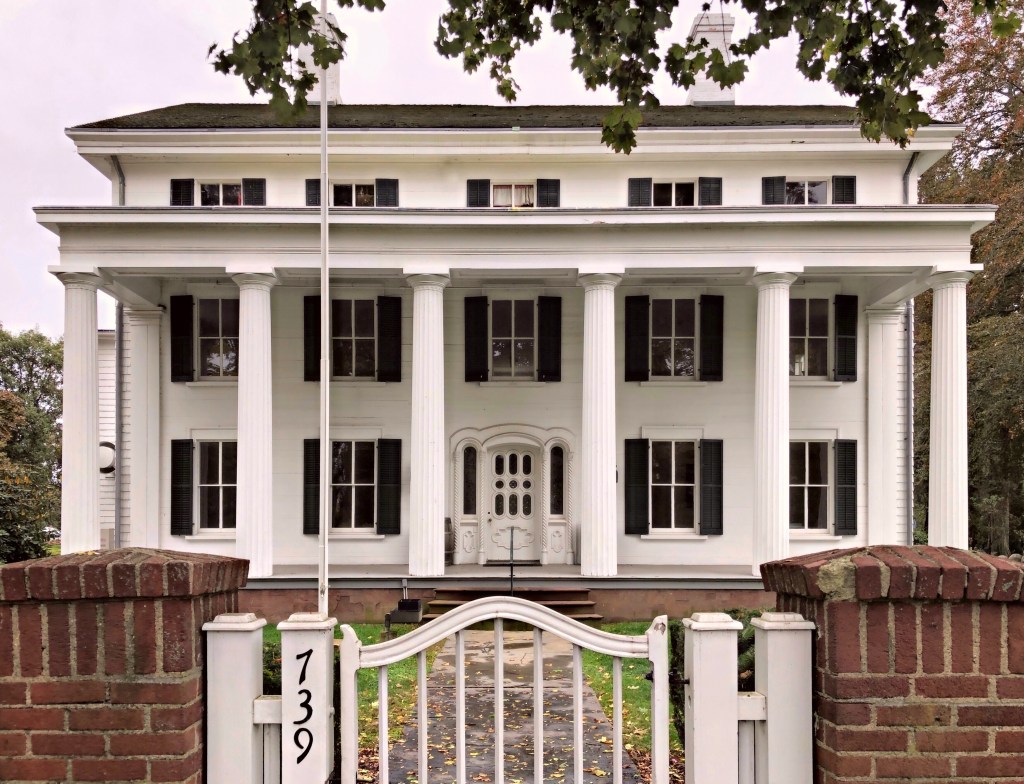
At the beginning of the 19th century, Fairfield, Connecticut was slowly recovering from its destruction by the British at the end of the Revolution. By around 1800, a member of the DeForest family appears to have built this home, across from the Town Common, overlooking the recently completed Fairfield County Courthouse. Before the American Civil War, the home was significantly altered, with a central pavilion, new round arch windows, and a full-length front porch, showcasing early Victorian-era desire for detail. The house changed hands several times over the next century, at one point becoming a boy’s school from 1891 to about 1909. In 1930, the house was renovated by architect Walter Bradnee Kirby, who restored the home back to its Colonial past, showing how the pendulum of architectural tastes can change back-and-forth with every passing generation.

First Church Congregational of Fairfield // 1892

The First Church Congregational in Fairfield, Connecticut is the sixth church to occupy this site! The first structure was built in 1640, and the current building was constructed in 1892. The third version of the church was burned by the British in 1779, while the fourth “meeting house” took nearly 42 years to finish and was partially funded by the sales of properties which formerly belonged to Tory sympathizers. The Romanesque Revival church was designed by architect J. Cleaveland Cady, who is best known for his design of the south entrance of the American Museum of Natural History on the Upper West Side of Manhattan.

Captain John Maltbie House // 1766

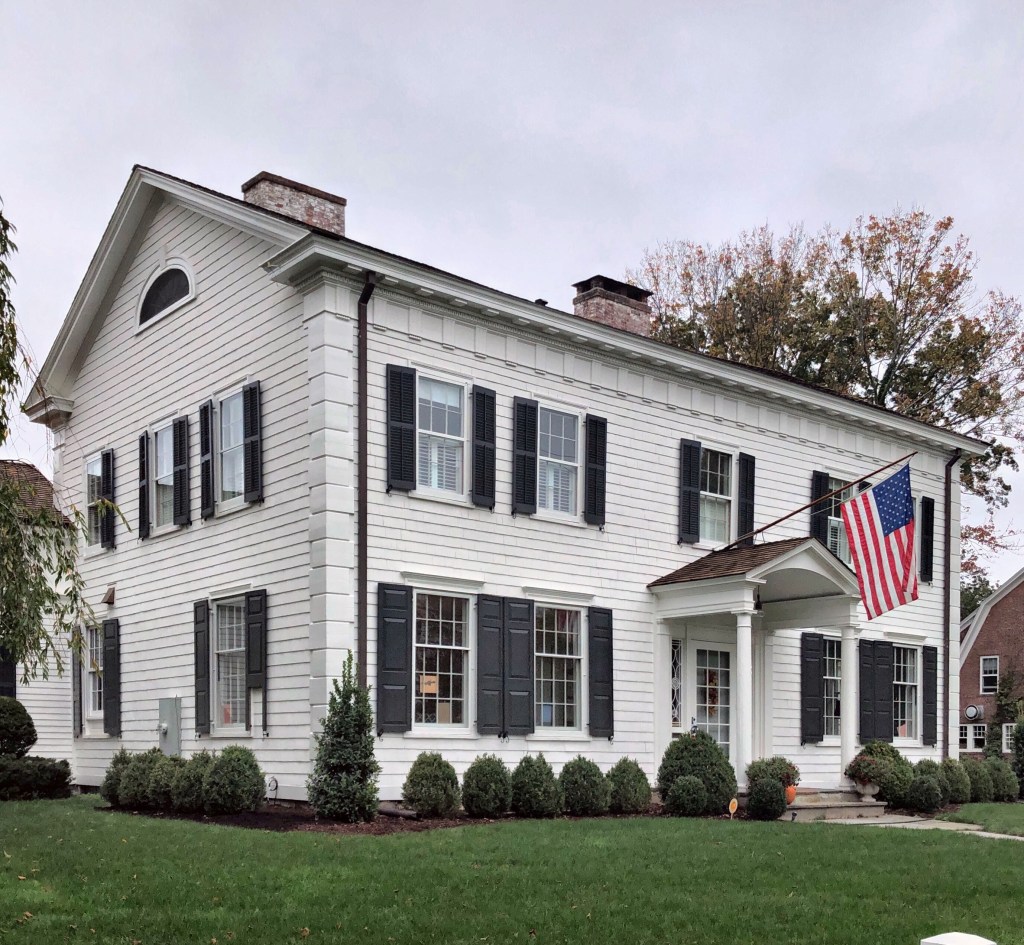
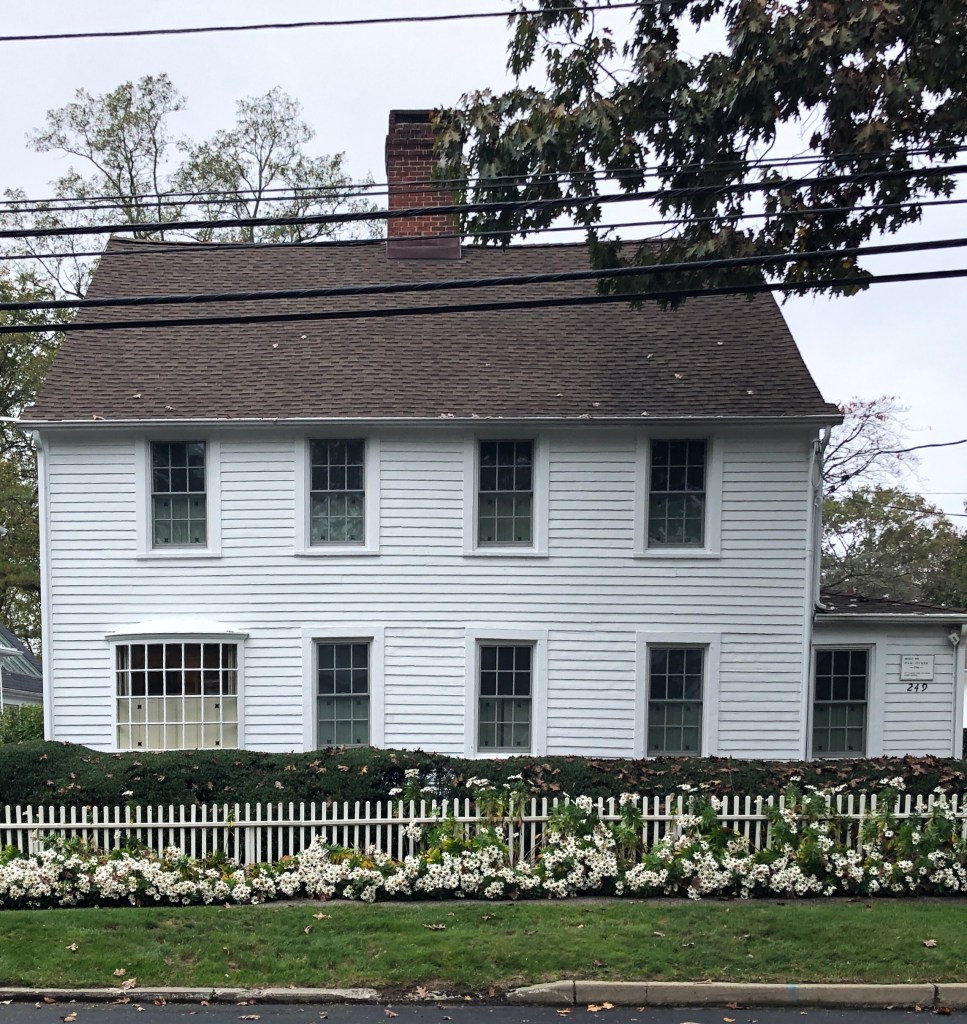
On July 7-8, 1779, the Red Coats marched through Fairfield torching houses to punish the locals for seeking independence. They killed locals, destroying anything they could find on their way out, setting fires to homes and civic buildings around the Green. This home was built by Isaac Tucker, later sold to Jonathan Maltbie, sea captain involved with East Indies trade. He later would fight against the British during the Revolution, and after the war, was hired as captain on one of the first cutter ships built, the Argus. During the British invasion of Fairfield, they attempted to set fire to this home three times, but it seemed to never go up in flames when they returned. The tradition holds that an elderly servant, hiding upstairs, put out the flames and saved the house from destruction, after the British Troops torched it. Burn marks apparently remain inside to this day. Since the home was built, the front door facing the street was relocated to the side, and a large multi-pane bay window was installed in its place.

Old Fairfield County Courthouse // 1794

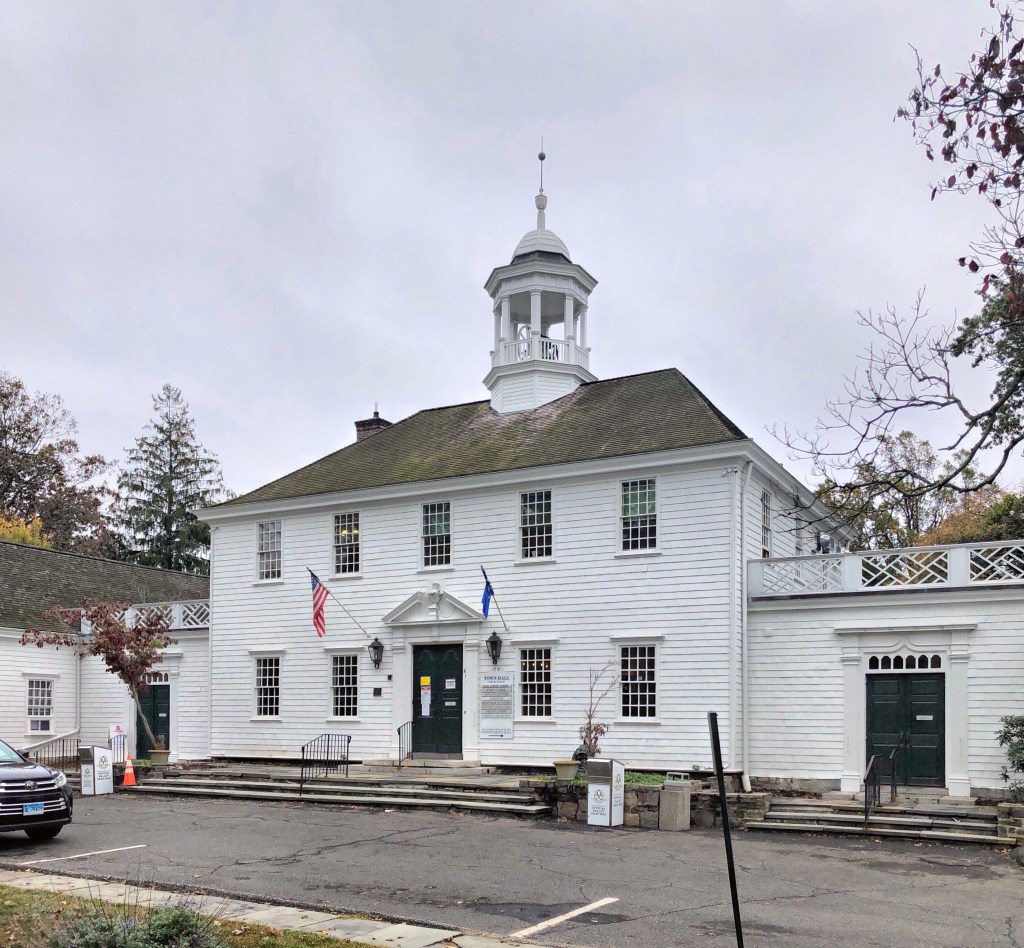
Located at the Fairfield Town Green, the Georgian-style Fairfield County Courthouse stands as a reminder on the town of Fairfield’s Colonial-era history. The first courthouse at the site was built in 1720. After a fire destroyed the first (which housed the jail as well), a second structure was built in 1767. That second courthouse was the center of a thriving, wealthy village with a port just blocks away. In July 1779, the British landed in Fairfield and destroyed much of the town, harming its prosperity for decades to come (though it has clearly recovered since). In 1794, a new courthouse was built, also housing town offices. In 1870, it became solely a town hall (the County Court moved to Bridgeport years before) modified and altered in the Second Empire style to ‘modernize’ the building. As Colonial Revival resurged in popularity in the late 19th and early 20th- centuries, the town sought to bring back the Georgian style Town Hall building, in 1936 hiring architect Cameron Clark, to restore the building.