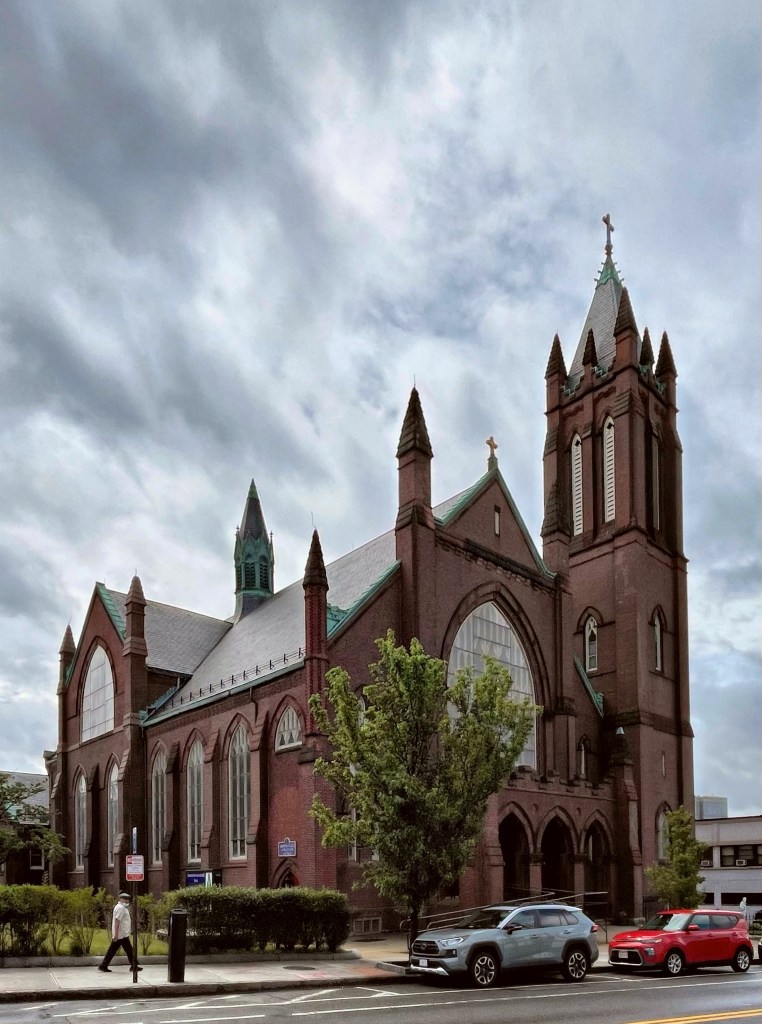
Immaculate Conception Catholic Church // 1896

The Immaculate Conception Roman Catholic Church in Everett, Massachusetts, is an imposing Gothic Revival building, that shows how the church spared no expense to build imposing and awe-inspiring edifices all over New England. Constructed of red brick with Longmeadow brownstone trim, the church was designed by preeminent Catholic Church architect Patrick W. Ford and the cornerstone was laid in 1896. Ford was born in Ireland and in 1872, he moved to Boston and opened his own practice. He was widely recognized as an authority on church architecture and his practice focused primarily on designing churches and institutional buildings for the Roman Catholic Church in New England. Ford died suddenly at age 52 in August 1900. Due to a lack of funds, the church was not completed until 1908, so Ford did not see this church completed in his lifetime. The work was completed by architects Reid & McAlpine and is stunning with its square corner tower topped by a pyramidal spire with smaller pinnacles marking the corners of the tower. The projecting entry porch has three, pointed arch openings and is topped by crenellation. The congregation appears pretty active to this day.
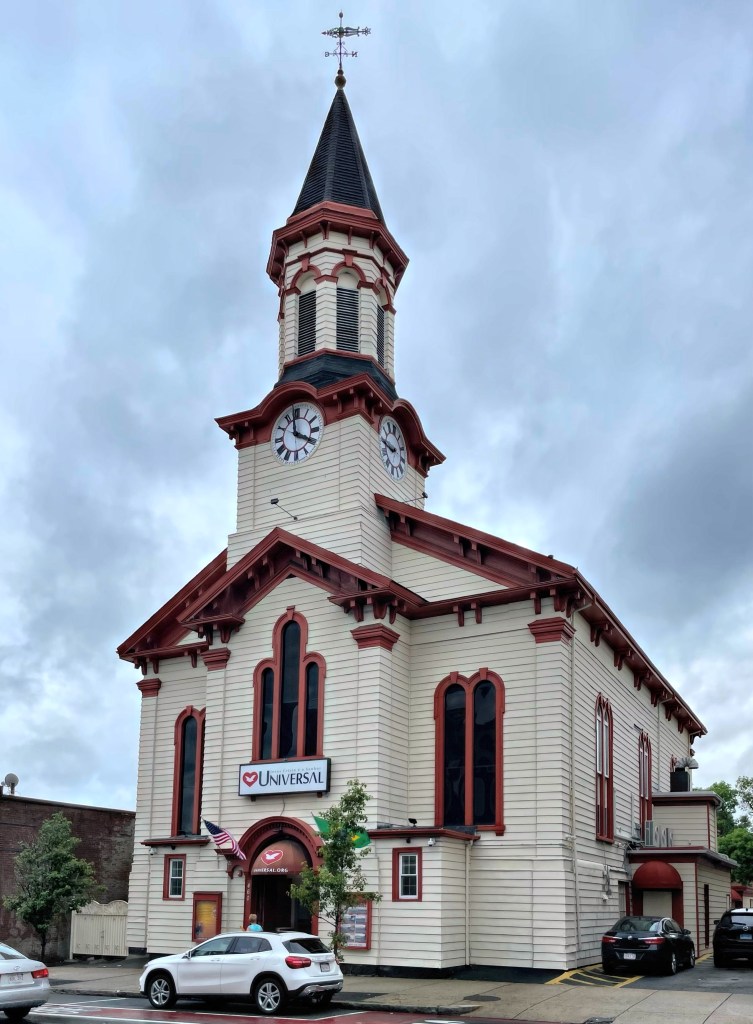
First Congregational Church, Everett // 1852

The oldest surviving church in Everett, Massachusetts is this one, the First Congregational Church, built in 1852 when the city was still a part of Malden. As in many other communities, this church was formed when the surrounding area of South Malden had grown and had the means to support its own religious society. Before this, residents had to travel to Malden Center for services. In 1848, it was voted to establish the church calling it the Winthrop Congregational Church, as at the time, it was thought that when South Malden would split away, the new town would be named “Winthrop”. When the town finally split in 1870, another town had already taken that name. Originally, the Italianate-style building was sheathed in wood clapboards and outlined by pilasters, both of which were covered or removed for the installation of aluminum siding, very common in the city after WWII. Remaining hallmarks of the Italianate style include the paired cornice brackets and the round-headed windows. The tower was originally capped by a taller steeple above an open octagonal arcaded belfry, but was replaced by the present spire in 1911. The church was possibly an early design by architect Thomas Silloway. Today, the church is occupied by Universal Church USA, a congregation that originated in Brazil, showing how the local community and demographics have shifted in Everett from 150 years ago.

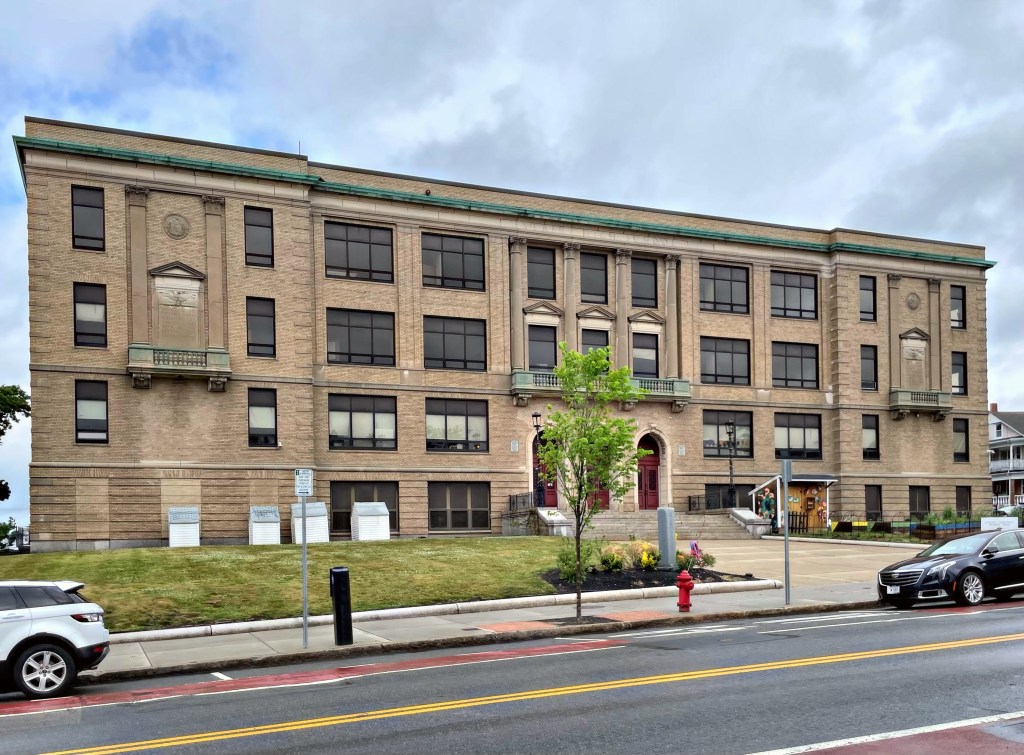
Second Everett High School // 1922

In 1892, the growing municipality of Everett, Massachusetts incorporated as a city. While Everett’s population had remained small compared to nearby towns throughout much of the nineteenth century, its close proximity to Boston resulted in dramatic population growth between 1885 and 1915. During this late industrial period Everett’s population was one of the fastest growing in the state, doubling between 1870 and 1880, nearly tripling from 1880 to 1890 and doubling again between 1890-1900. This massive population growth put a strain on public facilities, necessitating new housing construction, new public utilities, and schools. By 1889, planning for the first purpose-built high school had begun. The resulting first Everett High School, first known as the Home School, in 1893, the year after Everett’s incorporation as a city. That building was almost immediately outgrown and the city acquired a new site for a school that was large enough to educate the ever-growing town’s students. The City of Everett selected the architectural firm of Ritchie, Parsons, and Taylor for the construction of the new high school. The firm was led by Scottish-born James H. Ritchie, who designed the Classical Revival building. In the early 2000s, the building was again deemed inadequate and a third high school was built about a mile away. The building is now occupied by the Everett Community Health and Wellness Center and the Webster School Extension.

First Everett High School // 1893

While Everett’s population had remained small compared to nearby towns throughout much of the nineteenth century, its close proximity to Boston resulted in dramatic population growth between 1885 and 1915. During this late industrial period Everett’s population was one of the fastest growing in the state, doubling between 1870 and 1880, nearly tripling from 1880 to 1890 and doubling again between 1890-1900. The City of Everett immediately went about erecting a new schoolhouse to educate its youth. Architects Loring & Phipps were retained to prepare plans for the new high school. Ground was broken in August 1892 and the building was dedicated just over a year later in September 1893. The school was opened to 175 students on Monday, October 2, 1892 with a capacity of 550 students (as it was realized that the city would continue to grow). The building is high-style Queen Anne with red brick and mortar and light sandstone trimming. In 1905, the capacity of the high school was nearly doubled by the construction of an addition on the west end of the original building. Even doubling the size of the school did not prove adequate as the building was outgrown less than a decade later. From this, the Second Everett High School was built a block away. The First Everett High School is now known as the Whitney Lorenti House, a low income, elderly housing complex.

Everett Masonic Hall // 1910

Further up Broadway from Everett City Hall, you’ll find the town’s Masonic Hall, a now-vacant institutional building which contributes to the diverse streetscape and character of Everett’s built environment. The local Palestine Lodge of the Masons in Everett originally met in its original lodge, built in 1870. A corporation known as the Everett Associates, which included only Masons, subsequently constructed the original Masonic Building. The property burned in a fire in 1908, leading to a new building campaign by members. A site was acquired further up Broadway, and the groundbreaking was held on June 11, 1910, led by Everett Mayor Charles Bruce, a past master of the Palestine Lodge. Mayor Bruce also served as the chair of the Building Committee. In his remarks at the groundbreaking, Bruce noted the membership of the lodge as over 500 men! Inside the cornerstone, members placed: original papers from the former Masonic Building, a history of the Palestine Lodge, a list of lodge members, photographs, news articles, and other ephemera. The Boston architectural firm Loring and Phipps was responsible for the design of the building, which is constructed of water-struck brick and is of the Classical Revival style. After WWII, membership declined sharply, and the organization sold the building in the 1980s. From the mid-1990s to 2019 the building was owned by the Islamic Association of Massachusetts, and suffered from deferred maintenance. The red “X” on the building is for firefighters not to enter the building in case of fire or emergency. Luckily, the building was purchased and the new owner hopes to convert the building into housing, preserving the structure and using Historic Preservation Tax Credits. Fingers crossed!!

Everett City Hall // 1960

Welcome to Everett, Massachusetts, a diverse, vibrant community of roughly 50,000 residents just north of Boston. Present-day Everett was originally part of Charlestown, which separated and became Malden. In 1870, the Town of Everett separated from Malden and was so-named after former Charlestown resident Edward Everett (1794-1865) who served as U.S. Representative, Senator, the 15th Governor of Massachusetts, U.S. Secretary of State and as President of Harvard University. From 1894, the Town (later City) Hall was located in the Hapgood Building, but was outgrown after WWII. In 1960, ground was broken for a new, Modern City Hall for Everett, with Harold Michael Turiello (1910-2001) of Revere, as architect. Everett City Hall (love it or hate it) is a testament to Mid-Century Modern/International style design with curtain wall construction originally included bright blue panels which were recently replaced with a bland white panel color.

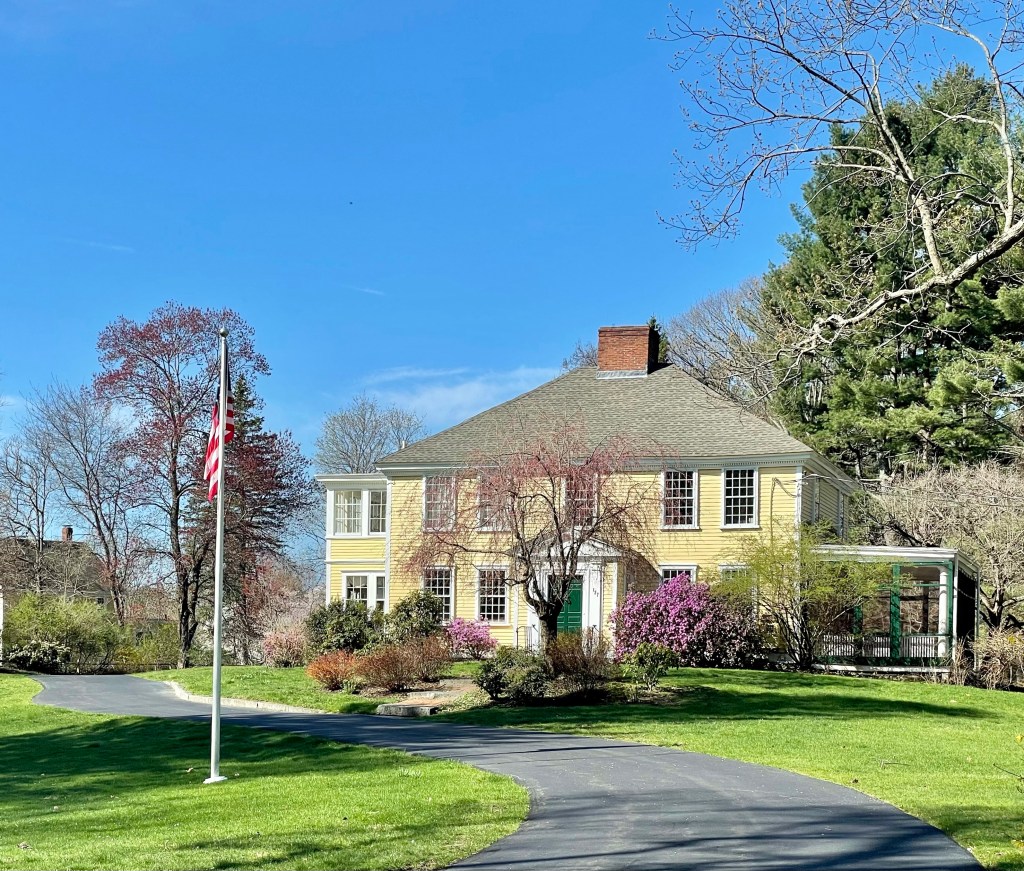
Stoneymeade Farm // c.1773

This stunning Georgian farmhouse in Acton, Massachusetts, was built around 1773 for Seth Brooks (1740-1831) and his wife Molly Conant Brooks, on land that had belonged to her father, William Conant of Concord (part of which was later annexed to Acton). Seth Brooks fought under Captain Isaac Davis on April 19th, 1775 at the Battle of Concord, who was among the first killed and was the first American officer to die in the Revolution. It was Brooks who ordered Davis’ body carried from the field after he fell, so he could be buried with honor. After the war, the family suffered an unfathomable tragedy. Seth and his wife, all their nine children, and all but one of their grandchildren died of the same type of tuberculosis, “slow consumption.” The family “curse” appears to have been broken by grandson Nathan Brooks, Jr., (1799-1881,) who inherited the property. According to local legend, a room beside the center chimney sheltered runaway slaves, as Nathan Brooks was an avid abolitionist. At the turn of the 20th century, the farm was purchased by Brookline timber merchant Benjamin Pope, owner of the Pope and Cottle Company of Boston. For many years, the Pope family used the house as a summer residence, with managers working the property as a dairy farm. It was Pope who named the farm “Stoneymeade,” and added greenhouses, an icehouse, and had an elaborate water system installed. Stoneymeade Farm continues to this day as an equestrian farm with boarding space for horses.

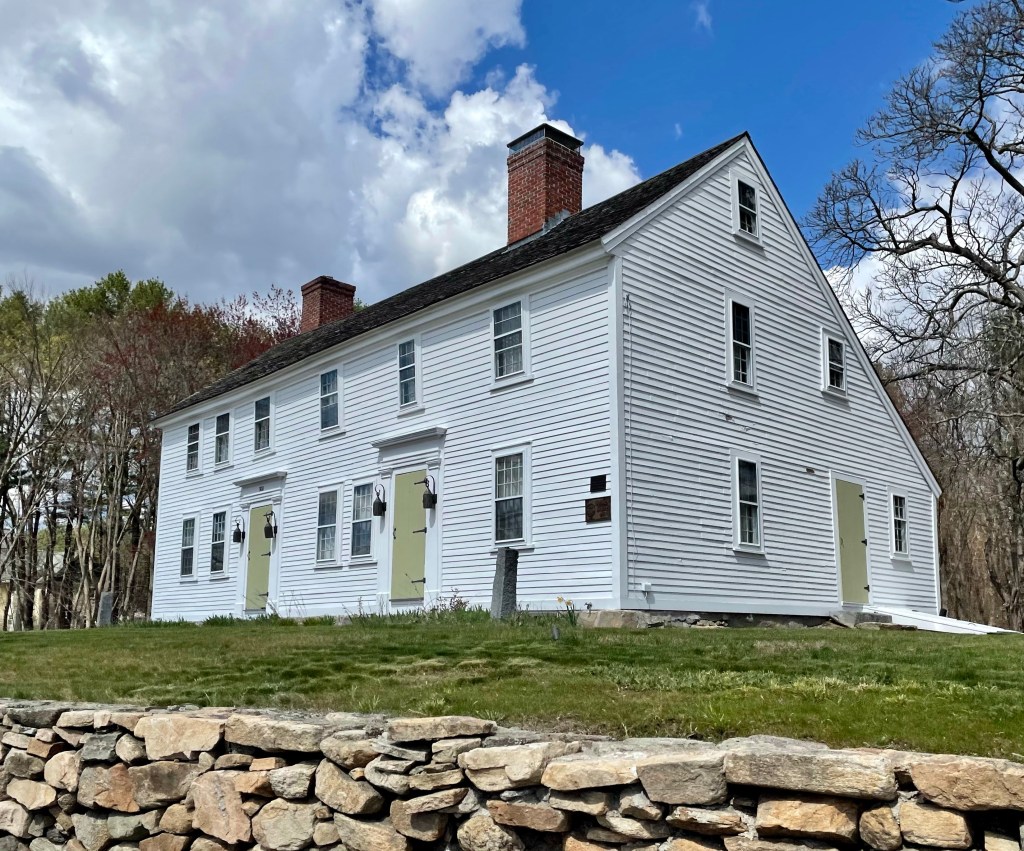
Hosmer House // 1760

This 2-1/2 story wood frame house in Acton, Massachusetts was built in 1760, and is one of the town’s best-preserved colonial-era houses. It is an unusual double house, consisting of one section with a square plan, and the other with a typical colonial “half house” plan, having three bays and an off-center chimney. The house was built by Jonathan Hosmer, Jr., a bricklayer whose workmanship is evident in the house’s many fireplaces. Hosmer was also prominent in civic and military affairs; he served (along with his son, who was killed at 17 years old) in the 1777 Battle of Bennington. The home was later owned by Jonathan’s son Simon, who may have added the attached dwelling, creating the double-house form we see today. In 1974 the property was acquired by the Acton Historical Society, which rents one of the units, and operates the rest of the property as a museum. The home is a great example of a Georgian double-house with a saltbox roof.

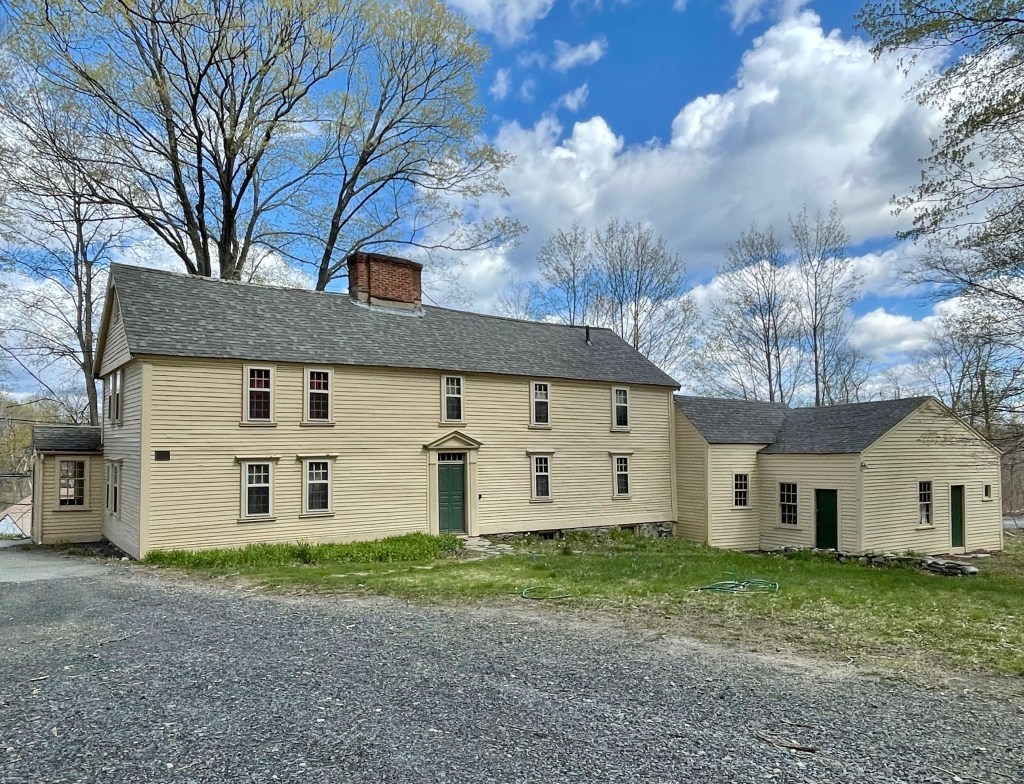
Faulkner Homestead // 1707

One of three pre-1725 houses in South Acton, the Faulkner Homestead is the best preserved First Period house in the area and displays elements from its First Period construction date of 1707 and from the later Georgian period. The home was built for Ephraim Jones, who was one of the first millers starting what was to become the Faulkner mills located near the old homestead. The home was known as a Garrison House, built as a refuge for the settlers in times of Indian raids, but there is no record that it was ever used for that purpose. In the 1730s, the home was rented by Ammi R. Faulkner (1692-1756), who purchased it years after he moved in. The Faulkner Homestead remained in the Faulkner Family for over 300 years, when it sold our of the family in the 1940s.

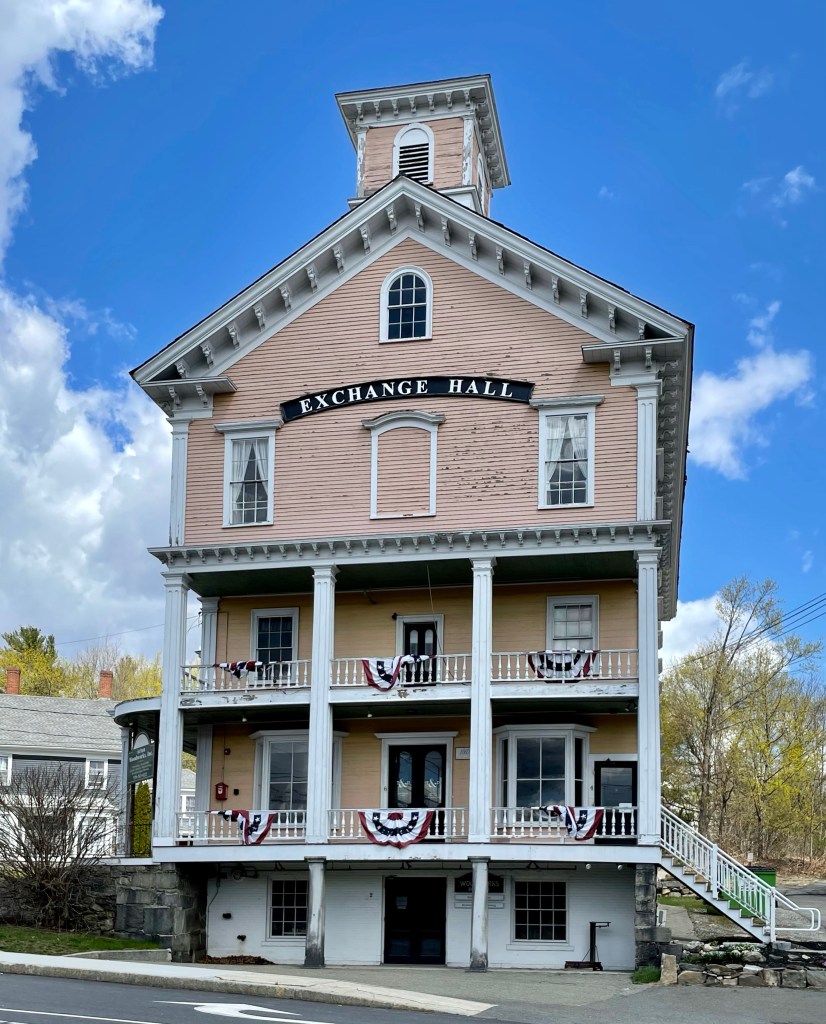
Exchange Hall // 1860

Arguably the most identifiable and iconic building in Acton is Exchange Hall, towering above the small village of South Acton. Exchange Hall was built in South Acton in 1860 to serve a variety of functions, primarily commercial. South Acton, with small milling operations and an ironworks established along Fort Pond Brook, had been a locus of
settlement since the earliest years of the 18th century. While the town’s village center evolved to the north, South Acton remained the site for industrial and economic development into the 19th century, spurred by the arrival of the Fitchburg Railroad from Boston in 1844. On the eve of the Civil War, South Acton supported a number of thriving
businesses, most under the aegis of three men: James Tuttle, his brother Varnum Tuttle, and Elnathan Jones Jr. The latter was the great-grandson of Samuel Jones, who established a successful tavern and store across the road from the site (a previous post). At the cost of $10,000, the three men financed the construction of Exchange Hall, designed to serve as the focus for the group of shops they ran together. The Italianate style Exchange Hall is 3 1/2-stories atop a raised foundation, with full length porches, stunning proportions, and a cupola at the roof.