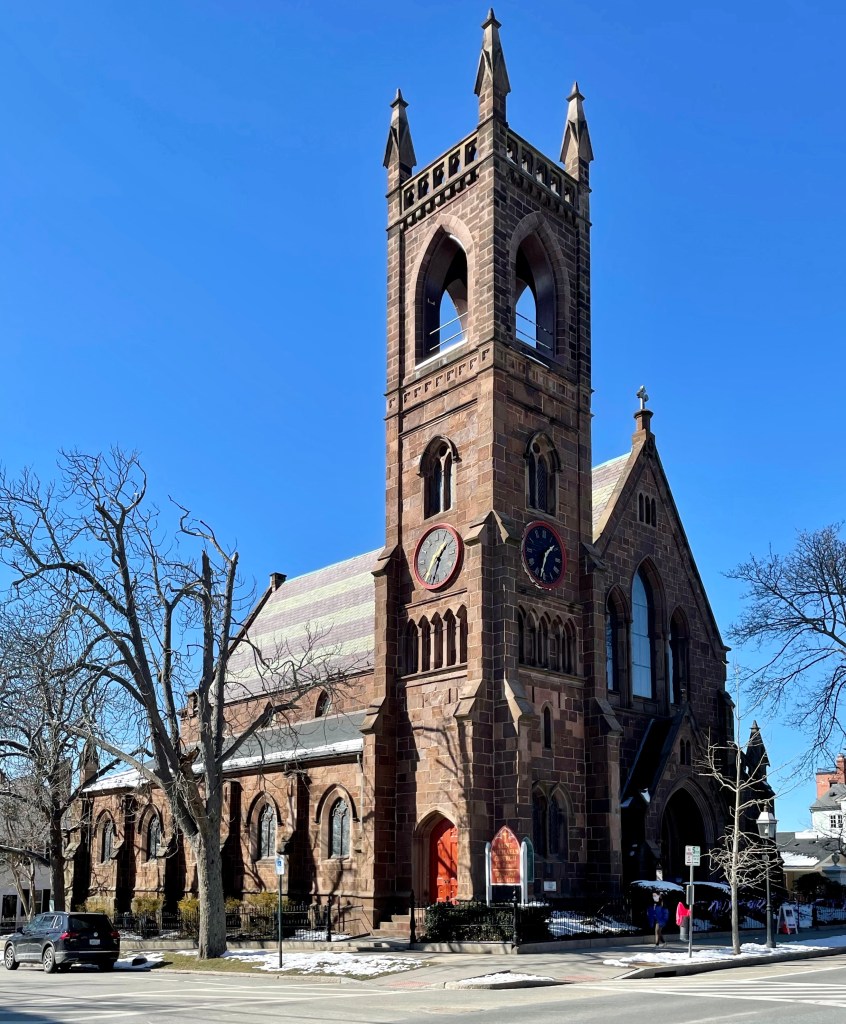
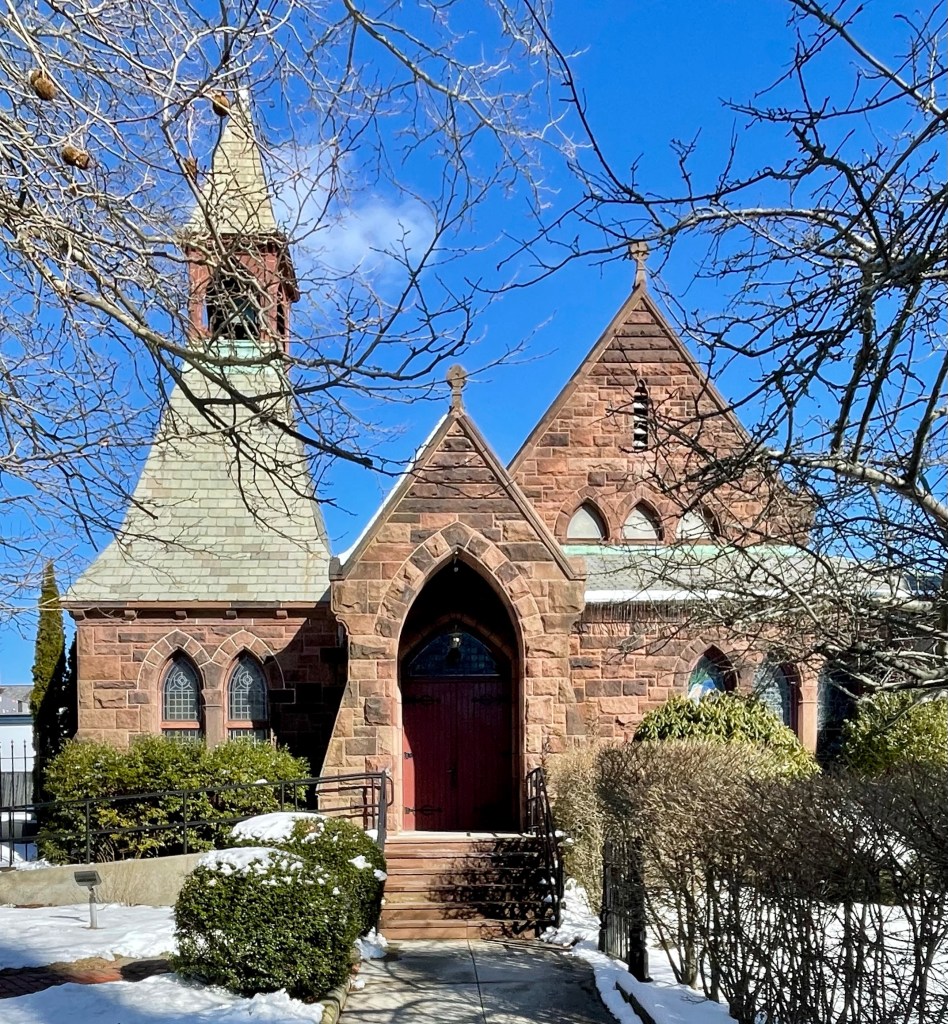
St. Michael’s Episcopal Church // 1860

While I love the quintessential white, wood-frame New England churches that proliferate the region, the stone, Gothic churches always make me stop in my tracks; and this example in Bristol is no exception! St. Michael’s parish was founded in 1718 as one of the Rhode Island’s four colonial churches, funded and overseen from London. The first church, built in 1720, was ironically later burned during a British raid in 1778. It was replaced in 1785 by a plain wooden meetinghouse with funds from local residents and partitioners. In 1833, it was replaced by a wood-frame Gothic church which burned in 1858. Undeterred, the church hired New York City architects Alexander Saeltzer and Lawrence B. Valk, who designed the present brownstone Gothic Revival church. Just over a decade later, the church hired Worcester architect Stephen C. Earle, to design a chapel and parish house, across the street. The chapel building follows the Gothic Revival style, but with more Victorian flair, and is also constructed of brownstone to compliment the church. Together, the two structures transport you to the English countryside with their design and presence on the main street in town. What do you think of them?
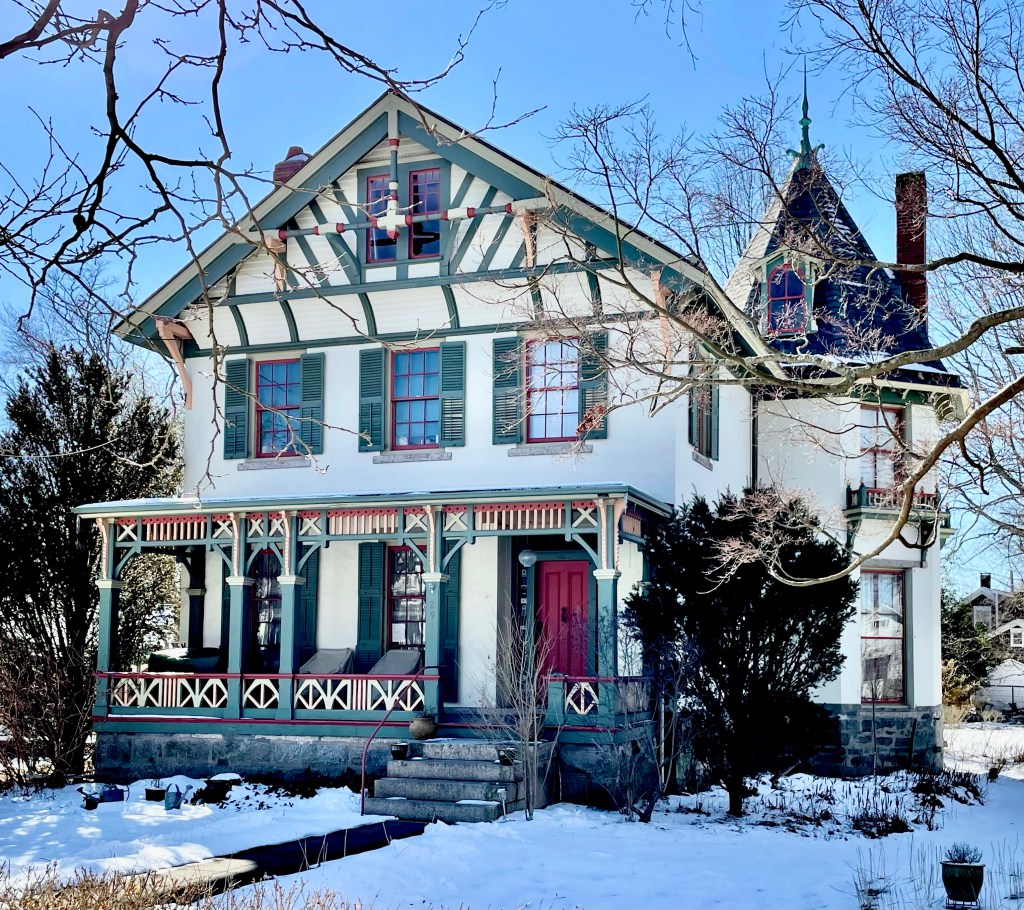
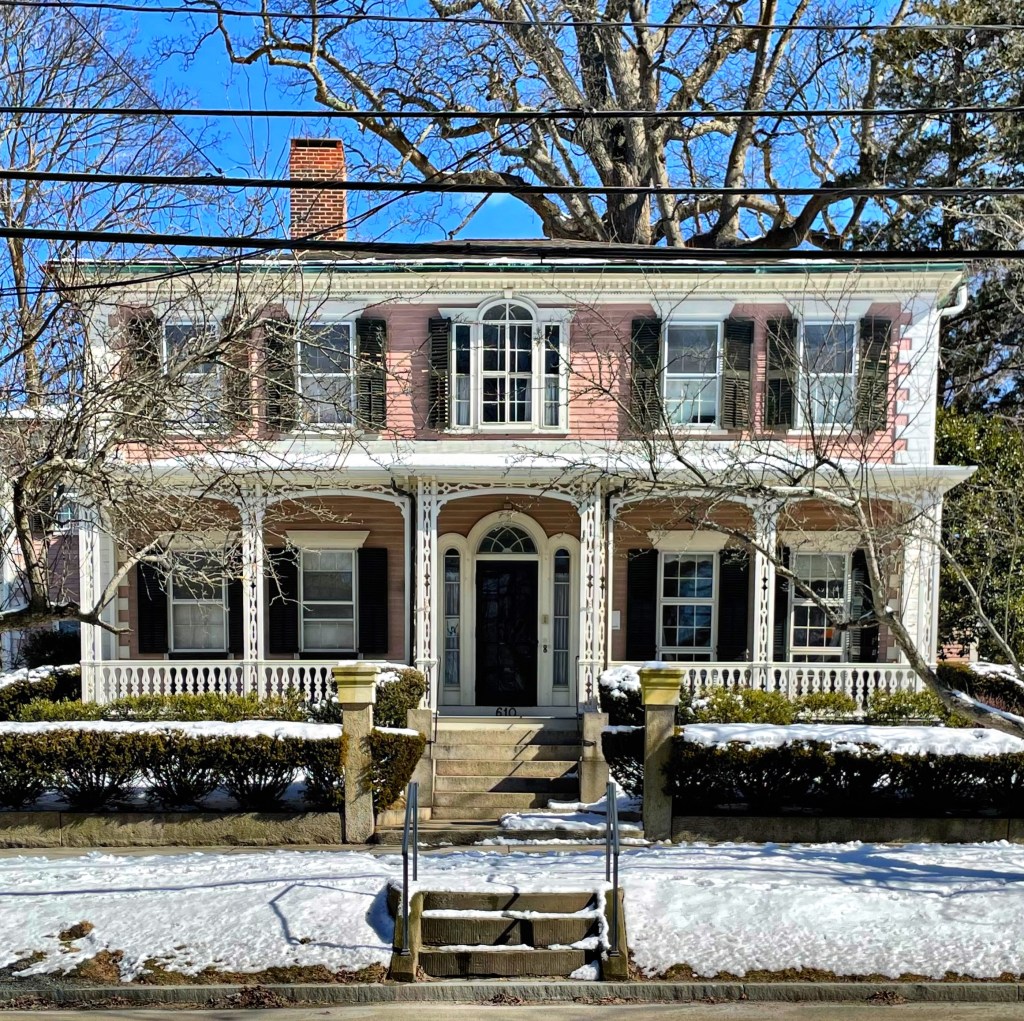
DeWolf-Guiteras House // c.1835

This incredibly unique and flawless home in Bristol was apparently built by the infamous James DeWolf. Historic records state that the slave trader built the home for his son William Henry, but that is unlikely as he was the owner of the family mansion, Linden Place at that time. Therefore it is likely that another of James’ sons William Bradford DeWolf was gifted the home, roughly at the time of his marriage in 1835. The home was a 2 1/2-story Greek Revival home. By the 1880s, the property was sold to Dr. Ramon Guiteras, a urologist, who had the house stuccoed, fashionable Stick style trim applied across the facade, a full-width bracketed porch, and two-story octagonal tower on the side. The home is now owned by the neighboring church who restored it in the 1970s and maintain it beautifully to this day.

Colt Memorial School // 1906

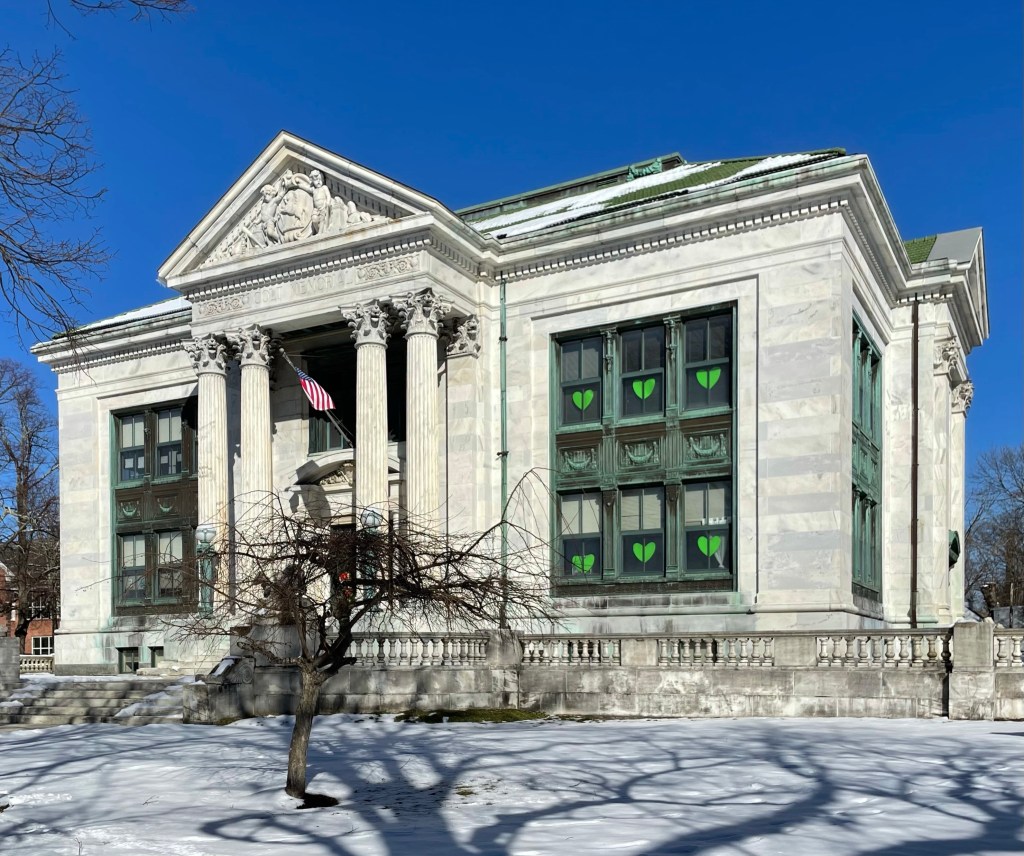
Similar to Burnside Memorial Hall nearby, this school building in Bristol was also constructed as a memorial, in the form of an architectural statement-piece. The school building was gifted to the town of Bristol by Samuel P. Colt, who resided in a mansion nearby, Linden Place, and also owned a massive country estate in town, where his prized cows were cultivated. The school building was funded as a gift in memory of his mother Theodora DeWolf Colt and showcases his everlasting love for her. Designed by Cooper & Bailey of Boston, this monumental, 2-story, hip-roof Renaissance Revival structure was built of white marble with 2-story, cast-bronze window bays. The symmetrical facade has a central Corinthian portico with fluted columns and a pediment containing cherubs around the Colt family crest. The school was used as the town high school until the 1960s when it was outgrown, the building has since been used as an elementary school, the nicest one I have ever seen!

Burnside Memorial Hall // 1883

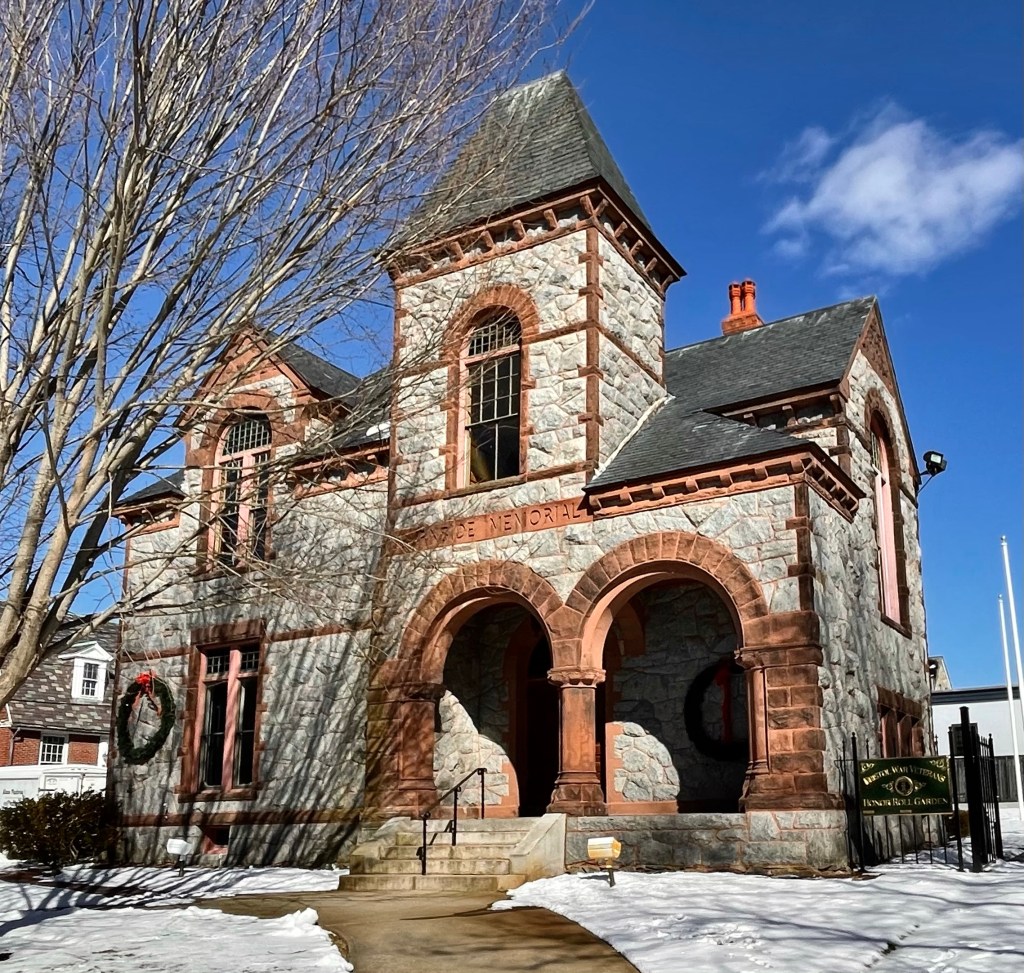
Located on Hope Street in Bristol, the Burnside Memorial Hall stands out as an elaborate, poly-chromed, two-story Richardsonian Romanesque public building. The Town of Bristol required a new town hall, and hired Worcester-based architect Stephen C. Earle to design the new structure. Earle’s program was to combine a town hall with a memorial to Major General Ambrose E. Burnside, Civil War hero, thrice governor of Rhode Island, and later United States senator, who died in 1881. The centerpiece of Burnside Memorial Hall was to be a statue of the general on its porch, long since removed from the building. Bristol town offices were removed from the building in 1969, and shifted to a bland building attached at the rear, Burnside Hall now serves purely as a memorial. Fun Fact: Burnside was noted for his unusual beard, joining strips of hair in front of his ears to his mustache but with the chin clean-shaven; the word burnsides was coined to describe this style. The syllables were later reversed to give the name we know today as “sideburns”!

Bristol Customs House and Post Office // 1858

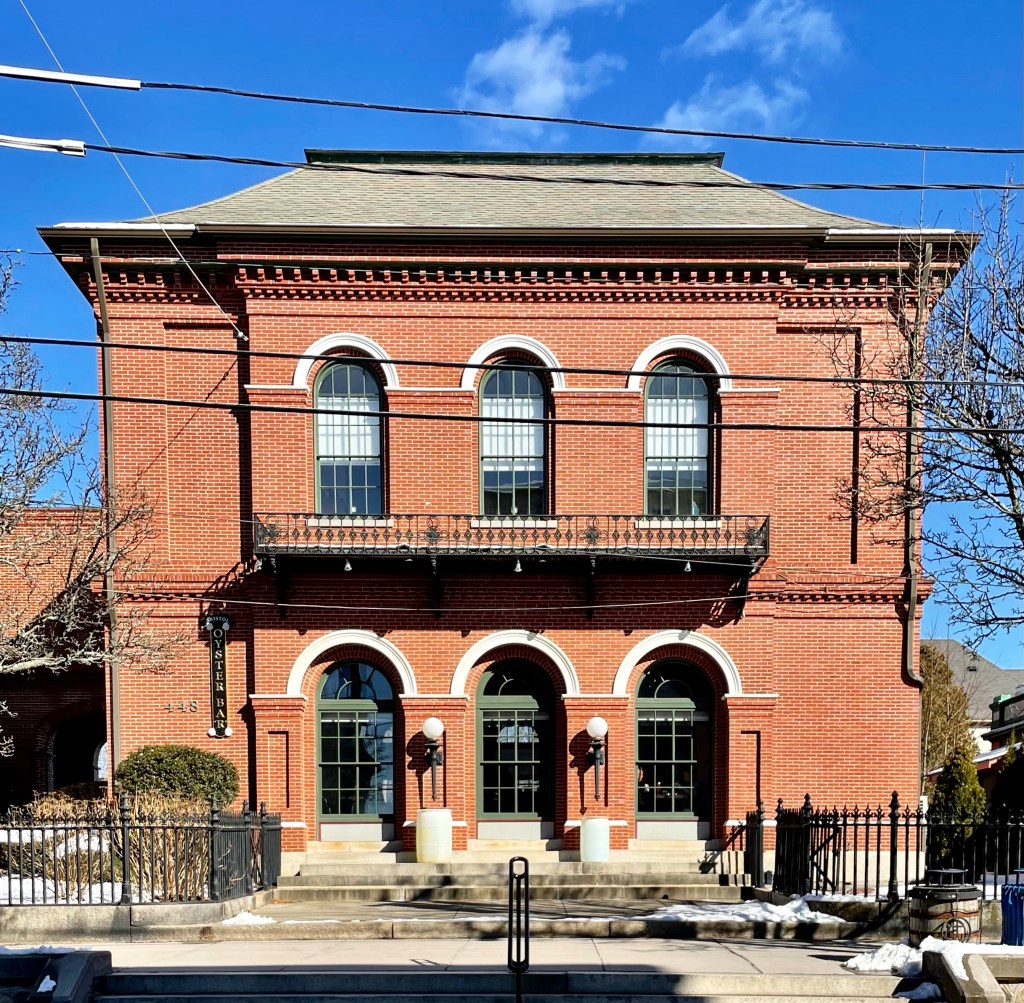
Completed in 1858 from designs by architect Ammi B. Young, the Bristol Customs House and Post Office is a two-story rectangular Italianate style building, that stands out as an uncommon building of the style in town. Ammi B. Young was the first Supervising Architect of the U.S. Treasury Department. As federal architect, he was responsible for designing many custom houses, post offices, courthouses and hospitals across the United States. He was a master of the Greek Revival style so it is interesting to see how he diverged from his trusted style in a town so populated by homes and buildings in the style. The design is more subdued compared to other Customs Houses he designed around the time, likely a response to the declining economy in town from whaling and shipping. The building was occupied as a customs house and post office until 1962, when it was abandoned. The adjacent YMCA purchased the building soon after, connecting it via a small addition and occupying it as additional programming space until 1990. The building was restored and is now home to the Bristol Oyster Bar.

Bristol YMCA Building // 1899

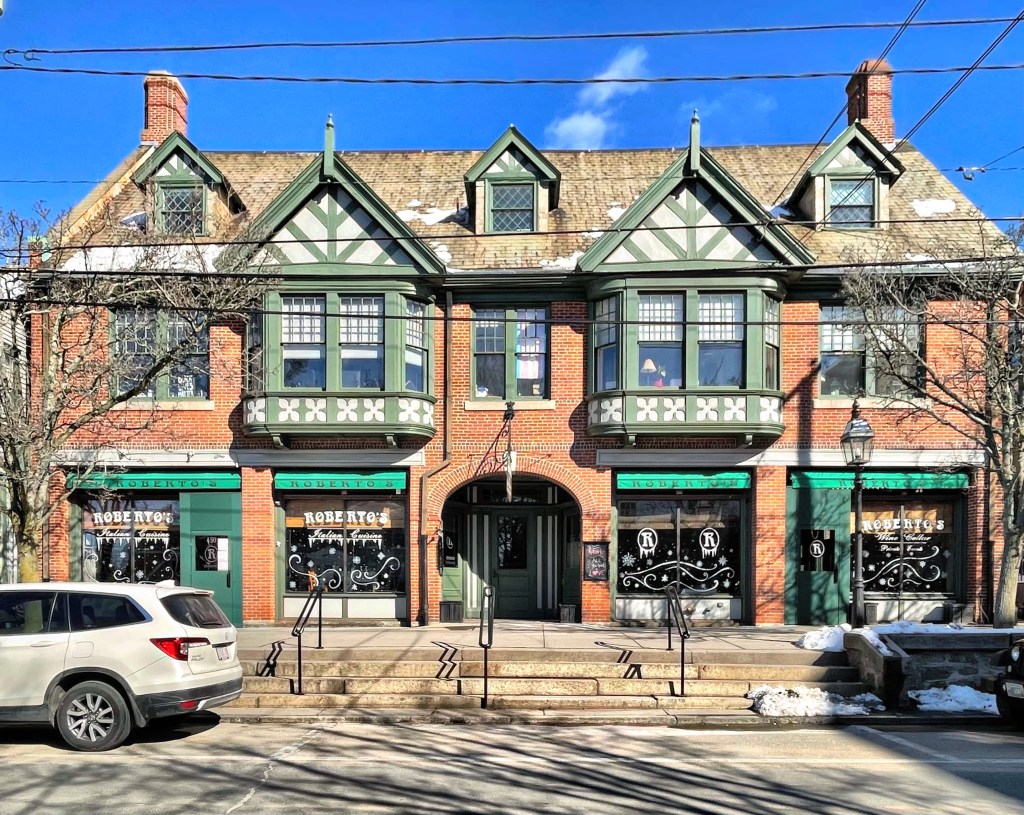
In 1899, the Bristol Young Men’s Christian Association (YMCA) selected architect Wallis E. Howe to design this five-bay, gable-roof, Tudor Revival building as its headquarters. Architect Howe created a rich effect with red brick and white mortar in combination with Tudor half-timbers in green, and buff-colored stucco. The building is a rare example of the Tudor style in Bristol, but is one of the most successful in the state (in my opinion), due to its strong presence and massing working with the use of materials and colors. The large central archway led upstairs to a library and gymnasium for use by YMCA members, while the ground floor featured four small businesses. In 1967, a new entrance and lobby, was constructed, linking the original YMCA to the since abandoned Bristol Customs House and Post Office.

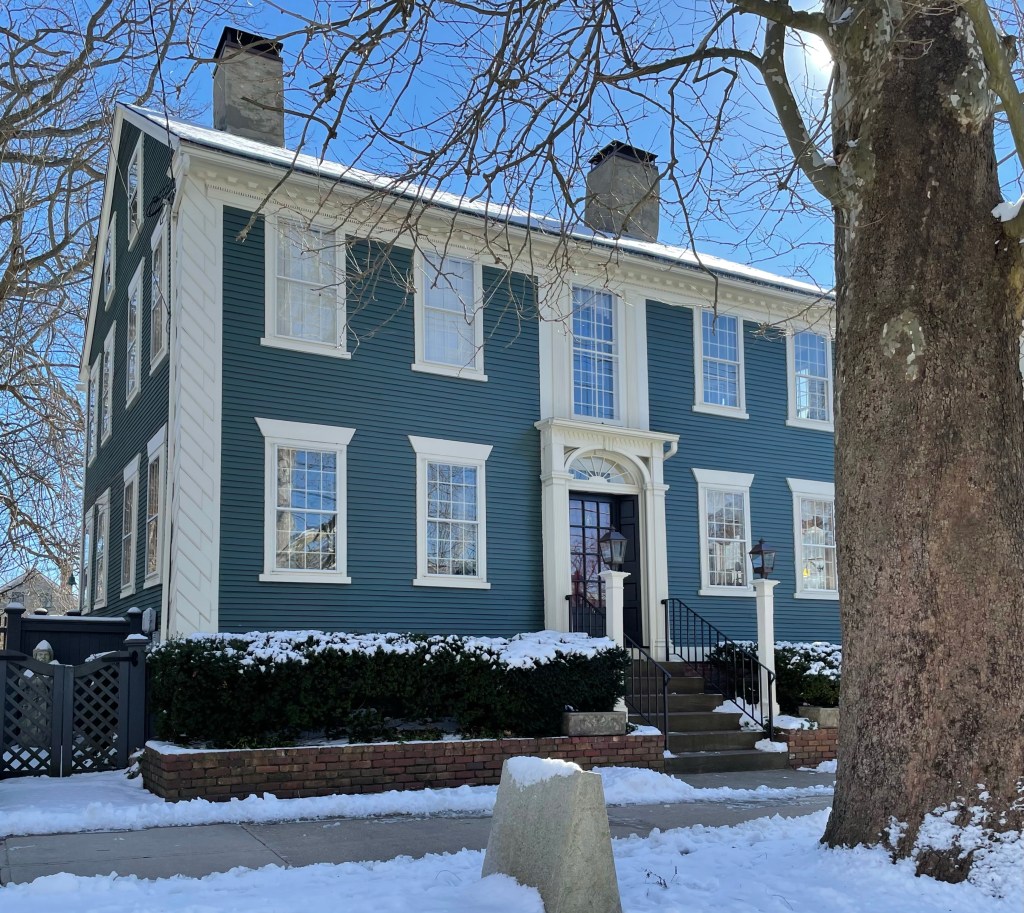
Luther-Babbitt House // 1809

In 1809, Giles Luther built this two-story, 5-bay, hip-roof Federal house, which has been substantially enlarged and altered over the years in succeeding styles. Original detailing on the facade includes the Palladian window, modillion cornice, quoins, and wide-beaded window casings with splayed lintels. Giles Luther (1775-1841), a shipmaster, merchant, and farmer, was more importantly the first Grand Marshall of the Bristol Fourth ofJuly Parade, which is believed to be part of the oldest Fourth of July celebration in the country. In 1825 Luther’s business failed; the Commercial Bank took this house and sold it in 1828 to Jacob Babbitt. Babbitt owned part of a wharf in town and in his will of 1849, he left the “use and improvement” of this house to
his son Jacob, Jr. (1809-1862). The younger Babbitt was wealthy and likely made the mid-19th century modifications to the home, including the Italianate triple-arched door and full-width porch with delicate cut-out posts and railings. The home was occupied for much of the 20th century by the Bristol Nursing Association, and sold in the 1970s to a private owner. The home was for a period ran as a bed & breakfast but appears to be back to a private residence today.

Russell Warren House // 1807

Architect Russell Warren (1783-1860), who I have featured on here numerous times, built this 2-story, 5-bay, hip-roof Federal house in Bristol, Rhode Island. This residence as interpreted by Warren as an example of the Federal style with stylistic features most notably being the angulated quoins (at the corners of the house). The house was designed for William Van Doom, a Bristol tailor of modest means. In 1814, Warren, a young and aspiring architect, saw the significant wealth in Bristol and decided to buy this home he designed. Siting himself in the vicinity of the extremely wealthy DeWolf family, he gained recognition and success by designing three expensive and elaborately crafted houses for them at this time, only Linden Place remaining. Warren lived in this house from 1814 until 1823.

“Seven Oaks” // 1873

When strolling around Bristol, Rhode Island, you are overloaded with gorgeous early 19th century house styles, primarily in the Federal and Greek Revival styles. Among these, one house (or should I say mansion) stands out as a flamboyant Victorian Gothic showpiece at the southern end of the downtown area. Built in 1873 for Augustus O. Bourn (1834-1925), the founder of the National Rubber Company (and from 1883 to 1885 governor of Rhode Island), “Seven Oaks” could go toe-to-toe with any house in the state. Bourn’s architect was James Renwick of New York, one of the most celebrated architects of his time. Before designing Seven Oaks, Renwick’s resume included: Smithsonian Institution Building, Washington, D.C.; St. Patrick’s Cathedral, New York City; and the Renwick Gallery, Washington, D.C.. Seven Oaks is a large, hip-and-cross-gable-roof Victorian Gothic mansion constructed of stone, with multiple towers and a slate roof capped with iron cresting.

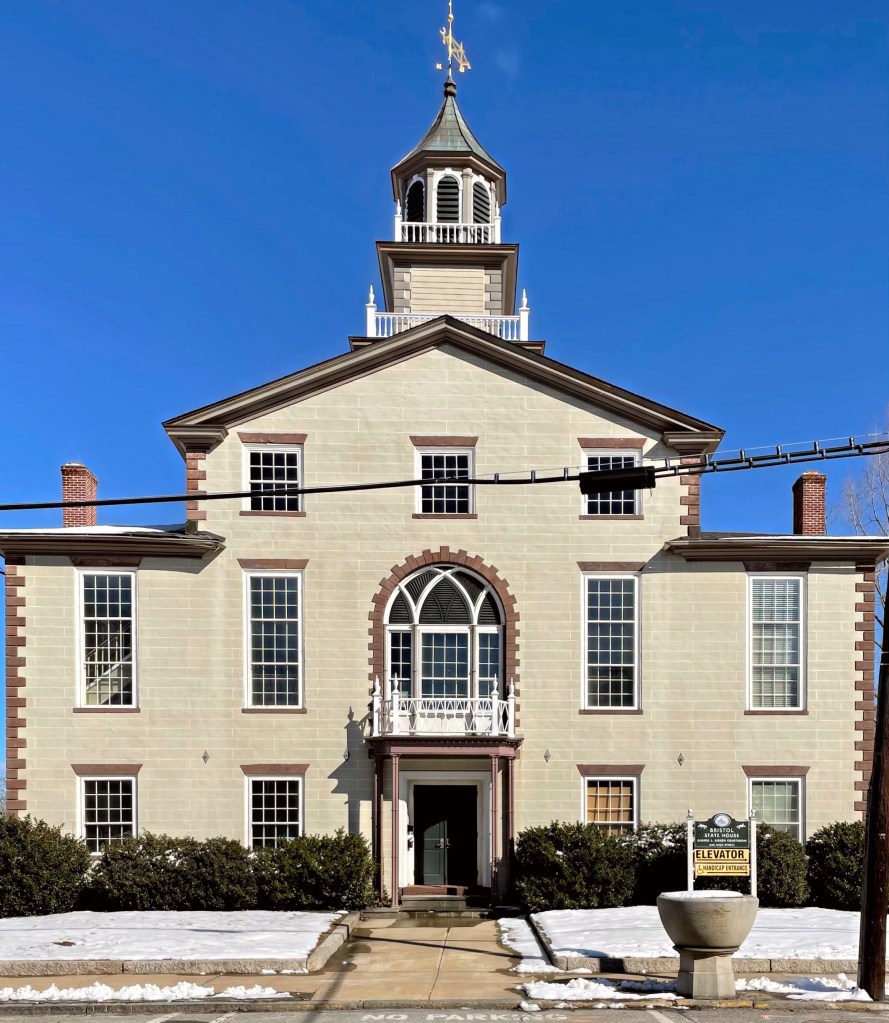
Bristol County Courthouse // 1816

Located on the Bristol Town Green, facing the main commercial area and harbor, the old Bristol County Courthouse is a well-preserved example of a building for civic use in town, at the height of its growth. It is believed that the courthouse is the work of architect Russell Warren, who lived in a home he designed just blocks away. This Federal-style stone building is faced with brick and subsequently stuccoed, giving it the unique composition it has today. The focus of the symmetrical facade is the large central arched window with granite quoins, and Y-tracery that echos Gothic design. As part of the 1836 state Bicentennial, the stucco facing was added over the original brick facing, and the exterior was painted a Gothic Revival sand color with darker trim, replicated in a 1976 restoration. From 1819, the courthouse served as one of the five state houses used in rotation by the Rhode Island General Assembly (in 1854, the General Assembly decided to meet only in Providence or Newport). In 1853, it reverted to courthouse use, a function which ceased in the early 1980s. The Bristol County Sheriff maintained offices there until 1997, when the building was purchased from the state for $1 by the Bristol Statehouse Foundation. The nonprofit foundation has worked to restore and maintain the building. Today, the building is used for education, community programs, meetings, and events.