Smith-Miller House // 1893

Located on stunning West Broadway in Bangor, Maine, the Smith-Miller House stands out as a beautiful blending of the Shingle and Queen Anne styles. Built in 1893 from the designs of Connecticut architectural firm Cook, Hapgood, and Company, the home was featured in The American Architect and Building News journal for its design success. The home is clad with continuous cedar shingle siding, with a prominent corner tower, wrap-around porch, and porte-cochere, all together provide complexity and intrigue on the street of large homes. What do you think of this home?
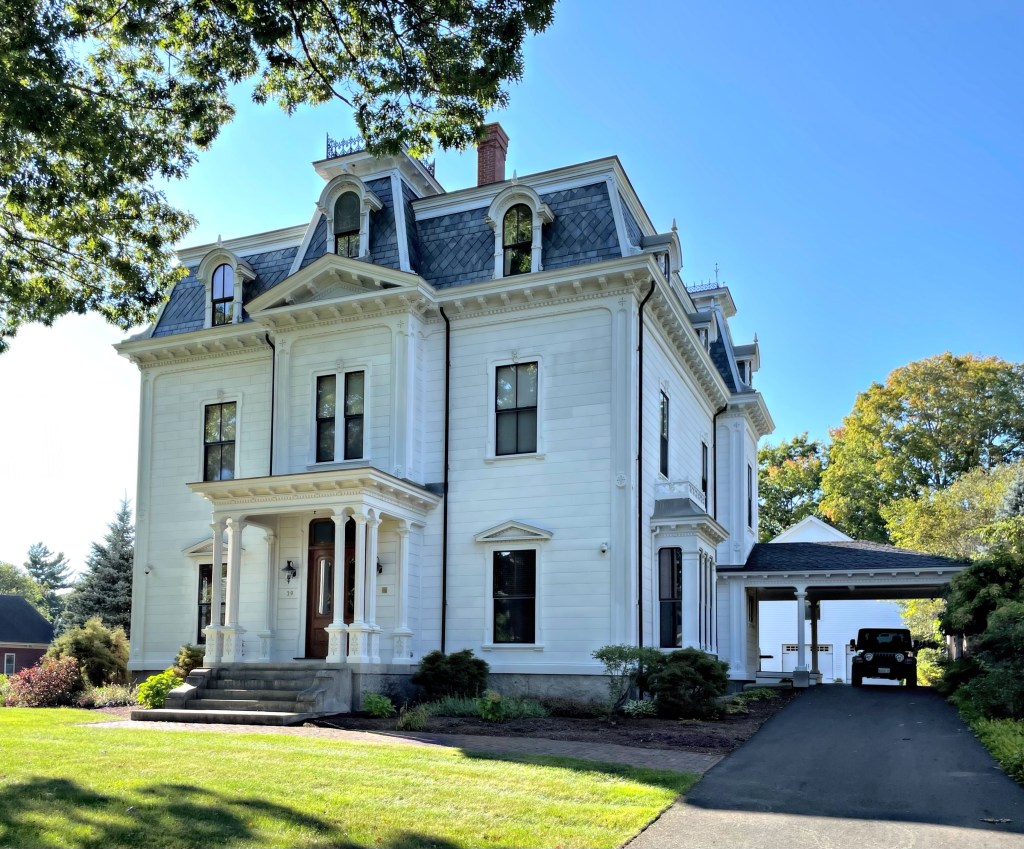
Charles P. Brown Mansion // c.1872

Located next to the famed Stephen King House in Bangor (last post), this stunning Second Empire house was purchased by Stephen and Tabitha King in 2004, creating a small historic house campus in one of the nicest neighborhoods of the city. The Brown Mansion was constructed in the early 1870s for Charles P. Brown, an attorney who became involved in land speculation in the west. During and immediately following the Civil War, Brown purchased large land holdings in the “western frontier” in Minnesota and farther west, and re-sold the land years later at a huge profit when development began. He was thought to be one of the richest men in Maine upon his death in 1892, but it was discovered that many land holdings possibly vanished (or he lied about having much more land to his family), leaving his executors of his will very upset. The man who was estimated of having a net-worth of over $1,000,000 in 1892 (more than $31,000,000 in dollars today), left just $16,000, split between his two daughters, leaving nothing to his sister, whom he had been living with for the final two years in his life.

Joseph C. White House // 1866

Located a short walk from the Stephen King House in Bangor, this stunning Second Empire style house shines just as bright! This house was built in 1866 for Joseph C. White, a dry goods merchant in town. Just years after it was completed, he sold the mansion, possibly due to upkeep. The two-story mansard-roof house is clad in wood siding, scored to resemble stone rustication, a method to make the home appear more expensive. The corner entrance with later enclosed second-floor porch, massive brackets, and scrolled dormers add a lot of Victorian flair to the home. Would you move in here?

Stephen King House // 1854

Stephen King, the world-renowned author of some of the most popular horror novels, was born in Maine, and has used the state as the setting for many of his stories. From blood-soaked Carrie, to the haunted hallways in The Shining, to the evil clown Pennywise in “It”, Stephen King has long been one of the leaders in horror, terrifying millions with his books and film adaptations. Instead of living in a larger metropolitan area, he has long resided in Bangor, Maine, in one of the most visually striking homes in the state. The home was built in 1854 for William Arnold, who operated prosperous livery stables in town. The home is a rare example of an Italianate Villa in the state. While Stephen King now spends most of his time at his home in Florida, his Bangor mansion with its iconic wrought-iron gate ornamented with spiders and webs, bat-winged creatures, and a three-headed reptile are much more fitting of the horror author’s essence.

Canterbury Shaker Trustee’s Office // 1831

The only brick building in the Canterbury Shaker Village, the Trustees’ Office, built in 1831, served as the office of the Lead Ministry and also housed a U.S. Post Office for the community beginning in October 1848. The building was made of bricks manufactured by a local family. The building was designed as the hub of the Canterbury Shaker’s considerable commercial enterprises. It housed only those Shakers who had the authority to conduct Village business, and they often hosted guests and clients who arrived from distant places, and met with townspeople and local officials to discuss civic matters impacting the community. Due to the community-facing nature of the building, the community spared no expense inside and out.

Canterbury Shaker Horse Barn // 1819

This large, shingled horse barn at Canterbury Shaker Village in New Hampshire, was built in 1819 and measures 60 x 40 feet. The massive barn structure showcases the significance of horses and agriculture for the rural community, which lived off the land.

Canterbury Shaker Ministry Privy // c.1845

Everybody poops, even the Shakers. While not the sexiest building or topic, I couldn’t help but share this mid-19th century privy (outhouse) located in the Canterbury Shaker Village. The small clapboard privy measures just 6.5 x 13 feet and has two chambers, which face outward overlooking the apple orchard, making it a great place to do your business!

Canterbury Shaker Infirmary // 1811

Constructed in 1811 as a guest house for the Canterbury Shakers, this beautiful structure follows the Georgian, center-hall residential floor plan constructed in the Federal period. Shaker records indicate that in 1849, the building was converted to an infirmary and the next year, the roof was tinned and the portico over the front door, called a “jet” by the Shakers, was added. After 1892, the first floor housed the nurses’ quarters, pharmacy, nurses’ sitting room and office and the dentist’s office. Upstairs, the patients’ rooms were fitted with lavatories and running water. The attic was used to store medical supplies and as a mortuary. All for the growing Shaker community here. Following the death of the last nurse in 1937, the building ceased to be used as an infirmary and was used as living quarters for sisters.

Canterbury Shaker Bee House // 1837

The original purpose served by this small clapboard building in the Canterbury Shaker Village, built in 1837 and measuring just 12 x 25 feet is subject to some debate, although it was definitely used as a drying house. Early writings indicate it was built as an apple-drying house while others state that the original purpose was to dry lumber. The present off-center gable-roofed cupola on the gable roof served as a ventilator. In 1865, the building became the headquarters of the bee keepers of the local Shakers.

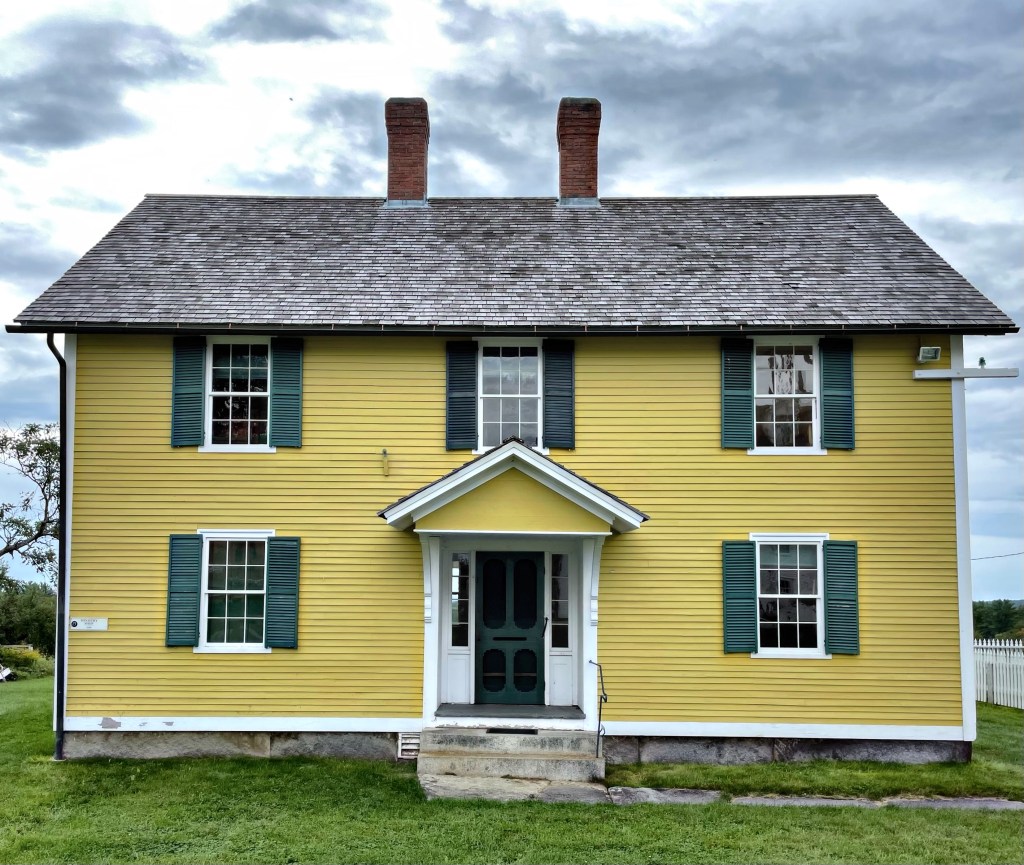
Canterbury Shaker Ministry Shop // 1848

Located just east of the Meeting House at Canterbury Shaker Village in New Hampshire, the Ministry Shop was used initially as a workshop and after 1878, as sleeping quarters for the Ministry, who resided in the Meeting House until that time. Embellishment on the exterior is limited to a door hood over
the recessed entrance, but the proportions and simplicity of the building really shine. The building is currently used as public exhibition space for the museum, and features a historically appropriate paint scheme!