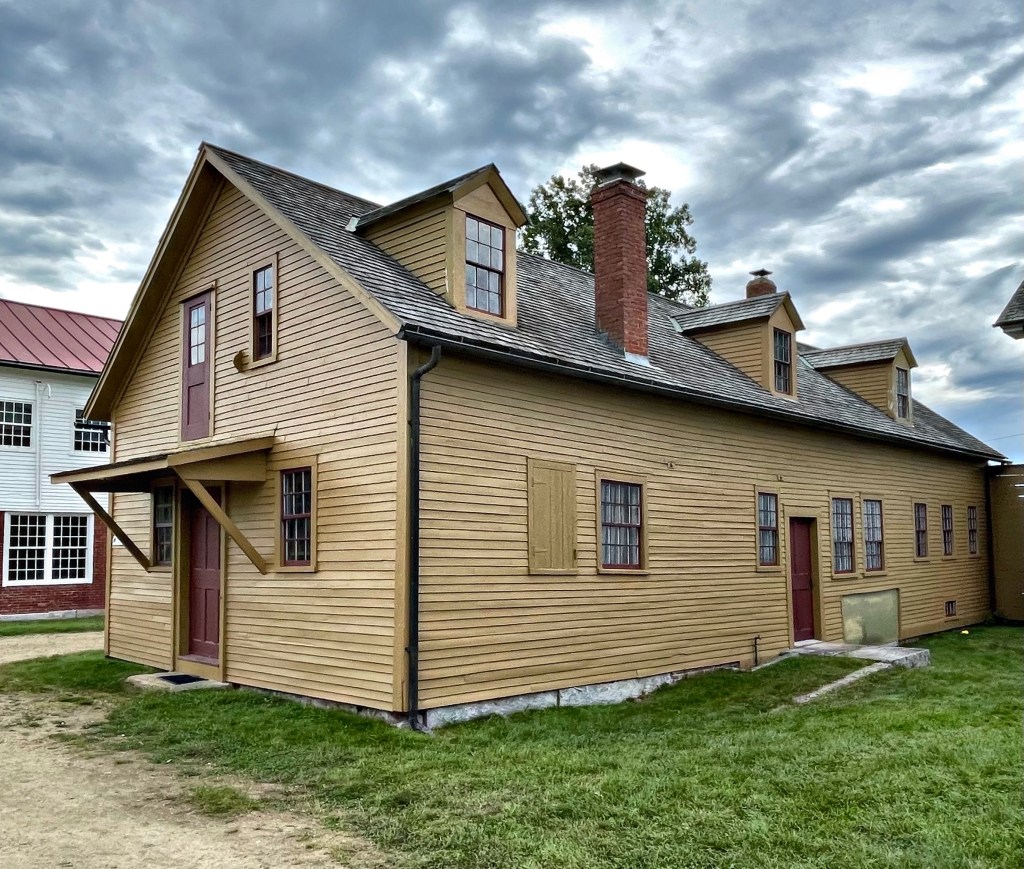
When Benjamin Whitcher donated his farm for the beginnings of a utopian Shaker community, the land and buildings became the catalyst for the next 200 years of Shaker life in the community. It is known that Benjamin Whitcher constructed his farmhouse sometime between 1775 and 1782. With the arrival of the first Shakers in 1783, Whitcher allowed families to reside on the farmland, with the 1790 Census counting 35 people on the Whitcher property. This structure was one of the original structures on the old Whitcher Farm, and is possibly the oldest extant building in the Shaker village today. The building was moved to its present location in 1841 and was used for distilling sarsaparilla syrup for medicinal purposes by members of the community.
The second oldest purpose-built building in the Canterbury Shaker Village (after the 1792 Meeting House), is the dwelling house, constructed in 1793. The T-shaped structure was expanded numerous times and contains 56 rooms. The structure is the largest in the village and is notable for the large domed cupola, housing a Paul Revere bell. The first floor contained the village butcher shop, bakery, communal kitchen and dining room. For many years the second floor consisted of four bedrooms, two for elders and two for the sisters and the brethren. The third floor is also devoted to dwelling rooms. The Dwelling House was the residence of Canterbury’s last remaining Shaker sister, Ethel Hudson, who died in September 1992, the 200th anniversary year of the founding of the Canterbury Shaker community.
The Canterbury Shaker Village was one of two Shaker communities existing in present-day New Hampshire (the other being Enfield Shaker Village, featured previously on here). In 1782 Israel Chauncey and Ebeneezer Cooley from the Mount Lebanon village of Shakers traveled to Canterbury and converted several prominent figures of the community by convincing some of the Christian farmers that the Shaker way was what they had been seeking. Among those converted to the Shakers, the Whitcher, Wiggin and Sanborn families, donated land to house the Canterbury Village community of Shakers and the Canterbury Village was founded in 1792, led by Father Job Bishop. The village expanded over time, and in 1803 there were 159 members in three families. Nearly fifty years later in 1850, the site contained 3,000 acres with a community of 300 housed in 100 buildings!
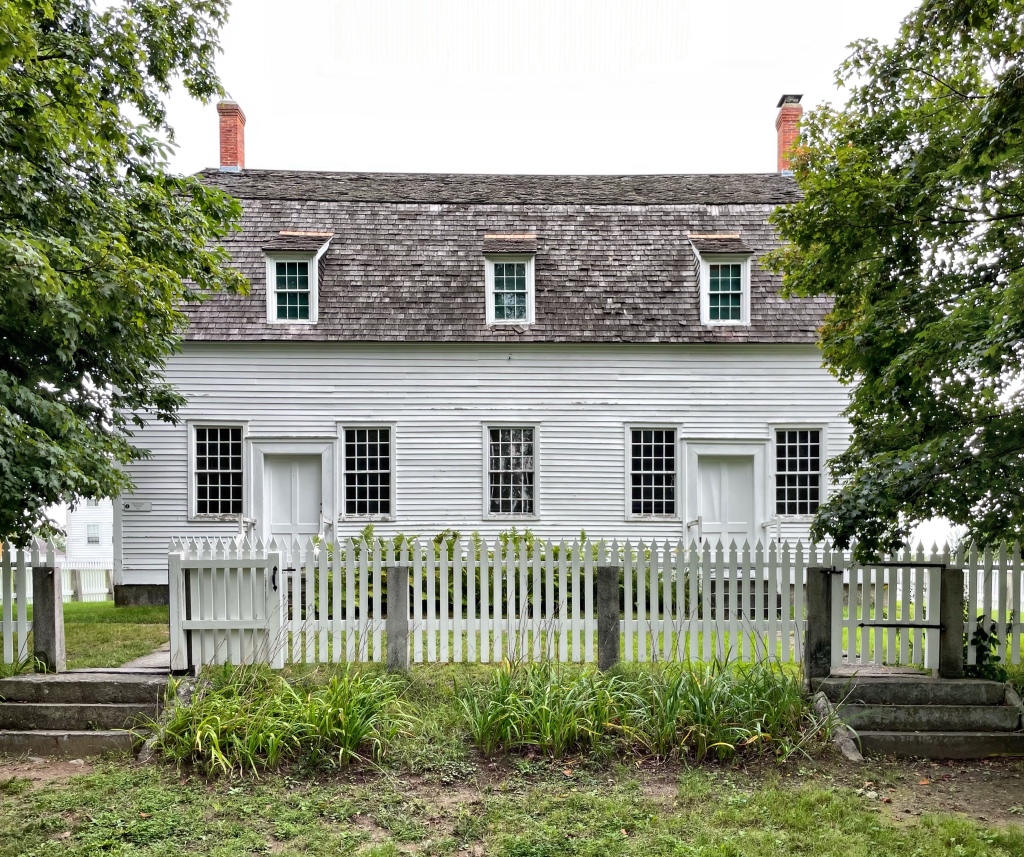
The first building of the Canterbury Village was the Meeting House. The Gambrel roofed building was constructed by members in reverent silence and supervised by Moses Johnson (1752-1842) who served as master builder of seven Shaker meetinghouses all over the Northeast. Inside, there were two stairways, one for men and one for women, located in the northwest and southwest corners of the building, each easily accessed by separate entrances, which led brothers and sisters from the first floor meeting room to the second story sleeping lofts.
In 1992, Canterbury Shaker Village closed, leaving only Sabbathday Lake Shaker Village open as a functioning community. There are apparently only two active Shakers left in the country, both at Sabbathday Lake in Maine. Many other villages like Canterbury, have been converted to museums, which give historians and the general public a great insight into how these places have functioned.
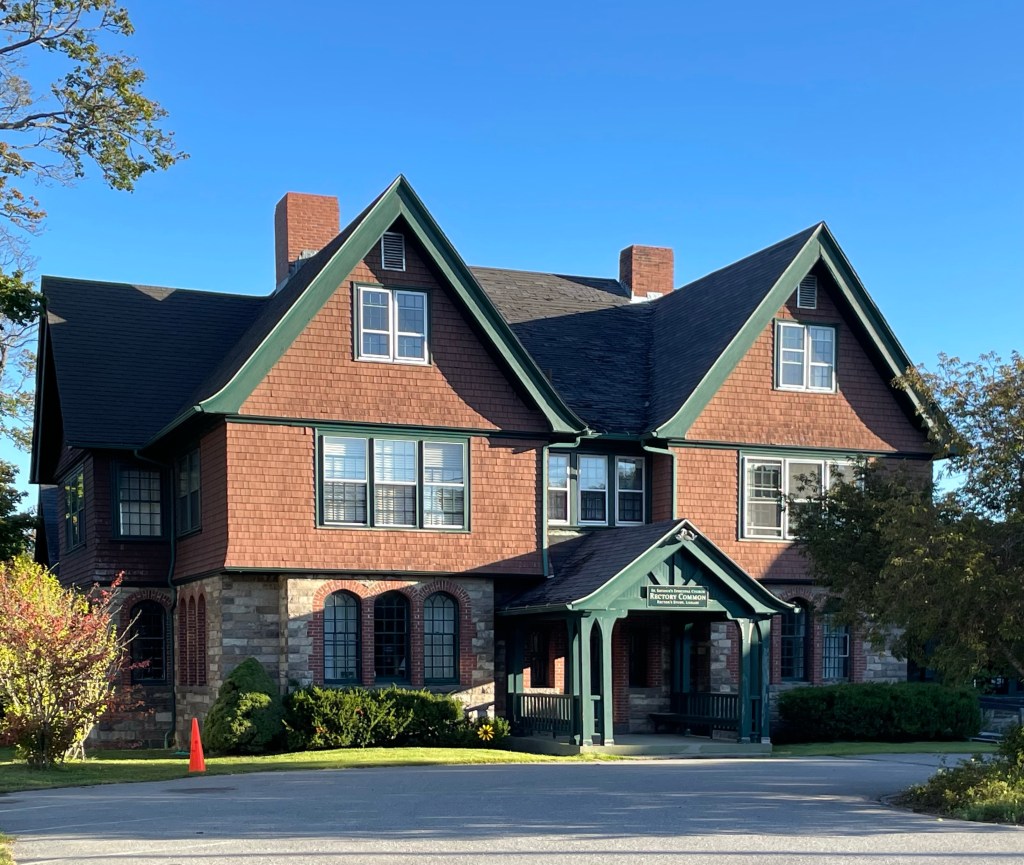
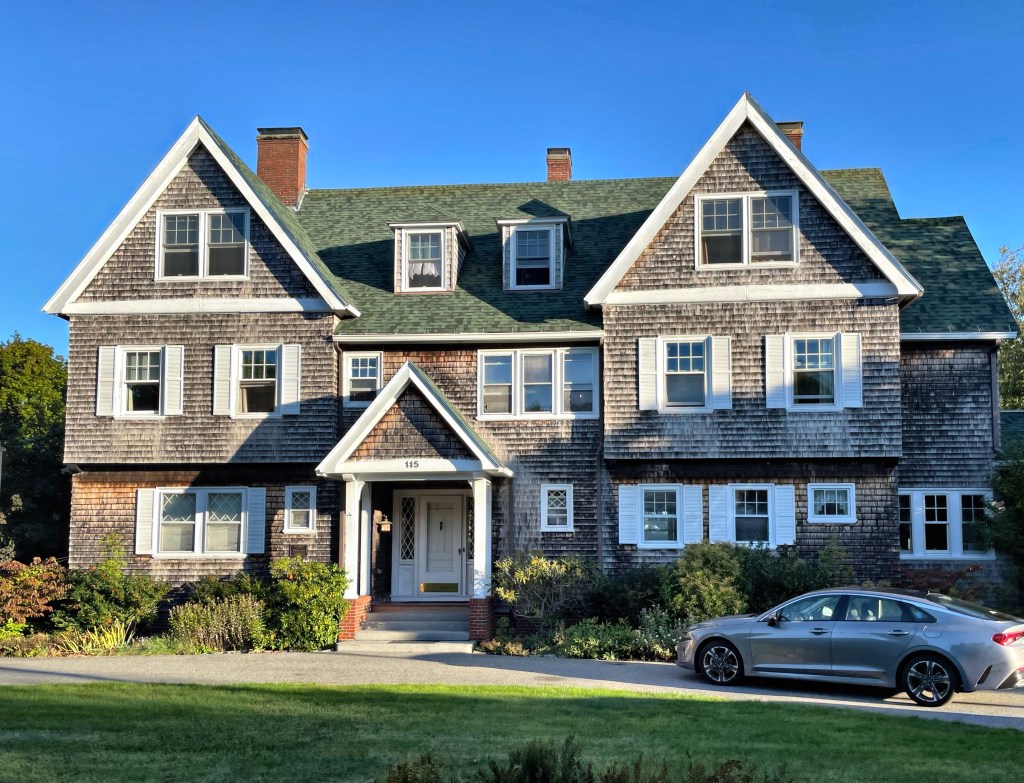
Standing adjacent to the beautiful St. Saviour’s Episcopal Church in Bar Harbor (last post), the church’s Rectory building fits very well into the landscape here. Built in 1898, the rectory is a two-and-a-half-story stone and frame home with a projecting entrance porch at the facade framed by a pair of steeply pitched gables. The Rectory was designed by Westray Ladd who grew up in the area, and worked in the office of Wheelwright & Haven in Boston, Massachusetts as well as with William Emerson and Peabody & Stearns before opening up a firm in Pennsylvania.
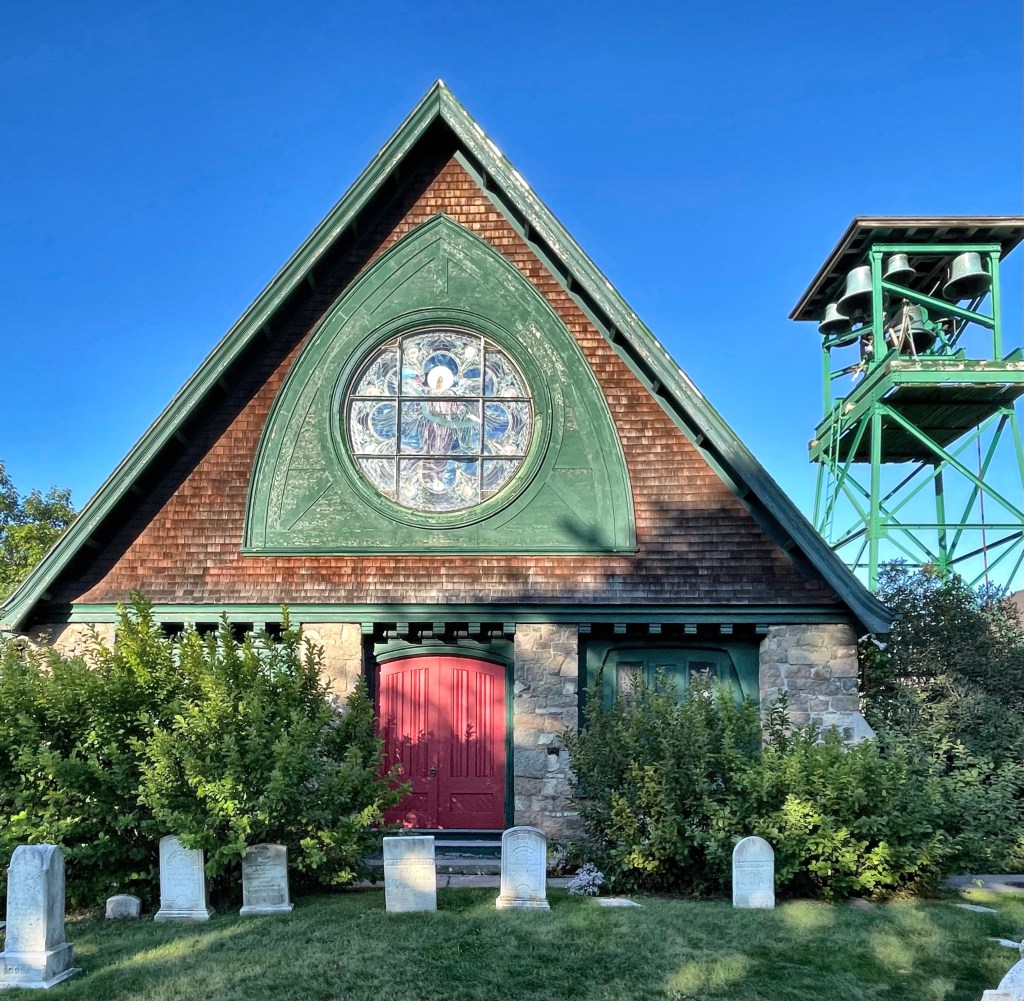
Initially erected in 1877 and enlarged several times thereafter, the St. Saviour’s Episcopal Church in Bar Harbor is an excellent example of ecclesiastical architecture in the state of Maine. The original church building had been erected in 1877-78 at a cost of about $7,000 from designs by the New York architect Charles C. Haight. Within eight years of its construction, space limitations caused the church to undertake a major expansion. Designed by the Boston architectural firm of Rotch and Tilden, this building campaign – carried out in 1885-86 – dramatically changed the church’s appearance by developing a cross shaped plan that made use of the original structure for transepts and added a larger nave, semi-circular apse, and an imposing crossing tower. The numerous building campaigns designed by both prominent and lesser known architects, have produced a rich eclectic architectural legacy that mirrors the development of Bar Harbor.
Bar Harbor’s first library is believed to have been organized in 1875 by a group of summer residents. This collection of 176 volumes was assembled for the use of Mt. Desert’s permanent residents and made available to them for two nights per week. A small frame library was built in 1877. In 1883, the growing collection was turned into a subscription library with borrowing privileges charged at the rate of $1.00 per family, but the fee was dropped three years later. By the late 19th century, the village’s population boomed, especially in the summer months when wealthy families descended upon the sleepy town every year to take in the cooler climate and sweeping scenery of Mount Desert Island. Acknowledging the need for a more suitable library, Maria Van Antwerp DeWitt Jesup, the widow of Morris K. Jesup (1830-1908), a New York financier and long-time summer resident of Bar Harbor, gifted the town funds to erect a new building as a memorial to her late husband. The Colonial Revival style library was designed by the New York firm of Delano & Aldrich, and exhibits a beautiful centered entrance recessed in a limestone arch.
The marriage of Anna Perkins Pingree to Joseph Peabody in 1866 was a merging of two of the most influential and wealthy families of Salem, Massachusetts. The marriage however did not meet the mark, as the couple eventually had a large falling-out after purchasing a mansion in Boston’s Back Bay neighborhood in 1877. In her time away from her estranged husband, Anna became heavily involved in the arts, collecting hundreds of paintings and decorating her homes in Boston, Ipswich, and her new summer cottage in Bar Harbor. In 1896, she had her Bar Harbor cottage built on West Street, a road of substantial summer homes right next to downtown. The Colonial Revival “cottage” sits on the waterfront of Frenchman Bay and has only 12 bedrooms and 7 bathrooms, in 12,500 square feet.
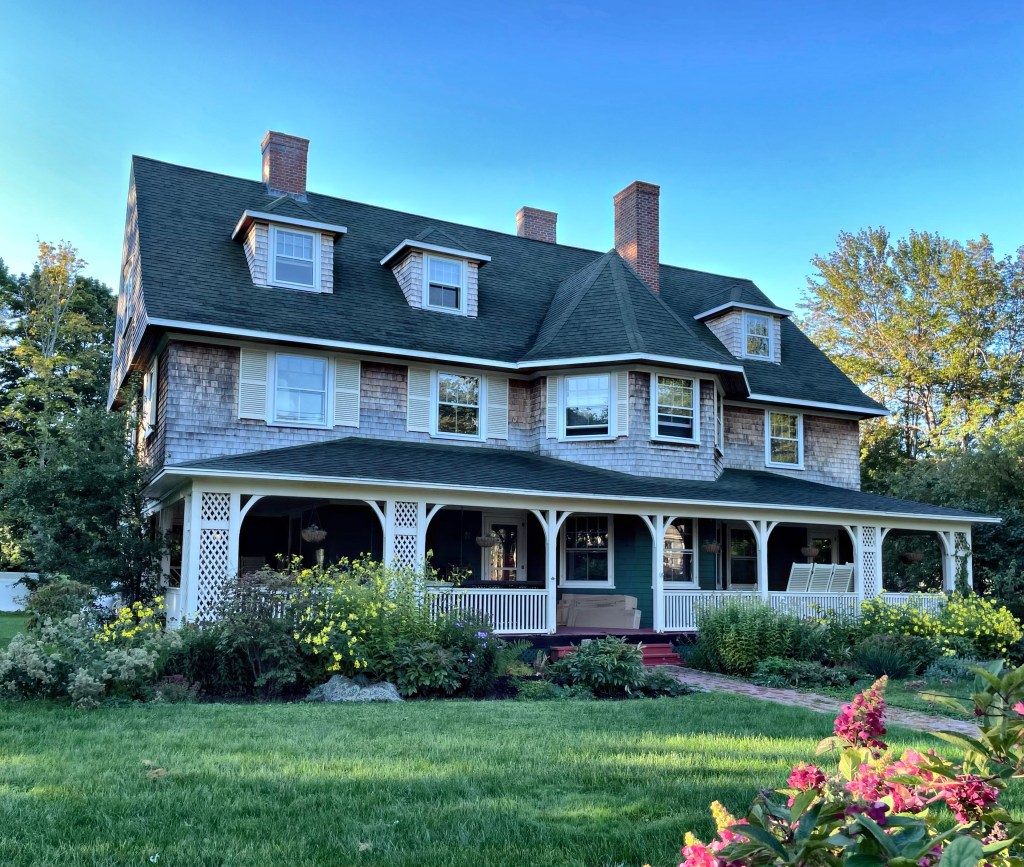
Built in 1901, “The Crossways” is one of Bar Harbor’s most stunning summer cottages built in the 20th century. The home was designed by the illustrious Boston architectural firm of Andrews, Jaques and Rantoul, possibly as part of the of the William B. Rice estate. The home appears to have been rented in early years until it was occupied by Edward and Esther Mears. Edward ran a hotel in town during the summer months before getting involved in real estate, where he made much more money. The home blends together the best of architectural styles of the time from Queen Anne to Shingle Style, and remains in an excellent state of preservation.
Sunset Cottage was designed by local architect Milton Stratton and cost $20,000. The cottage was constructed for New Yorker Gertrude Stevens Rice, a decade after the death of her husband William. She and her husband formerly resided at The Tides, a home nearby, but she decided to construct a new home to summer at with her sister. The shingled home originally had half-timbering in the gables, but other than that, looks almost identical to when it was built 110 years ago!
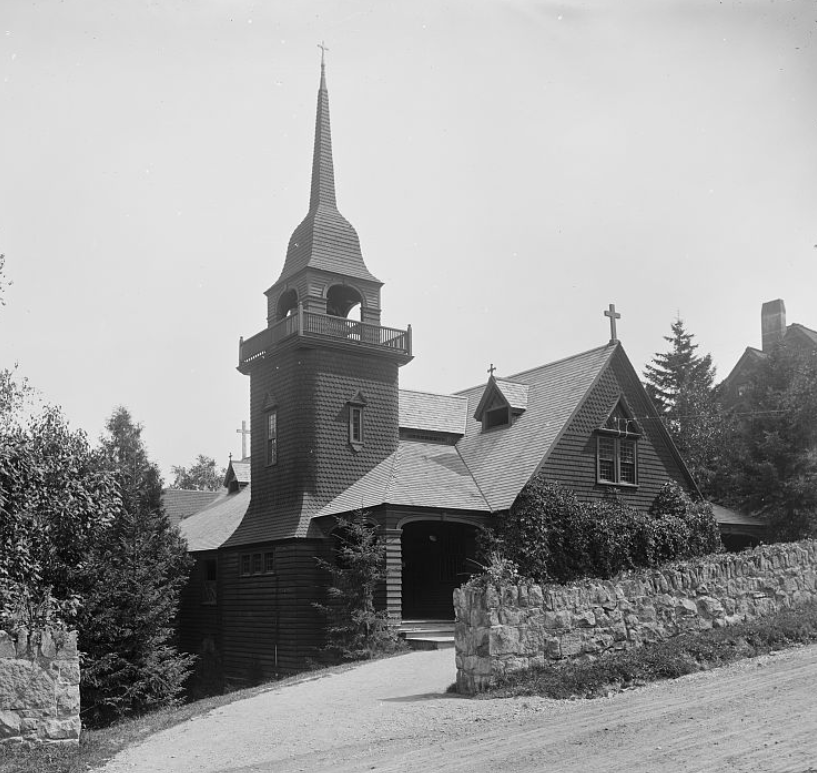
As wealthy citizens from cities like Boston, Philadelphia and New York, began building summer cottages on Mount Desert Island in Maine, an influx of carpenters and tradespeople from Ireland followed to construct and work on them. Realizing this, cottager DeGrasse Fox along with Brooks White of Philadelphia, donated land for a new Catholic church building. Maine architect, William Ralph Emerson, donated plans for the church. A masterpiece of Shingle style design, the church, which seated 300 people, was deemed too small for the growing village’s summer congregation. A new, stone church was built closer to town (featured previously). The spire and belfry resemble another church Emerson designed in Beverly, MA, St. Margaret’s Catholic Church. Sadly, St. Sylvia’s burned down in 1909.



 Buildings of New England