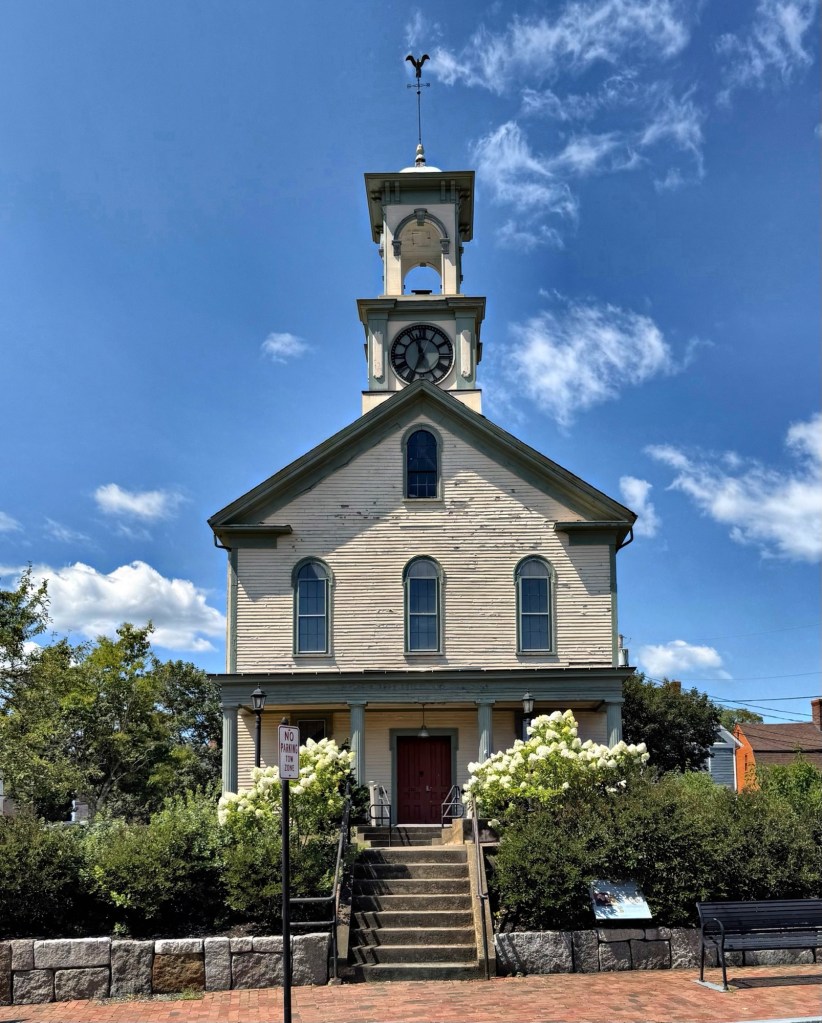
South Meeting House, Portsmouth // 1866

The South Meeting House was built in Portsmouth in 1866 and it is significant as a high-style Italianate building in the coastal town, and as the meeting place for the first African American church congregation in New Hampshire. The present building is the second building on this site. The initial structure was the Old South Meeting House, which was built for the South Church in 1731. The City demolished it in 1863 for the construction of the present building in 1866 as a Ward Hall for the Southern area of the community. The building’s upper level serves as a large public meeting space, and has seen use for political meetings, ward elections, and religious services The structure was the home of the People’s Baptist Church, the first African American church in New Hampshire, which organized in 1873, when the Freewill Baptists congregated on the second floor of this building. The church relocated in 1915 to 45 Pearl Street when the congregation raised money and bought their own building. In the late 19th century and early 20th century, the building continued to serve as a church, school, and community center until at least 1915. After World War II, it was boarded up due to economic circumstances and endured a period of neglect. In 1966, Strawbery Banke leased the building from the city for about fifteen years, during which it returned as a community resource and was renamed the South Meeting House. The city invested around $67,000 for repair work that also exposed further damage issues. In 1982, the city approved a proposal for the building to become a Children’s Museum. The community contributed to the required materials and labor that allowed the Museum to welcome the public from 1983-2008. Today, the city is still permitting restoration projects to preserve the historic building.
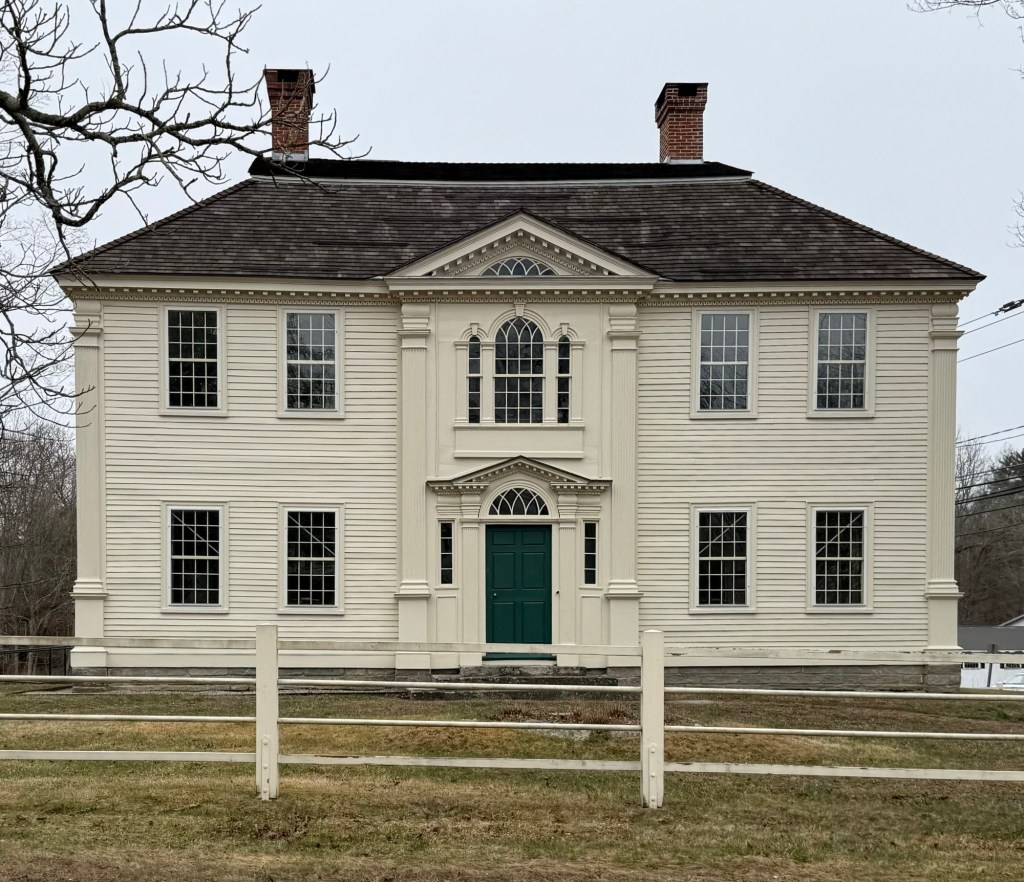
Prudence Crandall’s School for Young Ladies and Little Misses of Color // c.1805

Built c.1805 for Elisha Payne, this architecturally distinguished Federal style mansion in Canturbury, Connecticut is one of the most significant buildings in the state, not only for its architecture but historical significance. In 1831, a young white woman, Prudence Crandall, was asked to open a boarding school for girls in Canterbury. She purchased this mansion and began operations for the school, which was attended by many wealthy girls in town. In 1832, Ms. Crandall was approached by a young Black girl who worked as a servant in town, named Sarah Harris, asking to attend the school. Encouraged by conversations with both Harris and Maria Davis, a Black woman who worked for Crandall and shared copies of the abolitionist newspaper The Liberator with her, Crandall agreed to admit Harris. Almost immediately, residents protested the school’s admission of a Black girl and parents threatened to withdraw their students, Crandall undeterred, closed her school and reopened in 1833, solely for Black and Brown students. Young girls traveled from several states to attend the school. The legislature of Connecticut responded by passing the “Black Law,” which prevented out-of-state Black and Brown people from attending school in Connecticut towns without local town approval. Crandall was arrested, spent one night in jail, and faced three court trials before the case was dismissed. In September 1834, a nighttime mob of men attacked the house, smashing the windows, leading Crandall to close the school out of fear for her students as no protections were afforded to them. These events made national and international news in the 1830s and galvanized the burgeoning abolitionist movement. Crandall would later marry and left Connecticut, never to return. For her vision and brave actions at this school, Prudence Crandall is Connecticut’s official state heroine and the house was designated a National Historic Landmark in 1991.

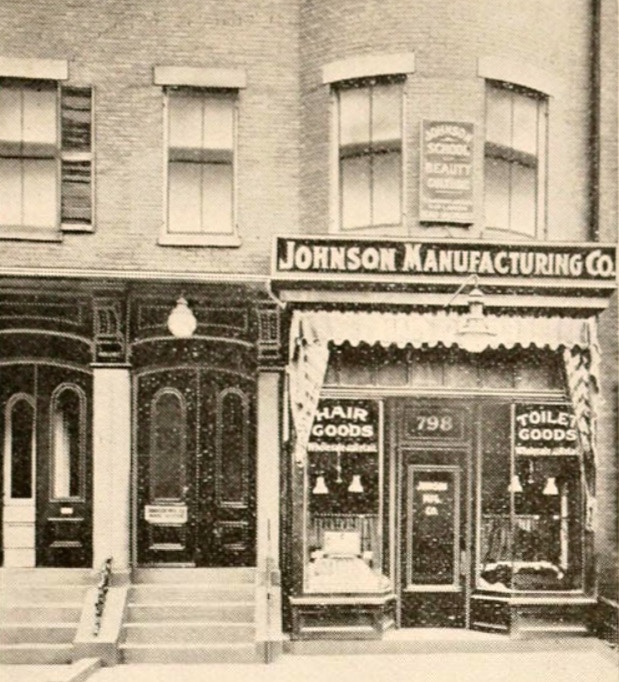
Johnson’s School of Beauty Culture // c.1865

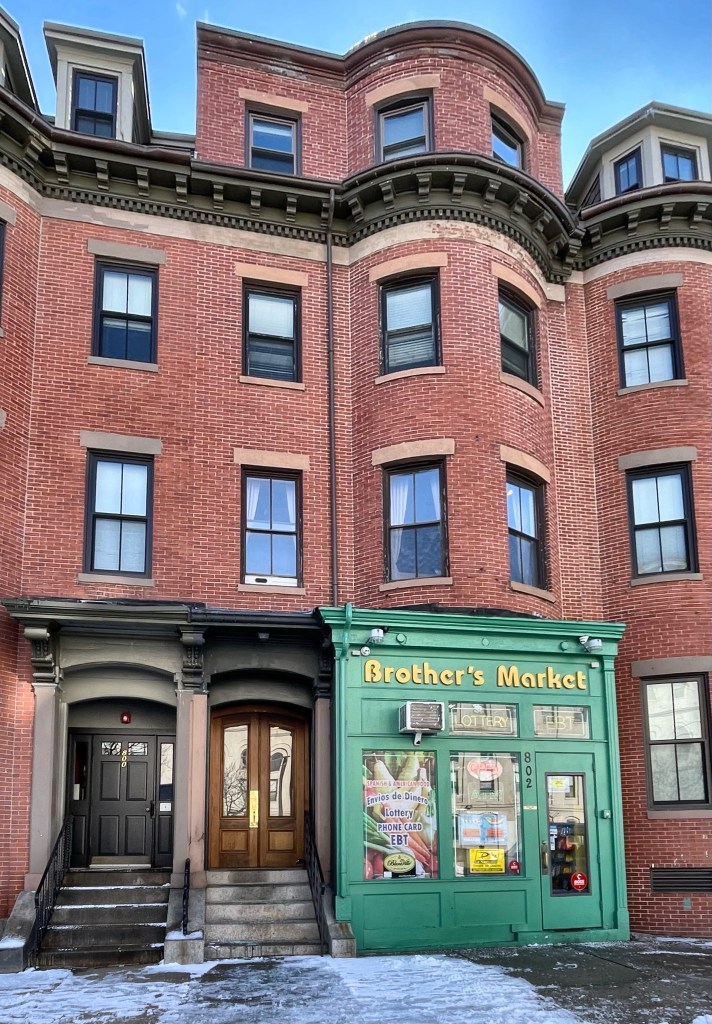
Boston’s South End neighborhood has so much history that NEEDS to be showcased. From the repetitive architecture of beautiful brick and stone bowfronts, to the history of African American activism, enterprise, and stories, the neighborhood is a gem of Boston. This building was constructed around 1865 for Thomas H. Snow (1833-1908) as his home. Snow was a wine and spirit merchant who had a store in Faneuil Hall Square. While that is interesting, Mr. Snow is not the highlight of this building, that comes later in 1899, when the building was rented to Madame Mary L. Johnson, a wig maker, scientific scalp specialist, and hair culturist. Mary Johnson and her husband, Dr. W. Alexander Johnson, were Black and ran one of just 200 Black-owned businesses in the city of Boston by the beginning of the 20th century. At their storefront, they sold hair goods at Johnson’s Hair Store. Sold all over the United States since 1900, their famous “Johnson Hair Food” was “the most scientific pomade yet discovered for growing, beautifying and softening the hair,” they claimed. In connection with their hair product outfit, Madame Johnson operated Johnson’s School of Beauty Culture, where a variety of services including manicuring, shampooing, scalp massage, facial massage, hairdressing, and scalp treatment were offered. The school provided young Black women in Boston technical training and skills, which there were limited options at the time. Mr. Johnson also was President of the Boston Negro Business League, which helped bolster Black businesses at the turn of the century.

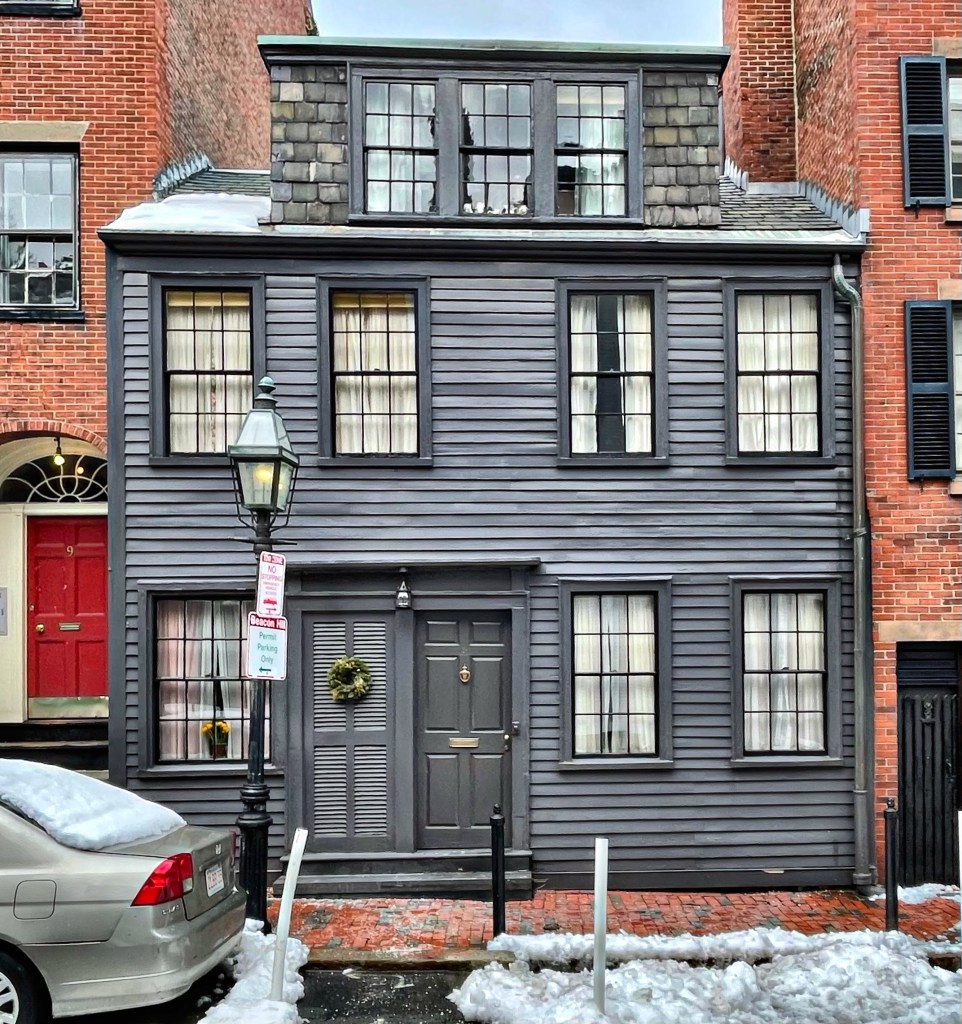
Glapion-Middleton House // 1787

George Middleton and Louis Glapion built this two-family residence in Boston’s Beacon Hill neighborhood in 1787, which is now the oldest extant home on Beacon Hill. This wood structure is a typical example of late 18th century Boston homes built by African Americans. Louis Glapion worked as a hairdresser and may have been from the French West Indies. Glapion lived and ran his business out of 5 Pinckney Street until his death in 1813. His wife Lucy continued to live there until 1832. George Middleton was a “horse breaker” (horse trainer) by trade and was adored in the diverse community of Beacon Hill. Middleton was one of 5,000 African Americans to serve in the military on the Patriot side of the Revolutionary War, leading an all-Black militia called the Bucks of America. The group is believed to have guarded the property of Boston merchants during the Revolution. After the war, he became the third Grand Master of the African Lodge, later known as the Prince Hall Masons. In 1796, Middleton founded the African Benevolent Society, which helped orphans and widows through job placement and financial relief. He died in 1815, outliving his wife and apparently left no children when he died in 1815.

Aunt Georgia’s House // c.1880

Located on the iconic Circuit Street in Oak Bluffs, this Eclectic Victorian cottage has a storied past related to Black history on the island. Even though Oak Bluffs was a relatively safe place for African Americans to be, there were still limits on their rights. In some parts of Oak Bluffs there were laws that said that certain property could only be owned by whites. The island became a vacation spot for thousands every summer in the 19th century and seeing a lack of options for Black travelers, Mrs. Georgia O’Brien and Ms. Louisa Izett began to operate an inn for people of color. The inn was one of two such residences in Oak Bluffs and has since been listed on the African American Heritage Trail of Martha’s Vineyard. The home has since been named the Tivoli Inn and retains much of the original gingerbread trim. In recent years, Martha’s Vineyard was given the nickname, “The Black Hamptons,” due to its popularity as a place for wealthy African-Americans to vacation, it remains a very diverse island in summer months.