For middle-class families in North Adams, some residents could afford to move out of workers housing but not yet afford single-family homes, the best option was for apartments. Seeing the demand for this housing type increase with the booming industrial development in town, businessman and real estate developer, Martin Crafts Jewett developed some of his land with a luxurious apartment building. This six-unit building has beautiful poly-chrome brickwork and corbeled chimneys, mansard roof with wall dormers, and flared turrets, typical of its architect, Marcus F. Cummings who also designed the Blackinton Mansion (now North Adams Public Library).
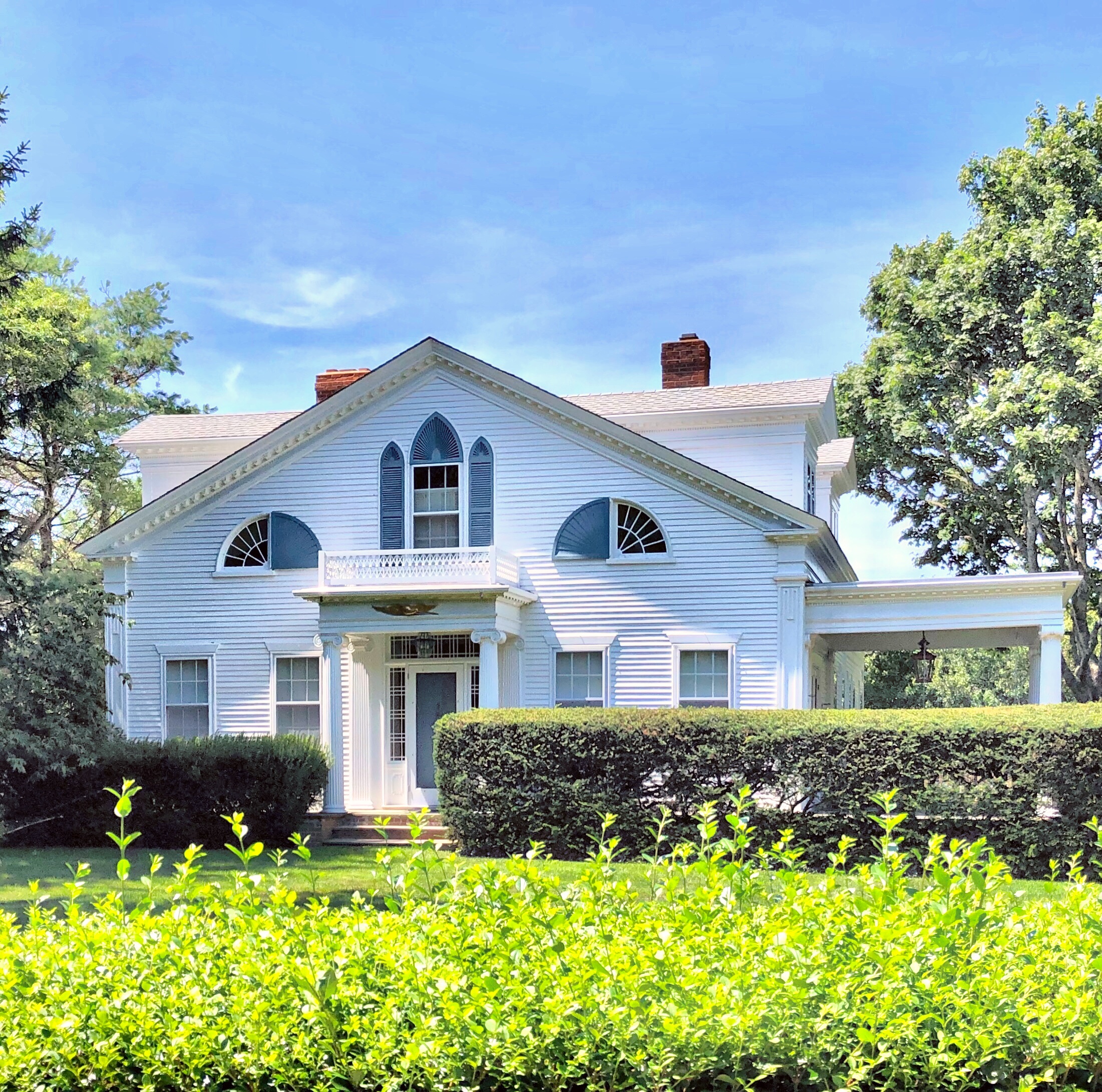
This stunning house on Starbuck Neck in Edgartown was originally built on Main Street by Frederick Baylies Jr., as his own residence. Baylies was the architect of the town’s original Methodist church, the Old Whaling Church, and a couple other extant churches in town in the early 19th century. The home was sold to William Cooke Pease, a shipbuilder and merchant. In 1839, he joined the United States Revenue Cutter Service, an armed customs enforcement service, and he quickly rose in rank, spanning the transition from sail to steam. Capt. Pease designed and built new Cutter ships for the Great Lakes and refitted many aging vessels on the West Coast. Today, he is regarded as a founder of the modern Coast Guard, which in 1915, was created by the consolidation by an act of Congress of the U.S. Revenue Cutter Service the United States Life-Saving Service to form the United States Coast Guard as we know it today.
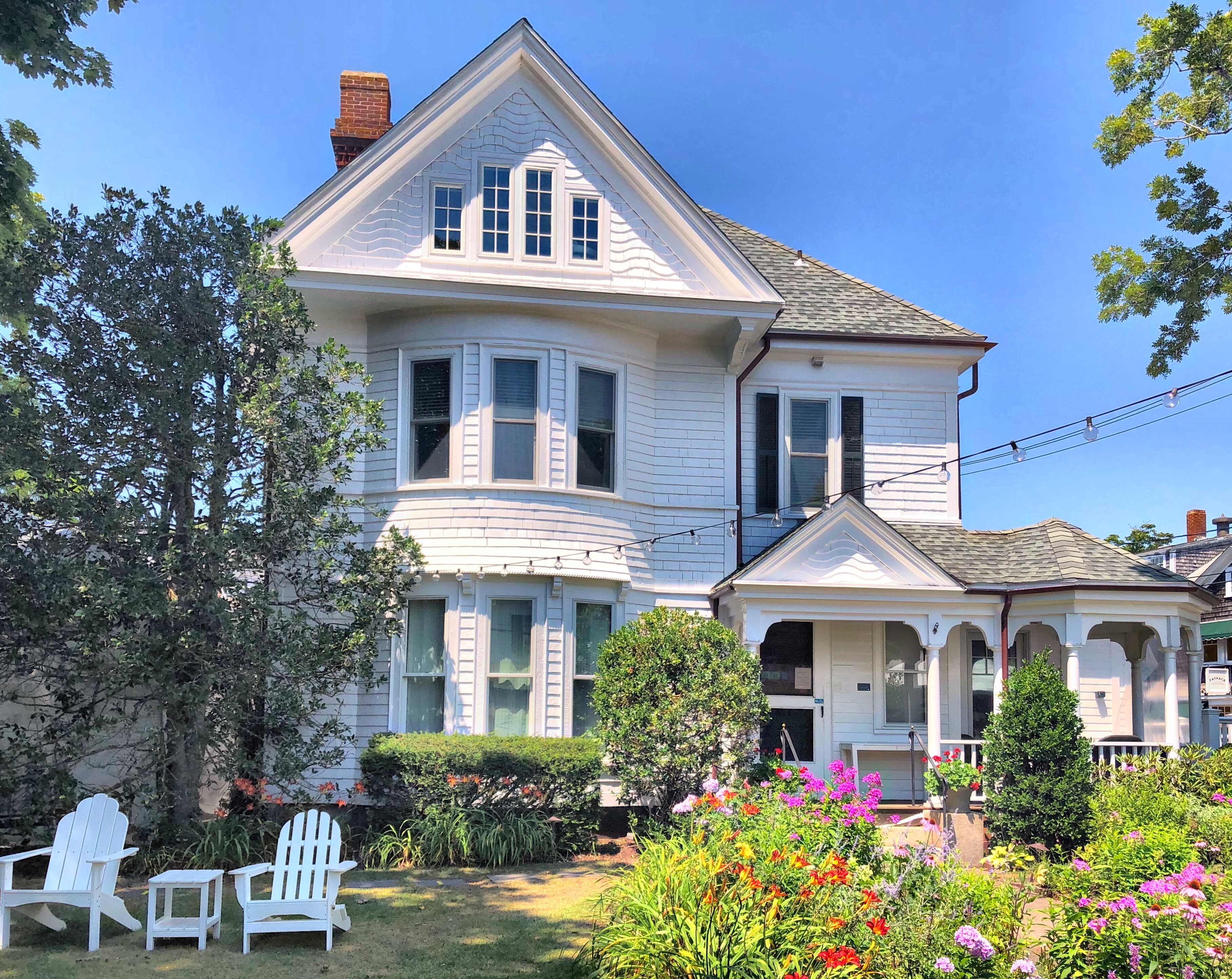
Standing out amongst the Federal and Greek Revival homes in Edgartown, this Victorian home was constructed in 1892 by Captain Charles W. Fisher (1835-1905) for his new wife. The Fisher family includes many members who were active in the local whaling industry. Fisher is said to have caught the largest sperm whale on record in 1884 and apparently loved being on the open ocean. The next year he married Parnell Pease and she sailed with him to the Pacific on a whaling voyage, lasting five years! At the time of their marriage, Fisher was in his 50s and his new wife in her 20s. Upon their return, Fisher built his wife this “modern style house on the pretentious side with Victorian ornamentation.” Unfortunately, his wife preferred her former house, which was a block a way and obscured any views of the water. Tradition states that apparently, Mrs. Fisher had seen enough of the water during her voyage, as her diary on the five year trip detailed her many unfortunate bouts with sea-sickness, a stay on an island, and dangerous storms.
Believe it or not, living on an island in the 19th century wasn’t as easy as you may think. Before this bank building was constructed in 1855, all banking was done off-island. The bank was constructed to house the newly formed Martha’s Vineyard National Bank, whose first president was Dr. Daniel Fisher, who made his money as a merchant and operator of one of the largest whale and sperm oil processing facilities in the country. The bank relocated to Vineyard Haven and the Edgartown National Bank was created to fill the void in town. Amazingly, the building is still to this day occupied by a bank, Rockland Trust, seemingly adding to the continuous occupancy of the building by banking facilities for well over a century. The structure is one of the oldest brick buildings in town and is a late iteration of the Greek Revival style.
This grand home was built in 1871 for George Hills, one of the original investors in the Oak Bluffs Land & Wharf Company development, a development to the east of Wesleyan Grove. The home was designed by Samuel Freeman Pratt, a Boston carpenter turned premier architect of Oak Bluffs, who likely designed the home in his distinct Stick Style with intricate wood carvings and posts. In 1877, the home was purchased by Governor William Claflin after his time in office as a summer retreat from his home in Newton, MA. The governor was an ardent Methodist who was involved with liberal causes such as abolition and Native American and female enfranchisement. Within 10 years of his purchasing of the home, he modified and enlarged it with Colonial Revival motifs including the gambrel roof, Tuscan columned porch, and simplified dormers.
Sited prominently on Ocean Park in Oak Bluffs, the Corbin-Norton House overlooks the Nantucket Sound with no buildings obscuring the gorgeous sunrises. When the home was originally built in 1891, it belonged to Philip Corbin, a manufacturer of household hardware and locks from New Britain. Conn., who got his start as a locksmith apprentice and grew his business until it employed 15,000 people. Corbin summered on Martha’s Vineyard and saw the shift from Cottage City, a Methodist-oriented summer resort town to Oak Bluffs, an exclusive summer colony. The house was built by Eli A. Leighton, a carpenter from Oak Bluffs whose descendants still live on the Island. The house remained in the Corbin family for some 40 years, after which it changed hands a number of times, at one point, housing a doctor’s office. By that time, nearly all of the historic character had been stripped of the home with replacement vinyl windows, removed trim and finials, and a monochrome color scheme. In 1991, when Peter Norton, the computer software magnate, and his wife, Eileen, decided to buy the old Corbin house for a reported $350,000, it was begging for someone with the resources to restore it. The restoration would take three years to complete, and Mr. Norton commissioned a team of consultants, architects and contractors to do the job. They meticulously restored the home, only to have the misfortune of a fire which destroyed the home. Norton funded the replica which was completed soon after, and passers-by wouldn’t be able to tell the difference!
Located at the heart of Oak Bluffs, this modest, wood-frame building has held some of the most important civic and cultural uses on the island. Built in 1882, the growing town of Cottage City (later renamed Oak Bluffs), which separated from Edgartown, needed a new town hall and fire station with the rapid development caused by summer visitors and increased year-round residents. After WWII, the property was renovated and expanded to allow space for a small police department in the building as well. In 1966, a new town hall was built across from the ferry pier at the waterfront, and the town soon after sold the former, outdated building, and two years later, it was purchased by The Cottagers, Inc. The Cottagers, Inc., is a philanthropic organization founded in 1955 by a group of African-American women who owned cottages or homes on Martha’s Vineyard. The social group provided a safe space for the growing Black community who lived on and visited Martha’s Vineyard. The building remains as an iconic landmark not only for its historical use and architecture, but as a symbol of the diversity and the black community in the small island town.
This cottage on Ocean Ave in Oak Bluffs was built before 1880 for J.F. Riday, a manager at the American Mail and Export Journal at the Wesleyan Building on Bromfield Street in Boston. The quaint cottage was photographed shortly after it was built with Riday and two women (one likely being his wife) posing on the front porch overlooking the ocean. By the early 20th century, the home was owned by George and Corielle Evans, a couple from Mexico. They likely modified the home with the shingled siding and front porch with sheltered balcony above, while the original lancet windows and doors remained.
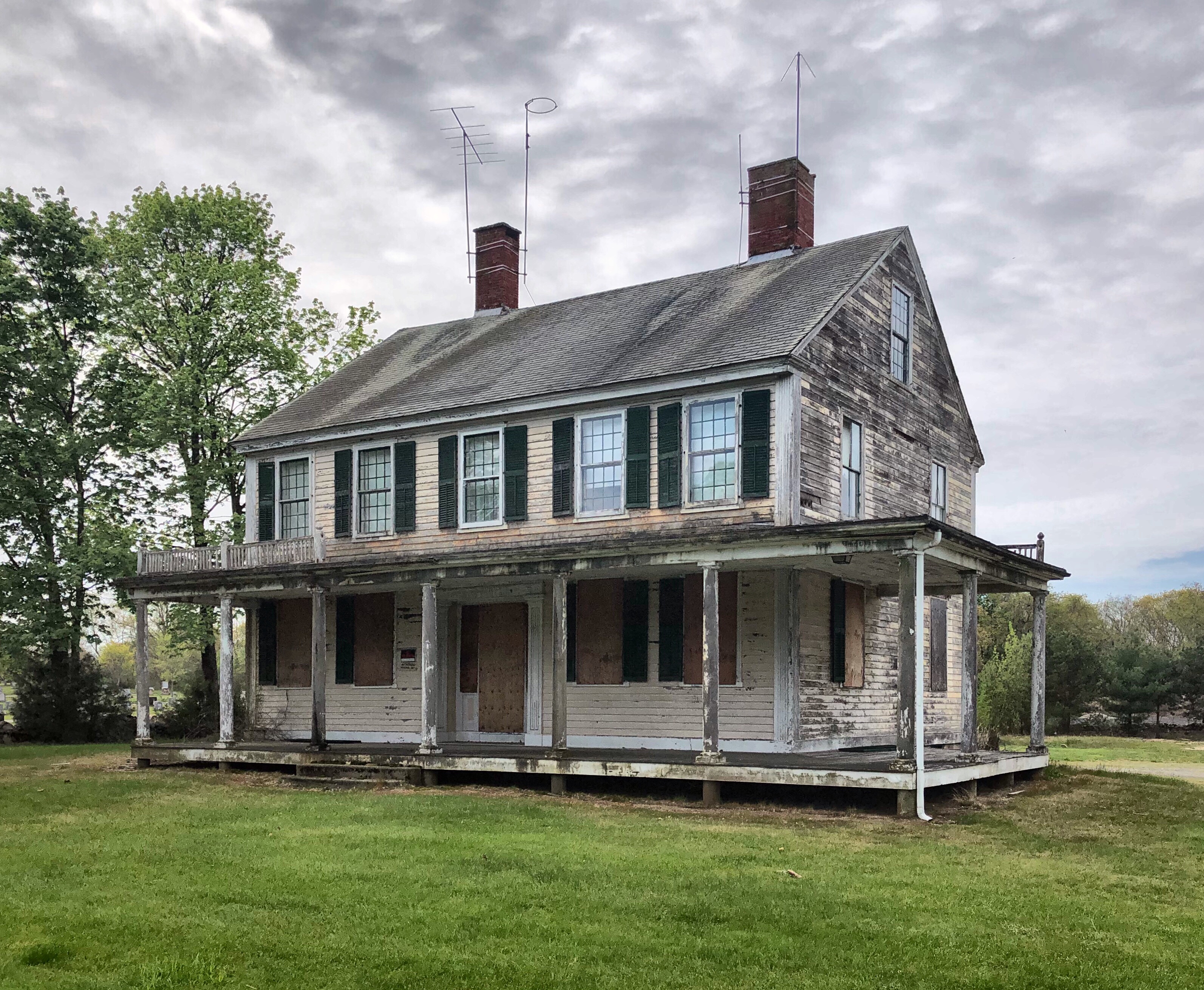
This old farmhouse in Swansea, MA, was built by 1820 for Preserved Gardner (1795-1873), one of five sons of Peleg Gardner, who owned much of Gardners Point. Preserved lived in the home until his death in 1873, and the home and acres of farmland were willed to his only son to live past childhood, Ira Gardner (1836-1901). Ira donated a large tract of land adjacent to the farmhouse to the town in 1882 for a cemetery, in which his father was buried. Later, the farm was purchased by Thomas D. Covel a bank president of Fall River who operated it as a gentleman’s farm and made the house his summer home. A ‘gentleman farmer‘ utilized their farms for pleasure rather than for sustenance or profit. After WWII, the land was purchased by the town to be used as a park and the property is still owned by the town. The Federal home with its veranda that wraps around the side has been neglected by the town for decades while the parks adjacent are maintained adequately.
The town has weighed various options for the home ranging from demolishing it, to preserving the front facade and converting it to a garage and storage shed (with a small museum on the second floor). I hate that idea personally. This seems like an ideal candidate for the town to allow a private individual or developer to move the home and restore it back to its original grandeur. Thoughts?




 Buildings of New England