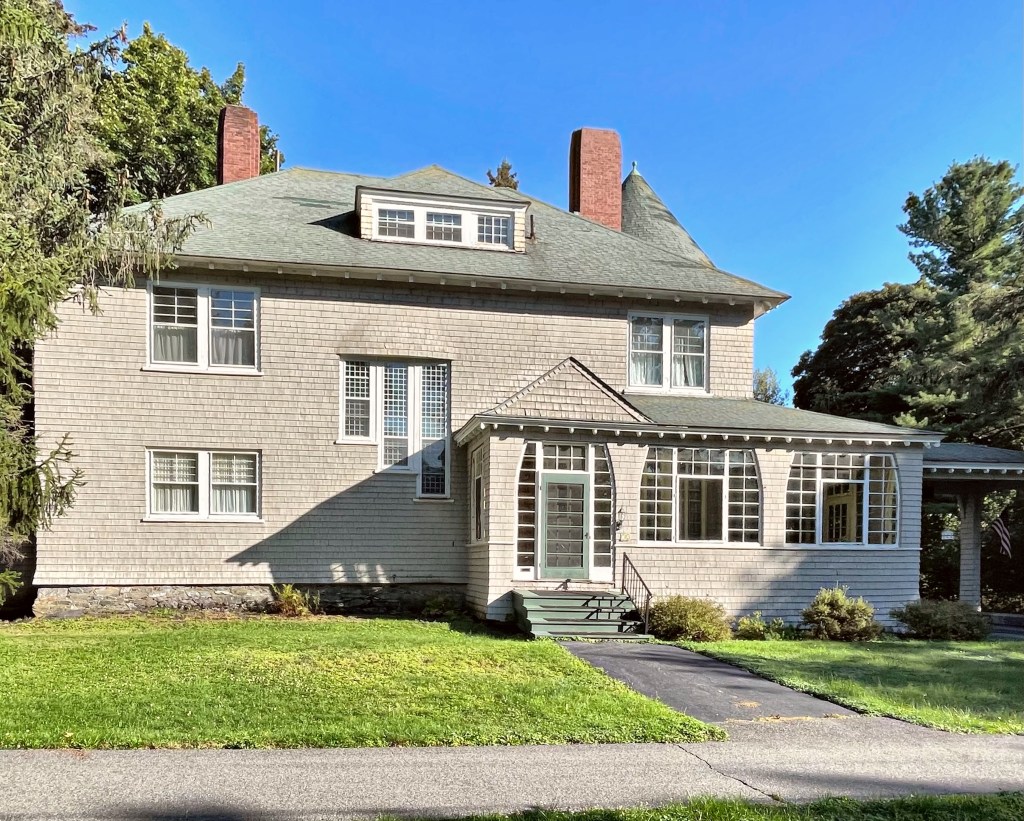
North Village Fire Station // 1888

After sharing the old Central Fire Station building in Lancaster (last post), I couldn’t help myself but to share another mini-mansard fire station constructed in town! Located in North Village, this station was built in 1888, and provided fire service to the more rural part of town. The wood-frame structure features a central tower which may have been used originally as a hose-drying tower. In the 1940s, the building was occupied by volunteers of the Ground Observer Corps, an American civil defense organization. The building’s tower provided unobstructed views of airspace where one could keep their eyes open for invading German aircraft. After the War, the Town of Lancaster sold the building, which then converted to a private residence. Sadly, a fire in 2015, damaged much of the interior of the building, but she survives!
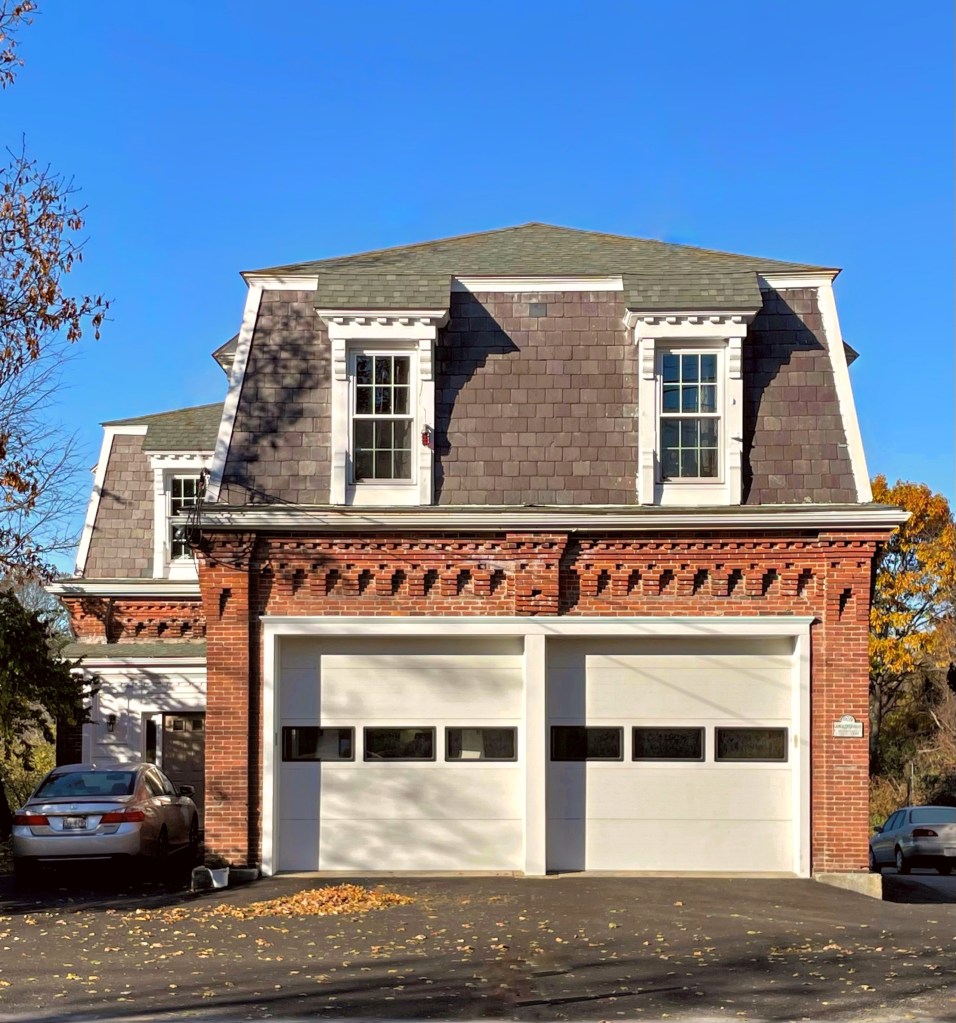
Lancaster National Bank – Central Fire Station // 1836

Located on sleepy Main Street in Lancaster, Massachusetts, this cute mini-mansard building caught my eye immediately, and I had to take a picture! The building was constructed in 1836 for the Lancaster National Bank. The brick building was just one story with storefront windows and a central entrance, and was the only bank in the small town. When the neighboring town of Clinton saw a large increase in population due to industrial growth, the Lancaster National Bank decided to relocate to be closer to a larger clientele. They sold this building to the Town of Lancaster in 1882 and moved out. Within a year, the town added the mansard roof to the building, being careful to preserve the original cornice (now where the brick meets the roof), and converted the building to a fire station with double doors. The Central Fire Station was in operation here until 1967 when a new building was built nearby, with doors large enough to easily house modern engines. The building was then used as storage and offices for the Lancaster Water Department. Sadly, the replacement fire station doors really diminish the appeal of the building.

Penobscot County Jail // 1869

Located just off Main Street in Bangor, the Penobscot County Jail building sits far off the street but stands out for its architectural design. The county jail building was designed in 1869 when the previous prison, built in the 1830s, proved inadequate. Designed by Boston architect Gridley J.F. Bryant, (who designed Charlestown’s prison that same year) the jail has somewhat of a dual personality architecturally speaking. The gracious street-facing section is constructed in the Italianate style, and housed the jail keeper and allowed the building to blend into the stylish and handsome neighborhood of downtown Bangor. The building is constructed of warm red brick with stone embellishments. Behind the jail-keeper’s house, the more severely modeled prison is constructed of granite and is more fortress-like, even though it’s much more appealing than modern prisons. The chronically overcrowded jail will likely be repurposed for a new building, but here is to hoping the county preserves this historic building for other uses!

Frost-Burpee House // 1847

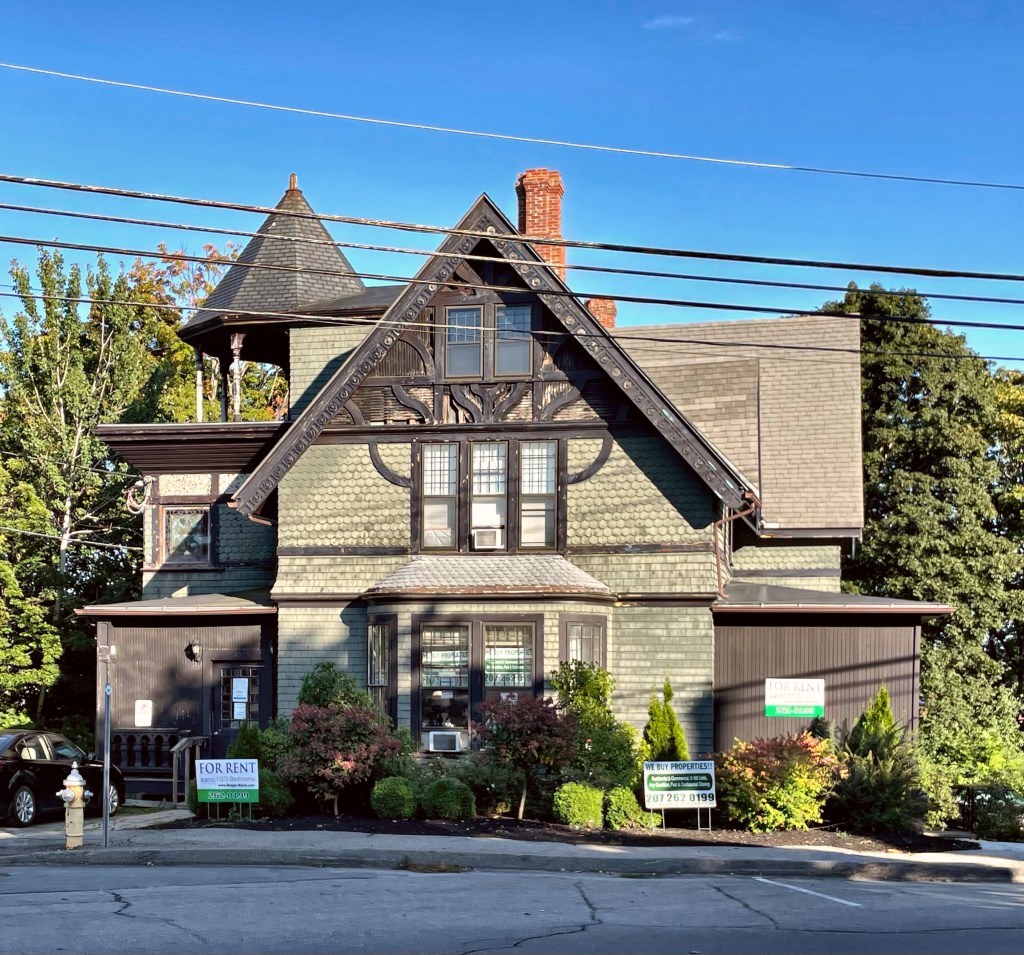
One of the largest homes I found in Bangor, Maine, was this Queen Anne stunner on High Street, just outside Downtown. After doing some research, I learned that the house was built in 1847 for Oliver Frost, a businessman involved in the lumber business. The home was likely Greek Revival in style based on the time period of the home and nearby houses. Frost is probably best known for his 1869 quote “The time may soon arrive when the three great cities of North America — Bangor, New York, and San Francisco — shall be representatives of the wealth, population, intelligence, and enterprise of the eastern, central and western divisions of our country.” He believed that the lucrative timber industry which led Bangor to become known as the “lumber capital of the world.” The city was home to numerous “lumber barons” and the river was often “jam packed with timber and lumber”. Even the nickname “Queen City of the East” evoked the era’s prosperity. Henry David Thoreau remarked, in 1846, that Bangor was “overflowing with the luxuries and refinement of Europe.” After his quote, the city began a period of decline, when the timber industry moved westward to the Great Lakes region and later, the Pacific Northwest. Frost’s home was later purchased by Egerton R Burpee, an engineer who worked in railroads. He hired Boston architect Arthur H. Vinal, to upgrade and enlarge the house in the then fashionable Queen Anne style we see today. The home has since been converted to commercial use with apartments inside.

Zebulon Smith House // 1832

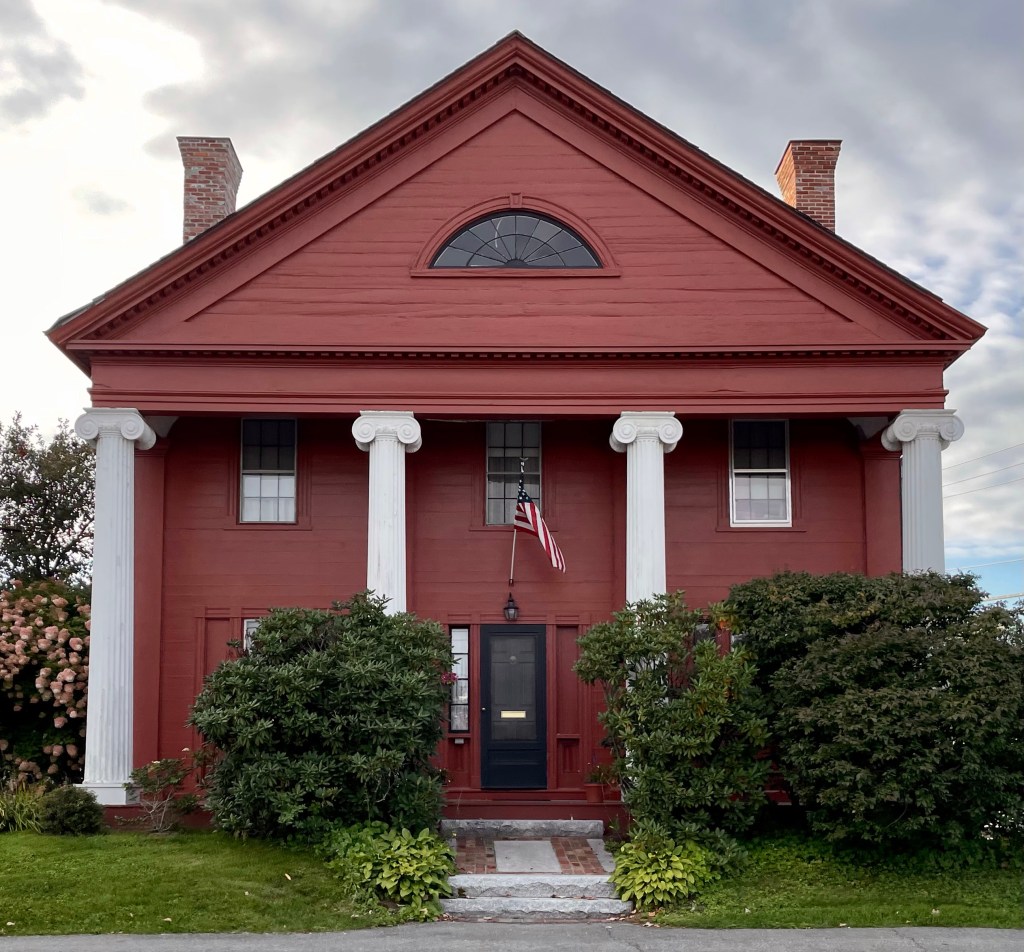
The Zebulon Smith House in Bangor is one of the earliest temple-front Greek Revival homes built in the state of Maine. The house was constructed in 1832 for Zebulon Smith, a businessman who moved to the Maine frontier in the early 19th century, likely to get involved with a lumberyard as this section of the state shipped timber all over the region. The substantial home was built just south of downtown Bangor, and has survived fire and urban renewal. It sits alone in a sea of parking lots and industrial buildings in what was once likely a lovely neighborhood.

Isaac Farrar Mansion // 1836

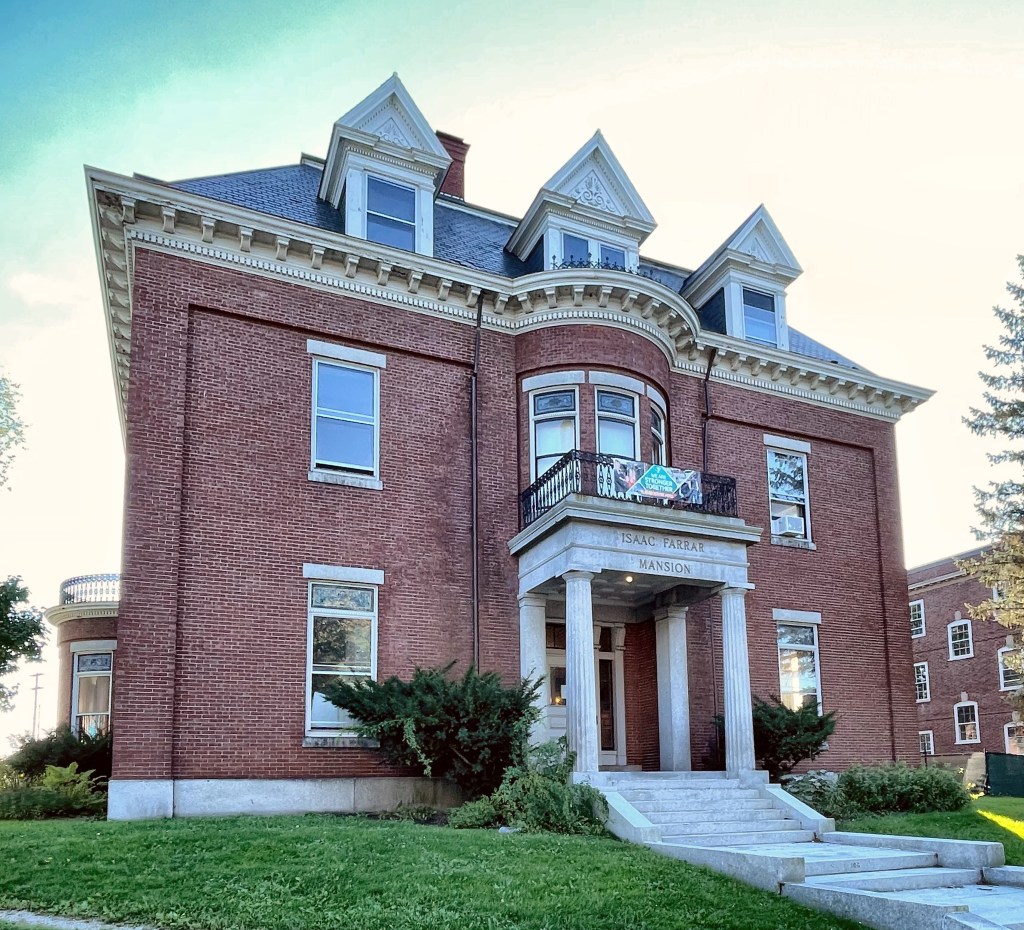
The Isaac Farrar Mansion in Bangor, Maine not only looks gorgeous, it is significant as the one of the first known works of architect, Richard Upjohn. It is important because it shows that English-born Upjohn, who is best-known for launching the popularity of the Gothic Revival style in the United States, began his career by building in the Greek Revival style, the traditional style of the time. This mansion was designed for Isaac Farrar, a lumberman and merchant, and later, President of the Maritime Bank of Bangor. Charles B. Sanford, who lived in the house from 1865-1878, was proprietor of the Sanford Steamship Lines. The home had a few more subsequent owners until 1911, when it was acquired by the University of Maine Law School, which used it as a residency until 1929. It was soon after purchased the Bangor Symphony Orchestra, who renamed it “Symphony House”, and operated the Northern Conservatory of Music on the premises, also hosting the music branch of the Bangor Public Library. In 1972 the school closed, and the symphony sold the building the following year to the local YMCA, which now uses it as an exhibit and reception space. While some aspects of the house look to be from the early 20th century, it retains much of the Greek Revival design by Upjohn. Talk about a full history!

Joseph Low Mansion // 1857

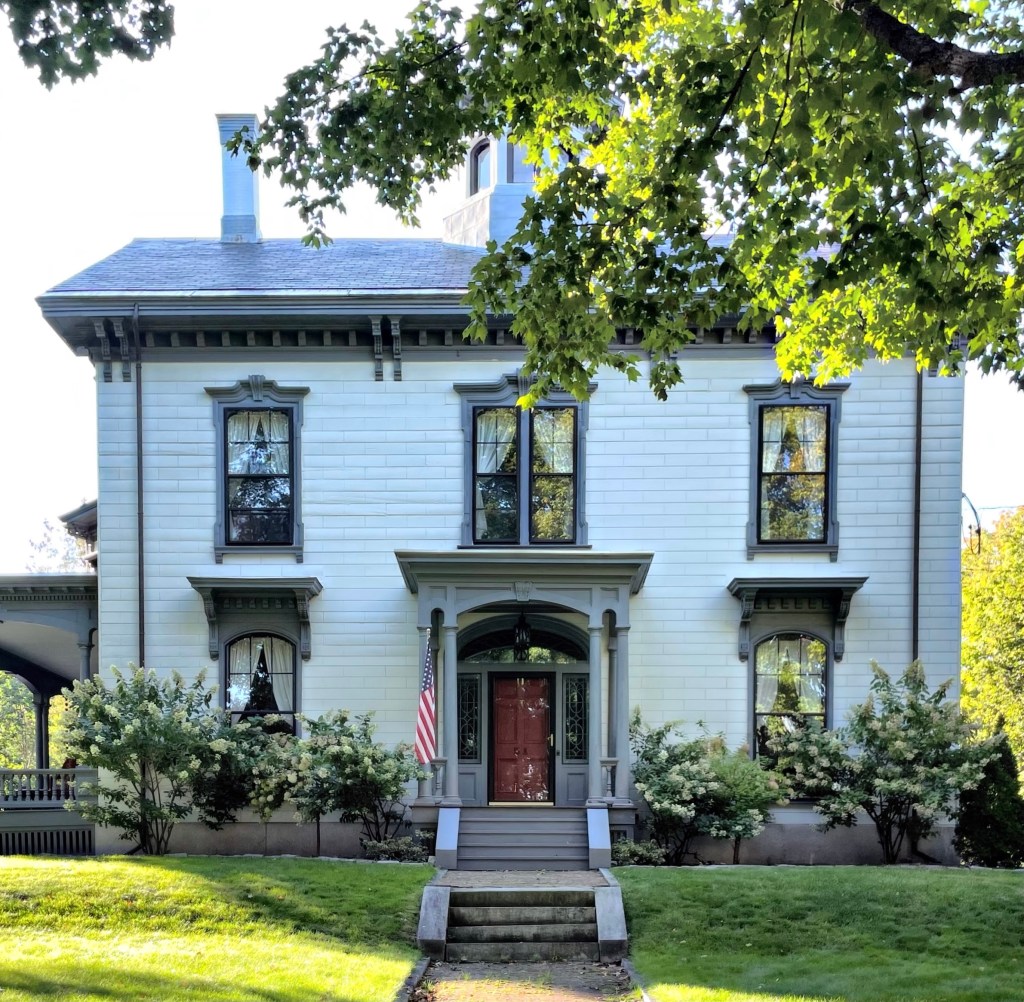
The neighbor to the iconic Thomas Hill Standpipe (last post), this pre-Civil War Italianate mansion predates the water tower and has long been one of the most grand homes in Bangor, Maine. The house was constructed in 1857 for Joseph W. Low, a businessman and trustee of the Bangor Savings Bank. The house he had built is one of eastern Maine’s outstanding Italianate residences, designed by Boston architect Harvey Graves, who was born in Maine. Soon after the Civil War, Graves moved west to California, likely seeking additional wealth from the spurned from the success of the Gold Rush. He appears to have lived out the remainder of his life out west, giving his family in Maine this home. The house exhibits flushboard siding with scored wood to resemble ashlar masonry, gorgeous window hoods and mouldings, and a large belvedere at the roof, which would have provided sweeping views of the Maine frontier when built, atop one of the highest hills in Bangor.

Thomas Hill Standpipe // 1897

Built in 1897, the Thomas Hill Standpipe is the oldest standpipe in town and has been in constant use since its construction. In 1895, it was discovered that the city pumping station contained faulty equipment, risking the possibility of a city water shortage, so the city councilmen pushed for a new standpipe on one of the highest points in the city to provide a back-up plan. Its purpose is the same today as when it was built; to help regulate Bangor’s water pressure in the downtown area and to provide water storage for emergencies. The New Jersey Steel and Iron Co. assembled the 50-foot high and 75-foot diameter steel tank atop Thomas Hill, with architect Ashley B. Tower of Holyoke, Massachusetts, designing and overseeing construction of the Shingle style wooden structure to cover the metal structure. Originally, the exterior was painted dark gray with the pillars and lattice work painted white. During World War II, the standpipe was painted olive for camouflage purposes, because of its proximity to Dow Army Airfield, and concerns it would be a target when the Germans ultimately crossed the Atlantic. The tower was completely painted white in 1949.

As Stephen King is synonymous with Maine, Bangor specifically, he used the Thomas Hill Standpipe as the inspiration for the Standpipe in the fictional town of Derry, where Stan first encounters Pennywise (It).

Frederick Parkhust House // c.1890

Frederick Parkhurst (1864-1921) was born in the small Maine town of Unity and attended local schools. He moved to New York to attend Columbia Law School, receiving his degree in 1887. Soon after, he was admitted to the Maine bar. Frederick moved back to Maine and joined his father in a leather goods business in Bangor, of which he later became president. He served on the Bangor City Council and later in the Maine House and State Senate. With his wealth and connections, he purchased a large house lot on West Broadway, then the most exclusive street in town, and hired local architect Wilfred Mansur, to design a Shingle style home for his family. During World War I he led the Liberty Loan effort and in 1920, was elected Governor with the largest margin in Maine history, moving to the State Capitol, Augusta soon after. Parkhurst served less than a month when he died on January 31, 1921.

Smith-Miller House // 1893

Located on stunning West Broadway in Bangor, Maine, the Smith-Miller House stands out as a beautiful blending of the Shingle and Queen Anne styles. Built in 1893 from the designs of Connecticut architectural firm Cook, Hapgood, and Company, the home was featured in The American Architect and Building News journal for its design success. The home is clad with continuous cedar shingle siding, with a prominent corner tower, wrap-around porch, and porte-cochere, all together provide complexity and intrigue on the street of large homes. What do you think of this home?