Edith C. Baker School // 1937

At a time when many public school buildings around Boston were designed in the Art Deco or early Modern styles, the Edith C. Baker School in South Brookline went back to basics and represents a nod back to Colonial era design. The whitewashed red brick building was designed and built in phases as the neighborhood surged in population, tied in with the re-emergence of the economy after the Great Depression. The opening of the West Roxbury Parkway in 1919 and the Hammond Pond Parkway in 1932, both precipitated subdivision of the farms in South Brookline for residential development. The first section was completed in 1937 (what is shown in the photo) by plans from the local architecture firm of Kilham, Hopkins and Greeley, who also designed an addition just a year later for the un-forecasted growth in the neighborhood. More additions were added in the decades following WWII, thankfully just as additions and not a scraping of the site which seems to be all the rage now. The school was named as a tribute to Edith C. Baker, a longtime member of the Brookline School Committee from 1900 to her death in 1942.

Universalist Church of Strafford // 1833

The Universalist Society of Strafford, founded in 1798, is the second oldest in Vermont and fourth oldest in the nation. In the early years, Universalists met in Strafford’s Town House, sharing the building with other denominations. Eventually the Universalists, Baptists, and Congregationalists all built their own churches, with the Universalists building a structure in 1833 in South Strafford Village. The white clapboarded church sits high on a hill with a gorgeous belfry and large stained glass windows.

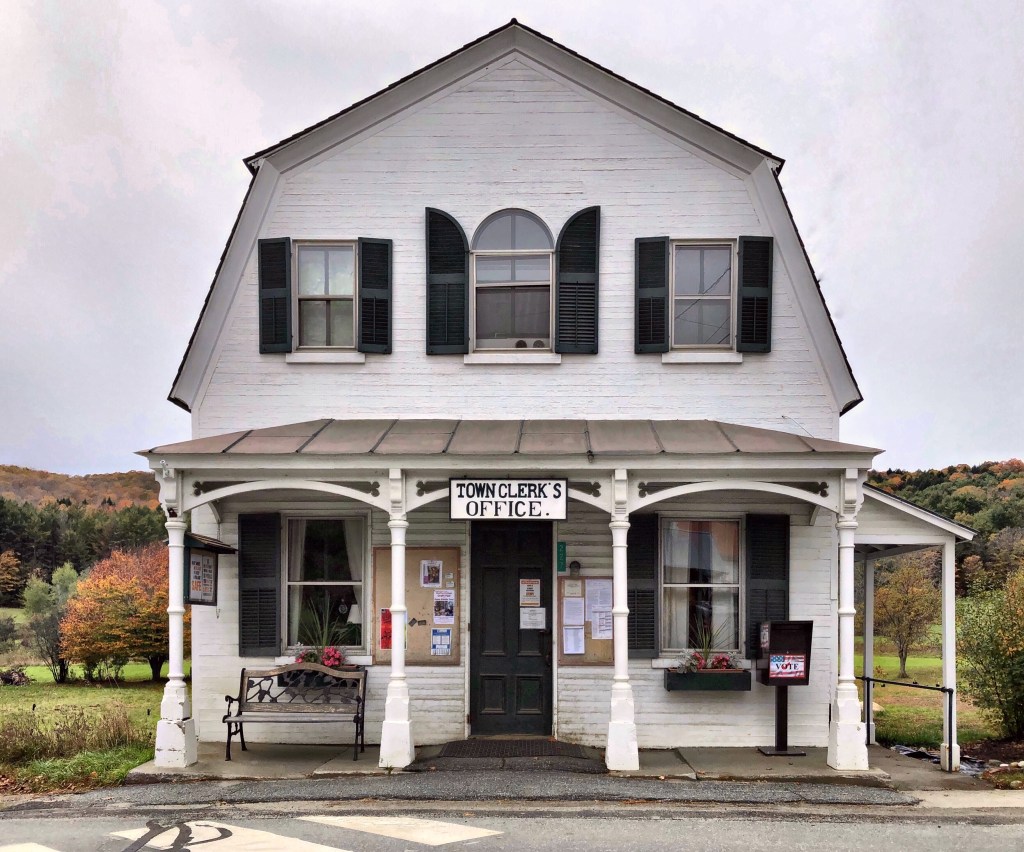
Strafford Municipal Building // 1883

Designed and built by Senator Justin Morrill in 1883, this building was donated to the town of Strafford by Morrill in memory of his mentor Jedidiah Harris. It was given to the town as a public library in part to house the Harris Library, which in turn had been created by a bequest from Harris. This structure remained a library until the Morrill Memorial Library building was completed in 1928 and its collection was joined with Morrill’s. It is currently used as the Town Office building providing space for the Town Clerk/Treasurer and Town Records, and town boards. The white clapboarded building has Victorian detailing with the spindled posts at the porch with a prominent gambrel roof covered in slate. Cute!

NYC Police Headquarters Building // 1909

Grand architecture in New York is not just limited to commercial buildings, churches and offices, even civic buildings here can go toe-to-toe architecturally with any in the world! On the border of the SoHo neighborhood, the former New York City Police Headquarters showcases the unity of the five boroughs into the City of New York in 1898, a city in need of a large and centrally located Police HQ. The firm of Hoppin & Koen was hired to design a large structure, fitting to represent the largest police force in the country and the five boroughs it represents. The grand Beaux-Arts building makes a statement with its perfect proportions, expanses of rusticated limestone and granite, and the massive central dome at the roof. The New York City Police Department relocated in 1973 to the larger One Police Plaza building, and the former headquarters was vacant for a decade until the early 1980s when the property was purchased by developers and converted to condominiums.

Socony-Mobil Building // 1956

One of the unsung heroes of Modernist architecture in New York City is one of my personal favorites, the Socony-Mobil Building at 150 E 42nd Street in Manhattan. Completed in 1956 from plans by Wallace Harrison of the iconic firm of Harrison & Abramowitz, the development stands out amongst the competing masonry buildings and glass skyscrapers in the area. At the time of its completion, the Socony–Mobil Building was the first skyscraper to have its exterior wall entirely clad with stainless steel, as well as being the largest air-conditioned building in the world! The base is clad with opaque blue glass panels framed with stainless steel moldings; above, the tower and wings are clad in over 7,000 embossed stainless steel panels. The firm reviewed over 100 different designs until they settled upon the four raised relief panels: a rosette-like motif for above and below the windows; a large and small rosette to flank the windows, and two variants displaying a design of interlocking pyramids. The panels were likely designed by or inspired by Oskar Nitzchke (1900-91), a German-born designer who worked at the firm and worked on the similar style Alcoa Building (1953) in Pittsburgh. The building was developed as a speculative project, but the largest tenant, the Socony-Mobil Oil Company, later renamed Mobil, helped to give way to the naming rights. The building was landmarked by the City of New York in 2003.

Macy’s Department Store – Herald Square // 1902

Thanksgiving in the days of Covid-19 will be different in more ways than one. A notable loss will be the absence of the annual Macy’s Thanksgiving Day Parade in New York, which has been a national pastime broadcast on televisions for millions of Americans every year. The six-mile route through the city, giant balloons and all, would end at Macy’s Herald Square, the flagship store of the department store chain. The building (one of the largest stores in the world) was completed in 1902 and its 2.5 million square feet of space, occupy an entire city block. The building was designed by Interestingly, in 1900, a small five-story building on the corner of 35th and Seventh was purchased by Robert H. Smith in 1900 for $375,000 ($11.5 million today). The idea had been to obstruct Macy’s from becoming the largest store in the world. It is largely supposed that Smith, was acting on behalf of Siegel-Cooper, which had built what they thought was the world’s largest store nearby in 1896. Macy’s ignored the tactic and built around the building, which now carries Macy’s “shopping bag” sign by lease arrangement! Oh, and Macy’s even hired the same architect for their department store that Siegel-Cooper used for their building, Theodore de Lemos, adding insult to injury. A great example of a spite building!

1908 image of Macy’s Herald Square courtesy of LOC.

141-147 5th Avenue // 1896 & 1900

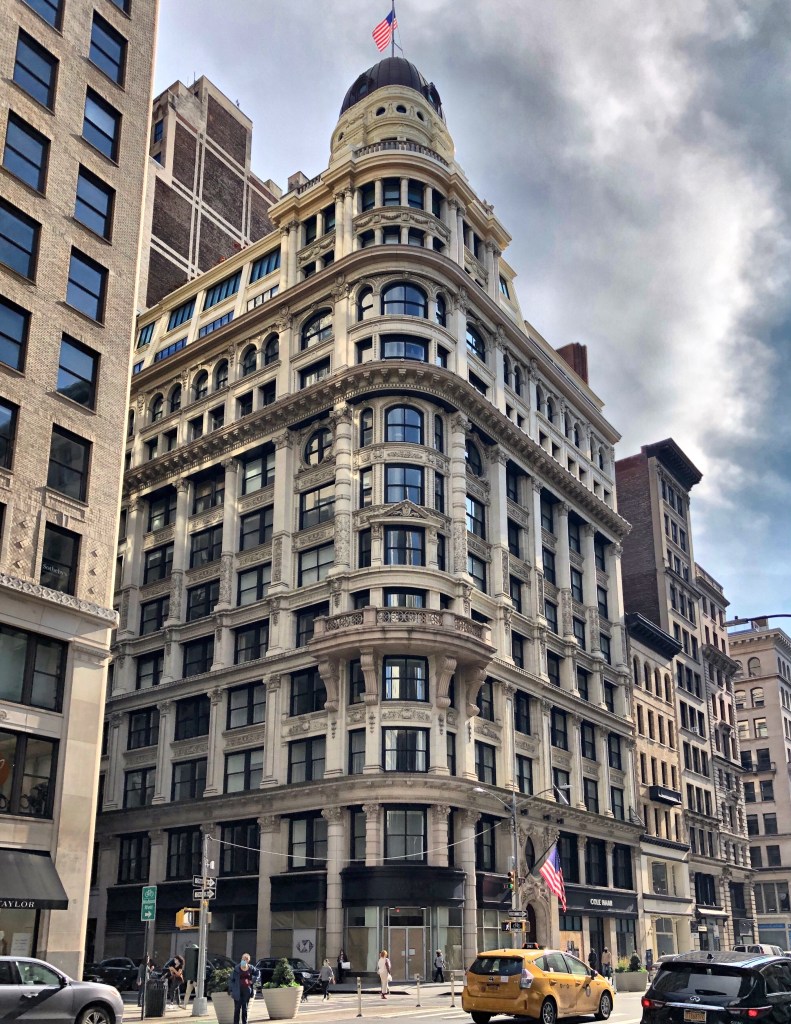
This stunning Beaux-Arts store and loft structure, is located on a
prominent corner site at 5th Ave and 21st Street in Manhattan. The structure is faced in limestone and terra cotta and was constructed in two phases. The original three southern bays (on the right side of the image) on 5th Avenue were designed by prominent architect Robert Maynicke for real estate developer Henry Corn. In 1899, two years after its completion, architect Henry Edwards Ficken designed an addition to the north wrapping around and running along 21st Street. The addition continued the richly embellished facade and supplemented it with a twelve-story, curved corner bay which is crowned by a dome. The building appears to have been constructed without a major tenant, and many companies utilized the iconic space including: the Merchant Bank of New York, Park & Tilford’s, a fancy grocer, and lace companies. In the mid 20th century the building suffered from deferred maintenance until 2005 when the building was restored and converted to 38 apartments (including one utilizing the dome)!

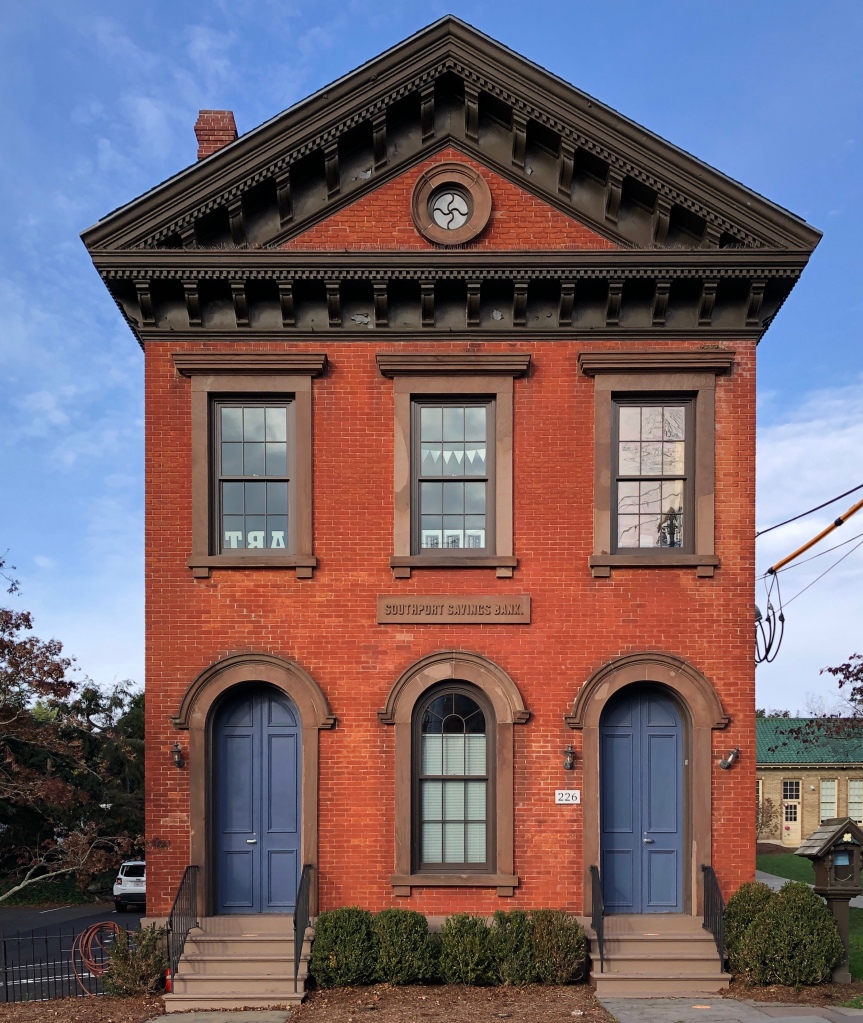
Southport Savings Bank // 1865

The Southport Savings Bank obtained a charter from the Connecticut General Assembly in May 1854, and was organized on September 25 of that year. Original incorporators included Paschal Sheffield, Austin Perry, Wakeman B. Meeker, Charles Perry, Prancis D. Perry, E.D. Sherwood, John Meeker, Frederick Marquand, and Andrew Bulkley. A new building, located at the foot of Main Street, was constructed to be accessible to shipowners, shop keepers, the farmer patronage, and commercial traders. This bank building was occupied in 1865, eventually merging with Bridgeport People’s Savings Bank on July 1, 1955, becoming the Southport Branch of the People’s Savings Bank – Bridgeport. It ceased to be a bank in the 2010s and is now occupied by the Southport School.

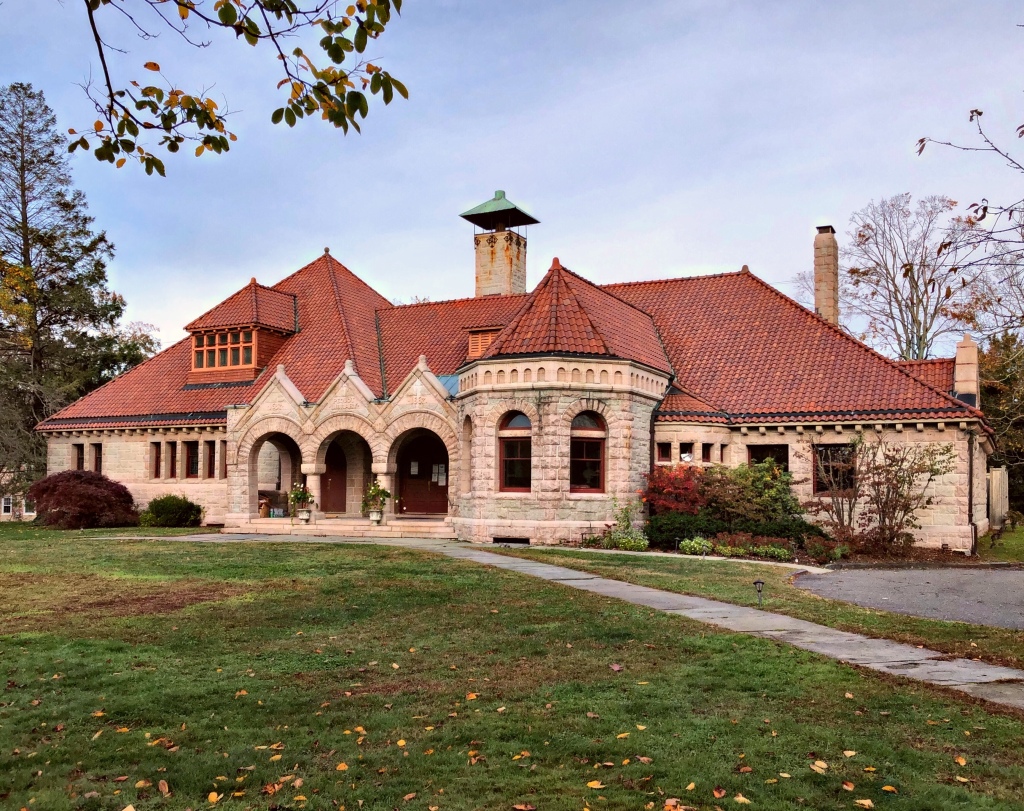
Pequot Library // 1894

The Pequot Library in Southport, Connecticut was founded in 1889 by Virginia Marquand Monroe and her husband Elbert B. Monroe. The library, designed by noted New York City architect Robert H. Robertson, opened to the public in March 1894. The building is Romanesque Revival in style in a granite sandstone construction. There is an expansive roof area topped with red tile and hipped dormers; an arcaded entrance porch with three arched openings serves as the focal point of the front facade. It was Mrs. Monroe’s intention that Pequot be as “free as air to all”, which it remains as to this day.

Trinity Church, Southport // 1862

The Trinity Episcopal Church in the Southport section of Fairfield, Connecticut was established in 1725. Twenty families met for worship at its first meeting house in the center of town on Thanksgiving Day, 1725. Since then, the church has constructed five different places of worship in locations around town. Architect Albert C. Nash designed the church which was constructed during the years 1854-56. Sadly, the building’s near total destruction by wind during a tornado on January 1, 1862, required the church to be completely rebuilt as originally planned, with a few structural alterations. Trinity Church is an excellent work of early Gothic Revival church architecture in wood, one of the best I have seen in my trips around the region.