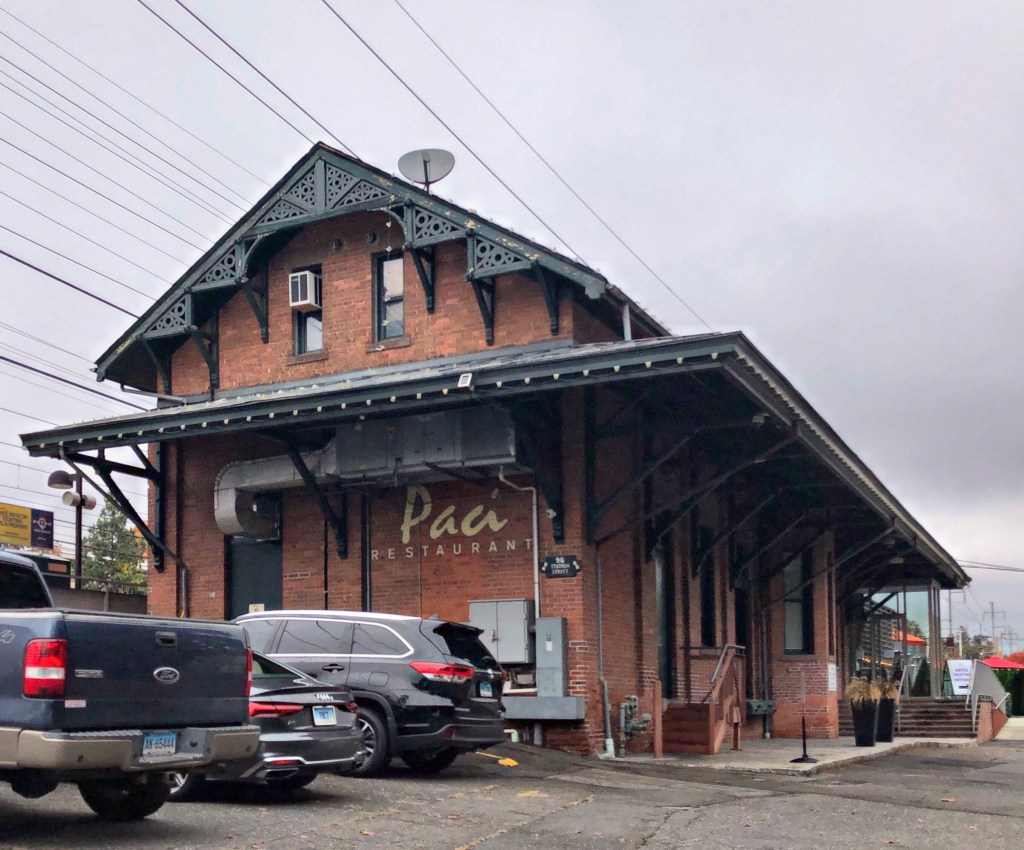
Southport Railroad Stations // 1884 & 1895

The Southport railroad stations in Fairfield, Connecticut, are reminders of the important role of railroad passenger service in the historical development of the town which continues to this day. In Southport, there are two stations, an east-bound and west-bound, one on either side of the tracks. The older east-bound station was built in 1884 to replace a depot destroyed by fire. It is typical of the substantial brick stations built at small-town stops throughout the state in the period. The use of brick was likely to prevent fire destroying yet another station. The stations were commonly large enough to accommodate spacious waiting rooms, ticket counters, offices, restrooms, and a baggage area. The brick station was converted to a restaurant, with a modern addition by Roger Ferris + Partners completed by 2017.
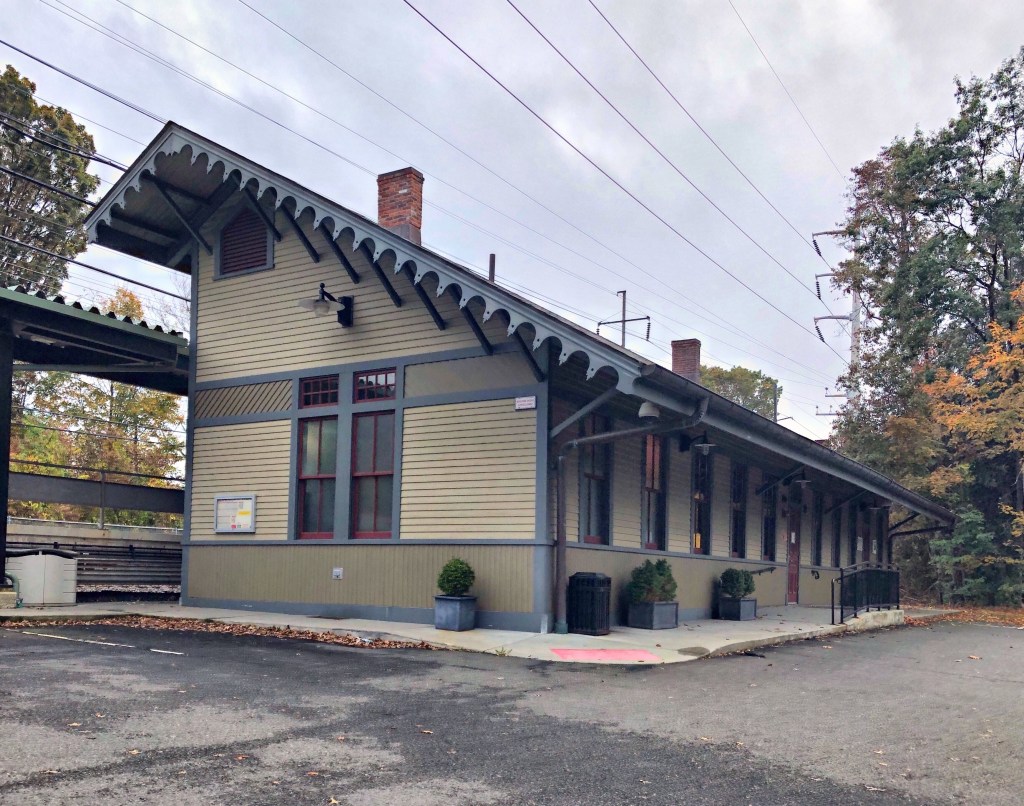
The wooden west-bound station was built around 1895 as part of a massive rebuilding of the New York, New Haven and Hartford Railroad’s main line. At this time, the railroad adopted a single design-concept for all the stations, reverting to wood construction, and limited the stylistic details. The Southport station has an interesting design however; with its saltbox-like roofline, bargeboards, and stick detailing. Imagine all the people and stories that passed through these buildings. Parents saying goodbye to children going off to college or war, businessmen and women commuting to and from work, or people like me who took it to Manhattan!
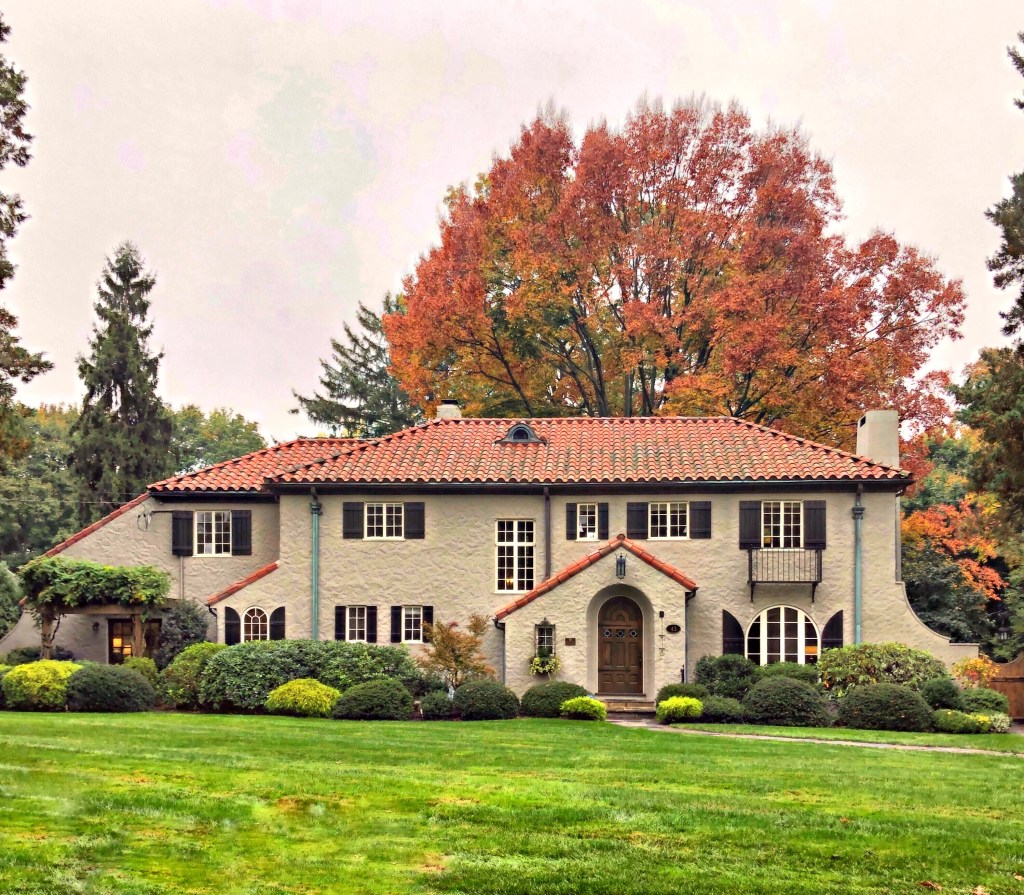
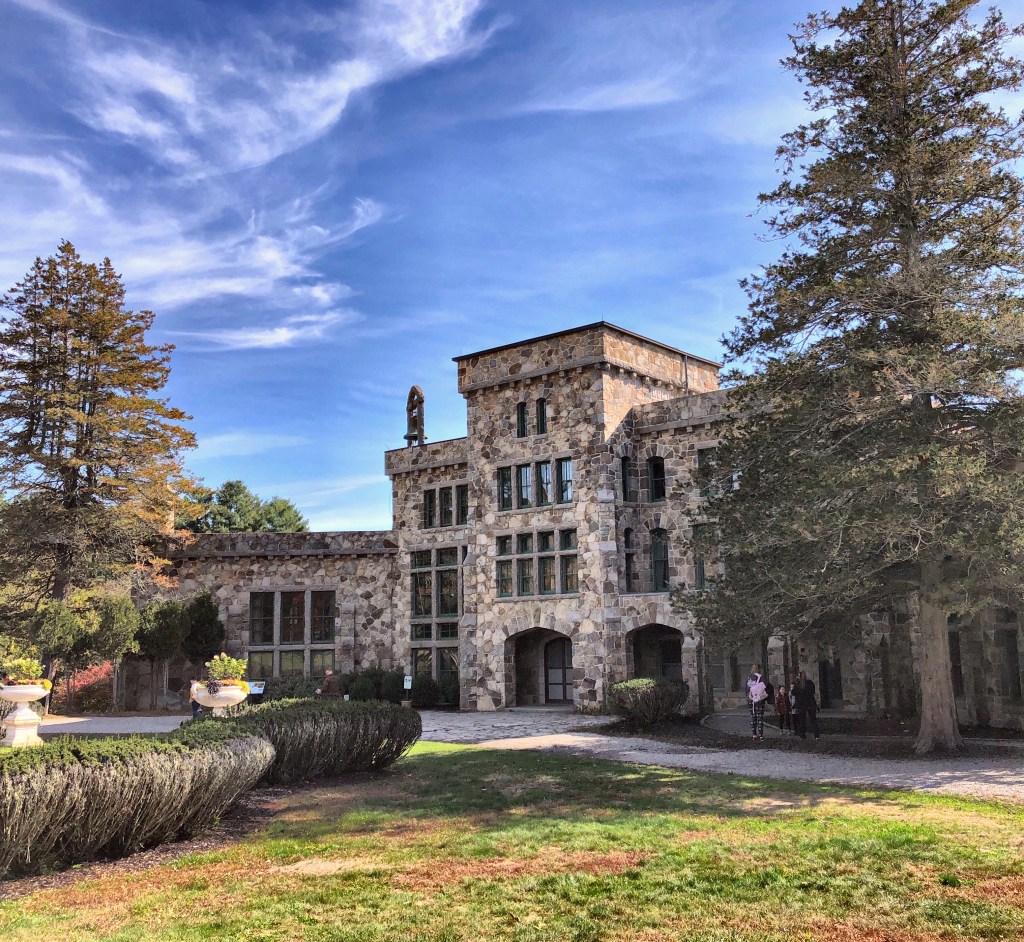
Howard Lee House // c.1928

Fairfield in the early 20th century began to shift as a suburban town with neighborhoods of large homes in planned districts. The proliferation of the personal automobile led to the “suburbanization” past streetcar suburbs closer to downtowns. Howard Greeley Lee (1893-1965) worked as Vice President of the Lee Brothers Furniture Co. based out of nearby Bridgeport. The company clearly did well as Howard had this large home built in the fairly uncommon (in New England) Spanish Revival style. It features a red tile roof, stuccoed siding, metal casement windows, and arched windows and front door, all commonly found in the style.

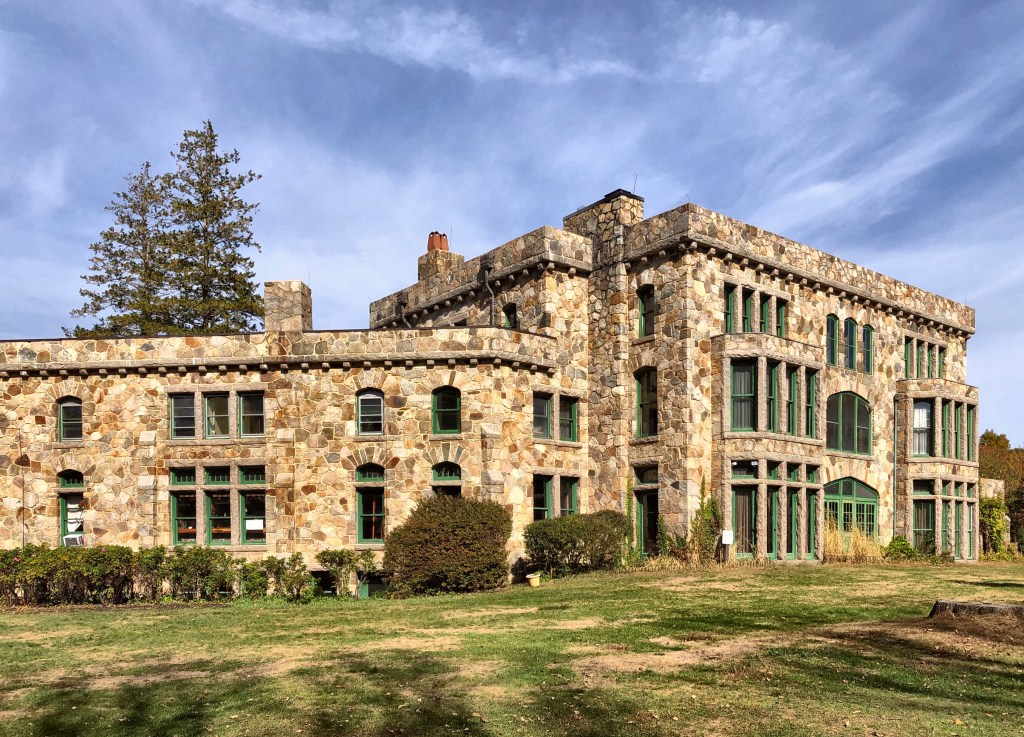
Ames Mansion-Borderland // 1910

One of the more stunning homes and parks in Massachusetts is located in Easton, known as the Borderland State Park. Borderland was the 1,200-acre estate of Blanche Ames Ames, an artist, political activist, inventor, writer, and prominent supporter of women’s suffrage and birth control. Blanche Ames’ husband, Oakes Ames (of the Ames Family of Easton), came from a wealthy Massachusetts family that owned the Ames Shovel Works. Marrying in 1900, Blanche and Oakes (who were not related even though they had the same last name) constructed their stone mansion in 1910 and created a system of ponds and dams on their property. Blanche and Oakes, who wanted a fireproof house, became displeased with the work of their architect because of the challenges he faced with their design and engineering requirements. Dismissing the architect, Blanche took over the design and construction management of the mansion and hired the Concrete Engineering Company to draw plans according to her specifications. Also on the grounds is a hunting lodge with fireplace, overlooking the large pond on the estate.

Once the mansion was completed, Blanche set up a studio on in the house and developed a scientific color system for mixing paints. She became the sole illustrator of her husband’s botanical books (Oakes was a renowned authority on orchids and taught botany at Harvard from 1900 until his retirement in 1941). Later in life, Blanche became the co-founder of the Birth Control League of Massachusetts and the Treasurer of the League of Women Voters from 1915 to 1918. She also gained notoriety for her political cartoons depicting the struggle for women’s suffrage. In addition to these many accomplishments, Blanche was an inventor who, in 1939, designed a hexagonal lumber cutter. During World War II she designed, tested and patented a method for ensnaring enemy airplanes in wires hung from balloons. Remaining active her entire life, Blanche received a patent for a water anti-pollution device in 1969, a year before her death.

The estate remained in the Ames family for 65 years, until 1971, when the Commonwealth of Massachusetts was gifted the Borderland Estate and all furnishings inside for use as a State Park.

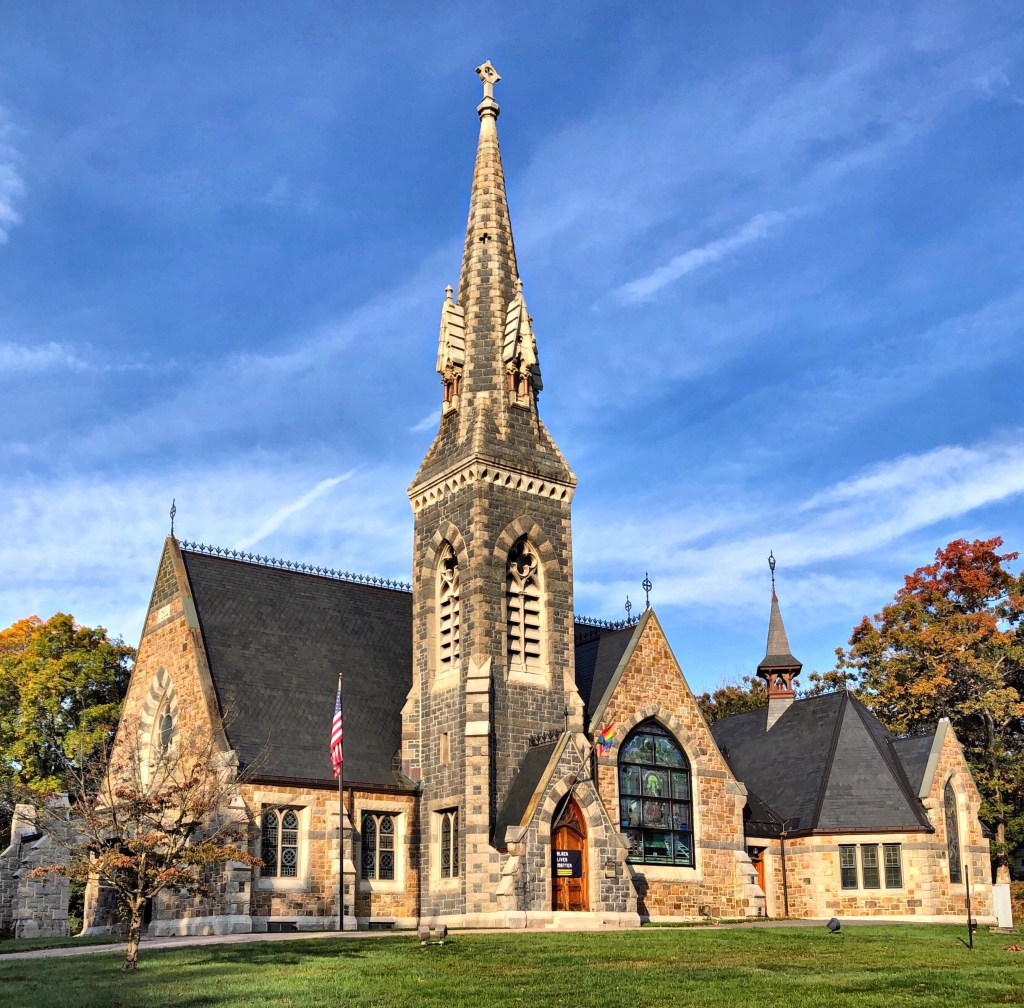
Unity Church of North Easton // 1875

The Unity Church of North Easton, Massachusetts looks like it could stand toe-to-toe architecturally with the large churches in major American cities. The church was a gift to the Unitarian Society in town, by Oliver Ames II, who hired renowned Gothic architect Henry Vaughan to design a chapel, worthy of the town’s wealth. The church contains various tablets and memorials to the Ames Family, with stunning stained glass windows by John LaFarge, recently restored by the church! Behind the grounds is the cemetery where many of the Ames family members are buried.

Oliver Ames High School // 1896

I’m starting to see a trend in Easton, almost everything is named after the Ames Family! In 1893, Oliver Ames (1831-1895), a grandson of shovel company founder Oliver Ames and son of Oakes Ames, offered to fund the construction of a new high school building if the town would pay the cost of building its foundation and grading the site. While governor of the Commonwealth of Massachusetts (1887-90), Ames had hired Boston architect Carl Fehmer as consulting architect to the State for the extension to the Massachusetts State House, and it was Fehmer who secured the design contract for the new school in Easton. The refined Colonial Revival school building features a central pavilion with an entrance set within an ornate stone architrave with a Classical entablature with central pediment. The school was outgrown in 1957 and became the town’s middle school, outgrown again in the 1990s. The town sold the school to a developer with preservation restrictions and it is now used as apartments!

North Easton Railroad Station // 1884

Frederick Lothrop Ames (1835-1893) was born in Easton, MA, the son of Oliver Ames Jr. who ran the Ames Shovel Works in town. On the death of his father in 1877, Frederick became head of the Ames & Sons Corporation also inheriting upwards of six million dollars, which he invested in railroads. From this, he eventually became Vice President of the Old Colony Railroad and director of the Union Pacific railroad. At the time of his death, Ames was reported to be the wealthiest person in Massachusetts! Due to his role for the Old Colony Railroad, Ames had a rail station built in his hometown, adjacent to his family’s factory. Henry Hobson Richardson, who designed many other buildings in town for the Ames Family, designed this station in his signature Richardsonian Romanesque style with its large arches, varied rustication of stone, and brownstone trimming. The building was completed two years before Richardson’s death. Rail service here was cut in the 1950s, allowing the Ames family in 1969 to buy the station back from the consolidated New York Central Railroad, gifting it to the Easton Historical Society.

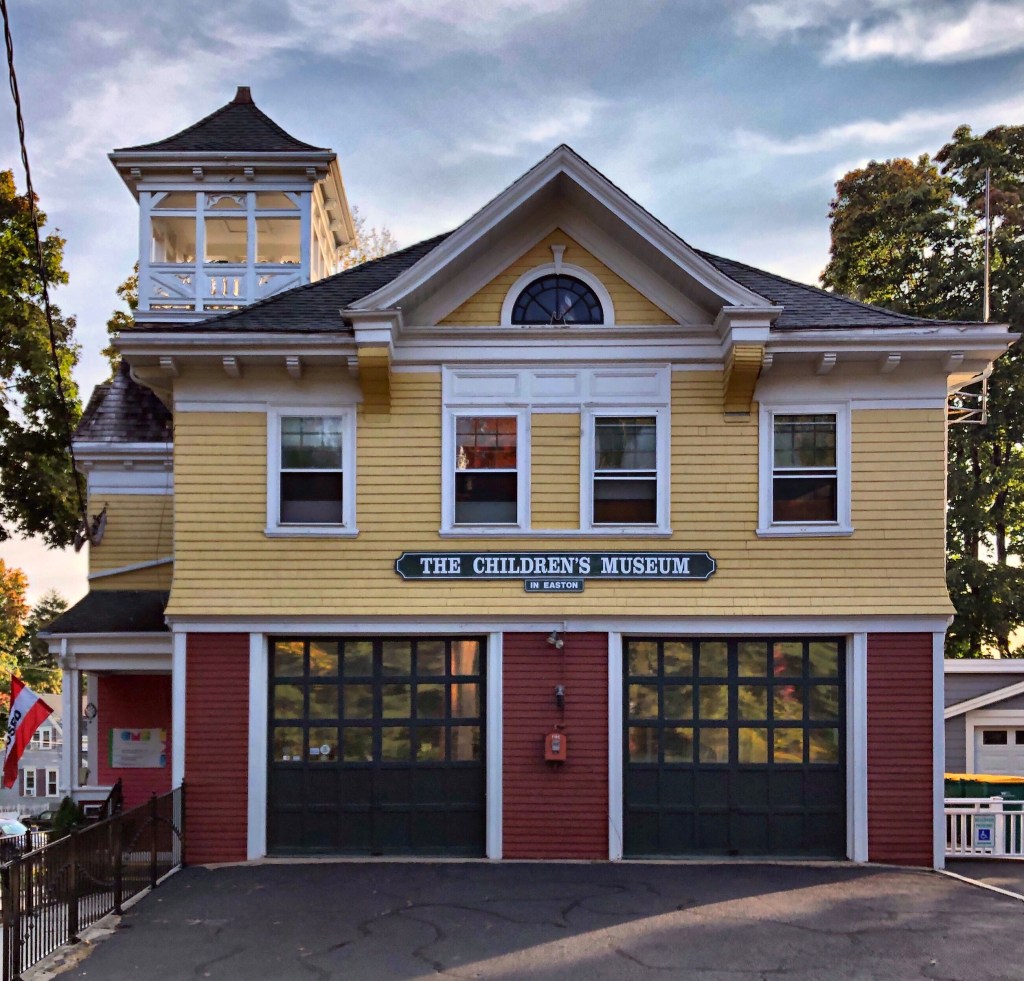
North Easton Fire Station // 1905

In the early 20th century, the village of North Easton, Massachusetts saw large growth, in large part by the Ames Family. The town had previously had a volunteer fire station, but due to the development, a permanent fire department was needed. In 1904, Mary S. Ames (later Mrs. Louis Frothingham) donated land for the purposes of building a fire station; across from the Ames Shovel Works. The fire station, completed in 1905, remained active until 1968, when the town’s modern firehouse that could accommodate larger fire apparatus was constructed. In 1991, the former fire station became the home of the Children’s Museum in Easton, which it remains to this day.

Forest Hills Administration Building & Chapel // 1884

Located adjacent to the Entrance Gate at Forest Hills Cemetery in Boston, the Administration Building and Chapel perfectly compliments the Gothic Revival collection of structures welcoming all visitors to the cemetery. Designed by the firm of Van Brunt & Howe, the building was completed in 1884, when the cemetery’s popularity with visitors (alive and deceased) was at a high. The building is in the Gothic Revival style and is constructed of
Roxbury puddingstone, with sandstone trim on the original parts of the building and yellow freestone trim on the 1921 addition. The building remains as a perfect partner to the entrance gate, serving as a physical portal between metaphorical life and death.

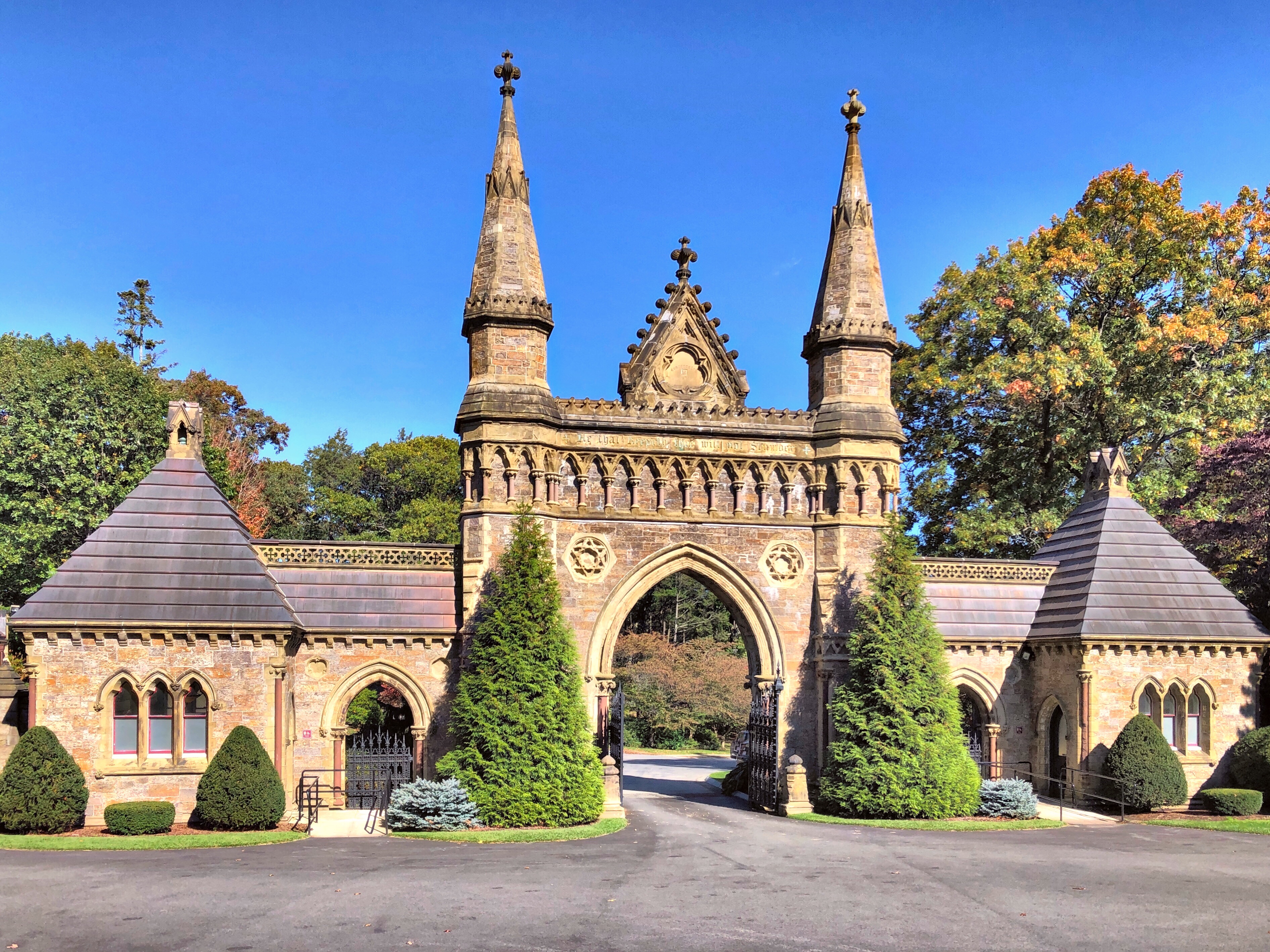
Forest Hills Cemetery, Entrance Gate // 1865

Forest Hills Cemetery was founded in 1848 by Henry A. S. Dearborn, then mayor of Roxbury. He designed this magnificent cemetery to offer the citizens of his community a place to bury and remember friends and family in a tranquil and lovely setting. Forest Hills embodies the ideals of the rural cemetery movement, which begun at nearby Mount Auburn Cemetery, in Cambridge in 1831, which was co-founded by Dearborn. Many rural cemeteries have elaborate entrance gates, possibly serving as a dramatic transition from the secular world to the spiritual realm of the cemetery, and perhaps as a metaphor for the journey from life to death. This entrance gate was built in 1865, replacing an earlier Egyptian Revival gate constructed in 1848. Designed by Charles Panter, the gate is constructed of local Roxbury puddingstone, with three arched openings with ornate iron gates surmounted by decorative scrolled ironwork. The central gateway is
framed by two conical spires and a central stone pediment, all topped with stone crosses.

Abbott Memorial Library // 1905

Gifted to the town of Pomfret by Ira Abbott, the Abbott Memorial Library is one of the most stunning little libraries in the State of Vermont. Given to his hometown as a memorial to his parents by Ira Abbott, who was at that time a State Supreme Court justice in the territory of New Mexico. Its architect, Henry M. Francis, used diverse materials — brick, granite, fieldstone, red birch, and pre-stressed concrete, to design the eclectic building. Capped with a red slate roof with terra cotta ridge tiles, the building stands out as one of the most unique buildings in the state and has been extremely well-maintained through its public-privately funded Commission.