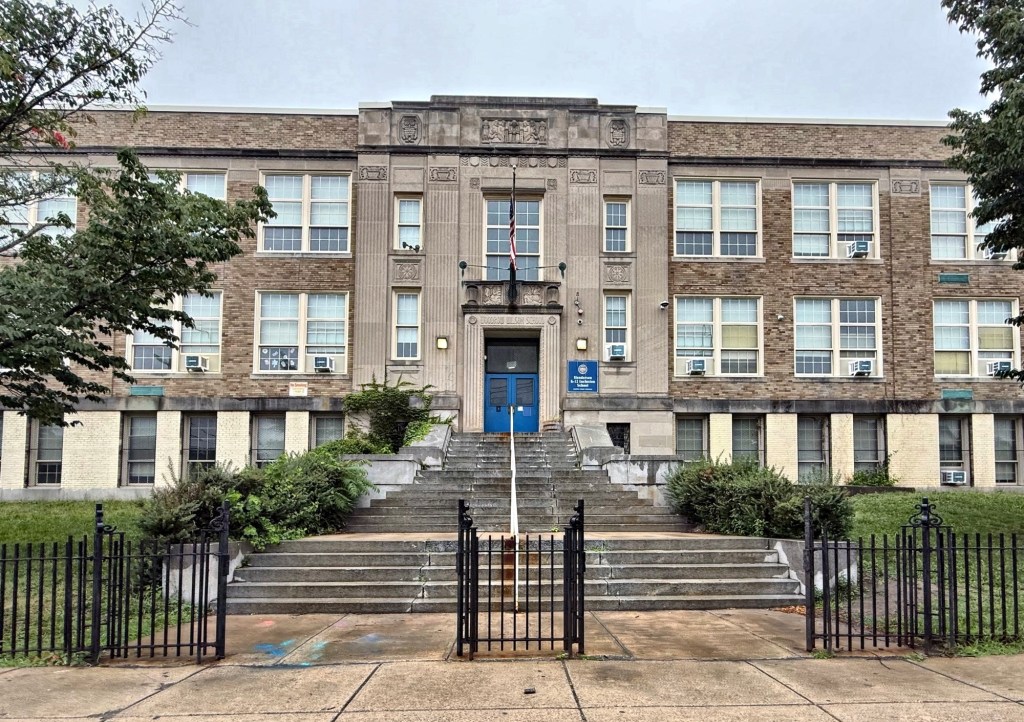
Woodrow Wilson School // 1932

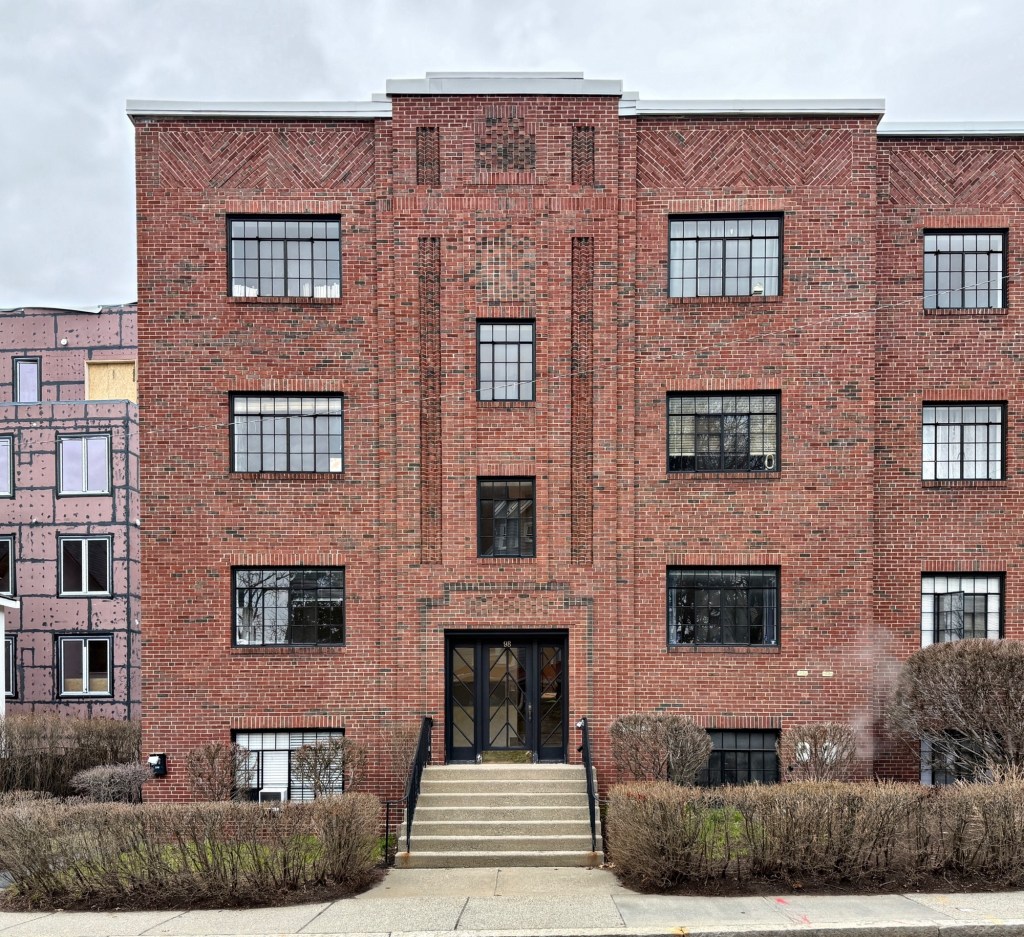
The Woodrow Wilson School, now Dr. William W. Henderson K-12 Inclusion School, is located at 18 Croftland Avenue in the Ashmont neighborhood of Dorchester. The school was built in 1932 to accommodate increased development and population growth in the immediate area in the interwar period and was designed in a blending of Classical Revival and Art Deco styles, both popular at the time for such academic buildings. The building was named for Woodrow Wilson (1856–1924), the 28th President of the United States and was designed to comfortably accommodate 1,600 students. Architect, John Matthew Gray designed the building to conform to a plan drafted by the City of Boston in 1923 to standardize all new school construction down to the precise dimensions of windows and hallways. The permitted flexibility for hired architects was strictly on the exterior, where architects were free to create individual character in the designs of entryways, auditoriums, and exterior architectural styles and decoration. The entry of the Woodrow Wilson School depicts Art Deco motifs including lettering and inlaid carved panels over the door of a child reading and a child holding a globe. The school was renamed the Dr. William W. Henderson K-12 Inclusion School after the innovative educator of the same name.


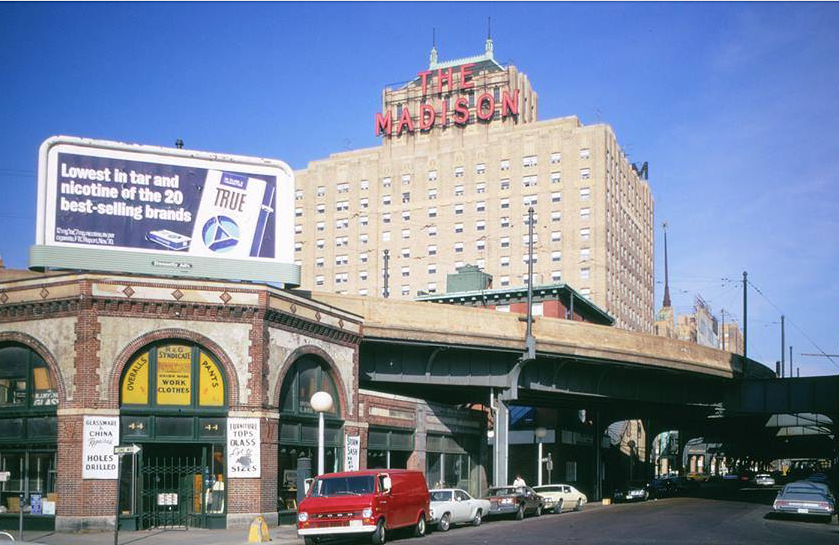
Hotel Manger // 1930-1983

Built on the site of the former Boston & Lowell Train Station the Hotel Manger (later renamed the Madison Hotel in 1959) was part of the first redevelopment of North Station in Boston. When the Boston & Maine Railroad announced that plans had been finalized for the construction of a new North Station facility, which would include a sports arena, hotel, office building, and distributing terminal, Manger Hotels, a national hotel chain, and the Boston & Maine Railroad announced that the two parties had signed a contract for the construction of the hotel on the site with each party holding a 50% stock in the building. Designed by the architectural firm of Funk & Wilcox in the Art Deco style, the 17-story hotel was completed in 1930 and contained 500 rooms and at the time of its opening, the hotel was said to have had proportionately more marble than any other building in New England! As railroad traffic declined, the neighborhood surrounding North Station lost its importance as a commuter center and the hotel began to suffer financially, leading the hotel to close in 1976. Plans to convert the old hotel into elderly housing fell through, and in March 1983, the Boston Redevelopment Authority purchased the hotel and demolished it as part of their urban renewal plan for the area. The site is now occupied by the mundane Thomas P. O’Neill Jr. Federal Building.

Everett Savings Bank // 1930

Located next door to the First Congregational Church of Everett, you can find one of the finest eclectic commercial buildings in the region, and it is one that is often overlooked. The Everett Savings Bank was built in 1930 from plans by architect Thomas Marriott James for the Everett Savings Bank, which was established in 1889. This building was constructed just at the beginning of the Great Depression, at a time when banks and American citizens were penny pinching. The budget was likely set before the Stock Market Crash of 1929 as the relatively high-style bank building would have been a big expense at the time. The bank blends Art Deco and Spanish Renaissance Revival styles elegantly. The structure is constructed with sandstone walls that are decorated with figured panels and semi-circular multi-pane windows are outlined by rope molding. Crowning the building is a bold arcaded frieze with Moorish inspired cornice. Swoon!

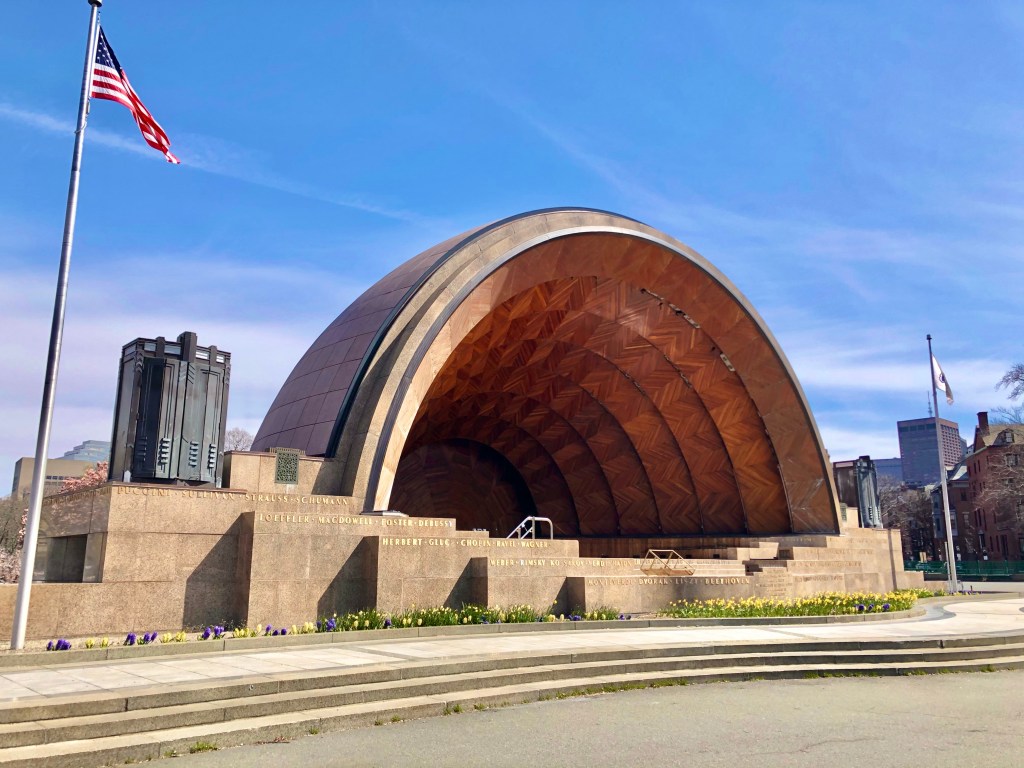
Hatch Memorial Shell // 1940

Located at the Charles River Esplanade in Boston, the Hatch Memorial Shell has long been an iconic landmark and meeting place for Bostonians and tourists alike. Built in 1940, this outdoor amphitheater structure replaced an earlier 1920s shell, envisioned by Arthur Fiedler, the first permanent conductor of the Boston Symphony Orchestra. Construction began on the first shell in 1928 and Arthur Fiedler conducted the first Boston Pops concert there on July 4, 1929, followed by a month of concerts during that first summer, a tradition that has continued to this day. A second temporary shell was constructed of metal in 1934, which was unsatisfactory for the famous orchestra. In 1940, the construction of the new music shell took place, donated by benefactor Maria Hatch, to build a memorial for her late brother, Edward, who it is named after to this day. The permanent shell was designed by Richard J. Shaw, a Boston architect known for designing churches. The Art Deco design, with intricate woodwork adorning the interior and a terrazzo tile roof, was dedicated on July 2, 1940, just in time for Independence Day celebrations.

New England Telephone Building // 1947

The New England Telegraph and Telephone Company Building was erected in 1947, just north of the Western Union Art Deco building (last post) to serve as the company’s headquarters. The steel-frame, polished granite and limestone-sheathed Art Deco skyscraper was designed by Alexander Hoyle, a partner in the firm of Cram & Ferguson. The stunning building takes the form of a stepped pyramid, or ziggurat, with successive receding stories rising from a four-story base, which diminishes its massing from the street. At the interior, a lobby mural on paper by artist Dean Cornwell (1892-1960), depicting “Telephone Men and Women at Work,” commissioned in 1947 and installed in 1951. The 190-foot mural told the story of the history of the telephone and was an artistic masterpiece, but was removed from the lobby during a recent renovation and subsequently sold.

Western Union Building // 1930

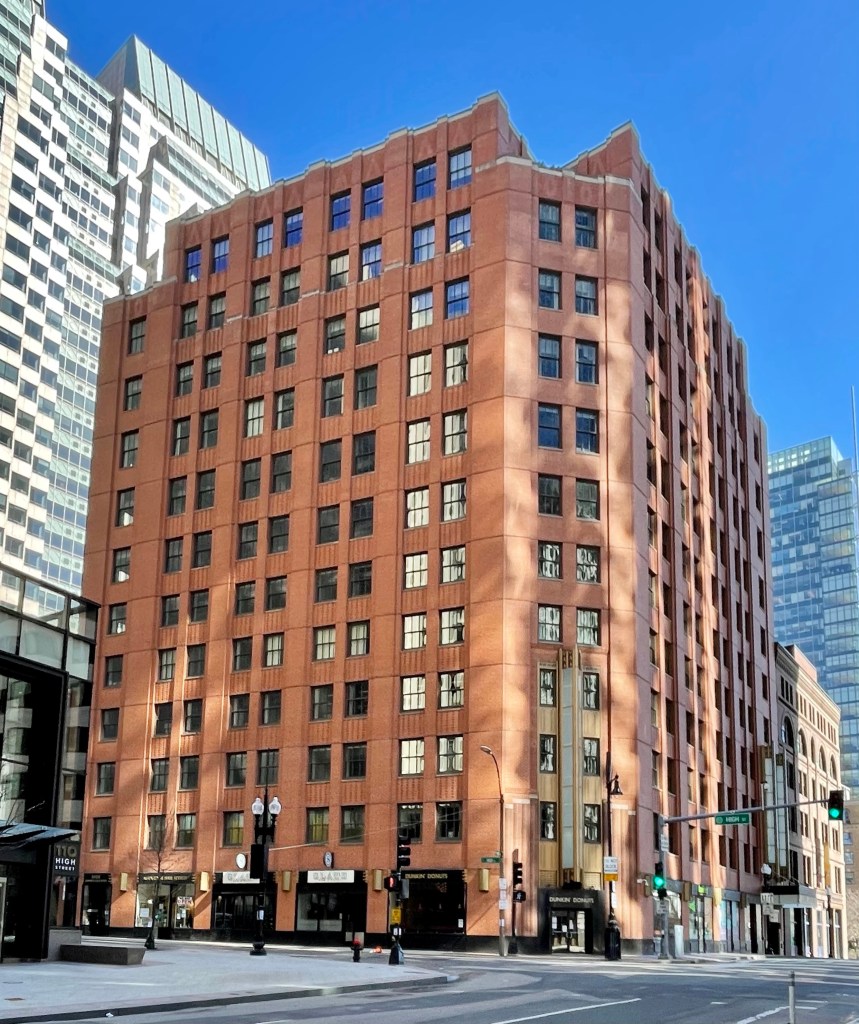
While Boston doesn’t have as many iconic Art Deco buildings as New York or Chicago, we do have some that pack a punch! Located at the southern end of Downtown Boston, the Western Union building at the corner of Congress and High streets served as a headquarters for the third district in Western Union’s eastern division. Western Union was founded in 1851, and ten years later, built the first transcontinental telegraph line. The company made a brief foray into the telephone field but lost a legal battle with Bell Telephone in 1879 and thereafter concentrated solely on telegraphy. In the 20th century, Western Union diversified its operations to include: leased private-line circuitry, a money order service, as well as telegrams and mailgrams. The company’s Boston building was designed at the same time as their New York City headquarters, designed by Ralph Thomas Walker, and the buildings are strikingly similar, just with the Boston building on a smaller scale. The building in New York is among my favorite Art Deco buildings ever, as the use of red brick in varied patterns creates such a stunning composition. Amazingly, in 2004, water infiltration behind the original brick façade of the Boston building necessitated the removal and replacement in-kind of the entire brick façade. The existing signage and light fixtures, designed in the Art Deco style were added at that time.

Nantasket Beach Bath House // 1935

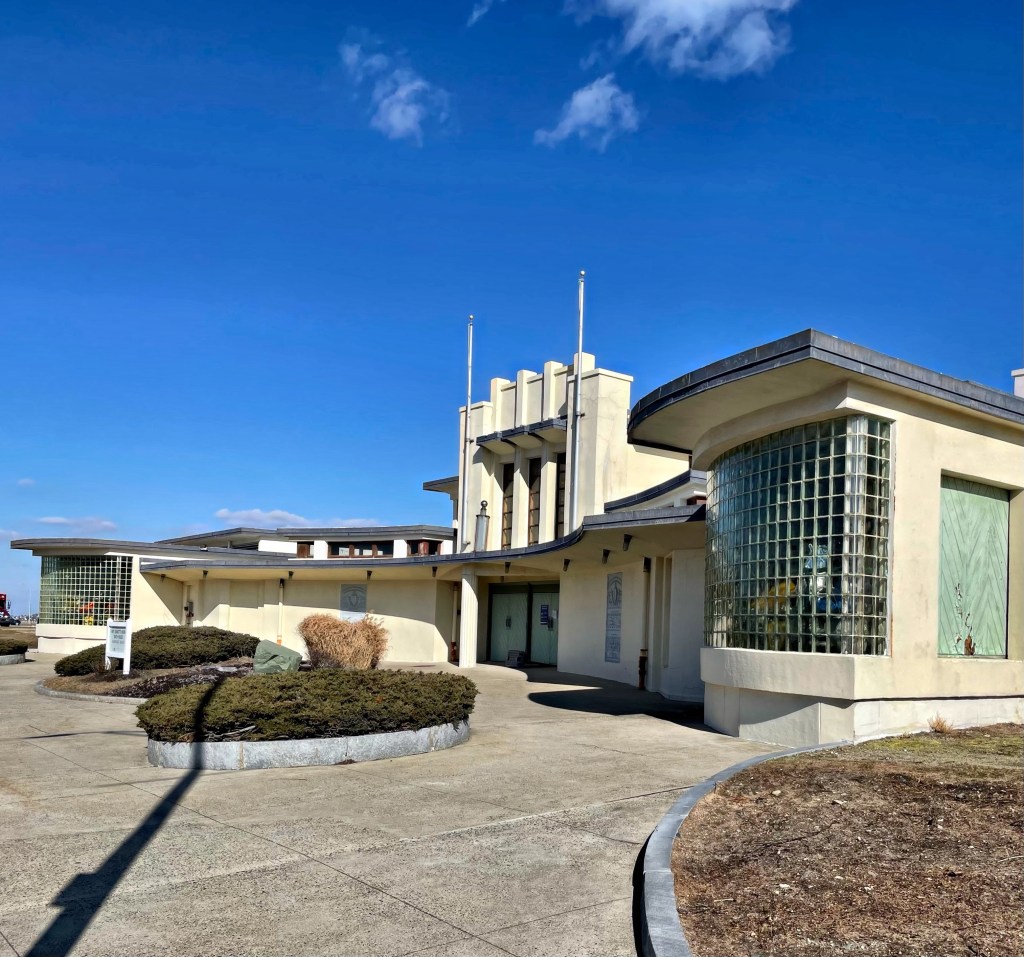
A part of any large public beach in Massachusetts is the public bathhouse, where visitors can go to the bathroom, change, and store belongings in lockers. Ever since the Massachusetts Parks System of Boston acquired land at Nantasket Beach, a bathhouse was here for visitors. The earlier building by Stickney & Austin burned down and was soon replaced. This amazing Art Moderne bathhouse features a central mass with wings adorned by glass block. The architects Putnam & Cox created a whimsical 1935 Moderne design that blends into the sandy beach. The building suffered from the salt air and cold winters and went through a massive restoration in the late 1990s, it was then re-opened and re-named after Mary Jeanette Murray, a state representative.