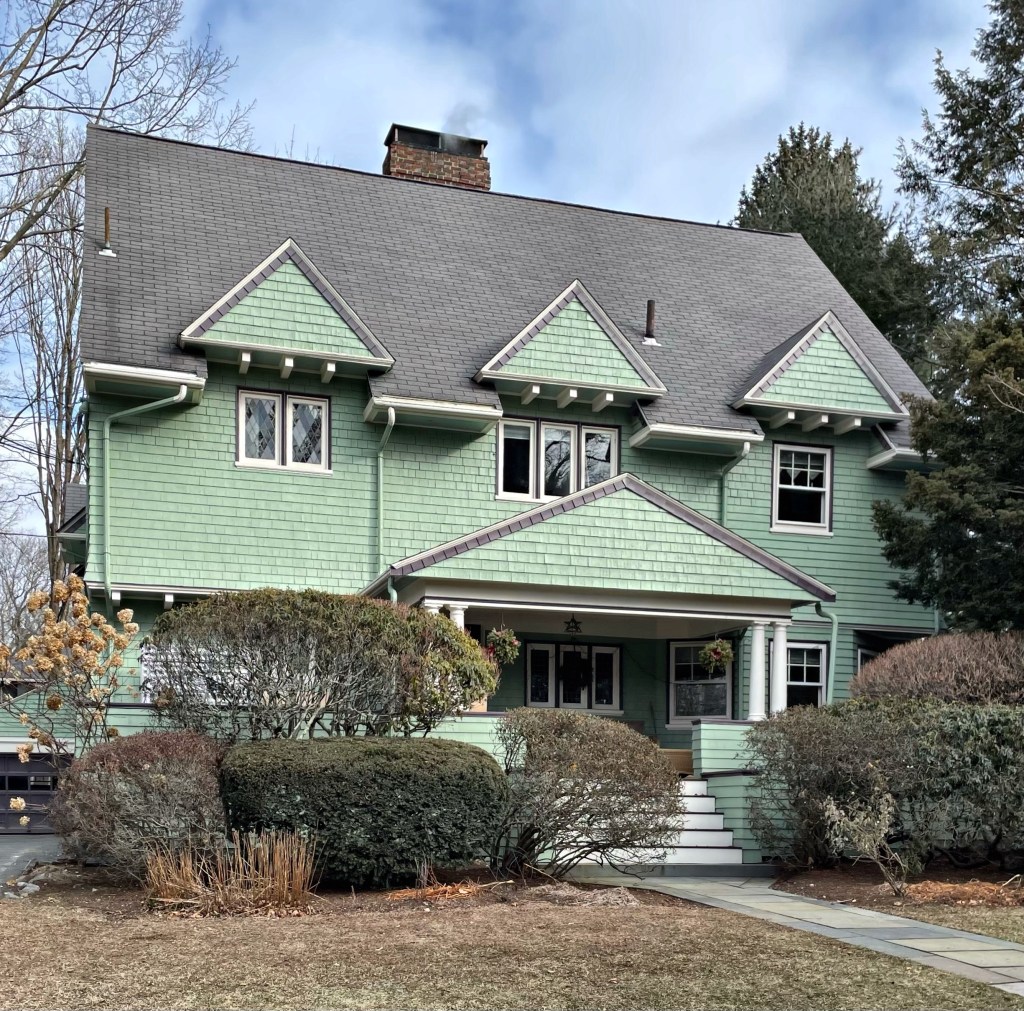
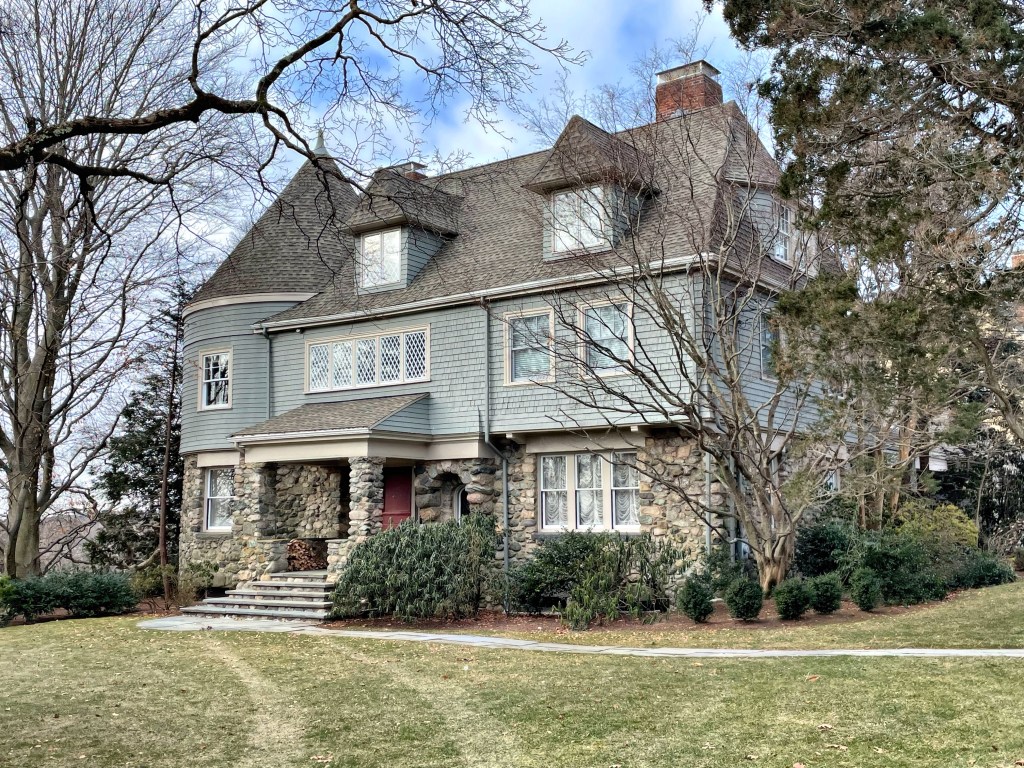
Louis K. Harlow House // 1888

One of the best houses in Waban Village in Newton is this absolutely stunning Shingle style/Queen Anne home perched high on Moffat Hill. This house was built in 1888 for Louis K. Harlow, who began his career as a professional artist in 1880 and traveled Europe to study the work of prominent painters. Back in the Boston area, Harlow painted nature and landscapes and produced etchings that were shown in the Boston Art Club and sold worldwide. He later got into poetry and published multiple works. Harlow hired the firm of Longfellow, Alden, and Harlow, to design this country retreat. I assume there is a relation between Louis K. and the architect Alfred Branch Harlow, but I would love to find out the connection! The design is quintessentially Queen Anne, with the asymmetry, complex roof form, varied siding types, and diamond window sashes. The shingled second floor overhangs the fieldstone first floor which to me, evokes the Shingle style where the house seems to have grown out from the earth. I can only imagine how spectacular the interior is!

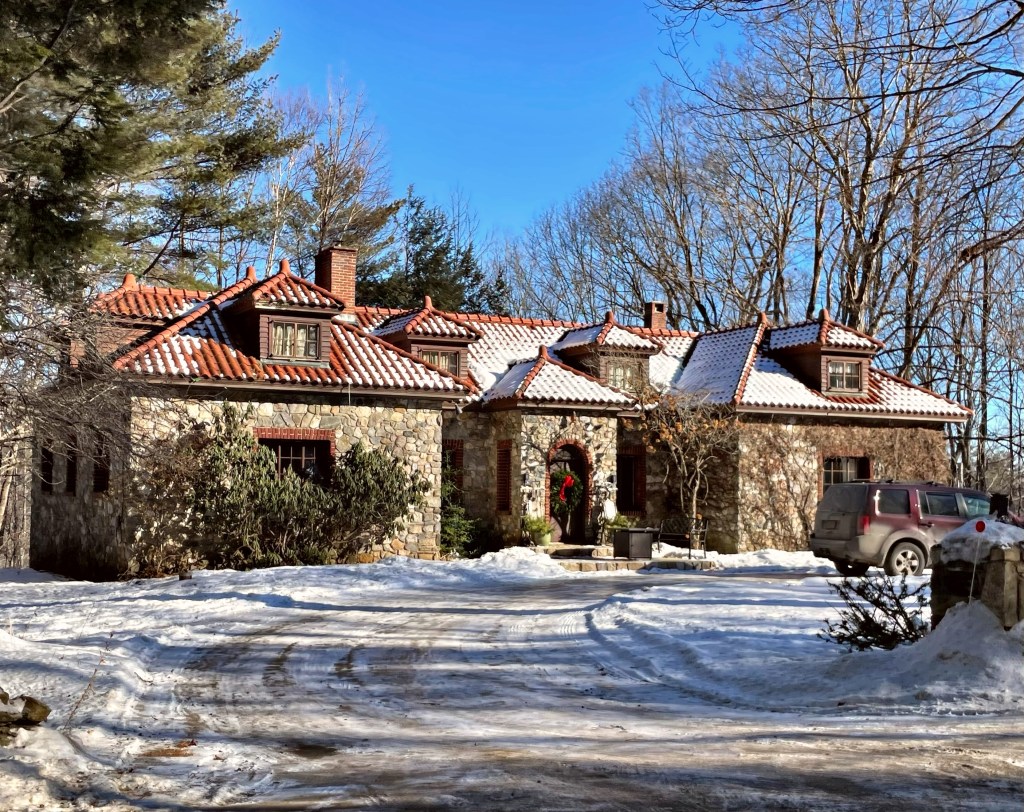
Wrightstone // 1925

In the early 20th century, Norway, Maine and the surrounding towns were sought-after for their natural beauty with large lakes and rivers with untouched expanses of forest. Upper-middle class residents of Portland, Boston and other larger cities in New England built more rustic summer homes, compared to the elaborate “White Elephants” in Newport, Rhode Island. This home in Norway was named Wrightstone and was built in 1925 for the Wright Family. The U-shaped home is constructed from rubblestone, likely gathered from the land on which it sits. The house blends the Arts and Crafts movement with the uncommon (in Maine) Spanish Colonial Revival style, with the terracotta roof! I bet the interior is so cozy!

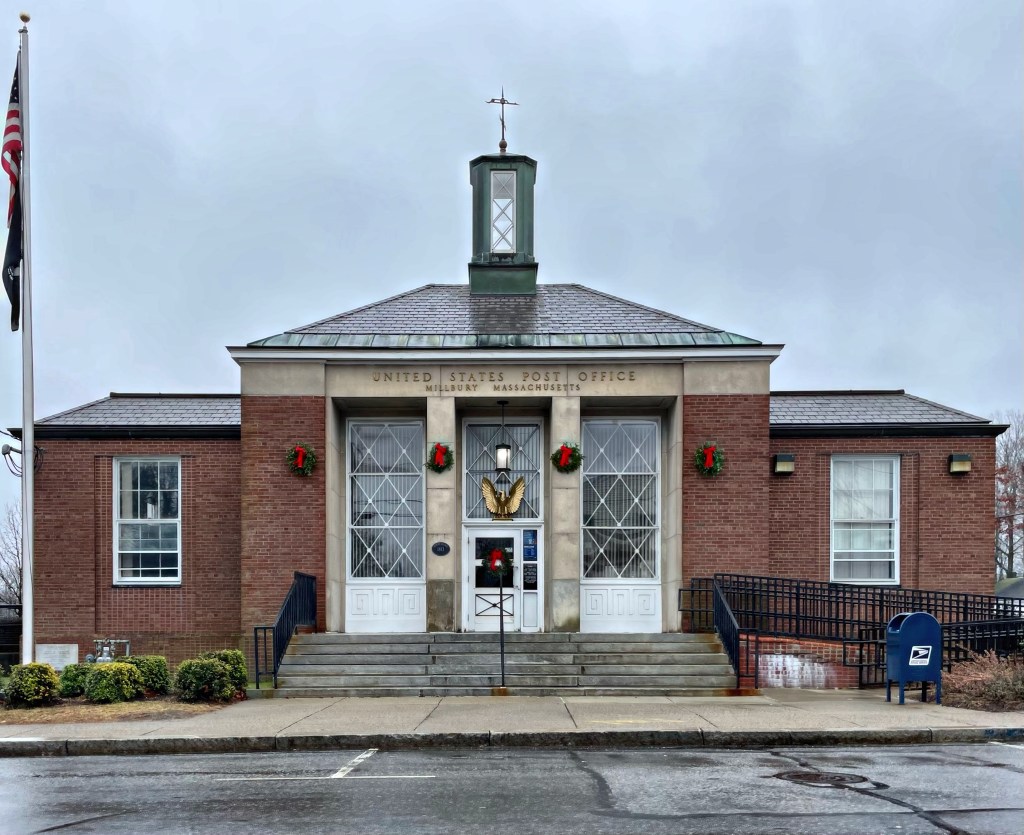
Millbury Post Office // 1940

Located in downtown Millbury, MA, the town’s local post office stands as a great example of Art Deco and Colonial Revival architecture styles, showing how well different styles can be incorporated into a single, complimentary design. The Millbury Post Office building was constructed in 1940 from plans by Louis Adolph Simon, who served as Supervising Architect in the Office of the Supervising Architect for the U.S. Treasury from 1933 until 1939, when the office was moved to the Public Works Administration / Works Progress Administration. The post office was designed at the tail end of the New Deal programs to help stimulate local economies by building infrastructure and providing jobs to locals. Inside, a mural “An Incident in the King Philip’s War, 1670” was painted by Joe Lasker and installed in 1941 and was “revivified” in 1991.

John Tillinghast House // c.1758

Built about 1758, this Georgian house in Newport was the home of John Tillinghast, a representative to the Rhode Island General Assembly in 1744 and 1749, and a wealthy merchant and ship owner. It is not unlikely to assume that Tillinghast was involved in the slave trade and transportation of goods in the Indies, like many other wealthy Rhode Island merchants at the time. During the American Revolution, General Nathanael Greene was quartered in this house. Greene was born to a Quaker family in what is now Warwick, Rhode Island, but because of his military affairs, the pacifist Quakers disowned him. After several decisive victories against the British in the Carolinas, Greene was named Commander of the Southern Army, second in command to George Washington! Also during this time, two of Greene’s aides are said to have visited him while he resided at the house. One was the Lithuanian General Thaddeus Kosciuszko, an engineer who designed fortifications along Delaware River and West Point. Another was the Inspector-General of the Continental Army, German-born Friedrich von Steuben. This house is significant and shows the international nature of the War for Independence, which saw American forces joined by French forces and German mercenaries to fight the British. In the early 19th century, the home was occupied by William C. Gibbs, Governor of Rhode Island from 1821-1824. The high-style Georgian home has been enlarged over the years, but remains one of the most significant properties in the town!

Canton Center Schoolhouse // 1872

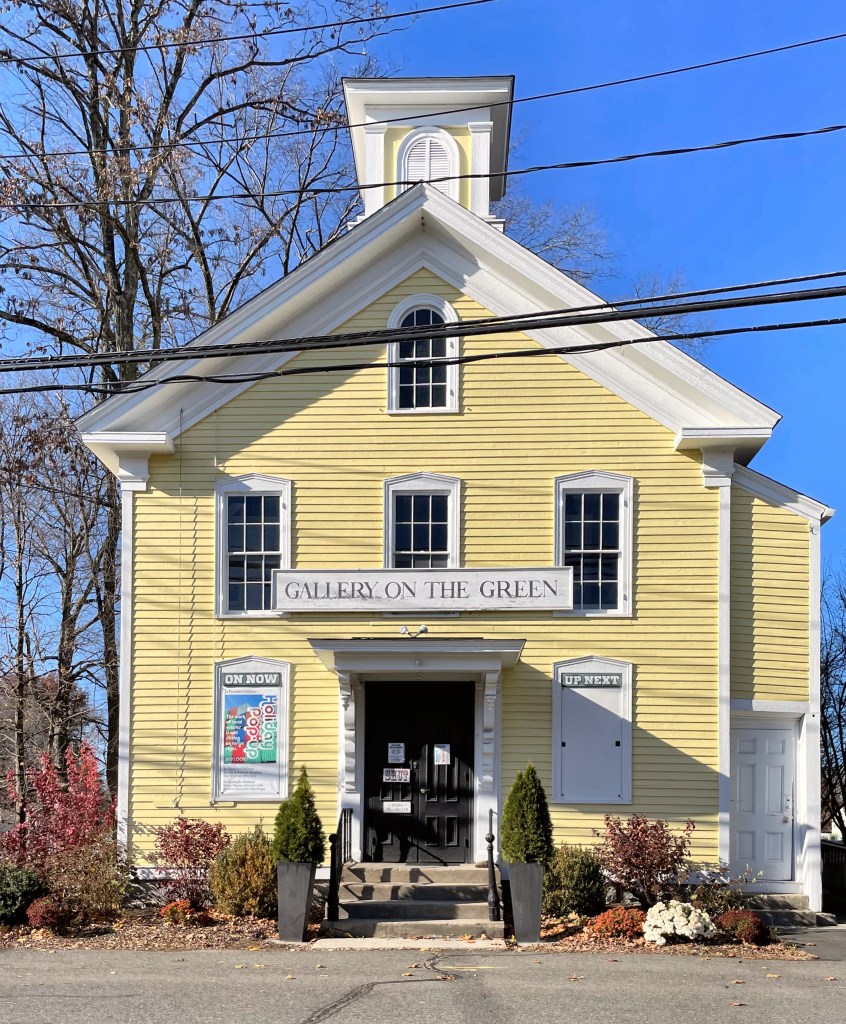
Canton, Connecticut, the only town in the state named after a city in China! The land which we now know as Canton had long been inhabited, specifically by the Wappingers, a group in the larger Algonquin speaking tribes. Canton was incorporated out of Simsbury in 1806, and named after the City of Canton in China (now known as Guangzhou), though I am not sure why. The town quickly developed two main villages. Collinsville sits on the Farmington River and its power was harvested for industry; while the center village grew differently as an agricultural village of farms. At the center of town sat a green for civic and town functions and gatherings. The town constructed a school here as far back as 1759, when the rural village was still a part of Simsbury. This is the fourth building on the green and it was built in 1872, and can be classified as Italianate in style. The building was occupied as a school until 1949, and it was used for other city uses until 1971, when the building was rented to the Canton Artist’s Guild and the building was renamed Gallery on the Green. The building remains community-focused and holds exhibits of local artists! Much of the rest of Canton Center lost all of its bucolic charm when the main road became commercialized, prioritizing speeding cars over a walkable village.

Old Settlers’ Burying Ground // 1674+

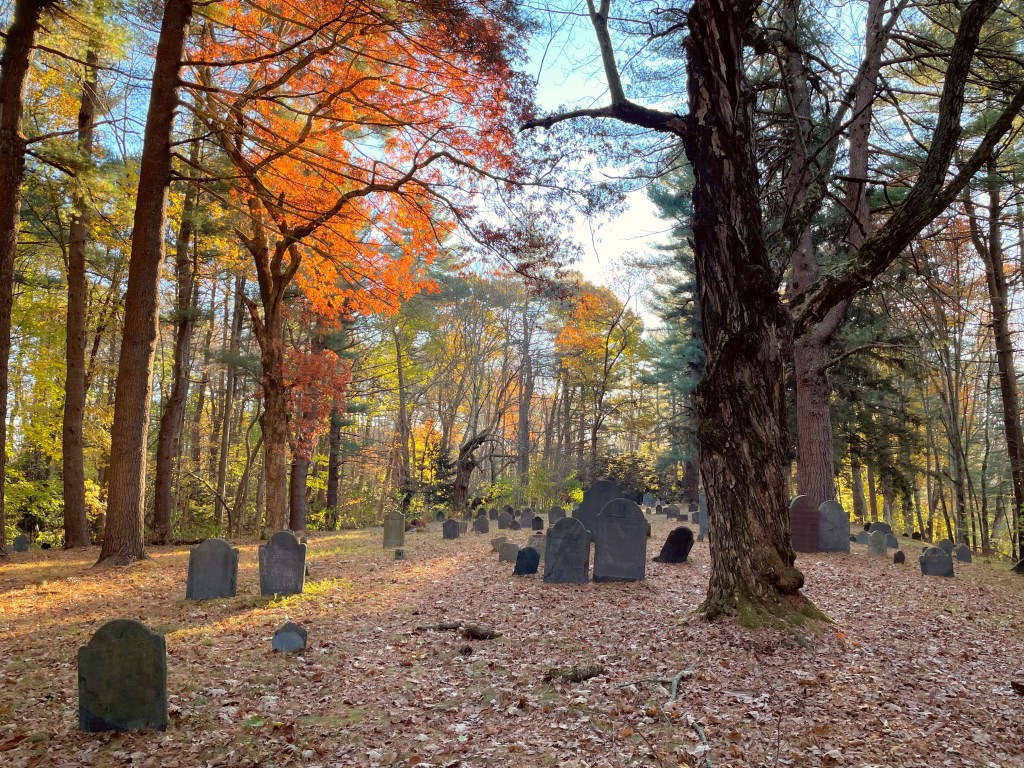
I know.. I know.. It’s not a building, but I couldn’t help myself but to find this hidden cemetery and take some photos! Tucked way off a street, across railroad tracks and down into a grove of trees, I came across this Colonial-era cemetery known as the Old Settlers’ Burying Ground. Established by 1674, it is the town’s oldest formal cemetery with gravestones dispersed, both standing up to the heavens and seemingly jutting out of the ground like crooked teeth. The Old Settlers’ Burying Ground contains approximately 196 stones and an estimated 230 burials. The stones in the cemetery reflect the continuum of headstone iconography popular from the 17th through 19th centuries, depicting winged death’s head, soul effigy, heart, hourglass, skeleton, and cherubs, to name a few. The cemetery is thought to possibly have unmarked graves of the colonists who were killed during the Lancaster Raid, the first in a series of five planned raids on English colonist towns during the winter of 1675 as part of King Philip’s War. Metacom, known by English colonists as King Philip, was a Wampanoag sachem involved in leading and organizing Wampanoag warriors during the war. The tension that led to these raids began from the decline in the fur trade due to overhunting, the decrease in the native population due to European-derived diseases, and the invasion of English livestock on native land. According to one estimate, at least fourteen Lancaster inhabitants died and twenty-three were captured and taken as prisoners, some of those 14 are likely buried here in unmarked graves.

Canterbury Shaker Infirmary // 1811

Constructed in 1811 as a guest house for the Canterbury Shakers, this beautiful structure follows the Georgian, center-hall residential floor plan constructed in the Federal period. Shaker records indicate that in 1849, the building was converted to an infirmary and the next year, the roof was tinned and the portico over the front door, called a “jet” by the Shakers, was added. After 1892, the first floor housed the nurses’ quarters, pharmacy, nurses’ sitting room and office and the dentist’s office. Upstairs, the patients’ rooms were fitted with lavatories and running water. The attic was used to store medical supplies and as a mortuary. All for the growing Shaker community here. Following the death of the last nurse in 1937, the building ceased to be used as an infirmary and was used as living quarters for sisters.

Canterbury Shaker Bee House // 1837

The original purpose served by this small clapboard building in the Canterbury Shaker Village, built in 1837 and measuring just 12 x 25 feet is subject to some debate, although it was definitely used as a drying house. Early writings indicate it was built as an apple-drying house while others state that the original purpose was to dry lumber. The present off-center gable-roofed cupola on the gable roof served as a ventilator. In 1865, the building became the headquarters of the bee keepers of the local Shakers.

St. Saviour’s Episcopal Church // 1877

Initially erected in 1877 and enlarged several times thereafter, the St. Saviour’s Episcopal Church in Bar Harbor is an excellent example of ecclesiastical architecture in the state of Maine. The original church building had been erected in 1877-78 at a cost of about $7,000 from designs by the New York architect Charles C. Haight. Within eight years of its construction, space limitations caused the church to undertake a major expansion. Designed by the Boston architectural firm of Rotch and Tilden, this building campaign – carried out in 1885-86 – dramatically changed the church’s appearance by developing a cross shaped plan that made use of the original structure for transepts and added a larger nave, semi-circular apse, and an imposing crossing tower. The numerous building campaigns designed by both prominent and lesser known architects, have produced a rich eclectic architectural legacy that mirrors the development of Bar Harbor.

Delano-Clapp House // 1735

My favorite Georgian style house in Rochester, MA is the Delano-Clapp House set far off the street, behind a stone wall. The house was built in 1735 for Jonathan Delano, a weaver. Jonathan’s son, Jonathan, Jr., sold the house and land to Ebenezer Clapp, in 1755. The property remained in the Clapp Family for nearly 250 years, when it sold out of the family in 1990. This house is testament to the fact that you can find great architecture in every corner of New England!