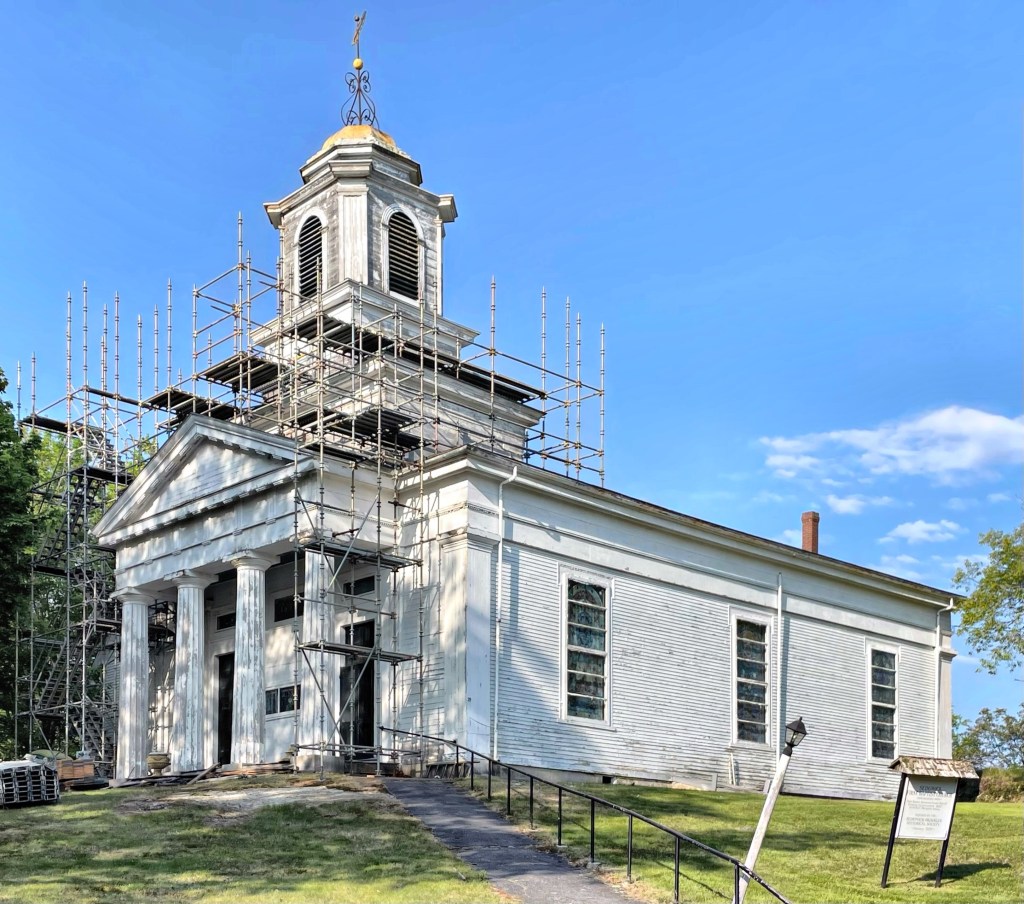
Holt House – Blue Hill Historical Society // 1815

The Holt House in Blue Hill, Maine, was built in 1815 by Jeremiah Thorndike Holt, grandson of Nicholas Holt who brought Blue Hill’s fifth family from Andover, Massachusetts in 1765. Jeremiah was one of the first to locate at the head of the bay, in what is now the center of Blue Hill village. He was an influential businessman who kept a store at what became known as the Pendleton House, engaged in shipping, and became the town’s second postmaster. After Jeremiah died in 1832, his widow turned the house into the town’s only inn and tavern. In 1851 their son, Thomas Jefferson Napoleon Bonaparte Holt (what a name!) and his family occupied the house. It stayed in the family for over a hundred years until the Blue Hill Historical Society bought the Holt House and made it their headquarters in 1970. The Holt House remains as a well-preserved Federal style home in this part of Maine.
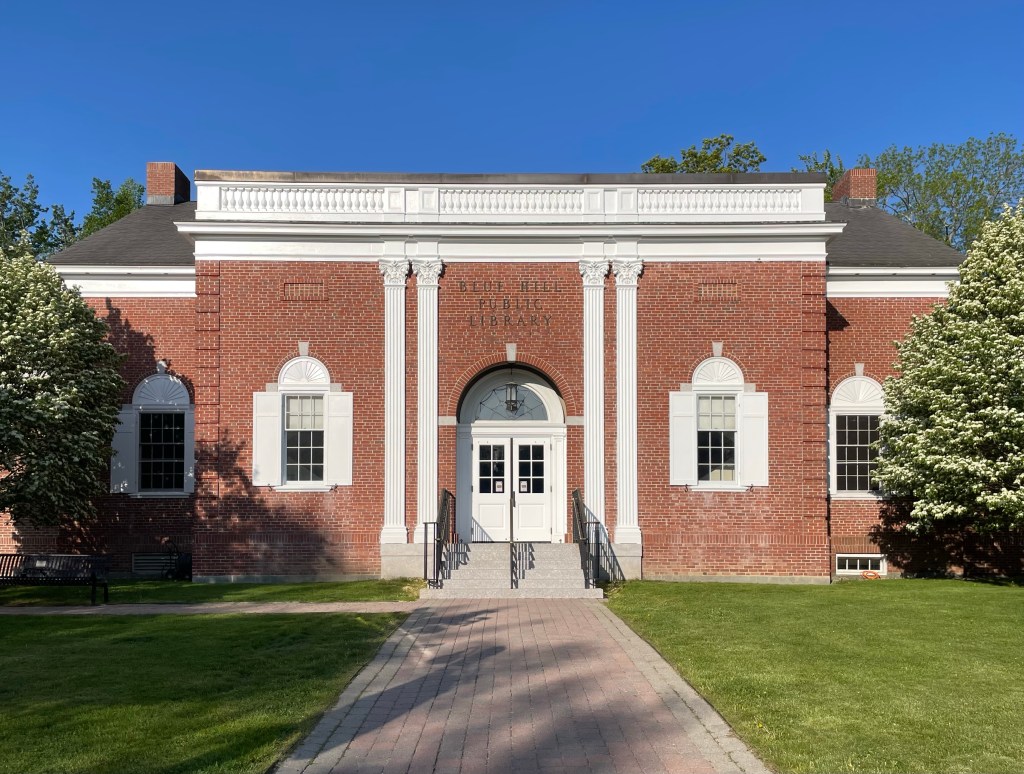
Blue Hill Public Library //1938

Some small town libraries really pack an architectural punch! Blue Hill had long had a public library building, which eventually outgrew its limited space in the 1895 Town Hall building. During the mid-late 1930s, in the depths of the Great Depression, plans began for a new library. Adelaide Pearson, who had moved to Blue Hill in 1928, took on the formidable task. She was described as “a small woman who got things done” and had a vision for a library that was an integral part of the community, serving more than as a place to store and retrieve books. To fulfill that dream, she organized a fundraising campaign to buy a vacant lot in town. Local pledges came in ranging from 25 cents to “one dollar or a day’s work.” With the help of librarian Anne Hinckley, Adelaide Pearson petitioned the federal government for funds from the Public Works Administration, part of the New Deal program. At last, in March of 1940, the Colonial Revival style library building designed by Bunker and Savage Architects of Augusta opened its doors. The library has been a centerpiece of life in the coastal town of Blue Hill ever since.

Pendleton House // 1826

Large commercial blocks like this can really transport you back a century or more! The Pendleton House in Blue Hill, Maine was built in 1826 by Jonah and Jeremiah Holt. The brothers were born in Beverly, Massachusetts and their family settled in Blue Hill, likely to work in the shipbuilding industry. Originally called the Brick Block, the building was a storefront for the Holts. In the 1870s, the building had fallen into disrepair, and was seized from its owner, Frederick Holt (Jeremiah’s son), by the Blue Hill Academy, from whom Nathan Pendleton purchased the building. As an 1877 issue of The Ellsworth American stated: “Blue Hill needs a hotel. There have never been so many strangers and visitors. Five hundred men are working in the quarries.” From the massive demand for lodging in town, tied to industry, Pendleton opened the building as a hotel in 1878, possibly adding the mansard roof at that time. The building became known as the Pendleton House for a number of years and was purchased by John M. Snow in 1888, who added porches to the building. Sadly, the porches were removed in the 20th century, but the old Pendleton House remains a fixture in Blue Hill and is home to small businesses with housing above.

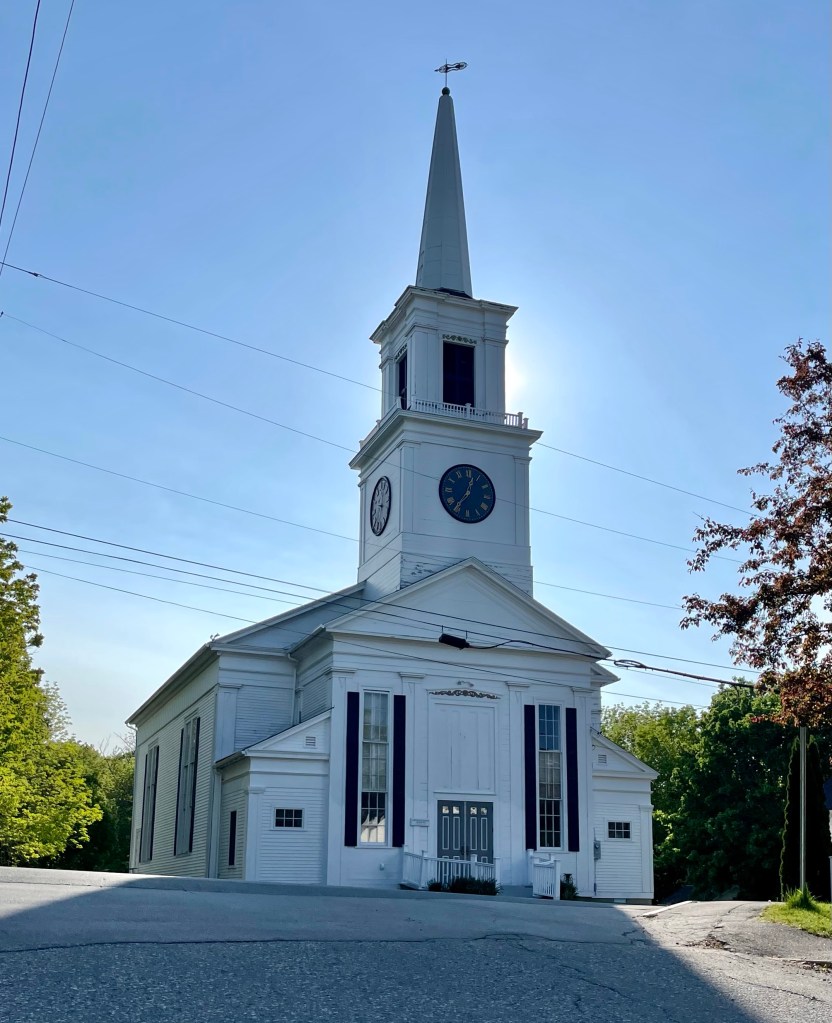
First Baptist Church of Blue Hill // 1817

In 1793, Rev. Daniel Merrill was ordained at the newly-organized Congregational Church in Sedgwick, Maine. Soon after the religious revival of 1799, Rev. Merrill changed his belief from a congregationalist to a Baptist; and in 1805, he and most of his church members were baptized by immersion. Rev. Merrill was
then re-ordained and installed as pastor of a newly-formed Baptist Church in town there. Baptism took hold in Maine (which was then still a part of Massachusetts), and in 1813, the Massachusetts Legislature passed a resolution incorporating the Baptist Society of Bluehill. Funds were gathered and the Baptist Church in Blue Hill began construction in 1817. In 1856, as Blue Hill saw great prosperity, the building was renovated by retired ship carpenter and local builder, Thomas Lord. The updated Greek Revival design has many pilasters and details that highlight the wealth and success of the Baptists in Maine.

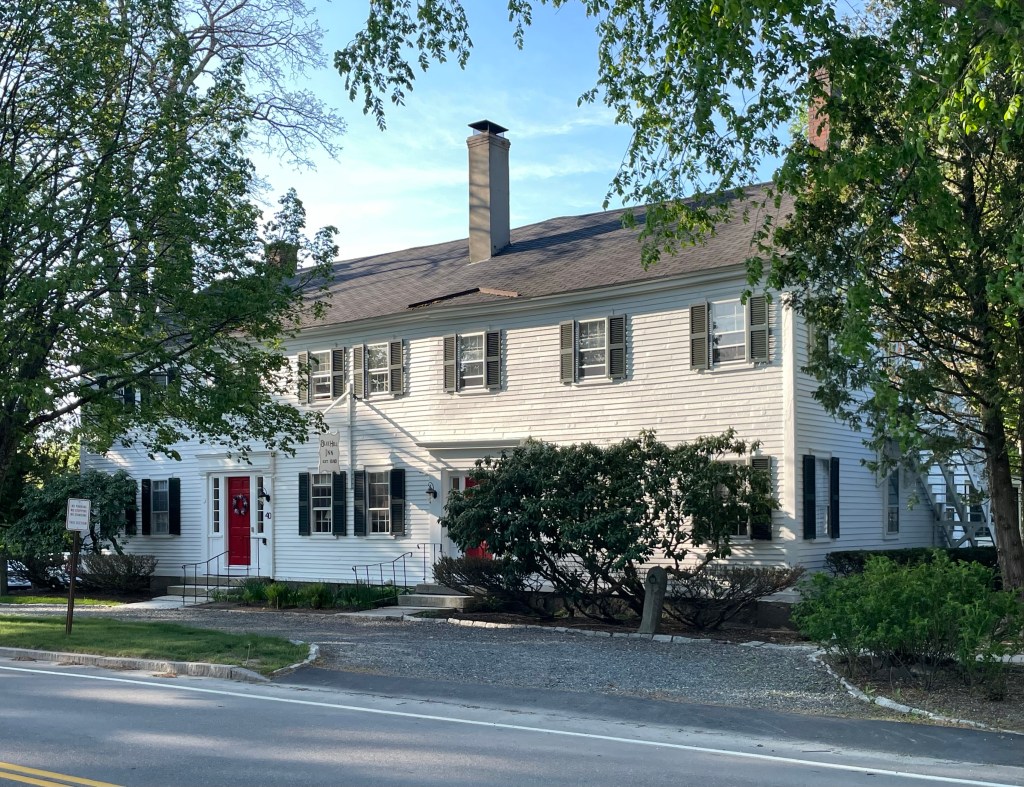
Blue Hill Inn // c.1830

The major part of this structure in Blue Hill, Maine was built as a house around 1830 by Edward Varnum Stevens. Stevens started an inn in his home likely after his marriage to wife, Susannah Hinckley. When Edward died in 1857, the property was acquired by Haskell W. Hinckley in 1858, who was possibly Susannah’s brother. Hinckley was a sea captain and his wife, Fanny Hinckley operated the hotel here for 50 years, known as the Blue Hill House. The hotel became a social center for the community and became a gathering place for many. The structure, now known as the Blue Hill Inn, continues to welcome visitors today. The elongated Federal/Greek Revival style house is excellently preserved inside and out, and guests can stay in one of the 11 gorgeous suites inside, which take you back in time.

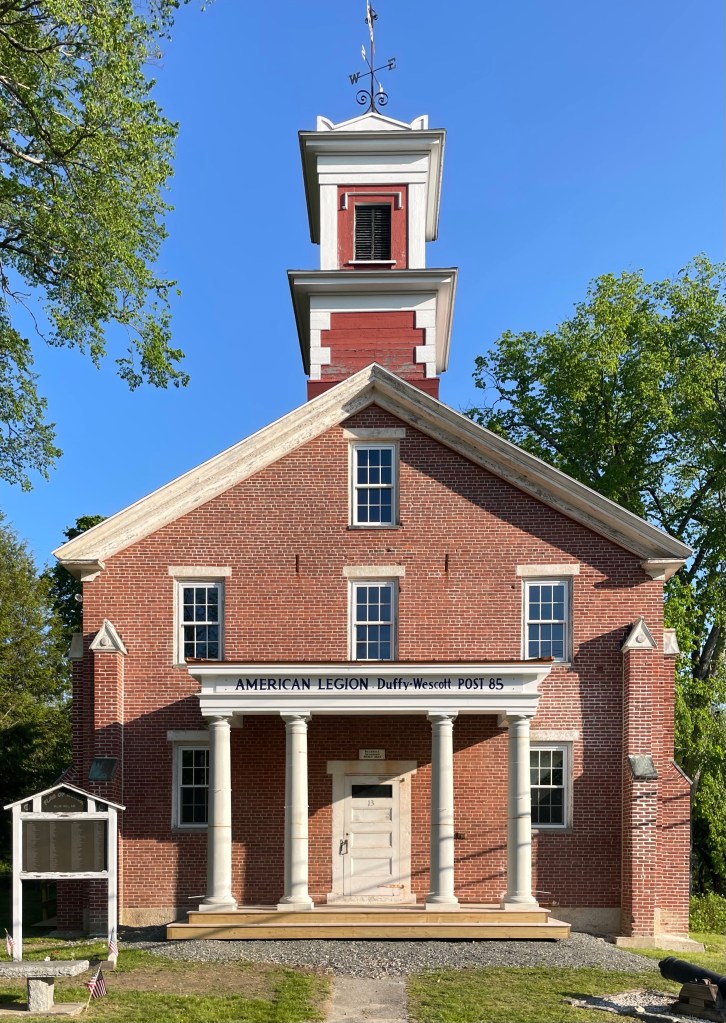
Blue Hill Academy Building // 1833

This gorgeous brick building sits in Blue Hill, Maine and is an excellent example of a Greek Revival style institutional building found on the coast of that great state. The structure was built in 1833 and originally housed the Blue Hill Academy, a school which provided courses in Greek, Latin and (due to the town’s maritime economy), navigation. The original building was constructed decades earlier when the school was founded, but was quickly outgrown. When the George Steven Academy opened its doors a couple blocks away in 1898, the two institutions were merged. The American Legion eventually purchased this building, renting it to the Blue Hill Grammar School. Renovations in 1909 were designed by Blue Hill native, George A. Clough which likely included the portico and elaborate belfry. After years of deferred maintenance on the building by dwindling membership of the local American Legion post, the building’s future was uncertain. Thankfully, the Duffy-Wescott Post 85 stood up and funded preservation and planning for the building and make emergency repairs.

Judah Chase House // c.1840

In the early 19th century, the town of Blue Hill, Maine, thrived as a shipbuilding and maritime trade center in New England. One of the town’s sea captains, Judah Chase, had this Greek Revival home built for his new family in about 1840. Just before this, Captain Chase had a brig built in town in 1834, he named it the Thomas M. Lyons. As owner and captain, Judah was hired to haul a shipment from Havre, France to the United States. On the route, gales battered the ship of the coast of the Isle of Jersey, and the ship capsized, the crew survived, but this event may have delayed the building of his home in Blue Hill!

Beth Eden Chapel // 1900

Almost at the southern, most remote tip of the Blue Hill Peninsula in Brooklin, Maine, I was stunned to come across this enchanting chapel. Completed in 1900, the Beth Eden Chapel is a small wooden frame building that appears to have been the first religious facility erected in the Naskeag area of Brooklin. Although it was erected by the Methodist Episcopal Church of Brooklin, the building was dedicated to the use of all Christian sects who wished to worship in the more remote section of town. Interestingly, the vernacular church employs some late 19th-century detail including the shingled flared siding and triangular motif. The chapel appears to remain open for summer months.

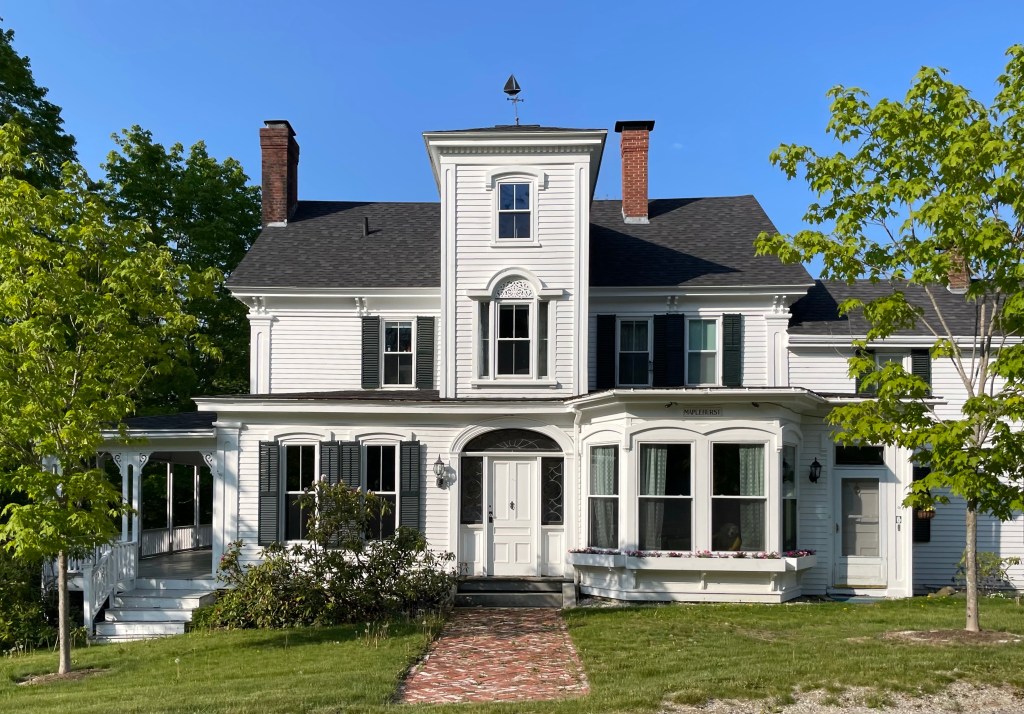
“Maplehurst” // 1837

Wyer Groves Sargent (1810-1900) was a descendant of the famous Sargent and Choate families and at the age of seven, arrived to the sparsely developed town of Sedgwick, Maine in 1817 with his parents. Twenty years later, Wyer has this house built in 1837. The original house was a one-story Cape house with a central chimney and an ell connected to a barn. He worked in the village of Sargentville in the town of Sedgwick as a merchant, operating a store, and traveling extensively to buy and sell goods along the New England coast. Operating a lucrative business allowed him to expand his outdated and cramped home in 1868 to the current configuration. It was then known as Maplehurst. Wyer raised the house and extended the front by adding a floor beneath it. When Wyer died in 1900 the house went to his daughter Martha Spooner. Martha sold it to Dr. Frederick Sweet. Last known, the home is still owned by Dr. Sweet’s great-granddaughter.

First Baptist Church of Sedgwick // 1837

Sedgwick, Maine is a coastal town overlooking the Penobscot Bay separating it from the better-known Deer Isle. The town was originally inhabited by the Wabanaki people. In the 18th century, land here was granted by the Commonwealth of Massachusetts in 1761 to David Marsh and 359 others, and settlers began arriving and building homes here shortly after. In 1789, the town was incorporated as Sedgwick, named after Major Robert Sedgwick, who in 1654, captured nearby Fort Pentagouet from the French. The land in Sedgwick was very rocky and was thus better suited for grazing than cultivation. Because of the geology, for decades Sedgwick had operating many granite quarries, which shifted southward toward Stonington in later decades. The town then became a hub of seafaring professions, from ship-building to trading, to fishing and clam-digging. The town’s Baptist population established a congregation in 1794 as a Congregationalist organization which underwent a large-scale conversion to Baptistry in 1805. This congregation retained Bangor architect Benjamin S. Deane to design its church, which was built in 1837 in the Greek Revival style. Deane’s design is based on a drawing publisher by Asher Benjamin in his Practice of Architecture. The church had seen a dwindling congregation for decades until it was disbanded in 2008. The church was acquired by the Sedgwick-Brooklin Historical Society, who have begun a restoration of the building.