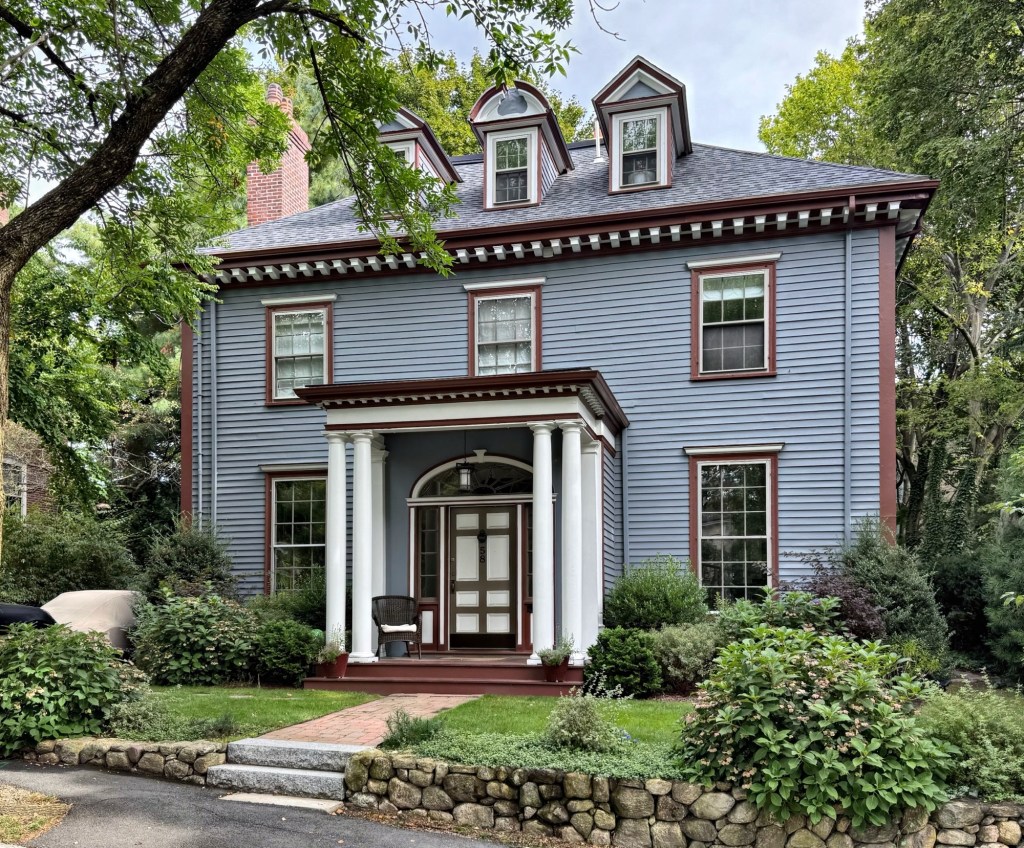
Russell-Hayes House // 1899

The Russell-Hayes House at 58 Allerton Street in Brookline, Massachusetts, was built in 1899 in the highly popular Colonial Revival style for Mr. and Mrs. Russell. Francis Henry Russell (1832-1919) was born in Plymouth and married Elizabeth Stevens (1835-1922) of Lawrence, and had one daughter together. Francis attended Harvard College and eventually worked as the Treasurer of the Bates Manufacturing Company, doing well enough to purchase a house lot in the fashionable “Pill Hill” neighborhood of Brookline to build his home here. Mr. Russell hired Plymouth-born architect, Joseph Everett Chandler, to design his suburban residence for himself, his wife, and daughter. After the death’s of Francis (1919), Elizabeth (1922) and their unmarried daughter, Mary (1926), the property was purchased in 1927 by African American musician, Roland Hayes. Just years prior to purchasing this stately home in Brookline, Roland Hayes performed abroad in Europe, even a private performance for King George V and Queen Mary at Buckingham Palace. He returned to the United States of America in 1923 and made his official debut on November 16, 1923, in Boston’s Symphony Hall, which received critical acclaim. He was the first African-American soloist to appear with the Boston Symphony Orchestra, who would later hire him, with a reported salary of $100,000 a year. Roland and his family lived in this house for 50 years until his death in 1977. His legacy lives on here with a plaque in front of the home, and a public school named after him.

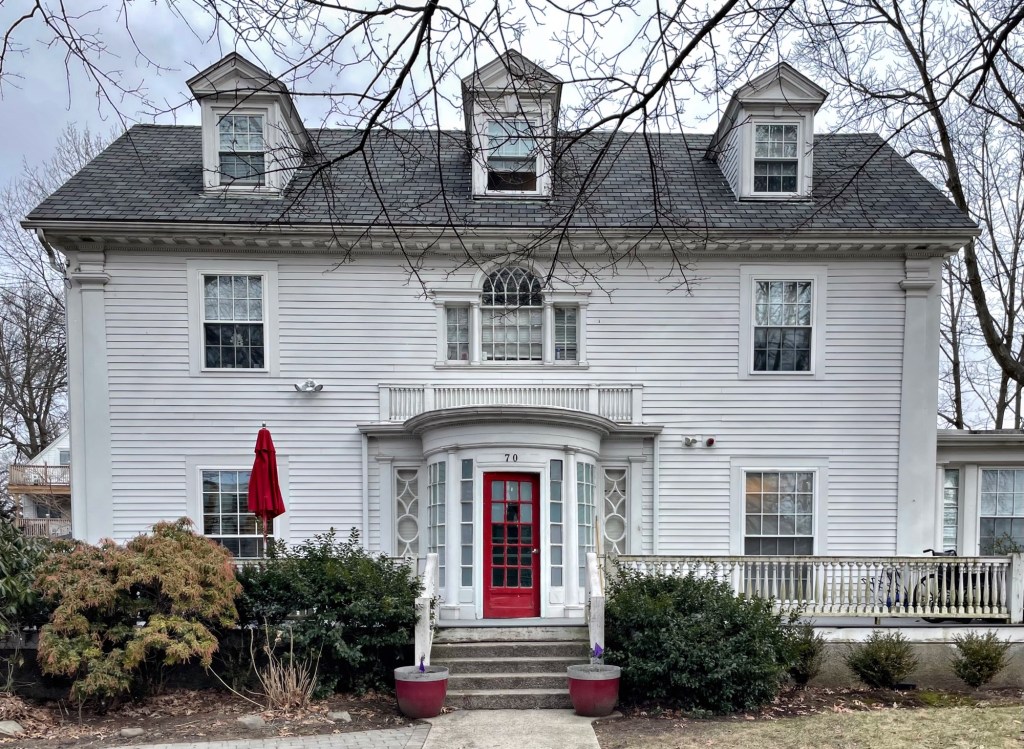
Pinderhughes House // c.1916

As much of the streets north of Franklin Park were developed in the early 20th century, a mix of middle-class apartment buildings and stately single-family homes began to sprout up. Boston contractor Hugh Nawn hired architect Julius Adolphe Schweinfurth to design this house, seemingly on spec, as an income-producing venture. Schweinfurth was employed by the architectural firm of Peabody and Stearns and worked as chief designer there until 1895, when he opened his own practice. His design for Mr. Nawn was this stately Colonial Revival style mansion, similar to Nawn’s own home just across the street, which overlooked Franklin Park. After WWII, Roxbury’s population saw an increase in Black residents, who began to be pushed out of the South End due to increased cost of living. This home was purchased by Dr. Charles A. Pinderhughes (1919-1998), Chief of Psychiatry at the Veterans Administration Medical Center in West Roxbury who also taught at Boston University, Tufts, and Harvard. He was engaged in the local chapter of the NAACP and advocated for African American residents when Urban Renewal began to destroy much of the surrounding neighborhood by the Mayor and Boston Redevelopment Authority. The Pinderhughes House is a well-preserved architectural landmark that also has ties to a more recent and overlooked history of the neighborhood. I hope this house stays like this forever!

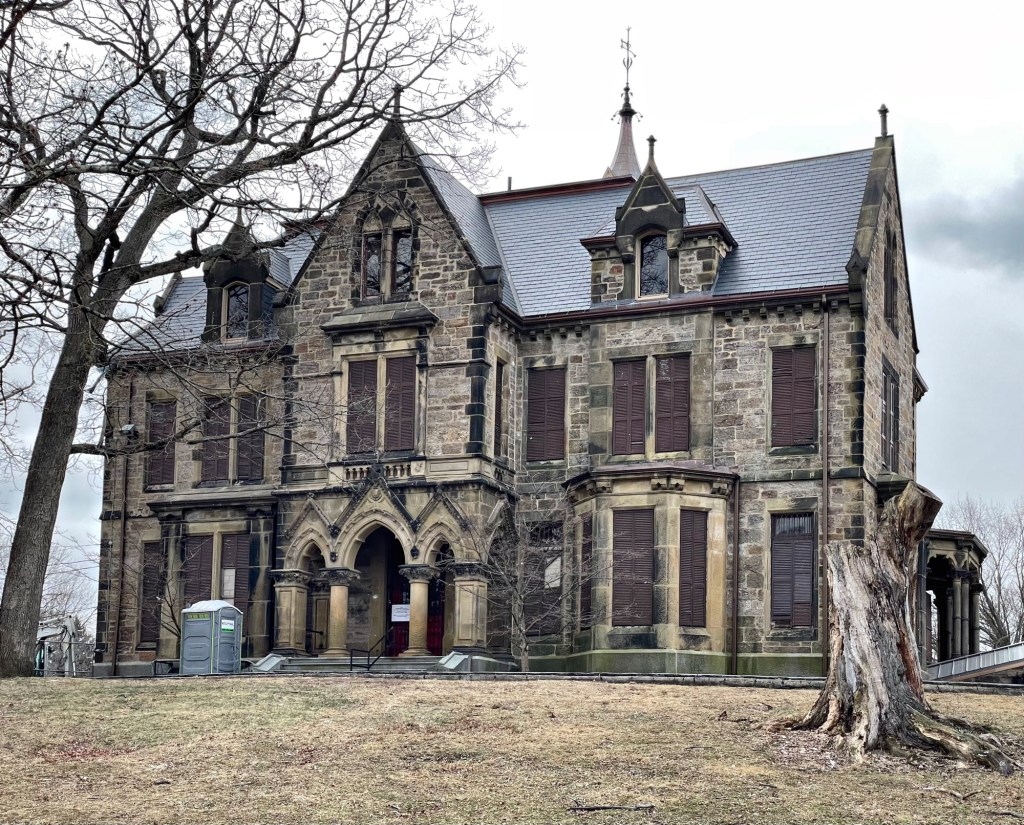
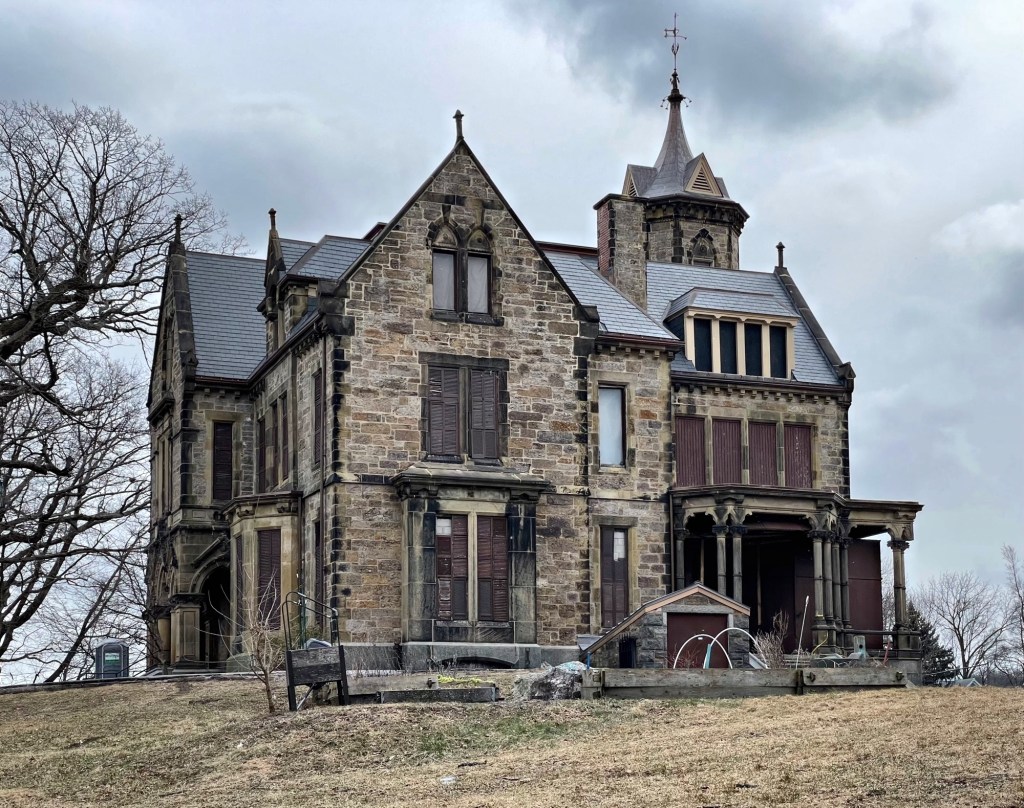
Abbotsford Mansion // 1872

The Abbotsford Mansion in the Roxbury neighborhood of Boston was designed in the High Victorian Gothic style and was built of Roxbury puddingstone, which was quarried locally. Abbotsford, originally named “Oakbend”, was built in 1872 as the residence of Aaron Davis Williams, Jr., (1821-1899) an industrialist and son of the founder of the Roxbury Institution for Savings. Roxbury-based architect Alden Frink designed the country estate and it is his most notable work. When Davis lost his fortune, James M. Smith, a brewer who had a passion for Sir Walter Scott, acquired the estate and renamed the house Abbotsford after Sir Walter Scott’s ancestral keep of the same name. The house continued to serve as a private residence until 1924, when the City of Boston acquired it for use as an elementary school and a disciplinary school for boys. The parcel was subdivided and the David A. Ellis School was built on the former grounds. After the building slipped into decline in the 1970s, the National Center for Afro-American Artists purchased the property, filling in the windows to create exhibit space. They have maintained the building to this day.

League of Women for Community Service Building // c.1860

Just a block away from the Women’s Service Club Building (last post) on Mass. Ave in Boston, you’ll find this landmark, with both architectural and cultural significance. The townhouse (along with the house next door) was built around 1860 for William and Martha Carnes. William Rice Carnes was a fine lumber importer and furniture maker, bringing in high-quality mahogany and rosewood to Boston, aligning with the Victorian era housing and furniture boom here, he made a lot of money. Inside his home, he showcased the quality and durability of his product, much of which remains today. It is believed that the house was a stop on the Underground Railroad, with the connected basements of the two houses (#558 and #560) providing an easier escape in the event of a slave-catcher coming by. After William died, the property eventually sold to Nathaniel W. Farwell of Maine on October 29, 1868. The Farwell family occupied the house only until 1910, and as evidence of the decline of the South End, it stood empty until 1920 when it was sold to the League of Women for Community Service, a pioneering Black women’s organization. The League emerged from the ‘30s and ‘40s and as late as the 1950s as a safe place and a popular gathering place for African Americans in Boston. Many hotels at the time were not willing to accommodate Black patrons or charged so much that events there were unattainable. Coretta Scott King lived in the home while she attended college at the New England Conservatory and honed her amazing singing skills. It is at the home that she and Martin Luther King Jr. – then a student at Boston University – likely had dates and began their courtship. The LWCS has recently received funding through grants to preserve and restore the landmark to her former glory.

Women’s Service Club of Boston // c.1860

This historic rowhouse in the South End of Boston was home to the Women’s Service Club, a social and volunteer organization made up of Black women to uplift Black Bostonians of varied backgrounds, including soldiers, students, migrants and mothers. “464,” as some locals admiringly called it, was formed in the early 20th century as Boston. The city, once known as “Freedom’s Birthplace” and the “Athens of America” as a hub of abolitionist activity leading up to the Civil War, saw extreme segregation in housing and education for its Black residents by the early 20th century. From this, local activist Mary Evans Wilson organized a knitting group in 1917 to support soldiers of color fighting in World War I. An estimated 350 women joined the group, donating their talents to produce scarves and gloves for servicemen. Humanitarianism guided the activity of the Women’s Service Club’s over the next half century. This building was purchased in 1919 and operated as part-meeting space and part-settlement house. “A Home Away from Home,” as some described it, the building offered affordable shelter to female workers, migrants, and college students barred from on-campus housing due to racist policies. One of the club’s most prominent members was Melnea Cass (1896–1978), who served as its President for more than fifteen years. Cass initiated the Homemakers Training Program which certified domestic workers so they would be assured a liveable minimum wage, social security and other benefits. The club continues to do great work, but could use funding to restore the landmark building!

Johnson’s School of Beauty Culture // c.1865

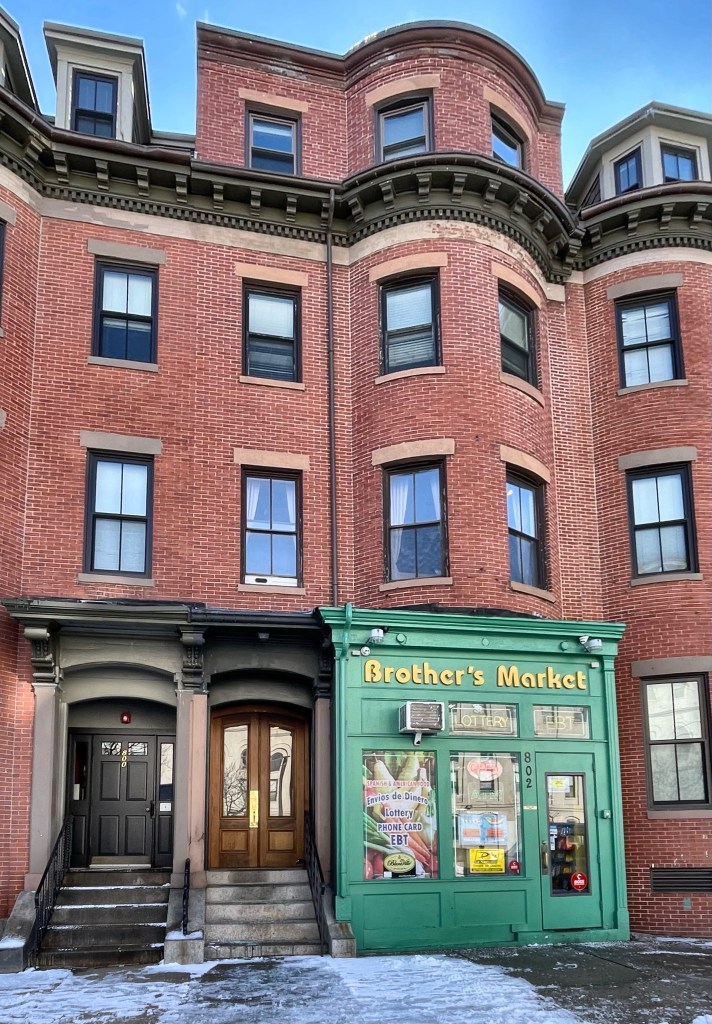
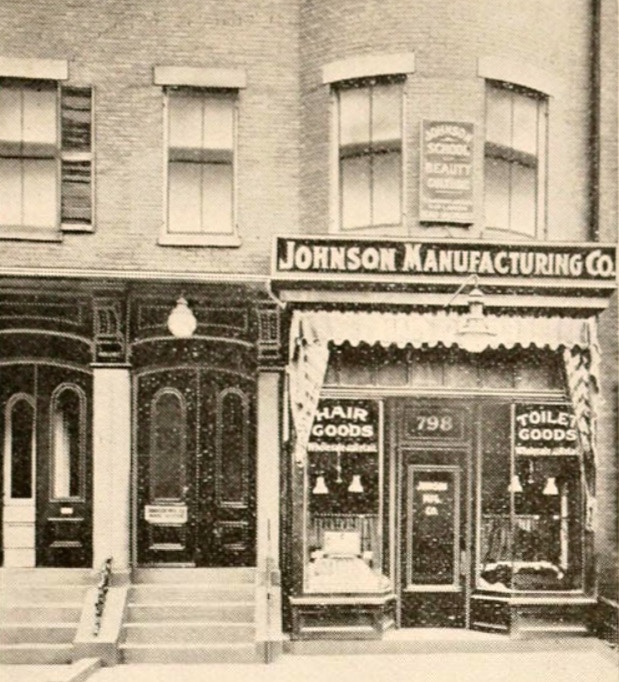
Boston’s South End neighborhood has so much history that NEEDS to be showcased. From the repetitive architecture of beautiful brick and stone bowfronts, to the history of African American activism, enterprise, and stories, the neighborhood is a gem of Boston. This building was constructed around 1865 for Thomas H. Snow (1833-1908) as his home. Snow was a wine and spirit merchant who had a store in Faneuil Hall Square. While that is interesting, Mr. Snow is not the highlight of this building, that comes later in 1899, when the building was rented to Madame Mary L. Johnson, a wig maker, scientific scalp specialist, and hair culturist. Mary Johnson and her husband, Dr. W. Alexander Johnson, were Black and ran one of just 200 Black-owned businesses in the city of Boston by the beginning of the 20th century. At their storefront, they sold hair goods at Johnson’s Hair Store. Sold all over the United States since 1900, their famous “Johnson Hair Food” was “the most scientific pomade yet discovered for growing, beautifying and softening the hair,” they claimed. In connection with their hair product outfit, Madame Johnson operated Johnson’s School of Beauty Culture, where a variety of services including manicuring, shampooing, scalp massage, facial massage, hairdressing, and scalp treatment were offered. The school provided young Black women in Boston technical training and skills, which there were limited options at the time. Mr. Johnson also was President of the Boston Negro Business League, which helped bolster Black businesses at the turn of the century.

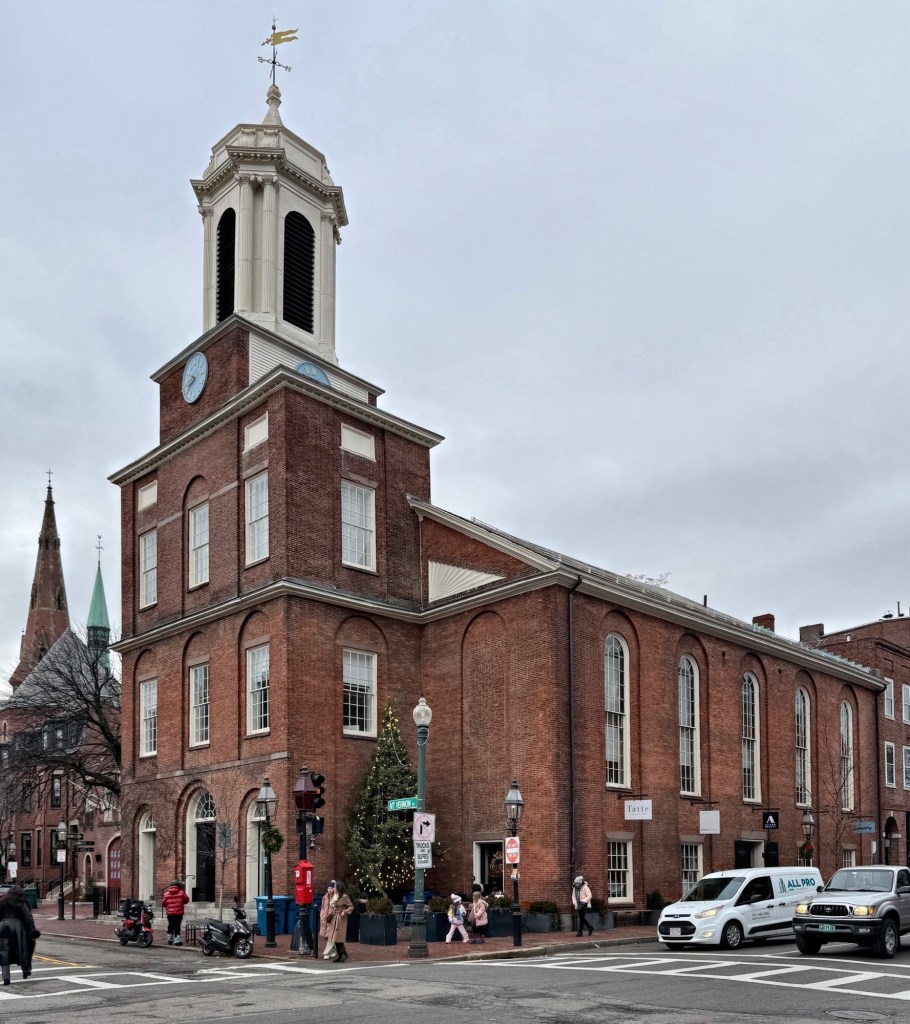
Columbus Avenue A.M.E. Zion Church // 1885

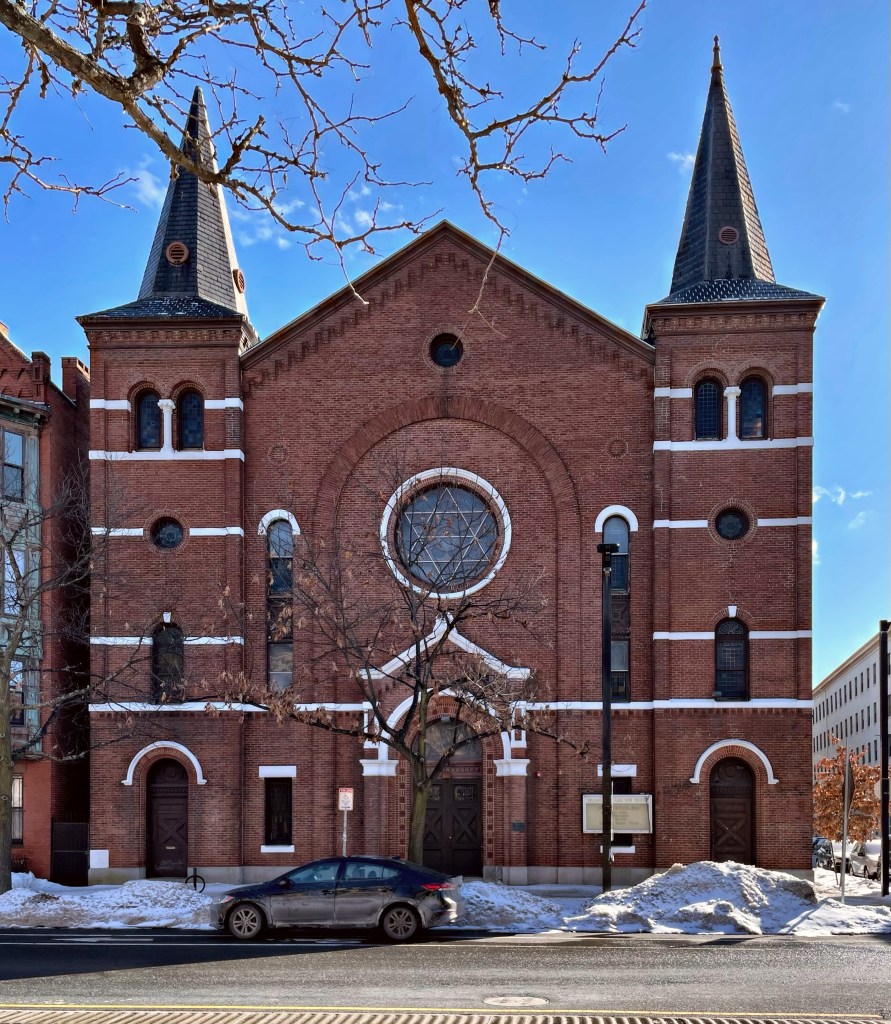
The Columbus Avenue African Methodist Episcopal Zion Church sits on the border of the South End and Lower Roxbury neighborhoods and is a great example of how the area evolved in the 19th and 20th centuries. The beautiful Romanesque Revival building was constructed in 1885 as the first synagogue of Congregation Adath Israel, which was founded in 1854. The congregation sought more space from its current location, and a closer place of worship for many of the German Jews who settled in Boston’s South End. They built this synagogue in 1885 and eventually moved west to a new Kenmore Square synagogue less than thirty years later as the neighborhood’s demographics began to shift. In 1903, the A.M.E. Zion Church purchased the former synagogue as their new home. This congregation had its beginnings in 1838 when seventeen African Americans withdrew from the communion of the Methodist Episcopal Church, then located on Joy Street in Beacon Hill. This group of Black worshippers wanted more religious freedom and desired to become part parcel of The African Methodist Episcopal Zion connection under the leadership of their own race. For many years, this church was the largest and principal Black church in the city of Boston. In 1903, shortly after moving to Columbus Avenue, the church experienced what was called the “Boston Riot.” The church hosted a debate between Booker T. Washington and William Monroe Trotter, editor and publisher of the “Boston Guardian”. Trotter, a Black Bostonian, opposed the gradual conservative approach to civil and political rights as promulgated by Mr. Washington. The debate took place on July 3, 1903 and the church was packed with over 2,000 spectators. Shortly after the opening prayer by Pastor McMullen of the AME Church, Washington was introduced. A disturbance then erupted with Trotter eventually being arrested for disturbing the peace. This building is the oldest synagogue building in Massachusetts and has been a center of Black life in Boston ever since the beginning of the 20th century.

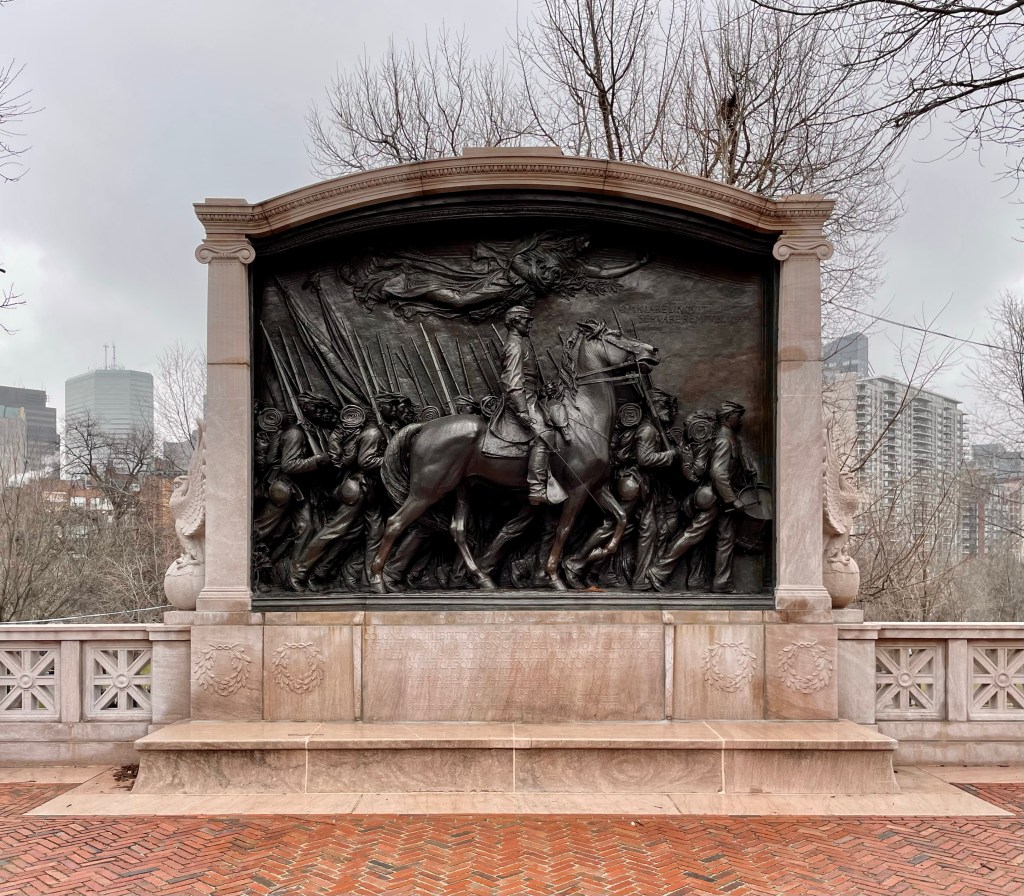
Robert Gould Shaw Memorial // 1897

Commissioned from the celebrated American sculptor Augustus Saint-Gaudens in the early 1880s and dedicated in 1897, The Shaw 54th Regiment Memorial (aka the Robert Gould Shaw Memorial) has been acclaimed as the greatest American sculpture of the 19th century. The memorial was designed by famed artist Augustus Saint-Gaudens, and it is a stop on the Boston Black Heritage Trail, commemorating the valiant efforts of Colonel Robert Gould Shaw and the men of the 54th Massachusetts, one of the first Civil War regiments of African Americans enlisted in the North. In July 1863, the regiment was sent to South Carolina where an assault was planned on Fort Wagner guarding Charleston harbor. Shaw had asked to have 54th Regiment lead the attack. Of the 600 men in the attack that day, there were 285 casualties, and Col. Shaw was killed, but the men never wavered in the battle and demonstrated great courage and determination. Following this display of valor, other black regiments were formed, and by the end of the war, 10% of the union army was made up of African American soldiers.

The monument in Boston shows the 25-year-old Shaw seated on his horse, with his regiment as it marched down Beacon Street on May 28, 1863 to depart the city to fight in the South. The concept of Shaw on horseback with marching soldiers was inspired, at least in part, from a painting Saint-Gaudens saw in France, Campagne de France 1814, by Jean-Louis Ernest Meissonier, which depicts Napoleon on horseback with rows of infantry in the background.While Shaw is the centerpiece of the monument, the significance of the monument is the Shaw Memorial is the first civic monument to pay homage to the heroism of African American soldiers in the U.S.