Hotchkiss-Shoninger House // 1854

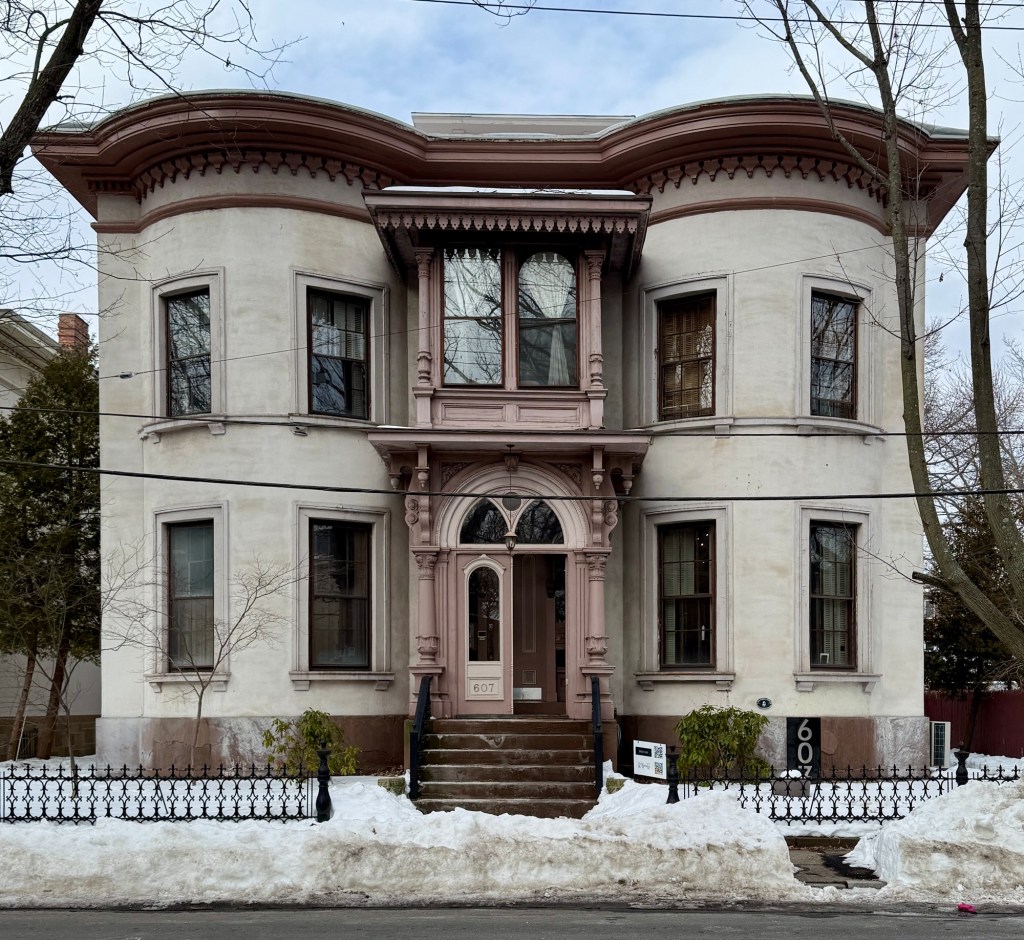
The Hotchkiss-Shoninger House on Chapel Street in New Haven’s Wooster Square district is one of three residences in a row developed and designed by the duo of architect, Henry Austin, and lumber dealer/developer, Nelson Hotchkiss. The finest of the three residences, this house, was built in 1854 and features a double bow-front facade, brick walls covered in stucco, and ornate two-story central porch with brackets and colonettes. Nelson Hotchkiss moved into this home from his first Austin-designed house and resided here for a number of years before moving back to the first home again. The second owner Frederick Betts, was an insurance commissioner, and in the late 19th century and early 20th century, the home was owned by Bernard Shoninger, a German-born, Jewish organ maker.
Edward Rowland House // 1857

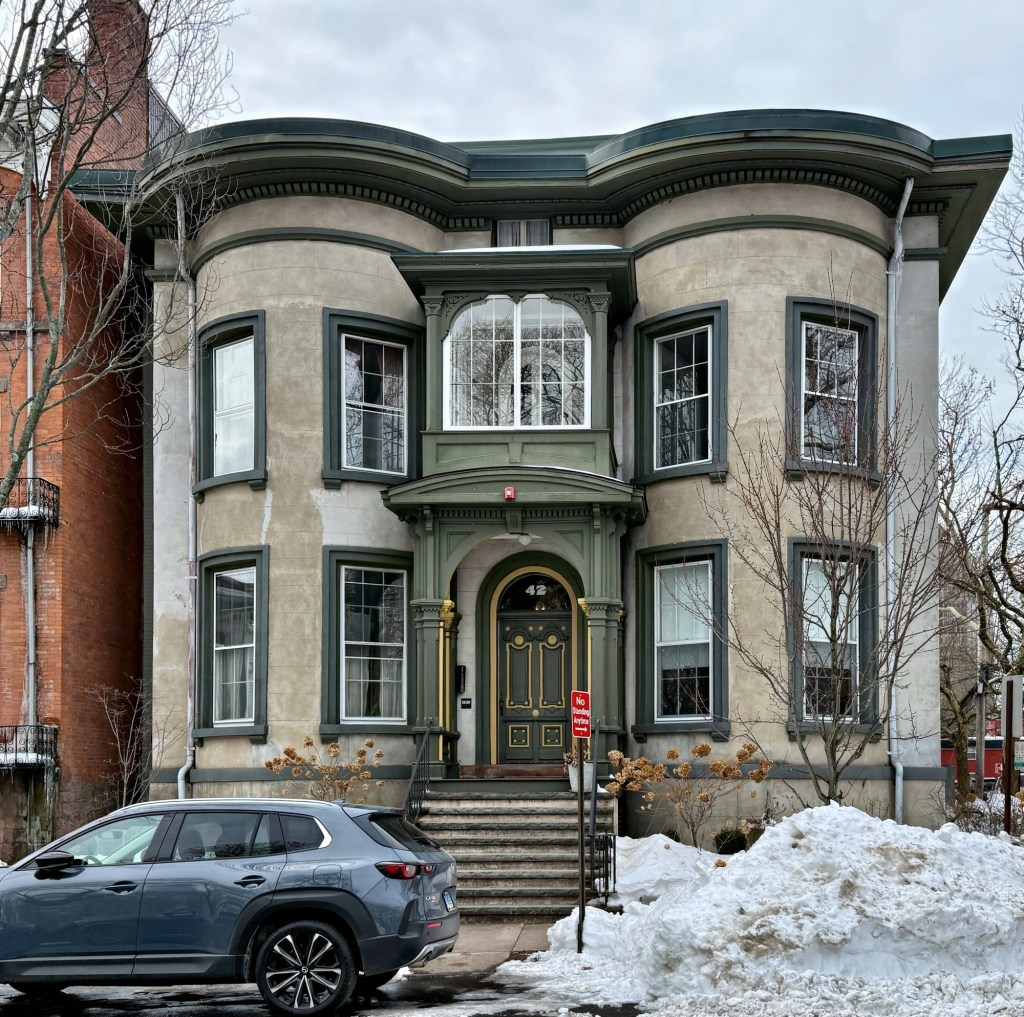
The Edward Rowland House on Academy Street in New Haven’s Wooster Square neighborhood is among the many great mid-19th century residences in the city and a rare example of a bowfront form. The residence was built for Edward Sherman Rowland (1812-1882), a prominent grocer, real estate developer, and Assistant U.S. Assessor and his family. The home is an example of the Italianate style with double-bow facade and is built of brick covered in stucco. The property was converted to condominium units and now houses six families.

Peleg Chandler House // 1860

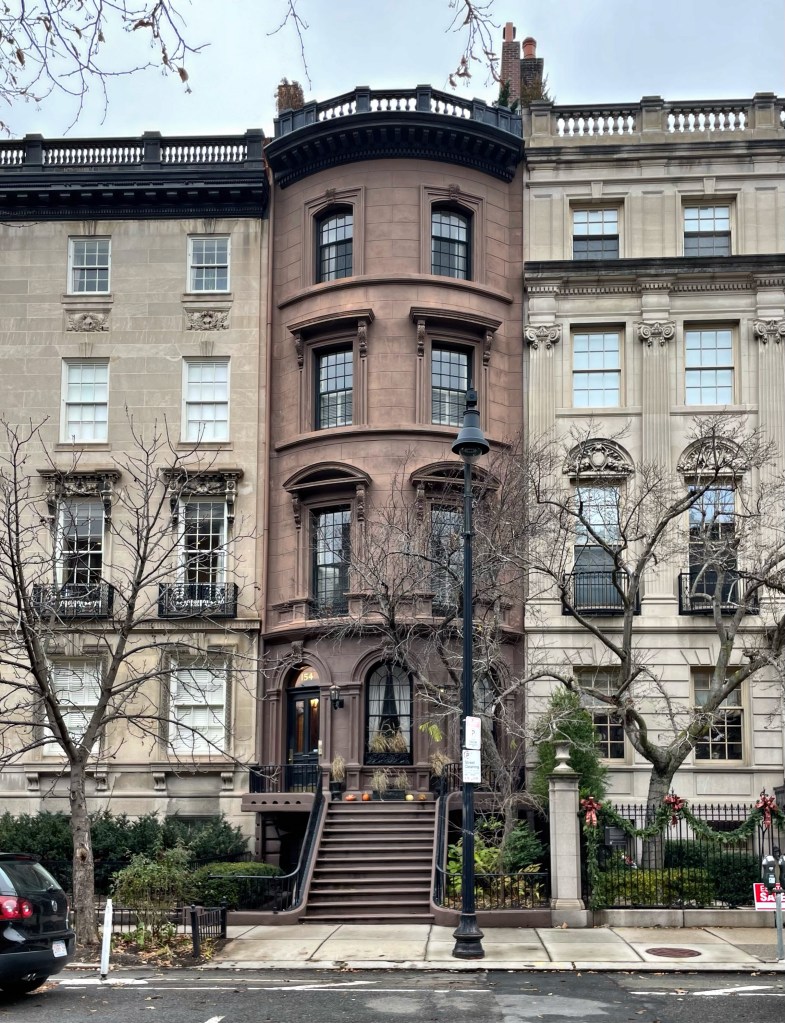
One of the most ingeniously symmetrical and academic facades on Beacon Street in the Back Bay neighborhood of Boston can be found at the Peleg Chandler House. Built in 1860 for Peleg Whitman Chandler (1816-1889), the two-bay bow-front townhouse appears to have been designed by architect Charles Kirk Kirby, a relatively unknown architect of Boston in this time period. The brownstone home originally had a mansard roof, but it was removed and replaced with a flat roof with parapet during the Great Depression, possibly to reduce the property taxes. Peleg Chandler was an attorney and publisher of the Law Reporter, which he established in 1838. He served as a member of the Massachusetts House of Representatives from 1845 to 1847 and as Boston City Solicitor from 1846 to 1853. He was an early advocate of the Public Garden and led efforts in 1859 to prevent the construction of houses on the eastern side of Arlington Street. The house has been divided up inside and now five fortunate families get to call this stunning building home!

Jacob Wirth Building // 1844

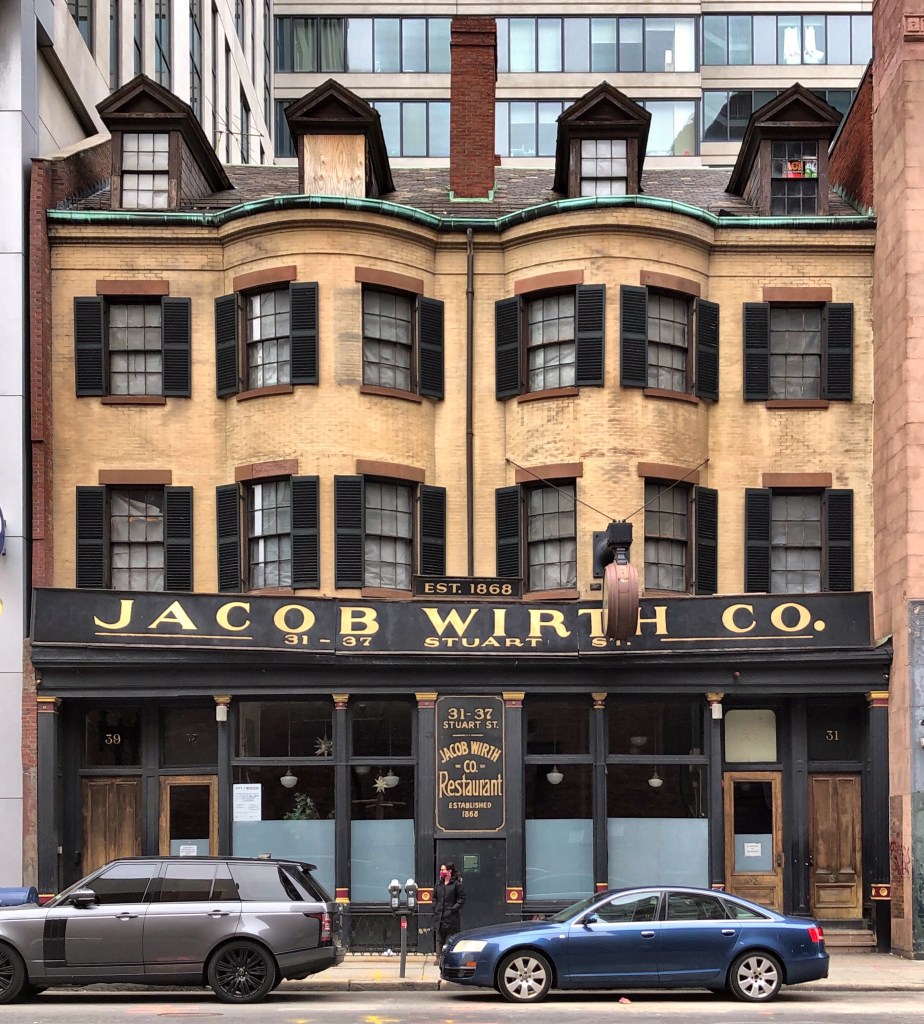
Comprising twin bowfront Greek Revival rowhouses, the Jacob Wirth Restaurant buildings on Stuart Street are scarce survivors of a century of urban change in an area in which the building type once abounded. Built by developer housewrights quite active in the area, the twin houses were soon sold to “gentlemen” for rental purposes. Jacob Wirth, a German emigrated to Boston from Bingen, Germany, and began work as a baker before getting into the restaurant business. Wirth bought the left building seen here in 1878 as his dwelling above and ran his authentic German restaurant below. Due to the success of the restaurant, he purchased the adjacent home in 1889 and constructed the storefront that now unites them. Jacob Wirth ran the restaurant until his death in 1892, which was then managed by his son, Jacob Wirth Jr., who also managed it until his death in 1965! In 2018, Jacob Wirth’s, the second oldest continuously operated restaurant in Boston, closed its doors following a fire. The future is somewhat uncertain for the space, but as it is landmarked, there are protections (even at the interior) of the building.

Did you get a chance to eat at Jacob Wirth’s before it closed?