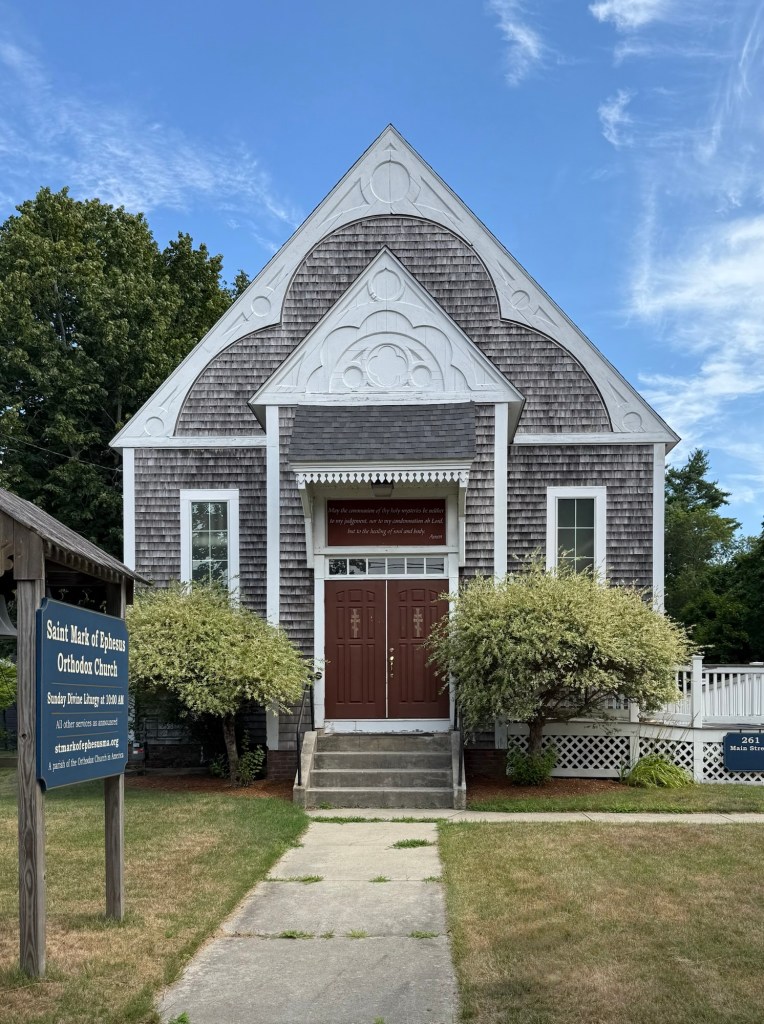
St. Mark’s Orthodox Church // 1882

Built in 1882 as a Catholic mission church, the St. Mark’s Orthodox Church on Main Street in Kingston, Massachusetts, stands as a lovely example of a Victorian Gothic ecclesiastical building in a great state of preservation. In the waning decades of the 19th century, the Irish and Catholic population of Kingston grew, which led members to petition the Diocese to erect a mission church closer to their homes, rather than attend St. Peter’s in Plymouth. Originally called St. Joseph’s Church, the building served the local Catholic population until after the new, brick St. Joseph’s. Church was built further down Main Street in the 1930s. The local St. Mark Of Ephesus Orthodox Church congregation purchased the chapel in 1995 and restored the building, removing faux-brick shingling and reshingled the exterior.
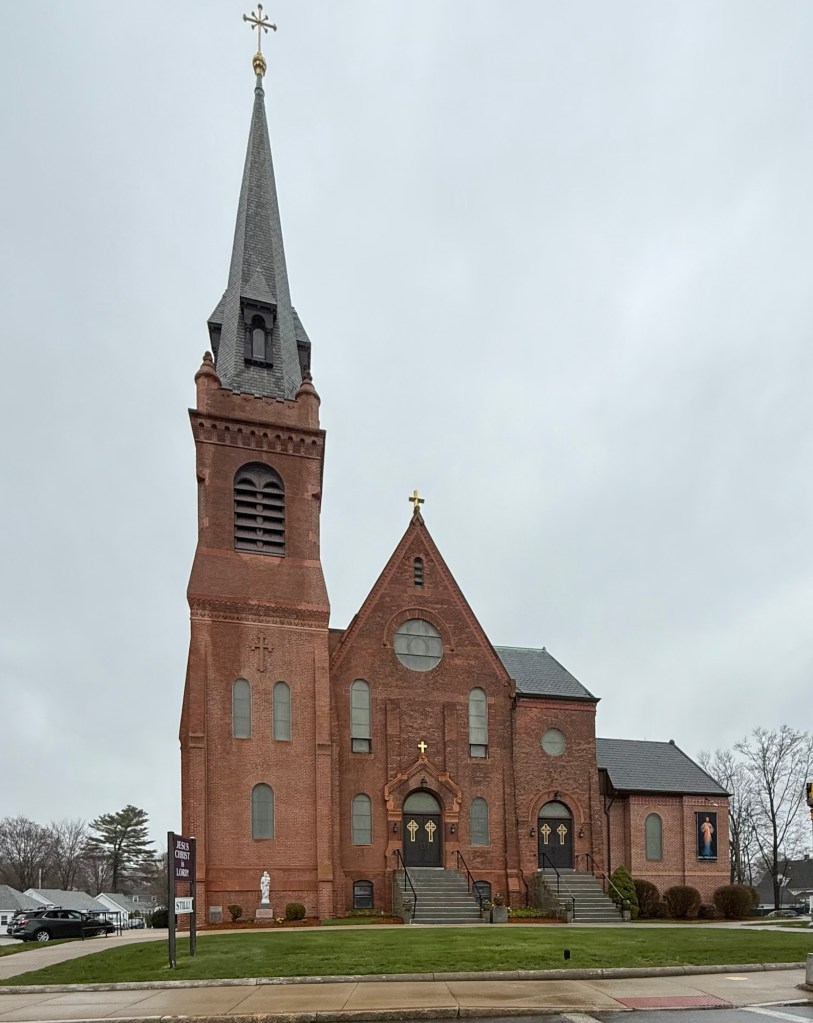
Holy Family Parish Church // 1882

In 1872, due to industrialization and increased numbers of immigrants settling in the area for work, it was decided that a new Catholic parish should be established in East Abington. Two years later, the village of East Abington incorporated as Rockland. It would be a decade later, in 1882, until the Holy Family Parish would be established, beginning planning of a true house of worship for the growing number of Catholics here. When the Holy Family Church was constructed in 1882, only a quarter of the Rockland’s approximately 4000 residents were Catholic at that time. Most of the original congregation consisted of Irish immigrants who worked in the town’s boot and shoe manufacturing industry. As the industry continued to flourish in the 1890s and 1900s, new shoe factories were built, bringing more workers to Rockland, including: Canadians, Italians, and British to the area. The town’s Catholic community grew as a result. The Victorian Gothic style Catholic church was built in 1882, with no known architect at this time. A complex of other buildings, including a school, rectory, and community center.

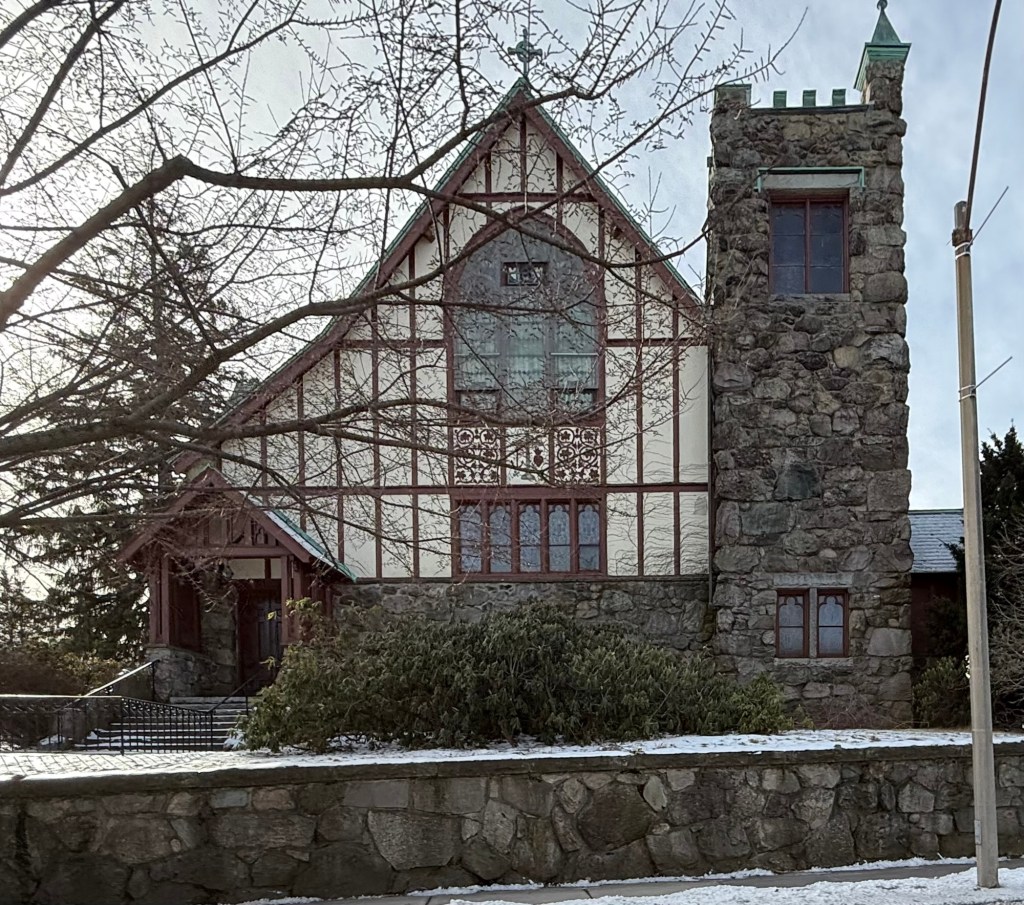
Saint Lawrence Catholic Church // 1896

The parish known today as Infant Jesus-St. Lawrence Church was established in 1898, two years after its original chapel building – shown here – was erected to serve as a mission church of St. Mary of the Assumption in Brookline Village. The St. Lawrence Church was built in 1896 on Boylston Street in the Chestnut Hill/South Brookline area of the town, built to serve a more local, well-off population in the area. The church (and the adjacent rectory) was designed by Franz Joseph Untersee, a Swiss-American architect, and Brookline resident, who designed many Roman Catholic churches throughout the eastern part of United States. The Neo-Gothic church building is built of wood and stone with stucco and applied half timbering. Besides the large stained glass window and applied ornament, the church is notable for its square, irregularly-laid granite tower with crenelation. The church remains active in the community and very-well preserved inside and out.

Former St. Mary’s of the Bay Catholic Church // 1928

Catholic residents of Hull, Massachusetts surged in the early 20th century with many well-to-do Irish families settling in town as year-round or summer residents. As a result, the cramped original St. Mary’s of the Bay Catholic Church was deemed too cramped, and a site in Hull Village was selected for a new church. In 1927, ground was broken for the new stucco church, which was partially funded by the Kennedy Family, who had a summer house nearby. The first service took place in 1928 and the church was in use as a religious building until the 1990s when it was sold to a private owner. The church was converted to a single-family residence and recently sold to new owners, who preserve the significant Spanish Colonial Revival style edifice.

St. Margaret Catholic Summer Chapel // c.1895

When the Grindstone Neck Summer Colony of Maine was in full-swing, wealthy summer residents would frequent the colony’s Episcopal chapel (featured previously). What the summer residents did not really plan for was the influx of other residents as summer staff, largely Irish servants who in large part were Catholic. As a result, the St. Margaret Catholic Chapel was built to provide a house of worship, largely for those summer workers on Grindstone Neck. Keeping with the rustic architectural character of the colony, the chapel was designed in the Shingle style. I could not find any information on the architect, so any additional insight would be greatly appreciated!