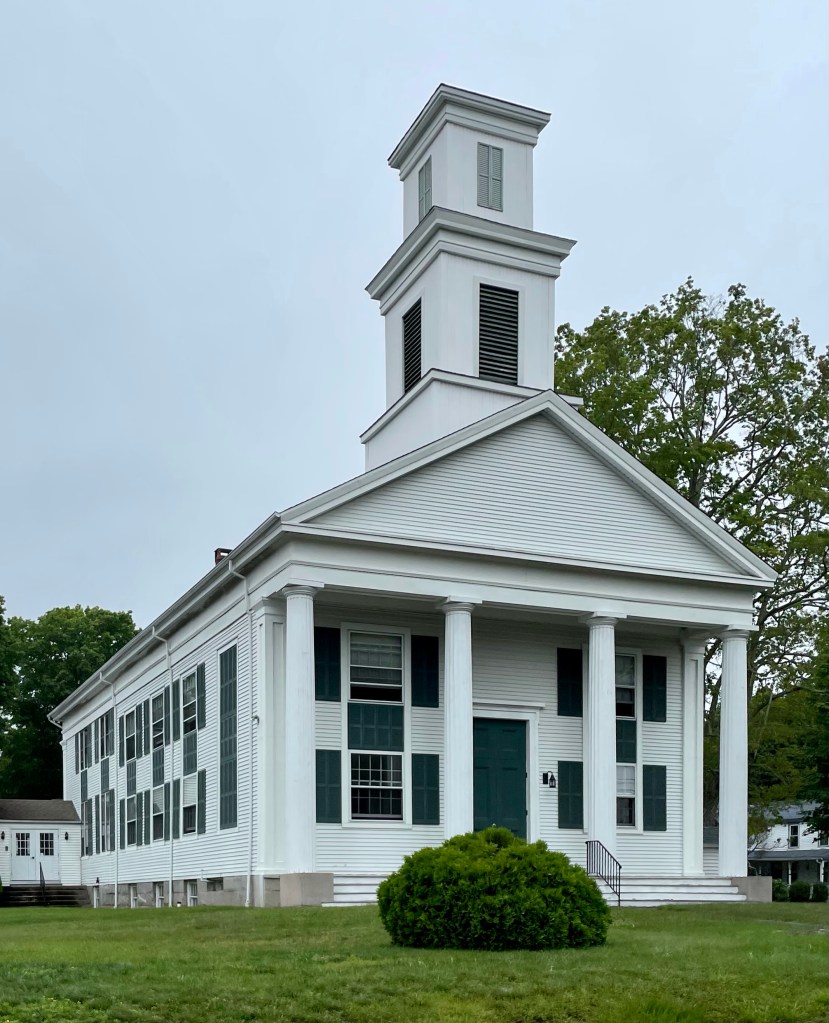
First Universalist Church, Marion // 1830

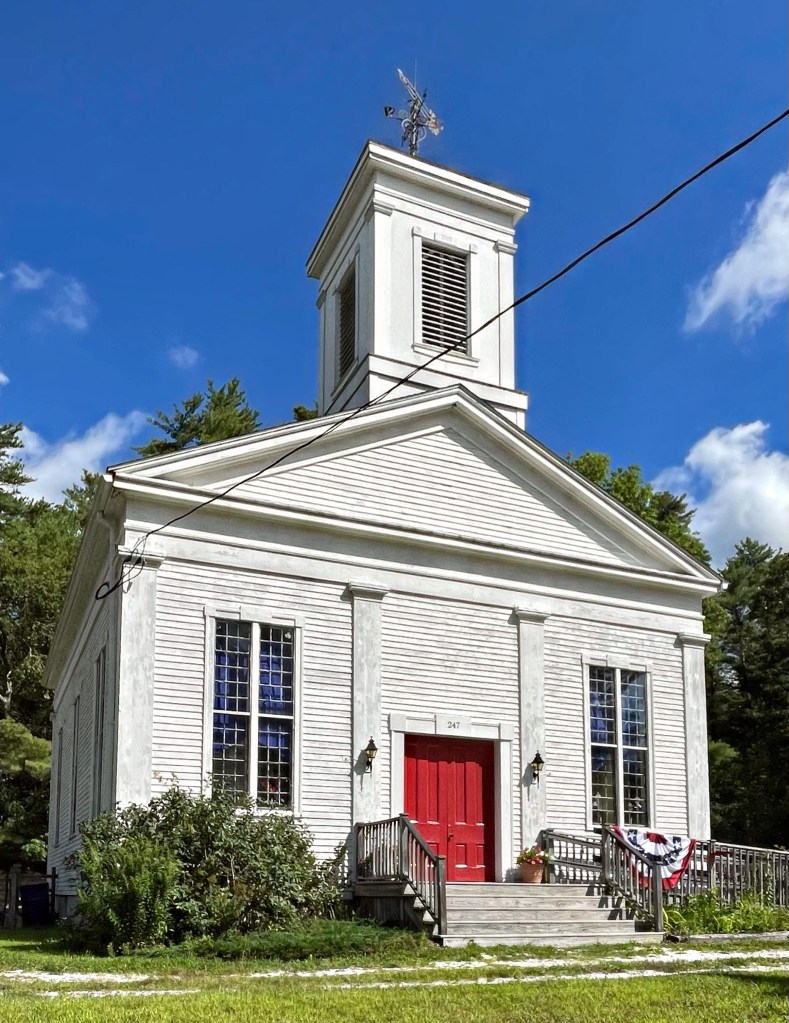
I do love a good adaptive reuse story! This Marion, Massachusetts church building was constructed in 1830 for the town’s growing Universalist congregation. Architect Seth Eaton was hired and furnished plans, likely relying on neighbor, Warren Blankinship, a carpenter and congregant, to construct the building. It blends together the Greek and Gothic Revival styles well, but in a less sophisticated form. By the mid 20th century, membership of the church dwindled, and it finally shuttered its doors. With the building’s future uncertain, at a time where demolition for surface parking lots was the go-to solution, Marion residents Andrew and Dorothy Patterson, purchased the building and soon after worked with local artists in town to restore the building for use as an art space. The Marion Art Center was thus founded in 1957, and to this day, serves as a non-profit community cultural organization dedicated to promoting the visual and performing arts.

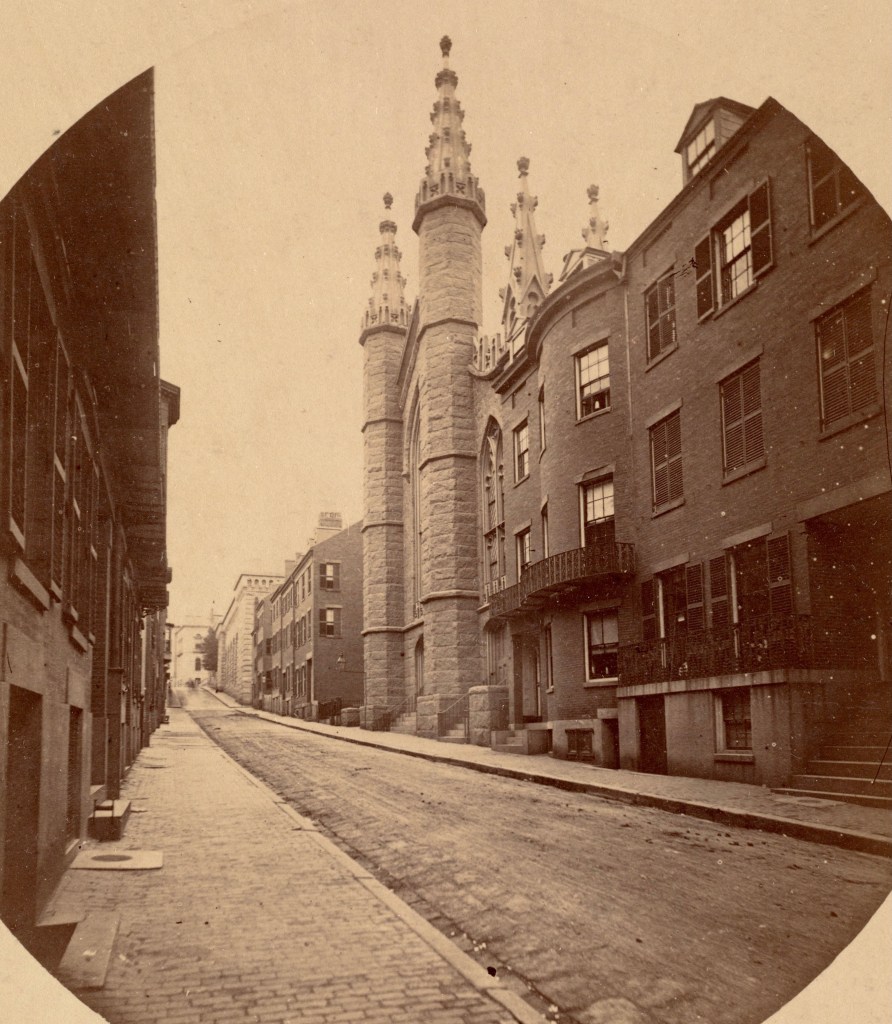
Grace Church // 1835-1966

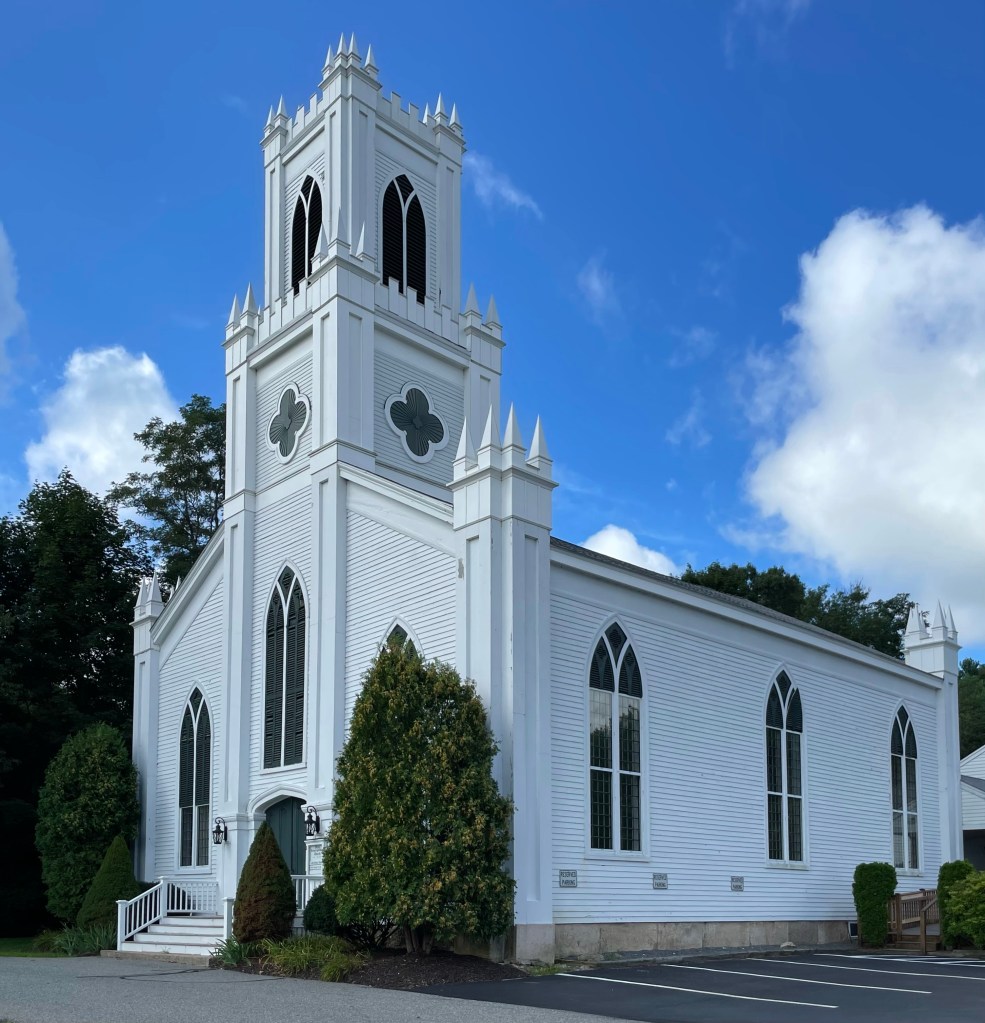
Grace Church was built in 1835 for a growing congregation in Beacon Hill. The absolutely stunning Gothic style church was designed by William Washburn (1808–1890), an architect and city councilor in Boston. The church was constructed of granite and had massive stained glass windows and soaring towers with decorative embellishments. Inside, a massive central window flooded the interior with natural light, and illuminated paintings from Mario Bragaldi, a Milan artist. In 1865, the building was sold to the Methodist Episcopal Society. 1873, it merged with Hanover Street, and took the name First Methodist. The church was variously referred to as First, Grace, or Temple Street, sometimes all at once! This church was occupied until 1962, when it merged with Copley to form First-Copley, which appears to have then occupied the Old West Church. The building was soon after acquired by Boston University and demolished for the building on the site today, a true loss to one of Boston’s most beautiful buildings.

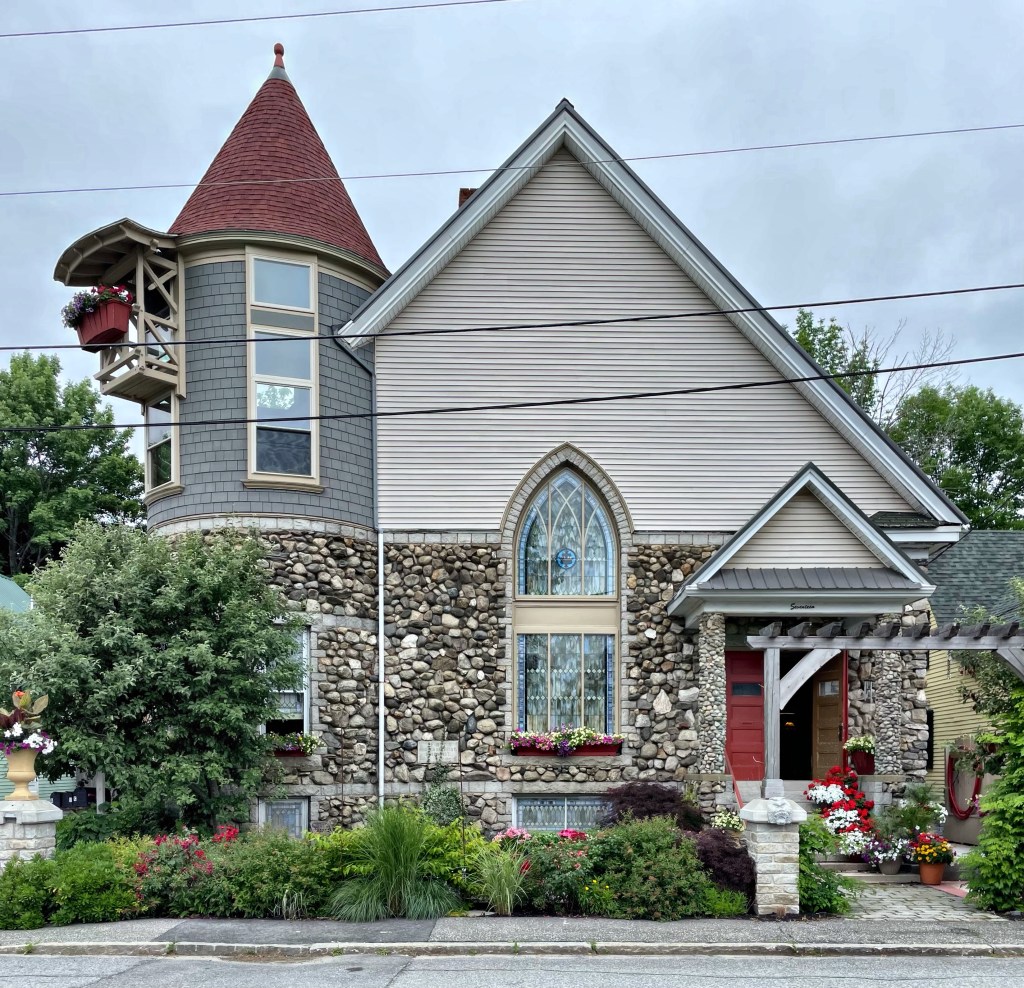
Christian Science Church, Gardiner // 1905

The first purpose-built Church of Christ, Scientist church in Maine is this turn-of-the-century edifice constructed in 1905 in Gardiner. Organized in 1897, this Christian Science Society of Gardiner met for several years in members’ homes and public places nearby until Palmer Noyes and his wife Caroline funded the new building. Caroline and Palmer helped establish the first such church in Chicago, after the couple witnessing a ‘healing’ and then heard Mrs. Mary Baker Eddy lecture in 1882. This church in Gardiner was seemingly designed by Caroline, who was likely inspired by architectural influences on the churches in town, from Gothic style lancet windows, to the shingle style facades. The building was eventually converted to a development center for the disabled, and is now known as “The Stone Turret”, a bed & breakfast, with amazing stained glass windows!

First Baptist Church, Waterford // 1848

Founded in 1710, when Waterford was still part of New London, the Baptist Church was one of the dominant institutions in the historical development of the Jordan Village, which became the historic population center of town. The fact that Jordan Village in Waterford sprang up around a Baptist and not a Congregational church gives it an unusual religious significance in the state. The Baptist denomination was introduced to Connecticut from Rhode Island in 1705. The separation from the City of New London, which was organized around the locally supported Congregational church, was due in large part to the differences between the the formal, structured, Congregationalists and the evangelical Baptist farmers. In 1848, when this church in Jordan Village was built, many residents followed the architectural vocabulary and built Greek Revival homes nearby, creating a large development boom in the new town center. The church remains today as an active member of the community.

Newington Meetinghouse // 1713

This old meetinghouse predates the Town of Newington having been erected when the area was known as “Bloody Point,” which was claimed by both Dover and Portsmouth. Surrounded on three sides by the Piscataqua River and the Great Bay estuary, early residents of Bloody Point found it difficult to attend town meeting or church service in either Dover or Portsmouth. Bloody Point residents soon decided to establish a parish, independent from both Portsmouth and Dover. The granting of a separate parish with town privileges in the early 1700s required the construction of a village meetinghouse, and the establishment of a church with a settled minster. There was no requirement for separation of church and state at that time, so a meetinghouse would serve the dual purpose of being both a place for feisty town meetings and solemn worship. Construction of the Bloody Point Meetinghouse began in 1712, and the first meeting was held in it in January, 1713, even though the building was far from completed. There were no seats, and the windows were only holes in the walls. On August 6, 1713, a meeting was held to organize the parish in the new building. The name “Newington” was chosen after an English village that provided a bell for the new meetinghouse. Rev. Joseph Adams was the first settled minister in the new meetinghouse, and he preached there for 68 years. Rev. Adams was the uncle to John Adams, second president of the United States, and great uncle of John Quincy Adams, the sixth president. The building was modernized in 1838-39 to its present church-shape appearance. Windows were reconfigured, the main entrance was moved from the long south side to the east gable end, and the freestanding belfry was relocated onto the roof of the east gable end, effectively rotating the building 90 degrees without moving it. The present-day Greek Revival building remains as a highly significant relic of the founding of Newington.

First Reformed Church, Schenectady // 1863

The First Reformed Church of Schenectady is the oldest congregation in the city. Founded by Dutch settlers, Schenectady’s first colonists, the first church lasted over a decade until it burned in the Schenectady Massacre in 1690, when a party of more than 200 French and allied Mohawk warriors attacked the unguarded community of Schenectady, destroying most of the homes, and killing or capturing most of its inhabitants. Sixty residents were killed, including 11 enslaved Africans. An expanding congregation after, outgrew its second and third buildings, replacing them with larger structures. The fourth was lost in Schenectady’s Great Fire of 1861, causing yet another building campaign. The present church building, an architectural landmark in Gothic design, was completed by the highly regarded Victorian-gothic architect Edward Tuckerman Potter in 1863. Potter is also known for his designs of the Nott Memorial Building (previously featured), in Schenectady, and Mark Twain’s home in Hartford, CT. A fire in the church gutted it in 1948, but the community at large banded together to fund the restoration efforts of the amazing architectural landmark.

St. Andrews-by-the-Sea // 1876

In the mid-to-late 1800’s, Rye Beach on the coast of New Hampshire was a popular summer residences for wealthy families from New York, St. Louis, Chicago, and other mid-western cities. Church services were important to these summer residents who united together to build this chapel, which before its construction, had to go to services at the casino in the colony (not ideal). Generally, wealthy summer residents here brought their household staffs, who lived in the many hotels and boarding houses along the beach. Some of these servants and employees of the hotels were African-Americans, who used St. Andrew’s for their own worship services and meetings. The summer chapel was built in 1876, completed that next year and is one of the most stunning chapels I have seen in New England. St. Andrew’s was designed by the architectural firm of Winslow and Wetherell. It is a unique example of a small rural stone chapel embellished by wooden trim and owes much to both the Stick and late Gothic styles. English country parish churches clearly inspired the chapel’s design and the use of rubblestone construction (likely of stones that were taken from the site) makes the building pop! Oh and that rose window at the facade!

Tewksbury Congregational Church // 1922

Located across the Town Green from the Tewksbury Town Hall (1920), this Colonial Revival style church with Classical elements, perfectly compliments the design motif seen here. The Tewksbury Congregational Church was established in 1734 by some 34 resident families who, after leaving the church in Billerica, established the new town of Tewksbury. Their first church was erected in 1736, and was replaced in 1824. The second church edifice (and much of the town center) suffered a catastrophic fire in 1918, destroying both structures, and resulting in a rebuilding campaign. Architect Curtis W. Bixby of Watertown, furnished designs for the church, which stands boldly beyond a large front lawn.

South Reading Union Meetinghouse // 1844

A very rare example of a snecked ashlar church, the South Reading Union Meeting House in Reading, Vermont remains in a great state of preservation, and a testament to innovative building styles seen in rural parts of New England. Built in 1844, the stone church was built by local stone masons based on the unique regional stone construction method. The church features a triangular stone in the facade which shows its construction date. There is something so stunning about stone churches..

Oak Hill Evangelical Chapel // 1903

On a busy road in Oak Hill Village in Newton, Massachusetts, I saw this house which appeared as if it was built for a different use. After searching historic maps, I found it was originally home to the Oak Hill Evangelical Society, as a rural chapel. The chapel served as a local religious gathering place for the handful of families who lived around this section of Oak Hill and did not desire to travel to nearby villages to worship. The practitioners had money, and hired the Boston architectural firm of Cooper and Bailey, who designed many stunning civic and institutional buildings in New England. With the proliferation of the personal automobile, locals would later be able to travel to nearby churches easier, and this building was sold to a member, who converted it to residential use, which it has been used as to this day. The building is an excellent example of the Arts and Crafts architectural style with the raised rubblestone foundation, flared eaves with exposed rafters, and shingle siding which flares where it meets the foundation.