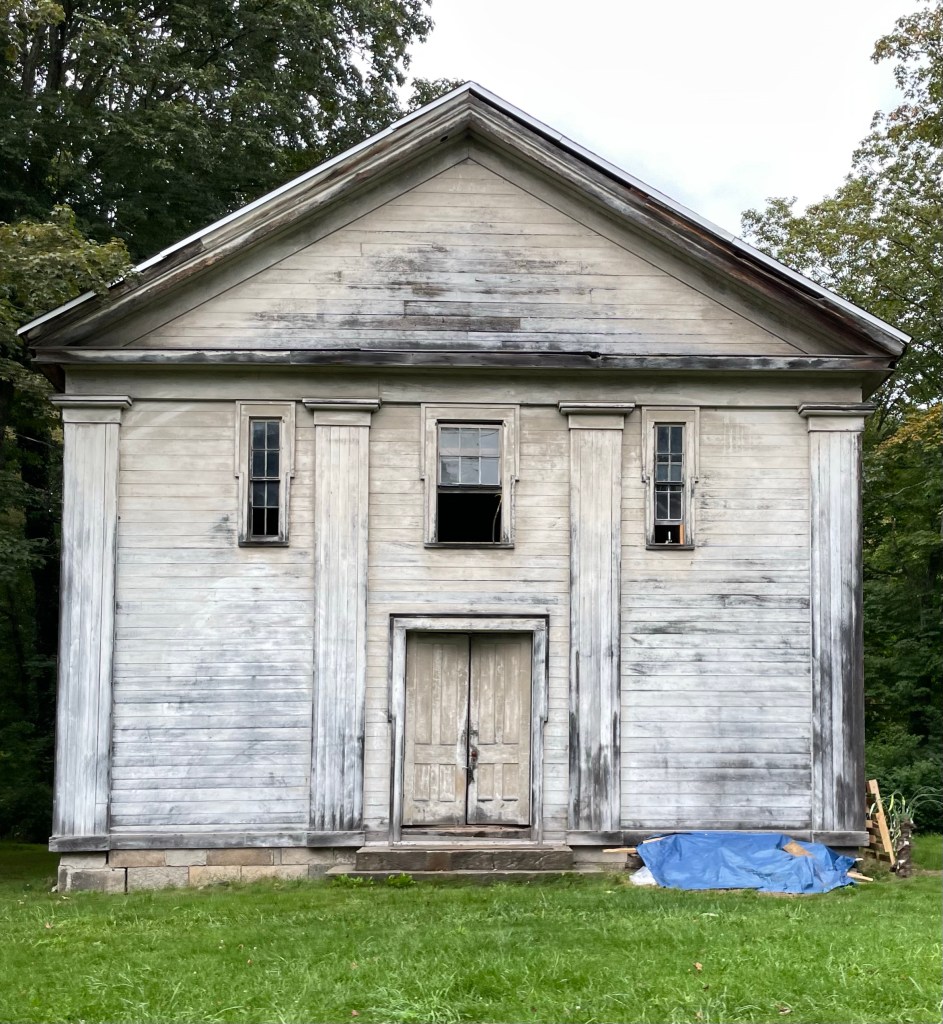
St. Sergius Chapel // 1932

Formerly known as “Churaevka,” the community known today as Russian Village in Southbury, Connecticut, was established in 1925 as an artistic community for Russians who fled to America after the Russian Revolution of 1917. The village was created by two Russian writers, Count Ilya Tolstoy, the son of Leo Tolstoy (the author of War and Peace and Anna Karenina), and the famous Siberian novelist George Grebenstchikoff. Although Tolstoy was first to discover the area while visiting his translator in Southbury, it was Grebenstchikoff who dreamed of establishing a cultural center and planned to create a rural community of cottages where Russian writers, artists, musicians and scientists could live and flourish statestide. The village was named after a mythical Siberian village mentioned in the works of Grebenstchikoff and the centerpiece is this chapel, St. Sergius Chapel, which was built in 1932-33 from plans by Nicholas Roerich. The small square-plan chapel was likely built of stone gathered from the neighborhood.

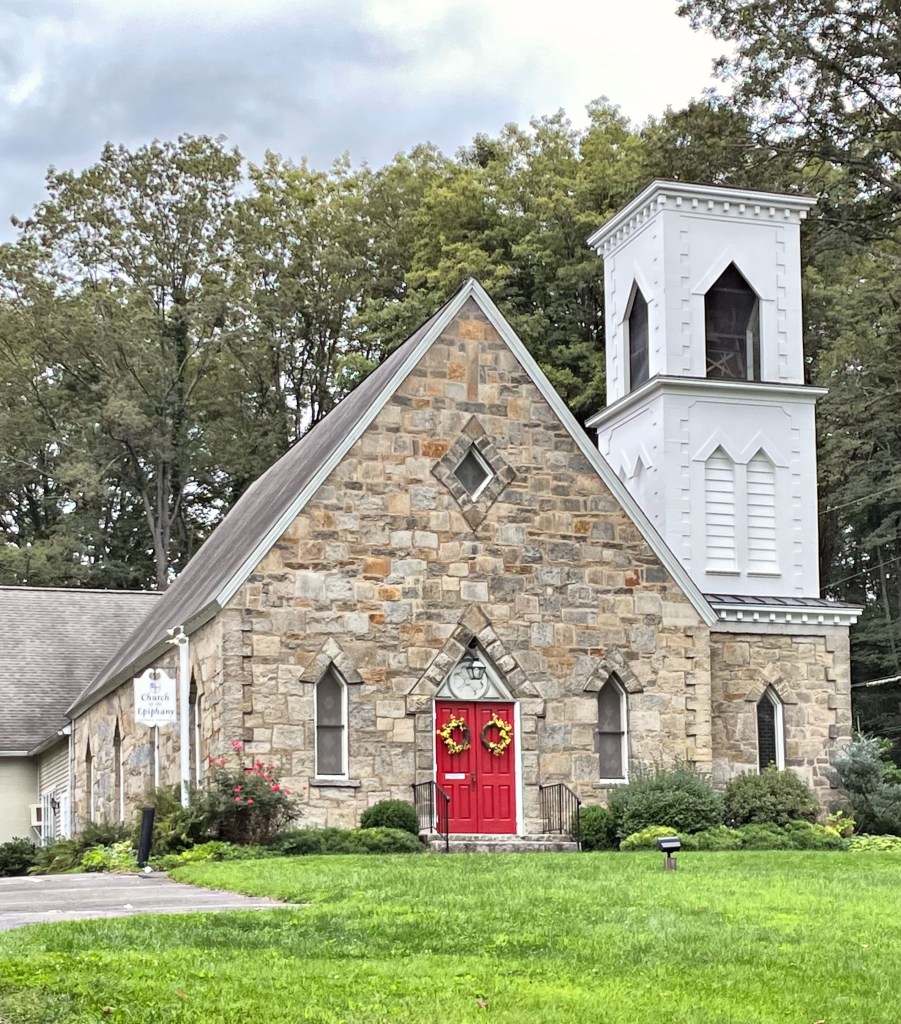
Church of the Epiphany // 1867

The stereotypical church in New England is the usual wooden structure with a central steeple and painted a bright white. Whenever I see an old church that breaks that oh-so-common mold, I have to snap a photo and learn more! This is the Church of the Epiphany, located on Main Street in Southbury, Connecticut. The church is an example of the Gothic style built in the Victorian period and is constructed of stone with a wooden corner belfry. Construction started in 1863, and the church was not completed until four years later in 1867. I could not locate who the architect was, but I am dying to know!

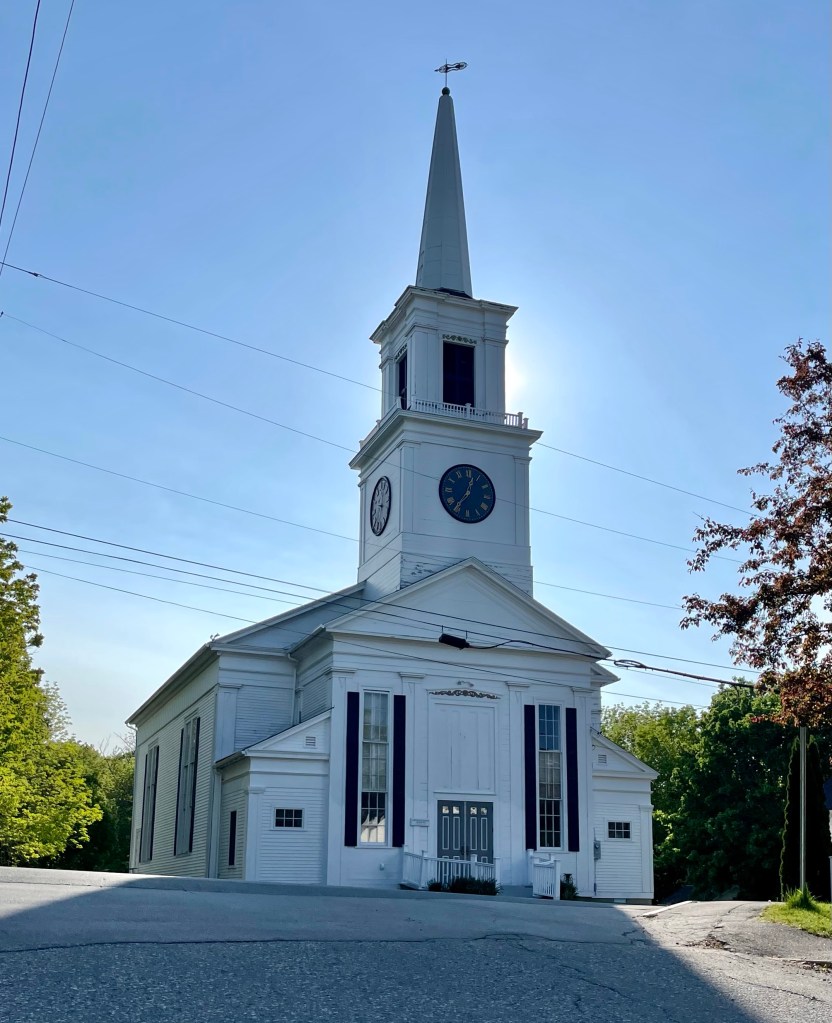
United Church of Christ Southbury // 1844

Originally, the parishioners living in present-day Southbury would travel to Woodbury Center to attend church services. This changed after the Southbury parish was incorporated in 1731, voting to erect a church a year later. Founded in 1732, the Southbury Congregational Church was dwelled in several sites until the third church was built on the present site in 1844. This Greek Revival style church features Doric pilasters and Ionic columns at the recessed portico with a large pediment above with ornate scroll carvings around the clock. The church remains well-preserved and a visual landmark on the Main street.

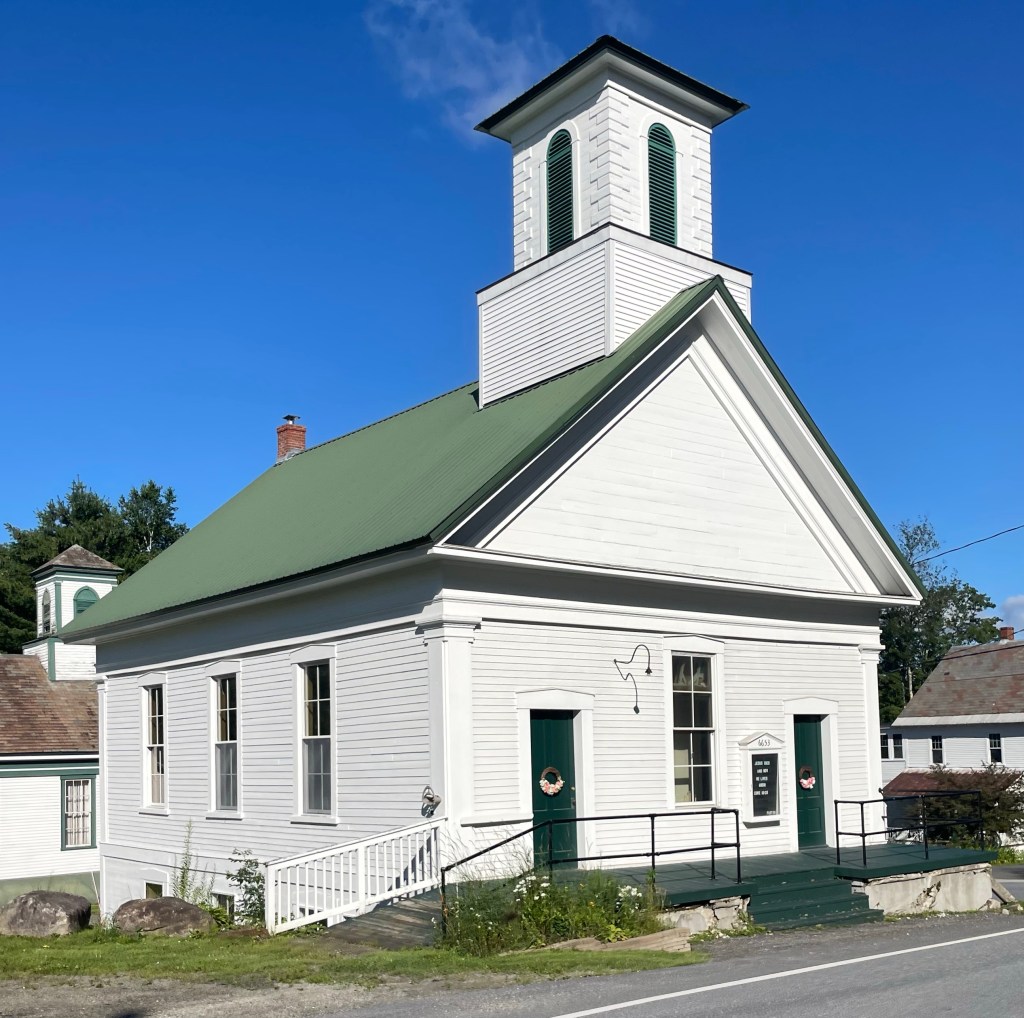
Whitingham Community Church // 1862

This simple, Greek Revival, frame church has a prominent pediment, corner pilasters, and two part steeple. It is built into a steep bank at the side of the road as it curves and descends into Whitingham Village, making it one of the most visible buildings in town. This church was originally built in 1862 by the Methodists who moved their congregation from their old and deteriorated church in the original Whitingham settlement on Town Hill. By the 1870s, the Methodist congregation was in decline. The Baptist congregation started holding meeting at this church regularly in Sadawga Village in 1879 and then purchased it. They made repairs and alterations in 1881. In historic photographs c. 1890- 1920s, the church’s steeple had third and fourth sections consisting of a narrow octagonal section topped by a small bell shaped dome. By the 1940s photographs show these had been removed. The building now serves as the Whitingham Community Church. My friends who tag along with me on visits throughout New England always say that every town has at least one old, white church. They aren’t wrong!

First Baptist Church of Blue Hill // 1817

In 1793, Rev. Daniel Merrill was ordained at the newly-organized Congregational Church in Sedgwick, Maine. Soon after the religious revival of 1799, Rev. Merrill changed his belief from a congregationalist to a Baptist; and in 1805, he and most of his church members were baptized by immersion. Rev. Merrill was
then re-ordained and installed as pastor of a newly-formed Baptist Church in town there. Baptism took hold in Maine (which was then still a part of Massachusetts), and in 1813, the Massachusetts Legislature passed a resolution incorporating the Baptist Society of Bluehill. Funds were gathered and the Baptist Church in Blue Hill began construction in 1817. In 1856, as Blue Hill saw great prosperity, the building was renovated by retired ship carpenter and local builder, Thomas Lord. The updated Greek Revival design has many pilasters and details that highlight the wealth and success of the Baptists in Maine.

St. John the Evangelist Church // 1885

One of the most bucolic and beautiful buildings I have ever seen is this church in the Catskills, just outside of Elka Park, NY. Wow I wish New England could claim this one! The St. John the Evangelist Chapel was developed as part of a smaller enclave of summer cottages for rusticators from the Philadelphia-area, which was largely established by Mr. Alexander Hemsley (1834-1904) a chemist from Philadelphia who would later die from anaccidental chemical explosion at his factory. In 1883, Hemsley sold cottage lots to friends and family to erect summer houses in the Catskills and in 1884, decided to develop a lot for an Episcopal summer chapel. In that same year, Hemsley hired his future son-in-law, William Halsey Wood, to design the chapel. The Stick-style Victorian chapel blends the rustic use of natural materials found on the property with an elegant siting and attention to detail, not typically found in rural chapels. The native stone and stylized half-timbering really stood out to me. The church is used still in the summer with regular services on Sundays in July and August.

Rockbound Chapel // 1900

Wrapping up our “tour” of Brooklin, Maine, I wanted to conclude with a feature on Rockbound Chapel, one of the village churches in the small coastal town. The chapel (like the Beth Eden Chapel) was constructed at the turn of the 20th century as a village church which saw increased use when the town’s population surged (relatively) in the summer months. The vernacular church building has pedimented lintels over the windows and door, and a steeple covered in decorative shingles which flare toward the base. There is something just so enchanting about these small rural chapels!

Litchfield Community Presbyterian Church // 1844

Litchfield, New Hampshire remained a rural agricultural town on the eastern banks of the Merrimack River from its founding by white settlers until after WWII when it rapidly became a bedroom community for nearby NH cities and Boston. The area’s Presbyterian residents needed a place to worship, separate from the more common congregationalists, and they built this Gothic and Greek Revival style church near the geographic center of town, a stone’s throw from the Merrimack River. The building features lancet windows, tracery, and a two-tiered belfry with classical pilasters and Gothic finials at the tower.

Congdon Street Baptist Church // 1875

The Congdon Street Baptist Church on College Hill is extremely significant as part of the rich history of Providence. Its origins began in 1819, when Moses Brown, an abolitionist, industrialist and member of the Brown Family (who profited on the institution of slavery) gave land to “the people of color” of Providence for a schoolhouse and meeting house. The original building stood slightly north of the present structure and it was built in 1821. The structure provided the first schoolhouse for Black children in Providence. In 1869 the building was torn down, without the approval or knowledge of the congregation by white neighbors because “its proximity displeased them”… Eventually the congregation arranged an exchange of lots with one of the church’s neighbors and architects Hartshorn & Wilcox were commissioned to design the new church building. Hartshorn was the successor of Thomas A. Tefft and this church echoes many of his designs in the Italianate style. The new building was completed in 1875 at the cost of $16,000. It was renamed the Congdon Street Baptist Church. The church has since 1875 served as an important landmark and gathering place for many Providence’s Black residents past and present.

Versailles United Methodist Church // 1876

After the Civil War, the Village of Versailles’ Congregational Church was seeing less attendance and its deathknell was a fire which destroyed the building in 1870. That next year, a vote was taken by members of the Congregational Church as to a preference for their denomination. A majority voted for Methodist Episcopal and asked the New England Conference to appoint a Pastor for the new church. Funds were gathered and this church was opened in 1876, in the Italianate and Victorian Gothic styles. The building sits upon a raised brick foundation with small windows on the facade. In 1887, the Versailles church was linked with Baltic and Greenville (Norwich) the following year.