Captain Silas Jones House // c.1774

Brick houses are not too common on Nantucket, so I love to highlight them whenever possible! This gambrel-roofed residence was built by 1774 for Silas Jones, a whaling captain around the time of his marriage to Judith Gardner. As originally built, this house had brick endwalls while the facade and rear walls were constructed of wood. It was not until under the ownership of Silas’ son, Daniel, that the house was “modernized” with its present appearance. Daniel added brick walls to the front and rear walls, added brownstone lintels and sills to the openings, and added twin chimneys, likely replacing a single, central chimney. Due to his materiality and heavy presence, the house looks more like it belongs in Salem or Providence, so seeing it in the coastal town of Nantucket makes my heart sing. Standing out is a good thing!

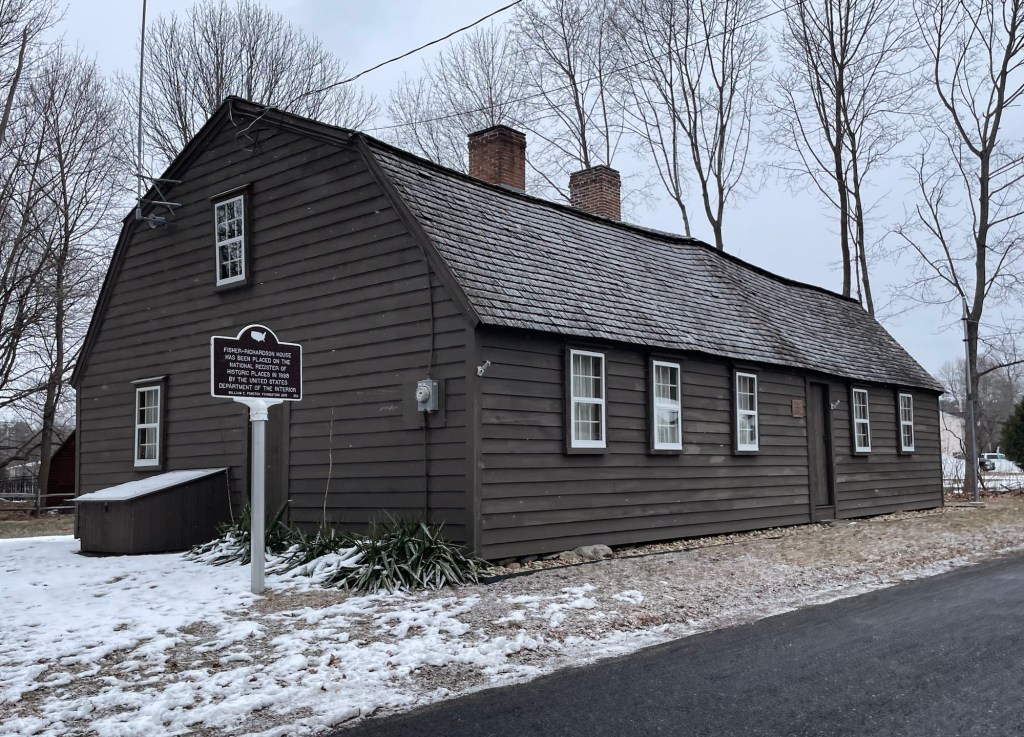
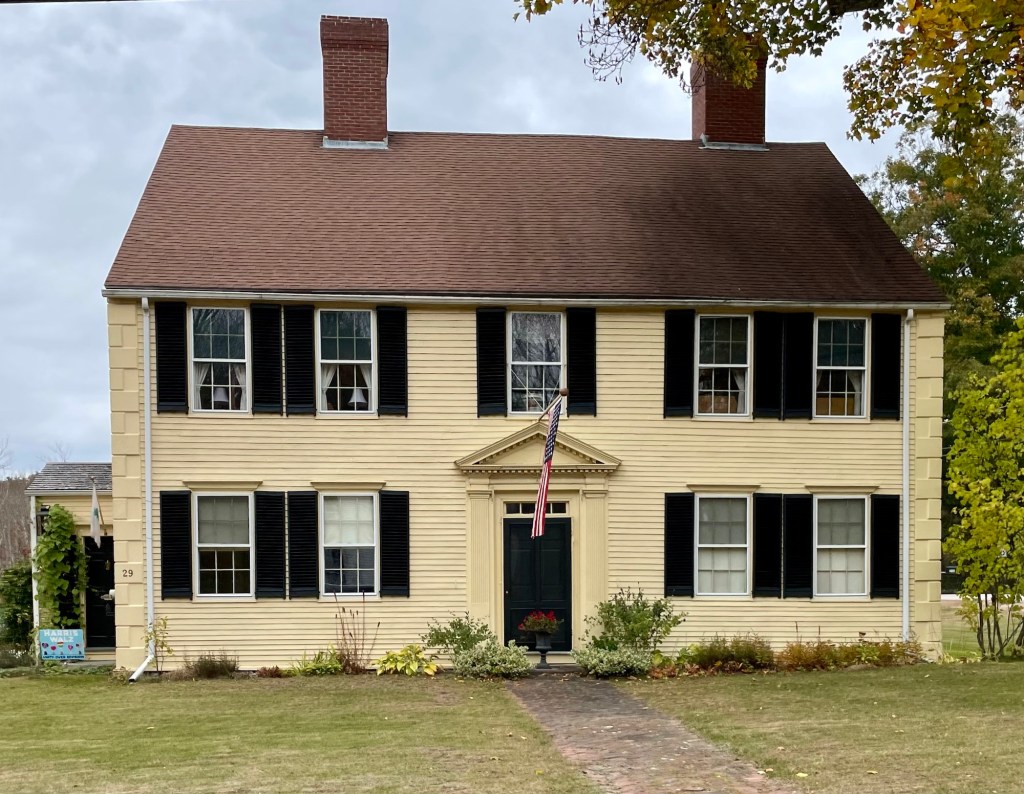
Wellman-Fisher-Richardson House // c.1745

The Fisher-Richardson House in Mansfield, Massachusetts is considered to be one of the oldest buildings in the suburban town. The home dates to sometime between 1743 and 1751 and was built for its original owner Ebenezer Wellman (1720-1776). The property was eventually owned by Lemuel Fisher, who in about 1800, doubled the size of the house adding its western half. When Lemuel died in 1820, the property was inherited by his youngest son, Daniel, a farmer and blacksmith who also built a gristmill nearby. The home was later inherited by Daniel’s daughter, Evelina and her husband, Captain Ira Richardson. By 1930, the gambrel-roofed Georgian house was in disrepair, and the owner at the time contacted SPNEA (now Historic New England) who drafted an agreement to acquire and restore the house. However, as local interest in the property increased, the owner deeded the property to the town, and the town took on the costs of restoration. The property is now managed by the Mansfield Historical Society.

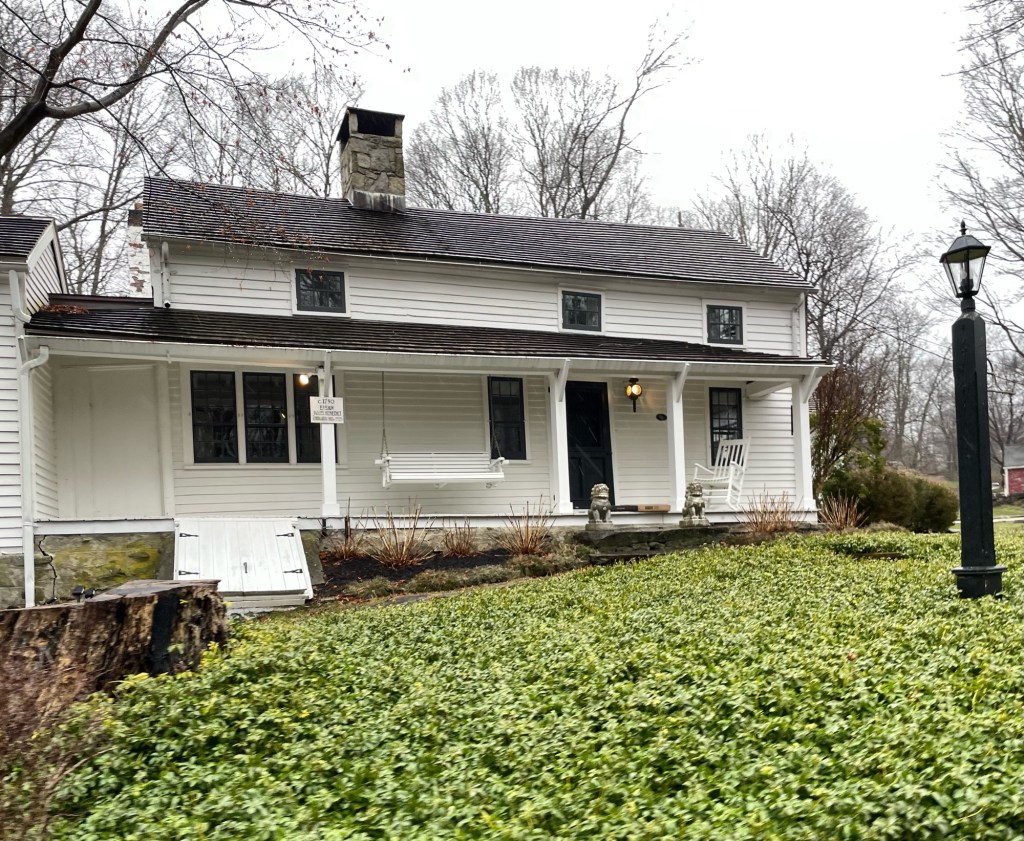
Benedict House // c.1740

The Benedict House in Ridgefield, Connecticut is a stunning Colonial-era cottage that was once the home of a cobbler, who had his shop on the property. The Benedict family, headed by James Benedict, Sr., were original proprietor settlers of Ridgefield. This house and shop have been attributed to James’ son James Benedict (1685-1762), who owned the land and was a shoemaker and deacon of the Congregational Church. Ensign Benedict was also a fence viewer, a term new to me. Fence viewers had power to make and enforce rulings regarding escaped or trespassing livestock, the location of fences, and, above all, maintenance of fences. With fences so crucial to keeping livestock where it belonged, loose boards and rotting posts were big concerns. The fence viewer could even compel a property owner to pay for needed maintenance or repair conducted by a neighbor if he or she failed to keep up their fence properly. The property left Benedict family ownership in 1848, and it was later extensively restored by renowned architect Cass Gilbert, who bought the property in 1920. Cass Gilbert also restored a few other Colonial-era houses in town. It was later the home of Robert and Mildred Wohlforth, both writers of note and six-decade residents of Ridgefield.

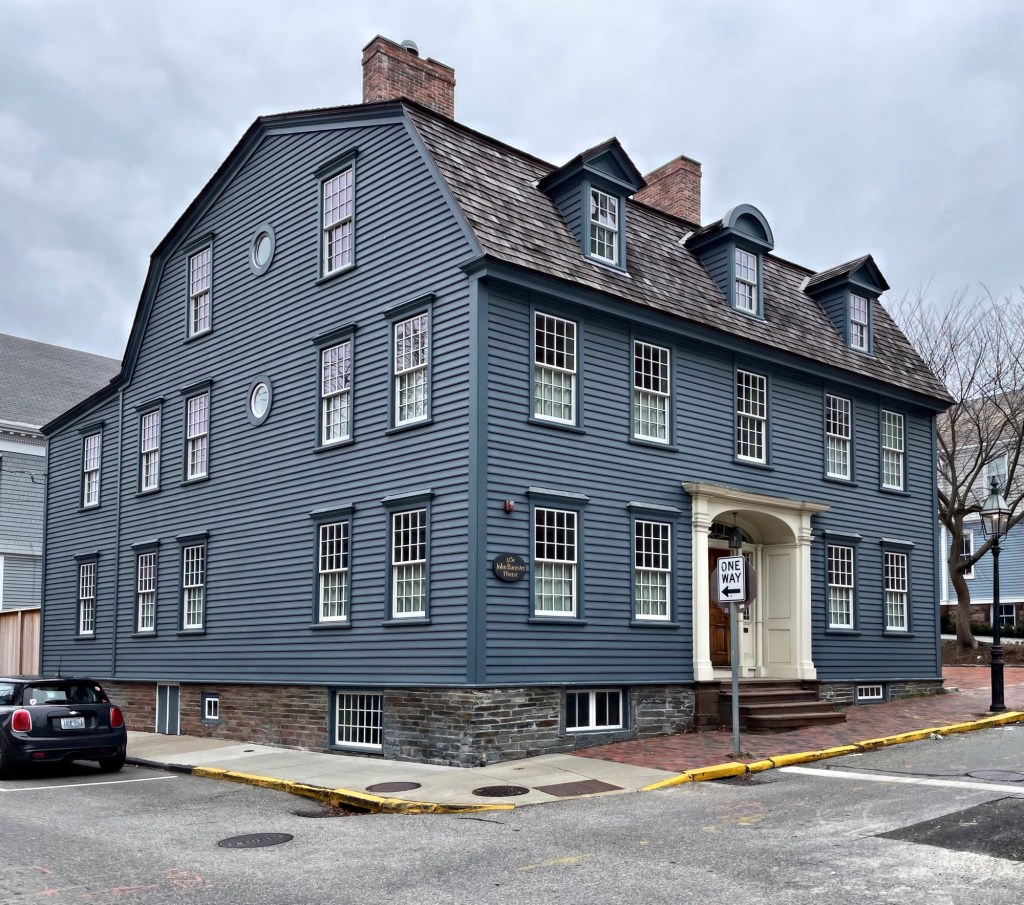
John Banister House // 1751

This deep, gambrel-roofed house is among my favorites in Newport. The house was built in 1751 for John Banister (1707-1767), a Boston-born merchant who moved to Newport in 1736, marrying Hermoine Pelham (1718-1765), a granddaughter of Gov. Benedict Arnold, that next year. Banister quickly established himself as a leading Newport merchant, trading with England, the West Indies, engaging in privateering and the slave trade. In 1752, he held one of the last public slave auctions in Rhode Island at his store, describing them in advertisements as “the finest cargo of slaves ever brought into New England”. The couple also built a country estate in Middletown, Rhode Island. John and Hermione had two sons, John and Thomas, who grew up in this home. John inherited the house after his father’s death in 1767, but the two brothers would soon find themselves on opposite sides of the battle for independence. Thomas was a loyalist, and even enlisted in the British army during the occupation of Newport, while John supported American independence. In retaliation for his patriot views, the occupying British forces seized this house, along with John’s farm in nearby Middletown. The house became the headquarters of General Richard Prescott during the occupation, although John later reclaimed his property following the British evacuation of Newport in 1779. The house has a later Federal entry, but otherwise is one of the best-preserved Colonial homes in Newport. It is a single-family home.

Langley-King House // c.1710

Built c. 1710 this amazing Georgian Colonial house would have originally been a smaller, central chimney structure built by Nathaniel Langley. Major remodeling to effect the Georgian style seen today was done by a subsequent owner of the property. That owner was likely John Brown (1694-1764) a wealthy merchant that may have gifted or sold this home to his daughter, Ann Brown and her new husband, Charles Handy. Handy was a merchant and operated a spermaceti factory just to its west. Later owner, David King and his heirs owned the house for much of the 19th century. The house is on its original site and was purchased by the Newport Restoration Foundation (NRF) in 1969 and restored in 1970-71.

Cahoone-Yates Double House // c.1763

James Cahoone (1727-1814) and Stephen Yates built this stunning double-house on Green Street in Newport around 1763. Both James and Stephen worked as painters in town, and built this house together, each living in one half (Cahoone must have paid a little more because his “half” was a little larger). The Georgian style double-house eventually suffered from neglect and like several other Colonial-era buildings in Newport, its future was uncertain. Luckily, the Newport Restoration Foundation stepped in and purchased the property in 1968, restoring the houses in 1974, complete with a paint color even Cahoone and Yates would love!

Reverend Graham-Howard Richmond House // c.1715

Who doesn’t love a good Colonial house in Connecticut!? This house in Southbury was originally built at the beginning of the 18th century and was later altered and expanded in the fashionable Federal style at the end of the century. The house was built around 1715 by a Nathan Strong, who sold the property to Reverend John Graham who was the town’s pastor for over forty years. The house was later owned by antiques dealers Daniel and Marguerite Croucher. They used the former White Oak Schoolhouse (nextdoor) to store and sell some of their finds! After later owners, the property (which includes the schoolhouse) was purchased by Howard K. Richmond had been a graphic designer and art director in New York. He created the original layout and logo for Life magazine in 1936. He also did advertising and publicity work for Lord & Taylor, Bloomingdale’s, Elizabeth Arden and Saks Fifth Avenue. So many layers of history in over 300 years!

Samuel Bradley House // 1715

Welcome to Southport, one of the most walkable and charming seaside villages in all of Connecticut, and it’s also in Fairfield! Southport became a leading coastal port on Long Island Sound, its ships carrying produce and goods back and forth to New York City. Sea captains houses, historic banks, and stunning churches line the streets in the village and are all in a great state of preservation. This is because much of the old village area is part of a local historic district, first established in 1967, where buildings from three centuries are protected for future generations. This house was built in East Haven, Connecticut by Samuel Bradley in 1715. The saltbox house is evocative of many early Colonial homes of Connecticut built at the time with a large central chimney and symmetrical facade. The house remained in the family until the mid-1940s when it was purchased, disassembled, shipped and reconstructed on this site on Harbor Road in Southport.

Woodward Abrahams House // c.1768

This Georgian-era Colonial home in Marblehead, Massachusetts was built around 1768 by Woodward Abrahams, who was appointed deputy postmaster in Marblehead ten years prior by Benjamin Franklin. Abrahams was one of the seven listed “Tories” mentioned in a town meeting of 1777, which were more loyal to the British crown than the colonies. After the war, he attempted to restore his political favor, which he did over decades, later being renamed a postmaster in 1797. The old Abrahams house was later owned by Thomas Tucker, who ran a dry goods business. In 1881, he converted the first floor to commercial space, giving the house its appearance we see today.

Reverend Whitwell House // c.1756

Another of the stunning gambrel-roofed Georgian homes in Marblehead is this beauty located on High Street in the village. This house was built around 1756 but is best known for its resident from 1766-1779, as the home of the Reverend William Whitwell (1737-1781), who was the fourth minister of the Old North Church, located just a stone’s throw away. Although this Georgian dwelling looks like a single-family house from the outside, it is actually divided into two houses with separate owners, likely since its construction. Later dormers crowd the roof, but its still a pretty amazing Pre-Revolution home in one of the most charming towns in New England!